
Reviewed · E-BIKES
Panoramic Rome Off-the-beaten-track Tour with Cannondale Ebike
Rome makes you work for its best views, but this Cannondale e-bike tour takes the sting out of the hills. In about four hours, you ride from the Circus Maximus through Trastevere, across the Vatican area, and up to Janiculum Hill and the Capitoline Hill. You see major sights, but the route also slips through quieter lanes and neighborhoods that are easy to miss on foot.
I like two things here. First, the electric assistance makes Rome’s steep climbs manageable, even in August heat. Second, the small groups, capped at 10 people, give guides such as Fabio, Valeria, Bruno, Carmen, and Emanuel room to offer useful local context and keep an eye on the group. The main consideration is that easy does not mean effortless: you still pedal for four hours, handle cobblestones, and ride near pedestrians and traffic.
In This Review
- Key things to know before you book
- Why an e-bike works so well in Rome
- From Via Labicana to the Circus Maximus
- The Aventine Hill and the Orange Garden
- Trastevere, Santa Maria, and Rome’s smaller streets
- Janiculum Hill and the best wide-angle view
- St. Peter’s Square and Castel Sant’Angelo
- Piazza Farnese and the old Jewish quarter
- Teatro di Marcello and the Capitoline Hill
- What the four-hour pace feels like
- Guide quality and group size
- Price, timing, and practical value
- Who should book this Rome bike tour?
- Should you book the Panoramic Rome e-bike tour?
- FAQ
- How long is the Panoramic Rome e-bike tour?
- Where does the tour start and finish?
- Are electric bikes and helmets included?
- What languages are available?
- Can children join the tour?
- What happens if the tour does not reach the minimum group size?
Key things to know before you book
- You cover about 12 miles: The route gives you a broad look at central Rome without spending the day walking between far-flung sights.
- The hills are much easier by e-bike: Janiculum and the Aventine still require riding, but the electric motor removes most of the strain.
- The route mixes famous sights with local streets: Expect St. Peter’s Square and the Roman Forum, plus Trastevere, the old Jewish quarter, and small lanes.
- Cobblestones are part of the deal: The ride can be bumpy, and crowded passages require attention and steady handling.
- The group stays small: The maximum is 10 riders, with a minimum of four required for the tour to run.
- The equipment is practical: Cannondale electric-assist bikes, helmets, handlebar bags, anti-puncture tires, and bottled water are included.
Why an e-bike works so well in Rome
Rome is spread across several hills, and many of its most rewarding viewpoints sit above the main streets. An ordinary bicycle would make this a fairly demanding outing. The electric-assist Cannondale does most of the hard work on climbs, so you can spend more energy looking around and less energy wondering how far the next hill goes.
The motor does not turn the bike into a scooter. You still need to pedal, steer, shift, brake, and keep a safe distance from the rider ahead. The ride is described as leisure level, but that rating can be misleading if you have not ridden a bicycle in years.
The bikes have anti-puncture tires, and a helmet is required for every rider. A handlebar bag gives you a place for small essentials, while bottled water is supplied. The bikes carry a maximum rider weight of 300 pounds, or 136 kilograms.
The route is planned to limit contact with traffic, and some stretches have no traffic at all. That helps, but Rome is still Rome. You may encounter uneven paving, pedestrians in narrow lanes, and busy crossings. One useful point from the ride reports is that a rider unfamiliar with electric-assist bikes may need time to get used to the motor response. Pay close attention during the briefing, especially when starting, slowing, or changing gears.
More bike days around Rome:
- Rome EBike Tour: Appian Way, Catacombs & Roman Aqueducts
★ 5.0 · 1,766 reviews - Rome: Top Highlights & Hidden Gems Tour by Cannondale E-Bike
★ 4.9 · 1,760 reviews - Rome: Appian Way, Catacombs, & Roman Aqueducts E-bike Tour
★ 4.9 · 1,421 reviews
From Via Labicana to the Circus Maximus
You meet the guide at Via Labicana 49, near public transportation, and the activity ends back at the same location. After being matched with a bike, you receive a helmet and safety instructions before setting off.
The first major stop is the Circus Maximus. This vast open area was once Rome’s great chariot-racing venue, large enough to hold an enormous crowd. Today, much of what you see is open ground and the long shape of the former track. It takes imagination, but the scale is the point. Your guide can help you picture the racing days and explain how the site fit into Roman public life.
The stop is brief, about 10 minutes. That is enough to orient yourself without turning the opening part of the ride into a long lecture.
The Aventine Hill and the Orange Garden
The ride then climbs toward the Aventine Hill and the Giardino degli Aranci, or Orange Garden. This is one of the tour’s strongest pauses because it gives you a clean view across Rome. From the garden, St. Peter’s dome rises above the city, while the Tiber runs below the hill.
The e-bike matters here. The climb is not extreme with electric assistance, but it would be more tiring on a standard bicycle, especially early in the tour. You get about 15 minutes to walk inside the garden and take in the view.
This stop also shows the tour’s basic rhythm. You ride for a while, park, listen to the guide, and have a few minutes to look around. It is not a bicycle race, and you are not expected to listen while pedaling through traffic.
Trastevere, Santa Maria, and Rome’s smaller streets
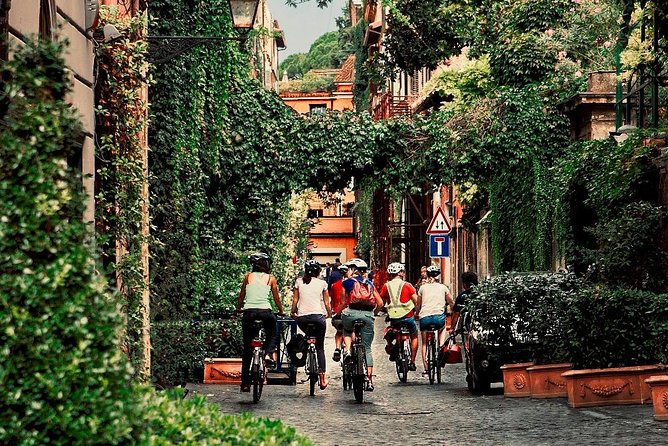
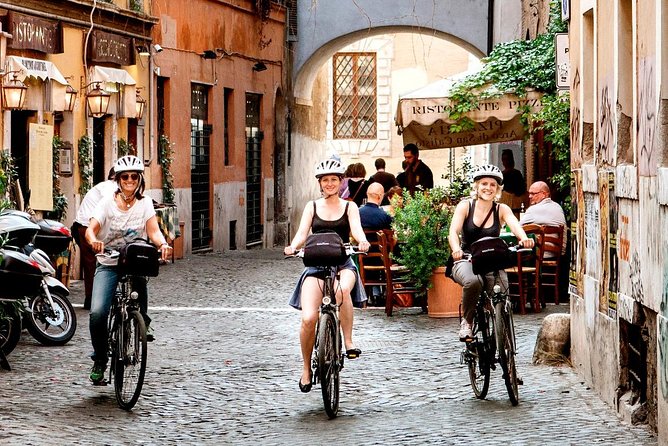
From the Aventine, the route continues toward Trastevere. The neighborhood is known for its narrow lanes, old façades, and informal Roman character. Riding here gives you a different view from walking. You can cover more ground, but you still move slowly enough to notice the streets and squares.
The group stops in Piazza di Santa Maria in Trastevere, where you can admire the church of Santa Maria. The pause is short, around five minutes, while the neighborhood stop lasts about 20 minutes.
Trastevere can be crowded, and bicycles make narrow streets more demanding. You should be comfortable braking and keeping your bike under control at low speed. The tour is not designed for riders who want to race from sight to sight. It is better suited to people who enjoy a careful ride with frequent stops.
More Rome tours worth comparing
- Rome City Small Group Bike Tour with quality Cannondale EBike
★ 5.0 · 1,380 reviews - Rome by Night – Ebike Small Group Tour – Food and Wine (Option)
★ 5.0 · 1,275 reviews - Rome:Appian Way E-bike Tour with Catacombs, Aqueducts & Food
★ 4.9 · 1,210 reviews - Rome: E-Bike Night Tour with Food and Wine Tasting
★ 4.9 · 1,131 reviews
Janiculum Hill and the best wide-angle view
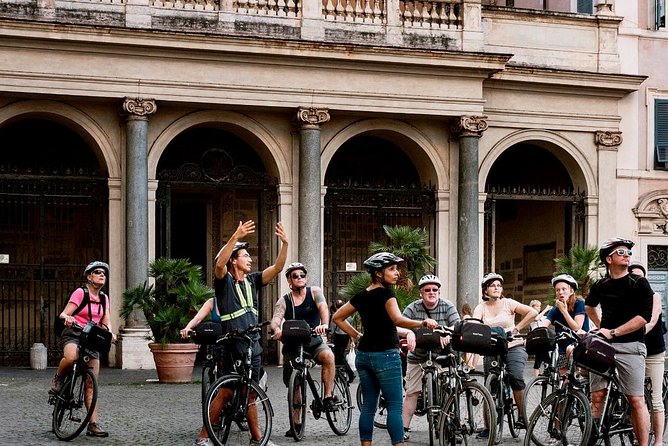
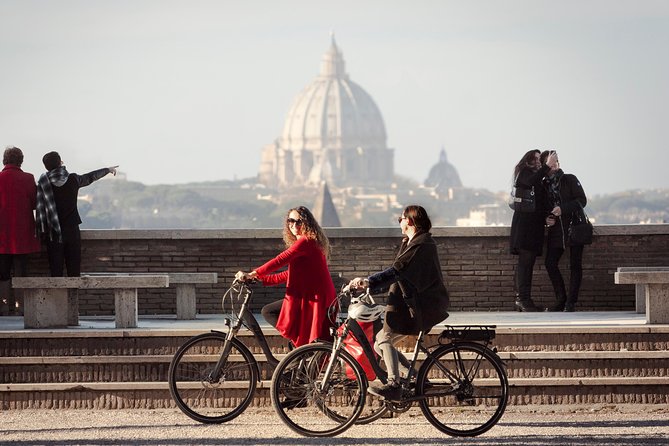
The climb to Colle del Gianicolo, or Janiculum Hill, is one of the reasons to choose this route instead of a standard city bike outing. Janiculum is one of Rome’s highest points, and the view reaches across the historic center.
This is where the electric motor earns its keep. Several riders have described the hills as manageable because of the assistance, but you still need to stay engaged with the bike. The reward is a broad view that helps you understand Rome’s shape: domes, church towers, ancient ruins, and the river all fit into one scene.
The stop lasts about 10 minutes, so plan to enjoy the view rather than expect a long photo session. If views are important to you, ask your guide about the best angle and timing on the day you ride. The route may change during public celebrations or other official events in the city center.
St. Peter’s Square and Castel Sant’Angelo
The ride descends toward St. Peter’s Square. You do not enter St. Peter’s Basilica as part of this tour, but you ride up to the square and hear about the basilica and its place in Rome.
This is a smart use of a bicycle. The Vatican area is one of the city’s busiest zones, and arriving by bike lets you approach the monumental setting without making a separate long walk from another sight. Still, expect people on foot and stay close to the guide.
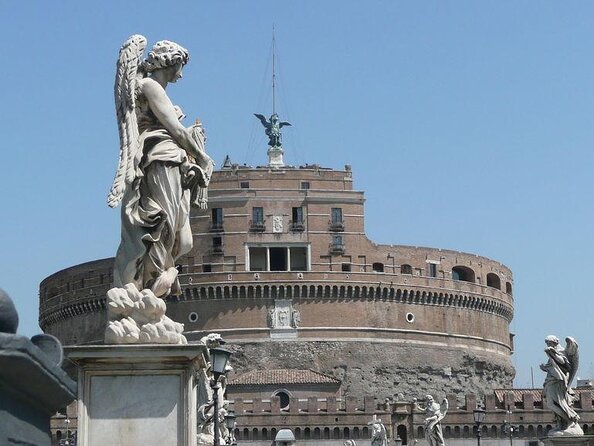
Next comes Castel Sant’Angelo, a building with several lives. It began as a mausoleum, later became a castle, papal residence, and prison, and now operates as a museum. The tour gives you about 10 minutes here, enough to understand the building’s role and see its location beside the Tiber.
You do not receive an included museum entrance, so think of this as an exterior and history stop rather than a castle visit. The nearby Bridge of Angels is also part of the route’s wider Vatican-area experience, according to the described ride.
Piazza Farnese and the old Jewish quarter
Piazza Farnese is a short stop at the foot of Palazzo Farnese, a major Renaissance palace. The square has a formal, polished feel that contrasts with the tighter lanes of Trastevere. Five minutes is brief, but it gives you time to take in the architecture and hear the basic story of the setting.
The route then crosses into the former Jewish Ghetto, an area where Rome’s Jewish community was confined for more than three centuries, from 1555 to 1871. You see the Portico of Octavia, a first-century colonnaded structure.
This is one of the tour’s more valuable history stops because it connects ancient Rome with the city’s later social and religious history. The visit is short, so the guide’s explanation matters. Guides such as Fabio, Nima, Klass, Imke, and Matteo have been praised for making these stops lively and clear, but the exact guide depends on the day and language selected.
Teatro di Marcello and the Capitoline Hill
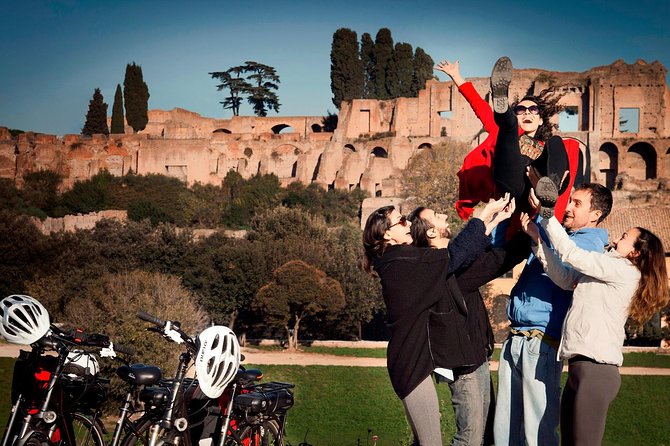
Teatro di Marcello was an ancient theater and later helped inspire the design of the Colosseum. The stop lasts about five minutes. It is a quick look, but the site helps you see how Roman architecture was reused and adapted over time.
The final major viewpoint is Colle Capitolino, or Capitoline Hill. From here, you look over the Roman Forum and the Imperial Fora. This is a strong ending because you can connect many of the ruins you have seen throughout the ride into one broad picture.
The route also uses the large road that cuts through the Roman Forum and Imperial Fora. You do not get an archaeological-site admission with the tour, so this is a sightseeing ride rather than a replacement for a full Colosseum or Forum visit. If you plan to tour those sites inside, keep that for another part of your schedule.
What the four-hour pace feels like
The tour lasts about four hours and covers roughly 18 kilometers, or 12 miles. That is enough distance to connect several parts of central Rome, but the frequent stops keep the pace from feeling like an endurance ride.
You will be moving your legs for most of the outing. The electric motor helps on hills and in hot weather, but it does not remove the need to ride for a long stretch. One rider with strong cycling experience found the distance easy but pointed out that crowds, rather than hills, created the biggest challenge.
Cobblestones deserve special attention. Rome’s small stone streets can make the ride rough, and some narrow lanes require careful movement around people on foot. If you are comfortable on a bicycle and can ride at low speed, the route should feel manageable. If you have not ridden for 15 years, this may be a poor choice even though the official difficulty is leisure.
The guides generally stop before explaining a sight, rather than talking continuously while the group rides. That makes it easier to enjoy the city and take photographs, but it also means you should stay close so you do not miss the next meeting point.
Guide quality and group size
The guide is a major part of this experience. The company uses English, Dutch, French, German, Italian, and Spanish-speaking guides, depending on the language you choose. Named guides praised in the supplied material include Fabio, Valeria, Bruno, Carmen, Emanuel, Nima, Klass, Imke, Matteo, Riccardo, Frederico, and Gederico.
The strongest theme is not a particular guide, but the combination of local explanation and practical riding help. You want someone who can explain why a ruin matters, then lead a group safely through a crossing. Guides have also adjusted the pace for mixed riding abilities.
The maximum group size is 10. That is small enough for the guide to notice if someone falls behind, and it gives you a better chance to ask questions than on a large bus tour. The tour requires at least four participants, so a cancellation is possible if fewer people are booked. In that case, you are offered an alternative or a full refund.
Price, timing, and practical value
At $102.80 per person, this is not the cheapest way to see Rome. It is more expensive than walking the same central sights on your own, but the price includes a quality Cannondale e-bike, helmet, handlebar bag, water, and a multilingual guide.
The real value is time and range. In four hours, you connect the Circus Maximus, Aventine, Trastevere, Janiculum, Vatican area, Castel Sant’Angelo, Jewish quarter, Teatro di Marcello, and Capitoline Hill. Doing that on foot would take much longer and leave you tired. A bus could cover distance, but it cannot use the smaller streets and pedestrian areas that give this tour its character.
The tour is booked around 55 days ahead on average, so it makes sense to reserve early if your Rome dates are fixed. You can cancel for a full refund up to 24 hours before the start time. Food and drinks beyond the supplied water are not included, and hotel pickup is not provided.
Choose an early or late departure if available during your dates. Several rides have worked well in the cooler part of the day, particularly during hot weather. A late afternoon trip can also offer softer light at viewpoints, though exact conditions depend on the season and schedule.
Who should book this Rome bike tour?
I would choose this tour if you want a fast orientation to Rome and feel comfortable riding a bicycle for four hours. It is especially useful during a short stay because it links major sights with neighborhoods and viewpoints you might not reach on your own.
It also suits couples, families with older children, and small groups who want something more active than a walking tour. Children aged 5 to 8 can ride with a child extension, while electric-assist bicycles are available only to participants over age 9. The equipment has the stated 300-pound weight limit.
I would skip it if you dislike uneven streets, have not ridden a bike in many years, or want long visits inside monuments. This is an outdoor sightseeing tour. The value comes from movement, views, and the guide’s interpretation, not from entrance tickets.
Should you book the Panoramic Rome e-bike tour?
Book it if you want to cover a lot of Rome without exhausting yourself on the hills. The best parts are the Janiculum and Aventine views, the easy access to Trastevere and the old Jewish quarter, and the chance to see the Forum from above at the end.
Go in with realistic expectations. You still need basic bike confidence, cobblestones can be jarring, and crowded lanes demand focus. For a capable rider who wants an active introduction to Rome, the $102.80 price is fair because it combines transport, equipment, a small group, and a guide across a wide section of the city.
FAQ
How long is the Panoramic Rome e-bike tour?
The tour lasts approximately four hours and covers about 12 miles, or 18 kilometers.
Where does the tour start and finish?
You meet at Via Labicana 49, 00184 Rome. The tour ends back at the same meeting point.
Are electric bikes and helmets included?
Yes. The tour includes a Cannondale electric-assist bicycle, a mandatory helmet, a handlebar bag, and bottled water.
What languages are available?
Guides are available in English, Dutch, French, German, Italian, and Spanish, depending on the language selected.
Can children join the tour?
Children aged 5 to 8 can use a child extension mounted on the bicycle. Electric-assist bikes are available only to participants over age 9.
What happens if the tour does not reach the minimum group size?
At least four participants are required for the tour to run. If it is canceled because the minimum is not met, you will be offered an alternative tour or date, or a full refund.
Newest reviews from Rome
- ROME:Colosseum & Ancient Rome – private/small group TOUR★ 5.0 · 24 reviews
- Off the Beaten Track in Rome: Rione VI Parione Private Tour★ 5.0 · 24 reviews
- Cinematic Photoshoot in Rome★ 5.0 · 24 reviews
- Rome: Best of Colosseum and Roman Forum Small Group Guided Tour★ 4.5 · 24 reviews
- The Labyrinth of Rome between catacombs and ancient quarries★ 4.5 · 24 reviews
- Vatican and Trionfale Market Tour with Wine and Food Tasting★ 5.0 · 24 reviews
- private tour: Vatican Museums, Sistine Chapel, St. Peter’s Basilica★ 4.5 · 24 reviews
- Colosseum guided tour with Virtual Reality★ 5.0 · 24 reviews
E-Bikes, compared.

Rome EBike Tour: Appian Way, Catacombs & Roman Aqueducts
Read our review →
Top Highlights & Hidden Gems Tour by Cannondale E-Bike
Read our review →
Appian Way, Catacombs, & Roman Aqueducts E-bike Tour
Read our review →
Rome City Small Group Bike Tour with quality Cannondale EBike
Read our review →
Rome by Night – Ebike Small Group Tour – Food and Wine (Option)
Read our review →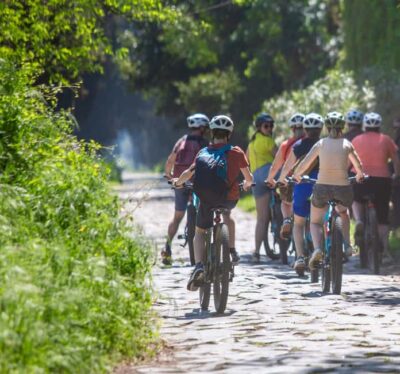
Appian Way E-bike Tour with Catacombs, Aqueducts & Food
Read our review →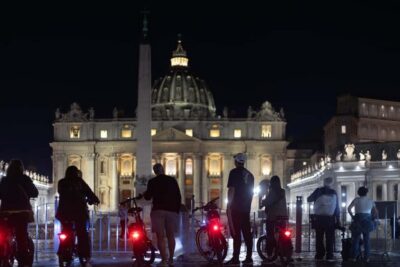
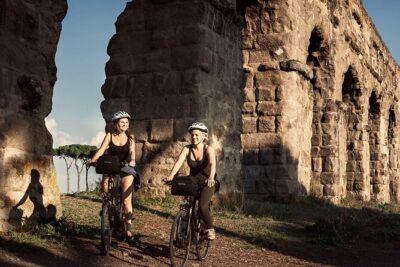
Appian Way, Catacombs and Aqueducts Park Tour with Top E-Bike
Read our review →Browse the lists this tour appears in