
Reviewed · EVENING EXPERIENCES
Rome at Night: Small Group Guided City Walking Tour
Rome is at its most atmospheric after dark, when fountains glow, ancient stone takes on a softer color, and the streets feel less packed than in the daytime. This two-hour walking tour links Piazza Navona, the Pantheon, Trevi Fountain, Piazza Venezia, the Roman Forum, and the Colosseum in one useful evening circuit.
I like the small group, capped at 15 people, because you can hear the guide and ask questions without shouting across a crowd. I also like the practical value: for about $29.04, you get a local introduction to Rome, stories you may miss on your own, and a better sense of which sights deserve a return visit.
The main consideration is the walking. Some outings have lasted two and a half hours or longer, and Rome’s stone streets call for good shoes. Entry to the Pantheon, Colosseum, and Roman Forum is not included, so this is an outdoor orientation tour rather than a substitute for visiting those monuments inside.
In This Review
- Key points at a glance
- Why Rome works so well after sunset
- Piazza Navona and the Pantheon: Rome’s Baroque opening act
- Trevi Fountain: a short stop with plenty to notice
- Piazza Venezia and the Altare della Patria
- The Roman Forum along Via dei Fori Imperiali
- The Colosseum by moonlight
- What the small group changes
- Price, pace, and what you actually receive
- Who should book this night walk
- Should you book Rome at Night?
- FAQ
- How long is the Rome at Night walking tour?
- What sights are included on the route?
- Does the tour include entry to the Colosseum or Roman Forum?
- Is Pantheon admission included?
- How large is the group?
- What is the cancellation policy?
Key points at a glance
- Night lighting changes the city: Rome’s fountains, churches, piazzas, and ancient monuments take on a different mood after sunset.
- Small groups stay personal: The maximum group size is 15, with enough room for questions and conversation.
- A strong first-night choice: Guides such as Alina, Sharon, Dan, and Domenica also offer useful tips for getting around during the rest of your stay.
- The route covers major sights efficiently: You see Piazza Navona, the Pantheon, Trevi Fountain, Piazza Venezia, the Roman Forum, and the Colosseum.
- No monument entry is included: You will see the Pantheon, Forum, and Colosseum from outside unless you arrange separate admission.
- Dress for the season: Wear walking shoes, and bring warm layers and an umbrella in winter.
Why Rome works so well after sunset
Rome can feel like several cities at once. In daylight, the big sights compete with tour groups, traffic, and people trying to take the same photograph. At night, the focus shifts. The lamps pick out columns, statues, domes, and old stonework, while the guide’s stories give shape to what you are seeing.
I like this tour because it does not ask you to choose between ancient Rome, Baroque Rome, and modern Italy. In a single evening, you move from Bernini’s fountain to the Roman Forum, then finish with the Colosseum glowing above you. That variety gives you a useful first reading of the city.
The mood is not the same every night. Some evenings may be cool, rainy, or crowded around the most famous fountains. Still, the route is designed for a smooth walk rather than a strenuous march, and guides have adjusted the pace for families, solo visitors, and mixed-age groups. Comfortable shoes matter more than athletic ability.
The advertised duration is about two hours, but you should keep extra time available. Different guides and groups can take longer, especially when questions, photographs, church visits, or informal conversation become part of the evening. One outing lasted three and a half hours, so do not schedule a tight dinner reservation immediately afterward.
More walking tours in Rome:
- Rome: Trastevere & Campo de Fiori Street Food Walking Tour
★ 4.9 · 2,768 reviews - Rome: Paranormal Night Walking Tour & Secret Backstreets
★ 4.9 · 1,921 reviews - Rome by Night Walking Tour – Legends & Criminal Stories
★ 4.5 · 1,003 reviews
Piazza Navona and the Pantheon: Rome’s Baroque opening act
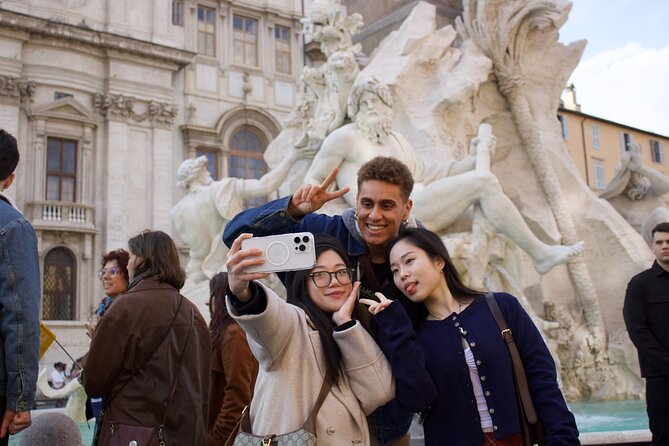
Piazza Navona is an excellent place to begin the sightseeing portion of the walk. The long, open square follows the shape of an ancient Roman stadium, though the atmosphere today is much more theatrical. Its centerpiece is Bernini’s Fountain of the Four Rivers, with sculpted figures and a tall Egyptian-style obelisk rising from the middle.
At night, the fountain’s details can be easier to appreciate because the lighting draws your eye toward the figures and flowing water. Your guide can explain the rivalry between Bernini and Borromini, the political meaning of the square, and the way Rome turned an ancient site into a grand public space.
Allow about 20 minutes here. Admission to the piazza is free, but you will want to listen carefully because this is a place where a quick photograph can easily replace real understanding. The guide helps connect the fountain, church façades, and surrounding palaces into one story.
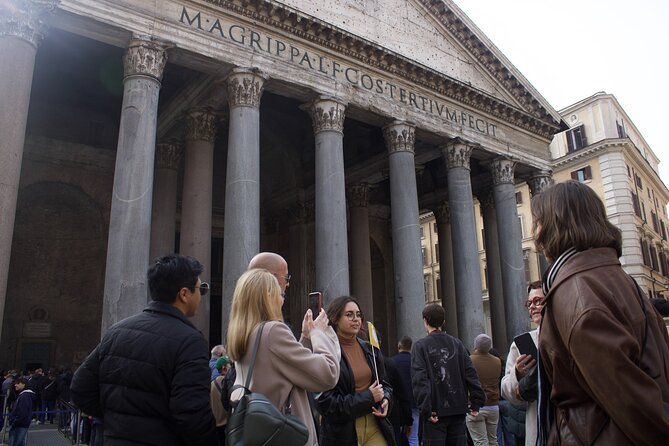
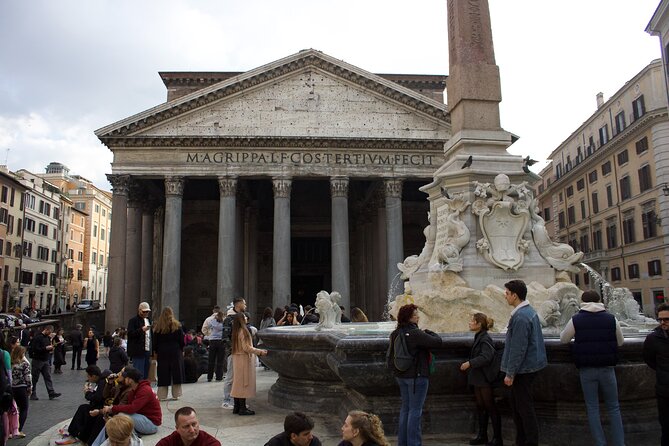
The route also includes the Pantheon, described as the best-preserved building from antiquity in Rome. Its enormous concrete dome remains the star feature, with the circular opening at the top bringing daylight and weather into the interior. The Pantheon is more rewarding when you understand what you are looking at, rather than simply treating it as another old building.
There is an important limitation: entry to the Pantheon is not part of this walking tour. You should think of this stop as a strong exterior introduction, followed by a separate visit if you want to see the interior and dome from below.
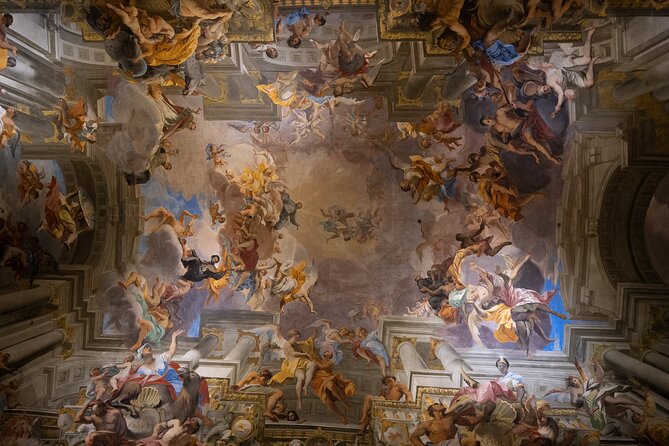
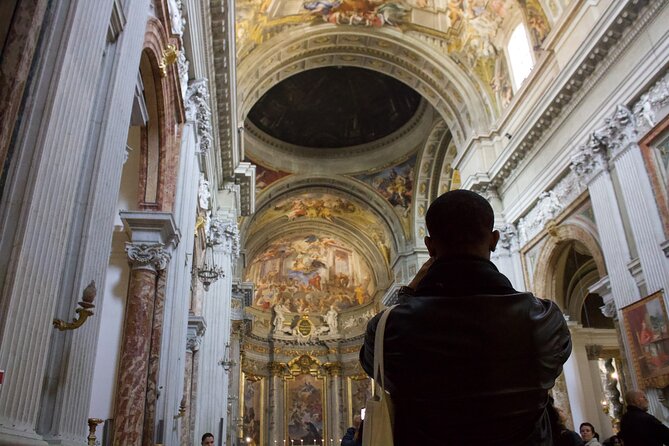
The church portion of the route adds another layer. One outing included St. Ignazio, a church known for its striking interior decoration and painted architectural illusion. Since the exact church experience may vary with the guide and evening conditions, treat this part as an opportunity to see one of central Rome’s significant churches, not as a guaranteed indoor visit at a fixed time.
Trevi Fountain: a short stop with plenty to notice
Trevi Fountain is one of Rome’s easiest sights to recognize and one of the hardest to experience quietly. It is the city’s most famous fountain, even though central Rome contains more than 2,000 fountains. Water, travertine, horses, sea creatures, and the figure of Oceanus fill the scene.
The tour allows about 20 minutes here. That is enough to take in the composition, hear the main stories, and make photographs, but it is not a long free period. If you want to linger, return on your own later.
The advantage of having a guide here is practical. The fountain sits in a tight urban setting, and it is easy to arrive, snap a picture, and leave without understanding why the monument looks as grand as it does. A guide can point out the symbolism and explain how the fountain fits into Rome’s water system and papal building program.
Keep your belongings secure in crowded areas. The route’s guides also use the evening to help the group move safely through busy spaces. That matters if you are still learning Rome’s streets and do not yet have a strong sense of direction.
Piazza Venezia and the Altare della Patria
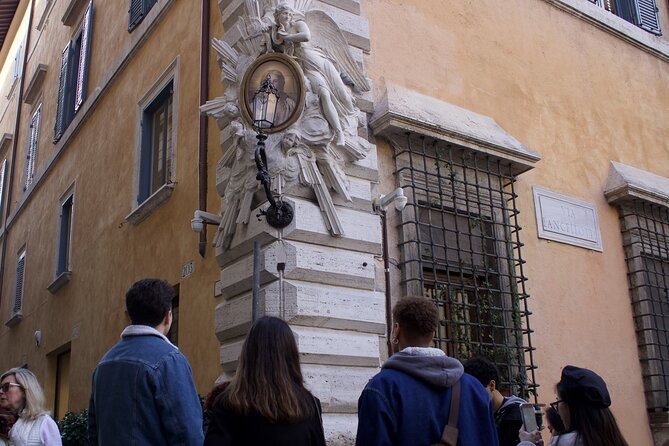
Piazza Venezia changes the scale of the tour. After the intimate lanes and compact piazzas around the Pantheon and Trevi Fountain, you reach one of Rome’s major traffic and civic spaces. The huge white Altare della Patria, also called the Monument to Vittorio Emanuele II, dominates the square.
This building is tied to the creation of modern Italy and the inauguration of the unified nation. The guide can help you separate the different layers of Rome’s past: imperial Rome, papal Rome, and the nineteenth-century kingdom that made Rome its capital.
The stop lasts about 20 minutes and is primarily an outdoor explanation. That is enough to understand the monument’s place in Italian history without spending the evening on architectural details that may not interest everyone.
I find this stop useful because it prevents the tour from becoming only an ancient-history walk. Rome is not just ruins and fountains. The Altare della Patria shows how a newer national story was imposed on an older city, and the contrast is hard to miss when you stand in the middle of Piazza Venezia.
Traffic and noise can make this part less peaceful than Piazza Navona. That is simply part of the setting. You are seeing a working city, not an open-air museum closed to modern life.
More Rome tours worth comparing
- Rome: City Highlights Open-Top Bus Night Tour
★ 4.1 · 2,038 reviews - Vespa Sidecar Tour By Night with Pickup
★ 5.0 · 1,803 reviews - Rome by Night – Ebike Small Group Tour – Food and Wine (Option)
★ 5.0 · 1,275 reviews - Colosseum Sunset Tour with Entry
★ 4.5 · 1,230 reviews
The Roman Forum along Via dei Fori Imperiali
From Piazza Venezia, the walk continues toward the Roman Forum and the broad Via dei Fori Imperiali. This is where the evening takes you through the heart of ancient Rome, even though the archaeological areas are viewed from outside and admission is not included.
The Forum was the center of public life for the Roman world. Temples, basilicas, political meeting places, markets, and triumphal routes once filled the valley. Today, the scattered columns and foundations can look confusing without guidance. A good explanation gives you a map in your head: where public business took place, how power was displayed, and how ordinary Roman life depended on this dense civic center.
The night setting helps here. Floodlighting gives the ruins a clean outline, and the road offers broad views across the archaeological zone. You can see why Rome’s ancient center was both practical and symbolic.
Do not expect an archaeological excavation visit on this tour. You are walking beside the Forum, not entering it. If you want to walk among the ruins, reserve a separate ticket and set aside a longer daytime visit. This evening route gives you the background and orientation to make that later visit more rewarding.
The guide’s role is especially important here. Without context, the Forum can become a collection of broken stones. With a strong storyteller such as Dan, Yusuf, Sila, or Domenica, the route can turn those fragments into a picture of civic life, religion, ceremony, and political power.
The Colosseum by moonlight
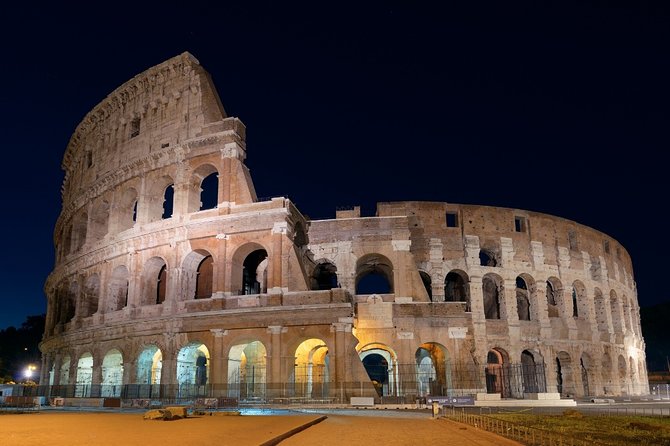
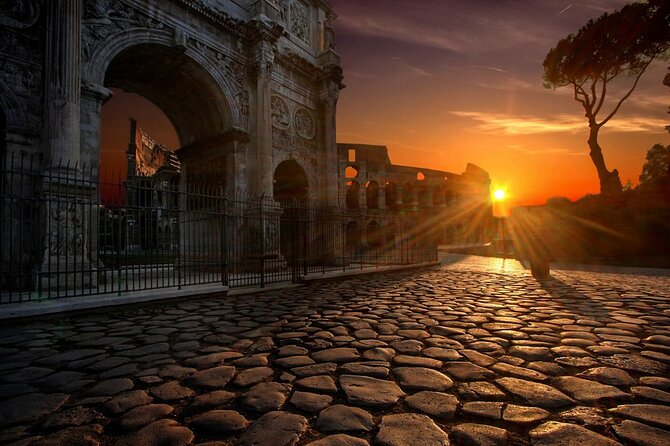
The Colosseum is the natural finish. Its arches and massive outer walls look impressive in daylight, but the nighttime view has a different force. Artificial light picks out the curves and openings, while the surrounding darkness makes the structure feel even larger.
The tour does not include entry to the Colosseum. You will see it from outside and finish at a viewpoint overlooking the monument. That final position is one of the strongest reasons to choose an evening walk, especially if you have already visited the Colosseum during the day and want a calmer look from a different angle.
Your guide can explain how the amphitheater worked, who used it, and what its survival tells you about Rome’s later history. The stop is scheduled for about 20 minutes, though the exact time may depend on the group and the guide.
The meeting point is at Piazza del Colosseo, 1, beside the Colosseum. The walk also ends in the Colosseum area, at a scenic viewpoint. Starting and finishing in the same general district is helpful if you are staying near the historic center or using public transportation, but the route itself covers a good stretch of central Rome on foot.
What the small group changes
A maximum of 15 people is a useful middle ground. You still get the energy of a shared outing, but the guide can keep the group together and respond to questions. Several guides, including Sharon, Alina, and Antonio, have been praised for making the walk conversational rather than a one-way lecture.
That personal feel matters most in Rome’s narrow streets and busy squares. You can hear a quieter explanation, stop for a photograph without losing the whole group, and ask about places you want to revisit. Solo visitors may also appreciate the easy social setting, while families can benefit from a guide who adjusts the pace.
Guide quality will shape your evening. Names associated with especially warm and lively outings include Sharon, Alina, Dan, Sila, Antonio, Yusuf, Pablo, and Domenica. Their styles differ. Sharon is known for humor, local warmth, and practical help. Alina uses questions and conversation to keep the walk active. Dan focuses on unusual details and ancient history, while Sila brings an art-history angle.
You cannot necessarily choose one of these guides when booking. Still, the range of guide styles suggests that the experience is built around personal interpretation rather than a fixed audio script.
Price, pace, and what you actually receive
At $29.04 per person, the tour is reasonably priced for a guided introduction to central Rome. You are paying for about two hours of local explanation, route planning, group management, and the chance to cover several major sights without stopping to navigate every turn.
The value is strongest if this is your first evening in Rome. You can get your bearings, note which monuments deserve a daytime return, and collect practical tips for the rest of your visit. Several people found it helpful at the start of a trip for exactly this reason.
The value is lower if you want interior access or a slow, specialist tour of one monument. No tickets are included for the Pantheon, Colosseum, or Roman Forum. You also do not get a long meal break, transport between sights, or a private guide.
Group discounts are available, and mobile ticketing makes the booking process simple. Confirmation is provided at booking, and the tour operates near public transportation. Free cancellation is available up to 24 hours before the start time. If you cancel or request changes inside that window, the payment is not refunded.
Who should book this night walk
I would choose this tour for a first night in Rome, a short city break, or an evening when you want to see the main monuments without committing to a full museum program. It suits solo visitors, couples, families, and people who prefer a guide to handle the route.
It is also a good match if safety after dark is on your mind. The guide keeps the group together, chooses the route, and helps you move through crowded areas. That does not remove the need for normal city awareness, but it is more comfortable than wandering unfamiliar streets alone.
You should think twice if you dislike walking, need a guaranteed short two-hour schedule, or want to enter the major monuments. The route is manageable, but it is not a seated activity. Winter evenings can be cold, and rain may come and go, so carry warm clothing and an umbrella.
Wear shoes with real support. Rome’s streets can be uneven, and even a gentle walk becomes tiring when you are distracted by sore feet. If you need to leave early, tell the guide rather than disappearing from the group.
Should you book Rome at Night?
Book it if you want a friendly, efficient introduction to Rome’s center and like the idea of seeing famous monuments under evening lights. The small group, broad route, strong guide personalities, and low price make it a smart first-night choice.
Skip it if your main goal is entering the Colosseum, Forum, or Pantheon, because admission is not included. Also skip it if your schedule cannot absorb a walk that may run beyond the advertised two hours.
For most people, the best plan is to use this as an orientation. Let the guide introduce the city, mark the places that catch your attention, then return in daylight for the interiors and archaeological sites that deserve more time.
FAQ
How long is the Rome at Night walking tour?
The advertised duration is approximately two hours. The actual walk may take longer, with some outings lasting two and a half hours or more.
What sights are included on the route?
The route includes Piazza Navona, the Pantheon, an important church, Trevi Fountain, Piazza Venezia, the Roman Forum area, and the Colosseum.
Does the tour include entry to the Colosseum or Roman Forum?
No. Admission to the Colosseum and Roman Forum is not included.
Is Pantheon admission included?
No. The Pantheon is part of the sightseeing route, but entry is not included.
How large is the group?
The group has a maximum of 15 people.
What is the cancellation policy?
You can cancel up to 24 hours before the experience begins for a full refund. Cancellations or changes made less than 24 hours before the start time are not accepted for a refund.
Newest reviews from Rome
- Rome: Vatican Museums & Sistine Chapel Skip-the-Line Ticket★ 4.4 · 148 reviews
- Shared Shuttle Transfer from Rome to Civitavecchia Port★ 5.0 · 148 reviews
- Rome: Crypts & Catacombs After Hours Tour with Bone Chapel★ 4.6 · 149 reviews
- Ghosts Legends and Mysteries of Rome Walking Tour★ 5.0 · 149 reviews
- Skip the Line: Vatican and Sistine Chapel with Guided Tour★ 4.0 · 149 reviews
- Tivoli: Villa Gregoriana Entrance Ticket★ 4.7 · 150 reviews
- Pizza and Tiramisu Cooking Class in Rome, Piazza Navona★ 5.0 · 150 reviews
- Appian Way E-bike Tour with Gourmet Picnic and Catacombs★ 4.5 · 150 reviews
Evening Experiences, compared.
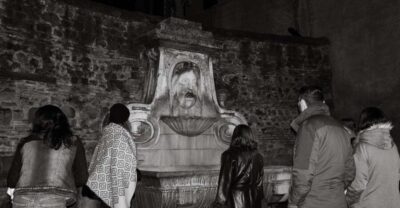
Paranormal Night Walking Tour & Secret Backstreets
Read our review →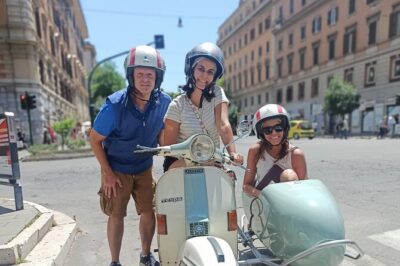
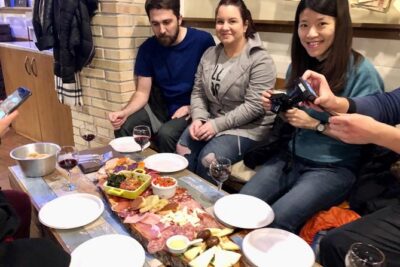
Rome by Night – Ebike Small Group Tour – Food and Wine (Option)
Read our review →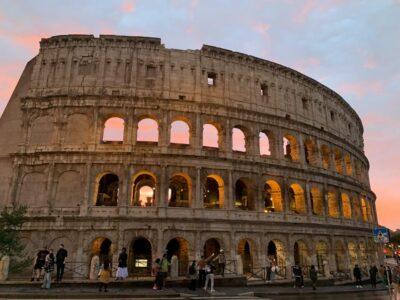
Rome by Night Walking Tour – Legends & Criminal Stories
Read our review →
Guided City Center Evening Sightseeing Walking Tour
Read our review →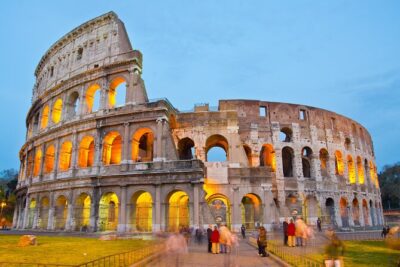
Colosseum by Evening Guided Tour with Optional Arena Floor Access
Read our review →Browse the lists this tour appears in