
Reviewed · WALKING TOURS
Rome: Between Holy Doors Small Group Walking Tour
Rome’s great churches are not limited to St. Peter’s. This tour takes you through seven remarkable basilicas, churches, and chapels, including Santa Maria Maggiore, San Clemente, and St. John Lateran. Along the way, you see Holy Doors, ancient mosaics, Michelangelo’s Moses, and relics tied to the early Christian story.
I like the tiny group size, capped at five people, and I like having a guide such as Roberto explain the symbols, artwork, and church traditions that are easy to miss on your own. The main drawback is simple: this is a brisk walking tour over cobblestones, hills, and many stairs, with little time to sit.
In This Review
- Key points to know before you book
- Why this church tour gives you a different Rome
- Santa Maria Maggiore begins with a grand welcome
- Santa Prassede rewards careful looking
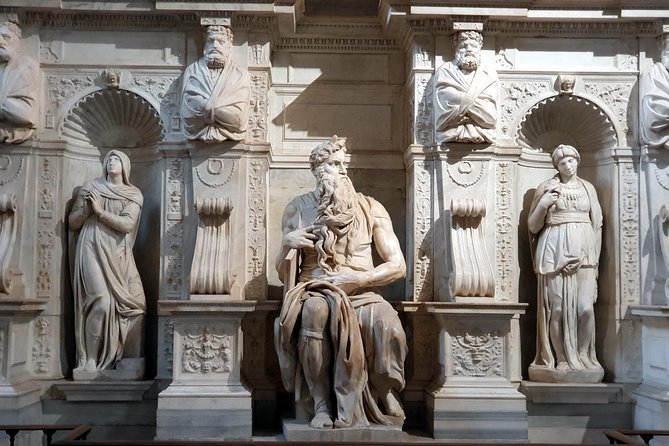
- Michelangelo’s Moses at San Pietro in Vincoli
- San Clemente reveals Rome beneath Rome
- Ss. Quattro Coronati brings quieter medieval atmosphere
- St. John Lateran is the morning’s major finish
- The Holy Stairs require a little flexibility
- Walking demands are real, even if distances are short
- Is $83.48 a fair price?
- Who should book this Roman church walk?
- Final verdict: book it for context, not just doors
- FAQ
- How long does the Holy Doors walking tour last?
- What time does the tour begin?
- Where does the tour start?
- Where does the tour end?
- How many people can join the tour?
- Is the tour offered in English?
- Are admission tickets included?
- What should I wear?
- Is this a suitable tour for someone with mobility challenges?
- Can I cancel for a full refund?
Key points to know before you book
- Seven sacred sites in one morning: The route links major basilicas with quieter churches that many first-time visitors miss.
- Michelangelo’s Moses: San Pietro in Vincoli gives you a close look at one of Rome’s best-known sculptures.
- Ancient mosaics and relics: Santa Prassede and the other churches pack serious art and religious history into short visits.
- A maximum of five people: You can hear Roberto clearly and ask questions without shouting across a crowd.
- Expect two to three miles of walking: Add uneven cobblestones, a slight incline, and stairs of different shapes and heights.
- Holy Door access can change: Jubilee crowds and special events may alter the route, and passage through every Holy Door is not guaranteed.
Why this church tour gives you a different Rome
Rome can feel like an open-air museum, but its churches often hold the finest works of art in the city. Many are free to enter, yet their mosaics, chapels, tombs, and relics can be hard to understand without context.
That is where this tour earns its keep. You move from one church to the next while Roberto explains what you are looking at and why it matters. The focus is not just on dates and names. You get the meaning behind a fresco, the purpose of a chapel, and the religious ideas expressed through sculpture and decoration.
I especially like the contrast between the grand basilicas and the more restrained churches along the route. In three to four hours, you see several layers of Rome: early Christian worship, medieval devotion, Renaissance art, Baroque decoration, and modern Catholic tradition.
The tour is offered in English and begins at 9 a.m. Its small size is useful inside busy churches, where a large group can block aisles or make it hard to hear. A group of four or five also lets the guide adjust explanations to your interests.
The $83.48 price is not cheap for a walking tour, especially since admission to the churches is free. You are paying for the route planning, the concentration of important sites, and Roberto’s explanations. If you would otherwise wander into these churches without knowing what to look for, the cost can be worthwhile. If you prefer a slow, unstructured morning or already have a strong background in Catholic art, you may find the pace and price less appealing.
More walking tours in Rome:
- Rome: Trastevere & Campo de Fiori Street Food Walking Tour
★ 4.9 · 2,768 reviews - Rome: Paranormal Night Walking Tour & Secret Backstreets
★ 4.9 · 1,921 reviews - Rome by Night Walking Tour – Legends & Criminal Stories
★ 4.5 · 1,003 reviews
Santa Maria Maggiore begins with a grand welcome
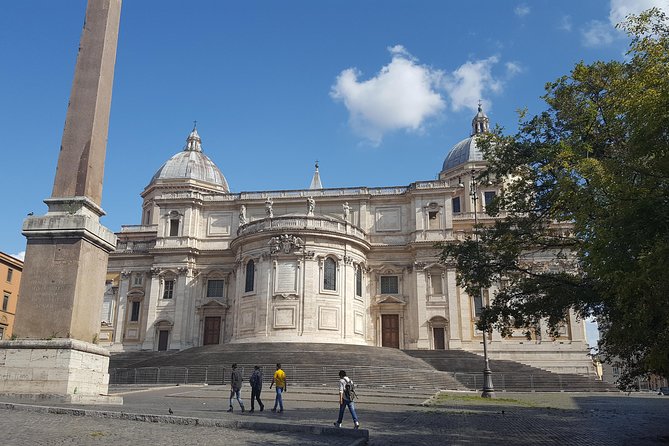
The first stop is the Basilica di Santa Maria Maggiore, one of Rome’s major churches dedicated to the Virgin Mary. It has the city’s highest bell tower, a Holy Door, and some of the most impressive chapels in Rome.
You have about 40 minutes here, which is sensible. This is not a church to rush through. The scale alone demands a pause, while the chapels and decoration give Roberto plenty to explain.
The Holy Door is a major reason for the tour’s name. During a Jubilee, pilgrims may be especially interested in passing through these doors, but access can depend on queues, ceremonies, and security arrangements. The tour cannot guarantee passage through every Holy Door, so you should treat the sight and explanation as certain, while viewing the actual passage as subject to conditions.
Santa Maria Maggiore sets the tone for the morning. It is grand, historic, and full of art, but the tour does not stop there. The next churches are smaller and more intimate.
Santa Prassede rewards careful looking
A short walk brings you to Basilica di Santa Prassede. You spend about 20 minutes here, but the visit is packed with material.
The church contains one of the oldest apse mosaics in the world. It also holds a relic associated with the Passion of Christ. These are the kinds of details that can slip past you if you simply enter, take a quick look, and leave.
Santa Prassede is a good example of why a guide helps. Ancient church art often uses symbols that are not obvious to modern eyes. Roberto’s role is to point out what the artists were communicating and how the church fits into Christian history.
The shorter stop also keeps the route moving. You are not given unlimited time at every site, so take in the main features and listen closely when the guide gathers the group.
Michelangelo’s Moses at San Pietro in Vincoli
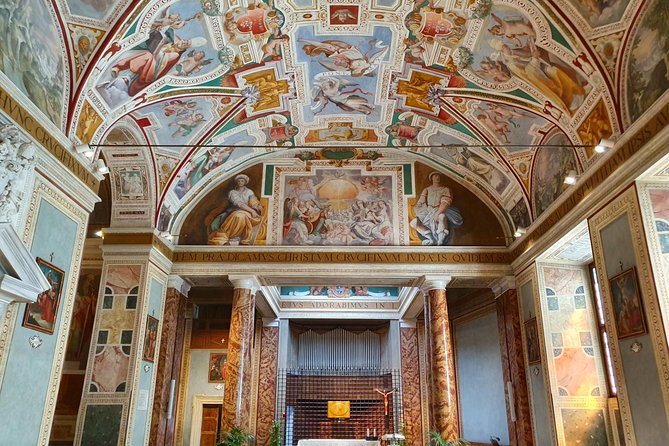
At San Pietro in Vincoli, the star attraction is Michelangelo’s sculpture of Moses. The church also holds the chains traditionally associated with Saint Peter.
Moses is a powerful stop even for visitors who are not making a religious pilgrimage. Michelangelo’s handling of the figure, especially the face, beard, and seated posture, gives the sculpture a strong presence. You may have seen photographs, but standing in front of the work helps you understand its scale and setting.
The church’s chains add another layer. They connect the site to the long tradition of relics in Rome, where objects linked to biblical and early Christian figures have shaped worship for centuries.
You get about 20 minutes here. That is enough for an introduction and questions, but not enough for a leisurely study of every corner. If Michelangelo is your main interest, pay attention from the start and use the small group to ask a focused question.
A completely different way to spend the day in Rome:
- Vatican: Museums & Sistine Chapel Entrance Ticket
★ 4.5 · 144,003 reviews - Vatican Museums & Sistine Chapel Tour with Optional Basilica
★ 4.3 · 67,413 reviews - Vatican Museums, Sistine Chapel & St Peter’s Basilica Guided Tour
★ 4.5 · 39,149 reviews - Rome: Colosseum, Palatine Hill and Roman Forum Guided Tour
★ 4.8 · 32,814 reviews
San Clemente reveals Rome beneath Rome
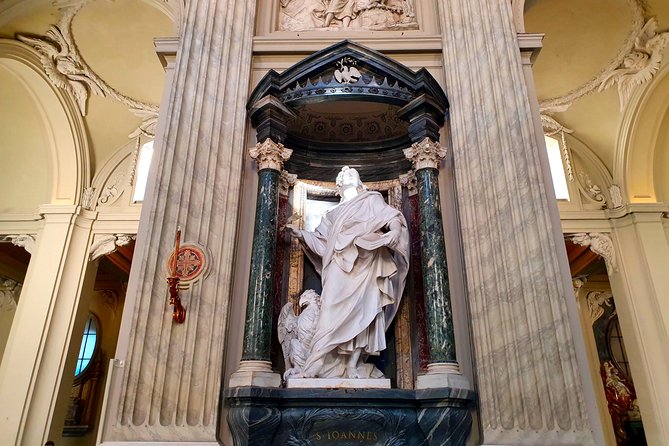
The Basilica of San Clemente is one of the oldest churches in the city and is known for its impressive apse. It is also a useful place to think about how Rome grew in layers.
The tour focuses on the church and its apse during a 20-minute visit. You should not expect a long archaeological stop or extended free time. Instead, Roberto explains the site’s importance and draws your attention to the features that give the building its character.
San Clemente is a strong choice for visitors who want more than famous monuments. Its appeal comes from the sense that Roman religious life was built over centuries, with one period leaving traces for the next.
This is one of the stops where a guide’s storytelling matters as much as the architecture. Without background, an old church can look like another ornate interior. With context, you begin to see why each layer matters.
Ss. Quattro Coronati brings quieter medieval atmosphere
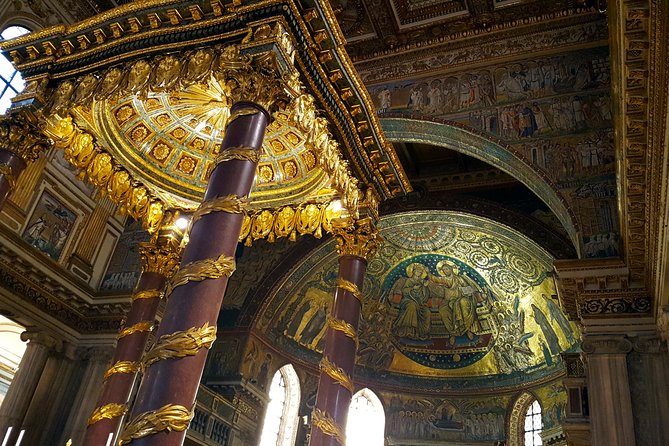
The Church of the Four Crowned Martyrs, or Ss. Quattro Coronati, is a more unusual stop. It contains frescoes depicting the legends of Saint Silvester.
Compared with Santa Maria Maggiore or St. John Lateran, this church is less likely to be on a first-time Rome checklist. That is part of its value. You get a look at a quieter religious site and art that does not compete with the city’s biggest attractions.
The visit lasts around 20 minutes. Listen for the story behind the Saint Silvester frescoes, since the narrative gives the paintings their force. This is not simply a stop for admiring color and age. It is a place where legend, politics, and Christian tradition meet.
The route also benefits from the church’s calmer character. After several major sights, a smaller setting gives you a change of rhythm, even though the walking schedule remains fairly brisk.
St. John Lateran is the morning’s major finish
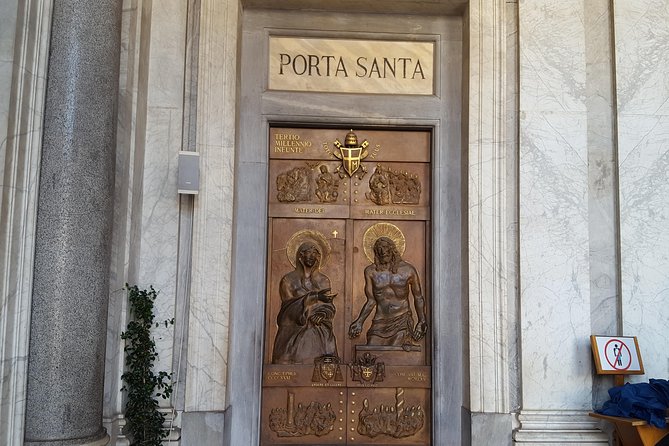
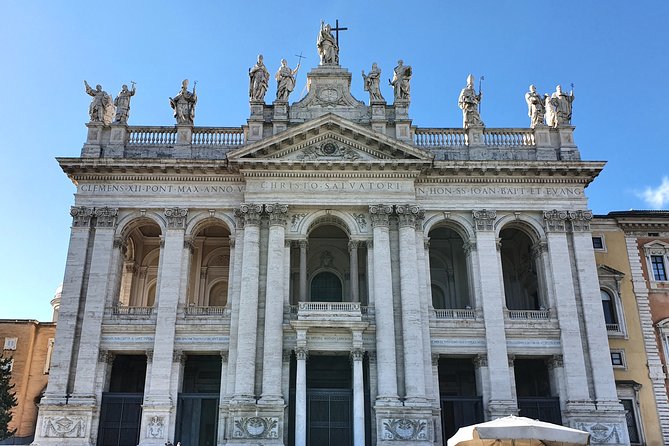
The Archbasilica of Saint John Lateran is the most important church in the Catholic tradition. It is the cathedral of Rome and the final major basilica on this route.
You spend about 40 minutes here, matching the longer visit at Santa Maria Maggiore. The church contains relics associated with Saint Peter and Saint Paul, and Roberto explains why the basilica carries such weight.
This stop helps connect the individual churches into a larger story. You have seen art, relics, mosaics, sculptures, and Holy Doors. At St. John Lateran, those pieces come together within the structure of the Catholic Church and the history of Rome.
The basilica is also a practical end point. The tour finishes nearby, close to the Line A San Giovanni metro station. That makes it easy for you to continue sightseeing, return to your hotel, or reach another part of Rome.
The Holy Stairs require a little flexibility
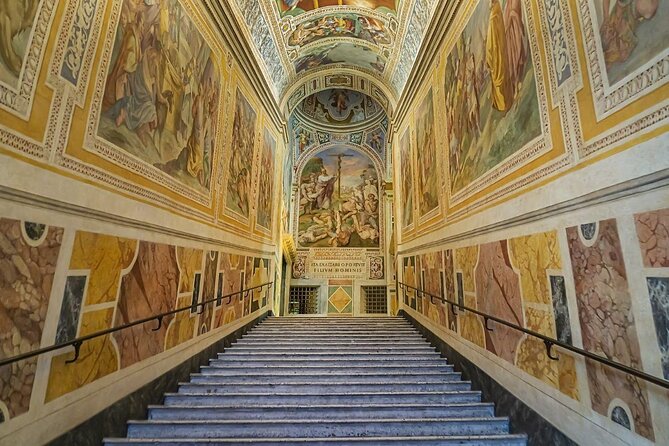
The final stop is the Pontifical Sanctuary of the Holy Stairs. The stairs are traditionally linked with the palace of Pontius Pilate, and the sanctuary contains impressive frescoes.
This part of the visit needs some explanation. During a Jubilee or a period of heavy religious activity, lines and access rules can change. The group may receive an explanation outside before visitors enter at their own pace. The tour may also be adapted if waiting times become long.
You should not assume that the group will climb the stairs together or that the full 20-minute visit will unfold in exactly the same way every day. The Holy Stairs are a place of personal prayer for many people, and physical access can also be difficult for some visitors.
That flexibility is practical, but it may disappoint you if climbing the stairs is the central purpose of your booking. Ask at the start how the site will be handled that day, particularly during Jubilee events.
Walking demands are real, even if distances are short
The churches are generally close together, often only a few minutes apart, but the full route still involves about two to three miles of walking. You cover uneven Roman pavement, irregular cobblestones, a slight incline, and many stairs.
The pace has been described as brisk. A fit visitor should manage it, but you should wear shoes with good support and avoid treating this as a gentle coffee-break stroll. There are few chances to sit, so consider your energy level before booking.
The small group helps because the guide can respond to the group’s rhythm. Still, you should speak up if you need to slow down or pause. One past concern involved the pace, heat, and lack of an obvious bathroom stop, so do not wait until you are uncomfortable to ask.
Restroom access is limited along the route. Facilities are available at the start and end, and the guide can pause at a local bar if needed. Use the bathroom before setting out.
Church dress rules are strict. Your shoulders, back, and knees must be covered. Bring a light layer if you are visiting in warm weather, since shorts, sleeveless tops, and uncovered backs can prevent entry.
Is $83.48 a fair price?
The admission cost is free at the listed churches, so the price rests on the guiding rather than tickets. You are buying a carefully arranged route through seven sites, plus explanations of art, relics, architecture, and Catholic tradition.
For me, the strongest value comes from the number of places covered in one morning. You could visit several of these churches independently, but you would need to research their importance, plan the walking order, and know where to look inside.
The value is also tied to group size. With no more than five people, Roberto can answer questions and speak quietly in places of worship. That is better suited to churches than a large group with a microphone and a flag.
The price is harder to justify if you want long visits, independent photography, or lots of sitting. The tour is designed for breadth and explanation, not a slow art study. You will see a great deal, but you will not have unlimited time at each stop.
Who should book this Roman church walk?
I would choose this tour if you care about Catholic history, sacred art, relics, architecture, or the less obvious side of Rome. It also suits repeat visitors who have already seen the Colosseum, Trevi Fountain, and St. Peter’s and want a different morning.
You do not need to be religious. An interest in old buildings, sculpture, mosaics, and the way Rome’s churches shaped the city is enough. The tour can add meaning to details you might otherwise pass without noticing.
It is less suitable if you have serious mobility limits, dislike stairs, or need frequent rest breaks. Wheelchair users may be accommodated through a private version with adjusted timing and access, but this standard small-group tour is not specifically adapted for mobility challenges.
The experience is also not ideal if your main goal is guaranteed passage through every Holy Door. Jubilee events, waiting times, and special ceremonies can change what is possible.
Final verdict: book it for context, not just doors
I recommend this tour if you want a concentrated morning of Roman churches and prefer learning as you go. Roberto’s strength is the detailed explanation of frescoes, statues, relics, symbols, and church history, while the group size keeps the experience personal.
Book it with comfortable shoes, covered shoulders and knees, a realistic view of the walking, and some flexibility around the Holy Stairs. If that sounds right, $83.48 buys more than a list of stops. It gives you a route through Rome’s sacred past that you would be unlikely to understand as well on your own.
The booking includes free cancellation up to 24 hours before the 9 a.m. start time. Poor weather can also lead to a new date or a full refund.
FAQ
How long does the Holy Doors walking tour last?
The tour lasts approximately three to four hours.
What time does the tour begin?
The tour starts at 9 a.m.
Where does the tour start?
The meeting point is at the Statue of John Paul II in Esquilino, Rome.
Where does the tour end?
The tour ends at the Basilica of San Giovanni in Laterano, near the Line A San Giovanni metro station.
How many people can join the tour?
The activity has a maximum of five participants.
Is the tour offered in English?
Yes. English is one of the offered languages, and the activity information specifies an English option.
Are admission tickets included?
The listed churches and basilicas have free admission, so there are no standard entry tickets to pay for at these stops.
What should I wear?
Your shoulders, back, and knees must be covered to enter the churches.
Is this a suitable tour for someone with mobility challenges?
The tour involves considerable walking, uneven cobblestones, a slight incline, and many stairs. It is not specifically adapted for mobility challenges, although a wheelchair-accessible version can be arranged as a private tour with adjusted timing and access.
Can I cancel for a full refund?
Yes. You can cancel at least 24 hours before the experience start time for a full refund. Cancellations or changes made less than 24 hours before the start are not refunded, and poor weather may result in a different date or a full refund.
Newest reviews from Rome
- Rome: Vatican Museums & Sistine Chapel Skip-the-Line Ticket★ 4.4 · 148 reviews
- Shared Shuttle Transfer from Rome to Civitavecchia Port★ 5.0 · 148 reviews
- Rome: Crypts & Catacombs After Hours Tour with Bone Chapel★ 4.6 · 149 reviews
- Ghosts Legends and Mysteries of Rome Walking Tour★ 5.0 · 149 reviews
- Skip the Line: Vatican and Sistine Chapel with Guided Tour★ 4.0 · 149 reviews
- Tivoli: Villa Gregoriana Entrance Ticket★ 4.7 · 150 reviews
- Pizza and Tiramisu Cooking Class in Rome, Piazza Navona★ 5.0 · 150 reviews
- Rome: Borghese Gallery Skip-the-Line Entry and Guided Tour★ 4.7 · 150 reviews
Walking Tours, compared.
Trastevere & Campo de Fiori Street Food Walking Tour
Read our review →
Paranormal Night Walking Tour & Secret Backstreets
Read our review →
Rome by Night Walking Tour – Legends & Criminal Stories
Read our review →
Guided City Center Evening Sightseeing Walking Tour
Read our review →
Best of Rome Walking Tour including Trevi Fountain
Read our review →

Forbidden History Walking Tour & Pub Crawl with Drinks
Read our review →
Guided Small Group Walking Tour of City Highlights
Read our review →Browse the lists this tour appears in