
Reviewed · CATACOMBS & CRYPTS
Rome: Capuchin Crypts Skip-the-Line Ticket and Tour
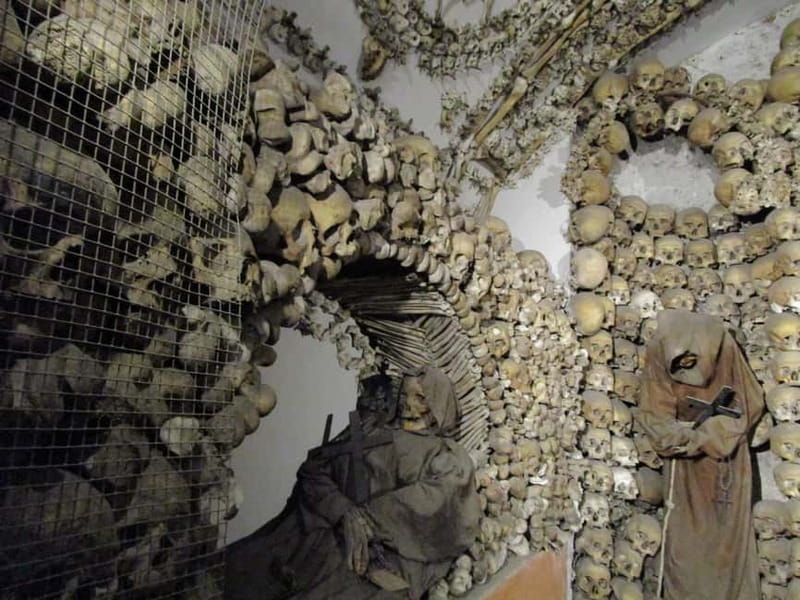
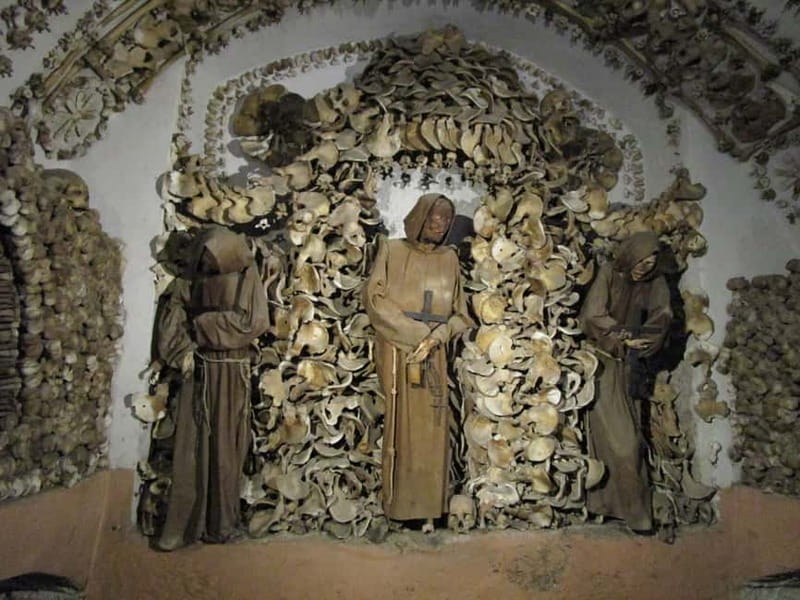
Rome’s Capuchin Crypt is one of Rome’s strangest sights: underground rooms decorated with the bones of roughly 3,700 people. Skulls form patterns, thigh bones line the walls, and a famous hourglass adds a reminder that this place is about death, faith, and the passing of time.
I like the small groups of no more than 10 people, which make it easier to hear the guide in the tight rooms. I also like the way the tour connects the bones to Capuchin beliefs and the history of the friary, instead of treating the crypt as a simple horror show. The main drawback is clear: this is a short, macabre visit, and it will not suit anyone who feels uneasy around human remains.
In This Review
- Key points to know before you go
- Why the Capuchin Crypt feels different from Rome’s grand sights
- Meeting at Via Vittorio Veneto 27
- Starting in the Capuchin Museum
- The Crypt of the Three Skeletons
- Leg bones, thigh bones, and the Crypt of Pelvises
- The Crypt of the Skulls and its hourglass
- The Crypt of the Resurrection and Mass Chapel
- Is $44.41 good value for one hour?
- Dress carefully for the crypt
- Who will enjoy this tour most?
- How the guide changes the experience
- Should you book the Capuchin Crypt tour?
- FAQ
- How long does the Capuchin Crypt tour last?
- Where do I meet the guide?
- What does the ticket include?
- How large is the tour group?
- What should I wear to enter the crypt?
- Can I cancel or pay later?
Key points to know before you go
- The bones belong to about 3,700 individuals, mostly Capuchin friars collected over centuries.
- The Crypt of the Three Skeletons contains the only complete human skeleton displayed in its natural state.
- The guided visit lasts 50 minutes to one hour, with English-language commentary.
- Small groups have a maximum of 10 participants, and private groups are also available.
- The Capuchin Museum comes first, giving the crypt a historical and spiritual setting.
- Your knees and shoulders must be covered to enter.
Why the Capuchin Crypt feels different from Rome’s grand sights
Rome is full of marble churches, imperial ruins, and painted ceilings. The Capuchin Crypt offers something far more direct. Its decoration is made from the physical remains of people who once lived, prayed, and belonged to the Capuchin order.
That makes the visit memorable, but the tone matters. You are not walking through a haunted attraction. The crypt was created as an underground cemetery and place of reflection. The bone designs were made within a religious setting, where death was treated as part of human life rather than hidden away.
The arrangement is both artistic and unsettling. Skulls, pelvises, leg bones, and vertebrae become patterns, borders, and symbols. Your guide helps explain what you are seeing, which is important because the rooms can otherwise look like a series of grim displays without a clear thread.
The best guides bring a light touch without making fun of the dead. Several guides praised in the experience include Luigi and Slobodan, both noted for combining humor, clear explanations, and strong subject knowledge. Your guide may be someone else, but the format gives you a live English speaker who can answer questions and explain the symbols as you go.
More catacomb and crypt visits from Rome:
- Rome: Crypts and Catacombs Underground Tour with Transfers
★ 4.6 · 5,341 reviews - The Original Roman Crypts and Catacombs Tour with Transfers
★ 4.5 · 4,896 reviews - Rome: Catacombs of St. Callixtus Entry Ticket & Guided Tour
★ 4.6 · 3,037 reviews
Meeting at Via Vittorio Veneto 27
The meeting point is at Via Vittorio Veneto 27, at street level beside the bronze gate. Take a moment to find the exact gate before your start time, since the activity begins there and not inside the crypt itself.
This location is useful if you are already visiting central Rome. The crypt is near the top end of Via Veneto, a famous street with hotels, restaurants, and historic associations. The tour itself does not include transportation, so you need to make your own way to the meeting point.
Once the group is together, the guide leads you into the Capuchin Museum and then through the underground rooms. The whole visit lasts about 50 minutes to one hour. That makes it easy to fit between other Rome plans, though I would avoid placing it too close to a timed visit on the other side of town.
Starting in the Capuchin Museum
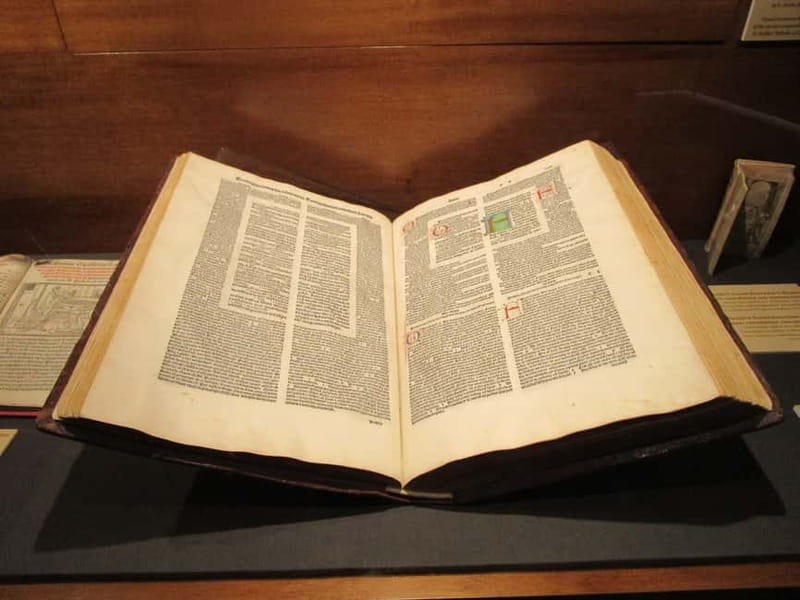
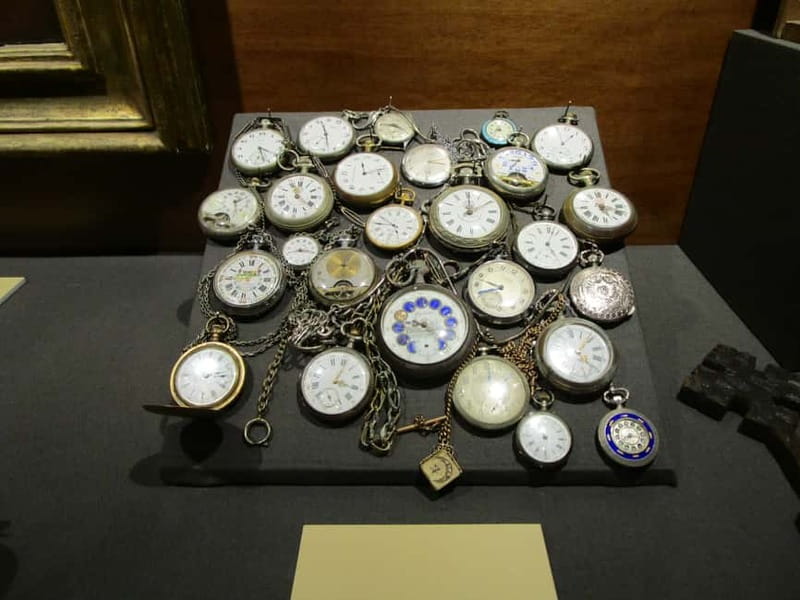
The museum provides the context that makes the crypt more meaningful. Rather than sending you straight into rooms covered in bones, the visit begins with an introduction to the Capuchin friars and the role of the site.
This opening matters because the crypt’s decoration follows a religious idea: human life is temporary, while faith continues beyond the grave. The bones are arranged to encourage reflection, not simply to shock you.
The museum also helps explain how the underground cemetery came to be. The Capuchins once had a friary near the Trevi Fountain, but their rules did not allow burials inside churches. When the friars moved to this location, the bones from the old friary were transferred underground.
The arrangement developed from that burial practice. The remains were not placed in a random pile. They were set into carefully planned displays, creating the unusual rooms you see today.
You can return to the museum after the guided portion ends. That is a useful feature if you want to look again at an object or absorb the information at your own pace. The guided tour is brief, so a second pass helps if you prefer to read slowly.
The Crypt of the Three Skeletons
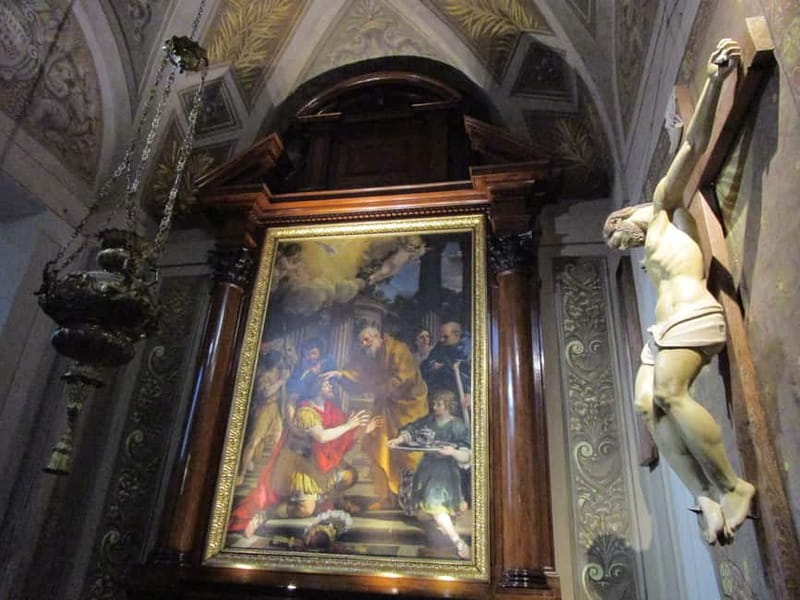
The first major underground room is the Crypt of the Three Skeletons. It is the only area where a complete human skeleton is displayed in its natural form.
That detail gives the room a different feel from the others. In later chambers, bones become visual patterns and architectural decoration. Here, the full skeleton makes the human connection immediate.
Your guide can help place the display within the larger message of the crypt. The room is not presented as a medical exhibit. It asks you to consider the body as temporary and the soul as lasting, ideas that shaped Capuchin religious practice.
This is also the point where you can decide how comfortable you are with the experience. The crypt is not presented as a scare attraction, but the material is real. If you prefer lighter sightseeing, this may be the moment to reconsider the rest of the visit.
More Rome tours worth comparing
- Vatican Museums & Sistine Chapel Skip-the-Line Entry Ticket
★ 4.4 · 13,838 reviews - Skip-the-Line Group Tour of the Vatican, Sistine Chapel & St. Peter’s Basilica
★ 4.5 · 12,779 reviews - Rome: Vatican Museums & Sistine Chapel Skip-The-Line Ticket
★ 4.2 · 11,708 reviews - Vatican, Sistine Chapel & St. Peter’s Skip-the-Line Tour
★ 4.5 · 7,770 reviews
Leg bones, thigh bones, and the Crypt of Pelvises
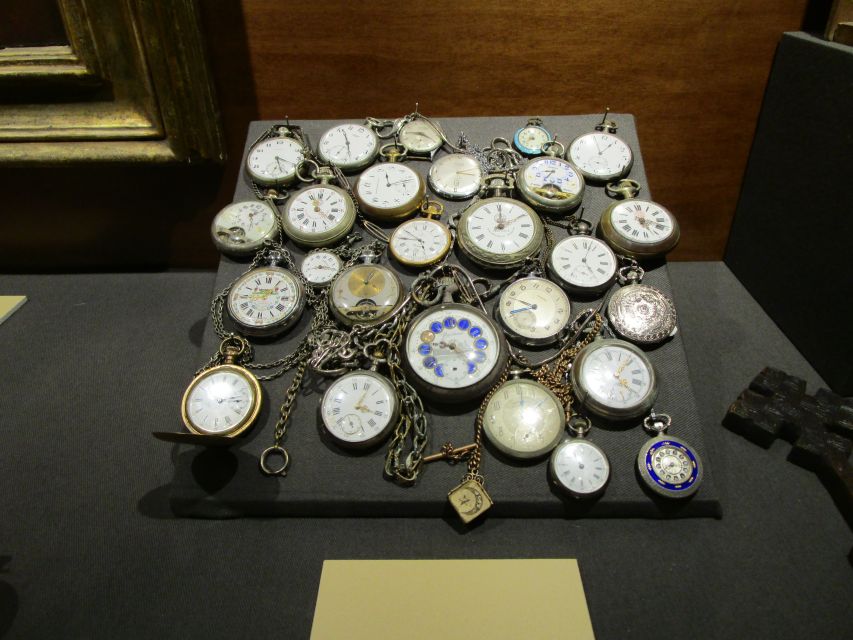
The next rooms use long bones in striking patterns. The Crypt of the Leg Bones and Thigh Bones shows how ordinary parts of the human body can become borders, frames, and repeated designs.
It is hard to understand the arrangement from a quick glance. A guide adds the missing layer by pointing out symbols and explaining the religious meaning behind the patterns. That is one reason I think the guided option is worth considering instead of simply visiting on your own.
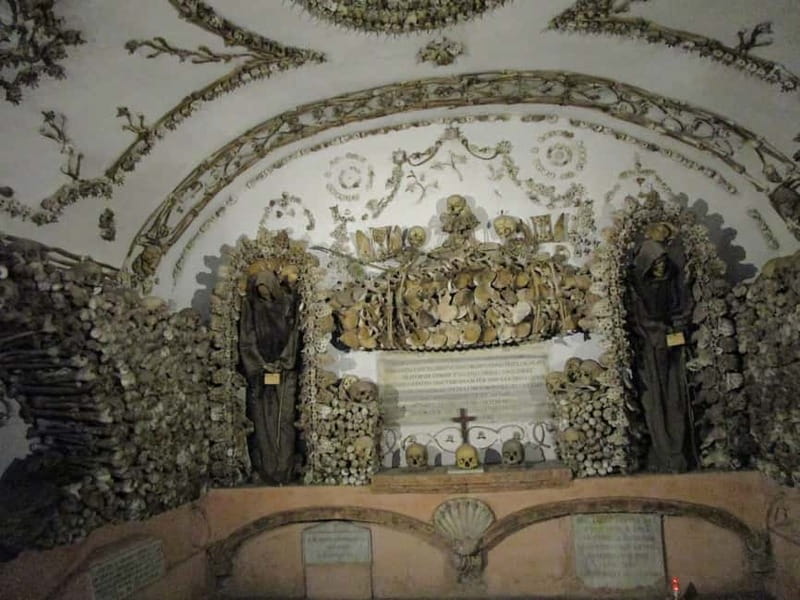
The Crypt of Pelvises has a particularly distinctive feature. Two Capuchin friars are positioned peacefully within an arched formation, creating a display that is both carefully arranged and deeply personal.
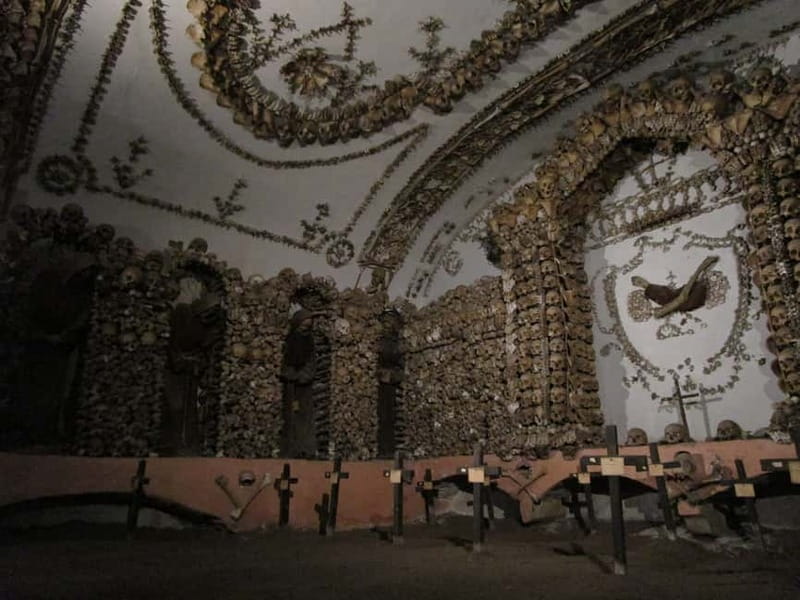
Crosses on the floor mark the resting places of seven Capuchins. Look down as well as up. The walls attract most of the attention, but these floor markings remind you that the crypt is still a burial place, not only a work of bone decoration.
The rooms are compact, so a group of 10 is a sensible limit. With a larger crowd, it would be harder to hear the guide or see the details without people pressing close together.
The Crypt of the Skulls and its hourglass
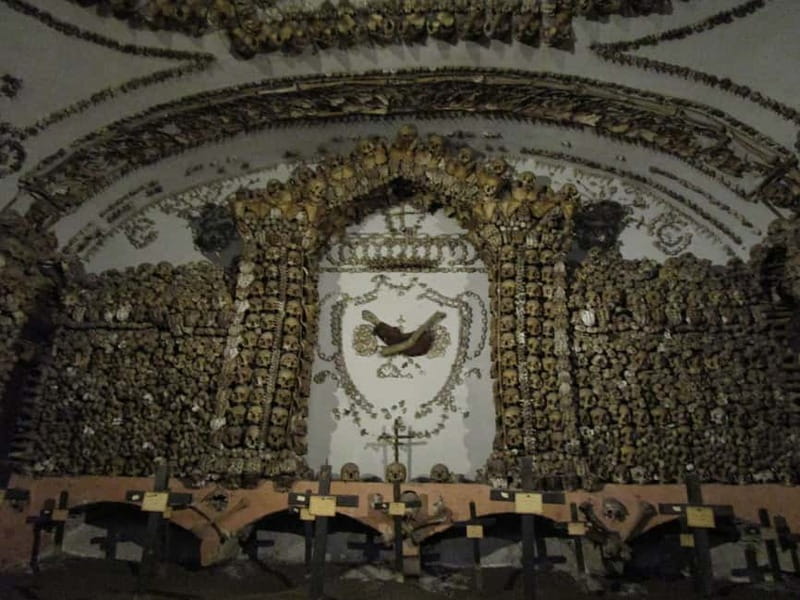
The Crypt of the Skulls is likely to be the room you remember most clearly. Skulls are arranged across the space in repeated patterns, creating a visual effect that is at once orderly and unnerving.
The famous hourglass reinforces the crypt’s central theme. It is a simple symbol, but it works well here: time passes, the body changes, and no life lasts forever.
This is where a good guide earns the ticket price. Without explanation, you might focus only on the unusual appearance. With a careful introduction to the symbols, the room becomes a lesson in Capuchin spirituality and the European tradition of using reminders of death to encourage humble living.
The tone of the tour can vary with the guide. The strongest presentations use gentle humor to make a difficult subject easier to approach, then return to the serious meaning of the space. That balance has been especially helpful for families and teenagers who might otherwise find the crypt too grim.
The Crypt of the Resurrection and Mass Chapel
The Crypt of the Resurrection continues the theme of death and faith. Its imagery brings the visit beyond the physical remains and toward the Capuchin belief in resurrection.
The Mass Chapel provides a quieter religious setting within the complex. It helps you see the crypt as part of worship and remembrance, not an isolated collection of bones arranged for public curiosity.
You may find the contrast between the rooms useful. The skulls and bones are visually forceful, while the chapel gives the experience a more reflective finish. Together, they explain why the site feels more serious than sensational.
The visit ends back at the Capuchin Crypt and meeting point. Since you can go through the museum again after the tour, you are not forced to absorb every detail during the guide’s one-hour route.
Is $44.41 good value for one hour?
At $44.41 per person, this is not a cheap quick stop. The price includes the Capuchin Crypt entry ticket, skip-the-line access, and an English-speaking guide. It does not include transportation, meals, or a longer walking tour of Rome.
The value depends on what you want from the visit. If you only want to glance at the bone-lined rooms, the price may feel high for less than an hour. If you want the history, symbolism, and Capuchin background explained clearly, the guide adds real value.
Skip-the-line entry also matters in Rome, where queues can eat into a carefully planned day. The exact time saved can vary, but bypassing the ticket line removes one uncertainty from a short activity.
The small group is another reason the cost can make sense. A group capped at 10 gives you a better chance to hear the guide and ask questions than a large crowd. Private groups are also available if you want a more personal format, though the supplied price is listed per person and may not apply to every private option.
Free cancellation up to 24 hours ahead and the reserve-now, pay-later option make the booking less rigid. Those terms are useful when you are arranging several timed sights in Rome, but check the conditions shown for your chosen time before booking.
Dress carefully for the crypt
You must cover your shoulders and knees to enter. This rule applies to everyone, so plan your clothing before leaving for the meeting point.
Do not assume that a warm Roman day changes the requirement. If your outfit leaves your knees or shoulders uncovered, bring a cover-up. One family even received help with a cover-up for a child’s legs, but it is smarter to arrive prepared rather than depend on supplies being available.
The crypt is a religious site, and modest dress is part of showing respect. It also prevents an avoidable problem at the door.
Who will enjoy this tour most?
I would recommend this experience to you if you enjoy unusual museums, religious art, and the less polished side of Rome. It is especially useful for anyone who wants to understand the meaning behind the bone displays rather than simply take in their appearance.
Families with older children and teenagers may find it surprisingly engaging. The unusual subject holds attention, while a lively guide can keep the presentation accessible. The visit is short enough that it does not demand a full morning of concentration.
It also suits repeat visitors to Rome who have already seen the Colosseum, Vatican Museums, and Trevi Fountain. The Capuchin Crypt presents a different part of the city’s religious culture and gives you a memorable break from grand monuments.
I would be cautious about booking it for very young children or anyone sensitive to human remains. The site is not described as a horror attraction, but the bones are genuine and appear throughout the rooms. You should also avoid it if covered shoulders and knees will be difficult for you.
How the guide changes the experience
The crypt is a place where explanation matters. Information boards can identify rooms, but they cannot easily explain why the bones were moved from the old friary near the Trevi Fountain or why the Capuchins created an underground cemetery.
A strong guide also points out details you might miss, such as the crosses marking seven Capuchin burials or the meaning of the hourglass. The tour’s short length makes a focused presentation important.
The best approach is to listen closely at each stop, then use the chance to ask questions. Guides such as Luigi and Slobodan have been singled out for energy, humor, and clear explanations, while other praised guides have been described as passionate and welcoming.
The format is English only. If you need another language, this particular activity does not list one.
Should you book the Capuchin Crypt tour?
Book it if you want an unusual, thoughtful stop in Rome and you are comfortable seeing real human bones. The combination of museum context, skip-the-line admission, and a small English-speaking group makes the experience more useful than a quick unguided look.
The strongest reasons to go are the rare subject matter, the clear religious meaning behind the displays, and the chance to see several distinct rooms in one compact visit. I also like that you can return to the museum after the guided portion ends.
Skip it if your Rome schedule is already packed with major sights or if the macabre subject will make you uncomfortable. At $44.41, the tour earns its price when you value interpretation and a smooth entry, not when you only want a fast photograph-free glance at an unusual room.
FAQ
How long does the Capuchin Crypt tour last?
The activity lasts approximately 50 minutes to one hour. Check availability for the starting times offered on your chosen date.
Where do I meet the guide?
Meet at Via Vittorio Veneto 27, at street level beside the bronze gate. The activity ends back at the Capuchin Crypt and meeting point.
What does the ticket include?
The price includes an English-speaking guide and entry to the Capuchin Crypt. Skip-the-line access is also included.
How large is the tour group?
The small-group option has a maximum of 10 participants. Private groups are also available.
What should I wear to enter the crypt?
Your shoulders and knees must be covered. Bring suitable clothing or cover-ups so you meet the entry requirement.
Can I cancel or pay later?
You can cancel up to 24 hours in advance for a full refund. The reserve-now, pay-later option lets you book without paying immediately.
Newest reviews from Rome
- Rome: Vatican Museums & Sistine Chapel Skip-the-Line Ticket★ 4.4 · 148 reviews
- Shared Shuttle Transfer from Rome to Civitavecchia Port★ 5.0 · 148 reviews
- Skip the Line: Vatican and Sistine Chapel with Guided Tour★ 4.0 · 149 reviews
- Rome: Crypts & Catacombs After Hours Tour with Bone Chapel★ 4.6 · 149 reviews
- Ghosts Legends and Mysteries of Rome Walking Tour★ 5.0 · 149 reviews
- Tivoli: Villa Gregoriana Entrance Ticket★ 4.7 · 150 reviews
- Pizza and Tiramisu Cooking Class in Rome, Piazza Navona★ 5.0 · 150 reviews
- Rome: Borghese Gallery Skip-the-Line Entry and Guided Tour★ 4.7 · 150 reviews
Catacombs & Crypts, compared.

Crypts and Catacombs Underground Tour with Transfers
Read our review →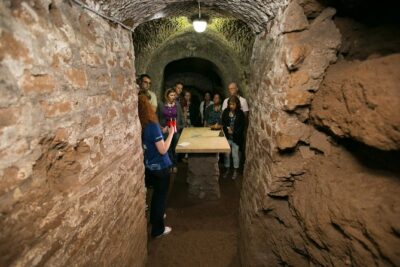
The Original Roman Crypts and Catacombs Tour with Transfers
Read our review →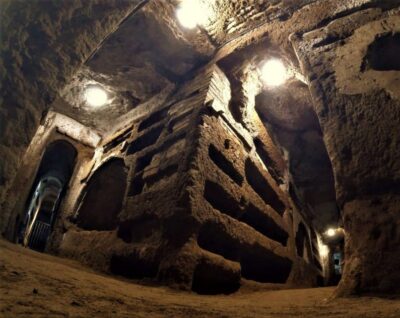
Catacombs of St. Callixtus Entry Ticket & Guided Tour
Read our review →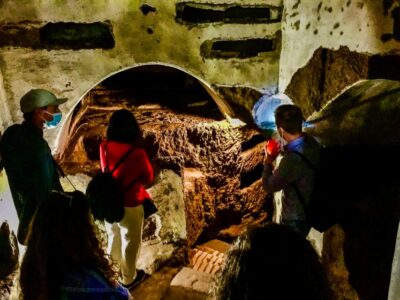


Rome EBike Tour: Appian Way, Catacombs & Roman Aqueducts
Read our review →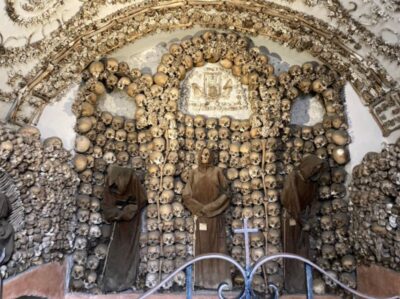
Catacombs and Capuchin Crypt Guided Tour with Transfer
Read our review →
St. Peter’s Basilica Priority Access Tour with Dome & Crypt
Read our review →Browse the lists this tour appears in