
Reviewed · CATACOMBS & CRYPTS
Rome: Catacombs of Priscilla Entry Ticket & Guided Tour
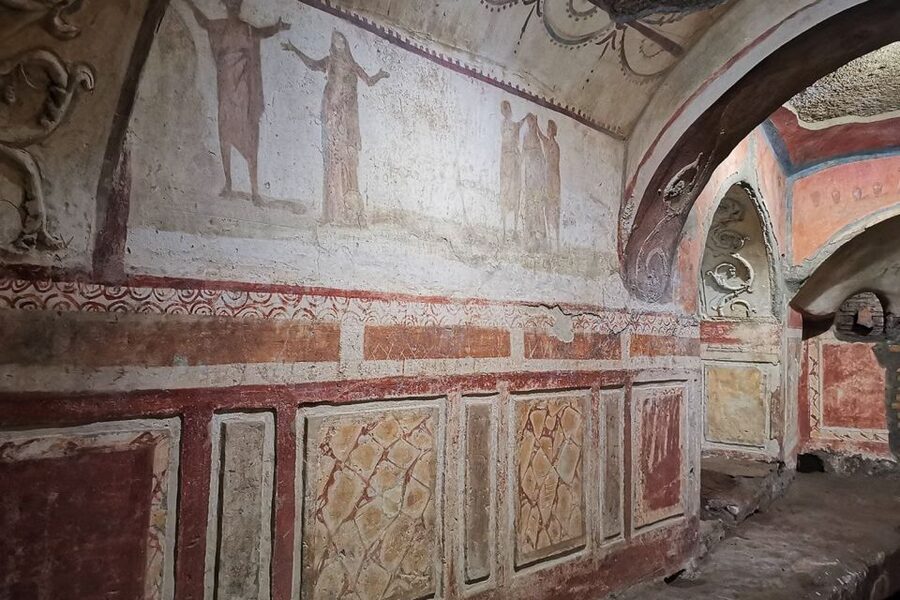
Rome’s Catacombs of Priscilla offer something the Colosseum and Trevi Fountain cannot: a close look at how early Christians buried their dead, honored their martyrs, and expressed their faith underground. You walk through narrow galleries cut beneath Via Salaria, with ancient paintings and burial niches still visible in the dim spaces.
I like the small groups of up to 10, which make it easier to hear the guide and see the artwork. I also like the guide-led context. Guides such as Sister Lydia, Alexandra, and Clara have been praised for explaining both the archaeology and the religious meaning of the site. The main drawback is the short 45-minute visit, and the catacombs are not suitable for people with mobility impairments.
In This Review
- Key points to know before you go
- Why the Catacombs of Priscilla feel different from central Rome
- What you see during the 45-minute visit
- The Greek Chapel and the Acili burial area
- Martyrs, popes, and the people buried here
- The guide makes the underground visit worthwhile
- Is $16 a fair price?
- Getting to Via Salaria and arriving on time
- Practical limits inside the catacombs
- Who should book this tour?
- Should you book the Catacombs of Priscilla?
- FAQ
- How long is the Catacombs of Priscilla tour?
- How much does the tour cost?
- What does the ticket include?
- Which languages are available?
- How large is the tour group?
- Where do I meet the guide?
- Is transportation included?
- Can I take photographs inside?
- Is the tour suitable for people with mobility impairments?
Key points to know before you go
- Ancient Christian art: See paintings dating from roughly the third century, including an early image of Mary with the infant Jesus.
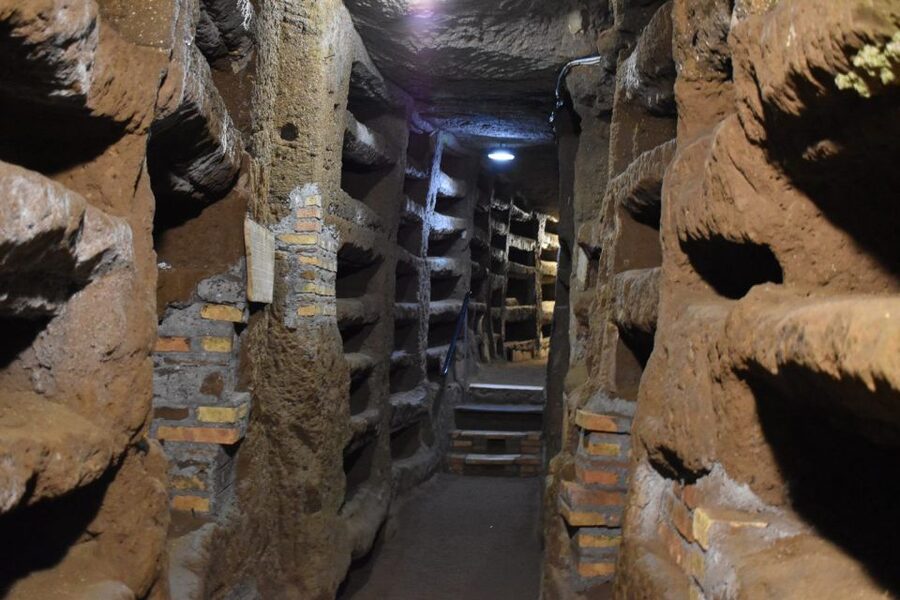
- Two underground levels: The catacombs include irregular galleries, tomb niches, a cryptoporticus, and the Greek Chapel.
- A serious historic site: This is a burial and commemorative space, not a theatrical attraction built for tourists.
- Small guided groups: Tours are limited to 10 people, useful in tight corridors where every bit of space matters.
- A cool break from Rome’s heat: The underground setting provides a welcome change from hot summer streets.
- Plan your arrival: Go directly to the catacomb ticket office and show your reservation at least 10 minutes before departure.
Why the Catacombs of Priscilla feel different from central Rome
Rome usually presents its past in broad, grand strokes: imperial arches, marble temples, huge basilicas, and crowded piazzas. Priscilla works on a smaller scale. Its passageways are uneven, its rooms are underground, and the evidence is personal: a carved name, a painted symbol, or a wall lined with small burial niches.
The site began as an arenarium, a place where sand was extracted. After it was abandoned, Christians adapted the large, irregular galleries for burial in the early third century. They created about 20 niche tombs and cut hundreds of additional niches into the walls.
That beginning matters. You are not entering a single purpose-built cemetery with a neat plan. You are walking through a space that changed over time, as the Christian community used and expanded old underground corridors.
The catacombs probably take their name from Priscilla, a woman connected with the Acili senatorial family. Her name appears in an inscription in the hypogeum of the Acili, a separate underground burial area linked to the wider complex.
For me, this is the chief appeal. The site connects everyday burial customs, Roman social class, early Christian belief, and later archaeological work in one compact visit.
More catacomb and crypt visits from Rome:
- Rome: Crypts and Catacombs Underground Tour with Transfers
★ 4.6 · 5,341 reviews - The Original Roman Crypts and Catacombs Tour with Transfers
★ 4.5 · 4,896 reviews - Rome: Catacombs of St. Callixtus Entry Ticket & Guided Tour
★ 4.6 · 3,037 reviews
What you see during the 45-minute visit
The tour takes you through the underground sections with a live guide in English, Italian, or Spanish. The exact order and amount of time spent at each point can vary, but you can expect the guide to explain the galleries, burial practices, paintings, and important people connected with the catacombs.
The first floor contains the main network of galleries. Hundreds of wall niches once held the dead. Some were simple openings, while others were more carefully marked. The guide helps you read these spaces, since the low light and repeated corridors can make it hard to understand what you are seeing on your own.
This is not a grand underground hall. At times, the passageways are narrow and the group may need to pause so everyone can see the area being discussed. One guide was praised for guiding the group through the twists and turns while making sure nobody got lost. That is a useful part of the experience, not a minor detail.
You also learn about the cryptoporticus, an underground passage or sheltered gallery connected to a large subterranean room. The complex includes the Greek Chapel, a decorated area with some of the most important early Christian paintings at Priscilla.
The paintings are the visual reward of the visit. They survived for centuries in a protected underground setting, and some date from around 240 to 280 AD. You might find the art more moving than visually dramatic. The images are not large fresco cycles in bright color. They are early, sometimes simple works that reveal how Christian ideas were taking shape.
One image receives special attention: an early depiction of the Virgin Mary and the infant Jesus. Several guides highlight it as one of the oldest known images of Mary and Jesus. The painting gives the tour a powerful human focus, especially if you are interested in the development of Christian art.
The Greek Chapel and the Acili burial area
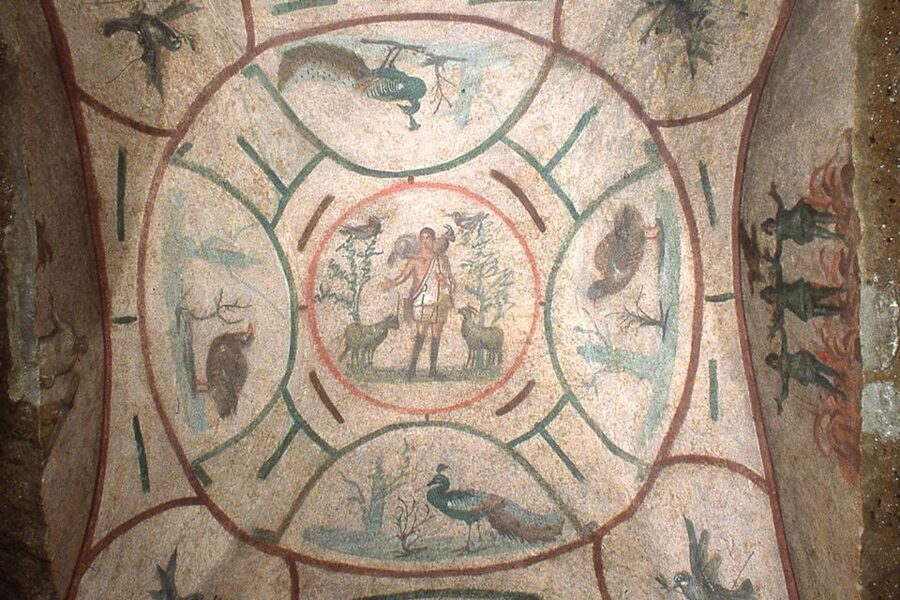
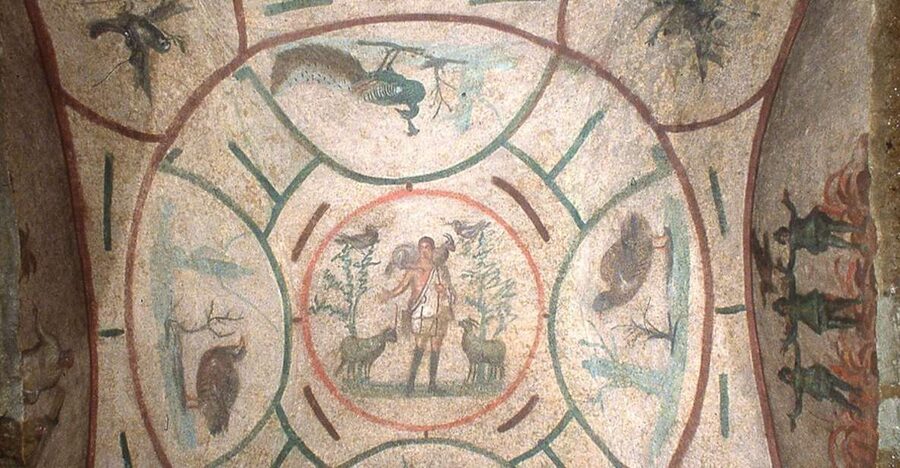
The Greek Chapel is one of the most notable spaces in the complex. Its name points to the Greek inscriptions and early Christian setting, while its paintings provide a glimpse of the beliefs and symbols used by the community.
Your guide is especially important here. Without explanation, the paintings can be easy to overlook in the dark. With context, you can begin to understand why certain figures and scenes mattered, and how early Christian art used visual shorthand to express faith.
Nearby is the hypogeum of the Acili, which began as a water cistern and later became a burial area for a noble family. Inscriptions connected with the Acili were found there and are now exhibited. This part of the site adds a social dimension to the visit. The catacombs were not only a place for anonymous burials. They also preserve evidence of families and people with status in Roman society.
The combination of ordinary galleries and a more elite burial area helps you see that the catacombs were not one uniform space. They grew through different uses and connections over many years.
You should also keep your expectations in check. This is a preserved archaeological site, not a fully restored underground city. One useful comment from an experienced visitor was that there was not a major wow effect and not a huge number of objects to see. That is fair. The appeal comes from the meaning, age, and setting of what remains, rather than from spectacle.
Martyrs, popes, and the people buried here
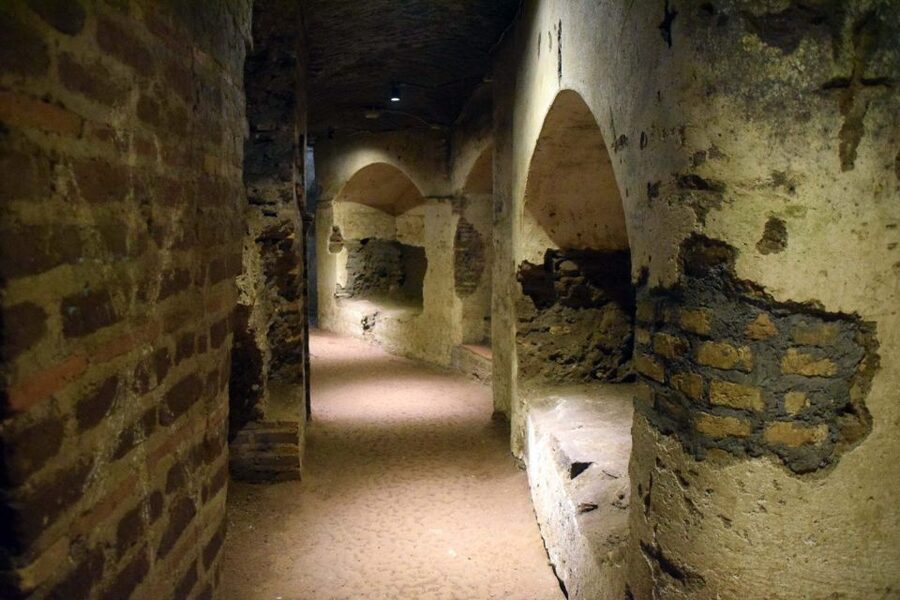
The guide also connects Priscilla with early Christian martyrs. Among those associated with the catacombs are Felice and Filippo, who were martyred, probably during the rule of Diocletian, along with their mother, Saint Felicita, and their brothers Alessandro, Marziale, Vitale, Silano, and Gennaro.
The site was also used for papal burials. Popes associated with Priscilla include Marcellino, Marcello, Silvestro, Liberius, Siricius, Celestine, and Vigilius. Their presence gives the catacombs an important role in the history of early Christian Rome.
A nearby basilica inside Villa Ada was built by Pope Saint Silvestro in connection with the tomb of Felice and Filippo. There is also a museum in the area with hundreds of sarcophagus fragments found during excavations around the catacomb.
You should ask at the ticket office or with the guide what is included in your particular visit. The core activity described here is the 45-minute guided entry to the Catacombs of Priscilla. The basilica and museum are part of the broader historic setting, but they should not automatically be treated as included stops.
More Rome tours worth comparing
- Vatican: Museums & Sistine Chapel Entrance Ticket
★ 4.5 · 144,003 reviews - Rome:Hop-On Hop-Off Panoramic Open Bus Ticket 3 Circuits x 1
★ 4.0 · 15,405 reviews - Vatican Museums & Sistine Chapel Skip-the-Line Entry Ticket
★ 4.4 · 13,838 reviews - Rome: Vatican Museums & Sistine Chapel Skip-The-Line Ticket
★ 4.2 · 11,708 reviews
The guide makes the underground visit worthwhile
A catacomb is not the sort of place where an audio guide or a quick sign can do the full job. The galleries repeat themselves, the paintings need interpretation, and the historical names can blur together.
The strongest part of this experience is the guide’s ability to turn the underground rooms into a story. Sister Lydia has been singled out for combining archaeology and faith with kindness and humor. Alexandra has been praised for explaining the site clearly and with real interest in its importance. Clara has been noted for answering questions and adding extra time to the visit.
Those details point to what you should expect from a good tour here: not just dates, but explanations of how the catacombs were made, who used them, and why the artwork matters.
The official tour languages are English, Italian, and Spanish. English delivery can vary by guide. One visitor felt the English could have been clearer, while other experiences describe guides who explained the material very well and welcomed questions. If exact wording matters to you, listen closely at the beginning and ask questions when the guide pauses.
The group limit of 10 is a real advantage. In cramped corridors, a large group can block the view and make it hard to hear. A small group gives you more room to look at the paintings and ask about details. It does not make the corridors wide, but it makes the visit more manageable.
Is $16 a fair price?
At $16 per person, this is one of the less expensive guided history activities in Rome. The price includes the entrance ticket and the guided tour, but not transport to Via Salaria.
The value depends on what you want. If you are looking for a long, elaborate attraction with many rooms and objects, 45 minutes may feel brief. One person wished the visit lasted longer, while another found the short duration ideal for an underground space.
I think the price works well if you care about early Christian history, Roman burial customs, or ancient art. You are paying for access to a protected archaeological site and for a guide who provides the explanation needed to understand it. At the cost of a casual meal or a small museum ticket, it adds a very different kind of experience to a Rome itinerary.
The tour can also be a practical choice in summer. The catacombs are cool underground, making them a welcome pause after walking through hot streets. Take a light top even in warm weather, since the temperature below ground can feel noticeably cooler.
Getting to Via Salaria and arriving on time
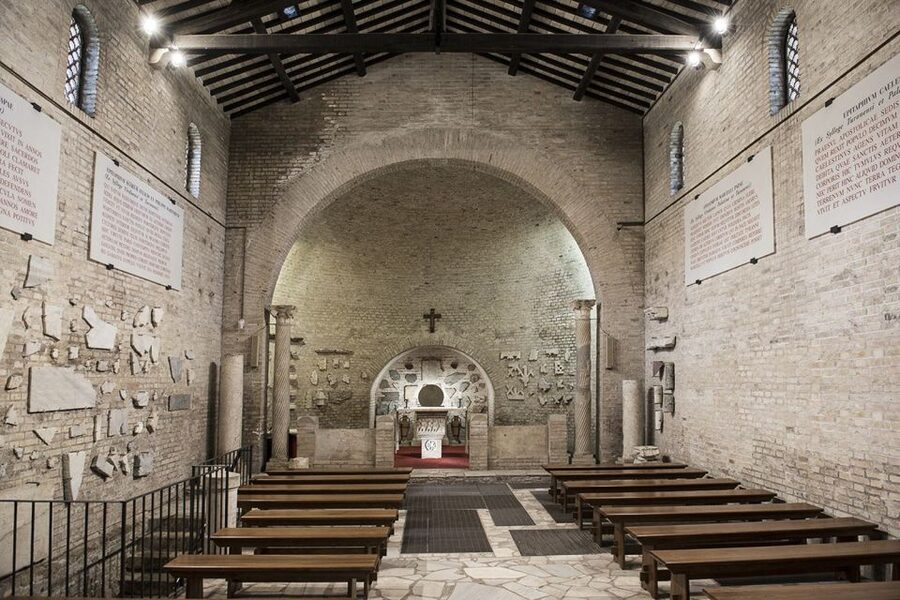
The catacombs are on Via Salaria, outside the densest cluster of ancient Rome sights. You should not treat this as a quick stop between the Trevi Fountain and the Pantheon without checking your route and timing.
Public transport can make the journey affordable. A bus serves the area, and the stop is within walking distance of the catacombs. Signage near the site may not be as clear as you would like, so leave enough time to find the entrance.
Go directly to the ticket office and show your reservation at least 10 minutes before the scheduled tour. Hotel pickup and drop-off are not included, and transportation is your responsibility.
The booking terms allow free cancellation up to 24 hours before the start time for a full refund. Starting times vary, so check availability when choosing your date.
Practical limits inside the catacombs
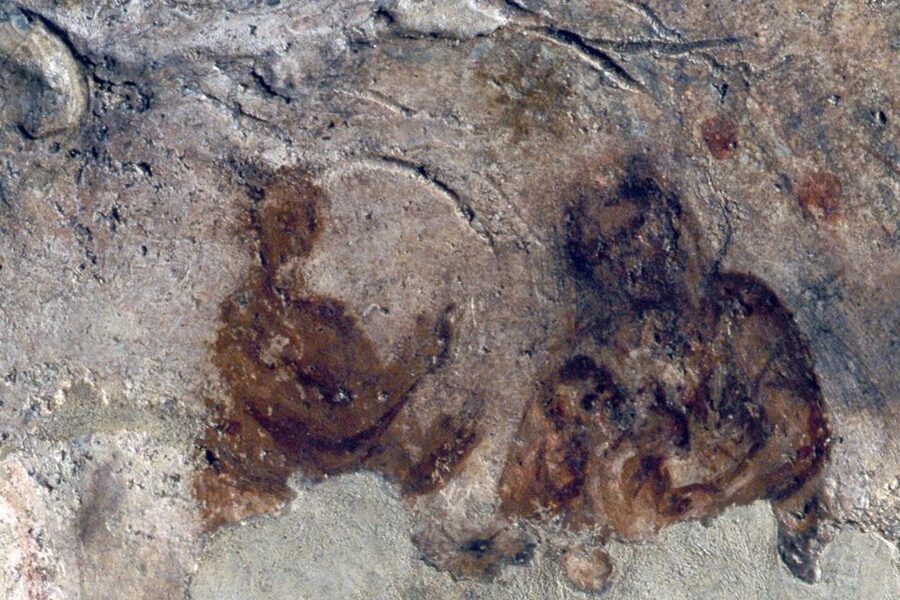
Photography is not allowed inside. That can be disappointing, especially when you see the ancient paintings and want a personal record. You can buy postcard prints of the artwork at a low cost, which gives you a way to remember the images without using your phone in the galleries.
Baby strollers are not allowed. The tour is also listed as unsuitable for people with mobility impairments. Narrow passages, underground levels, and the nature of the site make this a poor choice if stairs, uneven surfaces, or confined spaces are difficult for you.
The catacombs are not presented as a place of preserved bodies. The tombs are empty, and the remains were moved. If you expect to see intact burials, you may be surprised. The interest lies in the burial spaces, inscriptions, art, and evidence of early Christian practice.
Keep the tone of the visit in mind. This is a cemetery and a religious site. The experience is quiet and reflective, not a spooky attraction. The best approach is to give the guide your attention and allow the place to remain serious.
Who should book this tour?
I would choose this tour for anyone who has already seen Rome’s headline monuments and wants a different side of the city. It works especially well for people interested in:
- Early Christian art and worship
- Roman burial customs
- Archaeology and inscriptions
- The history of Christian martyrs and popes
- A quiet, cooler activity away from busy streets
- A short cultural visit that fits into a larger day
Families with older children and teenagers can enjoy it if they are curious about history. Teenagers aged 15 and 18 have found the visit interesting, but younger children may not have the patience for a quiet guided explanation in dark corridors.
I would not book it if your main goal is grand architecture, dramatic ruins, or a large museum collection. Compared with the Colosseum or Vatican Museums, Priscilla is restrained. Its rewards are subtle: the age of a painting, the shape of a burial niche, and the realization that a community used these galleries nearly 1,800 years ago.
Should you book the Catacombs of Priscilla?
Book it if you want a focused, affordable look at early Christian Rome and you are comfortable walking through narrow underground spaces. The guides are the heart of the experience, and the small group size helps you see and hear what matters.
Skip it if you have mobility concerns, dislike enclosed spaces, or want a long attraction packed with major sights. For everyone else, the Catacombs of Priscilla offer a thoughtful 45-minute visit, especially after you have seen the standard ancient monuments. It is not a showy stop, but it gives Rome a more personal face.
FAQ
How long is the Catacombs of Priscilla tour?
The tour lasts 45 minutes. Some visits may run a little longer if the guide answers questions or adds extra explanation.
How much does the tour cost?
The listed price is $16 per person.
What does the ticket include?
The price includes entry to the Catacombs of Priscilla and a guided tour.
Which languages are available?
Live tours are offered in Italian, English, and Spanish.
How large is the tour group?
The group is limited to 10 participants.
Where do I meet the guide?
Go directly to the ticket office at the Catacombs of Priscilla on Via Salaria. Show your reservation at least 10 minutes before the scheduled start.
Is transportation included?
No. Hotel pickup, hotel drop-off, and transportation to the catacombs are not included.
Can I take photographs inside?
No. Photography is not allowed inside the catacombs. Postcard prints of the artwork may be available for purchase.
Is the tour suitable for people with mobility impairments?
No. The experience is listed as unsuitable for people with mobility impairments. Baby strollers are also not allowed.
Newest reviews from Rome
- Rome: Vatican Museums & Sistine Chapel Skip-the-Line Ticket★ 4.4 · 148 reviews
- Shared Shuttle Transfer from Rome to Civitavecchia Port★ 5.0 · 148 reviews
- Rome: Crypts & Catacombs After Hours Tour with Bone Chapel★ 4.6 · 149 reviews
- Ghosts Legends and Mysteries of Rome Walking Tour★ 5.0 · 149 reviews
- Skip the Line: Vatican and Sistine Chapel with Guided Tour★ 4.0 · 149 reviews
- Tivoli: Villa Gregoriana Entrance Ticket★ 4.7 · 150 reviews
- Pizza and Tiramisu Cooking Class in Rome, Piazza Navona★ 5.0 · 150 reviews
- Rome: Borghese Gallery Skip-the-Line Entry and Guided Tour★ 4.7 · 150 reviews
Catacombs & Crypts, compared.

Crypts and Catacombs Underground Tour with Transfers
Read our review →
The Original Roman Crypts and Catacombs Tour with Transfers
Read our review →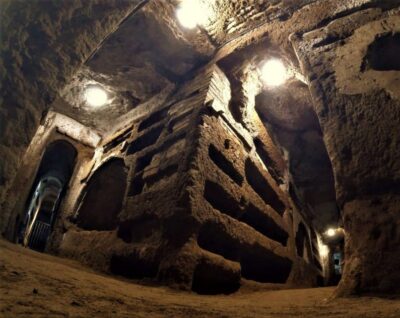
Catacombs of St. Callixtus Entry Ticket & Guided Tour
Read our review →


Rome EBike Tour: Appian Way, Catacombs & Roman Aqueducts
Read our review →
Catacombs and Capuchin Crypt Guided Tour with Transfer
Read our review →
St. Peter’s Basilica Priority Access Tour with Dome & Crypt
Read our review →Browse the lists this tour appears in