
Reviewed · CATACOMBS & CRYPTS
Rome: Catacombs Skip-the-Line Tour with Tickets
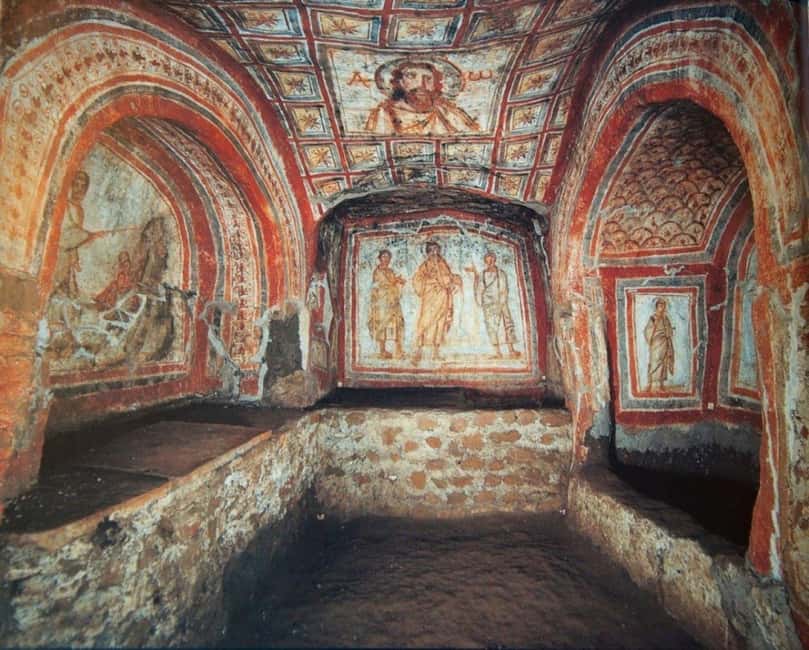
Rome’s catacombs take you below the familiar monuments and into the world of early Christian burial. At San Domitilla, you’ll walk through a small section of a tunnel network said to stretch for more than 180 miles, seeing ancient tombs, burial spaces, and some of Rome’s earliest Christian art, including the tombs associated with Nereus and Achilleus.
I like the small-group format, which gives your English-speaking guide room to explain symbols, answer questions, and keep the pace human. I also like the strong storytelling from guides such as John, Divan, Sean, Heather, and Mike, who bring humor and clear historical context to a serious subject.
The main consideration is that this is not a long underground hike, and you should not expect piles of visible bones. Some passages are narrow and the setting may feel uncomfortable if you dislike enclosed spaces. Add sturdy shoes, a jacket, and a strong command of English, since photography is not allowed and the tour depends on spoken explanation.
In This Review
- Key points to know before booking
- Meeting at Via delle Sette Chiese, 282
- Entering San Domitilla’s underground world
- Burial customs, tombs, and early Christian art
- From pagan Rome to Christian Rome
- Why the English guide matters
- Small groups and the value of personal attention
- Price and what you receive for $54.66
- Practical comfort and access
- Who should book this catacomb tour?
- Should you book San Domitilla?
- FAQ
- Where does the tour meet?
- Where does the tour finish?
- How long does the catacombs tour last?
- Is transportation included?
- Can I take photographs inside the catacombs?
- Is the tour suitable for wheelchair users?
Key points to know before booking
- San Domitilla is the focus: You visit one of Rome’s major catacomb sites rather than trying to cover several in a rushed outing.
- The tour lasts two hours: That gives your guide time to explain the burial customs, art, and religious changes behind the tunnels.
- Tickets are included: You skip the ticket line, though you still need to arrive at the correct meeting point.
- Guides make the difference: John, Divan, Sean, Heather, and Mike are praised for humor, clear explanations, patience, and storytelling.
- No photography underground: You’ll need to experience the art and chambers without taking pictures.
- Bring a jacket: The underground setting can feel cool, and comfortable shoes matter on uneven walking surfaces.
Rome is often presented through emperors, fountains, churches, and grand public buildings. The Catacombs of San Domitilla show you a quieter side of the city, one shaped by family burial, religious identity, social customs, and fear of persecution.
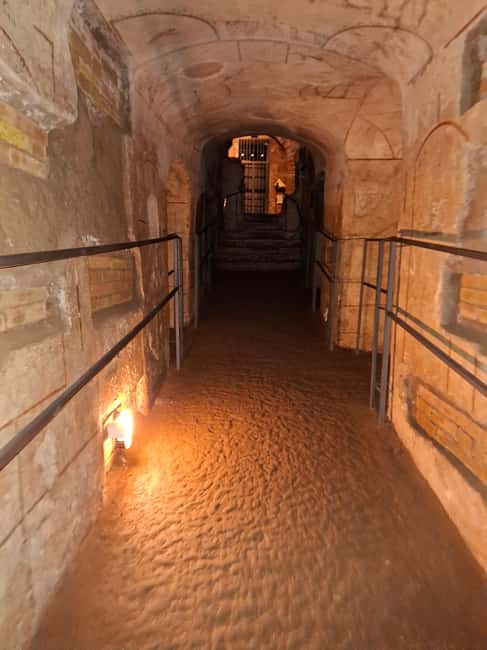
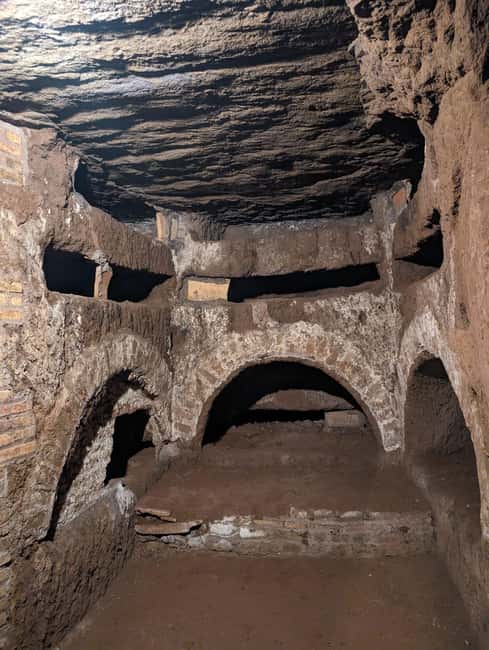
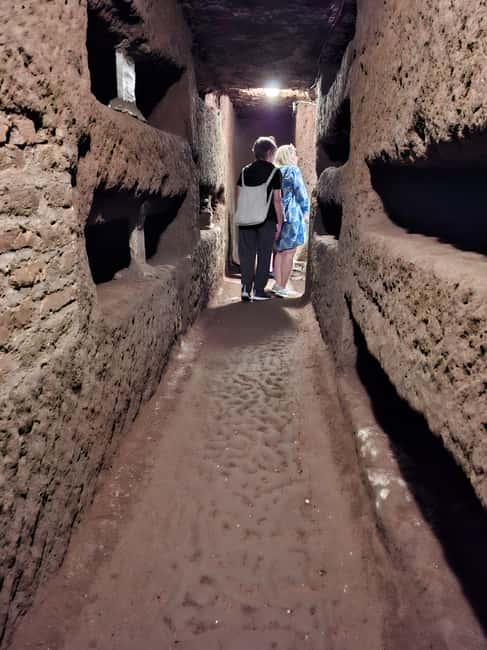
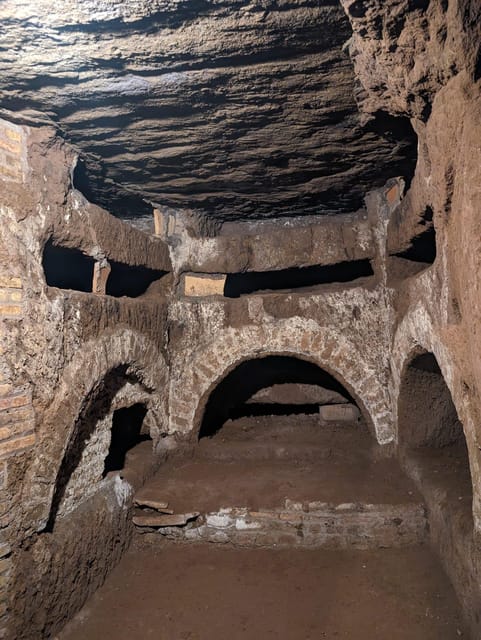
You enter a world built below ground outside the ancient city walls. These tunnels were not simply hiding places. They were burial complexes, with corridors leading to chambers and wall niches cut for the dead. Your guide uses the setting to explain how early Christian communities remembered their dead and expressed their beliefs.
The experience is especially useful if you want more than a photo stop. You’ll hear how Rome moved from a society shaped by pagan religious practice toward a Christian city, and how burial art records that change.
Meeting at Via delle Sette Chiese, 282
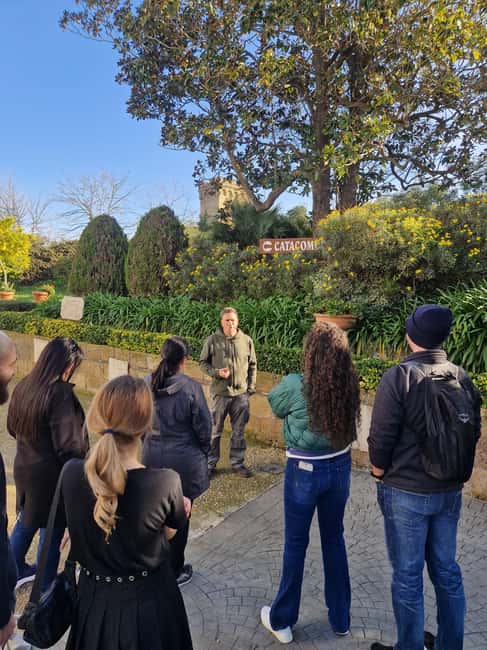
The tour begins and ends at Via delle Sette Chiese, 282. Look for the garden near the picnic tables and the white gazebo or umbrellas. That detail matters because the meeting area is not described as a grand landmark, so arrive with the address ready on your phone.
There is no transfer included. You are responsible for reaching the site, and the tour returns you to the same place after the underground visit. Plan your Rome sightseeing around that fact rather than assuming the catacombs are part of a hotel pickup or city-center walking tour.
The activity lasts two hours. Starting times vary, so check the available time when you book and leave enough room for getting to the meeting point without rushing.
More catacomb and crypt visits from Rome:
- Rome: Crypts and Catacombs Underground Tour with Transfers
★ 4.6 · 5,341 reviews - The Original Roman Crypts and Catacombs Tour with Transfers
★ 4.5 · 4,896 reviews - Rome: Catacombs of St. Callixtus Entry Ticket & Guided Tour
★ 4.6 · 3,037 reviews
Entering San Domitilla’s underground world
Once inside, your guide leads you through part of the catacomb system. The full network is enormous, with more than 180 miles of tunnels associated with Rome’s underground burial sites, but this tour wisely concentrates on a manageable section of San Domitilla.
That distinction helps set expectations. You are not walking for hours through every tunnel. Instead, the guide pauses to explain what you are seeing, why the spaces were made, and how the people who used them thought about death and faith.
The shorter distance can be an advantage. One guide can give you more context instead of pushing a group through a long route with little time to stop. It also makes the experience easier to fit into a busy Rome itinerary.
You may encounter narrow passages and a strong sense of being underground. If enclosed spaces make you uneasy, tell yourself that the guide is there to set the pace and explain what comes next. A guide named Divan was especially praised for helping a nervous participant feel comfortable, while still keeping the tour focused.
Burial customs, tombs, and early Christian art
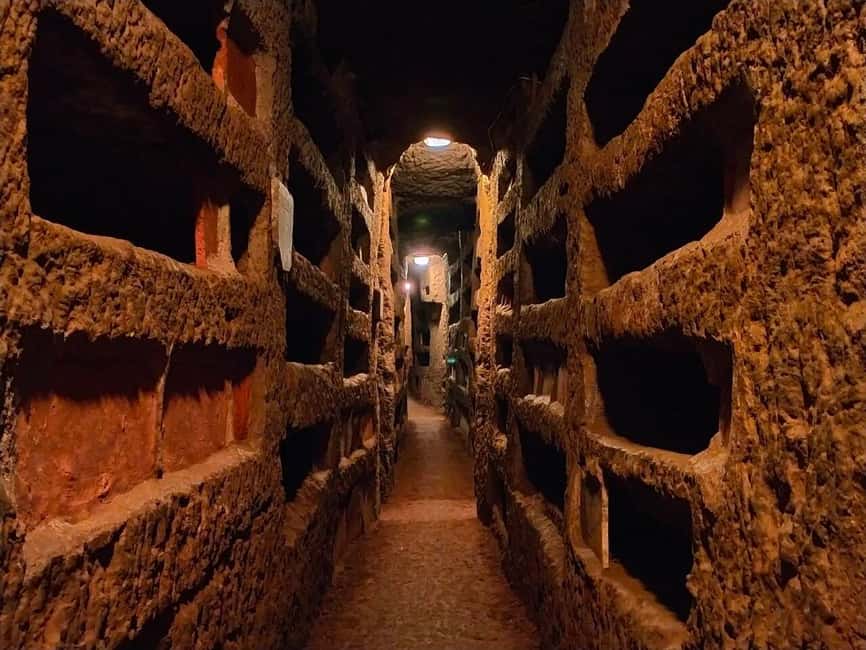
The catacombs are most powerful when you look at them as evidence of ordinary people and their families. The corridors and chambers connect to burial rites and rituals, giving you a more personal view of Roman society than you get from imperial monuments.
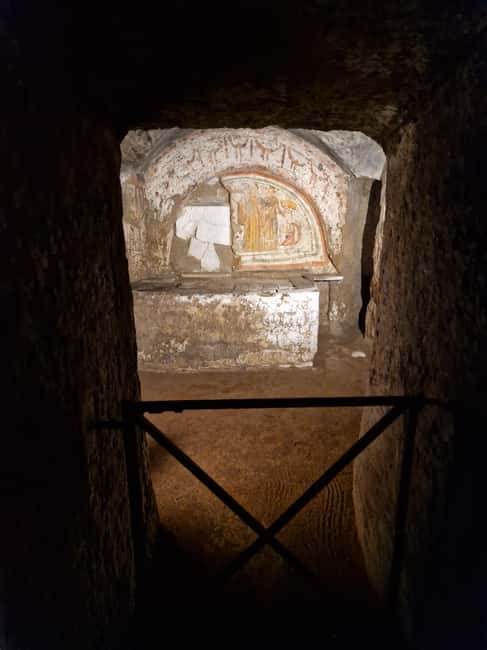
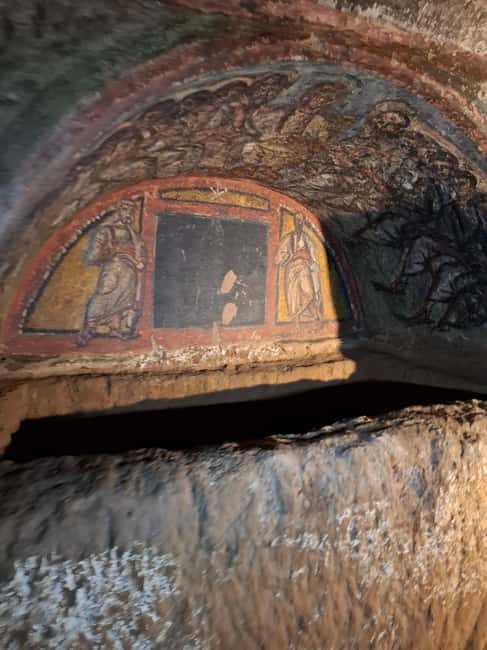
The tour includes the tombs of Nereus and Achilleus, an important stop for understanding the religious world represented here. Your guide also points out early Christian artwork, which is among the main reasons to choose this activity.
Do not expect a museum display with labels and bright lighting. The art belongs to the underground setting, and the guide’s explanation helps you notice its meaning. Since photography is forbidden inside, you’ll need to listen closely and remember the details rather than relying on pictures later.
That restriction may disappoint anyone who likes to document every stop. I think it also keeps the visit quieter and more respectful. The catacombs are burial places, not just a backdrop for social media.
From pagan Rome to Christian Rome
The historical thread is the transition from pagan religion to Christian Rome. Your guide explains the old religious customs, the place of burial in Roman society, and the pressures faced by early Christians during periods of persecution.
This subject can become dry if it is treated as a list of dates and rulers. The best part of this tour is the way the guides connect the physical spaces to the people who used them. John is described as funny and clear, while Sean is praised for setting the scene before entering the tunnels. Heather is noted for explaining serious material with humor without making the subject feel careless.
You’ll want a guide who can keep the facts organized. Divan, also spelled Diwan in some guide references, receives especially strong praise for presenting a large amount of information in a clear order. That matters underground, where it is easy to lose your bearings or forget how one chamber connects to the next.
The tour also touches on secret societies and the private religious life of early Roman communities. Listen for the difference between what the evidence shows and what later stories may suggest. A good guide helps you keep the drama while staying anchored to the history.
More Rome tours worth comparing
- Vatican Museums & Sistine Chapel Skip-the-Line Entry Ticket
★ 4.4 · 13,838 reviews - Skip-the-Line Group Tour of the Vatican, Sistine Chapel & St. Peter’s Basilica
★ 4.5 · 12,779 reviews - Rome: Vatican Museums & Sistine Chapel Skip-The-Line Ticket
★ 4.2 · 11,708 reviews - Vatican, Sistine Chapel & St. Peter’s Skip-the-Line Tour
★ 4.5 · 7,770 reviews
Why the English guide matters
This is a spoken-history tour, not a self-guided walk. The only listed language is English, and strong English is required. If you understand English well enough to follow a sustained explanation, you should gain much more from the visit than you would by simply walking through the tunnels.
The guides are a major part of the experience. John is described as friendly, funny, and easy to understand. Sean combines wit with a broad grasp of Roman history, while Heather is praised for fresh explanations and strong storytelling.
Mike has also been praised for patience with young children and for keeping a three-year-old involved. That does not turn the tour into a children’s program, but it suggests that some guides can adjust their delivery for families.
You should still judge your own group carefully. Young children may enjoy the mystery of going underground, yet two hours of historical explanation may be a lot for some families. The narrow passages and serious subject matter also make this better for children who can stay with an adult and follow instructions.
Small groups and the value of personal attention
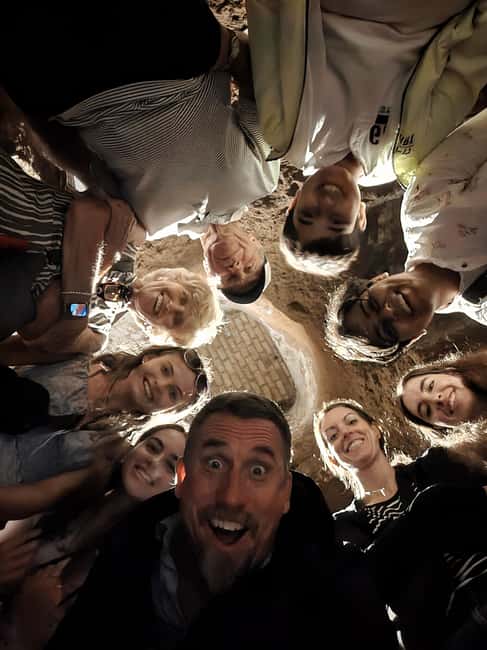
The small-group setup is one of the clearest reasons to choose this tour rather than simply buying entry and walking through on your own. A smaller group makes it easier to hear in underground spaces and gives you a better chance to ask about symbols, burial practices, and the history of the site.
A private option may also be available, depending on the booking choice and date. If you want a slower pace or have a family group with different interests, check the available options before paying.
The guide-led format is particularly valuable here because the tunnels do not explain themselves. You might see a wall niche or painted symbol without knowing its purpose. A guide can connect that detail to Roman customs and early Christian belief at the moment you are looking at it.
The tradeoff is that you have less freedom than on a self-guided visit. You follow the group route and the guide’s timing. For most people, that is a fair exchange because the interpretation is the main reason to come.
Price and what you receive for $54.66
At $54.66 per person, this is not Rome’s cheapest attraction. The price makes more sense when you consider that it includes the skip-the-line ticket and a two-hour English-speaking guide.
You are paying for access, but also for explanation. Without a guide, the catacombs could become a series of dark corridors with limited meaning. Here, the history of persecution, burial rites, early Christian art, and the rise of Christian Rome gives the visit shape.
The value is strongest for first-time visitors to the catacombs, families who want the site explained, and anyone who prefers a focused tour to reading a guidebook underground. It is less appealing if you want a long hike, broad access to the entire tunnel network, or a photo-heavy attraction.
The cancellation policy also gives you some flexibility. You can cancel up to 24 hours before the activity for a full refund, and the reserve-now, pay-later option lets you hold a place without paying at once. Check the exact terms shown for your selected booking.
Practical comfort and access
Wear comfortable shoes. The tour involves walking through underground burial passages, and practical footwear will serve you better than anything chosen only for appearance.
Bring a jacket and dress for the weather. Even if Rome is hot above ground, the catacomb setting may feel cooler. A light layer is easier to carry than wishing you had one once you are below the surface.
Photography is not allowed inside. Put your phone away and prepare to take mental notes instead. If you need photographs of the art for later study, this experience will not provide them.
The activity is not suitable for wheelchair users. The underground setting, narrow passages, and access conditions make this an important point to consider before booking.
You should also be comfortable listening in English for two hours. The tour depends on the guide’s spoken explanations, so a basic command of English will not give you the full value of the visit.
Who should book this catacomb tour?
I would choose this tour if you want a serious but approachable look at ancient Rome beyond the usual sights. It suits you if you enjoy history, religious art, burial customs, and stories about how ordinary Roman life changed over time.
It is also a good fit for families with older children or curious younger children who can manage a two-hour guided visit. Mike’s reported patience with a three-year-old suggests that the right guide can keep a family engaged, but the subject and setting still require some attention.
You may want a different experience if you dislike enclosed spaces, cannot walk comfortably, need wheelchair access, or want to photograph everything. You should also reconsider if you need a tour in a language other than English.
The experience has earned a 4.9 rating from 449 reviews, and the pattern of praise is unusually consistent around the guides. The most repeated strengths are clear historical explanations, humor, patience, and the ability to tell a story without turning the visit into a classroom lecture.
Should you book San Domitilla?
Book it if you want a guided historical experience underground, not a spectacle built around bones or dramatic effects. San Domitilla gives you ancient burial spaces, early Christian art, and a direct way to understand Rome’s religious change.
The best reason to book is the guide. John, Divan, Sean, Heather, and Mike are all praised for making complex material easy to follow, though your assigned guide depends on the date. The skip-the-line ticket, small-group attention, and two-hour length make the $54.66 price reasonable for travelers who value context.
Skip it if you want a long underground trek, photography, wheelchair access, or a completely independent visit. For everyone else, this is a thoughtful way to see a side of Rome that sits below the grand streets and tells a more intimate story of the city.
FAQ
Where does the tour meet?
The meeting point is at Via delle Sette Chiese, 282. Meet in the garden near the picnic tables and the white gazebo or umbrellas.
Where does the tour finish?
The activity ends back at the same meeting point on Via delle Sette Chiese, 282.
How long does the catacombs tour last?
The guided visit lasts two hours. Starting times vary, so check availability for the date you want.
Is transportation included?
No. Transfers are not included, so you must make your own way to the meeting point and return from there after the tour.
Can I take photographs inside the catacombs?
No. Photography is not allowed inside the catacombs.
Is the tour suitable for wheelchair users?
No. The activity is not suitable for wheelchair users. Comfortable shoes, a jacket, and weather-appropriate clothing are recommended.
Newest reviews from Rome
- Rome: Vatican Museums & Sistine Chapel Skip-the-Line Ticket★ 4.4 · 148 reviews
- Shared Shuttle Transfer from Rome to Civitavecchia Port★ 5.0 · 148 reviews
- Rome: Crypts & Catacombs After Hours Tour with Bone Chapel★ 4.6 · 149 reviews
- Ghosts Legends and Mysteries of Rome Walking Tour★ 5.0 · 149 reviews
- Skip the Line: Vatican and Sistine Chapel with Guided Tour★ 4.0 · 149 reviews
- Tivoli: Villa Gregoriana Entrance Ticket★ 4.7 · 150 reviews
- Pizza and Tiramisu Cooking Class in Rome, Piazza Navona★ 5.0 · 150 reviews
- Rome: Borghese Gallery Skip-the-Line Entry and Guided Tour★ 4.7 · 150 reviews
Catacombs & Crypts, compared.

Crypts and Catacombs Underground Tour with Transfers
Read our review →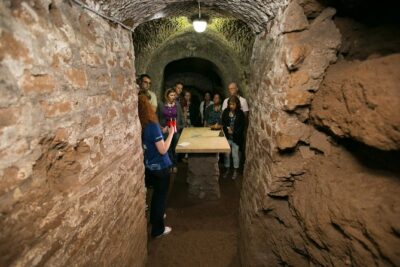
The Original Roman Crypts and Catacombs Tour with Transfers
Read our review →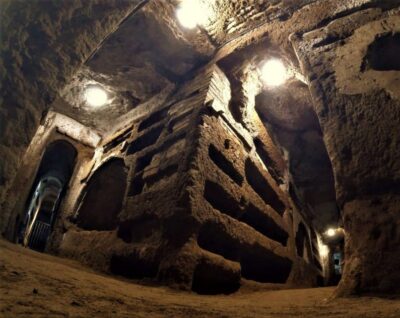
Catacombs of St. Callixtus Entry Ticket & Guided Tour
Read our review →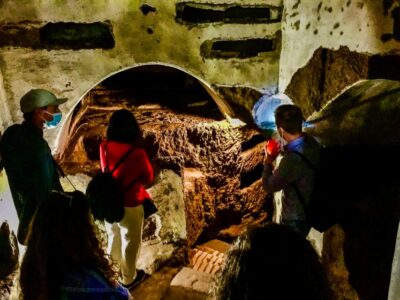


Rome EBike Tour: Appian Way, Catacombs & Roman Aqueducts
Read our review →
Catacombs and Capuchin Crypt Guided Tour with Transfer
Read our review →
St. Peter’s Basilica Priority Access Tour with Dome & Crypt
Read our review →Browse the lists this tour appears in