
Reviewed · WALKING TOURS
Rome: City Highlights Walking Tour
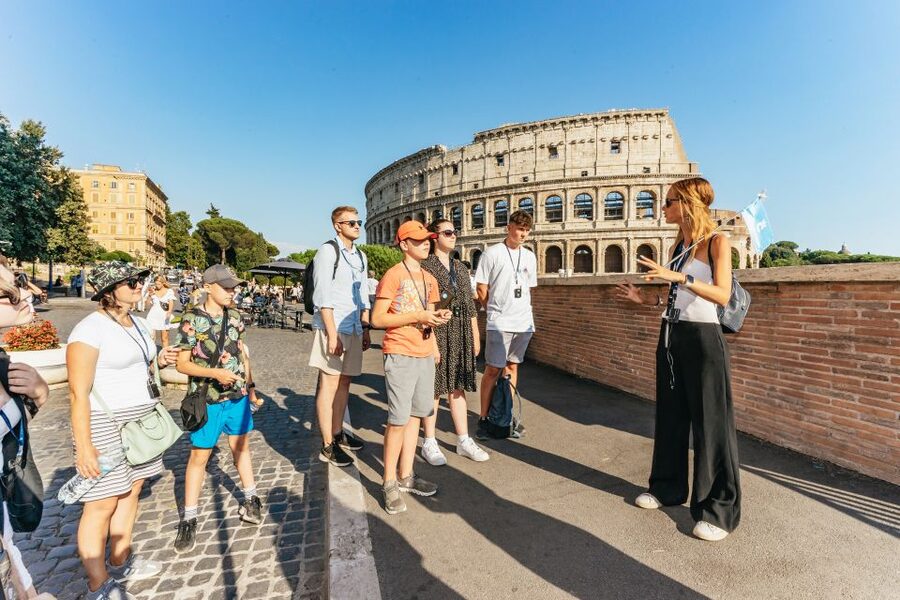
Rome reveals itself best on foot, and this 2.5-hour city highlights walk strings together ancient ruins, Baroque fountains, lively squares, and quieter corners of the historic center. You begin at Trajan’s Market and finish at the Trevi Fountain, with plenty of famous sights between them.
I like the route for two reasons: it combines the major first-time sights with the Jewish Ghetto, an area many visitors might otherwise miss, and it gives you a guide to explain what you are seeing rather than leaving you to guess at layers of stone and sculpture. Guides named Brian, Fabio, and Monica have been praised for clear English, humor, and an easy willingness to answer questions.
The main consideration is simple: this is a walking tour, not an entry tour. You see the monuments from outside, and the pace and route are not suited to people with mobility impairments. Bring water, wear comfortable clothes, and expect the tour to go ahead in rain or sun.
In This Review
- Key points at a glance
- Why this route works for a first look at Rome
- Trajan’s Market begins the walk with ancient engineering
- Piazza Venezia puts modern Rome beside imperial power
- The Jewish Ghetto adds a more personal layer of history
- Campo de’ Fiori brings the route into everyday street life
- Piazza Navona is the Baroque centerpiece
- The Pantheon is seen from the outside
- Hadrian’s Temple is a quick but worthwhile pause
- Trevi Fountain provides a strong finish
- The guides are the main reason to book
- Pace, walking demands, and weather
- What $41 gets you, and what it does not
- Who should choose this walking tour
- Should you book the Rome City Highlights Walking Tour?
- FAQ
- How long does the Rome City Highlights Walking Tour last?
- What language is the tour conducted in?
- Where does the tour meet?
- Where does the tour finish?
- Does the tour include entry to the Pantheon?
- Is hotel pickup included?
- Which sights are included on the route?
- What should I bring?
- Does the tour operate in bad weather?
- Is the tour suitable for people with mobility impairments?
Key points at a glance
- Starts at Trajan’s Market: Begin beside one of ancient Rome’s most striking commercial and engineering sites.
- Covers Rome’s essential center: See Piazza Venezia, Campo de’ Fiori, Piazza Navona, the Pantheon, Hadrian’s Temple, and the Trevi Fountain.
- Includes the Jewish Ghetto: Add a more reflective historical stop to the usual Rome sightseeing circuit.
- Built around storytelling: Guides explain the monuments, architecture, and history in English, with headphones available if needed.
- Good first-day orientation: The route gives you a useful map of central Rome for later exploring.
- Outdoor sightseeing only: There is no admission inside the Pantheon or any other building on this tour.
Why this route works for a first look at Rome

Rome can feel like an open-air museum with no clear beginning or end. One street gives you ancient brickwork, the next offers a Baroque fountain, and a short turn later you are in a neighborhood shaped by centuries of religious and political history.
This tour gives that jumble a sensible order. You move from Trajan’s Market and imperial Rome toward Piazza Venezia, then through the Jewish Ghetto and Campo de’ Fiori before reaching Piazza Navona, the Pantheon, Hadrian’s Temple, and the Trevi Fountain. The route is less about checking off isolated sights and more about seeing how the city’s different eras sit beside one another.
I especially like this approach at the start of a Rome visit. You get a broad introduction before spending time inside individual attractions. Afterward, you will know which places deserve a longer return visit and how several of the central squares connect.
The tour costs $41 per person. That is a reasonable price if you want a live guide to supply context and keep the route moving, particularly when Rome is new to you. It is less compelling if you only want admission to monuments, since entry is not included and the tour remains outside throughout.
More walking tours in Rome:
- Rome: Trastevere & Campo de Fiori Street Food Walking Tour
★ 4.9 · 2,768 reviews - Rome: Paranormal Night Walking Tour & Secret Backstreets
★ 4.9 · 1,921 reviews - Rome by Night Walking Tour – Legends & Criminal Stories
★ 4.5 · 1,003 reviews
Trajan’s Market begins the walk with ancient engineering
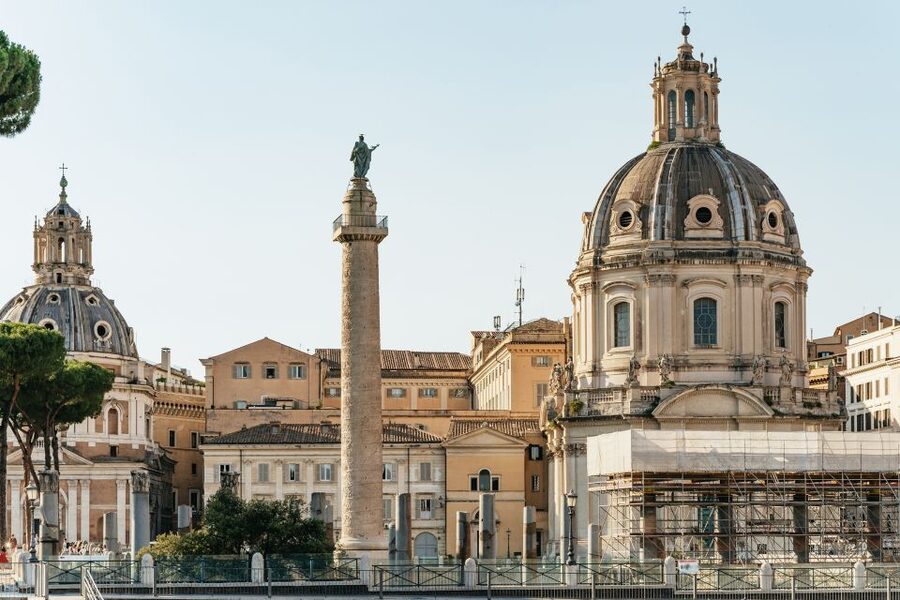
The meeting point is Colonna Traiana number 84, beside Trajan’s Column and Trajan’s Market. Look for a guide holding a City Walkers sign or flag, and allow enough time to find the exact spot around this busy central area.
Trajan’s Market dates from the second century AD. It is an excellent place to begin because it immediately shows you that ancient Rome was not only about temples and arenas. The complex was a large commercial and administrative area built into the slope of the Quirinal Hill, and its curved brick levels make the scale of Roman construction easy to read from the street.
Your guide explains the site from outside. That distinction matters: the tour does not include entry to Trajan’s Market, and the same outdoor format applies to every monument on the route. If you want to explore the market’s interior later, treat this stop as an introduction rather than a complete visit.
Piazza Venezia puts modern Rome beside imperial power
From Trajan’s Market, the route continues to Piazza Venezia. This broad, traffic-heavy square is one of Rome’s key crossroads, and it can feel overwhelming if you first encounter it without context.
The focal point is the Monument to Victor Emmanuel II, the enormous white structure often called the Altar of the Fatherland. Your guide places the monument within the story of modern Italy and helps you make sense of its size and position. From here, you can also look back toward the Roman Forum area and forward into the historic center.
This is a stop where a guide adds real value. On your own, you might see a huge staircase and a sea of traffic. With an explanation, the square becomes a meeting point between ancient Rome, the capital of unified Italy, and the present-day city.
The monument is also a useful landmark for orientation. One practical note comes directly from the meeting-point experience: the exact Trajan’s Market address may not be as obvious as the giant Victor Emmanuel monument. Keep the written meeting details with you, and do not assume the monument itself is the official starting point.
The Jewish Ghetto adds a more personal layer of history
The route then enters Rome’s Jewish Ghetto, an area established in the sixteenth century. This section gives the walk a different mood from the grand spaces of Piazza Venezia and the monumental ruins nearby.
You will hear about the neighborhood’s past and its place in Rome’s history. The stop is not simply a change of scenery. It shows how the city’s story includes communities shaped by religious rules, political power, and restrictions as well as emperors and artists.
This portion may appeal most to you if you prefer a tour that goes beyond the standard postcard route. One review found the amount of explanation here a little heavy compared with the other stops, so your enjoyment may depend on how much social and religious history you want during a fast-moving city introduction.
Still, including the Jewish Ghetto is a strong choice. It breaks up the procession of famous monuments and gives you a neighborhood to revisit at a slower pace.
More Rome tours worth comparing
- Rome: City Sightseeing Hop-on Hop-off Bus with Audioguide
★ 4.0 · 16,045 reviews - City Sightseeing Rome Hop-On Hop-Off Bus Tour
★ 3.5 · 5,446 reviews - Rome: Fettuccine Pasta Cooking Class in Rome’s City Center
★ 4.8 · 2,414 reviews - Vatican City: Vatican Museums & Sistine Chapel Entry Ticket
★ 4.3 · 2,185 reviews
Campo de’ Fiori brings the route into everyday street life
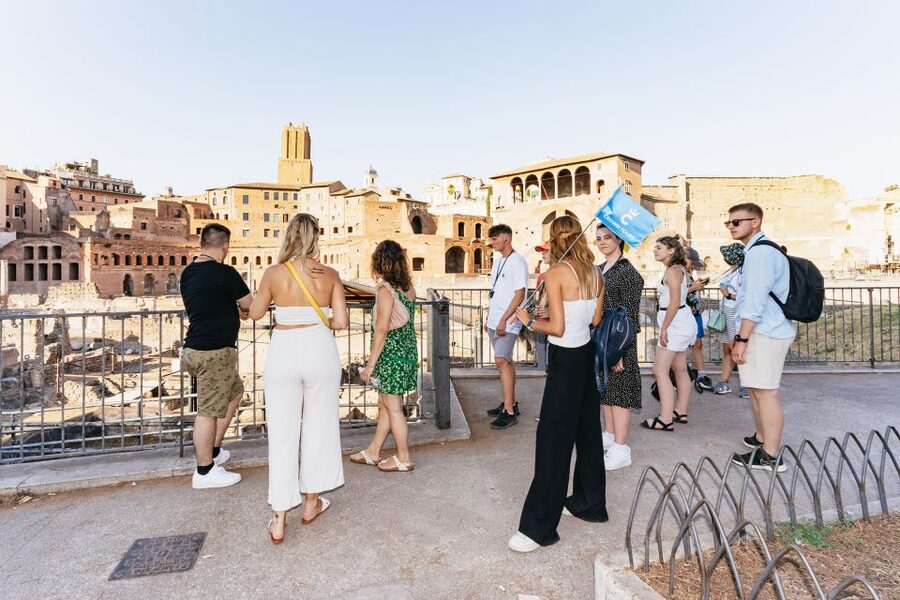
Campo de’ Fiori is next. The square is known for its street market, where stalls sell goods and souvenirs. It is one of those Roman spaces that works both as a historic site and as a place where ordinary city life continues around you.
The market is part of the experience, but it is not a dedicated food tour or shopping excursion. You get time to see the square and understand its place in the center, but the emphasis remains on the guide’s commentary and the overall walking route.
I would use this stop as a chance to notice the contrast between Rome’s formal monuments and its less polished public spaces. The city is not arranged like a museum, and Campo de’ Fiori helps make that clear.
If you want to buy something, keep your expectations practical. The tour includes a look at the stalls, not a planned shopping stop with tastings or purchases built into the price.
Piazza Navona is the Baroque centerpiece
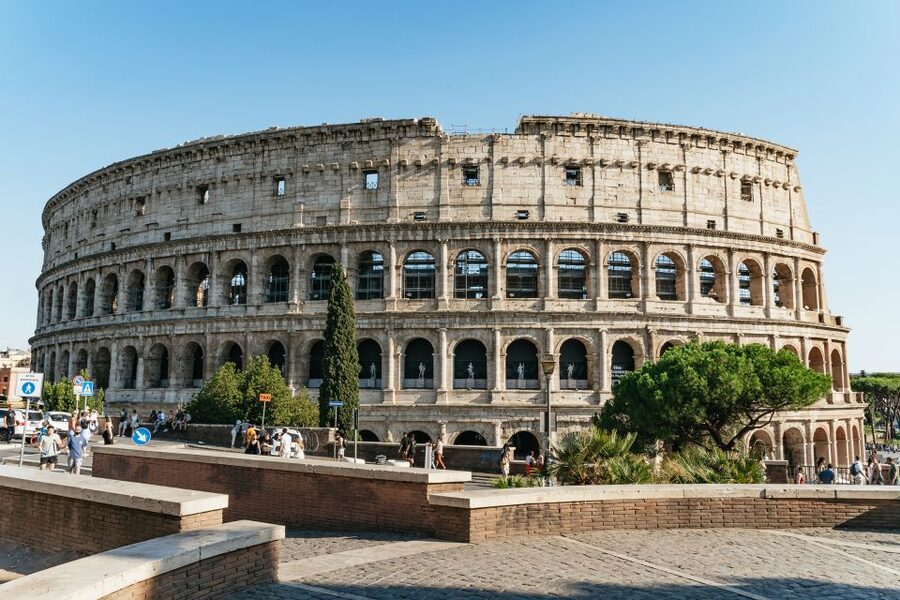
Piazza Navona is one of the visual high points of the walk. The long square follows the shape of an ancient Roman stadium, and today it is lined with Baroque architecture, fountains, sculptures, restaurants, and street activity.
The guide explains the square’s fountains and the stories behind its decoration. The Fountain of the Four Rivers is a particular highlight, and one guide was praised for making its story the best part of the tour. This is exactly the kind of detail that makes a live walk worthwhile: you are not just looking at carved stone, you are given a reason to study the figures and waterworks.
Piazza Navona can be crowded, so staying near the guide matters. Headphones may be provided if needed, which can help when nearby traffic and conversation compete with the explanation.
You should also expect pauses rather than long free periods. The tour is designed to keep moving, and the guide needs to cover several major sites within two and a half hours.
The Pantheon is seen from the outside
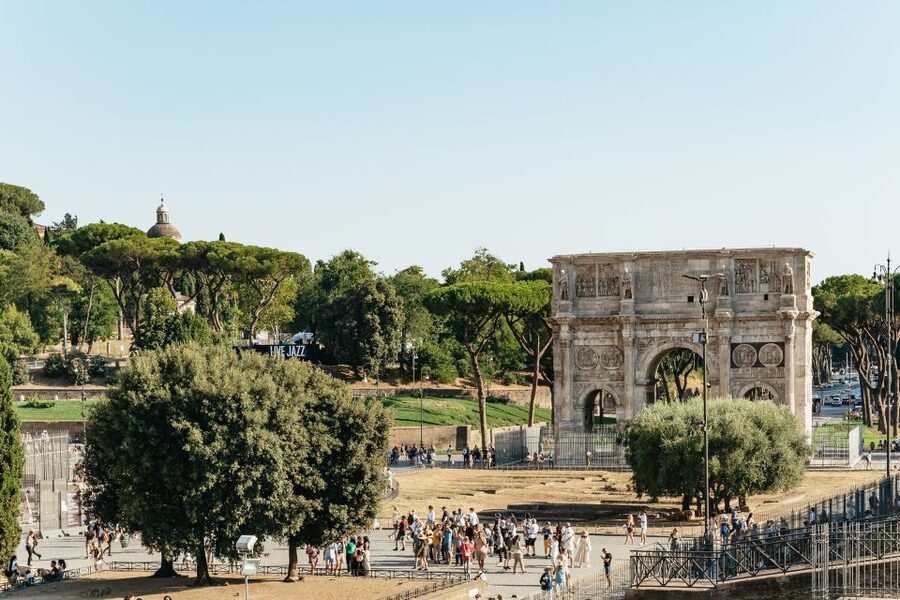
The Pantheon is one of the best-preserved ancient Roman monuments, and it is an essential stop even when you are not going inside. Its massive columns and broad portico give you an immediate sense of the building’s age and scale.
Your guide explains the Pantheon from the exterior. There is no included admission, so you should plan a separate visit if stepping inside is important to you. This is one of the clearest limits of the tour, but it also keeps the group moving and avoids turning the walk into a queue-management exercise.
The Pantheon is especially useful in a highlights tour because it connects several parts of Rome’s story: ancient building methods, later religious use, and the city’s habit of adapting old structures rather than simply replacing them. Listen for the construction details, since the guides are praised for explaining Roman architecture and even the use of bricks.
A separate interior visit will require its own planning. This walking tour gives you the outside view and historical framework, not a full Pantheon visit.
Hadrian’s Temple is a quick but worthwhile pause
After the Pantheon, the route reaches Hadrian’s Temple, described as the last of the great temples built in the city. Today, the surviving columns are incorporated into a later building, creating one of Rome’s classic layers of old and new.
This is not likely to be the longest stop, but it rewards close attention. The columns can be easy to pass without noticing when you are focused on the Pantheon or nearby shopping streets. A guide helps you spot the ancient structure and understand why it matters.
Hadrian’s Temple also fits the wider theme of the walk: Rome’s past is often visible in fragments, reused walls, and structures that serve a new purpose. You do not need an archaeology background to appreciate it, since the explanation supplies the essential context.
Trevi Fountain provides a strong finish
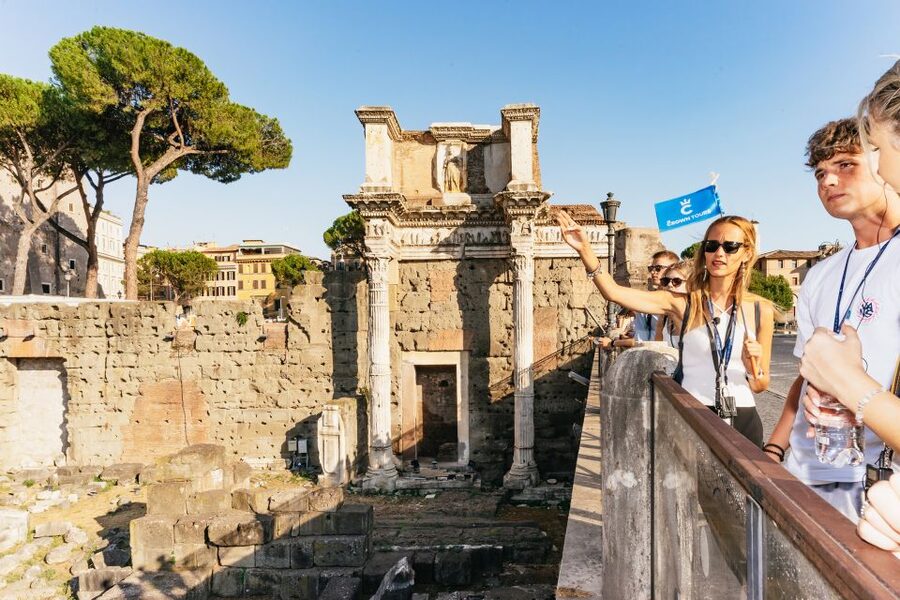
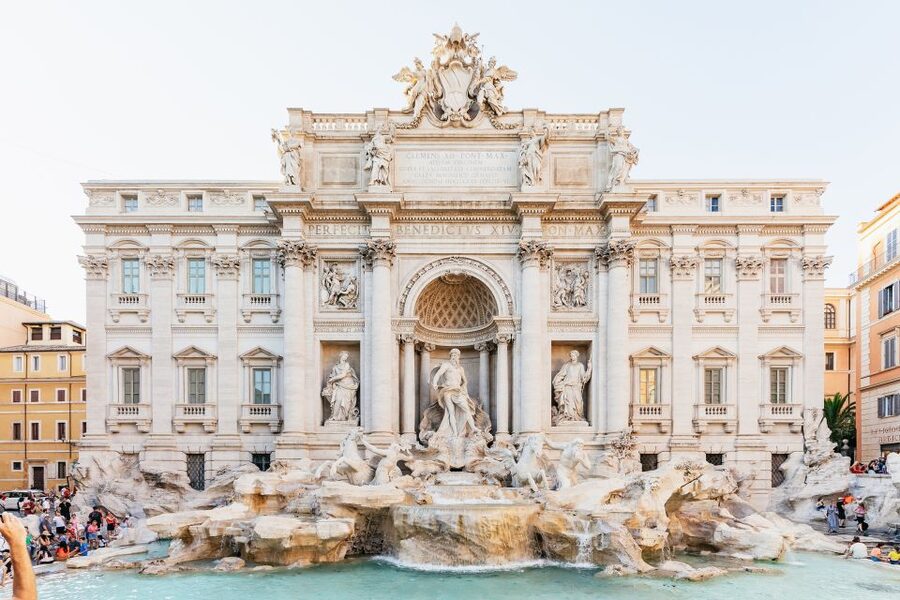
The final stop is the Trevi Fountain, Rome’s famous Baroque masterpiece. Ending here gives the walk a satisfying visual payoff after the quieter historical material in the Jewish Ghetto and the ancient sites near Piazza Venezia.
The fountain is often crowded, and you should expect a lively public setting rather than a calm private viewing. The guide explains the fountain and its place in Rome’s Baroque story, then the tour ends in one of the city’s most recognizable locations.
Finishing at Trevi is useful for planning the rest of your day. You can continue exploring from the fountain, return to a nearby sight, or simply pause and take in the details. Since the tour does not include a hotel transfer, you are responsible for making your own way to the start and onward from the finish.
The guides are the main reason to book
The strongest pattern in the feedback is the quality of the guiding. Brian is repeatedly praised for his storytelling, good humor, answers to questions, and ability to make complex Roman history understandable. He also led very small groups on some dates, including a group of four and a group of two couples, which made the conversation more personal.
Fabio is described as friendly, reassuring, and attentive to the group. Monica is praised for her English and for making sure the group had a good time. Guide availability can change, so you should not book on the assumption that one particular person will lead your departure.
The best fit is someone who wants a real person to connect the stops. You will get more from this tour if you ask questions and pay attention to the explanations than if you treat it as a simple escorted walk between photo spots.
Parents may also find the format workable with older children. One family reported that children from ages seven to fifteen stayed involved because the guide answered their questions and kept the pace moving. That does not remove the physical demands, but it suggests the storytelling can work across age groups.
Pace, walking demands, and weather
The tour lasts 2.5 hours and covers a substantial stretch of central Rome. One participant specifically praised the pace, while another advised being aware that there is a lot of walking if you are not used to it.
Wear comfortable shoes and weather-appropriate clothing. Sunscreen and water are sensible additions, especially in warm weather. The tour runs rain or shine, so a light rain layer is useful when the forecast is uncertain.
The experience is not suitable for people with mobility impairments. Even without steep mountain paths, Rome’s historic center can involve uneven paving, crowds, and extended time on your feet. If you need frequent seated breaks or an accessible route, this is not the safest choice.
What $41 gets you, and what it does not
At $41 per person, you are paying for a live English-speaking guide, a planned route, and historical explanation across a large part of central Rome. Headphones are included if needed, and free cancellation is available up to 24 hours before the tour, with a full refund. You can also reserve now and pay later.
You are not paying for hotel pickup, transportation, food, or admission to the monuments. The Pantheon, Trajan’s Market, and every other building are explained from outside.
I see the price as fair for a first visit when you want structure and context. A private guide at this rate would be exceptional, but group size varies. Some departures have been very small, while others may be larger. If you mainly want to enter the Pantheon or spend time inside archaeological sites, put the $41 toward a separate entry-based experience instead.
Who should choose this walking tour
I would recommend it to you if:
- You are visiting Rome for the first time and want a clear overview.
- You enjoy history, architecture, and stories behind public monuments.
- You prefer walking through neighborhoods instead of riding between isolated attractions.
- You want to see the Jewish Ghetto alongside the main landmarks.
- You can comfortably walk for 2.5 hours in changing weather.
- You want a guide who can answer questions in English.
I would skip it if your main goal is interior access, if you dislike group schedules, or if long walks are difficult. It is also not a substitute for a dedicated Colosseum, Roman Forum, or Vatican tour. Those major sites are not part of this route.
Should you book the Rome City Highlights Walking Tour?
Book it if you want a well-paced introduction to central Rome, especially early in your stay. The route covers the essential sights, adds the Jewish Ghetto, and ends at the Trevi Fountain, while the best guides bring enough humor and detail to keep the history from becoming a list of dates.
Go in with the right expectations. You will walk a lot, see the monuments from outside, and share the route with a group whose size may vary. At $41, it offers good value for orientation and storytelling, but not for monument admission.
For a first day in Rome, this is a practical way to get your bearings fast. Afterward, you can return to the Pantheon, Trajan’s Market, or another stop with a better idea of what deserves your time.
FAQ
How long does the Rome City Highlights Walking Tour last?
The tour lasts 2.5 hours.
What language is the tour conducted in?
The live tour guide speaks English.
Where does the tour meet?
Meet the guide at Colonna Traiana number 84. The guide will hold a sign or flag with the City Walkers logo.
Where does the tour finish?
The tour finishes at the Trevi Fountain.
Does the tour include entry to the Pantheon?
No. The monuments are explained from outside, and there is no entry into the Pantheon or other buildings.
Is hotel pickup included?
No. Hotel pickup and drop-off are not included.
Which sights are included on the route?
The route includes Trajan’s Market, Piazza Venezia, the Monument to Victor Emmanuel II, the Jewish Ghetto, Campo de’ Fiori, Piazza Navona, the Pantheon, Hadrian’s Temple, and the Trevi Fountain.
What should I bring?
Bring sunscreen, water, comfortable clothes, and clothing suitable for the weather.
Does the tour operate in bad weather?
Yes. The tour takes place rain or shine.
Is the tour suitable for people with mobility impairments?
No. The tour is not suitable for people with mobility impairments because it involves substantial walking.
Newest reviews from Rome
- ROME:Colosseum & Ancient Rome – private/small group TOUR★ 5.0 · 24 reviews
- Off the Beaten Track in Rome: Rione VI Parione Private Tour★ 5.0 · 24 reviews
- Cinematic Photoshoot in Rome★ 5.0 · 24 reviews
- Rome: Best of Colosseum and Roman Forum Small Group Guided Tour★ 4.5 · 24 reviews
- Vatican and Trionfale Market Tour with Wine and Food Tasting★ 5.0 · 24 reviews
- private tour: Vatican Museums, Sistine Chapel, St. Peter’s Basilica★ 4.5 · 24 reviews
- The Labyrinth of Rome between catacombs and ancient quarries★ 4.5 · 24 reviews
- Colosseum guided tour with Virtual Reality★ 5.0 · 24 reviews
Walking Tours, compared.
Trastevere & Campo de Fiori Street Food Walking Tour
Read our review →
Paranormal Night Walking Tour & Secret Backstreets
Read our review →
Rome by Night Walking Tour – Legends & Criminal Stories
Read our review →
Guided City Center Evening Sightseeing Walking Tour
Read our review →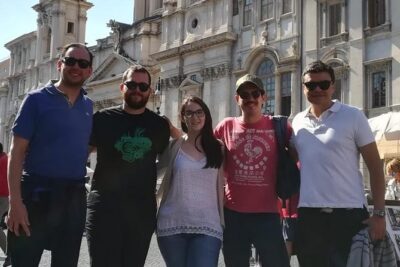
Best of Rome Walking Tour including Trevi Fountain
Read our review →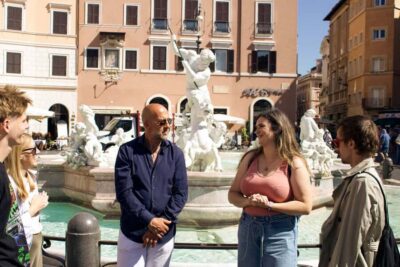

Forbidden History Walking Tour & Pub Crawl with Drinks
Read our review →
Guided Small Group Walking Tour of City Highlights
Read our review →Browse the lists this tour appears in