
Reviewed · COLOSSEUM TOURS
Rome: Colosseum Arena, Roman Forum & Palatine Tour
The most gripping part of this Rome tour is the Colosseum arena floor, where you can look across the space once filled by gladiators, animals, and roaring crowds. Your guide explains how hidden lifts and passages made creatures appear from below, then leads you through the Roman Forum and up Palatine Hill.
I like the way the tour connects engineering with human stories, rather than treating the Colosseum as just an old stone shell. I also like the practical three-hour route, which covers Rome’s essential ancient sights without taking your entire day. The main drawback is the physical effort: expect stairs, uneven ground, heat, and plenty of walking.
In This Review
- Key points to know
- A strong introduction to ancient Rome
- Meeting at Via delle Terme di Tito 93
- Walking onto the Colosseum arena floor
- Seeing Titus and Constantine’s imperial arches
- Reading the Roman Forum in one focused hour
- Climbing Palatine Hill for Rome’s broadest views
- How the guides shape the experience
- Price, pace, and what the three hours really provide
- Who should book this Colosseum tour?
- Should you book it?
- FAQ
- How long does the tour last?
- Where does the tour start?
- Does the tour include the Colosseum arena floor?
- Which languages are available?
- Is skip-the-line entry included?
- What identification should I bring?
- Is the tour suitable for wheelchair users?
Key points to know
- Arena-floor access: Confirm that your selected option includes access to the Colosseum arena floor, since this feature is listed as optional.
- Three major sights in three hours: The route gives roughly one hour each to the Colosseum, Roman Forum, and Palatine Hill.
- Gladiator-focused storytelling: Expect explanations of training, living conditions, combat, and the machinery beneath the arena.
- Titus and Constantine’s arches: The tour includes two of Rome’s remaining imperial triumphal arches.
- Useful headsets: Audio equipment helps you follow the guide in a busy archaeological area.
- Plan for a hot, active walk: Water, a sun hat, and comfortable shoes are sensible choices.
A strong introduction to ancient Rome
At $44.41 per person, this is a reasonably priced way to see Rome’s three biggest ancient sites with an organized route and live commentary. You are paying not only for admission, but also for someone to explain what you are looking at and guide you through a huge, sometimes confusing archaeological zone.
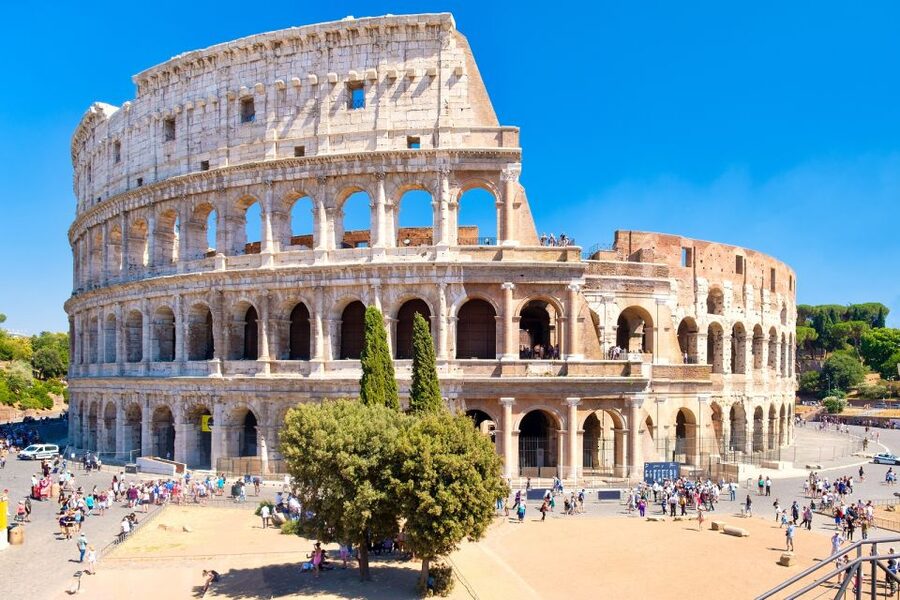
That matters here. The Colosseum is visually powerful, but its surviving walls do not explain themselves. The Roman Forum can feel like a jumble of columns and foundations without context. Palatine Hill rewards attention, yet its paths and ruins can be hard to read on your own.
The guide-led format gives each place a clear purpose. You hear about the people who used these spaces, the systems that made the games possible, and the emperors who used public monuments to display power. Guides including Maria, Laura, Marco, Giuseppe, Tania, Marilena, and others have been praised for clear explanations, good pacing, friendly manners, and strong English. Your guide will depend on the date and language you choose.
The tour has an overall rating of 4.3 from 1,731 ratings, a solid result for a busy, highly scheduled attraction. The most consistent strength is the guiding. Several guides have been singled out for keeping groups together, answering questions, showing visual aids, and allowing time for photographs instead of rushing from one stop to the next.
More ways to see the Colosseum:
- Rome: Colosseum, Palatine Hill and Roman Forum Guided Tour
★ 4.8 · 32,814 reviews - Rome: Guided Tour of Colosseum, Roman Forum & Palatine Hill
★ 4.7 · 27,897 reviews - Rome: Colosseum & Forum with Audio Guide App -Optional Arena
★ 4.2 · 24,770 reviews
Meeting at Via delle Terme di Tito 93
The meeting point is at Via delle Terme di Tito 93, near the Colosseum. Give yourself enough time to find it, especially if you are arriving on foot through the crowded streets around the monument.
By Metro, get off at Colosseo station and reach the terrace above the station. Walk along Via Nicola Salvi for about 100 meters, then turn left. This is a simple route, but Rome’s archaeological district has several paths, terraces, and viewing areas, so arriving early is wise.
Bring your passport or national identity card. Children need identification too. Every person on the reservation must be listed with a complete name, since incomplete information can prevent entry.
There is no hotel pickup or drop-off. You meet the group at the site and return to the same meeting point when the activity ends. The tour includes a guide, walking route, admission to the Colosseum, Roman Forum, and Palatine Hill, plus a headset.
The advertised skip-the-ticket-line entry saves useful time, but it does not mean you walk straight inside without checks. All visitors must pass airport-style security. Large bags, luggage, glass objects, weapons, sharp items, alcohol, drugs, and pets are not allowed.
Walking onto the Colosseum arena floor
The first hour focuses on the Colosseum. The arena-floor option is the feature that makes this tour especially appealing, but check your booking carefully to make sure it is included in the version you select.
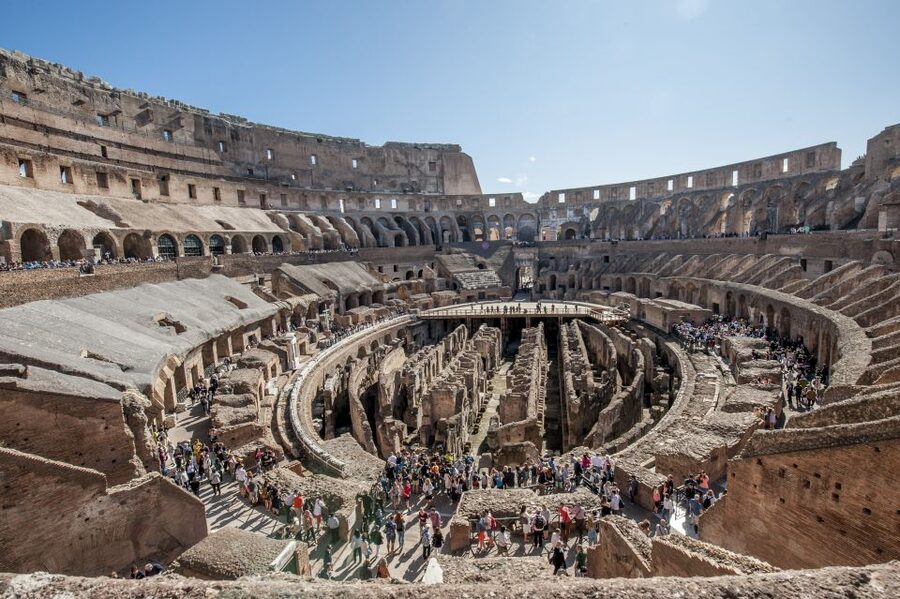
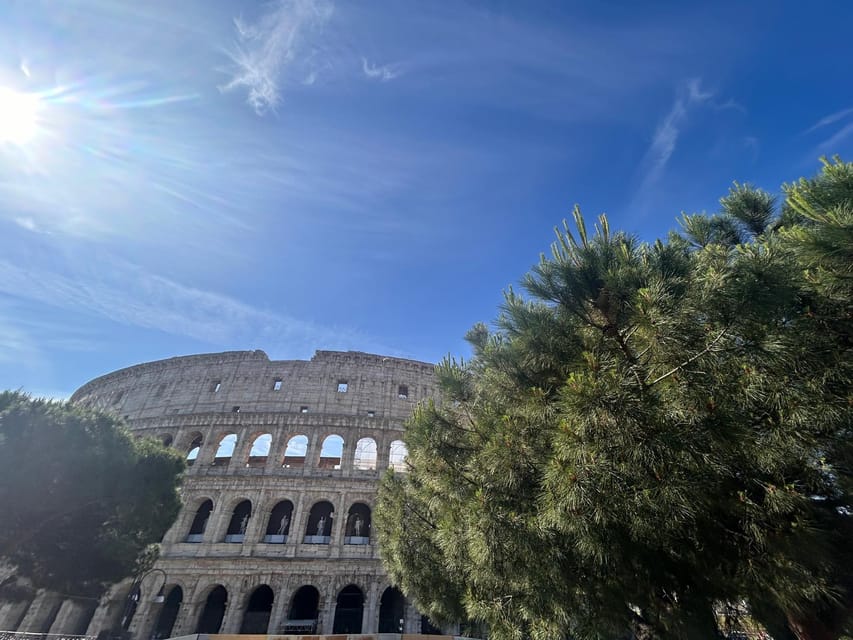
From the arena floor, you get a more direct sense of the building’s scale. Look upward and imagine the crowds packed into the tiers above. The guide explains how gladiators and animals were brought into the performance area, including the underground mechanisms that allowed people and creatures to appear suddenly.
This engineering story is one of the tour’s best subjects. The games depended on more than combat. They required lifts, tunnels, storage areas, timing, and a large staff working below the spectators’ view. The arena was designed to create surprise, and the machinery helped turn violence into public theater.
The guide also discusses gladiators as people, not just as names attached to dramatic stories. You learn about their training, living conditions, and final hours before entering the arena. That human focus gives the building a different weight. You are not only looking at an ancient structure. You are considering the controlled lives of men who fought for survival, status, freedom, or simply because they had been forced into the system.
A headset is included, and that is useful inside the Colosseum. Stone, distance, and crowd noise can make a guide difficult to hear. The equipment lets you take a few steps aside for photographs while still following the explanation.
The arena floor can be very exposed to the sun. One guide specifically advised bringing water and a sun hat, and that is practical advice. In hot weather, the first hour may feel harder than the same amount of walking in shaded streets.
Bad weather can also change this part of the visit. The arena floor may close without notice in poor conditions. Entry through the gladiators’ gate can still operate, but you may not be allowed onto the floor itself, and no refund is provided for that change.
Seeing Titus and Constantine’s imperial arches
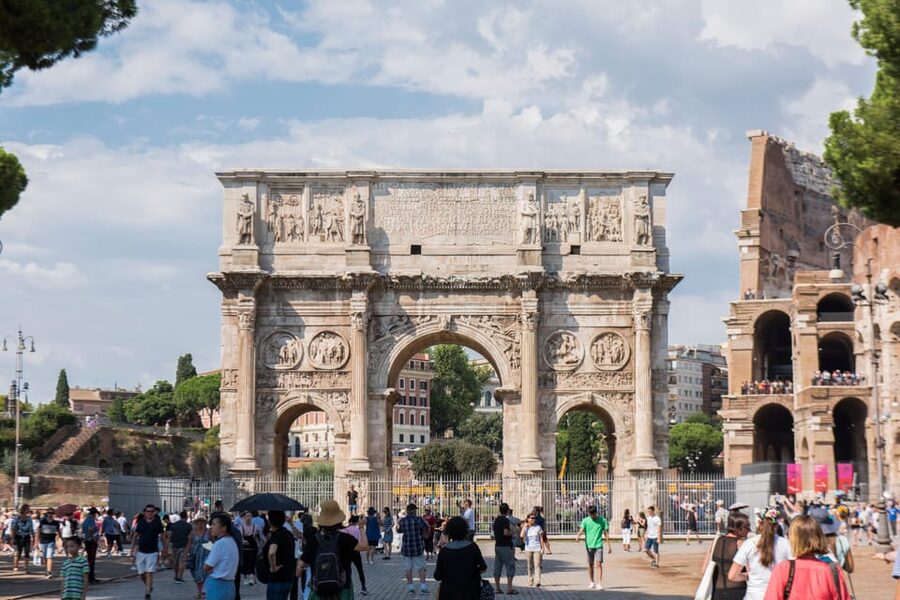
After the Colosseum, the route takes you to the triumphal arches of Titus and Constantine. They are two of only three remaining arches of this kind in Rome, and they help explain how emperors used monuments to celebrate military success.
The Arch of Titus is closely tied to imperial victory and the procession of captured treasures. The Arch of Constantine reflects a later moment in Roman power and political change. Seeing both during one walk lets you compare different emperors and periods instead of treating the Roman Empire as one unchanging age.
These arches are easy to pass without a guide. Their reliefs and inscriptions reward a closer look, but you need someone to point out what matters. Your guide may use pictures or visual material to help you understand details that are difficult to see from ground level.
This part of the tour also acts as a transition between the Colosseum and the Roman Forum. It keeps the walk focused on the relationship between public entertainment, military triumph, and imperial authority.
More Roman Forum and Palatine Hill visits:
- Rome: Colosseum, Roman Forum and Palatine Hill Guided Tour
★ 4.5 · 23,903 reviews - Rome: Colosseum, Forum & Palatine Hill Tour & Optional Arena
★ 4.4 · 13,839 reviews - Rome: Colosseum, Palatine Hill & Roman Forum Guided Tour
★ 4.6 · 12,703 reviews - Rome: Colosseum Arena, Palatine Hill & Forum Guided Tour
★ 4.6 · 10,584 reviews
Reading the Roman Forum in one focused hour
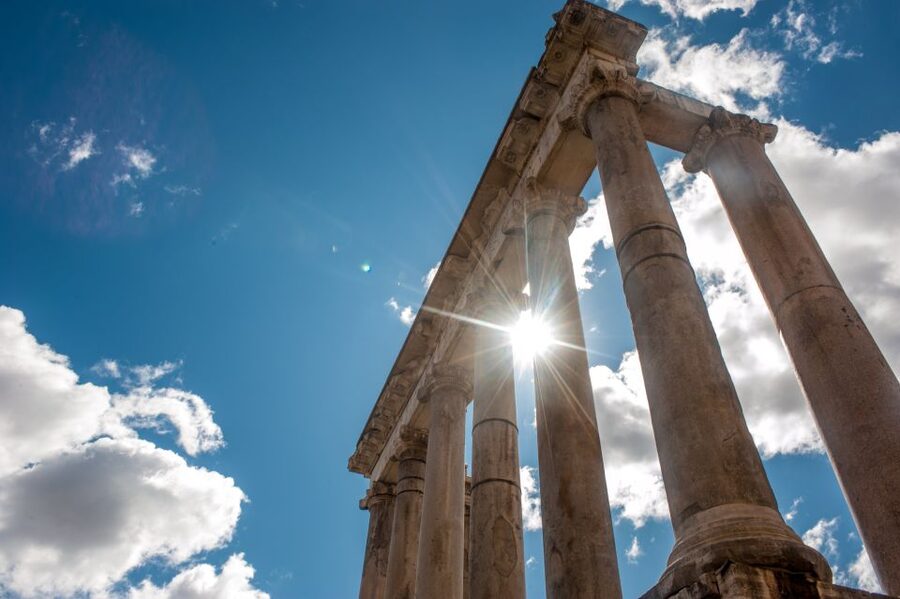
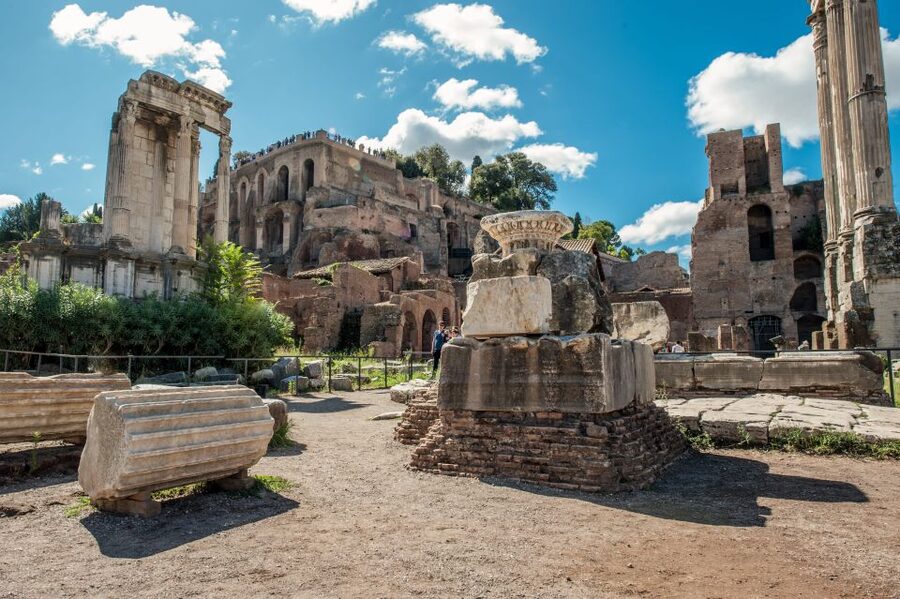
The second major stop is the Roman Forum, where the tour spends about an hour. This is the heart of ancient political and civic Rome, but it is also the place most likely to overwhelm first-time visitors.
The Forum is spread across an open archaeological area filled with foundations, columns, temples, roads, and fragments. Without a plan, you may see attractive ruins without knowing which buildings shaped Roman public life. A guide gives you a route and explains how the separate pieces fit together.
Expect more walking on uneven ground and additional exposure to the sun. The site is not a compact indoor museum. You move through an archaeological zone, pause at important remains, and use the surrounding hills and monuments to understand how the ancient center was arranged.
The guide’s explanations are particularly valuable here because the Forum is less immediately readable than the Colosseum. The Colosseum tells you what it was built for through its shape. The Forum requires more interpretation.
The one-hour limit is both useful and limiting. It keeps the visit moving and prevents the Forum from swallowing the afternoon, but it cannot cover every ruin in detail. If you want to study inscriptions, architectural fragments, or individual temples at length, plan to return on your own another day.
I see this as a good first visit rather than a final word on the Forum. You get the main orientation, learn why the area mattered, and leave with enough understanding to explore more independently if you have the time.
Climbing Palatine Hill for Rome’s broadest views
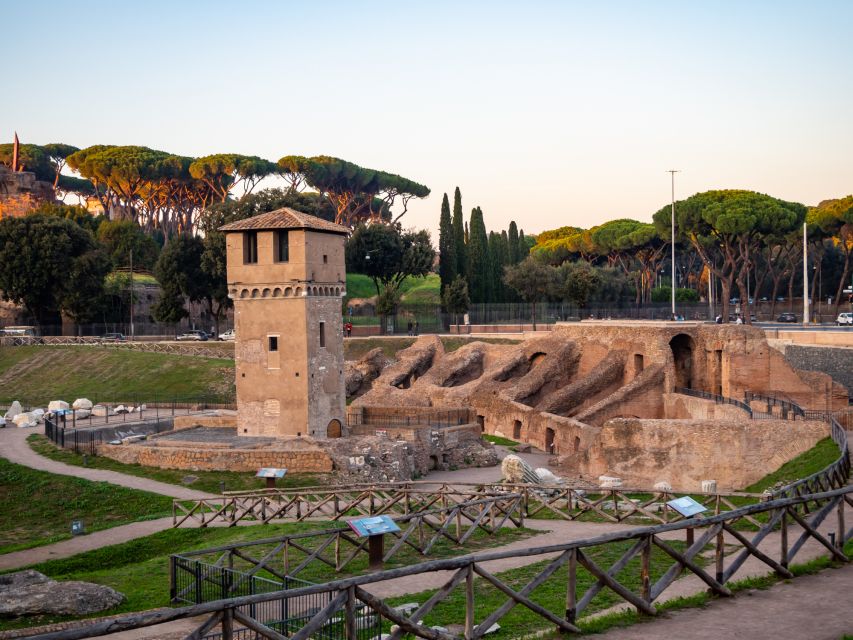
The final hour takes you up Palatine Hill. The climb adds effort, but it also gives the tour a satisfying finish. From the hill, you can look over the Forum and toward the wider city, seeing how the ancient center fits into modern Rome.
Palatine Hill is linked to the imperial world that developed above the Forum. The setting helps explain the difference between Rome’s public life below and the elite residences and power centers on the hill.
The views are a major reason to keep going when your legs are tired. After the enclosed feeling of the Colosseum and the close-packed ruins of the Forum, the hill opens the experience outward. You can pause for photographs and see the city from a higher viewpoint.
This section is not effortless. The complete route lasts about three hours, and the sites involve stairs, slopes, and uneven surfaces. One group found the pace relaxed and had time for pictures, while another noted that a moderate to good level of fitness is needed. Both points can be true: the guide may keep a sensible pace, but the ground remains demanding.
The tour is not suitable for wheelchair users or people with mobility impairments. If stairs and rough archaeological paths are a concern, this is not the right format for you.
How the guides shape the experience
The guide is the main reason to choose this tour instead of simply buying admission. A good guide turns a procession of ruins into a connected story, and the strongest feedback focuses on clear explanations, patience, humor, and the ability to manage a group in the heat.
Maria has been praised for being friendly, funny, well organized, and willing to answer questions. Laura is described as professional, engaging, and full of detail. Marco’s careful pace and the reliable headsets helped his group stay connected. Giuseppe was noted for his strong command of Roman history and an unhurried pace.
Tania is a useful example for families. She handled a group that included children and adjusted her approach patiently. That does not guarantee the same guide or exact style on your date, but it shows why the live format can work better than a fixed audio guide when children or mixed interests are involved.
Guides speak Italian, Spanish, French, German, and English. Private groups are available if you want a more personal format, more room for questions, or a pace shaped around your party. A group tour should offer better value, while a private option may suit families or people who want tighter control over the experience.
The headsets are worth noting. They allow you to hear the guide even when the group spreads slightly across a large site. Still, keep close enough to see where the guide is going, since the archaeological area has many paths and crowds.
Price, pace, and what the three hours really provide
At $44.41 per person, the tour offers good value if you want the Colosseum, Forum, and Palatine Hill handled in one morning or afternoon. Admission to all three sites is included, along with the arena-floor access when that option is selected, a live guide, and a headset.
The strongest value comes from the time saved and the explanations provided. You do not need to work out the order of the sites or guess which ruins matter most. Skip-line entry can also protect your limited time in Rome, although security screening still applies.
The tradeoff is depth. One hour per site gives you a clear introduction, not a specialist study. You will cover the major sights and hear the main stories, but you will not have unlimited time for quiet exploration or detailed photography.
The tour can also be affected by group size and operating conditions. Private groups are available, but the standard option may place you with other people. If the minimum number of participants cannot be reached, the provider may change the arrangement after contacting you by phone or message.
Free cancellation is available up to five days before the activity for a full refund. That rule is worth checking against your plans before booking, especially if your Rome schedule may change.
Who should book this Colosseum tour?
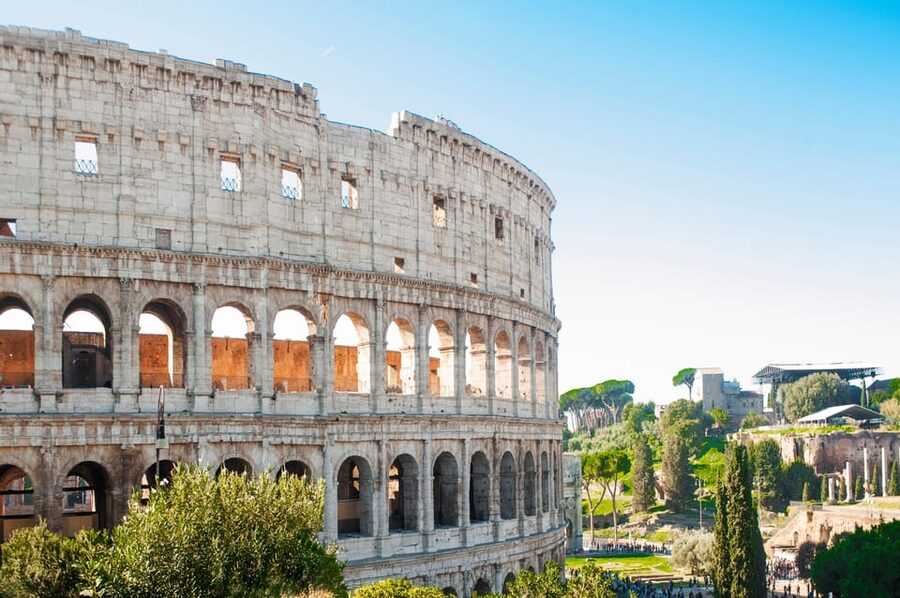
I would choose this experience for a first visit to Rome, especially if you want the central ancient sights explained in a compact block. It suits people who enjoy stories about gladiators, Roman engineering, imperial politics, and the way public monuments worked.
It is also a good fit for families with older children who can manage three hours of walking. The guides have shown patience with mixed-age groups, and the gladiator material gives children a clear thread to follow.
You should think twice if you dislike fixed schedules, prefer long periods alone at ruins, or have difficulty with stairs and uneven ground. The Forum and Palatine Hill are not smooth museum floors, and hot weather can make the route feel longer.
Bring water, a sun hat, comfortable shoes, and your identification document. Leave large bags and restricted items behind. Most of all, confirm that your booking includes the arena floor if that is the part you care about most.
Should you book it?
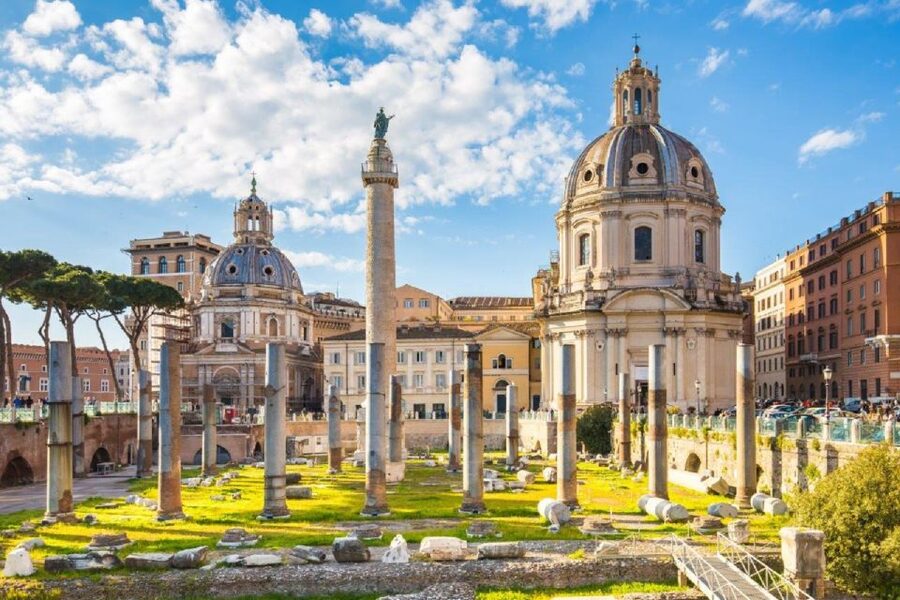
Book this tour if you want efficient coverage of Rome’s ancient core and value a guide who can explain what you are seeing. The arena floor, the underground engineering story, the imperial arches, and the Palatine views give the three-hour route plenty of variety.
Skip it if you need step-free access or want to spend an entire day studying the ruins at your own pace. For most first-time visitors with reasonable fitness, the $44.41 price is a fair exchange for admission, orientation, and a focused walk through the places that define ancient Rome.
FAQ
How long does the tour last?
The tour lasts three hours. The schedule allows about one hour for the Colosseum arena, one hour for the Roman Forum, and one hour for Palatine Hill.
Where does the tour start?
Meet at Via delle Terme di Tito 93. From Colosseo Metro station, go to the terrace above the station, walk about 100 meters along Via Nicola Salvi, and turn left.
Does the tour include the Colosseum arena floor?
Arena-floor access is included if you select the option that provides it. Confirm the exact option when booking, since arena access is not listed as part of every version.
Which languages are available?
The live guide is available in Italian, Spanish, French, German, and English.
Is skip-the-line entry included?
Skip-the-ticket-line entry is included. You must still pass through airport-style security before entering.
What identification should I bring?
Bring a passport or identity card. Children also need a passport or identity card, and complete names for everyone on the reservation are required.
Is the tour suitable for wheelchair users?
No. The activity is not suitable for wheelchair users or people with mobility impairments because the route includes stairs, slopes, and uneven archaeological ground.
Newest reviews from Rome
- Rome: Vatican Museums & Sistine Chapel Skip-the-Line Ticket★ 4.4 · 148 reviews
- Shared Shuttle Transfer from Rome to Civitavecchia Port★ 5.0 · 148 reviews
- Rome: Crypts & Catacombs After Hours Tour with Bone Chapel★ 4.6 · 149 reviews
- Ghosts Legends and Mysteries of Rome Walking Tour★ 5.0 · 149 reviews
- Skip the Line: Vatican and Sistine Chapel with Guided Tour★ 4.0 · 149 reviews
- Tivoli: Villa Gregoriana Entrance Ticket★ 4.7 · 150 reviews
- Pizza and Tiramisu Cooking Class in Rome, Piazza Navona★ 5.0 · 150 reviews
- Appian Way E-bike Tour with Gourmet Picnic and Catacombs★ 4.5 · 150 reviews
Colosseum Tours, compared.
Colosseum, Palatine Hill and Roman Forum Guided Tour
Read our review →
Guided Tour of Colosseum, Roman Forum & Palatine Hill
Read our review →
Colosseum & Forum with Audio Guide App -Optional Arena
Read our review →
Colosseum, Roman Forum and Palatine Hill Guided Tour
Read our review →
Colosseum, Forum & Palatine Hill Tour & Optional Arena
Read our review →
Colosseum, Palatine Hill & Roman Forum Guided Tour
Read our review →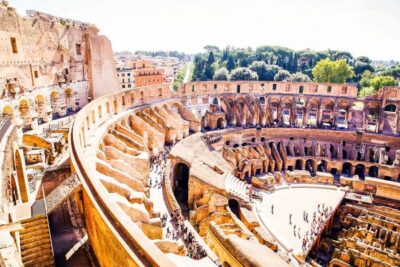
Colosseum: Underground and Ancient Rome Tour
Read our review →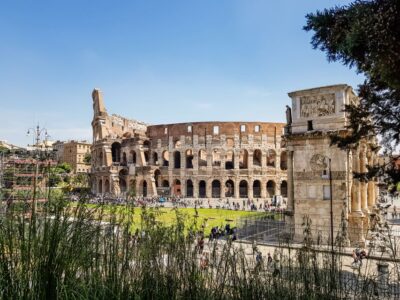
Colosseum Arena, Palatine Hill & Forum Guided Tour
Read our review →Browse the lists this tour appears in