
Reviewed · COLOSSEUM TOURS
Rome: Colosseum, Forum, and Palatine Hill Guided Tour
Rome’s ancient center makes the most sense when someone helps you read it. This 2.5-hour small-group tour links the Colosseum, Palatine Hill, and Roman Forum in a sensible order, with an English-speaking guide explaining what once happened among the ruins.
I like the archaeological background many guides bring, especially Ferdinando, whose clear English, storytelling, and academic context earned repeated praise. I also like the headsets, which let you hear the guide while walking through busy open-air sites. The main drawback is the price, $223.17 per person, and free admission on the first Sunday of the month can create very long waits.
In This Review
- Key points to know before booking
- A useful first look at Ancient Rome
- Meeting at the Arch of Constantine
- Inside the Colosseum for about one hour
- Palatine Hill and the beginning of Rome
- The Roman Forum as Rome’s public square
- Why the guide can make or break the visit
- Is $223.17 a fair price?
- Timing, heat, crowds, and the first Sunday problem
- Who should book this tour?
- What to bring and what to leave behind
- Should you book it?
- FAQ
- How long does the tour last?
- Which sites are included?
- What language is the tour conducted in?
- Where does the tour begin?
- Are tickets included?
- Do I need to bring identification?
- Are food and drinks included?
- Is the tour suitable for wheelchair users?
Key points to know before booking
- Ferdinando and other archaeologist guides add useful detail about construction, excavation, and ancient life.
- The three major sites fit into one route, so you get a strong first look at Ancient Rome without arranging separate tickets.
- The Colosseum visit lasts about one hour, followed by roughly 45 minutes each on Palatine Hill and in the Forum.
- Headsets are included, a real help when the group is moving through crowded ruins.
- The first Sunday of the month is a special case, with free entry but potentially hours of queuing.
- Comfortable shoes, water, sunscreen, and a hat matter, while large bags and luggage are not allowed.
A useful first look at Ancient Rome
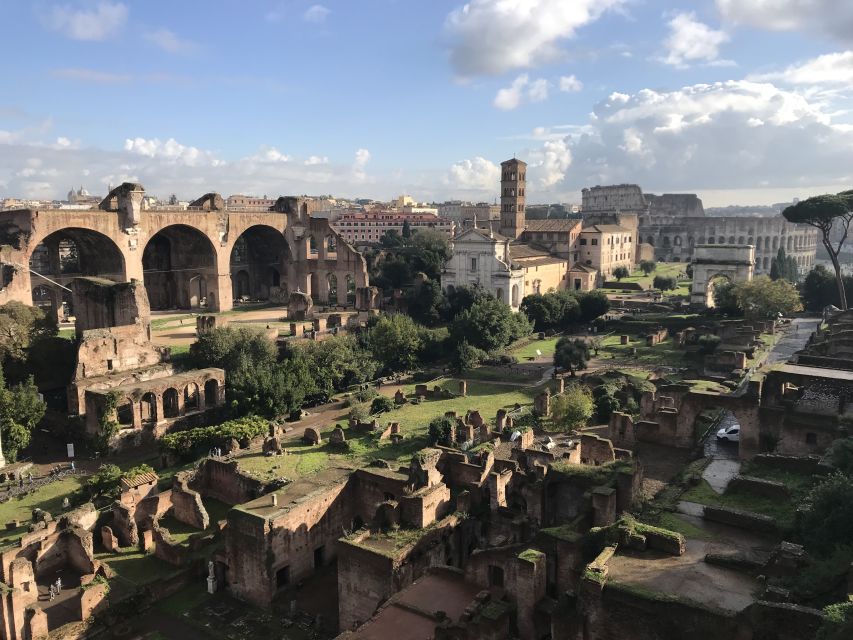
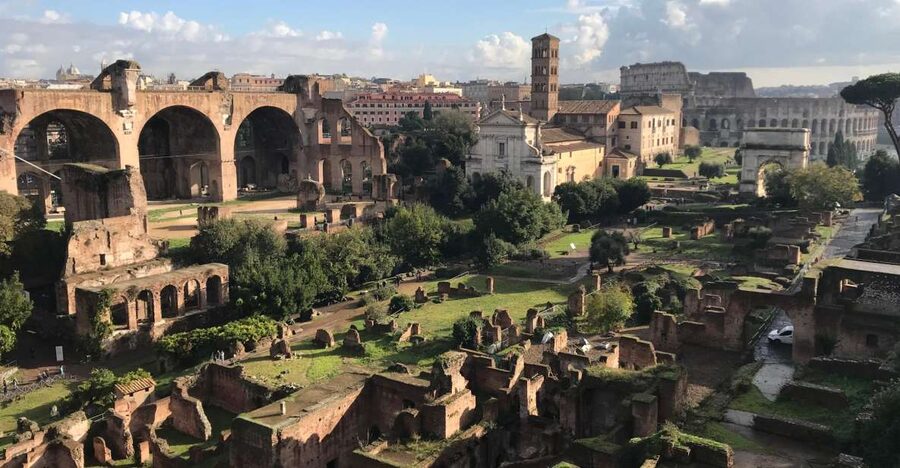
This tour covers the three places most visitors want to see in Rome’s archaeological center. You begin at the Colosseum, then walk across Palatine Hill before finishing in the Roman Forum. The route gives you monuments, viewpoints, myths, politics, and everyday Roman life in one compact outing.
The tour is led in English, and the guide may be an archaeologist, historian, or art historian. That background matters here. These ruins can look like a jumble of broken marble if you do not know which building served as a temple, courthouse, meeting hall, palace, shop, or political stage.
At 2.5 hours, this is a brisk introduction rather than a full archaeological study. You will spend about an hour at the Colosseum and 45 minutes at each of the other two sites. That timing works well for a first visit, though you should not expect to examine every corner or linger at every viewpoint.
More ways to see the Colosseum:
- Rome: Colosseum, Palatine Hill and Roman Forum Guided Tour
★ 4.8 · 32,814 reviews - Rome: Guided Tour of Colosseum, Roman Forum & Palatine Hill
★ 4.7 · 27,897 reviews - Rome: Colosseum & Forum with Audio Guide App -Optional Arena
★ 4.2 · 24,770 reviews
Meeting at the Arch of Constantine
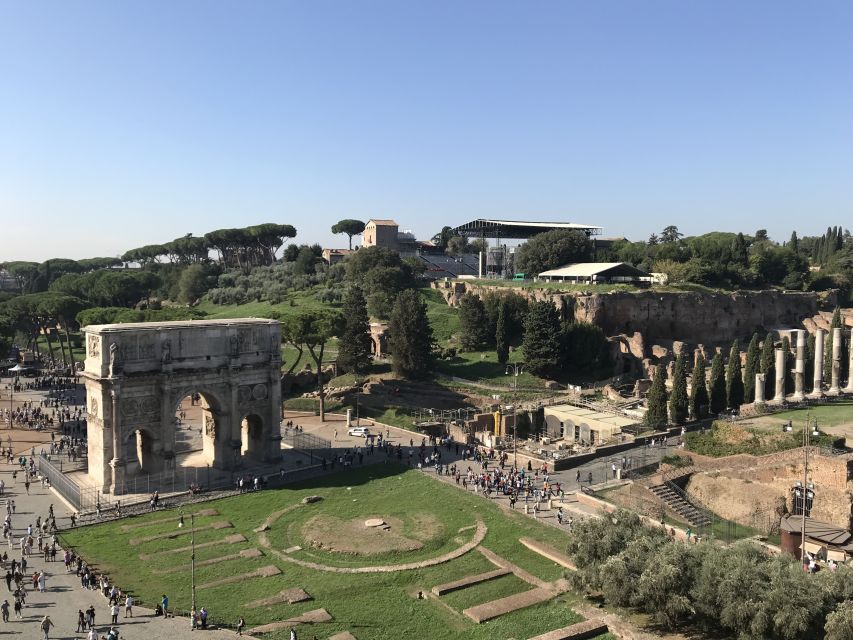
The meeting point is in the Colosseum square, at the short side of the Arch of Constantine facing Palatine Hill. Look for a small column near a street lamp. This is a busy area, so arrive with enough time to identify the exact spot rather than trying to find it at the last moment.
The location puts you right beside one of Rome’s grandest triumphal monuments. The Arch of Constantine was built to celebrate the emperor’s victory, and its placement near the Colosseum gives you an immediate sense of how tightly the monuments are packed together.
The tour information says the activity ends back at the meeting point, while the listed finish location is Largo Ricci Corrado. Check the final meeting instructions you receive so you know where the guide plans to leave the group.
Inside the Colosseum for about one hour
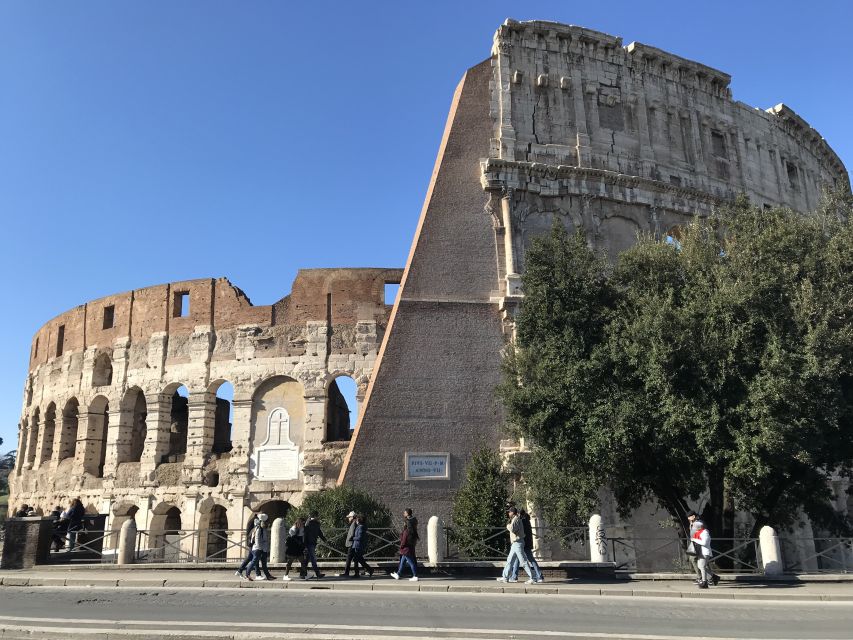
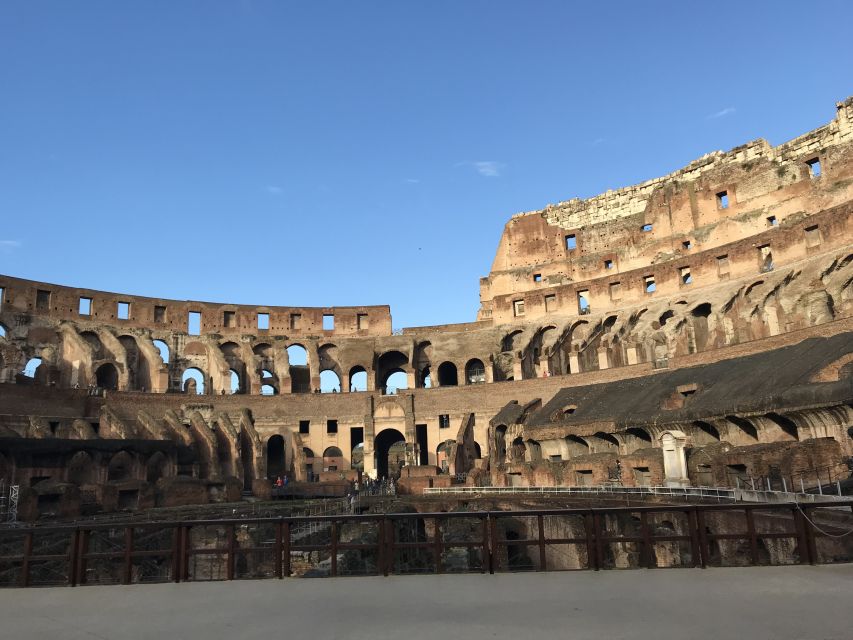
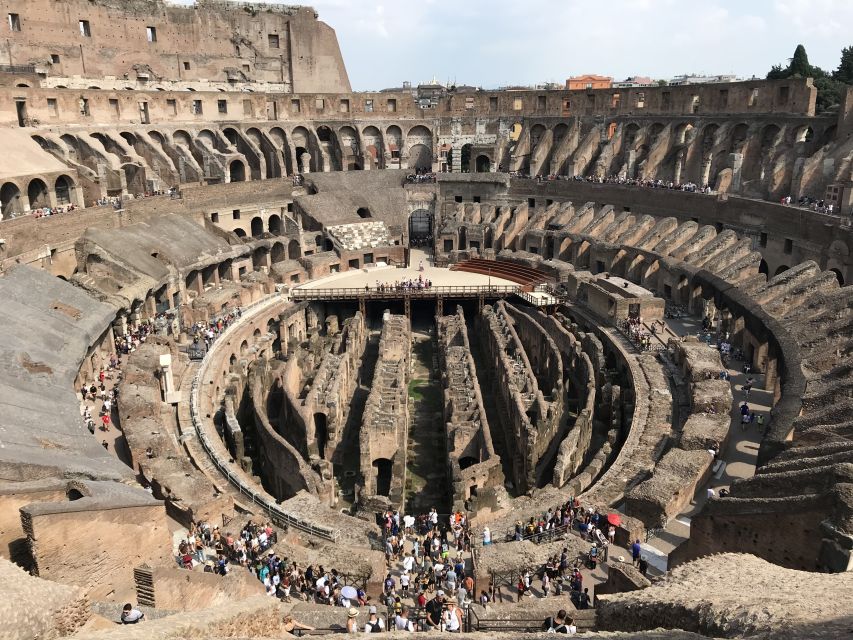
The Colosseum is the natural opening act. Its scale is hard to grasp from photographs, and the guide helps connect the stone structure to the people who filled it: emperors, senators, fighters, workers, and crowds seeking spectacle.
Expect a guided walk of about one hour. The focus is not only on gladiators. The tour description also points to reconstructions of armor, helmets, weapons, and fighting equipment, details that help you picture the showmanship behind the arena. Roman spectacles were designed to impress, and the equipment was part of that display.
A good guide can also help you understand the building as an organized machine for public entertainment. The arena had to move large crowds, control access, and keep the action visible. You will get more from the visit if you listen for how the structure worked, not just who fought there.
Security checks are compulsory at the Colosseum. Do not bring luggage or a large bag, as these are not allowed. Comfortable shoes are essential because the visit involves walking over ancient and modern surfaces, and the entire experience continues on foot after you leave the arena.
The skip-the-ticket-line benefit can save valuable time on a normal day. It does not mean you walk past every form of control. Security still applies, and special dates can change the rhythm completely.
Palatine Hill and the beginning of Rome
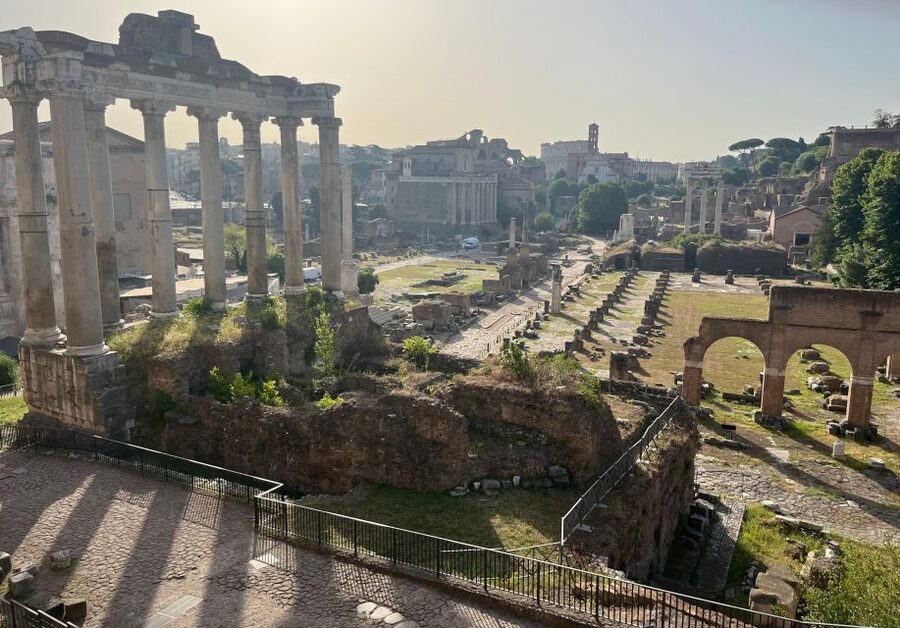
From the Colosseum, the group continues to Palatine Hill for about 45 minutes. This is where the tour shifts from public spectacle to the origins and private power of Rome.
The hill is tied to the story of Romulus and Remus, the twins abandoned by their mother and raised by a she-wolf. According to Roman tradition, this is where the city began. Archaeological remains on the southwestern corner include traces of early wooden huts associated with the first Romans.
You should treat the founding story as part of Rome’s powerful mythology, while also looking closely at the physical remains. One of the pleasures of Palatine Hill is seeing how legend and archaeology sit beside each other. Your guide can explain what the excavated evidence shows and how later Romans understood their own beginnings.
The hill also preserves the remains of imperial residences, including the Houses of the Emperors. These ruins can be harder to read than the Colosseum, since walls, rooms, and decorative fragments are spread across a broad archaeological area. This is where an expert guide earns the fee by giving the stones a setting and purpose.
You might find Palatine Hill the most atmospheric part of the route, but it is not the easiest section for anyone with limited mobility. The tour is not suitable for wheelchair users, and you should expect uneven ground and steady walking. Bring water, especially in summer, since much of the site is exposed to the sun.
More Roman Forum and Palatine Hill visits:
- Rome: Colosseum, Roman Forum and Palatine Hill Guided Tour
★ 4.5 · 23,903 reviews - Rome: Colosseum, Forum & Palatine Hill Tour & Optional Arena
★ 4.4 · 13,839 reviews - Rome: Colosseum, Palatine Hill & Roman Forum Guided Tour
★ 4.6 · 12,703 reviews - Rome: Colosseum Arena, Palatine Hill & Forum Guided Tour
★ 4.6 · 10,584 reviews
The Roman Forum as Rome’s public square
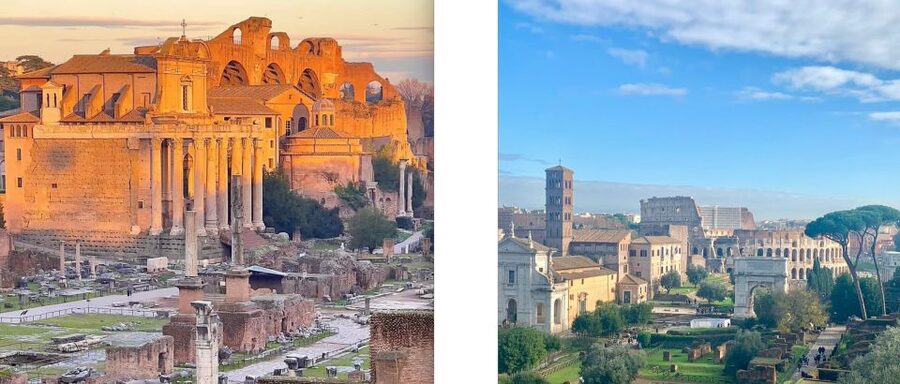
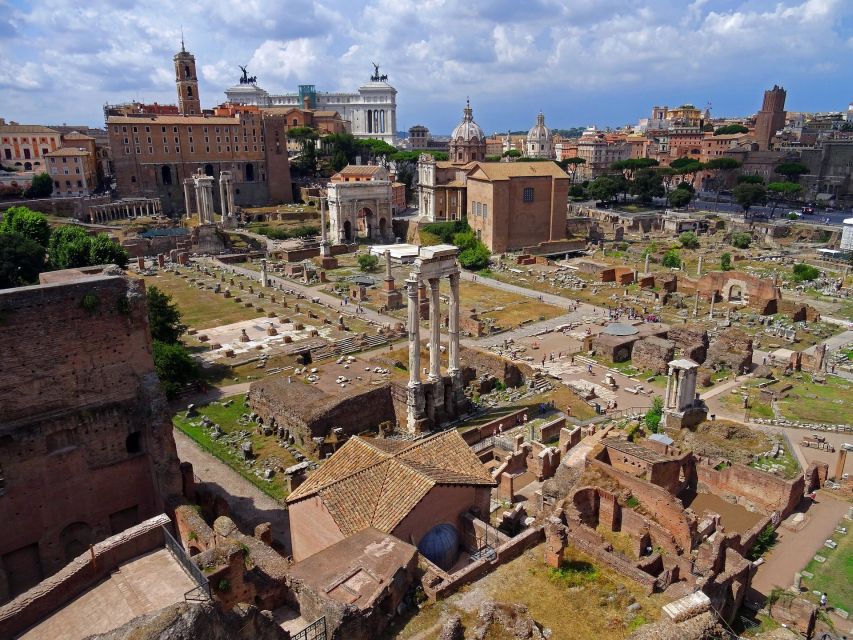
The final 45 minutes take you through the Roman Forum, once the main public center of Ancient Rome. Rather than one single building, the Forum is a collection of temples, political spaces, commercial areas, and judicial sites arranged around the heart of the city.
The description of the Forum as an ancient downtown is helpful. You can think of it as a place where banking, shopping, religion, law, and politics met. Rome’s power was not expressed only in palaces and monuments. It was also managed here, through speeches, decisions, disputes, and daily business.
The Forum was also the setting for famous political speeches, including Mark Antony’s speech concerning Julius Caesar. A guide can help you picture the crowd and the stakes behind those events, instead of leaving you with isolated columns and partial walls.
This section benefits greatly from a clear pace. The Forum is large, and it is easy to lose your sense of direction. Headsets help you follow the explanation while looking around, and a guide can point out how the different structures relate to one another.
By the end, you will have walked through Rome’s entertainment center, its legendary birthplace, and its political heart. That sequence gives the tour a strong shape and helps you understand that Ancient Rome was not just a collection of ruins. It was a working city with different zones for power, worship, commerce, and public life.
Why the guide can make or break the visit
The strongest feature of this experience is the quality of the guide assigned to your group. Ferdinando receives especially high praise for his archaeological training, excellent English, preparation, humor, and ability to connect one explanation to the next. He is also described as a good storyteller, which is important when much of the Forum survives only in fragments.
Other praised guides include Alessio, Antonieta, and Alissia. Alessio is noted for keeping children involved, while Antonieta is praised for maintaining energy even when rain disrupted the start of the visit. Alissia is described as bringing archaeological insight and enthusiasm to the ruins.
You cannot choose a specific guide based on the information provided, so consider these names examples of the level of expertise the operator aims to provide, not a guarantee of assignment. The included professional may be an archaeologist, historian, or art historian.
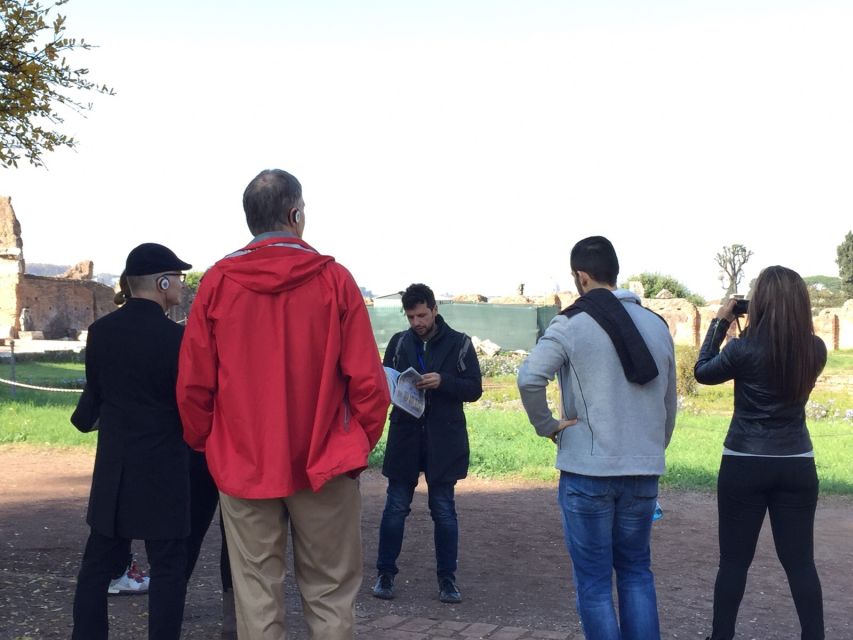
The headsets are another practical plus. The Colosseum and Forum can be noisy, and a group can spread out as people stop to look at a wall or photograph a view. Clear audio means you can keep your attention on the site instead of standing shoulder to shoulder with the guide.
Is $223.17 a fair price?
At $223.17 per person, this is not a budget sightseeing option. The cost includes admission to all three sites, a professional English-speaking guide, headsets, and the convenience of visiting the major monuments in one organized route.
The value depends on what you want from Ancient Rome. If you mainly need entry and plan to read signs or use an audio guide, the price may feel high. If you want an archaeologist or historian to explain how the sites connect, answer questions, and keep the route moving, the price becomes easier to justify.
The small-group format is also important. The exact group size is not provided, so do not assume a private or ultra-small experience. Still, a guided group with headsets should be more personal and easier to follow than a large crowd gathered around a guide shouting over the city.
You pay for interpretation as much as access. The Colosseum is famous enough to visit on its own, but Palatine Hill and the Forum reward explanation. Without context, you may spend much of your time wondering what you are looking at.
Meals and drinks are not included. That is reasonable for a 2.5-hour walking visit, but carry a reusable water bottle. Fountains inside the archaeological areas allow you to refill it.
Timing, heat, crowds, and the first Sunday problem
Check available starting times before booking. Summer visits require extra care because the hill and Forum can be hot, with limited shade. Wear a hat, use sunscreen, and bring water. Comfortable shoes are not optional here.
The first Sunday of every month is different. Entry to the monuments is free, but the tour provider cannot arrange advance entry in the usual way. You meet the guide at 8 a.m. and join the line for tickets. The waiting time can be short or very long depending on the season.
One reported experience involved nearly three hours in line on the free-entry Sunday. That is a serious risk and can turn a 2.5-hour tour into most of a morning. The guide uses the wait to introduce the tour and keep the group occupied, but good commentary does not make a three-hour queue disappear.
If you have flexibility, avoid the first Sunday. Paying for a regular timed entry may offer much better value than spending hours in line, especially if your Rome visit is short.
Rain is another small consideration. The tour continues in poor weather, and one guide kept a group engaged during a wet beginning. Still, pack a light rain layer if the forecast is uncertain. The ruins remain open-air, and the ground may become slippery.
Who should book this tour?
I would recommend it to a first-time Rome visitor who wants the main ancient sites explained by a strong English-speaking guide. It suits families too, especially if your guide is as good with children as Alessio was reported to be.
It is also a good choice for anyone who enjoys archaeology but does not want a university lecture. Ferdinando’s reported style, combining academic context with humor and stories, is exactly the balance these sites need.
You should think twice if you dislike walking, struggle with uneven surfaces, or need wheelchair access. The tour is not suitable for wheelchair users, and the schedule leaves little room to move slowly.
It may also be a poor fit if you want a relaxed, unhurried day. The three sites are large, and 2.5 hours requires a steady pace. You will see the essential areas, but this is an introduction, not an exhaustive examination.
What to bring and what to leave behind
Bring:
- Passport or ID card
- Comfortable walking shoes
- Sunscreen
- A hat in summer
- A reusable water bottle
Leave luggage and large bags at your accommodation. Security checks take place at both the Colosseum and Roman Forum, so traveling light will make the entry process easier.
Because food and drinks are not included, plan your meal before or after the tour. The route finishes in the archaeological center, so you can continue sightseeing or find lunch nearby, but the tour itself does not provide refreshments.
Should you book it?
Book this tour if you want the Colosseum, Palatine Hill, and Roman Forum explained as parts of one ancient city rather than three disconnected stops. The archaeologist-led approach, clear headsets, and focused route offer real value for a first visit, especially when your guide is someone like Ferdinando, Alessio, Antonieta, or Alissia.
Skip it if you want the lowest possible price, need wheelchair access, or are visiting on the first Sunday and cannot tolerate a long wait. For most people who want historical context without committing to a full-day program, this is a well-shaped introduction to Rome’s ancient center. Just wear good shoes, carry water, and avoid the free-entry Sunday if you can.
FAQ
How long does the tour last?
The tour lasts 2.5 hours. The Colosseum visit takes about one hour, followed by approximately 45 minutes at Palatine Hill and 45 minutes in the Roman Forum.
Which sites are included?
Admission and guided visits to the Colosseum, Palatine Hill, and Roman Forum are included.
What language is the tour conducted in?
The live tour guide speaks English.
Where does the tour begin?
The meeting point is in Colosseum square, at the short side of the Arch of Constantine facing Palatine Hill. Look for a small column near a street lamp.
Are tickets included?
Access to the Colosseum, Roman Forum, and Palatine Hill is included. The tour also offers skip-the-ticket-line entry under normal admission conditions.
Do I need to bring identification?
Yes. You should bring a passport or ID card.
Are food and drinks included?
No. Meals and drinks are not included. A reusable water bottle is recommended, and bottles can be refilled at fountains inside the archaeological areas.
Is the tour suitable for wheelchair users?
No. The activity is not suitable for wheelchair users. Comfortable shoes are also recommended because the tour involves walking through the archaeological sites.
Newest reviews from Rome
- ROME:Colosseum & Ancient Rome – private/small group TOUR★ 5.0 · 24 reviews
- Off the Beaten Track in Rome: Rione VI Parione Private Tour★ 5.0 · 24 reviews
- Cinematic Photoshoot in Rome★ 5.0 · 24 reviews
- Rome: Best of Colosseum and Roman Forum Small Group Guided Tour★ 4.5 · 24 reviews
- The Labyrinth of Rome between catacombs and ancient quarries★ 4.5 · 24 reviews
- Vatican and Trionfale Market Tour with Wine and Food Tasting★ 5.0 · 24 reviews
- private tour: Vatican Museums, Sistine Chapel, St. Peter’s Basilica★ 4.5 · 24 reviews
- Skip the Line: Vatican Wheelchair Accessible Private Tour★ 5.0 · 24 reviews
Colosseum Tours, compared.
Colosseum, Palatine Hill and Roman Forum Guided Tour
Read our review →
Guided Tour of Colosseum, Roman Forum & Palatine Hill
Read our review →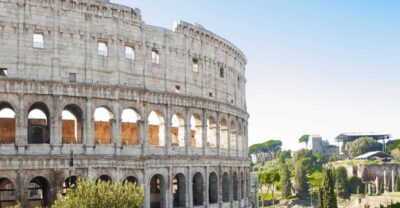
Colosseum & Forum with Audio Guide App -Optional Arena
Read our review →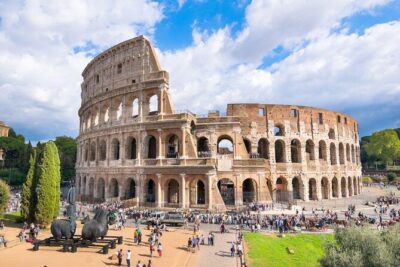
Colosseum, Roman Forum and Palatine Hill Guided Tour
Read our review →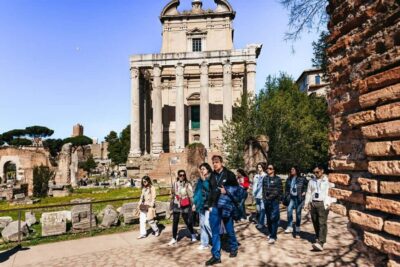
Colosseum, Forum & Palatine Hill Tour & Optional Arena
Read our review →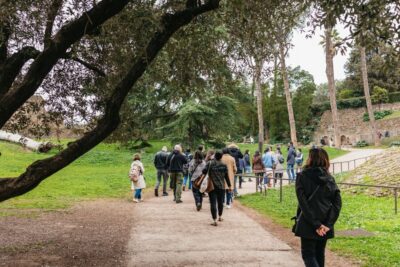
Colosseum, Palatine Hill & Roman Forum Guided Tour
Read our review →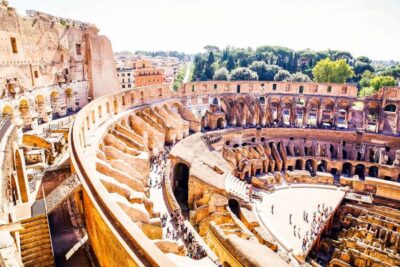
Colosseum: Underground and Ancient Rome Tour
Read our review →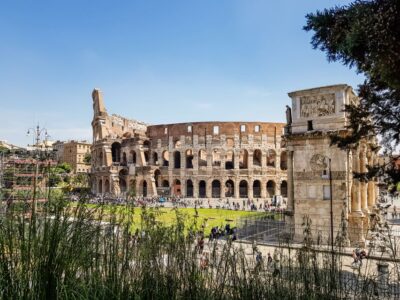
Colosseum Arena, Palatine Hill & Forum Guided Tour
Read our review →Browse the lists this tour appears in