
Reviewed · COLOSSEUM TOURS
Rome: Colosseum, Palatine Hill, and Forum Guided Experience
Rome’s ancient center is easiest to understand with someone who can connect the broken stones to the people who used them. This three-hour guided visit takes you through the Colosseum, Roman Forum, and Palatine Hill, then finishes near Trajan’s Column, giving you a solid first look at the city’s most important ruins.
I like the clear historical storytelling, especially the way a good guide can separate gladiator fact from movie fiction. I also like the chance to keep exploring inside the Colosseum after the guided hour, rather than being hurried straight out. The main caution is timing: skip-the-line does not always mean walk straight in, and some groups have waited 45 minutes before entering.
In This Review
- Key points at a glance
- Why this three-hour route works in Rome
- Entering the Colosseum with a guide
- How much time you really need at the amphitheater
- Reading the Roman Forum beyond the ruins
- Palatine Hill and the view over ancient Rome
- Ending near Trajan’s Column
- The guide makes the biggest difference
- Skip-the-line value, price, and waiting
- Summer heat and seasonal timing
- Identification and booking details that matter
- Who should book this Colosseum experience
- Should you book it?
- FAQ
- How long does the tour last?
- What sites are included?
- Is the underground area included?
- Can I explore the Colosseum after the guided tour?
- Which languages are available?
- Do I need identification?
- Is the tour suitable for wheelchair users?
Key points at a glance
- Colosseum access with a live guide: Spend about one hour inside Rome’s great amphitheater, with headsets to make the commentary easier to follow.
- A useful ancient-Rome overview: The tour links the Flavian dynasty, Roman engineering, gladiatorial contests, and public entertainment.
- Forum and Palatine Hill included: Continue among temples, arches, streets, and imperial remains in the heart of the old city.
- Free time inside the Colosseum: After the guided portion, explore the permitted sections at your own pace.
- Trajan’s Column finish: End by one of Rome’s most famous symbols of military power and victory.
- Practical limits: Underground and arena-level access are not included, and the tour is not suitable for wheelchair users or people with mobility impairments.
Why this three-hour route works in Rome
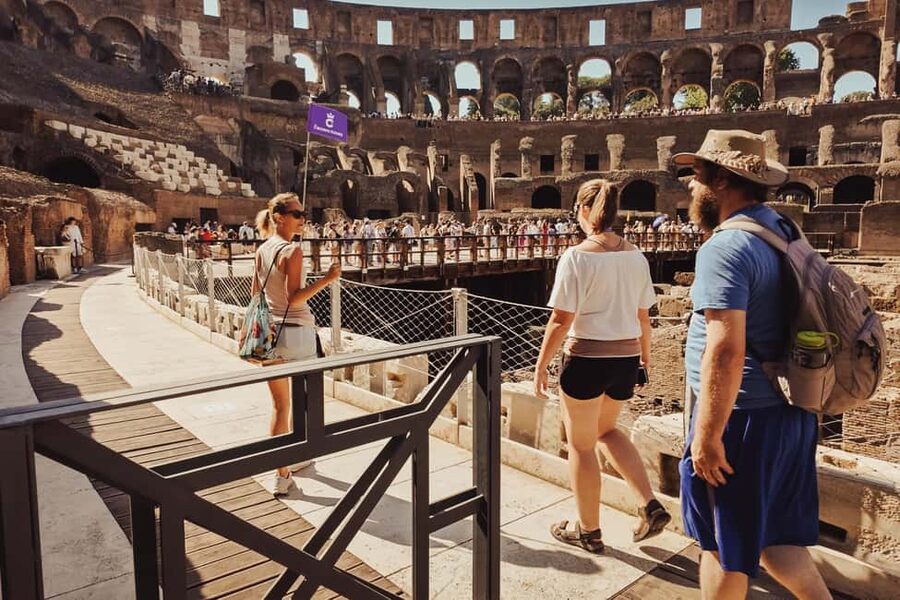
The Colosseum is a spectacular building, but its scale alone does not explain how it worked. A guide gives you the missing pieces: who paid for it, why the Flavian emperors built it, how Roman engineering made the structure possible, and how public games fit into Roman society.
That context matters because the Forum and Palatine Hill can otherwise feel like a field of columns and scattered walls. With an explanation, you can begin to read the site as the center of government, religion, ceremony, and imperial life.
The tour is also a sensible choice if you have limited time in Rome. It covers three major sites without asking you to spend a full day on ancient ruins. The trade-off is depth. One hour at the Colosseum gives you a strong introduction, but it will not satisfy someone who wants every architectural detail or access to restricted areas.
More ways to see the Colosseum:
- Rome: Colosseum, Palatine Hill and Roman Forum Guided Tour
★ 4.8 · 32,814 reviews - Rome: Guided Tour of Colosseum, Roman Forum & Palatine Hill
★ 4.7 · 27,897 reviews - Rome: Colosseum & Forum with Audio Guide App -Optional Arena
★ 4.2 · 24,770 reviews
Entering the Colosseum with a guide

The visit begins outside the amphitheater with a short introduction to Roman civilization and the building itself. This opening is useful because the Colosseum’s façade can seem self-explanatory. It is not. The structure was a carefully planned machine for moving large crowds, staging performances, and displaying imperial power.
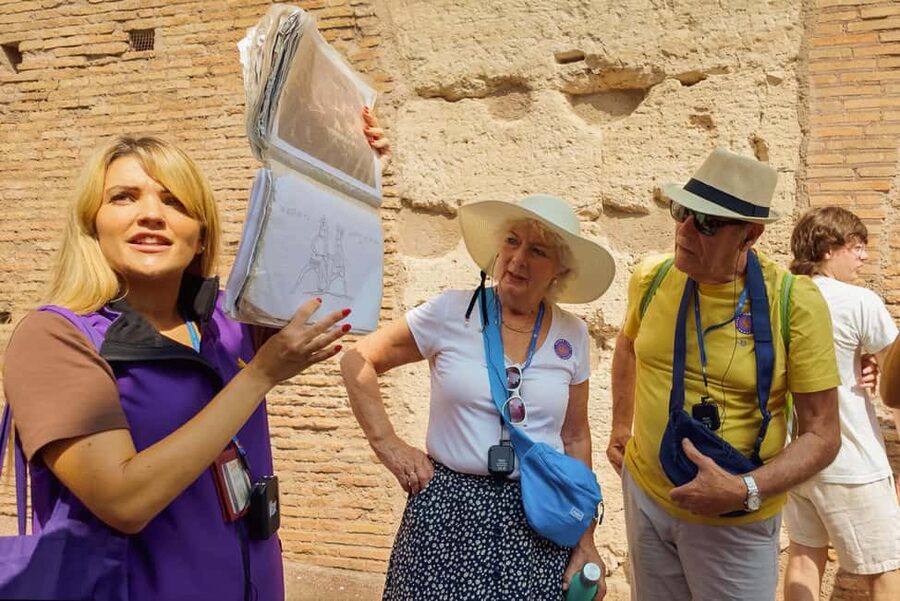
Inside, the guided portion lasts about one hour. You walk through the permitted sections while the guide explains the building’s development under the Flavian dynasty and the role of gladiators, entertainers, and spectators.
I especially value the chance to hear the difference between popular legend and evidence. Roman games were violent, but the modern picture of every fight ending in death is too simple. A good explanation brings out the rules, social pressures, public spectacle, and human choices behind the arena.
The included headsets are practical. Groups can spread out slightly, and you do not need to stand shoulder to shoulder with the guide to catch every sentence. The quality of the experience still depends on the individual guide. Past groups have praised guides including Jessica, Lars, André, Lumi, Simon, Mercedes, and Niels Arne for clear explanations, humor, and energy. English, French, German, and Spanish tours are offered.
Do not confuse this booking with a full-access Colosseum package. Underground and arena-level access are not included. If standing on the reconstructed arena floor or visiting the underground chambers is your main reason for coming, choose a different ticket.
How much time you really need at the amphitheater
The scheduled visit lasts three hours in most of the year, but the Colosseum portion is guided for about one hour. After that, you receive free time inside the sections allowed by your ticket.
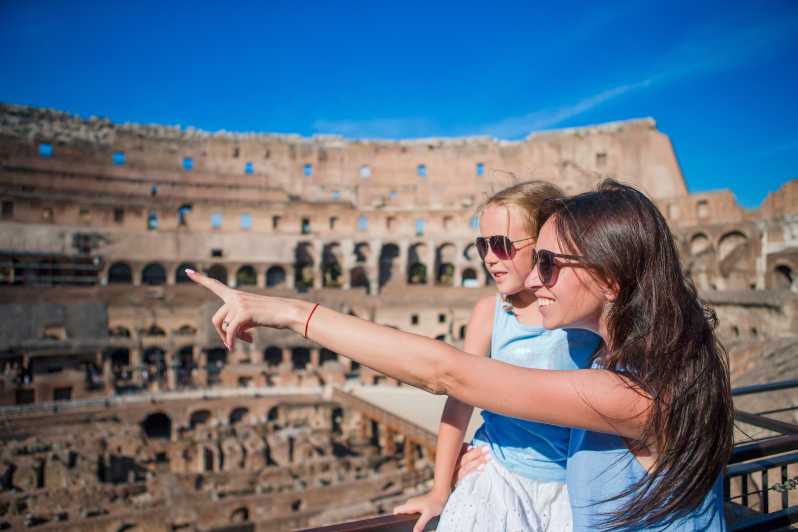
That extra time is valuable. You can pause for photographs, look more carefully at the seating levels, and revisit an explanation that caught your attention. Families may also appreciate not having to follow a guide every minute. One parent described the format as a good fit for children with little patience for long waits and lengthy lectures.
The tour can feel short if you want a detailed study of the building. One hour moves quickly, particularly when the group is large or the guide pauses for questions. A group of around 20 has been reported as comfortable to follow, but the exact group size can vary by departure.
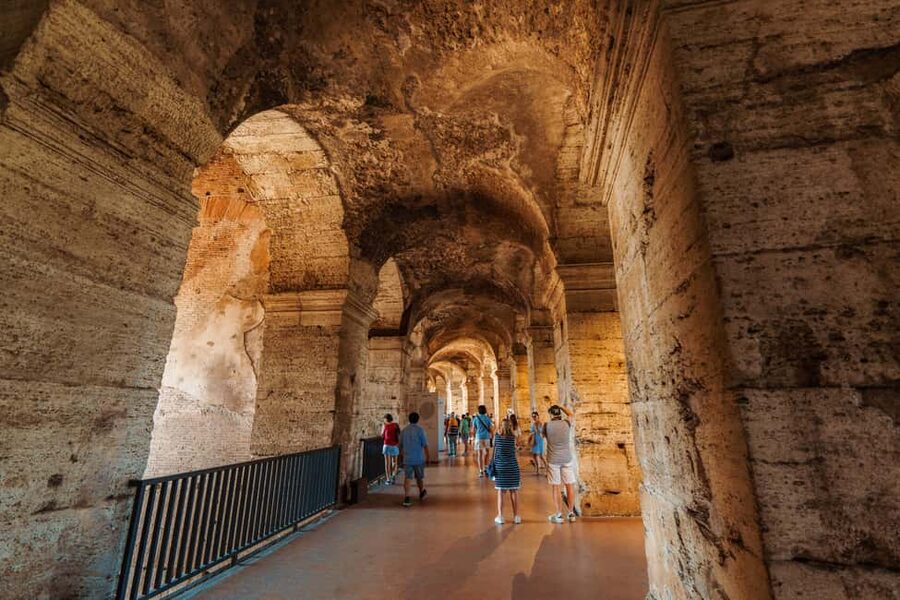
The site is also physically demanding. Expect uneven ancient surfaces and substantial steps. One visitor specifically warned that some steps are large, so comfortable shoes are essential. The experience is not suitable for wheelchair users or people with mobility impairments, and electric wheelchairs are not accepted.
Reading the Roman Forum beyond the ruins
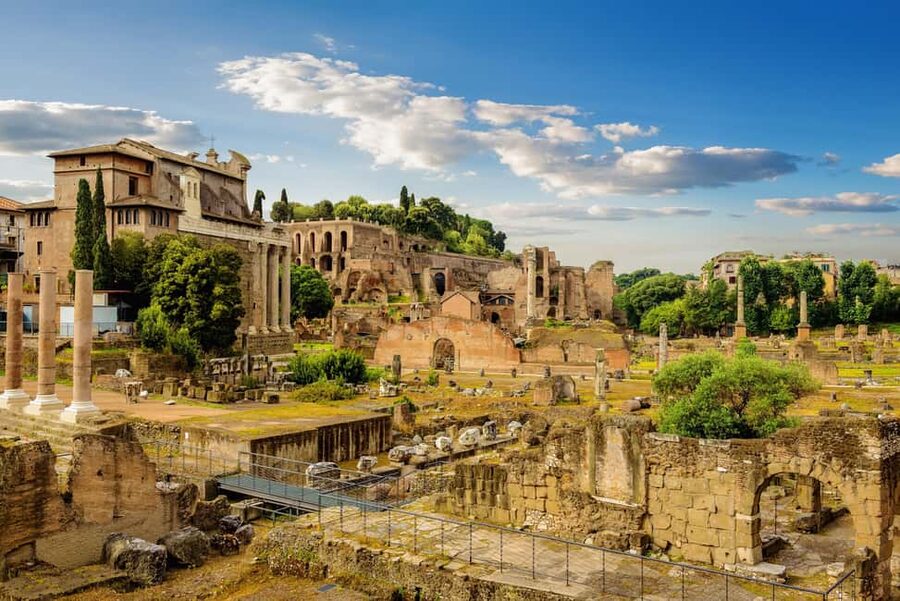
After the Colosseum, the route includes the Roman Forum. This was the center of public life in ancient Rome, but the remains are not arranged like a modern museum. You will see fragments of temples, arches, government buildings, roads, and monuments spread across an open archaeological area.
This is where a guide earns the admission price. Without help, it is easy to look at a column and move on. With a clear explanation, you can picture the Forum as a place where political speeches, religious rites, legal business, triumphal processions, and ordinary errands took place.
The Forum also shows how Rome changed over time. Buildings were repaired, reused, damaged, and surrounded by later construction. The scattered appearance is part of the story, not a failure of preservation.
You should expect more walking here and less shade than in the Colosseum. In summer, heat can change the whole experience. Bring water for before or after the tour, although food and drinks are not allowed inside the archaeological sites. A hat and light clothing are sensible, but the only required item specifically listed is comfortable footwear.
More Roman Forum and Palatine Hill visits:
- Rome: Colosseum, Roman Forum and Palatine Hill Guided Tour
★ 4.5 · 23,903 reviews - Rome: Colosseum, Forum & Palatine Hill Tour & Optional Arena
★ 4.4 · 13,839 reviews - Rome: Colosseum, Palatine Hill & Roman Forum Guided Tour
★ 4.6 · 12,703 reviews - Rome: Colosseum Arena, Palatine Hill & Forum Guided Tour
★ 4.6 · 10,584 reviews
Palatine Hill and the view over ancient Rome
Palatine Hill adds the imperial side of the story. The hill is linked with Rome’s earliest legends and later became the address of emperors and elite residences. Among the remains, you will encounter the scale of ancient palaces and the elevated views that helped make this one of Rome’s most desirable locations.
The hill is not just another collection of stones. It helps explain the social order of the city. The Forum below was a place of public activity, while the Palatine represented private imperial power and ceremony.
The route can be tiring because the area is large, uneven, and sloped. If you want to examine every ruin, you will need more time than this tour provides. If you want an organized introduction, the visit gives you a helpful framework and points out what deserves a closer look later.
Some departures take place at twilight, when the ruins and palace remains can have a particularly striking atmosphere. Still, do not assume every booking has the same light or meeting arrangement. Check the starting time and option details carefully.
Ending near Trajan’s Column
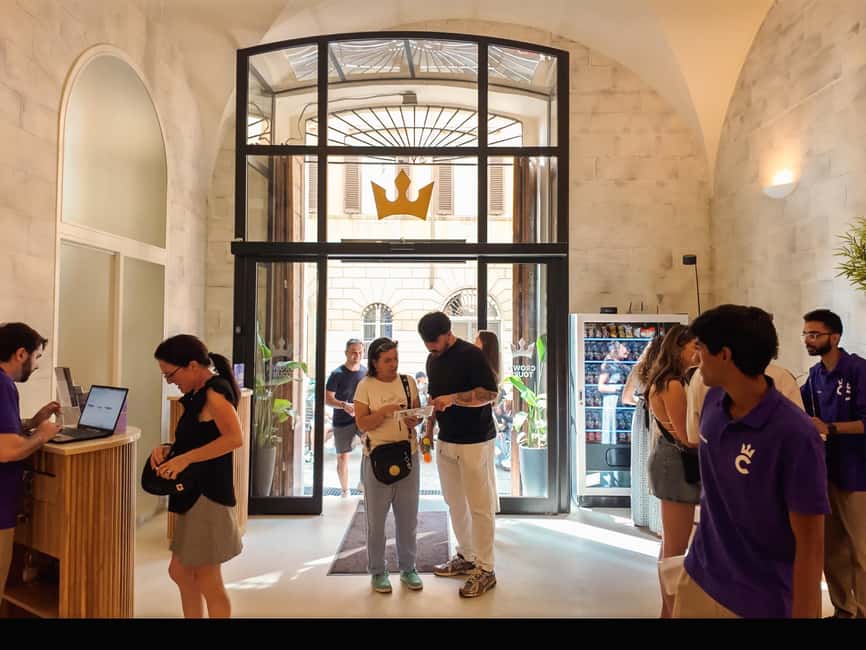
The experience ends at Trajan’s Column, a famous monument to Roman military victory and imperial authority. Its spiral relief shows scenes from Trajan’s campaigns against the Dacians, giving you one last example of how Rome used architecture to tell its own political story.
The column is a fitting finish because it shifts your attention from the arena to propaganda. The Colosseum showed the emperor providing entertainment. Trajan’s Column showed the emperor as commander and conqueror.
You may want to plan your next stop from here rather than rushing away. The ending is in the city center, not at your hotel, and hotel pickup or drop-off is not included. Since the meeting point can vary by option, read your confirmation closely before setting out.
The guide makes the biggest difference
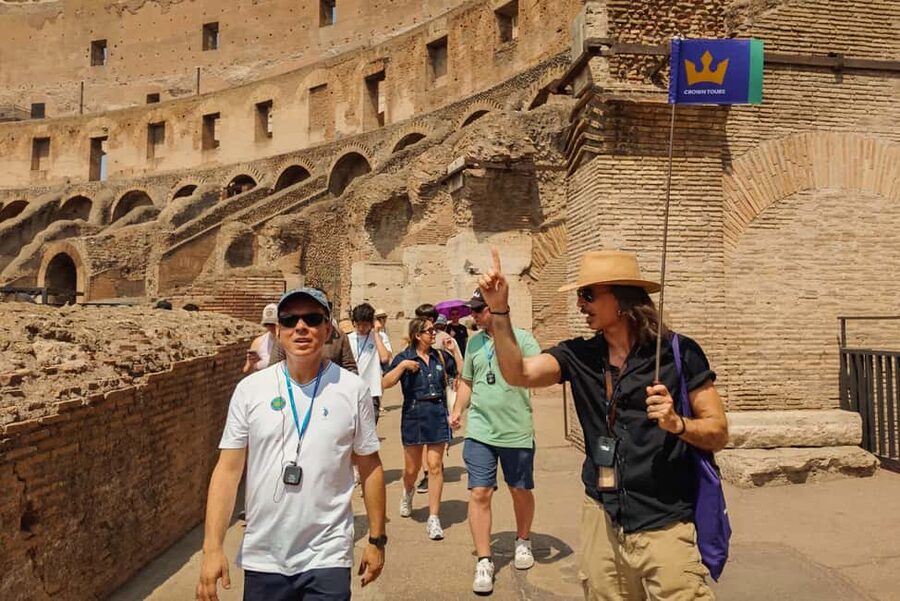
This experience depends more on the guide than on the route. The monuments are extraordinary, but a flat lecture can make even the Colosseum feel like a school assignment. The strongest guides use stories, dates, humor, and visual clues to keep the group connected to the place.
Past guide names associated with strong experiences include André, Lumi, Jessica, Lars, Mercedes, Simon, Fuma, and Niels Arne. The best feedback repeatedly centers on enthusiasm, clear presentation, friendly behavior, and the ability to bring the ruins to life.
There have also been uneven moments. One group found the guide’s English difficult to follow, and another reported that the guide used a phone during the tour. Those incidents appear to be exceptions, but they are worth keeping in mind when you book a group experience rather than a private guide.
The headsets help with sound, but they cannot fix a rushed or disorganized presentation. If you want a very detailed scholarly tour, look for a longer specialist visit. This one aims to give you the main story and keep the pace moving.
Skip-the-line value, price, and waiting
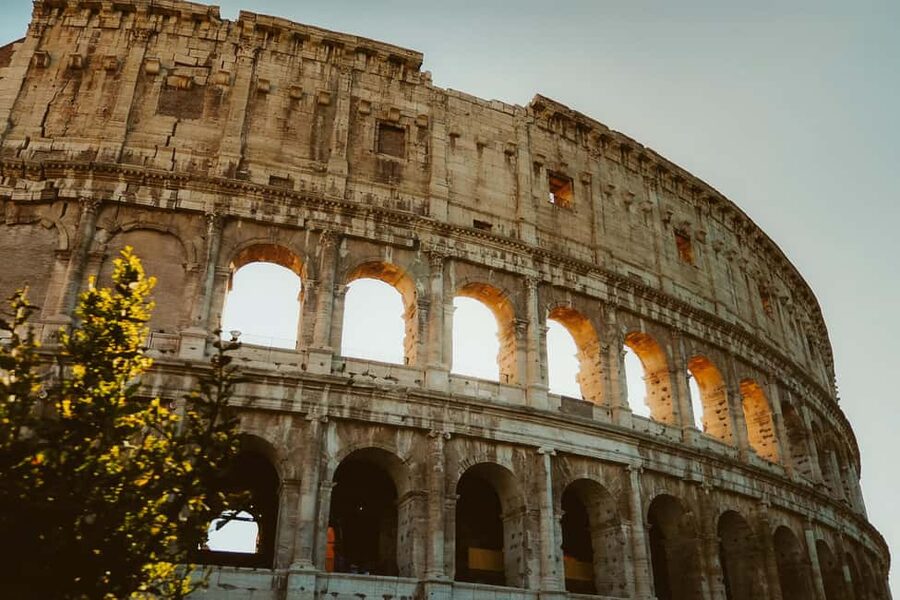
At $58 per person, this is not the cheapest way to enter the archaeological area. The adult entry fee is listed as €16, plus a €2 reservation fee. The rest of the price pays for the guide, audio equipment, booking arrangements, and tour service.
The value is mainly in your time and orientation. You avoid the regular ticket line, and you do not have to work out the Forum’s layout or decode every ruin alone. For a first visit, that can be worth the extra cost.
But skip-the-line is not a promise of instant entry. Security, timed admission, and crowd control can still create a wait. Some people have stood outside for 45 minutes after arriving at the assigned time, and one group waited long enough to threaten a separate Vatican appointment.
I would leave plenty of space after this tour. Do not book a tight connection, restaurant reservation, or second timed attraction immediately afterward. Arrive at the meeting point early, and make sure you can identify the correct company. Several tour groups may gather in the same area, and the meeting point varies by booking option. A past mix-up involved an unclear meeting location, while another visitor found the area confusing because several guides were present at once.
Summer heat and seasonal timing
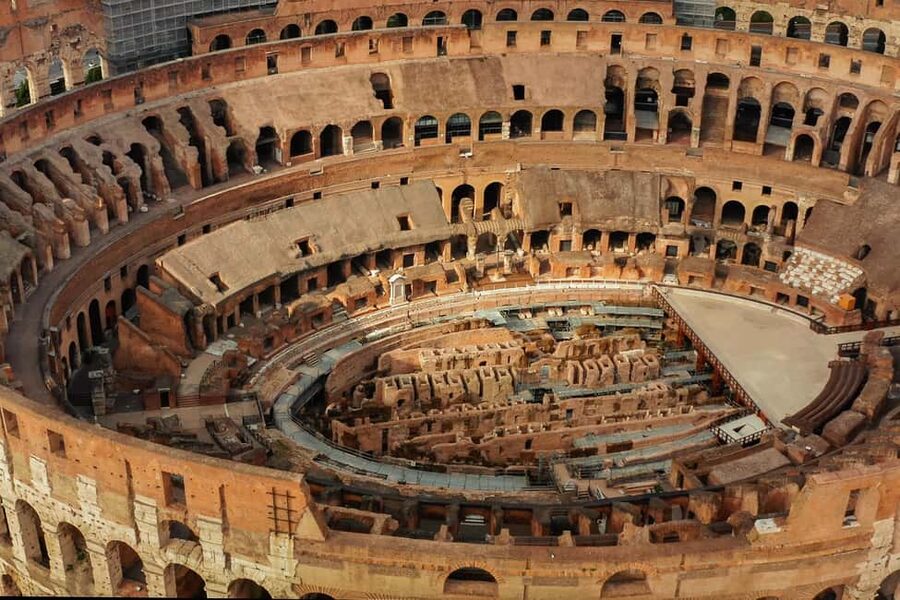
In July and August, the listed duration drops to two hours. That shorter schedule may be easier in the heat, but it also means less time for explanations and independent exploring.
The Forum and Palatine Hill offer limited relief from the sun, and ancient paving can make walking harder in hot weather. Choose shoes with good support, carry identification, and avoid scheduling this on a day when you are already worn out from several other outdoor sights.
Twilight departures can be appealing because the ruins may look especially atmospheric as the light softens. Still, the exact mood depends on the departure time and season. The practical point is simple: check the schedule, dress for the conditions, and do not count on a cool evening unless your booking confirms it.
Identification and booking details that matter
Bring your passport or national identity card. Identification is mandatory, and entrance cannot be guaranteed if you arrive without it.
The full names of every participant must be supplied with the booking. Incomplete information can also put admission at risk. This is easy to overlook when one person books for a family or group, so check the spelling before payment.
The activity is non-refundable. That makes it especially important to confirm the date, start time, language, meeting point, and names before you commit. Pets, weapons, sharp objects, oversize luggage, smoking, alcohol, drugs, aerosols, sprays, and glass objects are not allowed.
Unaccompanied minors are not accepted. The tour is also not appropriate for wheelchair users or people with mobility impairments. These are not minor details at an archaeological site with steps, uneven ground, and long outdoor stretches.
Who should book this Colosseum experience
I would choose this tour if you are visiting Rome for the first time, have only a few days, or want the main ancient sites explained in one organized outing. It is also a good match for families who need structure and for anyone who would rather listen to a guide than read a long series of signs.
It suits you best if you want a lively introduction, not a specialist course. The one-hour Colosseum explanation and the guided Forum and Palatine visit give you a useful foundation, while the free time inside the amphitheater lets you slow down afterward.
I would look elsewhere if you require step-free access, want the underground or arena level, dislike group tours, or need a guaranteed quick entry. I would also avoid it if you want to spend half a day examining every corner of the Forum and Palatine Hill.
Should you book it?
Book this experience if you value clear explanations, included access to all three major sites, and a practical three-hour schedule. The strongest part is the guide-led context, especially for understanding gladiators, Roman engineering, imperial power, and the purpose of the Forum.
Just plan with patience. The meeting point can be confusing, entry can take longer than the advertised time, summer visits are shorter, and the route involves steps and open-air walking. For many first-time visitors, $58 is fair for the time saved and the stories that turn ancient stone into a functioning city. For repeat visitors seeking restricted areas or fine architectural detail, a longer or more specialized tour may be the better buy.
FAQ
How long does the tour last?
The listed duration is three hours. In July and August, the visit lasts two hours.
What sites are included?
The experience includes the Colosseum, Roman Forum, and Palatine Hill. It ends at Trajan’s Column.
Is the underground area included?
No. Underground and arena-level access are not included with this experience.
Can I explore the Colosseum after the guided tour?
Yes. After the guided portion, you have free time to explore the permitted sections inside the Colosseum.
Which languages are available?
Live guides are available in English, French, German, and Spanish.
Do I need identification?
Yes. You must bring a passport or ID card. Entry cannot be guaranteed without identification, and the full names of all participants are required for the booking.
Is the tour suitable for wheelchair users?
No. The experience is not suitable for wheelchair users or people with mobility impairments. Comfortable shoes are recommended because the route includes steps and uneven surfaces.
Newest reviews from Rome
- Rome: Vatican Museums & Sistine Chapel Skip-the-Line Ticket★ 4.4 · 148 reviews
- Shared Shuttle Transfer from Rome to Civitavecchia Port★ 5.0 · 148 reviews
- Rome: Crypts & Catacombs After Hours Tour with Bone Chapel★ 4.6 · 149 reviews
- Ghosts Legends and Mysteries of Rome Walking Tour★ 5.0 · 149 reviews
- Skip the Line: Vatican and Sistine Chapel with Guided Tour★ 4.0 · 149 reviews
- Tivoli: Villa Gregoriana Entrance Ticket★ 4.7 · 150 reviews
- Pizza and Tiramisu Cooking Class in Rome, Piazza Navona★ 5.0 · 150 reviews
- Rome: Borghese Gallery Skip-the-Line Entry and Guided Tour★ 4.7 · 150 reviews
Colosseum Tours, compared.
Colosseum, Palatine Hill and Roman Forum Guided Tour
Read our review →
Guided Tour of Colosseum, Roman Forum & Palatine Hill
Read our review →
Colosseum & Forum with Audio Guide App -Optional Arena
Read our review →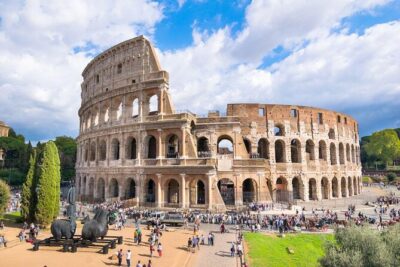
Colosseum, Roman Forum and Palatine Hill Guided Tour
Read our review →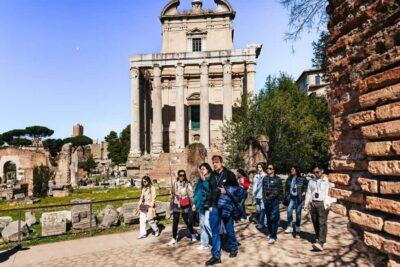
Colosseum, Forum & Palatine Hill Tour & Optional Arena
Read our review →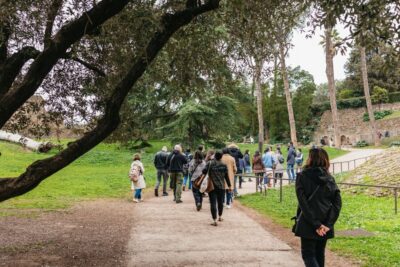
Colosseum, Palatine Hill & Roman Forum Guided Tour
Read our review →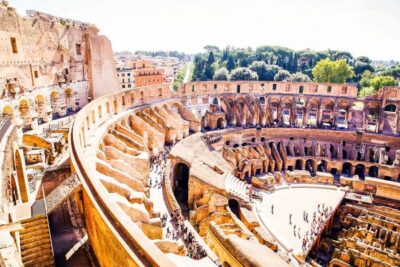
Colosseum: Underground and Ancient Rome Tour
Read our review →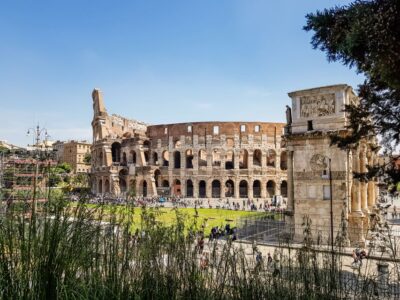
Colosseum Arena, Palatine Hill & Forum Guided Tour
Read our review →Browse the lists this tour appears in