
Reviewed · UNDERGROUND ROME TOURS
Rome: Colosseum Underground and Arena Tour
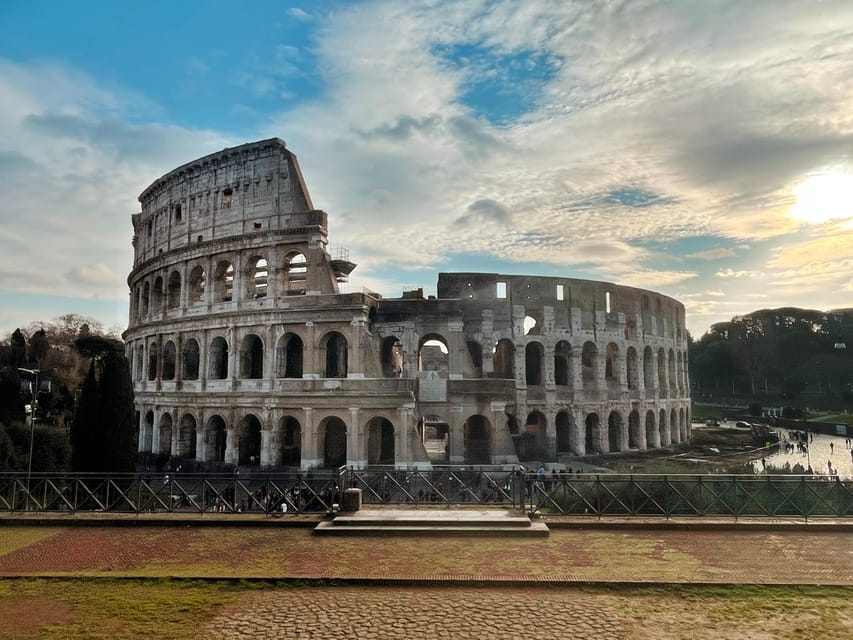
The most unusual part of this Colosseum tour is below ground. In the Hypogeum, you walk through the cramped corridors where gladiators and animals were held before appearing through trapdoors onto the arena. You also get onto the sand-covered arena floor, then climb to the upper tiers for wide views.
I like the small group of no more than eight, which makes it easier to hear guides such as Sara, Claudia, Virginia, and Giorgio and ask questions. I also like that the tour covers the Roman Forum and Palatine Hill, not just the Colosseum. The main drawback is pace: with so much packed into 2.5 hours, the Forum and underground can feel rushed.
Another practical point matters here: the Colosseum controls access to the restricted areas. Entry times can shift, the underground guide may sometimes be separate, and an Italian-only guide has been assigned underground on at least one occasion. Keep your schedule flexible.
In This Review
- Key points at a glance
- Why the underground changes the Colosseum visit
- Meeting the guide at Largo della Salara Vecchia
- Roman Forum: a quick route through ancient Rome
- Palatine Hill: Rome from above
- Entering the Hypogeum beneath the Colosseum
- The arena floor and the best Colosseum perspective
- First and second tiers: views over the monument
- A realistic look at the $94 price
- Who should book this Colosseum tour?
- Should you book the underground and arena route?
- FAQ
- How long does the tour last?
- What language is the tour conducted in?
- How large is the group?
- Where does the tour begin?
- Where does the tour finish?
- Does the tour include the Roman Forum?
- Does the tour include Palatine Hill?
- Is entry to the Colosseum underground included?
- Is the arena floor included?
- What identification should I bring?
- Can the Colosseum change the tour time?
Key points at a glance
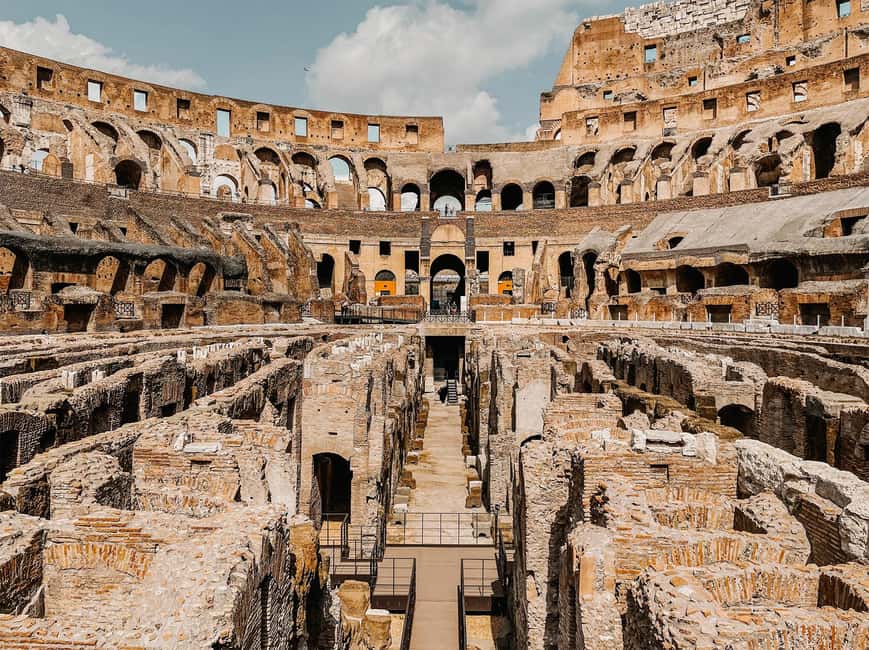
- Walk through the Hypogeum: See narrow passageways, animal cages, drainage works, gladiator rooms, and a reconstructed lifting system.
- Step onto the arena floor: Stand on the central wooden platform and look up at the Colosseum from the place where spectacles unfolded.
- See the Roman Forum and Palatine Hill: The tour adds two major ancient sites that are often rushed or skipped on a Colosseum-only visit.
- Travel in a group of eight or fewer: A compact group makes headset commentary and questions easier to manage.
- Plan for a brisk schedule: The Forum, Palatine Hill, underground, arena, and upper tiers all fit into 150 minutes.
- Bring matching identification: Your passport or ID card is required, and the booking names must match those documents.
Why the underground changes the Colosseum visit
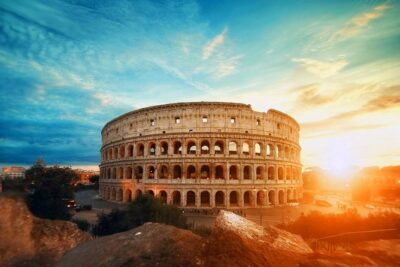
From the outside, the Colosseum is an enormous shell. From the upper seats, it is an impressive monument. But the Hypogeum explains how the building worked.
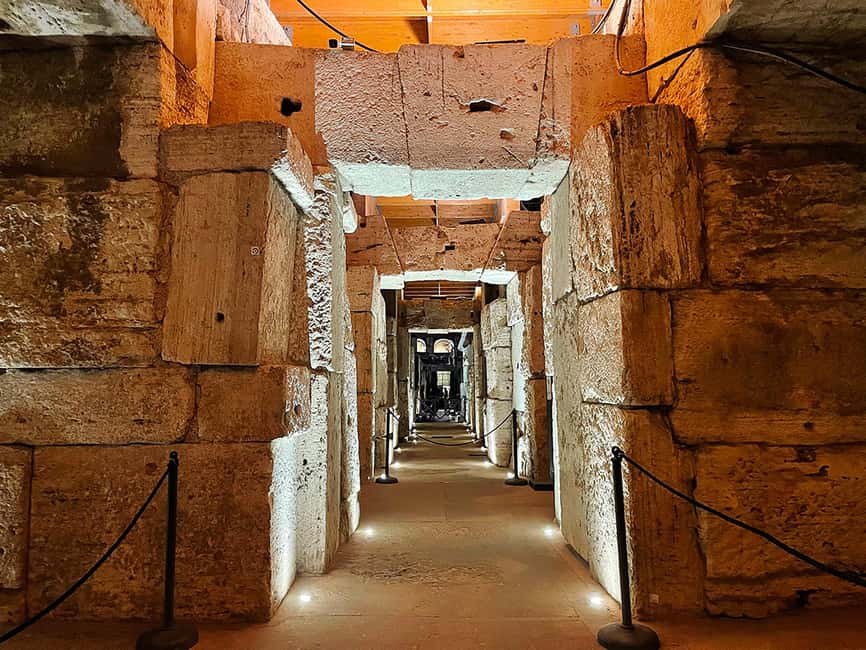
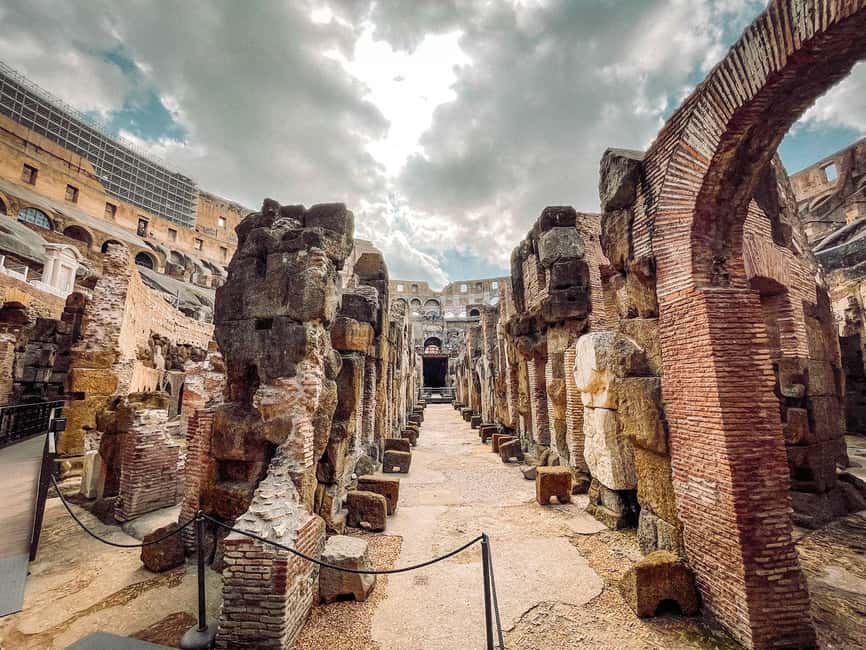
The underground level was the machinery room of the ancient amphitheater. Beneath the arena, corridors connected holding rooms, animal cages, lifts, and trapdoors. Gladiators waited there before appearing in front of the crowd, while animals were kept out of sight until the moment they were released.
I find this more useful than simply hearing another account of emperors and battles. The underground lets you picture the operation of the games. The arena was not just a round stage. It was a busy system of people, animals, equipment, pulleys, doors, and timing.
You can see fragments of the original floor and part of the old drainage system. Large travertine blocks give the space a rough, unfinished look. The corridors are narrow and the light is dim, so the effect is more physical than the open-air monument above.
Access to this level is restricted, which is why an organized tour can be good value. The standard entrance does not give every visitor the same route, and the underground requires a special ticket. At $94 per person, this is not a cheap way to see the Colosseum, but the restricted access is the part you are paying for.
More ways to see the Colosseum:
- Rome: Colosseum, Palatine Hill and Roman Forum Guided Tour
★ 4.8 · 32,814 reviews - Rome: Guided Tour of Colosseum, Roman Forum & Palatine Hill
★ 4.7 · 27,897 reviews - Rome: Colosseum & Forum with Audio Guide App -Optional Arena
★ 4.2 · 24,770 reviews
Meeting the guide at Largo della Salara Vecchia
The tour begins at Largo della Salara Vecchia, at the entrance to the Roman Forum. The meeting point is near the ticket counters, on the left side under a tree. Look for the guide carrying the GetYourGuide logo.
This location is worth taking seriously. The Forum entrances can be confusing, and one person had trouble finding the group because there was no obvious large sign. Arrive early and read the directions carefully. You do not want to begin a short, tightly timed tour by circling the block.
The guide supplies headsets, a useful feature in a place filled with foot traffic and echoing stone. A good headset means you can look at the ruins while still following the explanation. Small groups also help. With eight people or fewer, the guide can keep track of the group and respond to questions without shouting across a crowd.
The English-speaking guides have included Sara, Claudia, Virginia, Giorgio, Paola, Italo, Sylvia, Massimo, Daniela, and others. The guide makes a real difference here. Strong guides use drawings, photographs, and comparisons to help you picture buildings that now survive mostly as broken walls.
Roman Forum: a quick route through ancient Rome
The first guided portion lasts about 30 minutes. The Forum was the center of public life in ancient Rome, and the remains are spread across a large area. You will see columns, foundations, roads, temples, and fragments of civic buildings rather than one intact monument.
Thirty minutes gives you a useful introduction, but not a full exploration. That is one of the tour’s clearest compromises. Several people wanted more time to wander among the Forum ruins, and you may feel the same if ancient architecture is your main interest.
The advantage is context. The Colosseum makes more sense when you understand the surrounding city. The Forum was where public business, religion, politics, speeches, and ceremonies took place. The Colosseum was part of a larger urban setting, not an isolated attraction built for modern photographs.
Your guide can also help with orientation. Without a guide, it is easy to look at a broken column and have no idea what once stood there. With only half an hour, stay close and listen for the main stories. Save independent exploring for another visit if you want time to inspect every corner.
The route is not designed for leisurely wandering. The group has to reach the Colosseum at a fixed access time, especially when the monument is closing earlier. Think of this section as a strong introduction, not a complete Forum visit.
Palatine Hill: Rome from above
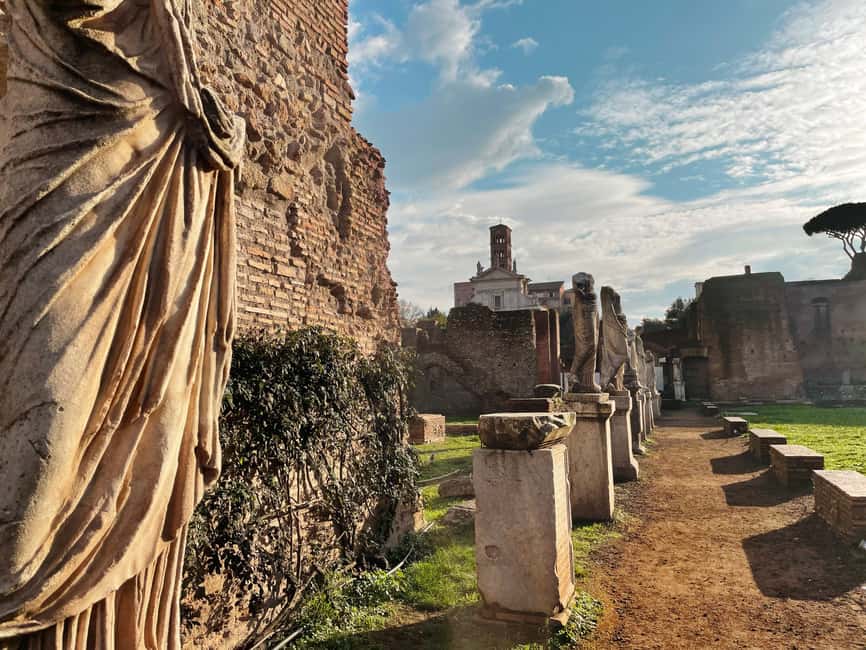
The next guided section lasts around 30 minutes, followed by a 15-minute photo stop. Palatine Hill gives you a higher view over the ancient area and offers a chance to understand the relationship between the Forum and the Colosseum.
The hill is also important for the stories of Rome’s earliest traditions. The experience here is less about one single surviving building and more about ruins, views, and the sense of how the ancient city occupied the hills and valleys around you.
I like having this stop before the Colosseum. You get a broader view of the site before entering the amphitheater’s enclosed spaces. Guides have used visual aids to show how the Forum, Palatine Hill, and Colosseum changed over time, which can make the scattered remains easier to read.
The 15-minute photo stop is short but useful. You can take pictures, catch your breath, and look back across the ruins. Do not expect a long pause for private exploration. The tour is moving toward the timed underground entrance, and that schedule controls the day.
Wear shoes that can handle uneven historic paving. The supplied information does not give a detailed accessibility route, but the experience is not suitable for wheelchair users. The Forum and Palatine Hill portions involve ancient surfaces and a fairly active walking schedule.
More underground Rome tours:
- Colosseum: Underground and Ancient Rome Tour
★ 4.7 · 12,691 reviews - Rome: Crypts and Catacombs Underground Tour with Transfers
★ 4.6 · 5,341 reviews - Expert Guided Tour of Colosseum Arena OR Underground, and Forum
★ 4.5 · 5,041 reviews - Rome: Colosseum Underground Small Group Guided Tour
★ 4.7 · 4,844 reviews
Entering the Hypogeum beneath the Colosseum
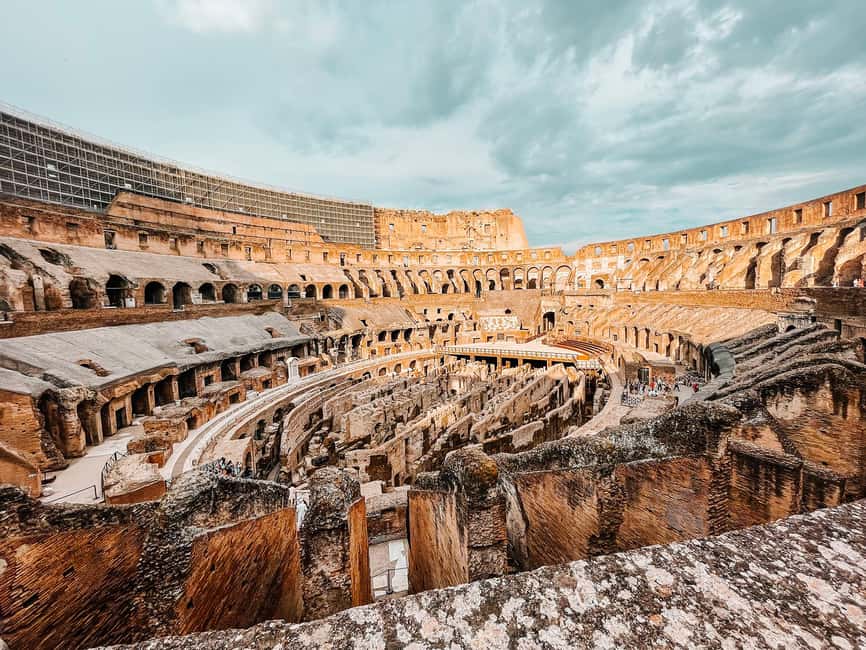
The underground visit lasts about 20 minutes. That may sound brief, but the area itself is restricted and the group must keep moving. Your guide will point out the main features rather than leave you to wander.
Look for the original floor fragments, drainage system, holding rooms, animal cages, and the reconstructed elevator. The elevator is especially helpful because it explains how performers and animals could rise from below the arena. A trapdoor opened above, and the lift created a sudden appearance for the crowd.
The narrow corridors make the visit feel very different from the bright upper levels. You are close to the rough blocks and working spaces that supported the spectacle. This is where the Colosseum feels less like a grand ruin and more like a carefully organized machine.
There is also an emotional side to the place. Gladiators waited here before fighting, and animals were confined below the noise of the crowd. The setting encourages vivid images, but a good guide should also separate documented features from dramatic storytelling. Guides such as Claudia, Sara, and Virginia have been praised for explaining both the structure and the larger setting without burying the group in facts.
Here is the important caution: the guide who takes you through the Forum and main Colosseum may not always be permitted to accompany you underground. The Colosseum staff control access and language assignments in the restricted area. One English-speaking group was given an Italian-only underground explanation, which made that part much less useful. This appears to be an operational risk rather than something the tour company can fully control, but you should know it before paying the premium.
The arena floor and the best Colosseum perspective
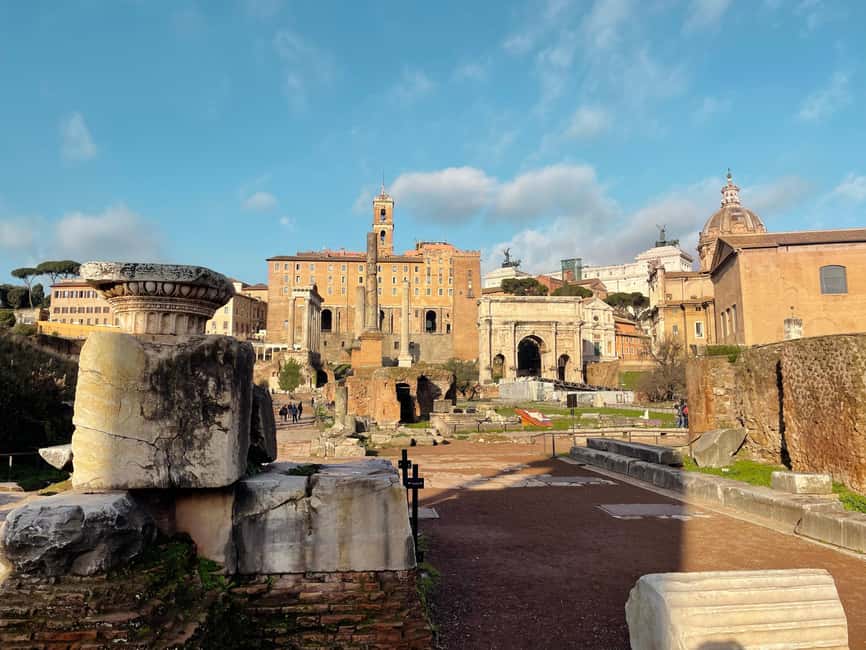
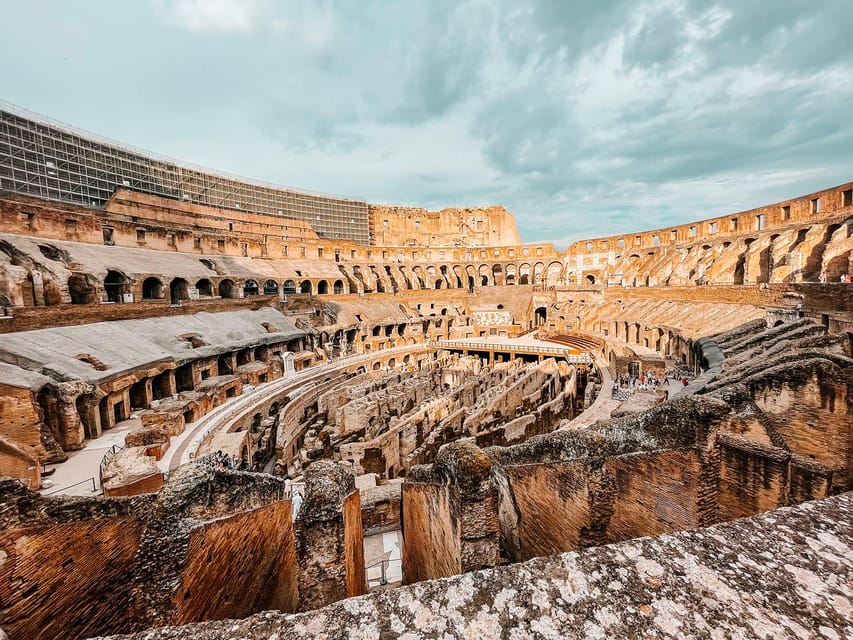
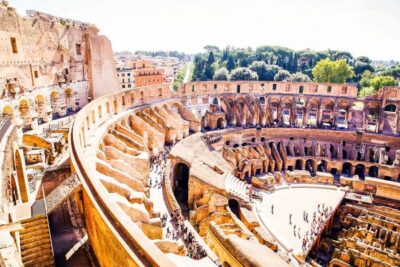
After the Hypogeum, you visit the arena floor for about 20 minutes. The central platform is covered with sand, and the Latin word arena means sand. From here, you look outward at the seating levels and upward at the vast walls.
This is one of the strongest parts of the route. The arena floor gives you a direct sense of scale. From the seats, the floor looks small. From the floor, the tiers rise around you and the building feels much larger.
You can also connect the arena to the underground machinery. The reconstructed lift and trapdoor system make sense when you are standing above it. The guide can explain how the visible spectacle depended on hidden work below.
The arena floor is also a good place for photographs. The view is less familiar than the standard exterior shot, and the guide may help with group pictures. Several guides, including Lucia and Claudia, have taken time to help visitors get photos in the main locations.
Twenty minutes is enough for the explanation and a few pictures, but it is not unlimited free time. If you like to frame photographs carefully, work quickly. The tour continues to the first and second tiers.
First and second tiers: views over the monument
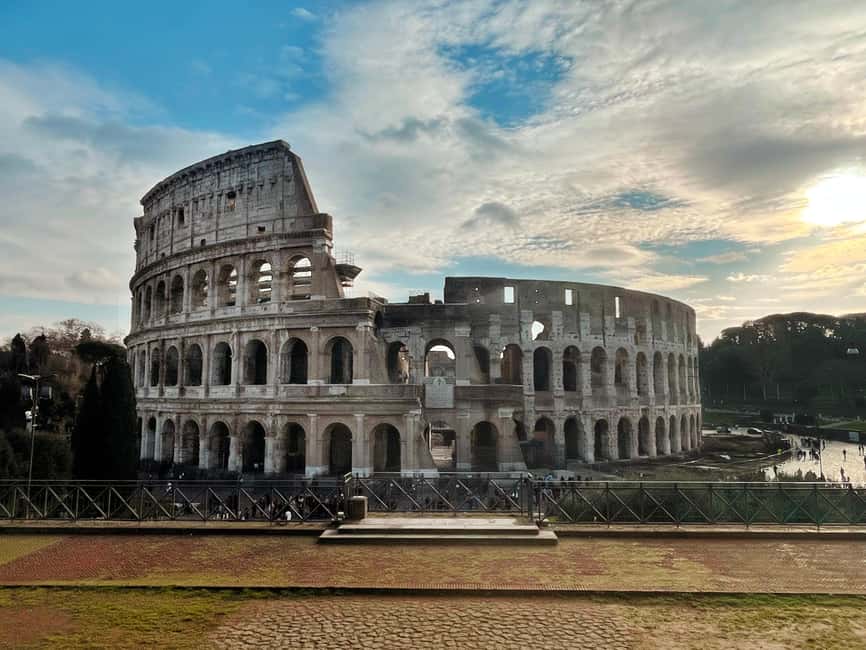
The tour continues to the first and second levels of the Colosseum. These panoramic terraces provide a different understanding of the building. You can see the arena, the remaining walls, and the surrounding city from a higher position.
This is where the three parts of the visit connect. Below, you saw the working corridors. On the floor, you saw the performance space. From above, you see how the audience experienced the event.
The guide also adds stories about the games, spectators, construction, and daily operation. This can clear up common misunderstandings about who sat where and how the events were organized. Some guides use images to recreate the missing parts, which helps when you are looking at empty arches and incomplete seating.
The upper levels are particularly good for photographs, but the time remains structured. You are not getting a full afternoon inside the Colosseum. You are getting a carefully chosen route through areas that explain how it functioned.
A realistic look at the $94 price
At $94, this costs far more than a basic Colosseum admission. You should not book it simply because it says VIP. Book it if the underground and arena floor are priorities and you value having someone handle the route and explain what you are seeing.
The underground ticket is the key value. These spaces have limited access, and official underground tickets can be difficult to secure. One person described trying to buy an official ticket and finding it sold out almost immediately. The tour fee can therefore buy convenience as well as entry.
The small group adds value too. A group capped at eight is easier to manage than a large crowd. You can hear the headset, ask a question, and stay connected to the guide. The strongest guide experiences have included personal attention, visual material, humor, and help with photographs.
Still, you are paying for access and organization, not a relaxed day. The Roman Forum and Palatine Hill are compressed into the same 2.5-hour schedule. If you want to sit, sketch, inspect ruins, or wander independently, a self-guided visit with more time may suit you better.
The overall rating is 4.7 from 1,002 ratings, and the recurring strengths are clear: guides who bring energy, small groups, working headsets, and access to the underground. The recurring cautions are also clear: the Forum can feel too short, the underground may feel rushed, and schedule changes can happen.
Who should book this Colosseum tour?
I would choose this tour for a first visit to Rome if the Colosseum is high on your list and you want more than the standard upper route. Families can benefit from the pace and storytelling. One guide kept toddlers involved by adjusting the stops, and another held a 10-year-old’s attention through the history.
It also suits visitors who have already seen the Colosseum and want a different angle. The underground, arena floor, and machinery offer material you may not have encountered on a regular visit.
I would hesitate if you dislike guided groups, need a fully accessible route, or want long stretches of quiet exploration. I would also avoid scheduling an important activity immediately afterward. The start time can change, and the tour needs to work around Colosseum access and unexpected closures.
Book early, especially if the underground is essential. Use the exact passport or ID names when reserving, bring the same documents, and leave room in your day for a possible timing change. Reservations made separately may not place people in the same group, so include everyone in one booking if staying together matters.
Should you book the underground and arena route?
Yes, if you want the Colosseum’s hidden mechanics and can accept a brisk schedule. The Hypogeum and arena floor give you the most distinctive parts of the experience, while the Forum and Palatine Hill add useful context.
At $94, I see it as a special-access tour rather than a bargain ticket. The price makes sense for a small English-speaking group, restricted entry, and a guide who can turn broken stone into a readable story. Just keep your expectations practical: the Forum is an introduction, the underground visit is timed, and language arrangements below ground can occasionally be outside the company’s control.
FAQ
How long does the tour last?
The tour lasts 2.5 hours.
What language is the tour conducted in?
The tour is offered in English with a live guide.
How large is the group?
The group is limited to eight participants.
Where does the tour begin?
It begins at Largo della Salara Vecchia, at the Roman Forum entrance, near the ticket counters on the left side under a tree.
Where does the tour finish?
The tour finishes at Piazza del Colosseo.
Does the tour include the Roman Forum?
Yes. The itinerary includes a guided visit to the Roman Forum.
Does the tour include Palatine Hill?
Yes. The tour includes a guided visit and a separate photo stop at Palatine Hill.
Is entry to the Colosseum underground included?
Yes. VIP underground entry is included.
Is the arena floor included?
Yes. VIP arena floor entry is included.
What identification should I bring?
Bring your passport or ID card. The names in the booking must match the names on those documents, since identification is required during security checks.
Can the Colosseum change the tour time?
Yes. The Colosseum can change access times or close unexpectedly because of public events, political events, or other unforeseen situations. The meeting point or starting time may then change.
Newest reviews from Rome
- Rome: Vatican Museums & Sistine Chapel Skip-the-Line Ticket★ 4.4 · 148 reviews
- Shared Shuttle Transfer from Rome to Civitavecchia Port★ 5.0 · 148 reviews
- Rome: Crypts & Catacombs After Hours Tour with Bone Chapel★ 4.6 · 149 reviews
- Ghosts Legends and Mysteries of Rome Walking Tour★ 5.0 · 149 reviews
- Skip the Line: Vatican and Sistine Chapel with Guided Tour★ 4.0 · 149 reviews
- Tivoli: Villa Gregoriana Entrance Ticket★ 4.7 · 150 reviews
- Pizza and Tiramisu Cooking Class in Rome, Piazza Navona★ 5.0 · 150 reviews
- Rome: Borghese Gallery Skip-the-Line Entry and Guided Tour★ 4.7 · 150 reviews
Underground Rome Tours, compared.
Colosseum: Underground and Ancient Rome Tour
Read our review →
Crypts and Catacombs Underground Tour with Transfers
Read our review →
Expert Guided Tour of Colosseum Arena OR Underground, and Forum
Read our review →
Colosseum Underground Small Group Guided Tour
Read our review →
St. Peter’s Basilica, Dome Climb, and Underground Tour
Read our review →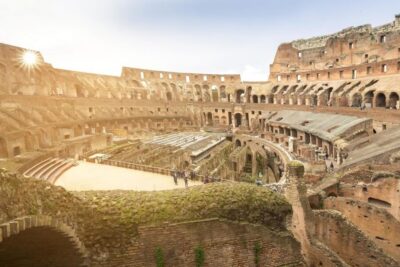
Colosseum Underground & Ancient Rome Guided Tour
Read our review →
Browse the lists this tour appears in