
Reviewed · E-BIKES
Rome E-Bike Tour – Premium Small Group with Local Guide
Rome makes you work for its sights. Ancient ruins, grand piazzas, hills, traffic, and crowds all pile into one compact city. This three-hour e-bike tour gives you a useful overview without asking your feet to carry you across Rome all day.
I like the small group, capped at eight, and the way guides such as Marco, Luca, Luigi, and Leo adjust the pace and route. I also like the electric assistance on Rome’s hills, plus the practical tips on food and places to explore later. The main drawback is traffic: you need to be a confident bike rider, and some street crossings can feel tense.
In This Review
- Key points to know before booking
- Why an e-bike works so well in central Rome
- Starting near Piazza Navona
- Roman Forum and Colosseum: Rome’s essential opening act
- Circus Maximus and Teatro di Marcello
- Michelangelo’s Piazza del Campidoglio
- Capitoline Hill for the best views
- Piazza Navona and the Pantheon
- What the guide adds to the ride
- Traffic, safety, and riding conditions
- Is three hours enough?
- Weather, timing, and practical value
- Who should book this Rome ride?
- Should you book the Rome E-Bike Tour?
- FAQ
- How long does the Rome e-bike tour last?
- What sights are included?
- Can I enter the Colosseum or Roman Forum during the tour?
- How many people can join the tour?
- Do I need to know how to ride a bike?
- What happens if bad weather cancels the tour?
Key points to know before booking
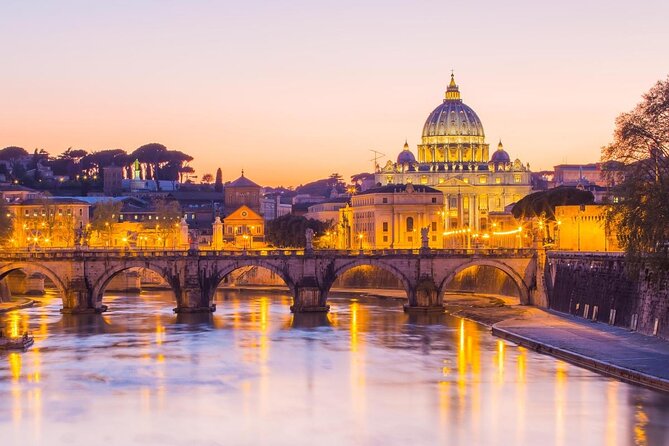
- You cover a lot of Rome in three hours: The route links ancient ruins, Renaissance spaces, famous fountains, and classic city views.
- The e-bike matters: Electric assistance makes Rome’s uphill sections much easier, especially around the Capitoline Hill.
- The group stays small: A maximum of eight people gives the guide room to answer questions and adjust the ride.
- You see sights from outside: The tour does not include monument entry, so plan separate visits to the Colosseum, Pantheon, or Roman Forum.
- Quiet streets help, but traffic remains: Guides use less crowded roads when possible, yet this is still urban cycling in central Rome.
- The timing suits a short stay: It is a smart orientation ride if you have only a day or two in the city.
Why an e-bike works so well in central Rome
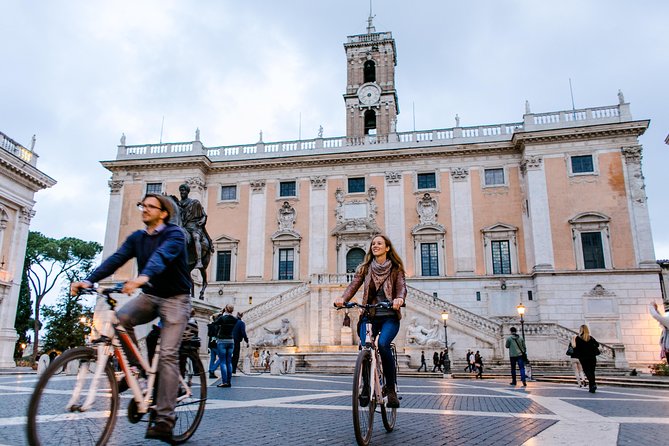
At $83.48 per person, this is not the cheapest way to see Rome. But price alone misses the point. You are paying for a bike, helmet, guide, route planning, and the ability to connect major sights quickly in a city where walking between them can consume much of your day.
The electric motor is especially useful here. Rome is not flat, and the ride includes uphill sections leading toward the Capitoline Hill and scenic viewpoints. You still pedal, but the assistance takes the sting out of the climbs. That lets you save your energy for museums, churches, meals, and evening walks.
The ride also changes the scale of Rome. On foot, you may spend a long time moving from one ancient site to another. By bike, you can pause at the Roman Forum, roll toward the Colosseum, cross to the Circus Maximus, and continue into the historic center without treating every transfer as a major hike.
The tour is described as an e-bike experience, although one itinerary line refers to a Segway. At the start, you should expect an e-bike and helmet, with an explanation of how to use the bike before setting off. Several guides have helped first-time e-bike users get comfortable, but you still need to know how to ride a bicycle.
More bike days around Rome:
- Rome EBike Tour: Appian Way, Catacombs & Roman Aqueducts
★ 5.0 · 1,766 reviews - Rome: Top Highlights & Hidden Gems Tour by Cannondale E-Bike
★ 4.9 · 1,760 reviews - Rome: Appian Way, Catacombs, & Roman Aqueducts E-bike Tour
★ 4.9 · 1,421 reviews
Starting near Piazza Navona
The meeting point is on Via dei Soldati, 27, in central Rome, close to Piazza Navona. This is a convenient part of town for a sightseeing ride because the route quickly reaches some of Rome’s best-known historic areas.
Expect a short practice period before the tour begins. This is useful if you have never handled an e-bike or if it has been a while since you rode in city traffic. Use this time to check the saddle, brakes, and electric assistance, and tell the guide if you need a slower pace.
The group size makes a real difference here. With no more than eight people, the guide can watch the group more closely than on a large coach or mass bicycle ride. Guides have also adjusted routes for road closures, weather, water breaks, and specific interests.
You should wear clothes suited to the forecast and comfortable shoes. A release of liability form must be signed at the start. The tour is offered in English, and children must be at least 10 years old and accompanied by an adult.
Roman Forum and Colosseum: Rome’s essential opening act
The first major stop is the Roman Forum, once the center of political, economic, cultural, and religious life in ancient Rome. From outside, you can see the sweep of ruins and begin to understand how densely packed the ancient city was.
The stop is listed at about 10 minutes. That is enough for an introduction and photographs, but not enough for a full archaeological visit. If the Forum is high on your list, arrange a separate entry visit, ideally with several hours available.
The Colosseum follows, also with roughly 10 minutes outside. This enormous amphitheater is one of Rome’s defining sights, and seeing it by bike gives you a quick orientation before or after a dedicated interior visit.
No admission tickets are included at either site. That keeps the tour moving and avoids tying a short ride to long entry queues, but it also means you should not book this expecting an inside tour. The guide gives you context and viewing time, not a complete exploration of the monuments.
For a first day in Rome, I like seeing these sights early in the visit. You get the basic layout, learn what deserves a longer return visit, and can then use the rest of your stay more efficiently.
Circus Maximus and Teatro di Marcello
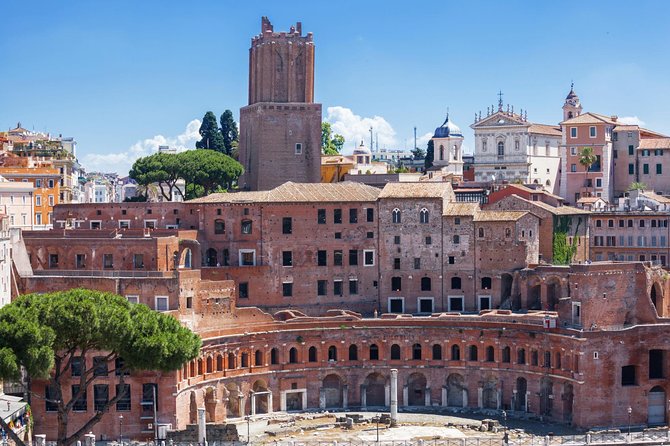
The route continues to the Circus Maximus, the huge valley once used for chariot races and staged naval battles. Little remains in the way of standing architecture, so the guide’s explanation is important. The open space helps you picture the size of ancient public events.
This is one of the better stops for understanding Rome’s scale. The Colosseum is visually dramatic, but the Circus Maximus shows how much space the city needed for mass entertainment. The stop is free and lasts about 10 minutes.
Teatro di Marcello provides a different view of ancient Roman design. It predates the Colosseum and is often described as an inspiration for it. The surviving curved structure is built into the modern city, which makes the stop a good reminder that Rome is not a separate ancient park. Old and modern life share the same streets.
The tour may also pause at other central landmarks, including one of Rome’s biggest squares, the National Monument often nicknamed the wedding cake, and reminders of Emperor Trajan’s vast empire. The supplied route information does not give every stop a name or exact duration, so treat these as brief viewing points rather than formal visits.
More Rome tours worth comparing
- Rome City Small Group Bike Tour with quality Cannondale EBike
★ 5.0 · 1,380 reviews - Rome by Night – Ebike Small Group Tour – Food and Wine (Option)
★ 5.0 · 1,275 reviews - Rome:Appian Way E-bike Tour with Catacombs, Aqueducts & Food
★ 4.9 · 1,210 reviews - Rome: E-Bike Night Tour with Food and Wine Tasting
★ 4.9 · 1,131 reviews
Michelangelo’s Piazza del Campidoglio
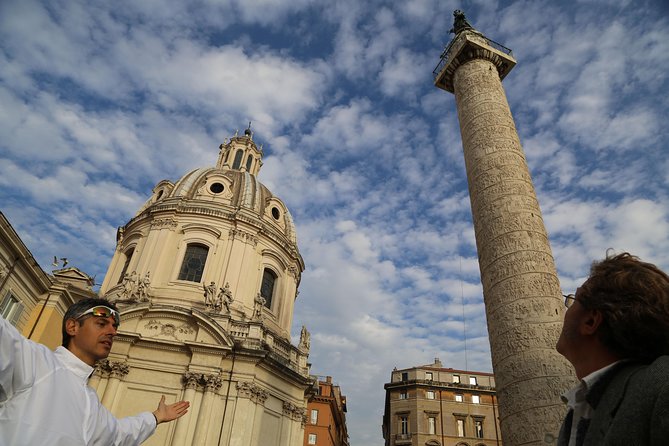
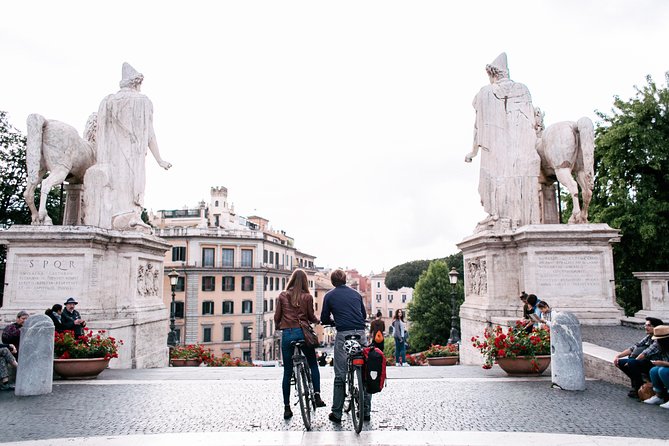
Piazza del Campidoglio is one of the ride’s most rewarding architectural pauses. Michelangelo designed the High Renaissance square on the Capitoline Hill, giving it a controlled, theatrical shape that feels very different from the rough ruins below.
The stop lasts about five minutes, enough to take in the geometry and hear a short explanation. It is not a museum visit, and the square can be busy, so you may need to focus on the guide rather than linger over every detail.
Reaching the Capitoline area is also where the e-bike proves its value. Rome’s hills can surprise you, especially after a warm day of walking. Electric assistance makes this section manageable without turning the ride into a test of fitness.
Capitoline Hill for the best views
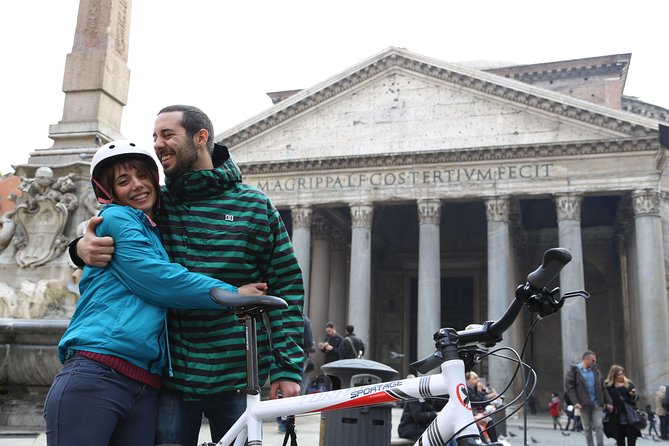
The Colle Capitolino stop lasts about 15 minutes and offers broad views across Rome. This is the place to pause, catch your breath, and connect the scattered pieces of the city you have just ridden through.
I find these elevated viewpoints especially useful early in a stay. You can see how the ancient center relates to the newer streets, churches, domes, and monuments around it. The view also gives you a better sense of what to visit later on foot.
Bring your camera, but keep your attention on the guide too. The history here is much easier to follow when it is tied to the buildings and streets in front of you. A good guide can turn a quick lookout into a practical map of Rome.
Piazza Navona and the Pantheon
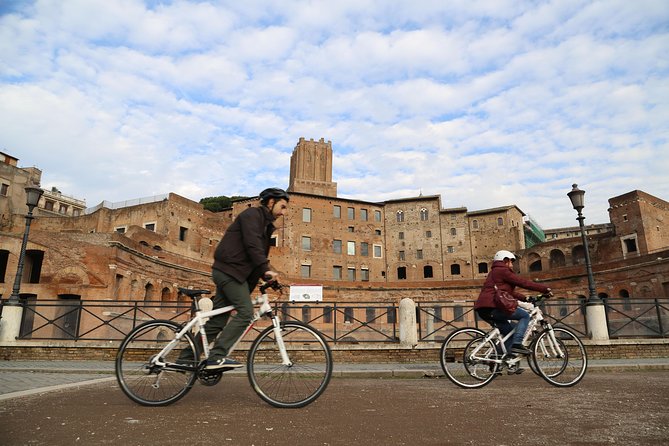
Piazza Navona brings the ride into Rome’s grand Baroque center. Bernini’s Fountain of the Four Rivers anchors the square, which is also associated with the film Angels and Demons. Street artists add a modern layer to the setting.
The stop lasts about 10 minutes. You should have time for photographs and a short explanation, but not for a relaxed café break or a full look at every fountain and church. If you want to sit in the piazza, return later when you are not keeping to a group schedule.
The Pantheon is the final named highlight. It is among Rome’s best-preserved ancient monuments, and its exterior alone gives you a sense of the building’s unusual survival in the modern city. The stop is also about 10 minutes, and entrance is not included.
The Pantheon can be one of Rome’s most worthwhile interiors, so plan a separate visit if you want to see inside. The e-bike route gives you a useful first look, but the time limit means this is an overview rather than a complete monument tour.
What the guide adds to the ride
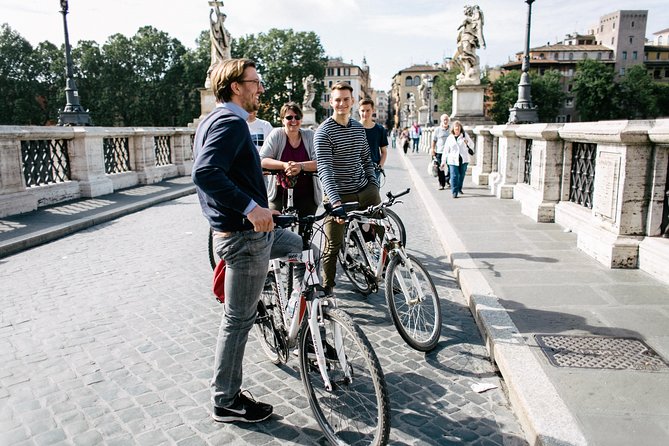
The guide is more important here than the bicycle. The route passes monuments you could photograph on your own, but a well-prepared local guide helps you understand why each stop matters and how the pieces fit together.
Marco is noted for answering questions, giving food suggestions, and finding less crowded roads. Luca has been praised for safe routing, clear historical explanations, and helping families keep a comfortable pace. Luigi is known for making riders feel secure in heavy traffic and for answering questions at each stop. Leo has provided both major landmarks and lesser-known city details, with an easygoing approach that suits small groups.
Guide quality can vary from one departure to another, so I would not book on the assumption that you will get a particular person. Still, the repeated pattern is clear: the best part of this experience is the human guidance, not simply the rental bike.
Ask questions as you go. You can also request suggestions for meals and places to visit after the tour. That local advice may be more useful than another stack of general Rome recommendations, especially if you have limited time.
Traffic, safety, and riding conditions
This is the part to consider carefully. Rome’s central streets can be crowded with cars, scooters, pedestrians, and buses. Several route sections use quieter streets, but no guide can remove city traffic from the experience.
You should be comfortable starting, stopping, steering, and keeping your place in a group. The tour is not suitable for someone who cannot ride a bike. One rider described being nervous about city cycling but became comfortable after a practice run and careful route choices. Another enjoyed the ride but warned that busy streets require confidence.
The guide leads the group and gives directions, yet you remain responsible for riding safely. Keep a reasonable gap, follow signals, and do not let photographs distract you while moving. If traffic makes you uneasy, an early evening departure may help, according to the practical advice shared by one guide. Road conditions and crowds can still change.
The tour has also operated during road closures and public events by substituting some highlights. That flexibility is useful, but it means the exact route is not guaranteed on days with official celebrations or major happenings in central Rome.
Is three hours enough?
Three hours is enough for a broad introduction, not a deep visit to Rome’s monuments. Most stops last between five and 15 minutes, with riding time connecting them. You will see a great deal, but you will not have time to read every inscription, enter every building, or explore the Forum at length.
That limitation can be a strength. I would use this tour at the start of a short Rome visit, then return to the Colosseum, Forum, Pantheon, or another favorite area later. One couple with only two days in the city used the ride to reduce walking and fit in more sights.
The route works especially well when your schedule is tight. If you have a full week in Rome and enjoy long walks, you may prefer to explore each neighborhood slowly. If you have one or two days, the e-bike gives you a quick city framework.
Weather, timing, and practical value
The experience requires good weather. If rain or poor conditions cancel the tour, you can receive a different date or a full refund. A weather-related reschedule has also been handled flexibly, which is helpful in Rome, where a sunny morning can turn wet later in the day.
You receive a mobile ticket, bike rental, e-bike rental, helmet use, and an English-speaking tour leader. The activity starts and ends at Via dei Soldati, 27. It is near public transportation, and most people who can ride a bike can participate.
You can cancel for a full refund up to 24 hours before the start time. Cancellations or changes made less than 24 hours ahead are not refunded or accepted. The minimum booking is two people, and the maximum group size is eight.
At $83.48, I see solid value for a first visit, especially if you would otherwise pay for several taxis or spend much of the day walking between distant sights. The value is weaker if you mainly want interior access, long photo stops, or a slow archaeological tour.
Who should book this Rome ride?
I would choose it for couples, families with children aged 10 or older, and anyone trying to cover Rome’s center in a short stay. It also suits people who like history in short, clear explanations rather than long lectures.
The tour can work for first-time e-bike riders, provided they can already ride a bicycle and are willing to practice before departure. It is less suitable if you are anxious around traffic, uncomfortable on hills, or hoping for a completely vehicle-free ride.
Book it early if your dates are fixed, since the experience is often reserved well in advance. Leave time afterward for a proper meal, a museum, or a return visit inside the monuments that caught your attention.
Should you book the Rome E-Bike Tour?
Book this tour if you want a fast, friendly orientation to central Rome, especially with only a day or two available. The small group, electric assistance, local route knowledge, and strong guide presence make it much more useful than simply renting a bike and guessing your way through the city.
Skip it if entering the Colosseum, Roman Forum, or Pantheon is your main goal. This ride takes you to those sights but does not include admission. For most first-time visitors who can ride confidently, though, it is a lively and practical way to get your bearings, save your feet, and decide where to spend the rest of your Roman holiday.
FAQ
How long does the Rome e-bike tour last?
The tour lasts approximately three hours.
What sights are included?
The route includes the Roman Forum, Colosseum, Circus Maximus, Teatro di Marcello, Piazza del Campidoglio, Capitoline Hill, Piazza Navona, and the Pantheon. It may also pass other central landmarks and squares.
Can I enter the Colosseum or Roman Forum during the tour?
No. Monument admission is not included, and the tour does not enter the sights because of time limits, queues, closing days, and ticket arrangements.
How many people can join the tour?
The minimum booking is two people, and the maximum is eight travelers.
Do I need to know how to ride a bike?
Yes. Participants must know how to ride a bicycle. The guide provides an initial explanation and practice period for the e-bike.
What happens if bad weather cancels the tour?
You will be offered another date or a full refund if poor weather causes the tour to be canceled.
Newest reviews from Rome
- ROME:Colosseum & Ancient Rome – private/small group TOUR★ 5.0 · 24 reviews
- Off the Beaten Track in Rome: Rione VI Parione Private Tour★ 5.0 · 24 reviews
- Cinematic Photoshoot in Rome★ 5.0 · 24 reviews
- Rome: Best of Colosseum and Roman Forum Small Group Guided Tour★ 4.5 · 24 reviews
- The Labyrinth of Rome between catacombs and ancient quarries★ 4.5 · 24 reviews
- Vatican and Trionfale Market Tour with Wine and Food Tasting★ 5.0 · 24 reviews
- private tour: Vatican Museums, Sistine Chapel, St. Peter’s Basilica★ 4.5 · 24 reviews
- Colosseum guided tour with Virtual Reality★ 5.0 · 24 reviews
E-Bikes, compared.

Rome EBike Tour: Appian Way, Catacombs & Roman Aqueducts
Read our review →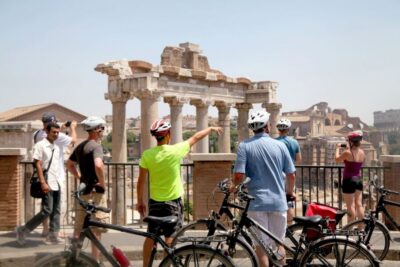
Top Highlights & Hidden Gems Tour by Cannondale E-Bike
Read our review →
Appian Way, Catacombs, & Roman Aqueducts E-bike Tour
Read our review →
Rome City Small Group Bike Tour with quality Cannondale EBike
Read our review →
Rome by Night – Ebike Small Group Tour – Food and Wine (Option)
Read our review →
Appian Way E-bike Tour with Catacombs, Aqueducts & Food
Read our review →
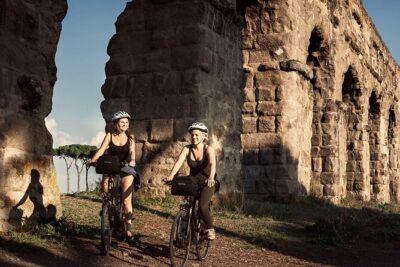
Appian Way, Catacombs and Aqueducts Park Tour with Top E-Bike
Read our review →Browse the lists this tour appears in