
Reviewed · PIZZA MAKING CLASSES
Rome For Kids: Small Group Pizza Making Class
The best part of this Rome activity is simple: you do not just order pizza, you make your own, then watch it bake in a traditional wood-burning oven. Near Piazza Navona, inside Ristorante Pizzeria Pasquino, a professional pizzaiolo guides you through dough, shaping, toppings, and baking.
I like the way this gives children a break from museums while still offering adults a real cooking lesson. I also like the small group size, capped at 10 people, and the warm, patient chefs, including Cleo, Simone, Luca, and Hassan. The main caution is the room temperature: some families found the kitchen very hot and tight, especially in summer.
In This Review
- Key points to know before booking
- Making pizza instead of just eating it
- What happens near Piazza Navona
- Rolling, stretching, and topping the dough
- A chef-led class that works well with children
- From wood-fired oven to your table
- The heat and space question
- Is $116.54 per person good value?
- Timing, transport, and planning your day
- Who will enjoy this most
- Booking and cancellation advice
- Should you book the Rome pizza class?
- FAQ
- Where does the pizza class meet?
- Where does the activity finish?
- How long does the experience last?
- Is the class offered in English?
- How many people can join the class?
- Can young children take part?
- What will I do during the class?
- Do I eat the pizza I make?
- Is a vegetarian option available?
- Are drinks, wine, and dessert included?
Key points to know before booking
- Small group near Piazza Navona: The class has a maximum of 10 participants and begins in Rome’s historic center.
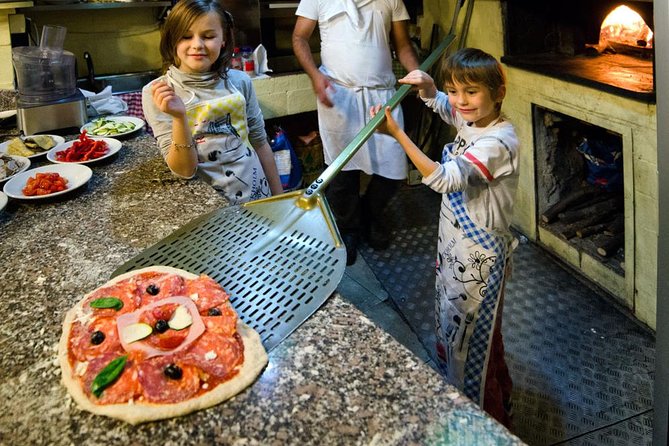
- Children can take part: Young children as well as older kids can help shape dough, select toppings, and assist with the oven under adult supervision.
- You eat what you make: Your pizza is baked and served hot at the restaurant, with beverages and a meal included as specified.
- The chef matters: Luca, Hassan, Simone, and Cleo have each been praised for making the lesson fun and practical.
- Allow for timing changes: The advertised duration is inconsistent, with the class described as two hours in one place and about 1 hour and 1 minute elsewhere.
- Check the final meeting details: The starting point is near Piazza Navona, but the exact location is supplied after booking.
Making pizza instead of just eating it
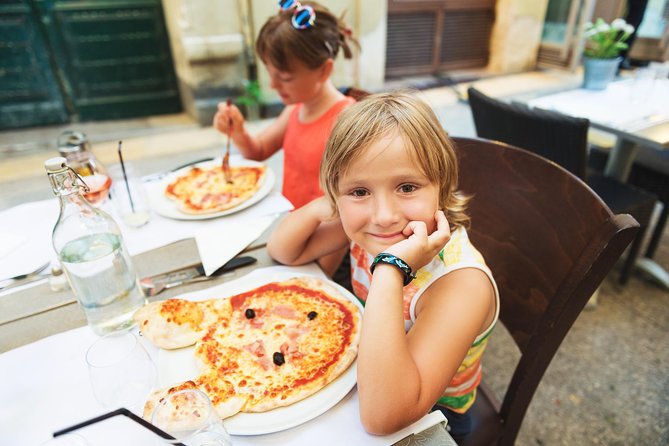
Rome offers no shortage of good pizza, but this class gives you something a restaurant meal cannot. You get flour on your hands, learn how the dough is formed, choose your toppings, and see your own pizza go into a wood-fired oven.
That makes this a strong choice for a family trip. A five-year-old may not care much about ancient Roman engineering, but a pizza he or she helped shape is another matter. Older children can follow the process more closely, while adults get a useful lesson they can repeat at home.
The class takes place at Ristorante Pizzeria Pasquino, near Piazza Pasquino and Piazza Navona. That central setting is handy if you are already sightseeing around the Pantheon, Navona, or the narrow streets of the historic center. You meet near Piazza Navona, receive the final meeting details after booking, and finish back at the restaurant.
The experience is offered in English. The group may include people from several countries, which adds a pleasant social side as everyone compares toppings, cooking habits, and plans in Rome.
More pizza making classes in Rome:
- Pompeii and Mount Vesuvius Day Trip from Rome with Pizza Lunch
★ 4.5 · 6,151 reviews - Cooking Class in the Heart of Rome: Pizza and Tiramisu Making
★ 5.0 · 1,330 reviews - Rome: Traditional Pizza Cooking Class near Piazza Navona
★ 4.7 · 1,241 reviews
What happens near Piazza Navona
The meeting point is listed as Piazza Navona, with the exact location advised through the booking platform. Do not treat the general square as precise enough for a last-minute arrival. Rome’s historic center has several entrances, side streets, and crowded corners, so give yourself time to locate the correct restaurant.
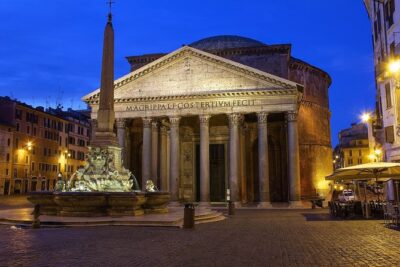
The location itself is a plus. Piazza Navona is one of Rome’s most enjoyable public spaces, with fountains, Baroque buildings, street performers, and cafes. You can pair the class with a morning walk through the square or plan it as a relaxed meal after sightseeing.
The practical drawback is that the meeting instructions have not always been perfectly smooth. Time changes and location changes have caused serious trouble for some customers, including missed starts and shortened classes. Check your confirmation carefully before setting out, and check messages again on the day of the class.
That advice matters because arriving late may mean losing part of the hands-on lesson. One family arrived after the class had begun because the exact address was unclear and was initially told it was too late to join. A later alternative worked out well, but it is better not to depend on a rescue.
Rolling, stretching, and topping the dough
Once inside, you put on an apron and move into the pizza-making part of the experience. The chef explains how to prepare and knead the dough, then shows you how to shape it into a pizza base.
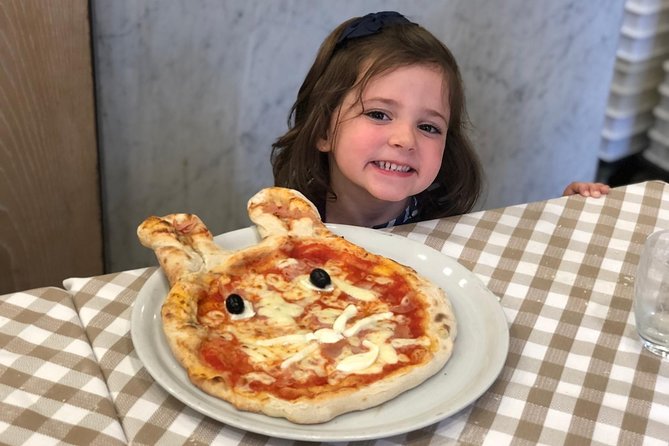
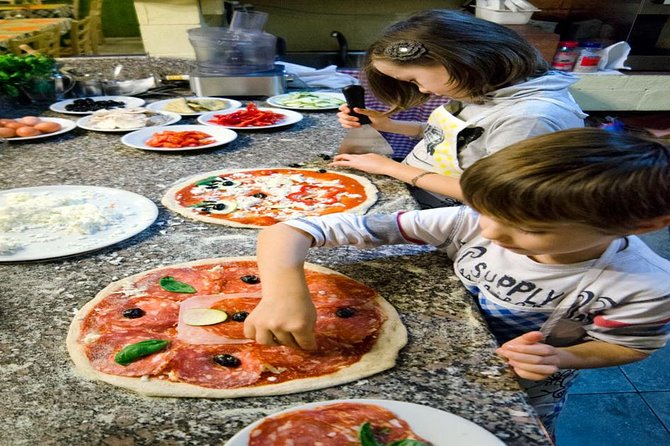
The exact amount of work children do can vary. Many families describe their children weighing flour, mixing, kneading, rolling, choosing toppings, and helping with the oven. Very young children may mainly play with dough, add toppings, and take part with more help from the chef.
One important point is that this is a guided class, not an entirely independent kitchen session. A German-speaking family felt that much of the preparation was already organized and that the children had limited space to work. The group setup may suit you if you want an orderly lesson, but it may disappoint you if you expect every participant to prepare a full dough ball from start to finish.
The most useful chefs teach beyond the motions. Luca, for example, explained the process in a way that participants could repeat at home. One group learned that the dough they prepared needed about eight hours to rise, so it was used to feed homeless people while the class worked with prepared dough that had already risen.
That is the kind of detail I value. It explains why the dough behaves as it does instead of treating the class as a quick craft project. Ask questions if you want to understand the home recipe, and bring a way to record it if the recipe is offered digitally. One family regretted not having internet access to scan the code for the recipe.
A chef-led class that works well with children
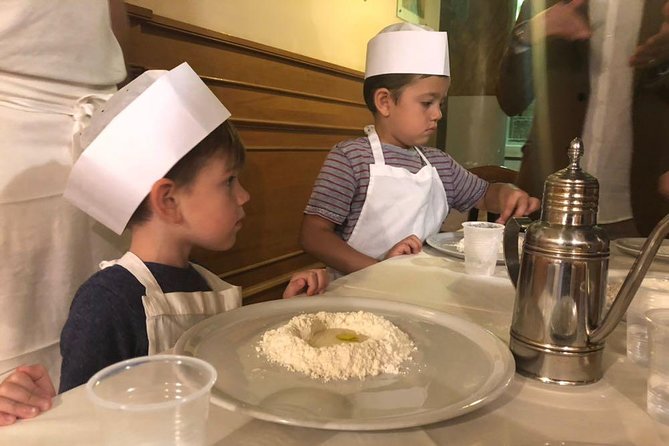
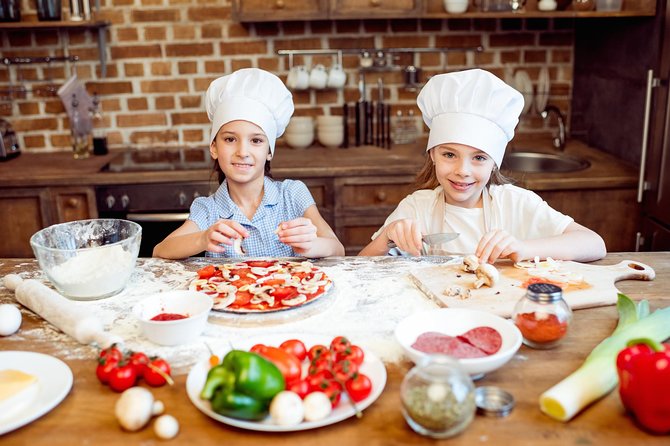
The strongest part of this experience is the staff. Chefs Simone, Hassan, Luca, and Cleo are each singled out for being friendly, patient, and good with children. Their approach seems to be practical rather than stiff. They explain the steps, help when small hands need support, and keep the mood light.
That matters with children because pizza dough can turn into a competition for space. A good chef makes the child feel involved without slowing the whole group. Younger children can add toppings and handle a little dough, while older children may enjoy learning how to stretch the base and slide it toward the oven.
Adults are not treated as spectators. The class also works for parents, grandparents, and other family members who want to learn the technique. One nine-year-old and his parent enjoyed the class with mostly adults in the group, along with wine and limoncello for the adults.
Children must be accompanied by an adult. That is more than a formal rule here, since the oven and kitchen work require supervision. The maximum group size of 10 should help, though the cooking area may still feel tight when several people gather around the work surfaces.
More Rome tours worth comparing
- 3 in 1 Cooking Class near Navona: Fettuccine, Ravioli & Tiramisu
★ 5.0 · 7,376 reviews - Rome: Pasta & Tiramisu Class with Fine Wine by the Vatican
★ 4.9 · 4,852 reviews - Rome: Pasta Making Class with Wine, Limoncello, and Dessert
★ 4.9 · 3,177 reviews - Rome: 3-in-1 Fettuccine, Ravioli, and Tiramisu Cooking Class
★ 4.9 · 2,704 reviews
From wood-fired oven to your table
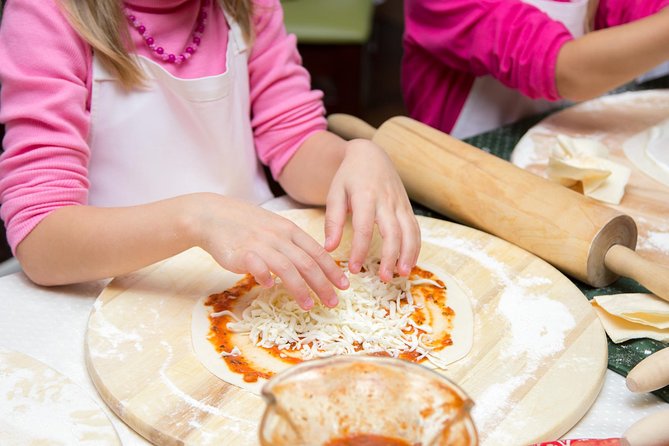
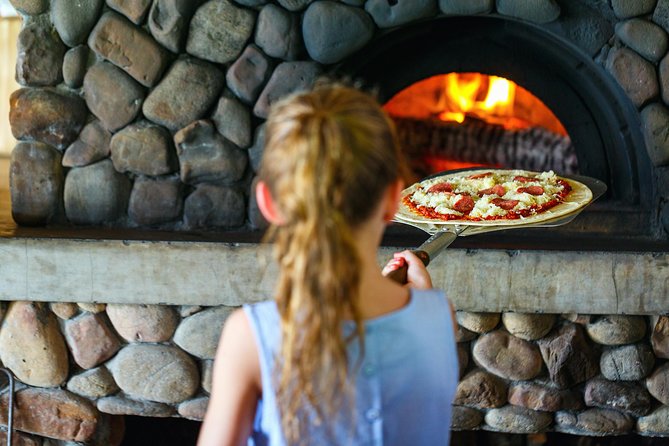
After the dough is shaped and topped, you help place it in the traditional wood-burning oven. The chef handles the parts that require care, but the oven step gives the class a proper finish. You are not simply decorating a cold pizza and taking it home. You eat the result hot from the oven.
The final meal is the reward for the work. Pizza quality naturally depends on the dough, toppings, and baking, but the available comments consistently describe the finished pizzas as tasty. This is also where the activity becomes social. Everyone returns to the table, compares creations, and eats together at the restaurant.
The listed inclusions mention beverages, wine, dinner or lunch, dessert, and the pizza class. They also state that alcohol is available to purchase and that alcoholic drinks are not included unless specified, so I would confirm exactly what your booking covers. Some families received wine, prosecco, limoncello, or beer, while children received nonalcoholic drinks such as orange juice.
Bruschetta has also appeared as an extra part of the meal. Dessert service has not always been consistent, and one family thought bruschetta may have replaced it. If dessert matters to you, ask when you arrive rather than assuming every item will appear in the same form.
The heat and space question
The biggest practical concern is the kitchen environment. Some families found the cooking room extremely hot, with poor air circulation and little space. The oven naturally adds heat, but the problem becomes more serious during Rome’s warmer months.
One family described being drenched in sweat and feeling faint. Another found the room very hot and tight, with drinks and dessert taking too long to arrive. These are not minor complaints if you are expecting a comfortable sit-down meal.
Other experiences were positive, so conditions may vary by season, timing, ventilation, or where your group is placed. Still, I would plan sensibly. Wear cool clothes in summer, avoid arriving already overheated from a long walk, and keep water in mind. If you are sensitive to heat, ask about ventilation before booking.
There is an odd contrast in the available comments: one family found the space cold and drafty with the door open, while others found it oppressively hot. That suggests the comfort level is not fully predictable. The food and staff may be excellent, but the kitchen is still a working restaurant space, not a purpose-built cooking studio.
Is $116.54 per person good value?
At $116.54 per person, this is not a cheap pizza dinner. You are paying for a central Rome location, a professional-led class, ingredients, use of the restaurant kitchen, the meal, and the family activity itself.
The value is strongest when you treat it as both a meal and an event. If you only want to eat a pizza, you can spend far less at a Roman pizzeria. If you want your child to learn a skill, meet other families, and finish with a meal he or she helped create, the price becomes easier to justify.
The class also fills a useful gap in a Rome itinerary. Museums and archaeological sites can wear down children, even when the adults are fascinated. This gives the whole family a shared task and a clear reward without sending you across town.
Value is weaker if your main goal is a long, technical cooking course. The hands-on section is described as about an hour, while the experience is also promoted as a two-hour class. Some accounts describe a fairly quick process, with ingredients prepared in advance and limited room for several people to work at once.
Before paying, read the confirmed duration and inclusions carefully. You should know whether wine, dessert, and other drinks are included in your specific booking.
Timing, transport, and planning your day
The activity begins and ends near the same central location, and no transportation to or from attractions is included. That is convenient if you are already in central Rome, but you need to make your own way to Piazza Navona.
The listed duration is approximately 1 hour and 1 minute, while the description calls it a two-hour pizza-making class. Actual timing can also be affected by restaurant service, group size, and schedule changes. Do not book a major timed attraction immediately afterward unless you have a generous buffer.
A reported time change from 11:30 to 12:15 became an even later start, close to 1 p.m. That kind of delay can disrupt a tightly planned sightseeing day. I would leave at least a couple of hours after the scheduled finish before any nonrefundable reservation.
The class is near public transportation, and most people can participate. Children need an accompanying adult. Specific dietary requirements should be provided when booking, and a vegetarian option is available if requested in advance.
Who will enjoy this most
I would choose this for families with children roughly from preschool age through the early teen years, especially if the children need a break from monuments. Five-year-olds may need extra help, but they can still feel part of the process. Seven- to eleven-year-olds seem particularly well matched to the mix of dough, toppings, and oven work.
It also suits grandparents traveling with grandchildren. The activity gives several generations something to do together, and the meal afterward keeps the pace easy.
Adults without children can enjoy it too. One class included mostly adults and still felt social and worthwhile. If you like learning food traditions through practice rather than watching a demonstration, this is a better fit than a standard restaurant meal.
I would hesitate if you dislike warm kitchens, need a precise schedule, or want an advanced baking course. I would also be cautious about booking during very hot weather unless the operator can confirm comfortable ventilation.
Booking and cancellation advice
Confirmation is sent within 48 hours of booking, subject to availability. Since the exact meeting point is advised after booking, do not wait until the last minute to check your messages.
Free cancellation is available up to 24 hours before the scheduled start for a full refund. Changes or cancellations made less than 24 hours ahead are not accepted for a refund, and the cut-off uses Rome local time.
The experience is offered in English and accepts a maximum of 10 people. That small cap is helpful for instruction, but it does not remove the need to arrive early, especially if the group must gather near a busy square.
Should you book the Rome pizza class?
Book it if you want a family memory with an edible result, especially for children who have had their fill of churches, museums, and ancient ruins. The patient chefs, central setting, wood-fired oven, and chance to eat your own pizza give the experience real appeal.
I would not book it as a guaranteed two-hour gourmet course. The active lesson may be closer to an hour, the kitchen can be uncomfortable, and schedule or location changes have caused problems. Confirm the meeting details, timing, dietary arrangements, and included drinks before you go.
For a family that values participation more than a perfectly polished cooking studio, this is a good Rome choice. Your child may forget a room of statues, but the pizza made with flour-covered hands is likely to stick.
FAQ
Where does the pizza class meet?
The starting point is near Piazza Navona in Rome’s historic center. The exact meeting point is advised after booking.
Where does the activity finish?
The activity ends back at the meeting point, at the restaurant where the class takes place.
How long does the experience last?
The duration is listed as approximately 1 hour and 1 minute, while the description also calls it a two-hour class. Confirm the expected timing when you book.
Is the class offered in English?
Yes. The activity is offered in English.
How many people can join the class?
The maximum group size is 10 participants.
Can young children take part?
Yes. Children can participate, but they must be accompanied by an adult. Most people can take part in the activity.
What will I do during the class?
You learn to prepare and knead dough, shape the pizza, choose toppings, and place the finished pizza in a traditional wood-burning oven with help from the chef.
Do I eat the pizza I make?
Yes. Your handmade pizza is baked and served at the restaurant at the end of the class.
Is a vegetarian option available?
Yes. A vegetarian option is available, but you should request it when booking.
Are drinks, wine, and dessert included?
The listed inclusions mention beverages, wine, dinner or lunch, and dessert, but the details also state that alcoholic drinks may be available to purchase unless specified. Confirm the exact inclusions for your booking.
Newest reviews from Rome
- ROME:Colosseum & Ancient Rome – private/small group TOUR★ 5.0 · 24 reviews
- Off the Beaten Track in Rome: Rione VI Parione Private Tour★ 5.0 · 24 reviews
- Cinematic Photoshoot in Rome★ 5.0 · 24 reviews
- Rome: Best of Colosseum and Roman Forum Small Group Guided Tour★ 4.5 · 24 reviews
- The Labyrinth of Rome between catacombs and ancient quarries★ 4.5 · 24 reviews
- Vatican and Trionfale Market Tour with Wine and Food Tasting★ 5.0 · 24 reviews
- private tour: Vatican Museums, Sistine Chapel, St. Peter’s Basilica★ 4.5 · 24 reviews
- Colosseum guided tour with Virtual Reality★ 5.0 · 24 reviews
Pizza Making Classes, compared.
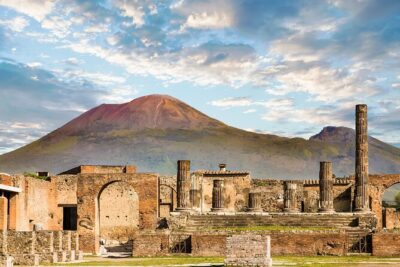
Pompeii and Mount Vesuvius Day Trip from Rome with Pizza Lunch
Read our review →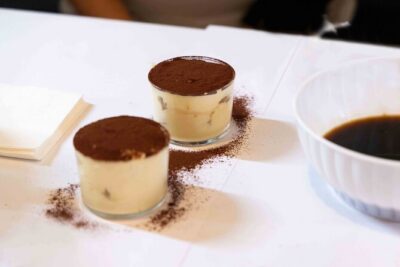
Cooking Class in the Heart of Rome: Pizza and Tiramisu Making
Read our review →
Traditional Pizza Cooking Class near Piazza Navona
Read our review →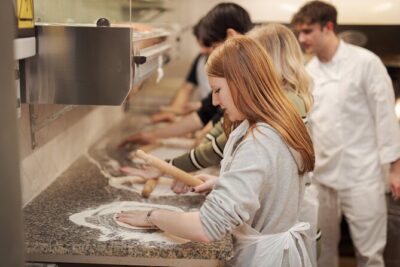
Pizza Cooking Class in Rome – Near Piazza Navona
Read our review →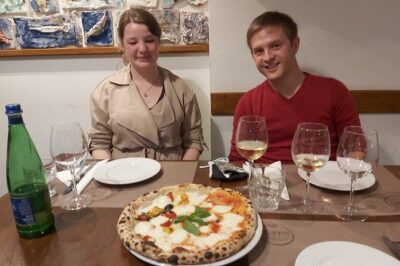
Pizza & Tiramisu Class with Free Flowing Fine Wine
Read our review →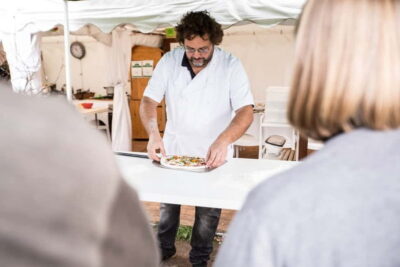
Night Tour of Rome with Local Pizza Dinner and Gelato Experience
Read our review →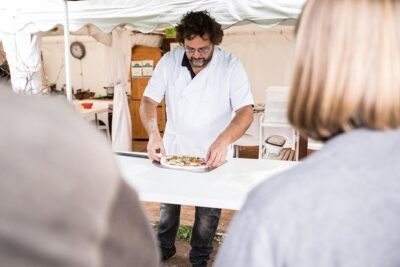
Rome Cooking Class: Make Pizza and Pasta with Wine & Dessert
Read our review →Browse the lists this tour appears in