
Reviewed · COOKING CLASSES
Cooking Class in the Heart of Rome: Pizza and Tiramisu Making
You make your own pizza and tiramisu, then eat both at the same table where you cooked them. That simple format makes this a useful break from Rome’s churches, ruins, and hard marble floors. The class is led in English by a chef, with instructors including Mattia, Leo, Carlotta, Lori, Mimi, Maria, Tom, and Charlotte.
I like the small-group setting, which makes it easier to get help with the dough and talk with the people at your table. I also like the practical balance: you learn basic techniques, enjoy wine or a soft drink, and leave with recipes you can try at home.
The main thing to understand is that your dough will not rise fully during a two-and-a-half-hour class. You prepare your own dough, but the chef also uses prepared dough so you can bake and eat pizza during the session. That is sensible, though anyone expecting to make a pizza entirely from start to finish should know how the timing works.
In This Review
- Key points at a glance
- A food break after Rome’s big sights
- Making pizza with four choices
- Tiramisu made together at the table
- From kitchen work to a shared meal
- Why the chefs make a difference
- A good choice for families and first-time cooks
- Timing, advance planning, and the price
- What to know before you arrive
- The final call: book it for the experience, not just the recipe
- FAQ
- How long does the pizza and tiramisu class last?
- Where does the activity begin?
- What pizza styles can I make?
- What food and drinks are included?
- Is the class offered in English?
- What is the cancellation policy?
Key points at a glance
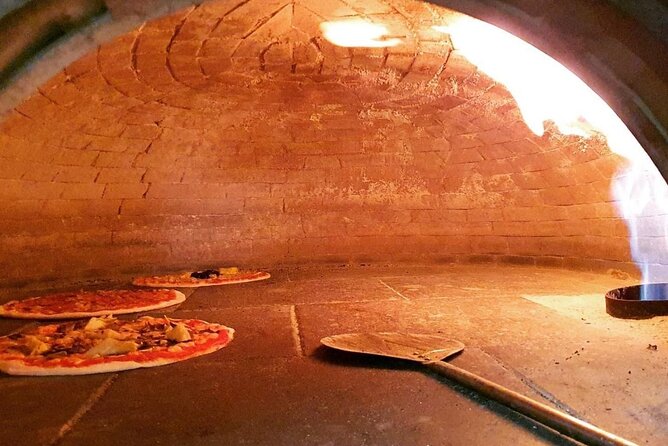
- Choose your pizza style: Make a Margherita, Marinara, spicy Diavola, or Neapolitan pizza with anchovies.
- Prepare two Italian favorites: The class covers pizza dough and traditional tiramisu.
- Eat what you make: Your pizza and individual tiramisu become the main meal and dessert.
- Drinks are part of the price: You receive wine or a non-alcoholic drink, plus coffee or limoncello and water.
- Meet at a central Rome restaurant: The starting point is Via Giuseppe Zanardelli 14, close to public transportation.
- Suitable for mixed ages and skill levels: Children, teenagers, first-time cooks, couples, families, and solo visitors can all take part.
A food break after Rome’s big sights
Rome is best explored on foot, but even enthusiastic sightseers need a chair now and then. This cooking class gives you a planned pause without wasting half a day. It lasts about two hours and 30 minutes, long enough to learn, eat, and chat, but short enough to fit between major visits.
You meet at a restaurant in central Rome, at Via Giuseppe Zanardelli 14. The activity ends at the same meeting point, so you do not need to arrange a ride back or find your way to a second neighborhood afterward. The location is near public transportation, which helps if you are coming from another part of the city.
The class has a maximum of 15 people. That is not an intimate private lesson, but it is small enough for a chef to demonstrate the main steps and move around the tables. Some sessions may be much smaller. One family described a group of six, which is the kind of size that allows easy conversation and plenty of room for questions.
I would schedule this after a morning of sightseeing, or at a time when you want something indoors. You will spend much of the class standing or working at a table, but the final meal gives you time to sit down and slow the pace.
More pizza making classes in Rome:
- Pompeii and Mount Vesuvius Day Trip from Rome with Pizza Lunch
★ 4.5 · 6,151 reviews - Rome: Traditional Pizza Cooking Class near Piazza Navona
★ 4.7 · 1,241 reviews - Pizza Cooking Class in Rome – Near Piazza Navona
★ 5.0 · 1,001 reviews
Making pizza with four choices
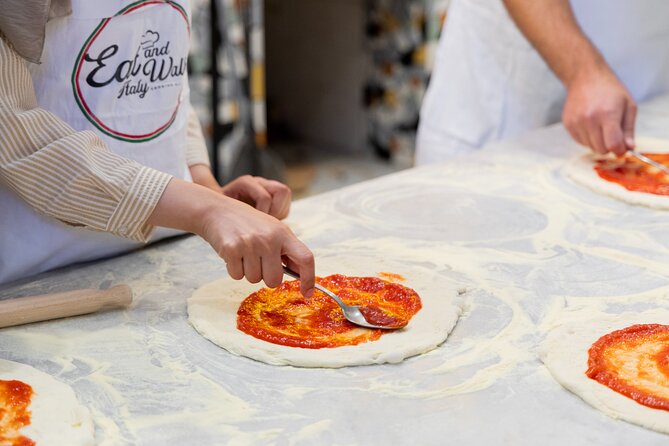
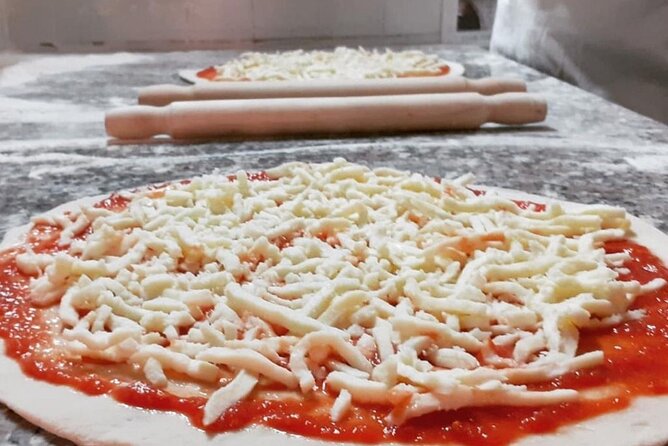
The pizza portion is the heart of the class. You work with fresh ingredients and learn the basic handling of pizza dough, including techniques that are simple enough for someone who rarely cooks. The chef explains the process and demonstrates it before you work with your own portion.
Your topping choice gives the class a little personality. You can make:
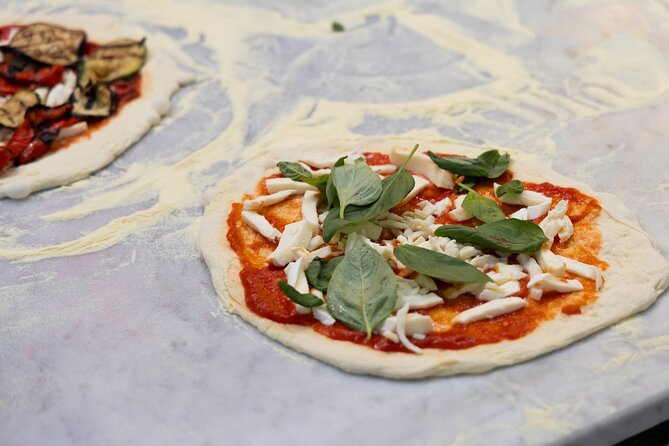
- A classic Margherita
- A Marinara
- A spicy Diavola with pepperoni
- A Neapolitan-style pizza with anchovies
The menu is pleasantly focused. You are not trying to produce several dishes at once, and you do not have to follow a single topping plan that may not suit you. If you prefer a straightforward pizza, choose Margherita or Marinara. If you like stronger flavors, the Diavola or anchovy option gives you more character.
One useful point about dough is easy to miss. Proper pizza dough needs time to rise, and one session included a prepared dough because the dough made in class could not be ready to bake immediately. This means you still get hands-on practice mixing and working with dough, but the pizza you eat is made from dough that has already had time to develop.
I see this as a practical compromise, not a flaw. You get to learn the technique and still eat hot pizza before the class ends. It also keeps the session to two and a half hours instead of turning it into a full-day lesson.
Tiramisu made together at the table
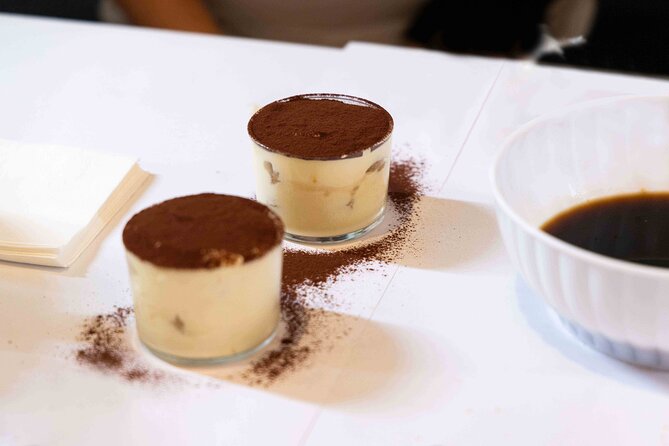
The second dish is traditional tiramisu. The class shows you how to assemble it, and the portions may be placed in individual dishes so each person has a dessert ready for the end of the meal.
The tiramisu is a good partner to the pizza lesson because it requires a different kind of attention. Pizza is about dough, shaping, and heat. Tiramisu is about careful assembly and familiar Italian flavors. You are not simply watching a chef cook dinner. You contribute to both parts of the meal.
The dessert also travels well as a memory. Pizza dough can take some practice at home, but tiramisu is easier to repeat once you understand the method. The class provides a recipe book afterward, giving you a useful reference rather than leaving you to remember every step from the demonstration.
The food is prepared in a relaxed setting, and the chef guides you through the work in English. Different dates may have different instructors. Mattia is described as friendly and funny, while Carlotta is praised for clear explanations and an easy manner. Lori, Mimi, Leo, Maria, Tom, and Charlotte are also among the named instructors associated with the class.
From kitchen work to a shared meal
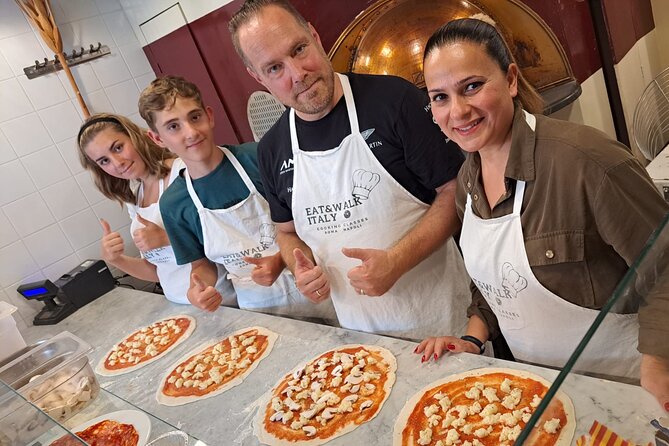
Once the pizzas are ready, you sit down and eat your own creation. This is where the class shifts from lesson to social meal. Wine or a soft drink is included, along with water. You can also choose either hot coffee or a shot of limoncello.
The included drink matters when you compare the price with a standard restaurant dinner. At $56.53 per person, you are paying for instruction, ingredients, a pizza, tiramisu, and drinks. The value is strongest if you would already spend roughly that amount on a meal and want an activity attached to it.
Extra food and drinks are not included, so plan on the supplied menu being the full meal. It includes your pizza, your tiramisu, one glass of wine or a non-alcoholic beverage, water, and your choice of coffee or limoncello. If you have a large appetite, you may want to treat the class as a satisfying meal rather than a tasting stop.
I especially like the shared-table format. You may arrive knowing nobody, but the cooking gives you an easy subject to talk about. By the time the pizzas are served, the group has already worked through flour, toppings, oven timing, and the occasional imperfect dough shape. That tends to make conversation easier than it is at a regular restaurant table.
More gelato and tiramisu classes:
- 3 in 1 Cooking Class near Navona: Fettuccine, Ravioli & Tiramisu
★ 5.0 · 7,376 reviews - Rome: Pasta & Tiramisu Class with Fine Wine by the Vatican
★ 4.9 · 4,852 reviews - Rome: 3-in-1 Fettuccine, Ravioli, and Tiramisu Cooking Class
★ 4.9 · 2,704 reviews - Learn to Make Pasta & Tiramisu with Wine and Limoncello Included
★ 5.0 · 2,345 reviews
Why the chefs make a difference
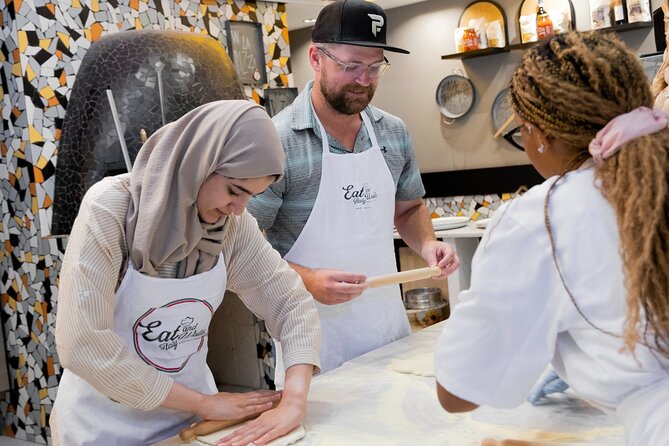
The recipes are important, but the instructor controls the mood and pace. A good chef needs to explain dough clearly, keep the group moving, answer basic questions, and make beginners feel comfortable. That matters here because the class mixes cooking abilities.
The strongest pattern across the experience is the approachable teaching style. Mattia is described as funny and easygoing. Leo is patient. Carlotta is energetic and clear. Mimi makes the steps easy to follow, while Lori helps create a friendly atmosphere. Those details suggest that the class is designed for participation, not for showing off professional cooking skills.
You should not expect a formal culinary-school lesson. The goal is to learn useful basics, enjoy a meal, and have fun with the process. If you already make pizza at home, you may find the instruction fairly introductory. If you are a beginner, you are more likely to appreciate the chef’s simple explanations and hands-on guidance.
The English-language format is another practical strength. You can ask questions and follow the demonstrations without translating as you cook. The exact chef varies, so the personality of the session may change, but the basic structure remains the same.
A good choice for families and first-time cooks
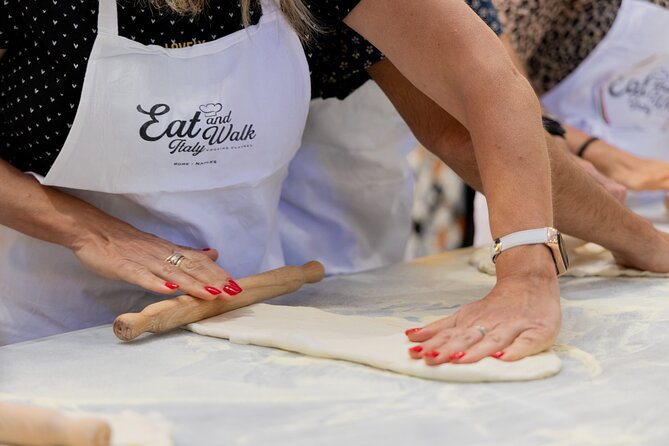
The class works particularly well for families because children and teenagers can take part in visible, hands-on tasks. A six-year-old enjoyed one session, and families with children aged eight and 10 also found it suitable. That does not mean every child will be equally interested, but pizza and tiramisu are more inviting subjects than a long lecture.
It also suits the reluctant cook. One participant joined mainly because a parent wanted to do the class and ended up enjoying it more than expected. That is a useful sign for couples or families with one enthusiastic cook and one person who would rather be sightseeing.
Couples can use the class as a casual meal with an activity built in. Friends can compare toppings and share a bottle of wine. Solo visitors may find the group arrangement especially useful because conversation happens naturally around the work.
I would be more cautious about booking it for someone who wants a highly technical workshop. The class covers the basics and moves at a pace suitable for a mixed group. Its purpose is an enjoyable Roman food experience, not advanced training in fermentation, oven management, or pastry technique.
Timing, advance planning, and the price
The class costs $56.53 per person and runs for approximately two hours and 30 minutes. That price includes the food you prepare and the listed drinks, so it is easier to assess than a tour where the activity fee covers only instruction.
The class is booked an average of 41 days ahead. That does not guarantee that every date sells out, but it is a useful planning signal. If you want a particular day, especially during a busy Rome visit, book before your trip rather than waiting until you are in the city.
I would avoid placing the class immediately before a timed museum entry or train departure. Cooking has a natural rhythm, and you will want to enjoy the meal rather than watch the clock. Since you return to the starting point, it is easy to pair the class with nearby sightseeing, but leave a little breathing room around it.
Free cancellation is available if you cancel at least 24 hours before the start time. Cancellations made less than 24 hours ahead are not refunded, and late changes are not accepted. The class also requires a minimum number of participants, so if that minimum is not met, you are offered another date or experience, or a full refund.
What to know before you arrive
The meeting point is Via Giuseppe Zanardelli 14, 00186 Rome. Use the exact address when planning your route, and allow time to reach central Rome on foot or by public transportation.
The activity is offered in English and uses a mobile ticket. Confirmation arrives when you book. Since the end point is the same as the start, you can plan your next stop from there without arranging additional transport.
Keep your expectations focused on food, company, and basic technique. You are not taking a walking tour during the lesson, and the included post-meal stroll around central Rome is best understood as an opportunity to continue exploring on your own after eating.
The group limit of 15 is worth noting for anyone who dislikes large organized activities. You will still be part of a group, but the cooking format gives everyone something to do. That usually feels more personal than sitting through a demonstration with no chance to participate.
The final call: book it for the experience, not just the recipe
I would book this class if you want an easy, social way to enjoy Italian food in central Rome. The strongest reasons are the hands-on pizza work, the individual tiramisu, the included drinks, and the chance to sit down with the people you met while cooking.
It is also a smart choice for families, first-time cooks, and anyone who needs a break from sightseeing. The price is reasonable when you count the meal and beverages, though advanced home cooks may find the instruction too basic.
Book it well ahead if your schedule is fixed. Choose it for the relaxed atmosphere and the pleasure of eating what you made. If that sounds better than another restaurant dinner, this is a worthwhile addition to a Rome itinerary.
FAQ
How long does the pizza and tiramisu class last?
The class lasts approximately two hours and 30 minutes.
Where does the activity begin?
You meet at Via Giuseppe Zanardelli 14, 00186 Rome, Italy, at a restaurant in central Rome.
What pizza styles can I make?
You can choose a Margherita, Marinara, spicy Diavola with pepperoni, or a Neapolitan pizza with anchovies.
What food and drinks are included?
You receive your own pizza with toppings of your choice, freshly made tiramisu, water, and either a glass of wine or a soft drink. You can also choose hot coffee or a shot of limoncello.
Is the class offered in English?
Yes. The activity is offered in English.
What is the cancellation policy?
You can cancel for a full refund up to 24 hours before the experience starts. Cancellations or changes made less than 24 hours before the start time are not accepted for a refund.
More Workshops in Rome
- Become a Masterchef in Rome: Pasta, Ravioli and Tiramisù Class
★ 5.0 · 2,156 reviews - Pasta Cooking Class Near the Colosseum with 3 Spritz Cocktails
★ 5.0 · 1,686 reviews - Rome: Pasta & Tiramisu Cooking Class near the Spanish Steps
★ 4.8 · 1,395 reviews - Rome Tipsy Cooking Class: Make Pasta and Mix 3 Spritz Cocktails
★ 5.0 · 1,357 reviews
More Cooking Classes in Rome
- Rome: Pasta Making Class with Wine, Limoncello, and Dessert
★ 4.9 · 3,177 reviews - Rome: Fettuccine Pasta Cooking Class in Rome’s City Center
★ 4.8 · 2,414 reviews - Rome: Traditional Pasta with Cocktails Cooking Class
★ 5.0 · 2,374 reviews - Rome: Fettuccine and Tiramisu Cooking Class with Wine
★ 4.8 · 2,013 reviews
Newest reviews from Rome
- Rome: Vatican Museums & Sistine Chapel Skip-the-Line Ticket★ 4.4 · 148 reviews
- Shared Shuttle Transfer from Rome to Civitavecchia Port★ 5.0 · 148 reviews
- Rome: Crypts & Catacombs After Hours Tour with Bone Chapel★ 4.6 · 149 reviews
- Ghosts Legends and Mysteries of Rome Walking Tour★ 5.0 · 149 reviews
- Skip the Line: Vatican and Sistine Chapel with Guided Tour★ 4.0 · 149 reviews
- Tivoli: Villa Gregoriana Entrance Ticket★ 4.7 · 150 reviews
- Pizza and Tiramisu Cooking Class in Rome, Piazza Navona★ 5.0 · 150 reviews
- Appian Way E-bike Tour with Gourmet Picnic and Catacombs★ 4.5 · 150 reviews
Cooking Classes, compared.
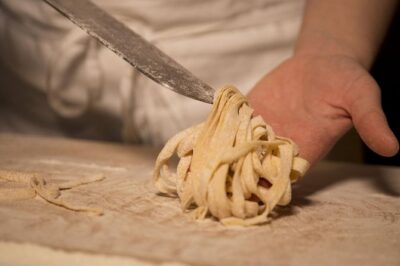
3 in 1 Cooking Class near Navona: Fettuccine, Ravioli & Tiramisu
Read our review →
Pasta Making Class with Wine, Limoncello, and Dessert
Read our review →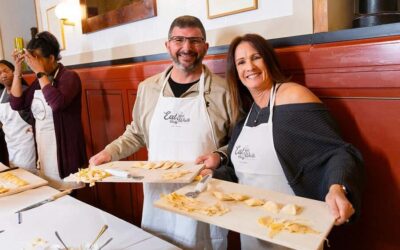
3-in-1 Fettuccine, Ravioli, and Tiramisu Cooking Class
Read our review →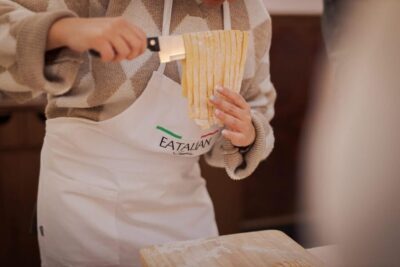
Fettuccine Pasta Cooking Class in Rome’s City Center
Read our review →
Traditional Pasta with Cocktails Cooking Class
Read our review →
Fettuccine and Tiramisu Cooking Class with Wine
Read our review →
Pasta Cooking Class Near the Colosseum with 3 Spritz Cocktails
Read our review →
Enjoy Spritz and Pasta Making in Piazza Navona
Read our review →Browse the lists this tour appears in