
Reviewed · WALKING TOURS
Rome: Fountains and Fallen Angels Small Group Walking Tour
Rome’s fountains are not just pretty ornaments. They mark old roads, announce papal power, bring water into public squares, and often sit beside astonishing churches. This tour links those fountains with Rome’s great Baroque interiors, moving from Piazza della Repubblica to Trevi Fountain and ending at Chiesa del Gesù.
I like the maximum group size of five, which gives you room to ask questions, and I like the unusual route through churches many first-time visitors skip. The main caution is the walking: the tour lasts three to four hours, and one account describes covering about 11 miles, so bring good shoes and expect a brisk pace.
In This Review
- Key points to know before booking
- Why this Rome walking tour feels different
- Piazza della Repubblica and Michelangelo’s ancient baths
- The Fountain of Moses and Santa Maria della Vittoria
- Quattro Fontane and two very different architects
- The Quirinal Palace and Rome’s changing power
- Trevi Fountain, the route’s famous centerpiece
- Santi Apostoli and the quiet side of central Rome
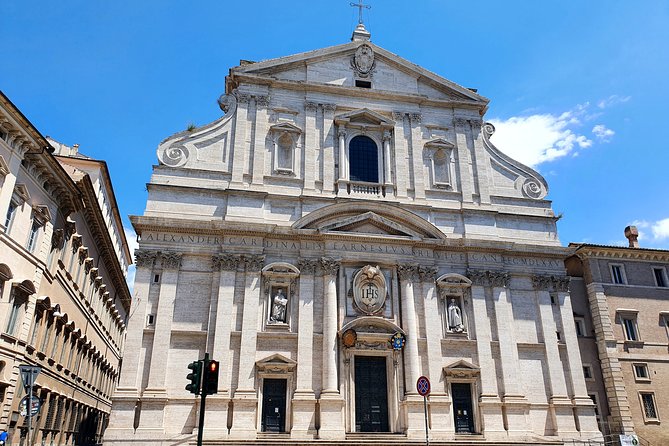
- Chiesa del Gesù provides a strong finish
- Pace, distance, and comfort
- Dress rules and church etiquette
- Who will get the most from this tour
- Booking value and cancellation terms
- Should you book Rome: Fountains and Fallen Angels?
- FAQ
- How long does the Fountains and Fallen Angels tour last?
- How much does the tour cost?
- How many people can join the tour?
- Is the tour offered in English?
- Are morning and afternoon departure times available?
- Where does the tour start and finish?
- Do I need to follow a dress code?
- Can I cancel for a full refund?
Key points to know before booking
- A compact group of no more than five: You get a personal format rather than a large crowd following a flag.
- A strong Baroque art focus: Bernini, Borromini, Michelangelo, and Domenico Fontana all appear along the route.
- Twelve stops from Esquilino to Piazza Venezia: The tour moves across central Rome instead of staying in one square.
- Church visits require proper dress: Your shoulders, back, and knees must be covered.
- Morning or afternoon departure: You can fit the walk around other plans, though church opening conditions can affect the flow.
- Roberto is the named guide: His explanations of art, faith, and Roman history are a major part of the experience.
Why this Rome walking tour feels different
This is not a greatest-hits stroll built around the Colosseum, Roman Forum, and Pantheon. Its subject is more specific: fountains, churches, sculpture, and the spiritual ideas behind Rome’s art.
That focus gives the walk a clear thread. You begin with the enormous Baths of Diocletian, move through Michelangelo’s adaptation of ancient ruins, encounter Bernini’s emotional sculpture, and finish in the dramatic Jesuit church of the Gesù. The fountains act as visual signposts between these interiors.
I especially like this approach if you have already seen Rome’s major ancient sights, or if you want a better sense of how art and religion shaped the city. You will still visit Trevi Fountain, but much of the route is made up of places you might otherwise pass without understanding.
The guide matters here. Roberto receives repeated praise for his storytelling, patience, enthusiasm, and ability to explain faith, art, and history together. He is also described as open to questions and discussion. That is useful in Rome, where a church can look impressive at first glance but reveal far more once someone points out the design choices.
The experience has a 4.8 rating from 29 reviews, with 97 percent of bookers recommending it. Still, the record is not perfect. One booking had trouble finding the guide at the starting point, and the participant found the pace too fast and the guide difficult to understand. The practical lesson is simple: arrive early, check the precise statue location on your confirmation, and contact the operator before the start if the meeting point is unclear.
More walking tours in Rome:
- Rome: Trastevere & Campo de Fiori Street Food Walking Tour
★ 4.9 · 2,768 reviews - Rome: Paranormal Night Walking Tour & Secret Backstreets
★ 4.9 · 1,921 reviews - Rome by Night Walking Tour – Legends & Criminal Stories
★ 4.5 · 1,003 reviews
Piazza della Repubblica and Michelangelo’s ancient baths
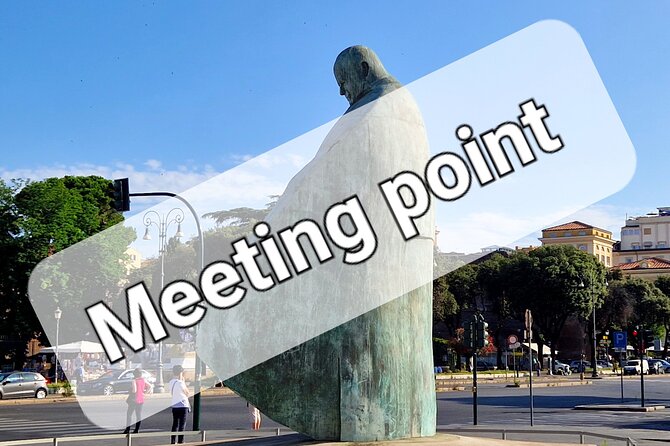
The meeting point is at the statue of Saint John Paul II in Esquilino, near Piazza della Repubblica. The square is also called Piazza Esedra, a name linked to the curved shape inherited from the ancient Baths of Diocletian.
You only spend about five minutes in the square, but it sets up the whole tour. Rome often places modern streets and grand fountains directly over ancient structures, and Piazza della Repubblica gives you that contrast right away.
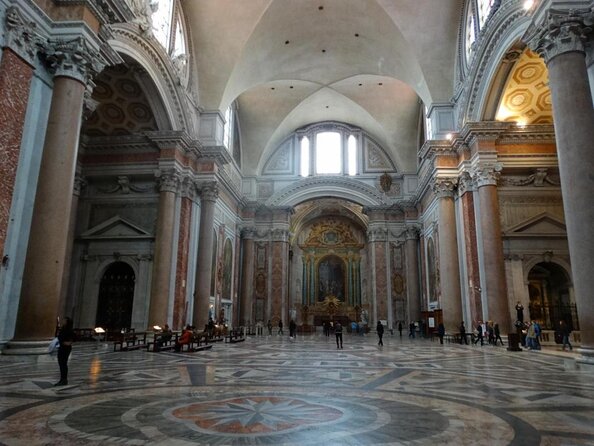
The next stop is the Basilica of Santa Maria degli Angeli e dei Martiri. Michelangelo designed this church inside the remains of the Baths of Diocletian, and the result is one of Rome’s most unusual church settings.
Allow about 20 minutes here. The attraction is not only the religious interior. It is the act of seeing an ancient bathing complex transformed into a Christian place of worship. A guide can help you read the building in layers, rather than treating it as simply another church.
The Fountain of Moses and Santa Maria della Vittoria
The Fountain of Moses takes only about five minutes, but it gives the tour its water-and-power theme. Domenico Fontana designed it, and its position along the old water system helps explain why fountains became such important public statements in Rome.
The short stop also shows how the tour works. Some fountains are not destinations where you linger for half an hour. They are brief outdoor lessons, placed between longer church visits.
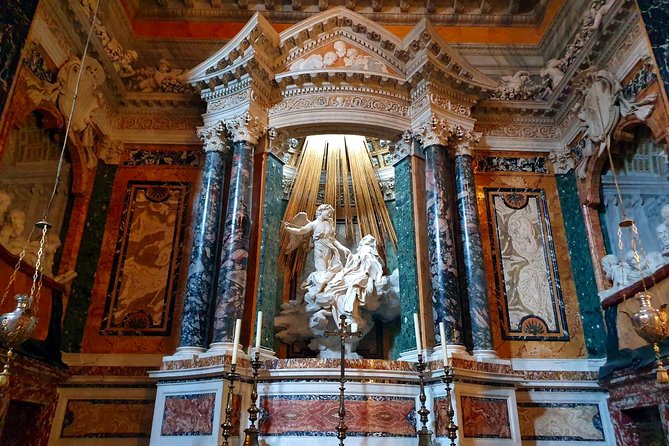
At Santa Maria della Vittoria, you get about 20 minutes with one of Bernini’s most famous works, the Ecstasy of Saint Teresa. The church is dedicated to victories attributed to Saint Mary, and Bernini’s sculpture turns a religious vision into a carefully staged work of theater, architecture, and emotion.
This is one of the strongest stops for art lovers. You can look closely at the figures, the surrounding setting, and the way light is used to shape the scene. The church also illustrates why dress matters. Shoulders, backs, and knees must be covered inside the churches on this route. Plan your clothing before you arrive, rather than relying on a last-minute fix.
Quattro Fontane and two very different architects
Quattro Fontane is a quick five-minute stop at a famous crossroads where four fountains occupy the corners. It is an excellent example of Rome’s habit of making an ordinary street junction into a work of art.
The next church, San Carlo alle Quattro Fontane, gives you a sharp contrast with Bernini’s grand theatrical style. Borromini designed this church, and its compact scale and inventive forms show a more restless side of the Baroque.
You spend about 15 minutes inside. That is enough for an introduction, though anyone who loves architecture may wish for more time. The church is small, so a good guide can make the visit count by explaining the curves, proportions, and unusual plan.
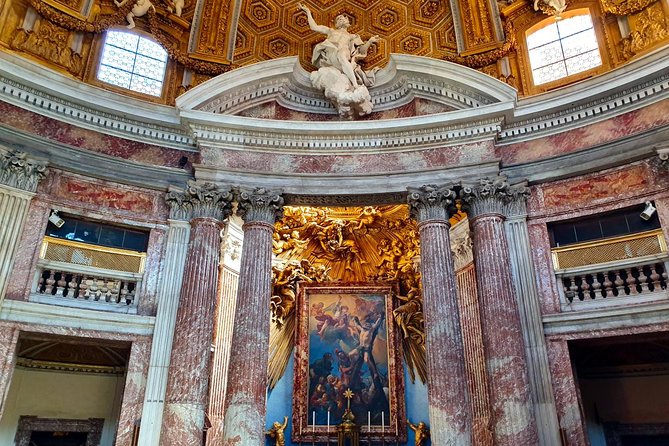
Chiesa di Sant’Andrea al Quirinale, designed by Bernini, follows for about 20 minutes. Its oval form creates a very different mood from San Carlo. Seeing the two churches close together is valuable because you can compare the working methods of Bernini and Borromini without treating them as interchangeable names from an art textbook.
The route is strongest when you pay attention to these contrasts. Bernini often makes architecture feel theatrical and welcoming. Borromini pushes shape and space in more surprising directions. You do not need advanced art training to enjoy the comparison, but you do need to slow your eyes down and listen.
A completely different way to spend the day in Rome:
- Vatican: Museums & Sistine Chapel Entrance Ticket
★ 4.5 · 144,003 reviews - Vatican Museums & Sistine Chapel Tour with Optional Basilica
★ 4.3 · 67,413 reviews - Vatican Museums, Sistine Chapel & St Peter’s Basilica Guided Tour
★ 4.5 · 39,149 reviews - Rome: Colosseum, Palatine Hill and Roman Forum Guided Tour
★ 4.8 · 32,814 reviews
The Quirinal Palace and Rome’s changing power
The Palazzo del Quirinale is the residence of the President of the Italian Republic. You view it from outside, since the building cannot be entered during the tour.
This is a brief 10-minute stop, yet it adds an important civic layer. Rome’s major buildings have changed roles over time, moving through papal, royal, and republican periods. The palace helps connect the churches and fountains to the city’s continuing political life.
Do not book this tour expecting palace interiors. The value here is the exterior setting and the guide’s explanation of what the building represents today.
Trevi Fountain, the route’s famous centerpiece
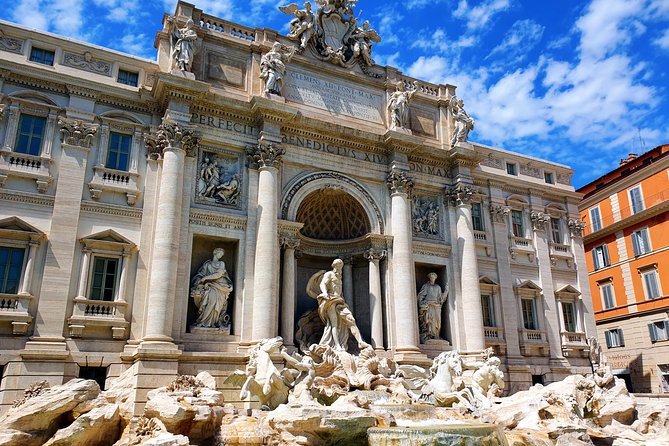
Trevi Fountain receives about 20 minutes, making it the best-known stop on the walk. You get the famous water display, but the tour’s earlier fountains give you useful context. Trevi no longer feels like an isolated photo stop. It becomes part of Rome’s long tradition of using water, sculpture, and public space together.
This is also the point where the practical side of the tour matters. Trevi is one of Rome’s busiest sights, and a small group is easier to manage than a large one. Keep personal belongings secure and stay close to the guide while listening.
The tour does not include an admission ticket because the fountains and churches listed are free to enter. That helps the $60.07 price go toward the guide’s time and interpretation rather than entrance fees. For a three-to-four-hour private-feeling experience with a group capped at five, I consider the cost reasonable, especially if art and church architecture are central to your interests.
Santi Apostoli and the quiet side of central Rome
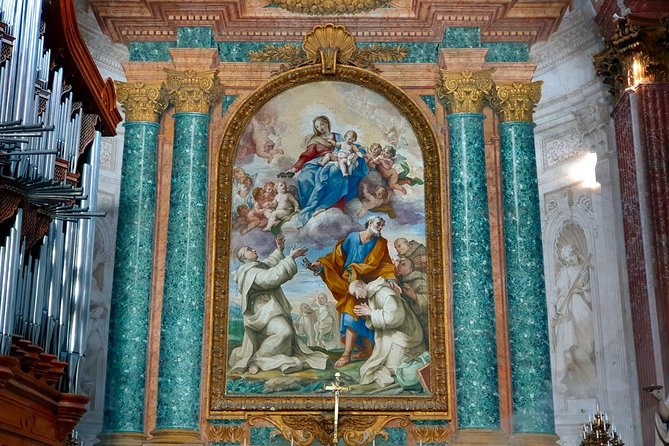
At Santi Apostoli, you spend about 20 minutes inside a church known for impressive paintings and the tombs of two Apostles. This is the sort of stop that benefits from a guide. You may recognize the church as old and important, but the paintings and burial sites need context to become memorable.
The route also includes the Museo Nazionale del Palazzo di Venezia, described here as an idyllic oasis connected with Palazzo Venezia. You have about 20 minutes in this setting. It provides a pause from the streets and a chance to appreciate another part of Rome’s built environment.
The stop is not presented as a full museum visit, so keep your expectations in check. You are not spending hours with a collection. Instead, it is a short cultural break near the end of a long walk.
Chiesa del Gesù provides a strong finish
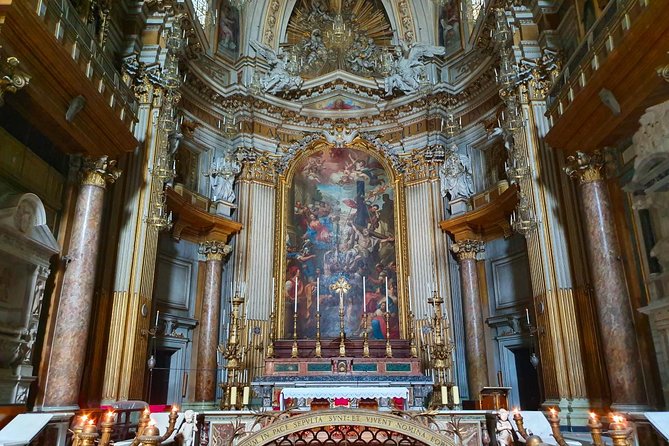
The final stop is Chiesa del Gesù, the mother church of the Jesuits and a model of Roman Baroque design. You spend about 20 minutes here, and it is a fitting conclusion because the church brings the tour’s main ideas together: religious power, dramatic decoration, architecture, and the use of space to shape emotion.
One particularly enthusiastic account described the Gesù as the grand finale. I can understand why. After several smaller churches and outdoor fountains, the church offers a large, forceful statement of Baroque style.
You finish at Piazza Venezia, close to the Piazza Venezia bus station. That makes the ending useful for continuing your day, though it does not return you to the starting point. The route is a one-way walk across central Rome, so plan your next activity from Piazza Venezia rather than from Esquilino.
Pace, distance, and comfort
The published duration is approximately three to four hours. The stops alone add up to about three hours, before allowing for walking between sites, questions, and any small changes in church access.
This is an active experience. One participant described walking about 11 miles from a hotel through Rome, though that may include the route to and from the tour. Either way, you should not treat this as a gentle, short neighborhood stroll.
I would wear supportive shoes, carry water, and avoid booking it immediately after another long walking activity. Morning and afternoon departures give you useful flexibility, but your choice will affect the heat, light, and energy you bring to the walk.
The group limit of five is one of the tour’s best practical features. You can usually hear the guide more easily, ask questions without holding up a large crowd, and spend more time on the stops that interest you most. The tradeoff is that the guide may keep a firm schedule to fit twelve locations into one outing.
Dress rules and church etiquette
Several stops are active Catholic churches, not simply monuments. Your shoulders, back, and knees must be covered to enter. The provider also says hats should be removed as a sign of respect.
This is not a minor detail. If your clothing does not meet the rules, you may have to wait outside and miss part of the experience. Dress modestly from the start, especially if you are taking the tour in warm weather.
The title refers to fountains and fallen angels, but the experience itself centers on sacred art, church architecture, and Rome’s religious setting. It suits people who are comfortable spending time in churches and listening to explanations about faith as well as design.
Who will get the most from this tour
I would choose this walk if you like:
- Baroque art and architecture
- Smaller churches with major works inside
- Fountains as part of urban planning and public life
- A guide-led experience with plenty of questions
- Routes that move beyond the standard Rome checklist
- Active sightseeing on foot
It is also a good choice for a return visit. The tour can give familiar places such as Trevi Fountain a wider setting, while the less obvious churches add new discoveries.
I would hesitate if you want a slow pace, dislike church visits, or need a tour with little walking. The experience covers a lot of ground, and one negative account raised concerns about unclear meeting directions and a guide who moved too quickly. Most of the praise focuses on Roberto’s explanations and patience, but communication style can vary by group and day.
Booking value and cancellation terms
At $60.07 per person, the tour is not a bargain-priced orientation walk. It is a specialist art and architecture tour with a maximum of five people, lasting three to four hours and including a dozen stops.
Because the churches and fountains have free admission, the price rests mainly on the guide’s time, route planning, and interpretation. I think that value works best if you would otherwise wander past these places without understanding them. If you only want photographs of Trevi Fountain and a few famous squares, you can spend less by walking independently.
You receive confirmation at booking, and the tour is near public transportation. Free cancellation is available up to 24 hours before the start time for a full refund. Changes or cancellations made less than 24 hours before the start are not accepted for a refund. Poor weather can also lead to a new date or full refund, since the experience requires good weather.
Should you book Rome: Fountains and Fallen Angels?
Book it if you want Rome explained through its fountains, churches, and Baroque masters rather than through only its biggest ancient monuments. Roberto’s strong command of church history and his willingness to answer questions appear to be central to the experience, and the five-person limit gives the walk a personal feel.
Before paying, make sure you are ready for a serious walking session and church dress rules. Confirm the exact meeting point at the Saint John Paul II statue, arrive early, and allow enough energy for the final stretch to Piazza Venezia.
For art-minded visitors, repeat Rome visitors, and active adults, this is a smart way to find a different Rome. For anyone seeking a relaxed or mainly outdoor stroll, it may feel too fast and too church-focused.
FAQ
How long does the Fountains and Fallen Angels tour last?
The tour lasts approximately three to four hours.
How much does the tour cost?
The listed price is $60.07 per person.
How many people can join the tour?
The group has a maximum of five participants.
Is the tour offered in English?
Yes. The experience is offered in English.
Are morning and afternoon departure times available?
Yes. You can choose a morning or afternoon tour.
Where does the tour start and finish?
The tour starts at the statue of Saint John Paul II in Esquilino, Rome. It finishes at Piazza Venezia, near the Piazza Venezia bus station.
Do I need to follow a dress code?
Yes. To enter the churches, your shoulders, back, and knees must be covered. Hats must also be removed as a sign of respect.
Can I cancel for a full refund?
Yes. You can cancel at least 24 hours before the start time for a full refund. Cancellations or changes made less than 24 hours before the start are not refunded, and poor weather may result in a different date or full refund.
Newest reviews from Rome
- ROME:Colosseum & Ancient Rome – private/small group TOUR★ 5.0 · 24 reviews
- Off the Beaten Track in Rome: Rione VI Parione Private Tour★ 5.0 · 24 reviews
- Cinematic Photoshoot in Rome★ 5.0 · 24 reviews
- Rome: Best of Colosseum and Roman Forum Small Group Guided Tour★ 4.5 · 24 reviews
- The Labyrinth of Rome between catacombs and ancient quarries★ 4.5 · 24 reviews
- Vatican and Trionfale Market Tour with Wine and Food Tasting★ 5.0 · 24 reviews
- private tour: Vatican Museums, Sistine Chapel, St. Peter’s Basilica★ 4.5 · 24 reviews
- Colosseum guided tour with Virtual Reality★ 5.0 · 24 reviews
Walking Tours, compared.
Trastevere & Campo de Fiori Street Food Walking Tour
Read our review →
Paranormal Night Walking Tour & Secret Backstreets
Read our review →
Rome by Night Walking Tour – Legends & Criminal Stories
Read our review →
Guided City Center Evening Sightseeing Walking Tour
Read our review →
Best of Rome Walking Tour including Trevi Fountain
Read our review →

Forbidden History Walking Tour & Pub Crawl with Drinks
Read our review →
Guided Small Group Walking Tour of City Highlights
Read our review →Browse the lists this tour appears in