
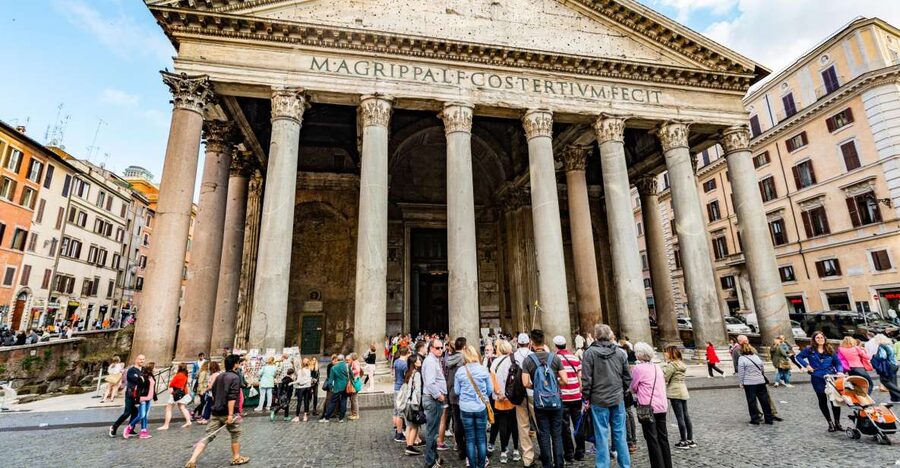
Reviewed · WALKING TOURS
Rome: Fountains and Squares Small-Group Walking Tour
Rome’s Baroque heart is best understood on foot, and this route links the city’s big showstoppers with smaller surprises. You’ll see Bernini’s Fountain of the Four Rivers, step inside the Pantheon, and finish at Trevi Fountain with time for the traditional coin toss.
I like the route’s compact design: it moves from the Spanish Steps to Trevi without wasting time on transport. I also like the guides’ personal touch. Stefano, Bruno, Matteo, Paolo, and Andrea are praised for humor, clear explanations, and keeping groups together. The main drawback is that this is a steady walking tour with much of it outdoors, so rain, cold, heat, crowds, and tired feet can affect the day.
In This Review
- Key points at a glance
- Why this route works for a first morning in Rome
- Starting below the Spanish Steps
- Piazza Navona and the Stadium of Domitian
- Inside the Pantheon, Rome’s ancient survivor
- Marcus Aurelius and a glimpse of Roman storytelling
- Sant’Ignazio and the painted dome that fools the eye
- Ending at Trevi Fountain
- The guides make the difference
- Price, pace, and what you receive
- Who should book this Rome walking tour?
- Should you book it?
- FAQ
- How long does the walking tour last?
- Where does the tour start?
- How early should I arrive?
- Where does the tour end?
- Is the Pantheon visited inside?
- Is the tour offered in languages other than English?
- What should I wear?
- Can I bring a stroller or wheelchair?
- Can I cancel the booking?
Key points at a glance
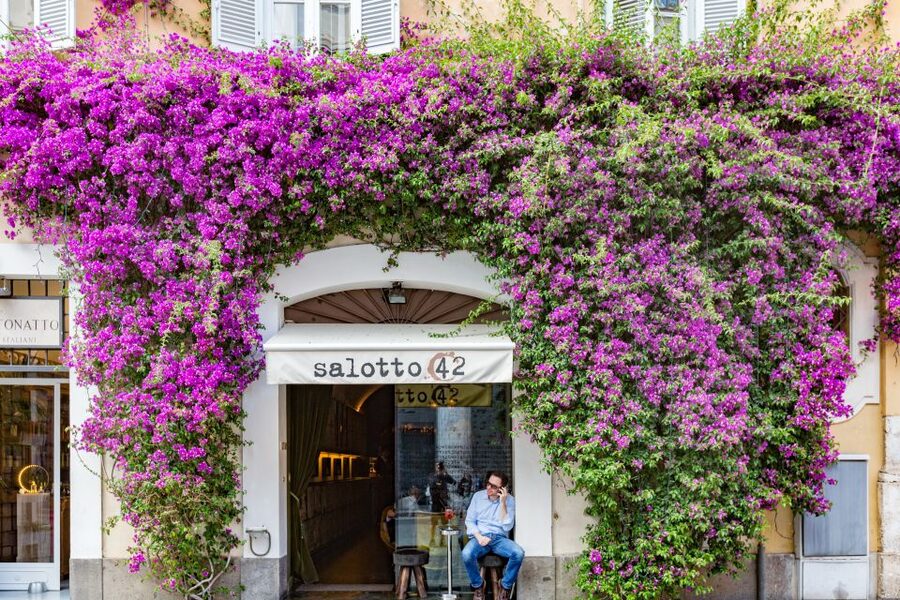
- A classic central Rome route: Walk from the Spanish Steps through Piazza Navona, the Pantheon, Sant’Ignazio, and Trevi Fountain.
- Strong guide-led storytelling: Guides such as Stefano and Bruno are noted for humor, patience, and lively explanations.
- Church visits require modest clothing: Bring something to cover your shoulders and knees.
- A small-group setting: The maximum is 20 people, with some departures operating with only a few participants.
- Good value for a first Rome walk: At $45.55, the price is reasonable if you want orientation, history, and several major sights in one outing.
- Not designed for everyone: Children under 10, wheelchair users, strollers, and people carrying large bags cannot join.
Why this route works for a first morning in Rome
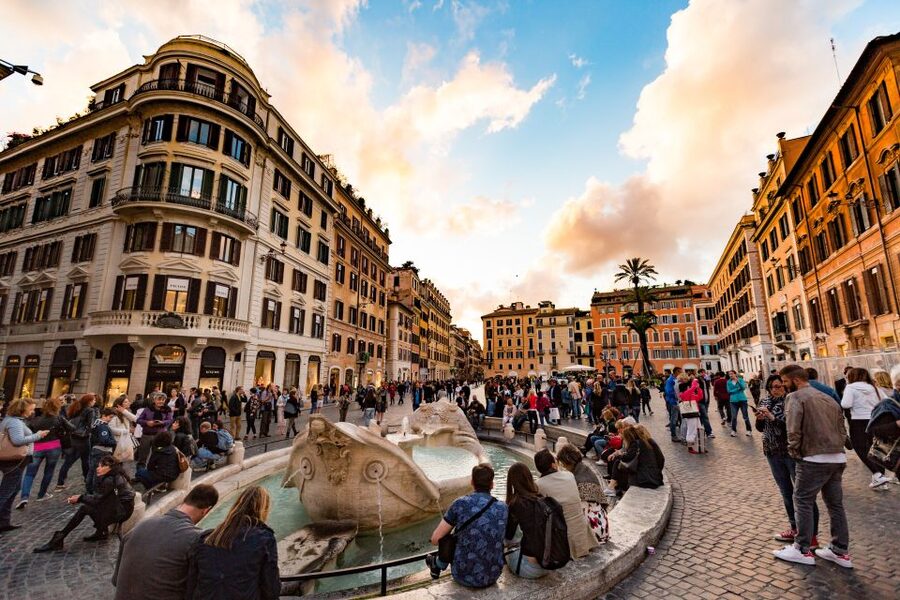
This tour gives you a useful mental map of central Rome. You begin at the Spanish Steps and finish at Trevi Fountain, passing through a dense stretch of churches, piazzas, ancient monuments, and sculpted fountains.
I especially like the way the route moves across several periods without treating them as separate museum exhibits. Ancient Rome appears in the Pantheon and the Stadium of Domitian. Renaissance and Baroque Rome arrive through churches, grand urban spaces, and Bernini’s fountains.
The tour lasts 2.5 hours, although parts of the description also refer to a two-hour walk. You should allow the full 2.5 hours when planning your day. The pace is active but not described as strenuous, and a guide can make the route easier to follow than a self-guided walk through Rome’s busy center.
The group limit is 20 people. That is still large enough that you need to stay close to the guide, but smaller than a typical mass-market city tour. Some departures have had only two people or a handful of participants, which can turn the walk into something close to a private tour.
More walking tours in Rome:
- Rome: Trastevere & Campo de Fiori Street Food Walking Tour
★ 4.9 · 2,768 reviews - Rome: Paranormal Night Walking Tour & Secret Backstreets
★ 4.9 · 1,921 reviews - Rome by Night Walking Tour – Legends & Criminal Stories
★ 4.5 · 1,003 reviews
Starting below the Spanish Steps
Meet at the entrance of the Keats and Shelley Museum at the bottom of the Spanish Steps, in front of the Acqua di Parma store. Your guide should wear a GETYOURGUIDE badge or carry a sign with the same branding.
Arrive 10 minutes early. This matters in Rome, where a short delay can become a missed meeting point in a crowded square. One piece of practical advice is especially important: have your voucher ready in the format required when booking. A past participant reported being told to print it for insurance purposes, so check the current instructions carefully before setting out.
The Spanish Steps are more than a convenient starting point. The staircase rises toward Trinità dei Monti, a late Renaissance church with a commanding position above the square. You’ll follow the graceful line of the steps and begin with one of Rome’s most recognizable urban scenes.
This is also a good spot to get your bearings. The tour places you in the center of Rome from the first minute, with no long transfer from a hotel or railway station.
Piazza Navona and the Stadium of Domitian
From the Spanish Steps, the walk heads toward Piazza Navona. The square follows the footprint of the Stadium of Domitian, built in 85 A.D. for athletic games. That shape gives Piazza Navona its long, open form, which feels different from Rome’s tighter streets and smaller courtyards.
This is the grand Baroque portion of the route. Bernini’s Fountain of the Four Rivers occupies the center, with its theatrical figures and water spilling through the design. The square also brings together the work of Gian Lorenzo Bernini and Francesco Borromini, two major names in Roman Baroque art and architecture.
A guide is useful here because the square can look like one large visual spectacle. You’ll get more from it if someone explains how the ancient stadium shaped the modern piazza, and how the sculpture, church, fountains, and surrounding buildings work together.
The tradeoff is noise and activity. Piazza Navona is a popular stop, and a group may need to pause at the edge of the square or gather tightly to hear. The guide’s ability to keep everyone together matters. Several comments praise guides for managing the group and making sure people could hear.
Inside the Pantheon, Rome’s ancient survivor
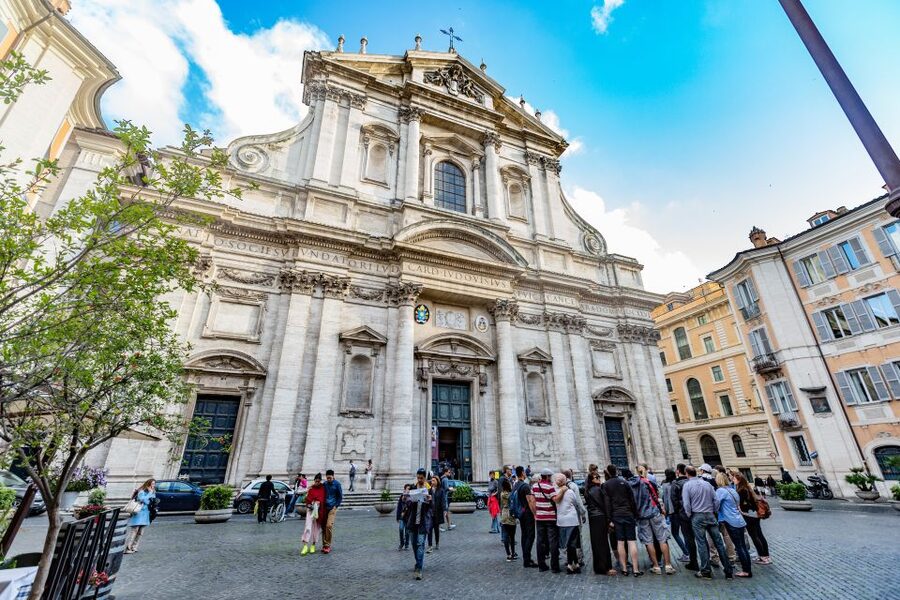
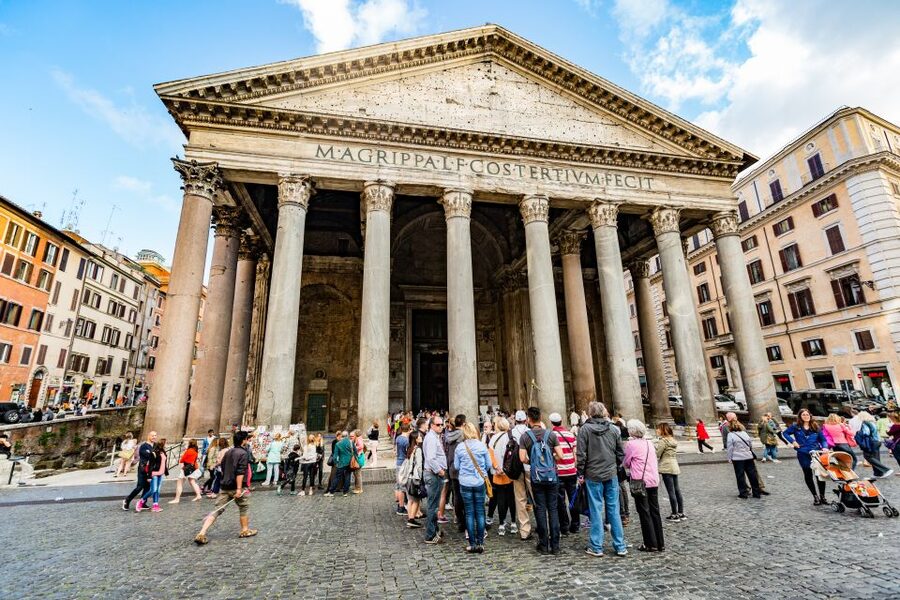
The Pantheon is the route’s most important interior stop. This remarkably intact Roman temple gives you a direct sense of ancient construction that is difficult to get from ruins alone.
The activity specifically includes going inside, not simply viewing the exterior. That makes the stop more valuable, especially if you have already spent time admiring Rome’s fountains and open-air monuments. The contrast is sharp: outside, you move through Baroque streets and crowded squares; inside, the Pantheon offers a powerful look at Roman engineering and religious architecture.
The Pantheon is also connected with Raphael, whose tomb is included among the sights on the walk. That adds a Renaissance layer to the visit and helps show how later Rome reused and reinterpreted ancient buildings.
You should dress for church entry. Shorts, short skirts, sleeveless shirts, and uncovered shoulders or knees are not permitted. Bring a light layer or scarf if your clothing is not suitable. Food, drinks, smoking, and large bags are also not allowed during the tour.
A completely different way to spend the day in Rome:
- Vatican: Museums & Sistine Chapel Entrance Ticket
★ 4.5 · 144,003 reviews - Vatican Museums & Sistine Chapel Tour with Optional Basilica
★ 4.3 · 67,413 reviews - Vatican Museums, Sistine Chapel & St Peter’s Basilica Guided Tour
★ 4.5 · 39,149 reviews - Rome: Colosseum, Palatine Hill and Roman Forum Guided Tour
★ 4.8 · 32,814 reviews
Marcus Aurelius and a glimpse of Roman storytelling
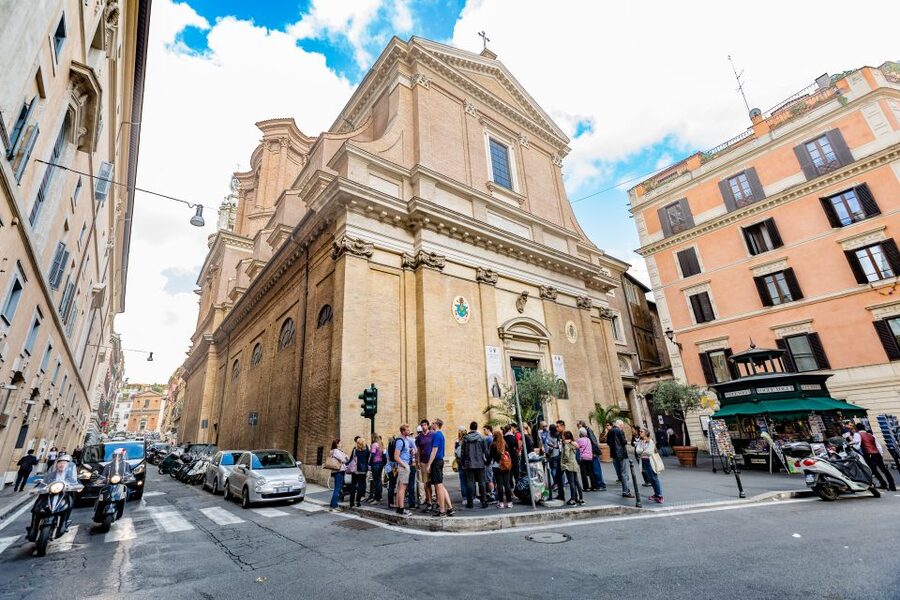
The route continues to the carved Column of Marcus Aurelius. Its reliefs show scenes from the emperor’s military campaigns, wrapping around the column in a long visual narrative.
This stop works well as a bridge between the Pantheon and the later churches. Instead of seeing ancient Rome as a collection of isolated ruins, you begin to notice how columns, reliefs, temples, and monuments remain part of the everyday city.
The description also points out original scenes associated with the film Gladiator. The exact explanation will depend on the guide, but the point is clear: Rome’s monuments have been used both as historical records and as modern movie settings. A good guide can help separate the real ancient story from the screen version without taking the fun out of either.
Sant’Ignazio and the painted dome that fools the eye
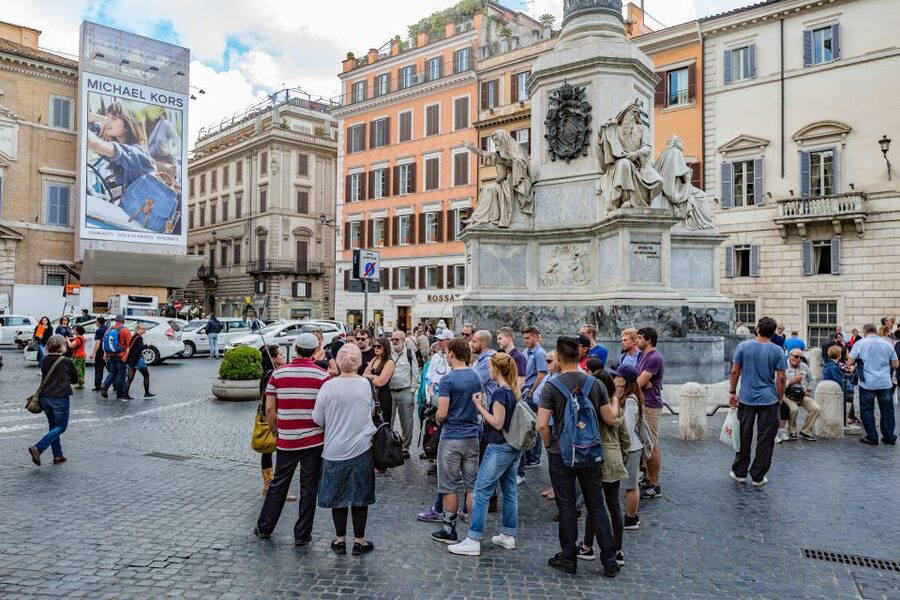
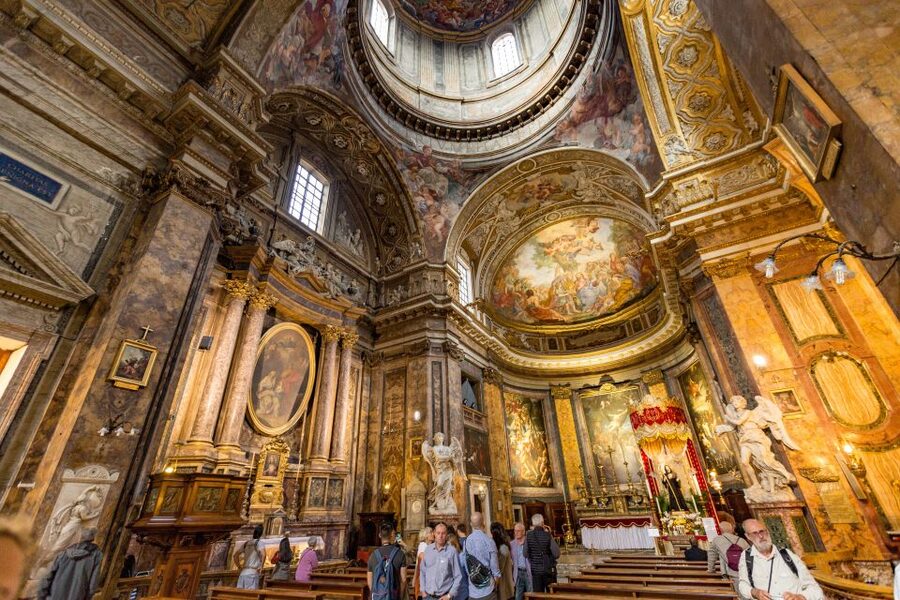
Sant’Ignazio Church offers one of the route’s quieter highlights. Its famous trompe l’oeil ceiling creates the impression of a dome where the church’s architecture does not provide a real one in the expected way.
This is the kind of stop you might miss if you only chase the famous fountains. From the ground, the painted perspective changes as you look upward, and the effect depends on where you stand. The guide can point out how the illusion works and why it was such an effective device in Baroque church design.
I like this part of the itinerary because it gives the walk some variety. Piazza Navona and Trevi Fountain are grand public stages. Sant’Ignazio is more intimate and rewards a few quiet minutes of looking.
Keep your clothing appropriate here, too. The tour enters churches and private areas, so you need to cover your shoulders and knees. The guide will also expect the group to respect church rules, including no eating, drinking, or smoking.
Ending at Trevi Fountain
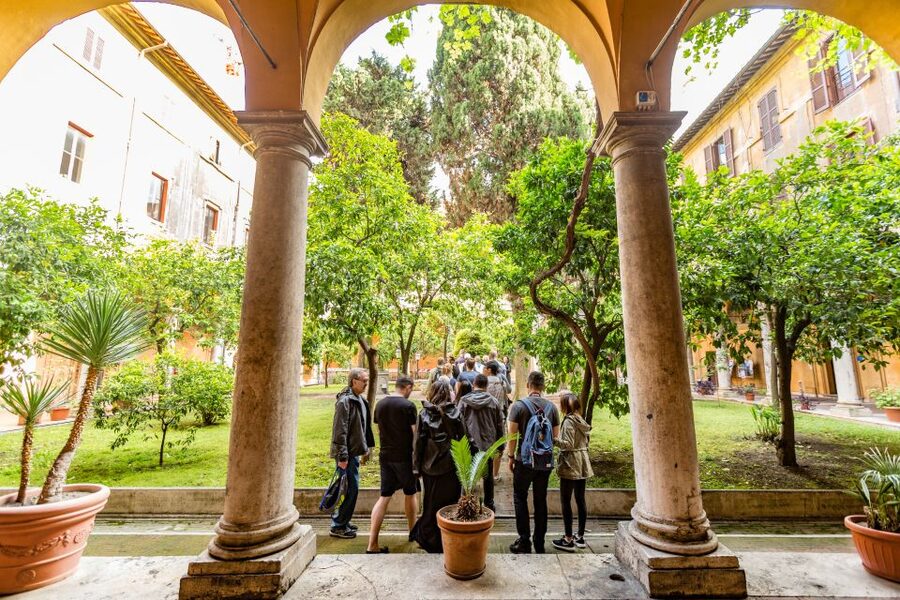
The final major stop is Trevi Fountain, where the tour ends according to the route description. This is the place for the familiar coin toss and a wish to return to Rome.
Trevi is best approached with realistic expectations. It is one of the city’s most popular monuments, and you may find a dense crowd around the fountain. The guide can explain the sculpture and its place in Rome’s water system, but you may have limited room for a long, quiet viewing.
One participant felt the Trevi stop was rushed, possibly because of rain and a tight schedule. That is useful to keep in mind. If Trevi matters greatly to you, plan to return on your own later for more time and photographs.
There is a small inconsistency in the practical information: the route says it finishes at Trevi Fountain, while the meeting details also say the activity ends back at the meeting point. Confirm the final drop-off when you book, especially if you have a timed reservation afterward.
The guides make the difference
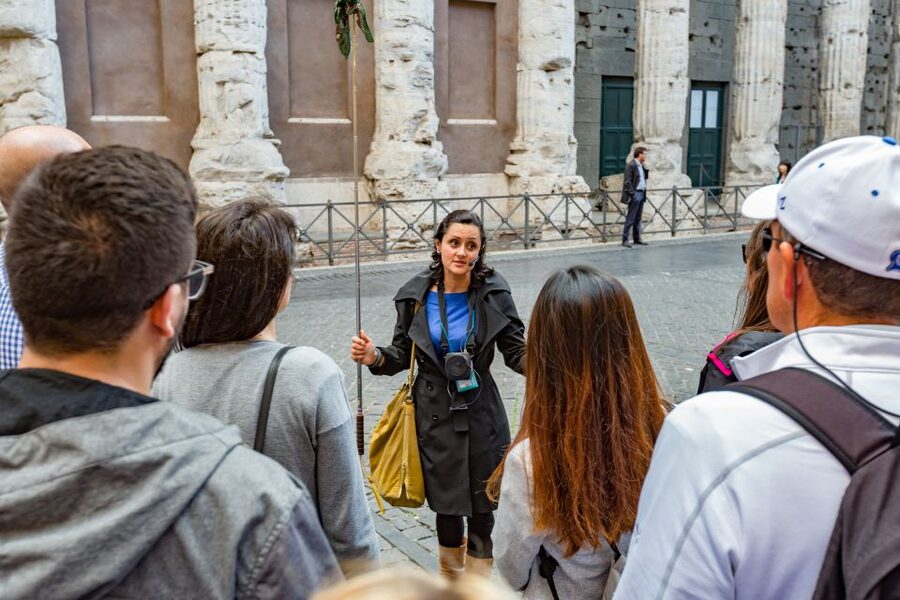
The strongest part of this tour is the guiding. Stefano receives repeated praise for his humor, enthusiasm, patience, and ability to bring Roman history to life. Bruno is described as personable and flexible, with one unusual extra touch: a complimentary tiramisu. Matteo is praised for his enthusiasm and respect for visitors, while Paolo’s walk was described as a highlight of a longer Rome stay.
Names can change by departure, so you cannot book a specific guide unless the operator confirms it. Still, the pattern is encouraging. The best guide for this route needs more than facts. The walk depends on timing, clear speaking, crowd control, and the ability to keep ancient monuments from becoming a blur of dates and names.
The tone also appears relaxed. Guides have recommended other places to visit, offered gelato advice, and added humor to the history. One participant even ended up having a beer with the guide, although that is clearly not a promised part of the activity.
The tour is conducted in English, and translating for other group members is not allowed. If you need frequent interpretation, this is not the right format. The rule keeps the walk moving and helps everyone hear the guide.
Price, pace, and what you receive
At $45.55 per person, this is not a free walking tour, but it can still offer good value. You are paying for a licensed English-speaking guide, a structured route, and entry into the Pantheon. Food and drinks are not included, and gratuities are optional, though tipping is welcomed if you enjoyed the walk.
The value depends on how you use it. If you want a quick introduction to central Rome, the route covers many major sights in one stretch. If you already know the historic center well, or prefer to linger inside each monument, the pace may feel too quick.
The walk is also a useful first-day activity. You can learn the basic layout of central Rome, note places you want to revisit, and ask the guide for ideas for the rest of your stay. It pairs naturally with separate visits to the Colosseum, Roman Forum, Vatican Museums, and Villa Borghese, none of which are included here.
Rain is the main practical risk. The tour is largely outdoors, and one departure continued through heavy rain and cold weather. Bring weather protection and wear shoes that remain comfortable on Rome’s hard streets. In warm weather, water would normally be sensible, but this activity’s rules say food and drinks are not allowed during the tour, so check with the operator if you need to manage medication or hydration.
Who should book this Rome walking tour?
I would choose this tour if you are visiting Rome for the first time, want a guide rather than an audio app, and prefer a concentrated walk through the historic center. It is also a good fit if you enjoy architecture, public art, churches, and the link between ancient and Baroque Rome.
It suits adults and families with children aged 10 and above who can manage a continuous walking route. It is not suitable for younger children, wheelchair users, strollers, or anyone carrying oversize luggage.
Book it early in your stay if you want help getting oriented. Book it later if you already know the center and mainly want a final sweep of famous fountains and piazzas. Either way, do not schedule an important timed attraction too close to the finish. Weather, crowds, and the Trevi Fountain stop can affect the exact pace.
Cancellation is free up to 24 hours before the start time, and you can reserve now and pay later. Starting times vary, so check availability before building the rest of your Rome schedule.
Should you book it?
Book this tour if you want a lively introduction to Rome’s central monuments and value a guide who can connect ancient temples, Renaissance art, and Baroque fountains in one walk.
Skip it if you need wheelchair access, cannot dress for church visits, dislike outdoor walking in uncertain weather, or want long uninterrupted time at each sight. For most first-time visitors who can keep a steady pace, $45.55 is a fair price for the route, the Pantheon visit, and the chance of a guide such as Stefano or Bruno turning a familiar sightseeing circuit into a more memorable morning.
FAQ
How long does the walking tour last?
The stated duration is 2.5 hours. Some tour details refer to a two-hour walk, so allow the full 2.5 hours when planning your day.
Where does the tour start?
Meet at the entrance of the Keats and Shelley Museum at the bottom of the Spanish Steps, in front of the Acqua di Parma store.
How early should I arrive?
You should arrive 10 minutes before the scheduled starting time. The guide should wear a GETYOURGUIDE badge or hold a matching sign.
Where does the tour end?
The route description says the walk ends at Trevi Fountain. The meeting information also says the activity ends back at the meeting point, so confirm the final location when booking.
Is the Pantheon visited inside?
Yes. Going inside the Pantheon is part of the route.
Is the tour offered in languages other than English?
No. The listed live tour language is English, and translating during the walk is not allowed.
What should I wear?
Wear comfortable shoes and comfortable clothing. You must have something that covers your shoulders and knees for churches, private areas, and some monuments.
Can I bring a stroller or wheelchair?
No. The route is not suitable for strollers or wheelchair users.
Can I cancel the booking?
Yes. You can cancel up to 24 hours in advance for a full refund. Reserve now and pay later is also available.
Newest reviews from Rome
- Rome: Vatican Museums & Sistine Chapel Skip-the-Line Ticket★ 4.4 · 148 reviews
- Shared Shuttle Transfer from Rome to Civitavecchia Port★ 5.0 · 148 reviews
- Ghosts Legends and Mysteries of Rome Walking Tour★ 5.0 · 149 reviews
- Skip the Line: Vatican and Sistine Chapel with Guided Tour★ 4.0 · 149 reviews
- Rome: Crypts & Catacombs After Hours Tour with Bone Chapel★ 4.6 · 149 reviews
- Tivoli: Villa Gregoriana Entrance Ticket★ 4.7 · 150 reviews
- Pizza and Tiramisu Cooking Class in Rome, Piazza Navona★ 5.0 · 150 reviews
- Rome: Borghese Gallery Skip-the-Line Entry and Guided Tour★ 4.7 · 150 reviews
Walking Tours, compared.
Trastevere & Campo de Fiori Street Food Walking Tour
Read our review →
Paranormal Night Walking Tour & Secret Backstreets
Read our review →
Rome by Night Walking Tour – Legends & Criminal Stories
Read our review →
Guided City Center Evening Sightseeing Walking Tour
Read our review →
Best of Rome Walking Tour including Trevi Fountain
Read our review →

Forbidden History Walking Tour & Pub Crawl with Drinks
Read our review →
Guided Small Group Walking Tour of City Highlights
Read our review →Browse the lists this tour appears in