
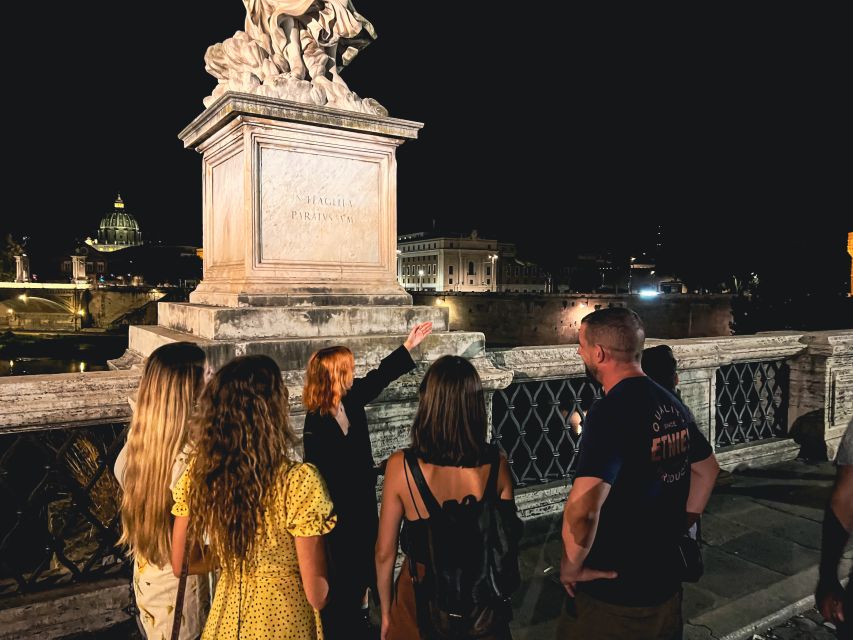
Reviewed · WALKING TOURS
Rome: Ghostly Nighttime Walking Tour
Rome’s darkest stories come alive after sunset, when Campo de’ Fiori, old bridges, quiet churches, and Castel Sant’Angelo take on a very different mood. This two-hour ghost walk mixes Rome’s famous sights with tales of executions, murder, paranormal activity, and the city’s more troubling characters.
I like the route’s variety, especially the shift from Giordano Bruno’s statue to the small religious images, bridges, and bone-decorated church. I also like that the tour avoids the heat and daytime crowds, while guides such as Maham, Dinara, Diletta, Sarah, and Domenica bring plenty of energy and audience interaction.
The main consideration is that the tour can be more historical than frightening. You’ll hear gruesome and eerie stories, but this is not a theatrical haunted-house show, and some stops are viewed from outside or treated mainly as storytelling locations.
In This Review
- Key points to know before booking
- Why Rome works so well after dark
- Starting at Giordano Bruno in Campo de’ Fiori
- Piazza Farnese and Rome’s public drama
- Small Madonnas and details you could miss
- Ponte Sisto and the Fountain of the Mask
- Santa Maria dell’Orazione e Morte and human bones
- Santa Maria in Monserrato degli Spagnoli
- Finishing at Castel Sant’Angelo
- The guides make or break the evening
- Is $28 a fair price?
- Who should book this Rome ghost walk?
- Should you book it?
- FAQ
- How long is the Rome Ghostly Nighttime Walking Tour?
- What language is the tour conducted in?
- Where do I meet the guide?
- Where does the tour finish?
- What places are included on the route?
- Is this a private tour?
- What should I bring?
- Can I cancel the booking?
Key points to know before booking
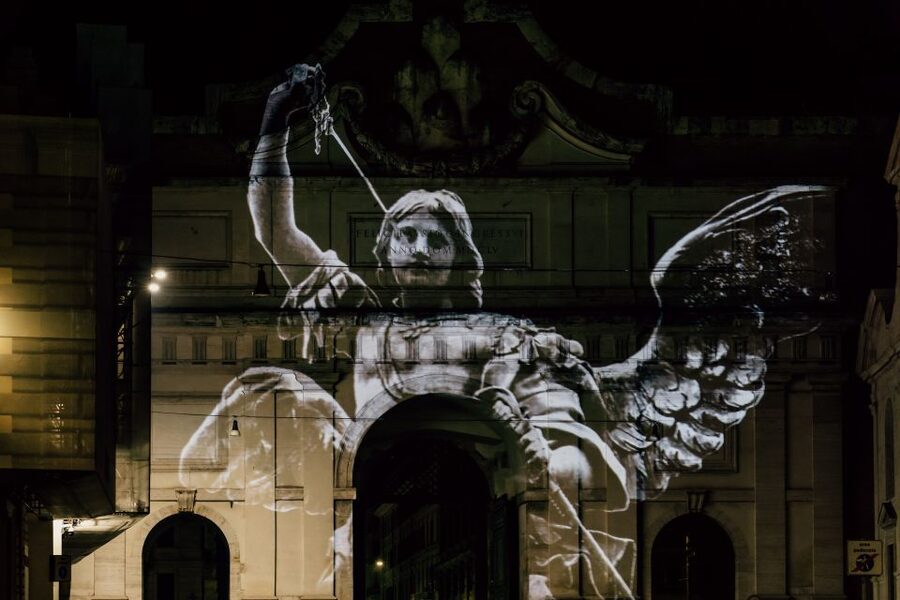
- Giordano Bruno’s statue begins the story: Meet in the center of Campo de’ Fiori, where the opening tale sets the tone for Rome’s darker past.
- The route links famous and overlooked places: Piazza Farnese, Ponte Sisto, Via Giulia, Santa Maria in Monserrato, and Castel Sant’Angelo all appear along the walk.
- The focus is historical first, supernatural second: Expect murders, executions, popes, emperors, artists, and ghost stories rather than staged scares.
- The English-speaking guides are central to the experience: Maham, Dinara, Diletta, Sarah, Domenica, and others are praised for clear storytelling, energy, and interaction.
- The $28 price is fair for a two-hour evening walk: You are paying for a guided route and interpretation, not entrance tickets or a large attraction.
- Wear proper walking shoes: The experience takes place outdoors at night and includes several stops connected by city streets and bridges.
Why Rome works so well after dark
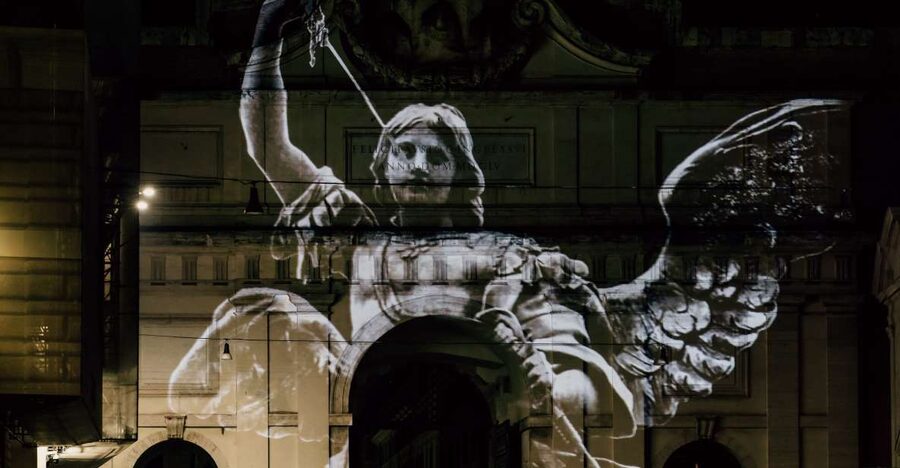
Rome is packed with grand monuments, but its past is not all emperors, fountains, and Renaissance masterpieces. Executions took place in public squares. Bodies were displayed on bridges. Religious buildings preserved human remains. Artists, popes, rulers, and ordinary citizens all appear in the city’s darker stories.
That contrast gives this walk its appeal. You are not simply listening to a ghost tale in an isolated setting. You are standing in the same squares and beside the same churches that form the usual sightseeing route, then hearing what happened there after the polished history-book version ends.
The nighttime setting matters. Campo de’ Fiori is lively during the day, but the statue of Giordano Bruno takes on a sterner mood after sunset. Narrow streets and old façades look less familiar, and the walk gives you a reason to pay attention to small details you might otherwise pass without noticing.
I also like the practical timing. Rome can be hot and crowded during the day, especially in warmer months. A two-hour evening walk lets you see central sights without spending another afternoon in full sun. You still need to walk at a steady pace, but the atmosphere is usually more comfortable than a midday city tour.
More walking tours in Rome:
- Rome: Trastevere & Campo de Fiori Street Food Walking Tour
★ 4.9 · 2,768 reviews - Rome: Paranormal Night Walking Tour & Secret Backstreets
★ 4.9 · 1,921 reviews - Rome by Night Walking Tour – Legends & Criminal Stories
★ 4.5 · 1,003 reviews
Starting at Giordano Bruno in Campo de’ Fiori
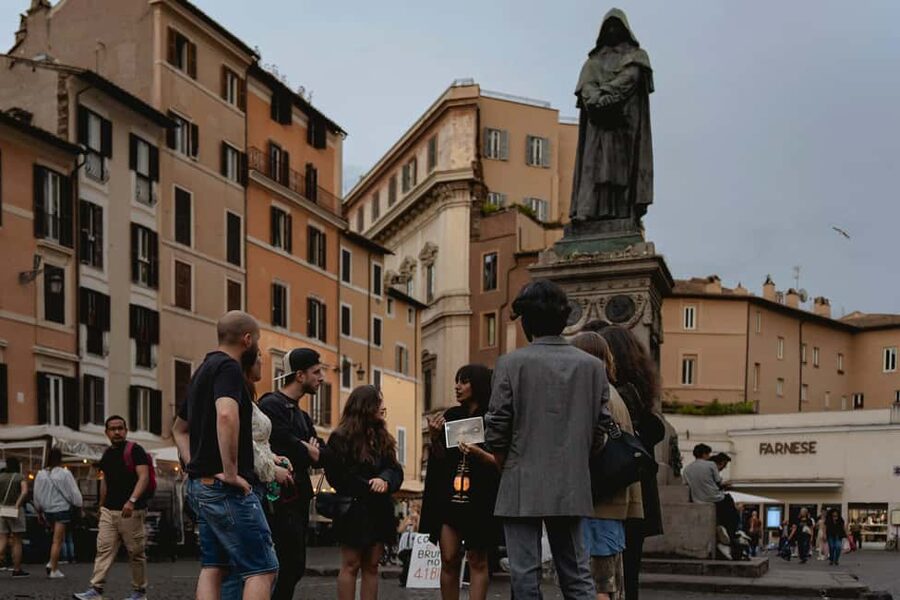
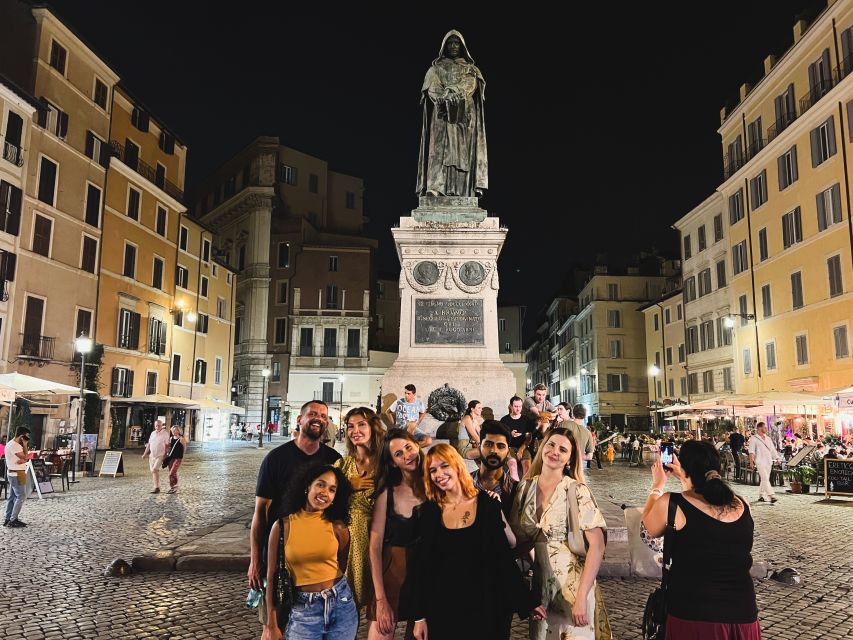
The meeting point is directly in front of the statue of Giordano Bruno in the center of Campo de’ Fiori. Your guide should be holding an iPad or a red sign, which gives you a clear visual marker in a busy part of central Rome.
The statue is more than a convenient meeting place. Giordano Bruno was a philosopher and former Dominican friar who was executed in Campo de’ Fiori in 1600. His monument, with its dark hooded figure facing across the square, immediately introduces the tour’s main idea: Rome’s beauty and its cruelty often occupy the same few streets.
The guide begins here with a short visit and explanation, listed at about 15 minutes. This is a good opening stop because it provides historical context before the walk moves toward churches, bridges, and stories of spirits. You can expect the guide to frame the tour through Bruno and the square’s connection with public punishment.
The setting can be crowded, and the statue is in an open public square rather than a private venue. Arrive with enough time to locate the guide. Comfortable shoes are important from the first step.
Piazza Farnese and Rome’s public drama
The next stop is Piazza Farnese, reached on foot from Campo de’ Fiori. The square is known for its grand Renaissance setting and the large fountains made from ancient Roman baths, but this tour looks at the less decorative side of the area.
Your guide uses the square as a stage for stories connected with Rome’s political and religious power. The broader theme is clear here: public spaces were not merely places for markets and ceremonies. They could also become places of judgment, punishment, spectacle, and rumor.
The stop lasts around 15 minutes, including guided sightseeing and walking. You will not be visiting a museum or entering a paid attraction as part of the stated program, so the value comes from the explanation and the way the guide connects the surroundings to past events.
This is one reason the tour works best for people who enjoy context. If you want a fast list of haunted buildings and dramatic sound effects, the pace may feel restrained. If you like looking at an ordinary square and then learning why its past is unsettling, it should be a strong part of the evening.
Small Madonnas and details you could miss
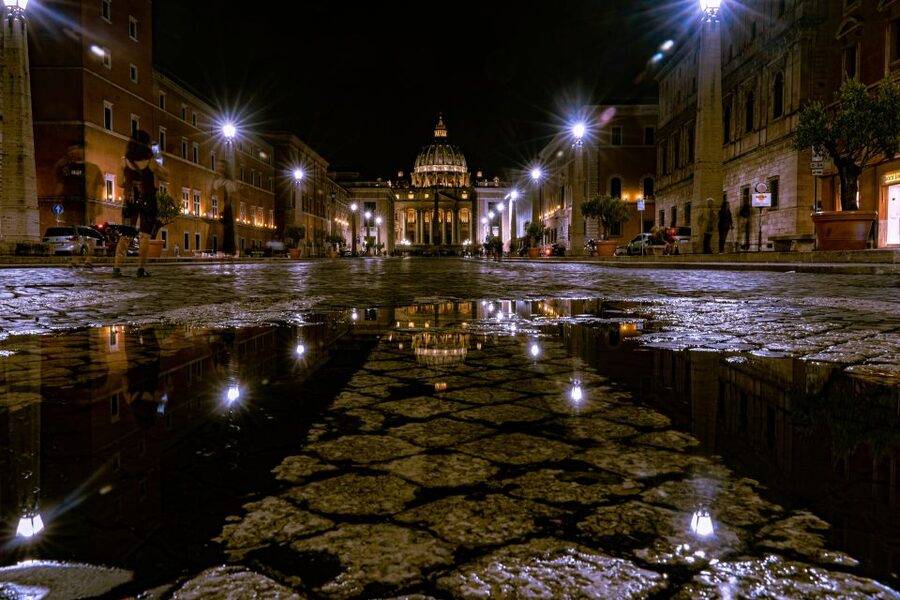
The route then includes Madonna della Pietà and the Madonnelle, or small Madonna images, found along Rome’s streets. These modest religious images are easy to miss during a normal walk, which makes this a useful change of scale after the large squares.
The tour points your attention toward small signs of faith and protection built into the city. Their presence also connects with the walk’s interest in death, prayer, memory, and the supernatural. A small image on a wall may seem simple in daylight, but the guide’s story can make you look at it differently.
This stop is listed as a 15-minute visit and guided sightseeing. Because the itinerary relies on city streets and small details, keep close to the group and listen for the guide’s directions. A camera is listed as a recommended item, though the experience is primarily about hearing the stories and observing the surroundings rather than taking formal photographs.
A completely different way to spend the day in Rome:
- Vatican: Museums & Sistine Chapel Entrance Ticket
★ 4.5 · 144,003 reviews - Vatican Museums & Sistine Chapel Tour with Optional Basilica
★ 4.3 · 67,413 reviews - Vatican Museums, Sistine Chapel & St Peter’s Basilica Guided Tour
★ 4.5 · 39,149 reviews - Rome: Colosseum, Palatine Hill and Roman Forum Guided Tour
★ 4.8 · 32,814 reviews
Ponte Sisto and the Fountain of the Mask
Ponte Sisto carries the group across the Tiber. Bridges are especially effective locations for this kind of tour because they connect neighborhoods while also serving as natural gathering places. Here, the guide discusses the darker side of Rome’s bridges, including the grim image of a bridge long associated with corpses.
The effect is not just spooky. It shows how the city’s most scenic viewpoints could also be tied to punishment, death, and public display. At night, the water and stonework provide a strong setting for the guide’s account, but the story remains the main attraction.
The walk continues to the Fountain of the Mask. This is another short guided stop, roughly 15 minutes. The fountain gives the group a chance to pause while the guide develops another tale tied to Rome’s symbols and public spaces.
I would not expect every stop to deliver a supernatural encounter. The appeal is the accumulation of unsettling details. A statue, a fountain, a bridge, and a church each add another piece to the city’s less comfortable identity.
Santa Maria dell’Orazione e Morte and human bones
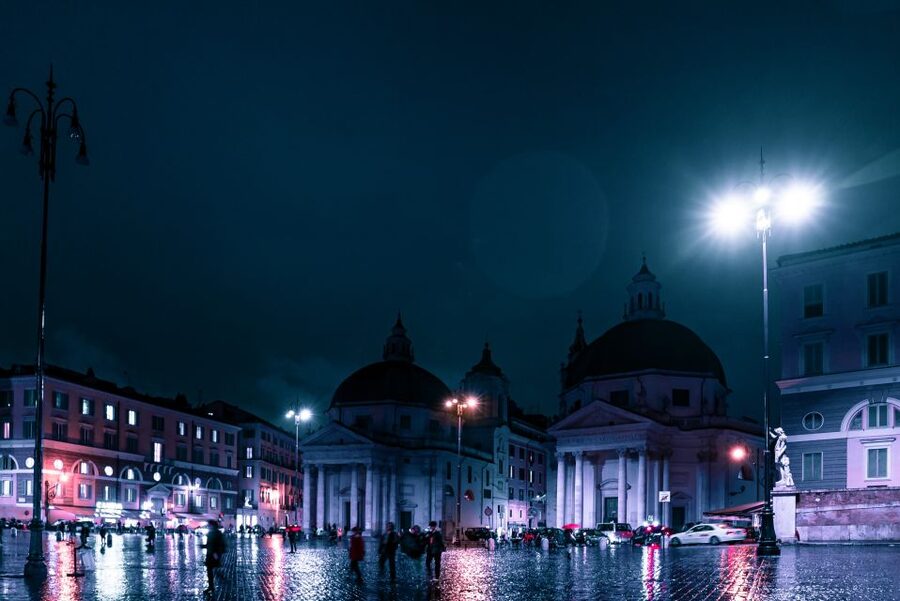
One of the most distinctive locations is the Chiesa di Santa Maria dell’Orazione e Morte, the Church of St. Mary of Prayer and Death. The tour describes a chapel decorated with human bones, making this one of the clearest examples of Rome’s direct relationship with death.
This stop gives the walk a different tone from the stories about individual ghosts. It points to religious practices centered on mortality, prayer, and the dead. The subject can be macabre, so you should be comfortable with material about bones, executions, murder, and death before booking.
The church is included as a guided sightseeing stop rather than as a separately advertised interior visit. That distinction matters. You should expect the guide to explain the place and its connection to the tour, but do not assume that an interior visit or special access is included unless your booking details say so.
For me, this is the sort of stop that makes the tour more worthwhile than a standard ghost-story walk. It ties the eerie mood to a real building and a recognizable tradition, rather than relying only on rumors.
Santa Maria in Monserrato degli Spagnoli
Santa Maria in Monserrato degli Spagnoli is another church on the route. Its inclusion broadens the tour beyond squares and bridges, showing how religious buildings fit into Rome’s stories of death, memory, and unusual events.
The guide spends about 15 minutes here on guided sightseeing. The exact story can vary with the guide, but the tour description places churches, popes, emperors, and artists at the center of its storytelling. You can expect the stop to connect the building with the people and events that shaped Rome’s darker reputation.
This is also a good place to listen carefully and ask questions. Several guides are praised for making the walk interactive and for responding well to detailed questions. Diletta, in particular, is described as strong on both history and art, while Sarah is praised for clear explanations and warm group management.
You should not treat this as a standard church-art tour. The emphasis is on the unusual, disturbing, or supernatural side of the setting, not on a full survey of architecture and religious artwork.
Finishing at Castel Sant’Angelo
The final major stop is Castel Sant’Angelo, reached after the walk through central Rome. The fortress-like building is one of the city’s most dramatic nighttime sights, and its long association with popes, prisoners, military power, and death makes it a natural ending for this subject.
The tour uses the exterior setting for a final guided stop and sightseeing. Castel Sant’Angelo gives the route a strong visual finish, especially after the smaller churches and street details earlier in the evening. You will have a chance to connect the individual tales with the larger story of Rome as a city where religion, politics, art, imprisonment, and violence have often overlapped.
The stated route finishes at Castel Sant’Angelo. The meeting information also says the activity ends back at the meeting point, so check your final confirmation for the exact end arrangement. Either way, plan your evening around the Castel Sant’Angelo area unless the operator gives you different instructions.
Do not assume that entry into the castle is included. The listed inclusions are the ghost walking tour and local guide, not admission to Castel Sant’Angelo.
The guides make or break the evening
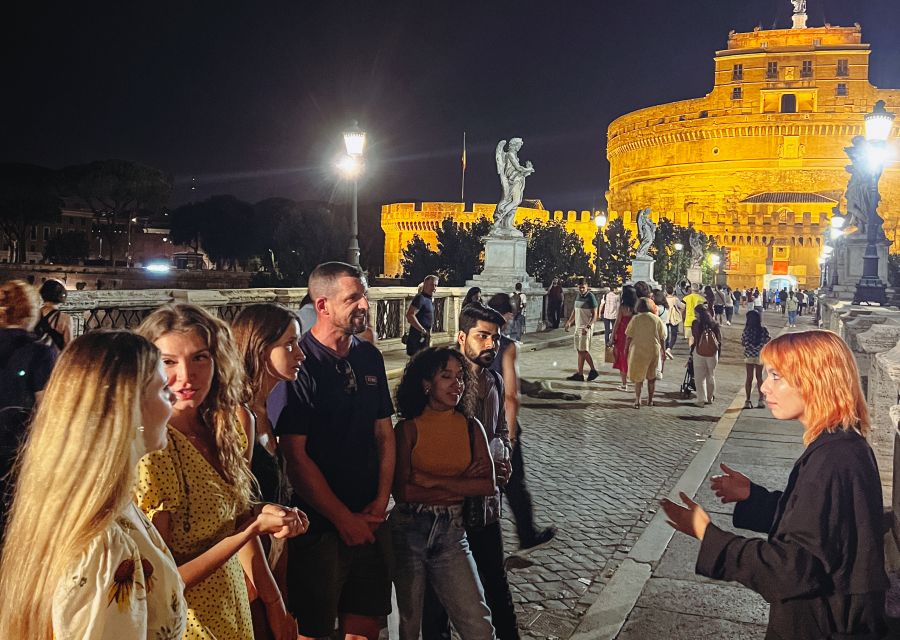
This experience depends heavily on the person leading it. The most praised qualities are clear English, strong storytelling, humor, enthusiasm, and the ability to keep the group involved.
Guides named in the feedback include Maham, Mahan, Moham, Dinara, Diletta, Sarah, Sara, Domenica, and Cayie. Names and spelling may vary in the booking system, and your assigned guide can differ by date. The consistent expectation is an English-speaking local guide who brings the stories to life through explanation rather than a scripted scare routine.
Maham is repeatedly singled out for charisma, passion, and clear storytelling. Dinara is praised for fluent English and entertaining accounts of lesser-known events. Diletta is described as engaging and especially strong with historical and art questions. Sarah receives praise for her energy, detailed explanations, and care in keeping the group together.
One useful detail is that a guide may bring a book with pictures to support the stories. Visual material can help when the subject involves people, old events, or places that are difficult to picture from the street.
The group format also matters. A private group is available, but the standard experience is a shared walking tour. If you enjoy asking questions and reacting to stories with other people, that social setting should suit you. If you prefer a quiet, highly personal pace, check the private option and its price before booking.
Is $28 a fair price?
At $28 per person, I consider this a reasonable price for a two-hour guided evening walk in central Rome. You are paying for a route through several historic areas and for a guide who supplies the interpretation. The tour does not include attraction admissions, food, transport, or a long formal visit inside a monument.
The value is strongest if you enjoy unusual history and would not otherwise know how to connect these places. Campo de’ Fiori, Piazza Farnese, Ponte Sisto, and Castel Sant’Angelo are easy to visit independently, but the smaller Madonna images, the Fountain of the Mask, and the Church of St. Mary of Prayer and Death may pass without notice.
The price is less compelling if you have already taken several Rome history walks and want only confirmed paranormal events. The tour’s supernatural material is mixed with documented historical episodes and dark local tradition. That blend is a strength for some people and a limitation for others.
Free cancellation up to 24 hours in advance and the option to reserve now and pay later reduce the risk of fitting it into a changing Rome schedule. Check availability for the exact starting time, since the walk operates after dark but the start varies.
Who should book this Rome ghost walk?
I would recommend it to adults, older children who are comfortable with grim subjects, first-time Rome visitors, and repeat visitors who want a different angle on familiar places. It also suits couples, friends, and solo visitors who like an evening activity with a clear route and plenty of storytelling.
It is a particularly good choice at the start of a Rome trip. The guide may point out places to revisit, offer food suggestions, and show you streets you might otherwise skip. It can also work well as a final evening activity, when you already recognize central Rome and can appreciate the contrast.
You should think twice if you dislike walking after dark, have difficulty standing during repeated 15-minute stops, or want a tour built around jump scares. The material includes murder, executions, corpses, human bones, and paranormal activity, so it is not a light family ghost tale.
Bring comfortable shoes and a camera. The route is in English, and the guide’s storytelling is the main reason to book.
Should you book it?
Book this tour if you want Rome to feel stranger and more complicated than the postcard version. For $28, you get a well-paced two-hour walk through Campo de’ Fiori, Piazza Farnese, bridges, churches, street shrines, and Castel Sant’Angelo, with a guide who turns familiar sights toward their darker past.
Skip it if you want major interior visits, formal archaeology, or a purely supernatural show. The strongest experience comes from the mix of real places, grim history, local stories, and nighttime atmosphere. Choose it for storytelling, not a haunted attraction.
FAQ
How long is the Rome Ghostly Nighttime Walking Tour?
The tour lasts two hours. Starting times vary, so check availability for the date you want.
What language is the tour conducted in?
The tour is conducted in English with a live guide.
Where do I meet the guide?
Meet directly in front of the statue of Giordano Bruno in the center of Campo de’ Fiori. The guide will be holding an iPad or a red sign.
Where does the tour finish?
The stated route finishes at Castel Sant’Angelo. The meeting information also describes the activity as ending back at the meeting point, so check the final booking confirmation for the exact end arrangement.
What places are included on the route?
The route includes Giordano Bruno’s statue, Piazza Farnese, Madonna della Pietà and the Madonnelle, Ponte Sisto, the Fountain of the Mask, Santa Maria dell’Orazione e Morte, Santa Maria in Monserrato degli Spagnoli, and Castel Sant’Angelo.
Is this a private tour?
A private group option is available. The standard booking may be a shared group experience.
What should I bring?
Bring comfortable shoes and a camera.
Can I cancel the booking?
You can cancel up to 24 hours in advance for a full refund. You can also reserve now and pay later, according to the activity terms.
Newest reviews from Rome
- Rome: Vatican Museums & Sistine Chapel Skip-the-Line Ticket★ 4.4 · 148 reviews
- Shared Shuttle Transfer from Rome to Civitavecchia Port★ 5.0 · 148 reviews
- Rome: Crypts & Catacombs After Hours Tour with Bone Chapel★ 4.6 · 149 reviews
- Ghosts Legends and Mysteries of Rome Walking Tour★ 5.0 · 149 reviews
- Skip the Line: Vatican and Sistine Chapel with Guided Tour★ 4.0 · 149 reviews
- Tivoli: Villa Gregoriana Entrance Ticket★ 4.7 · 150 reviews
- Pizza and Tiramisu Cooking Class in Rome, Piazza Navona★ 5.0 · 150 reviews
- Appian Way E-bike Tour with Gourmet Picnic and Catacombs★ 4.5 · 150 reviews
Walking Tours, compared.
Trastevere & Campo de Fiori Street Food Walking Tour
Read our review →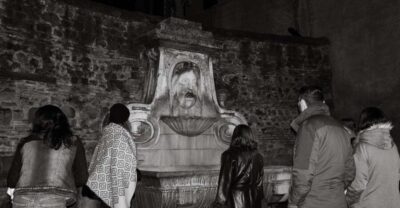
Paranormal Night Walking Tour & Secret Backstreets
Read our review →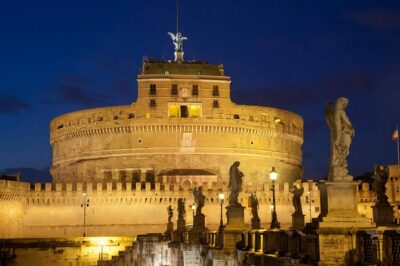
Rome by Night Walking Tour – Legends & Criminal Stories
Read our review →
Guided City Center Evening Sightseeing Walking Tour
Read our review →
Best of Rome Walking Tour including Trevi Fountain
Read our review →

Forbidden History Walking Tour & Pub Crawl with Drinks
Read our review →
Guided Small Group Walking Tour of City Highlights
Read our review →Browse the lists this tour appears in