
Reviewed · WALKING TOURS
Rome: Guided Walking Tour in English or Spanish
Rome makes an especially fine walking tour after sunset, when the Pantheon, Trevi Fountain, and grand squares take on a softer look. In two hours, you move through the historic center while your guide connects ancient monuments with Italy’s unification, church history, architecture, and more recent Roman politics.
I like the mix of famous sights and lesser-known details, including Rome’s smallest church and a church with a painted illusion. I also like the strong guide element: Dan, Anna, Alina, Sila, Theo, Sharon, and others are praised for clear explanations, humor, patience, and useful advice.
The main drawback is meeting the guide. Several people had trouble spotting the starting point, especially where the guide waited under trees or in a garden. Give yourself extra time, read the exact meeting instructions, and look for the guide’s sign or flag before the walk begins.
In This Review
- Key points to know before you book
- Rome after dark gives the route a different mood
- Starting the walk near Piazza d’Aracoeli or Piazza di Pasquino
- Monument to Victor Emmanuel II and the story of modern Italy
- Trevi Fountain in its evening setting
- The Pantheon, one of Rome’s great architectural lessons
- Piazza Navona and the city’s layered past
- Trajan’s Column and Rome’s habit of telling stories in stone
- Small churches, painted illusions, and details you could miss
- The guides are the heart of the experience
- How much walking and what to bring
- Who should book this $28 Rome walking tour?
- Final decision: a smart introduction to central Rome
- FAQ
- How long is the Rome walking tour?
- What languages are available?
- Which sights are included on the route?
- Where does the tour meet?
- Does the tour include food or drinks?
- Is a private group available?
- What should I bring?
Key points to know before you book
- Evening views of central Rome: The timing lets you see major monuments as daylight fades and the city lights come on.
- A history-rich route without museum entry: You visit the outside of major sights and hear the stories behind them while walking between squares.
- English or Spanish guiding: The live tour is offered in both languages, with private groups available.
- Several meeting-point options: Your start may be near Piazza d’Aracoeli, Piazza di Pasquino, Trajan’s Column, or Piazza Navona, depending on the option selected.
- A strong value at $28: For two hours with a local guide, the price is reasonable if you want orientation and context rather than formal monument entry.
- Good walking shoes matter: Expect continuous city walking, uneven pavement, and stops in busy public spaces.
Rome after dark gives the route a different mood
Rome’s center can feel quite different in evening light. White stone catches the lamps, fountains become easier to admire, and the crowds may thin in some places. You are not simply being taken from one postcard view to the next. The guide uses the walk to explain why these places matter.
This is a sightseeing tour rather than an entry tour. The listed stops include the Monument to Victor Emmanuel II, Trevi Fountain, Pantheon, Piazza Navona, and Trajan’s Column, but no admission tickets, food, or drinks are included. That keeps the price down and makes the experience useful on your first evening in Rome, when you want to understand the city before choosing which places deserve a longer visit.
At $28 per person, the value is strongest if you enjoy stories, questions, and a human explanation of what you are seeing. A self-guided walk can cover similar ground for free, but it will not explain why a statue points in a certain direction, how a square connects to Italian unification, or where to find a small church with a visual trick.
More walking tours in Rome:
- Rome: Trastevere & Campo de Fiori Street Food Walking Tour
★ 4.9 · 2,768 reviews - Rome: Paranormal Night Walking Tour & Secret Backstreets
★ 4.9 · 1,921 reviews - Rome by Night Walking Tour – Legends & Criminal Stories
★ 4.5 · 1,003 reviews
Starting the walk near Piazza d’Aracoeli or Piazza di Pasquino
The exact start depends on the option you book. Two listed starting locations are Piazza d’Aracoeli and Piazza di Pasquino, while other booking choices may meet near Trajan’s Column or Piazza Navona.
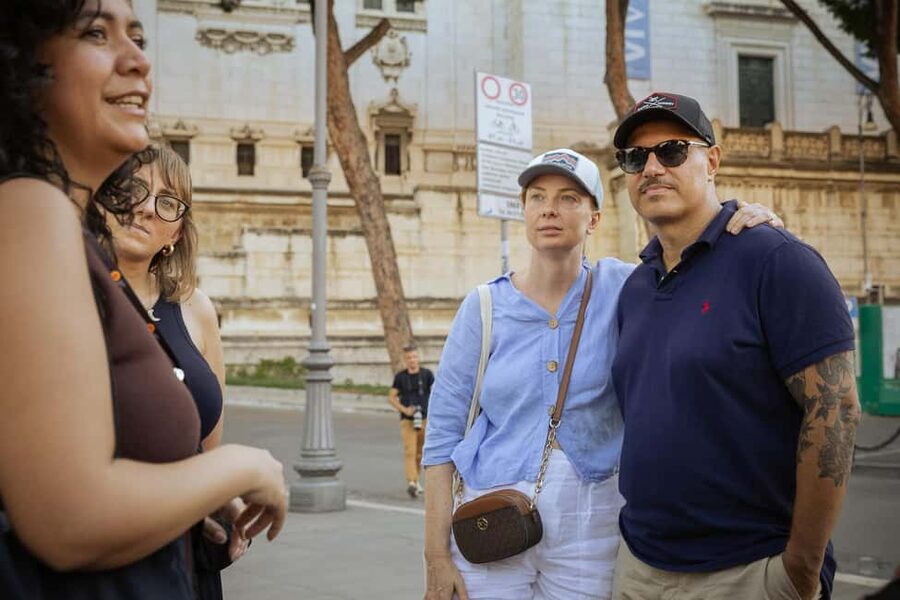
This matters because central Rome’s squares can be confusing, especially at night. One meeting point is described as being in a garden beneath trees, and several people had difficulty finding the guide. Do not arrive at the general neighborhood and assume you are there. Check the precise instructions, allow a little spare time, and contact the local office or guide if you are lost.
The first minutes are important. A clear guide should explain the route and help you understand how the evening will unfold. Theo is specifically praised for making the plan clear from the beginning, while Alina helped a participant reach the correct meeting point. That kind of assistance can make a real difference in a city where several plazas sit close together but have different names.
Monument to Victor Emmanuel II and the story of modern Italy
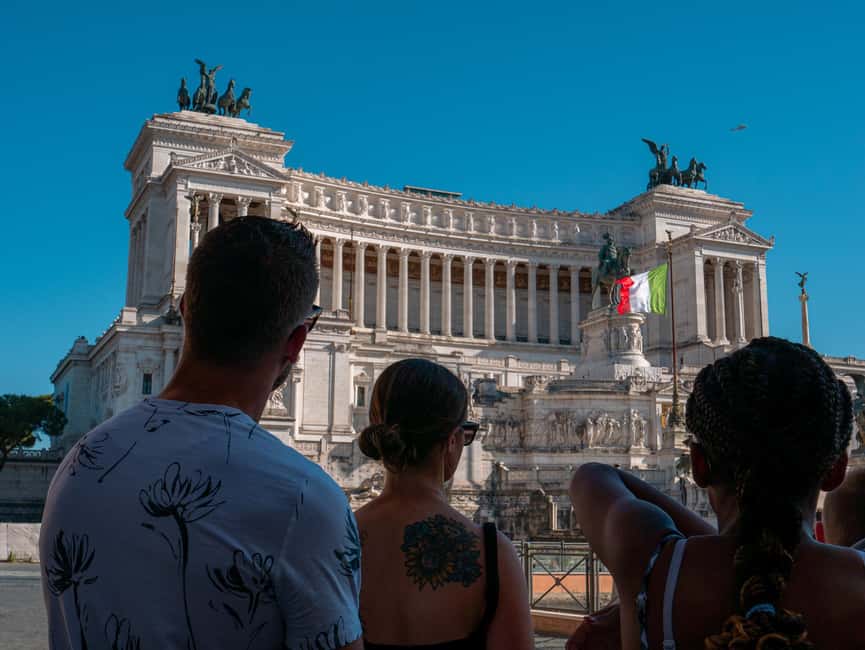
The route includes a guided stop of about 10 minutes at the Monument to Victor Emmanuel II. The enormous white structure is hard to miss, and it offers a useful way into Rome’s modern political story.
The monument honors Victor Emmanuel II, the first king of a unified Italy. That gives your guide a chance to explain how Rome changed when the city became the national capital. The route is not limited to ancient Rome or the Renaissance. It also touches the political events and public figures that shaped the more recent city.
A short stop here works well because you get the essential context without spending half the tour on one monument. You should not expect an interior visit or a detailed architectural study. Instead, the guide uses the building and its setting to connect the old city with the nation that came later.
Trevi Fountain in its evening setting
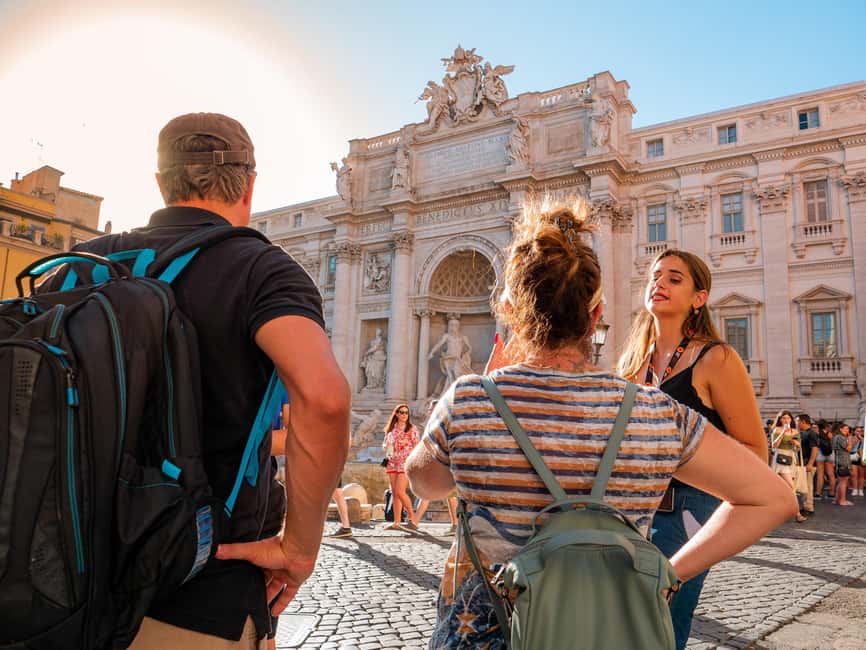
The Trevi Fountain receives about 15 minutes of guided attention. This is one of Rome’s busiest and most photographed sights, so the timing can affect how much you enjoy it. In evening light, the fountain’s stonework and water are particularly striking, but the space may still be crowded.
A guide adds value here by helping you look beyond the familiar coin-toss picture. You can hear about the design, the fountain’s place in Rome’s water system, and the stories attached to the monument. The supplied information confirms that the tour explains famous squares and monuments in their wider setting, but it does not promise a long stop or reserved access.
Treat this as an introduction, not a complete visit. You will have time to see the fountain, take photographs, and listen to the explanation. If you want quiet pictures or a close look at every sculpted figure, return at another time.
More Rome tours worth comparing
- Vatican Museums, Sistine Chapel & St Peter’s Basilica Guided Tour
★ 4.5 · 39,149 reviews - Rome: Colosseum, Palatine Hill and Roman Forum Guided Tour
★ 4.8 · 32,814 reviews - Rome: Guided Tour of Colosseum, Roman Forum & Palatine Hill
★ 4.7 · 27,897 reviews - Rome: Colosseum & Forum with Audio Guide App -Optional Arena
★ 4.2 · 24,770 reviews
The Pantheon, one of Rome’s great architectural lessons
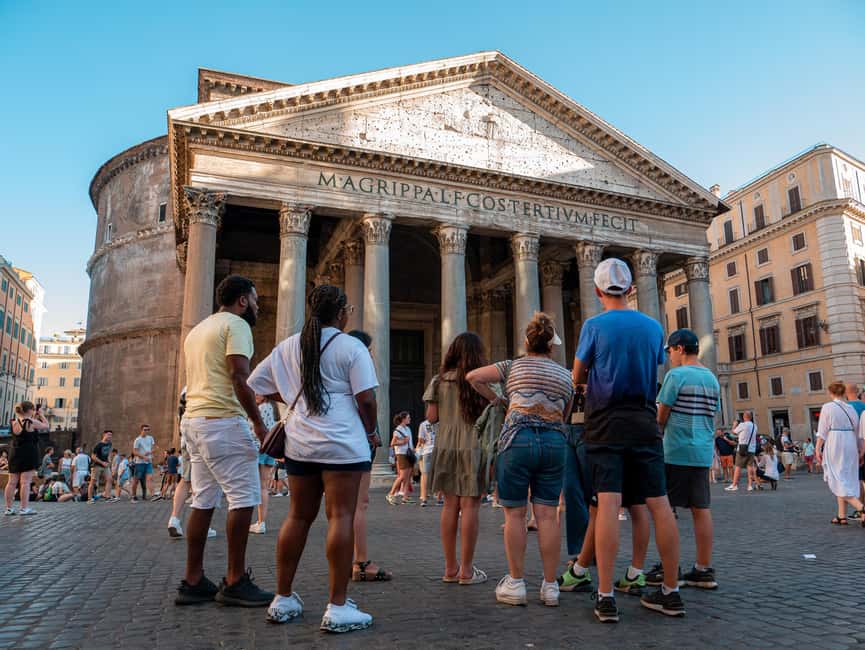
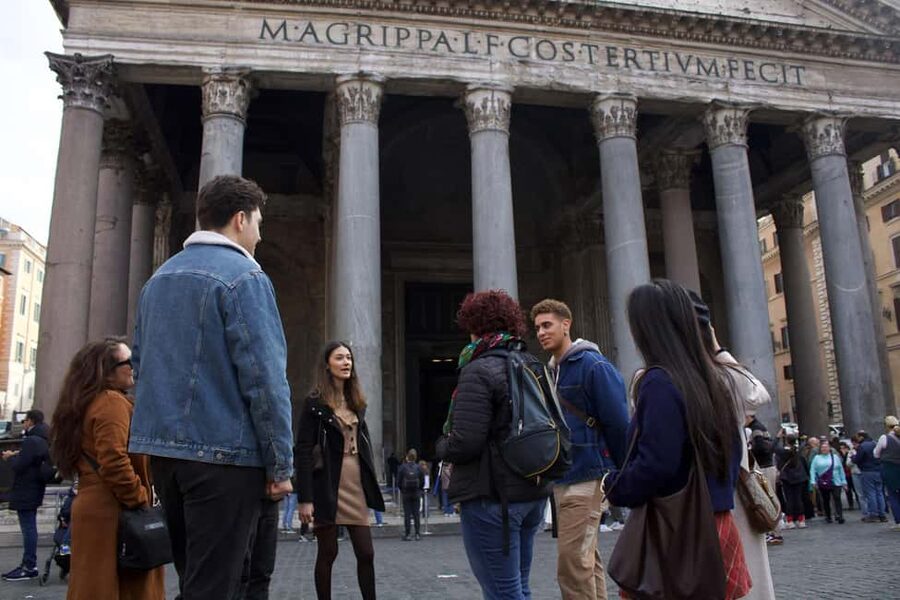
The Pantheon receives about 20 minutes, making it one of the longer stops. Even from outside, it is an excellent place to talk about Roman engineering, later Christian use, and the way ancient buildings were absorbed into the living city.
The tour description places the Pantheon among the main sights, but it does not include an entrance ticket. You should therefore plan on an exterior explanation unless your chosen arrangement says otherwise. That is not a flaw for a short orientation walk. The building’s columns, immense dome, and position in the surrounding streets give the guide plenty to explain without an indoor visit.
This is also where a good guide can turn architecture into something personal and understandable. Anna is praised for explaining stories and architectural details, while other guides are described as making clear why statues face or point in particular directions. Those small observations are useful because they train you to notice Rome rather than simply photograph it.
Piazza Navona and the city’s layered past
The walk continues to Piazza Navona for roughly 20 minutes. This long, open square is one of the most rewarding stops because it brings together architecture, fountains, public life, and older layers of Roman history.
Your guide explains the importance of famous squares and how some connect to Italy’s unification and later political events. The route also includes stories and scandals involving recent Roman politicians. That blend of ancient, religious, artistic, and modern material keeps the tour from becoming a string of dates.
Piazza Navona is also a natural place for questions. Domenica is praised for adjusting her pace and taking time with individual questions, while Vlad is described as speaking with people between stops. Those details suggest the better guides do more than deliver a speech. They notice the group and make room for conversation.
The square can be lively, and sound may be an issue. One person found it harder to hear the guide in parts of the city and suggested small radios for participants. Stay close, especially during explanations, and do not hesitate to ask the guide to repeat a point.
Trajan’s Column and Rome’s habit of telling stories in stone
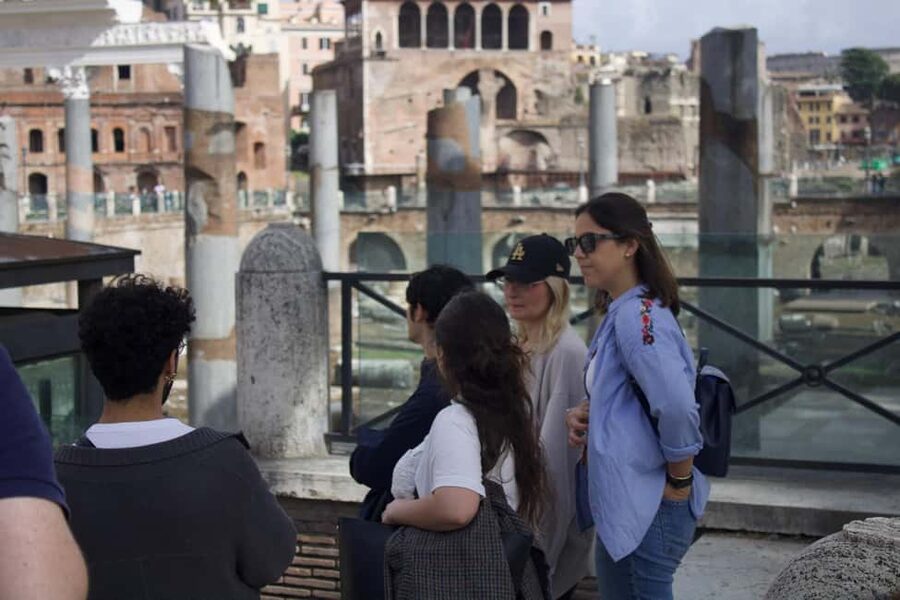
Trajan’s Column is another major point on the route, with about 15 minutes of guiding time. Its carved scenes record the emperor Trajan’s military campaigns in a spiral that winds up the column. You will not be able to study every detail in a short stop, but the monument gives the guide a vivid way to explain Roman power, public memory, and political storytelling.
The route may begin near Trajan’s Column on some options, or it may appear later as a stop. This is another reason to confirm your exact version before setting out. The supplied schedule lists more than one possible arrangement, so the meeting point and order can vary.
This part of the walk suits you if you enjoy learning how monuments were made to communicate. Rome’s stones are not neutral decoration. They tell you who held power, what victories mattered, and how leaders wanted to be remembered.
Small churches, painted illusions, and details you could miss
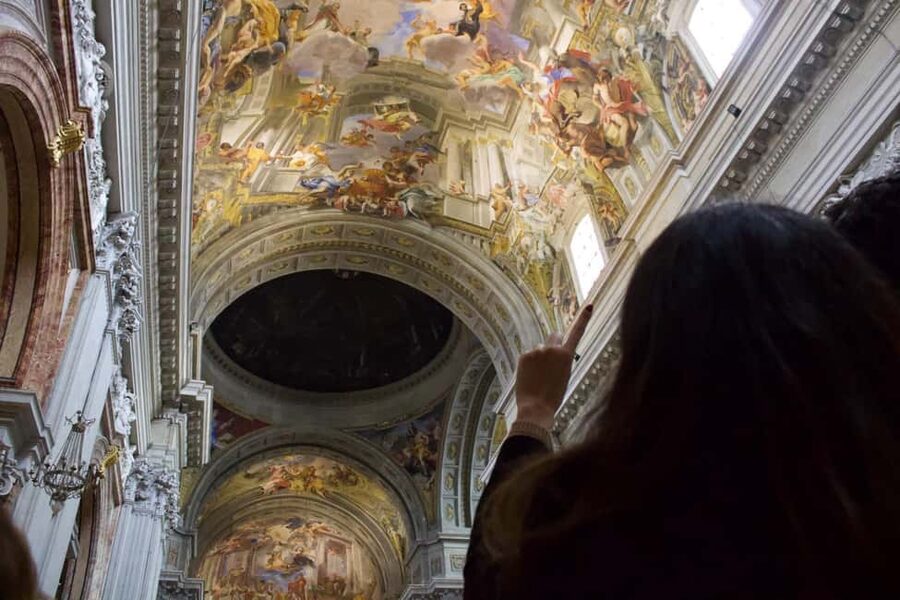
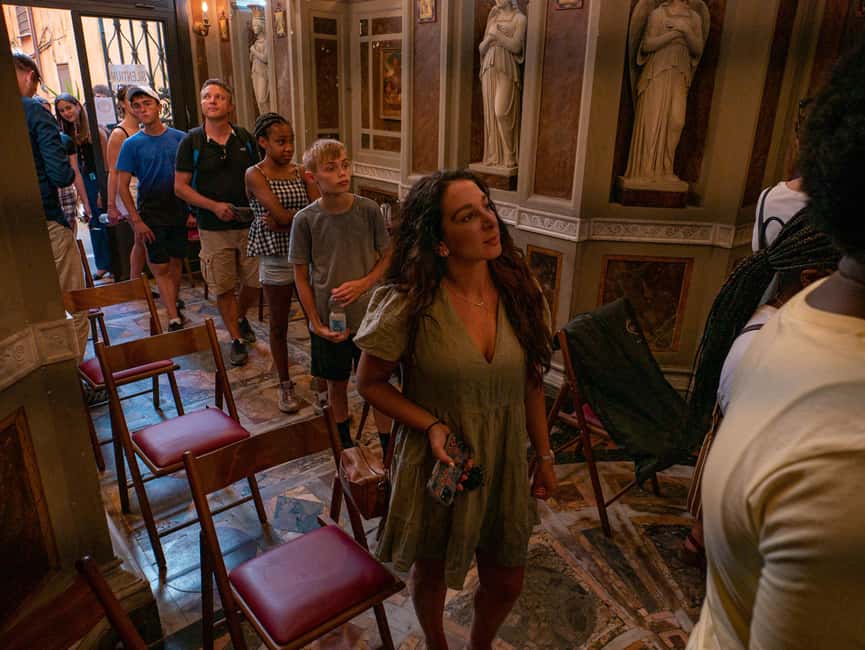
One of the tour’s best features is its attention to smaller sights. Along the route, the guide points out Rome’s smallest church and another church containing a painted illusion. These details help the walk feel like more than a standard checklist of the Pantheon and Trevi Fountain.
You might pass these places on your own without knowing what to look for. A local guide gives you a reason to pause and notice a doorway, perspective effect, or modest building that lacks the fame of Rome’s headline monuments.
The information supplied does not name these churches, and the exact route may change with the meeting-point option. That is sensible in central Rome, where streets, churches, and squares sit close together. Think of these smaller discoveries as part of the guide’s storytelling rather than guaranteed interior visits.
The guides are the heart of the experience
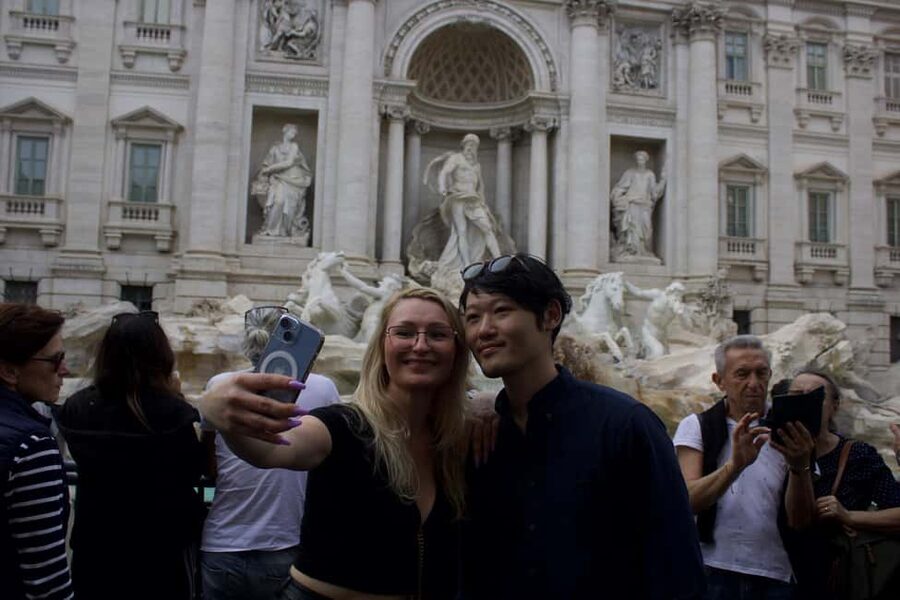
The most consistently praised part of this tour is the guiding. Dan is described as funny, friendly, and deeply interested in Roman history. Theo is praised for clear explanations and patience. Anna receives credit for energy, architectural detail, and useful recommendations, while Sila is noted for patience and for keeping younger people engaged.
Sharon is praised for stories covering many periods of Rome and for offering practical tips. Alina is described as friendly and well informed, and Domenica is praised for adapting the pace and allowing extra time. Other named guides include Paulina, Polina, Denis, Dinara, Vlad, Csemge, and Dogus.
You should not expect every guide to use exactly the same route or style. That is part of the nature of a live walking tour. The common thread is a focus on explanation, humor, questions, and connections between famous sights and less obvious details.
Some tours finish close to the planned two hours. One group’s walk lasted almost an hour longer because the guide took extra time, although this should not be treated as a guarantee. If you have a dinner reservation immediately afterward, leave a buffer.
How much walking and what to bring
The tour lasts two hours and takes place on foot through Rome’s historic center. You should wear comfortable shoes and comfortable clothes, exactly as advised. Rome’s central streets and squares are easy to explore on foot, but the surface can be uneven and you will be standing during several explanations.
Food and drinks are not included. Bring water if you need it, especially in warm weather, but do not expect a meal stop. The value comes from the route and the guide rather than refreshments.
The group format can suit solo visitors, couples, families, and private parties. One solo participant especially valued having a group for an evening walk, while family groups appreciated guides who kept younger people involved. A private group is available if you want more control over pace and questions.
Who should book this $28 Rome walking tour?
I would choose this tour for a first or second day in Rome, especially if you want an evening orientation before exploring on your own. It covers enough major sights to help you understand the center, while the smaller churches, visual illusion, political stories, and local anecdotes give it more character than a basic monument walk.
It is also a good fit for solo visitors who would rather not navigate central Rome alone at night. Families can benefit from the humor and storytelling, though young children must be comfortable walking and standing for two hours.
I would look elsewhere if you need guaranteed monument entry, a quiet small-group setting, wheelchair details, or a fully fixed route. Those features are not specified. I would also avoid booking it too close to another appointment because meeting-point confusion or a longer-than-planned explanation could delay you.
Cancellation is flexible, with a full refund available when you cancel at least 24 hours ahead. You can also reserve now and pay later, which helps if your Rome plans are still shifting.
Final decision: a smart introduction to central Rome
Book this tour if you want Rome explained as you walk, not just displayed in front of you. The two-hour route covers the Pantheon, Trevi Fountain, Piazza Navona, Trajan’s Column, and the Monument to Victor Emmanuel II, while the guide adds churches, political stories, architectural clues, and humor.
At $28, it offers good value for a live introduction to the historic center. Just take the meeting point seriously, arrive early, stay close enough to hear, and wear shoes made for city streets. If your priority is context, evening atmosphere, and an engaging guide, this is an easy choice. If your priority is going inside monuments, you will need separate tickets and more time.
FAQ
How long is the Rome walking tour?
The tour lasts two hours. One guide-led outing extended beyond the scheduled time, but you should plan around the advertised two-hour duration and leave extra time afterward.
What languages are available?
The live tour is available in English and Spanish.
Which sights are included on the route?
The route includes the Monument to Victor Emmanuel II, Trevi Fountain, the Pantheon, Piazza Navona, and Trajan’s Column. It also includes historic churches, smaller sights, and explanations of Rome’s squares and political history.
Where does the tour meet?
The meeting point varies according to the option booked. Possible locations include Piazza d’Aracoeli, Piazza di Pasquino, Trajan’s Column, and Piazza Navona. Check your booking details carefully.
Does the tour include food or drinks?
No. Food and drinks are not included.
Is a private group available?
Yes. A private group option is available.
What should I bring?
Wear comfortable shoes and comfortable clothes. Because the group walks and stops in public squares, arrive early and follow the exact meeting-point directions.
Newest reviews from Rome
- Rome: Vatican Museums & Sistine Chapel Skip-the-Line Ticket★ 4.4 · 148 reviews
- Shared Shuttle Transfer from Rome to Civitavecchia Port★ 5.0 · 148 reviews
- Rome: Crypts & Catacombs After Hours Tour with Bone Chapel★ 4.6 · 149 reviews
- Ghosts Legends and Mysteries of Rome Walking Tour★ 5.0 · 149 reviews
- Skip the Line: Vatican and Sistine Chapel with Guided Tour★ 4.0 · 149 reviews
- Tivoli: Villa Gregoriana Entrance Ticket★ 4.7 · 150 reviews
- Pizza and Tiramisu Cooking Class in Rome, Piazza Navona★ 5.0 · 150 reviews
- Rome: Borghese Gallery Skip-the-Line Entry and Guided Tour★ 4.7 · 150 reviews
Walking Tours, compared.
Trastevere & Campo de Fiori Street Food Walking Tour
Read our review →
Paranormal Night Walking Tour & Secret Backstreets
Read our review →
Rome by Night Walking Tour – Legends & Criminal Stories
Read our review →
Guided City Center Evening Sightseeing Walking Tour
Read our review →
Best of Rome Walking Tour including Trevi Fountain
Read our review →

Forbidden History Walking Tour & Pub Crawl with Drinks
Read our review →
Guided Small Group Walking Tour of City Highlights
Read our review →Browse the lists this tour appears in