
Reviewed · TRASTEVERE TOURS
Rome: Jewish Ghetto and Trastevere Tour
Rome’s Jewish Ghetto and Trastevere tour connects two neighborhoods that can seem unrelated at first. In fact, the walk shows how Rome’s ancient ruins, Jewish life, Christian traditions, wartime memory, and everyday street culture overlap in a remarkably small part of the city.
I like the strong storytelling, which turns stones and alleyways into human stories. I also like the route’s variety: you see the Theatre of Marcellus, Portico d’Ottavia, Tiber Island, old churches, narrow lanes, and local food streets in one outing. The main consideration is that the synagogue is viewed only from outside, and the tour gives a broad account of Rome rather than a fully dedicated study of Jewish life.
In This Review
- Key points at a glance
- Why this Rome walk is worth your time
- Starting beside the Theatre of Marcellus
- Portico d’Ottavia and the edge of the Ghetto
- Walking through Rome’s Jewish Ghetto
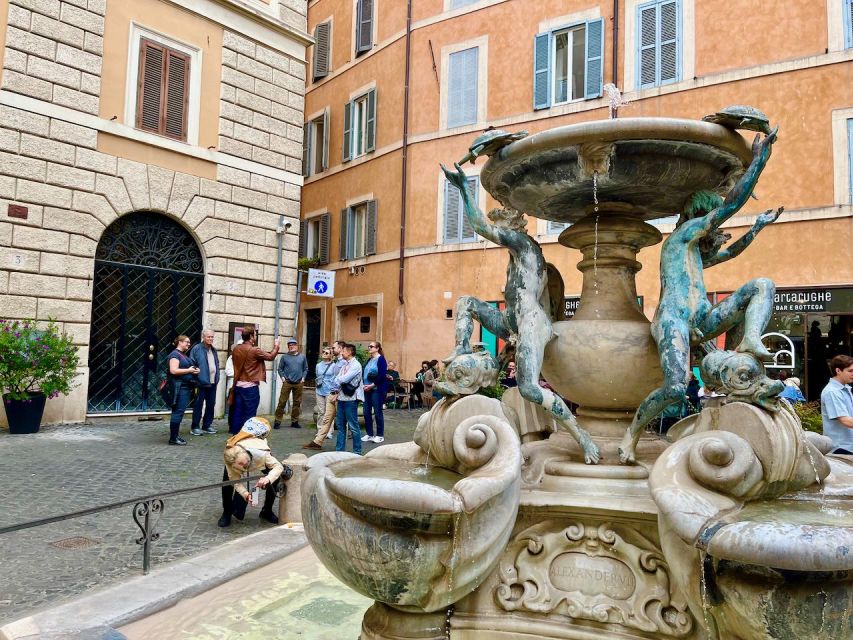
- Piazza Mattei and the second look at the neighborhood
- Crossing Tiber Island
- Entering Trastevere through its back streets
- Santa Maria in Trastevere
- Finishing at Piazza Trilussa
- Pace, comfort, and practical details
- Who will get the most from this tour
- Should you book the Jewish Ghetto and Trastevere tour?
- FAQ
- How long does the Jewish Ghetto and Trastevere tour last?
- What language is the tour offered in?
- Where does the tour begin?
- Where does the tour finish?
- Is the synagogue entrance included?
- Are food and drinks included?
- What should I bring?
- Can I cancel the booking?
Key points at a glance
- Ancient Rome begins the story: Start beside the Theatre of Marcellus and the ruins near the Ghetto.
- The Jewish Ghetto gets serious attention: Allow about 50 minutes of guided time in the neighborhood, with stories of community, hardship, survival, and change.
- Tiber Island links the two districts: A short stop here helps explain the route between the Ghetto and Trastevere.
- Trastevere adds a different mood: Expect ivy-covered homes, narrow lanes, old churches, restaurants, bars, and a more rustic side of Rome.
- Guides make the difference: Ben, Guido, Alethea, Alithia, Ariel, Ivana, and others have led this walk, with praise for humor, clear English, and answers to questions.
- Good value at $35: Two and a half hours of guided walking costs less than many private tours and covers several layers of Roman history.
Why this Rome walk is worth your time
This is not a monument checklist. You are not spending the whole afternoon staring at one famous building while a guide recites dates. Instead, the route uses streets and surviving fragments to explain how Rome grew and changed.
That approach matters in the Jewish Ghetto. The neighborhood is compact, but its past reaches from ancient Rome to the modern era. You see a place shaped by Roman power, religious restriction, Jewish resilience, war, and renewal. The guide’s job is to connect those periods without making you feel as if you are sitting through a lecture.
The tour also adds Trastevere, which gives the walk a useful contrast. The Ghetto feels closely tied to Roman ruins and Jewish memory. Trastevere feels more like a lived-in neighborhood, with winding lanes, old façades, churches, cafés, and places to eat. By the end, you have seen two different faces of central Rome.
At $35 per person, the value is strongest if you want orientation and context early in your stay. You get an English-speaking guide for about two and a half hours, and you finish in a neighborhood where you can continue on your own. It is not a bargain if you prefer to move quickly and see interiors, since most of the tour takes place outdoors and the synagogue entrance is not included.
More Trastevere tours and tastings:
- Winner 2025 Rome Twilight Trastevere Food Tour by Eating Europe
★ 5.0 · 5,157 reviews - Rome: Trastevere or Jewish Quarter Street Food Tour
★ 4.8 · 3,839 reviews - Rome: Trastevere Food tour with Free-Flowing Fine Wine
★ 5.0 · 2,853 reviews
Starting beside the Theatre of Marcellus
Meet outside Santa Rita da Cascia in Campitelli on Via Montanara, next to Antico Caffè del Teatro Marcello. Look for the guide holding a sign that says Jewish Ghetto & Trastevere Stroll. Arrive 10 minutes early. The operator does not guarantee a wait for late arrivals, and this is a walking tour where catching up can be difficult.
The Theatre of Marcellus is the opening lesson in Rome’s habit of building one age over another. The guided stop lasts about 10 minutes, so do not expect a full archaeological visit. You get a short explanation of the site and its place in the surrounding neighborhood.
This is a smart starting point because it immediately shows how close the ancient city is to the later Jewish quarter. You begin with major Roman history, then move toward the streets where later communities lived and worshipped. The walk feels more coherent because the guide establishes that connection at the start.
Portico d’Ottavia and the edge of the Ghetto
The next stop is Portico d’Ottavia, with about five minutes of explanation. The remains are impressive even when seen quickly, but this is another brief outdoor stop rather than an extended archaeological tour.
The portico helps frame the Jewish Ghetto geographically and historically. Ancient Roman structures were not simply abandoned and erased. They became part of the fabric of later Rome, sometimes serving as boundaries, landmarks, or building material. Listen for the way your guide links the ruins to the neighborhood around them.
The quick timing has a plus and a minus. You keep moving and cover more ground, but you may want to return later if you prefer to study the ruins carefully or take photographs without the group waiting.
Walking through Rome’s Jewish Ghetto
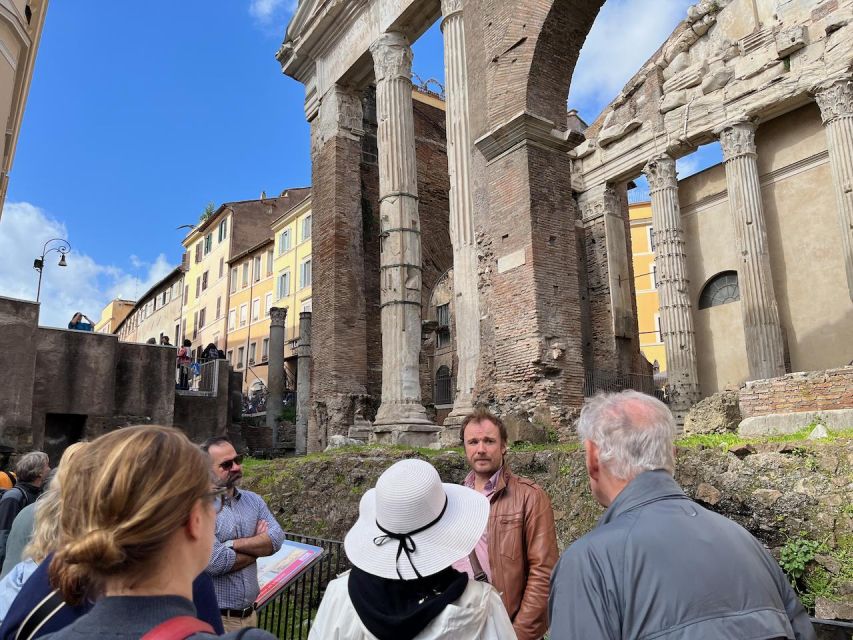
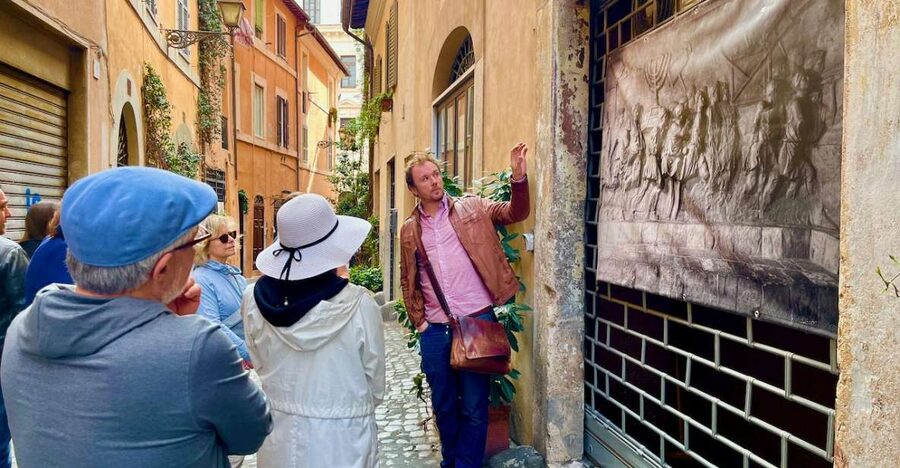
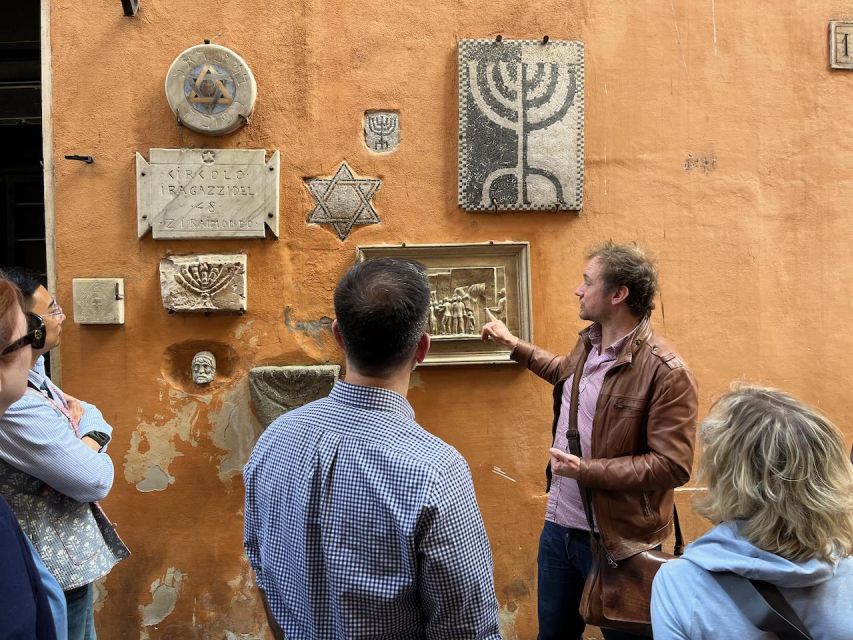
The heart of the tour is the Jewish Ghetto, with two guided sections totaling about 50 minutes. This is where the guide explains the community’s long experience in Rome, including the restrictions imposed on Jewish residents and the ways people maintained their identity and daily life.
The word ghetto can sound abstract until you walk through the streets and hear how the area functioned. The guide gives the neighborhood human scale, explaining what the lanes, walls, buildings, and surviving traces meant to the people who lived here. The strongest part of the tour is not simply learning dates. It is understanding how policy affected homes, work, worship, movement, and family life.
Expect a serious tone at points. The subject includes suffering and tragedy, especially when the story reaches the modern period and the persecution of Rome’s Jews during the Second World War. The guides balance those difficult chapters with accounts of courage, continuity, and ordinary life. That balance keeps the tour from becoming either grimly narrow or overly cheerful.
Several guides have been singled out for making this material easy to follow. Ben is praised for explaining a large amount of information without firing facts at the group too quickly. Guido is noted for mixing architecture and history with humor. Alethea and Alithia are described as energetic, clear, and good at answering questions. The guide can vary, but the common strength is storytelling rather than a dry recital.
The synagogue is seen from the outside only. That is important to know before booking. If entering the synagogue is central to your plans, this walk will not replace a synagogue visit or a specialized Jewish heritage tour. If you want an introduction to the neighborhood and its place in Rome, the exterior visit fits well within the route.
More Jewish Ghetto walks:
- Jewish Ghetto and Trastevere Tour Rome
★ 4.5 · 1,729 reviews - Jewish Ghetto and Synagogues with Jewish Roman Guide 3 Hours
★ 5.0 · 907 reviews - Rome: Eat Like a Roman Ghetto & Campo de’ Fiori Food Tour
★ 5.0 · 743 reviews - Jewish Ghetto & Piazza Navona: Food, Wine & Sightseeing Rome Tour
★ 5.0 · 460 reviews
Piazza Mattei and the second look at the neighborhood
Piazza Mattei receives about 10 minutes of guided attention, followed by another 20 minutes in the Jewish Ghetto. The repeated time in the area is useful. Rather than rushing through once, the guide can pause at different points and add more context as the group moves.
Piazza Mattei gives you a change of scale. After narrow streets and heavy historical subjects, the square offers a more open setting where you can look at the surrounding buildings and absorb the character of the quarter. The guide may also point out places to eat in and around the Ghetto.
Food advice is a practical bonus. Several guides have recommended restaurants and local places, and one participant returned to eat at spots suggested during the walk. You should still treat restaurant recommendations as personal tips, not part of the tour price. Food and drinks are not included.
Crossing Tiber Island
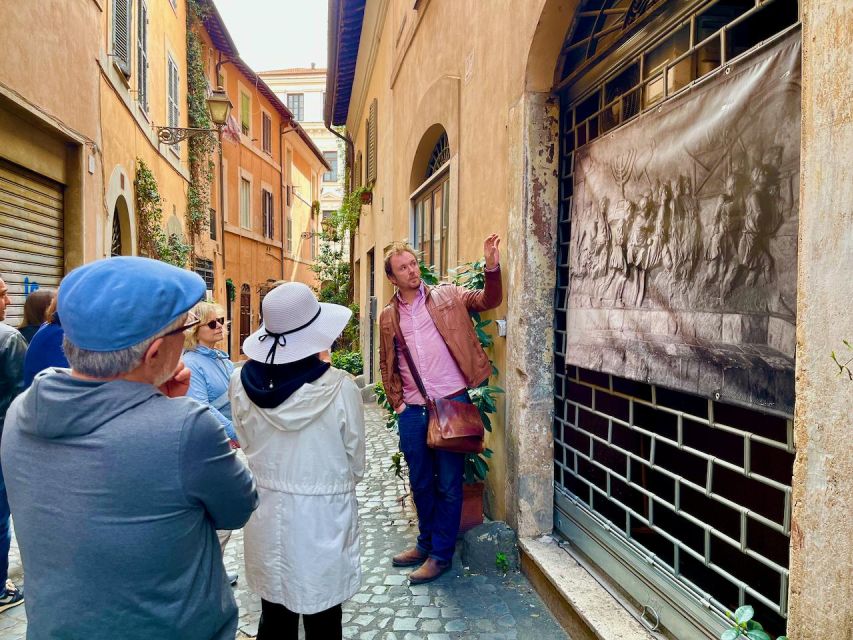
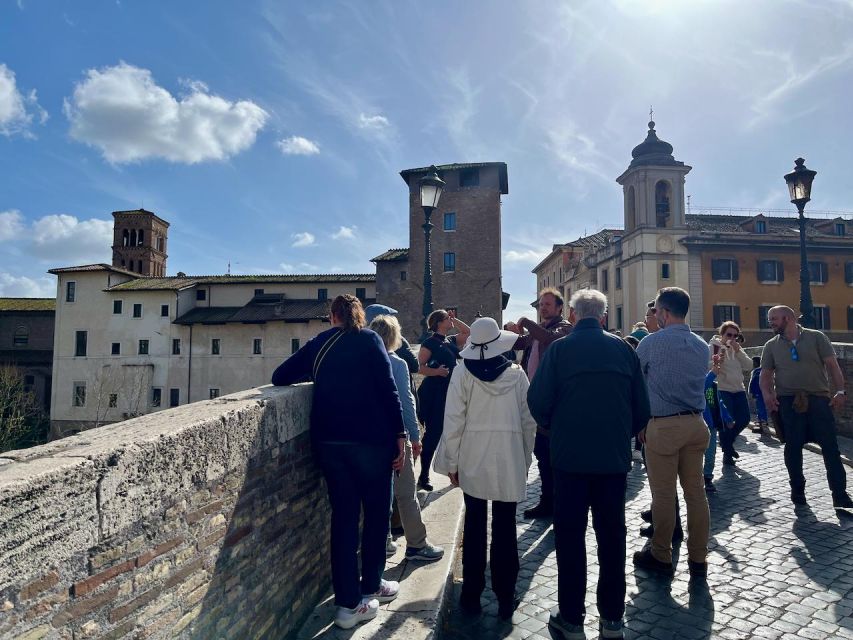
The route then reaches Tiber Island for about 15 minutes of guided explanation, followed by a 10-minute break. This small island is easy to pass without a second thought, but the tour asks you to stop and consider why it matters to Rome.
Its position in the river makes it a natural link between the Ghetto and Trastevere. The island also helps you understand the city’s geography. Rome is not a collection of isolated attractions. The river, bridges, hills, ruins, churches, and neighborhoods have shaped how people moved and where communities developed.
The break is short, but welcome. You can catch your breath, refill water when needed, and take a few pictures. An optional stop at a gelateria or café may be made during the outing, but you should bring money if you want anything. The break is not a meal stop, so do not arrive expecting lunch or a full coffee break.
Entering Trastevere through its back streets
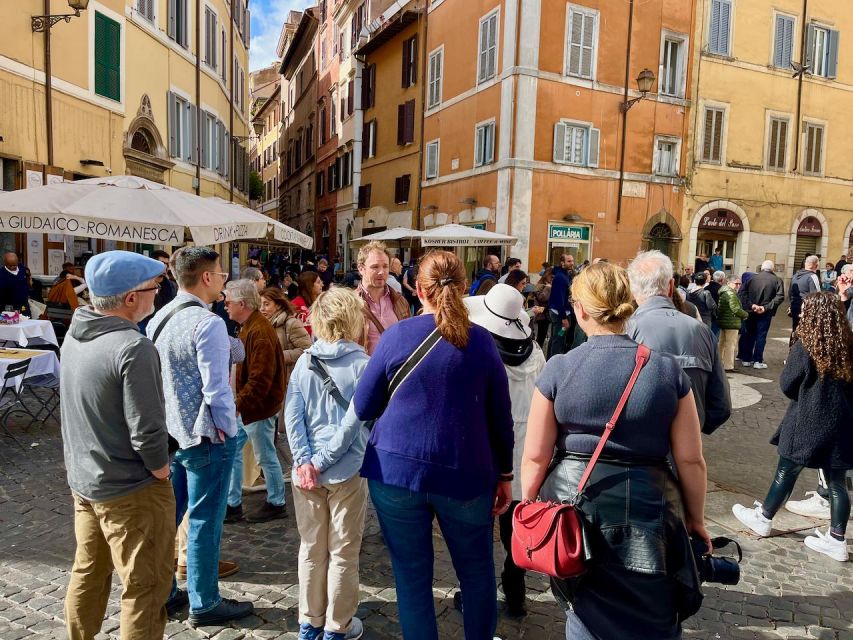
From Tiber Island, the walk continues into Trastevere, with about 30 minutes of guided time at first, then another 20 minutes later in the neighborhood. This is where the mood changes.
Trastevere is known for narrow lanes, ivy-clad houses, old churches, restaurants, and bars. The guide presents it as a more traditional and rustic side of Rome, though you should not mistake the neighborhood’s old appearance for a quiet village. It is one of the city’s popular evening areas, and the streets can feel lively, especially around dining time.
The best reason to include Trastevere is contrast. After hearing about the Jewish community’s experience in the Ghetto, you enter a district with its own identity and long connection to the river and the city. The guide helps you notice details you might otherwise walk past: façades, church exteriors, small squares, and the way streets open or narrow.
This section also works well for visitors who want practical help choosing where to spend the evening. Guides have offered suggestions for restaurants and bars, and several people stayed in Trastevere after the tour. Since the walk ends here, you can easily continue exploring instead of crossing Rome again.
Santa Maria in Trastevere
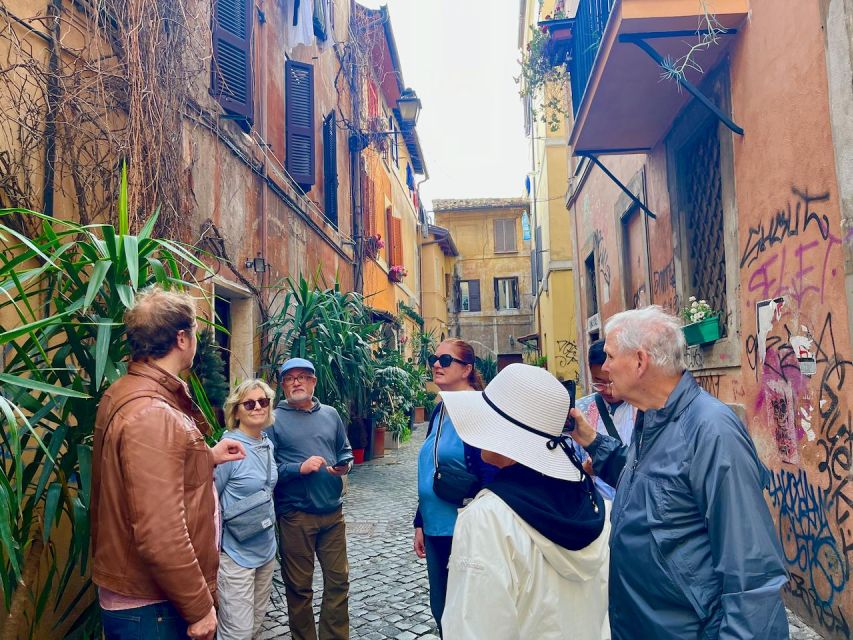
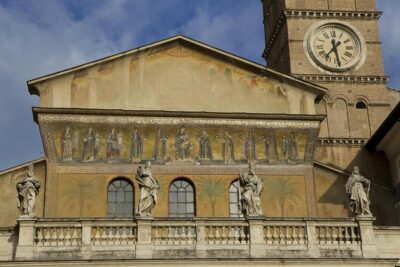
The church of Santa Maria in Trastevere gets about 10 minutes of guided attention. That is enough for an introduction to its importance and exterior setting, but not enough for a detailed art-history lesson or an unhurried interior visit.
The church adds another layer to the route. You have moved from ancient Roman remains to Jewish history and then into a Christian neighborhood with centuries-old religious architecture. The tour does not isolate each subject. It shows how different communities and eras occupy the same compact center.
If you want time for quiet observation, plan to revisit the church after the walk if it is open. The scheduled stop is short, and the guide needs to keep the group moving toward the final points.
Finishing at Piazza Trilussa
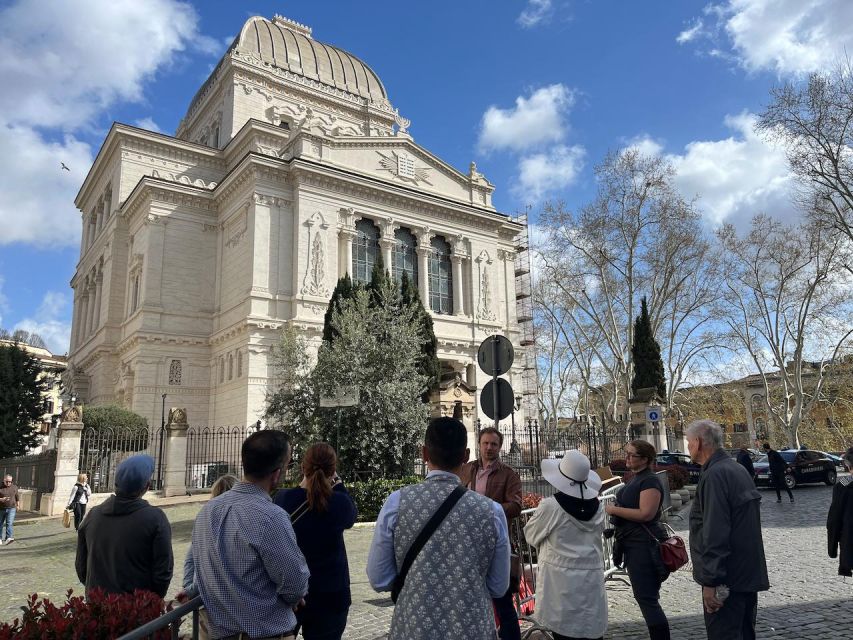
The last guided stop is Piazza Trilussa, with about five minutes of explanation. The square is a practical ending because it puts you in a social part of Trastevere, close to places for food and drinks.
This is also a useful place to end your Rome day. You can follow the guide’s suggestions, find your own restaurant, or simply continue walking. The ending is not at the starting point, so plan your evening around finishing in Trastevere rather than needing to return to Campitelli.
The total route is listed at two and a half hours, including the short break and the walking between stops. Some people have found the walk finished a little earlier, just over two hours. That can depend on the pace, questions, group size, and time spent at each location.
Pace, comfort, and practical details
Wear comfortable shoes. The route uses city streets and cobblestones, and even a leisurely pace adds up over two hours. The tour runs in rain or shine, so bring suitable protection rather than hoping Rome will provide perfect weather.
Summer heat is the main comfort issue. Carry a water bottle. Rome’s public fountains can provide refill points, which is helpful on a walking route with limited break time.
The tour is offered in English and is wheelchair accessible. Since all listed stops are outdoor locations along city streets, you should still be prepared for the normal surfaces and movement of an old Roman neighborhood. The provider lists accessibility, but the booking details do not give further information about group size or specific street conditions.
Free cancellation is available up to 24 hours before the start, and you can reserve now and pay later. Those terms are useful if your Rome schedule is still shifting, but the late-arrival rule is strict enough that you should build in extra time to reach Via Montanara.
Who will get the most from this tour
You should book this walk if you want history explained through real places rather than a museum-style presentation. It is especially suitable for first-time visitors who have already seen the Colosseum and Vatican area and want a different side of Rome.
Families with older children and teenagers can also do well here because the guides use humor and anecdotes to break up the heavier material. The route gives young visitors more than a list of emperors and dates, while Trastevere supplies visual variety.
This is a good choice for Jewish heritage interest, but it is not a specialist Jewish tour. You will learn about the Roman Jewish community and see key outdoor locations, yet the tour also covers ancient Rome, Christian history, architecture, the river, and modern events. If you want detailed discussion of religious practice, synagogue interiors, or Jewish institutions, seek a more focused experience.
It may not suit you if you dislike walking, want extensive time inside monuments, or prefer a private itinerary with no fixed pace. The price reflects a shared guided walk, not an exclusive tour.
Should you book the Jewish Ghetto and Trastevere tour?
At $35, I think this is a strong buy for a two-and-a-half-hour introduction to two central neighborhoods. The best reasons are the human stories, the clear connection between ancient and modern Rome, and the chance to finish in Trastevere with useful ideas for dinner.
Book it early in your stay if you want help getting your bearings. Choose another experience if synagogue entry or a detailed Jewish-only focus is your main goal. For most visitors who want a thoughtful walk, a lively guide, and a useful route beyond Rome’s biggest sights, this tour earns its excellent 4.9 rating from 208 reviews.
FAQ
How long does the Jewish Ghetto and Trastevere tour last?
The tour is scheduled for 2.5 hours, including a short 10-minute break on Tiber Island. Some outings may finish a little earlier, depending on the group and pace.
What language is the tour offered in?
The tour is conducted in English with a live guide.
Where does the tour begin?
Meet outside Santa Rita da Cascia in Campitelli on Via Montanara, next to Antico Caffè del Teatro Marcello. The guide holds a Jewish Ghetto & Trastevere Stroll sign.
Where does the tour finish?
The walk ends at Piazza Trilussa in Trastevere.
Is the synagogue entrance included?
No. The synagogue is viewed from the outside only, and entrance is not included.
Are food and drinks included?
No. An optional stop may be made at a gelateria or café, but you pay for your own food and drinks.
What should I bring?
Bring comfortable shoes and weather protection. In summer, carry a water bottle because the walk can be warm and fountains are available for refills.
Can I cancel the booking?
You can cancel up to 24 hours before the tour for a full refund. Reserve now and pay later is also available.
Newest reviews from Rome
- Rome: Vatican Museums & Sistine Chapel Skip-the-Line Ticket★ 4.4 · 148 reviews
- Shared Shuttle Transfer from Rome to Civitavecchia Port★ 5.0 · 148 reviews
- Skip the Line: Vatican and Sistine Chapel with Guided Tour★ 4.0 · 149 reviews
- Rome: Crypts & Catacombs After Hours Tour with Bone Chapel★ 4.6 · 149 reviews
- Ghosts Legends and Mysteries of Rome Walking Tour★ 5.0 · 149 reviews
- Tivoli: Villa Gregoriana Entrance Ticket★ 4.7 · 150 reviews
- Pizza and Tiramisu Cooking Class in Rome, Piazza Navona★ 5.0 · 150 reviews
- Rome: Borghese Gallery Skip-the-Line Entry and Guided Tour★ 4.7 · 150 reviews
Trastevere Tours, compared.
Winner 2025 Rome Twilight Trastevere Food Tour by Eating Europe
Read our review →
Trastevere or Jewish Quarter Street Food Tour
Read our review →
Trastevere Food tour with Free-Flowing Fine Wine
Read our review →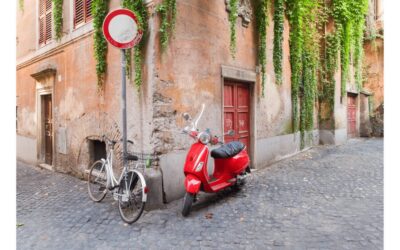
Trastevere & Campo de Fiori Street Food Walking Tour
Read our review →
Award Winning Trastevere Group Food Tour with Wine
Read our review →

Rome Food Tour: Hidden Gems of Trastevere with Dinner & Wine
Read our review →
Trastevere Guided Food and Wine Tour with 20+ Tastings
Read our review →Browse the lists this tour appears in