
Reviewed · JEWISH GHETTO TOURS
Rome: Eat Like a Roman Ghetto & Campo de’ Fiori Food Tour
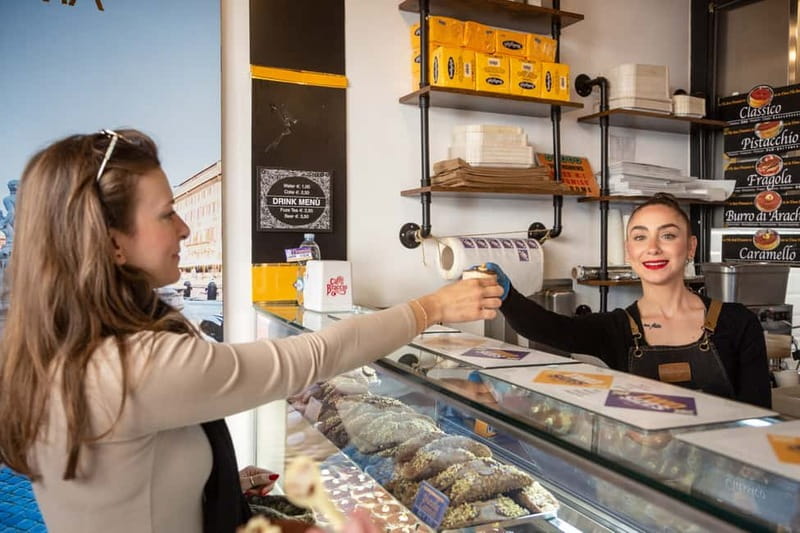
Rome’s best history lesson may come with a crispy rice ball in your hand. This 2.5-hour walk links supplì, porchetta, Roman pizza, Jewish-style fried artichokes, and gelato with the streets and ruins that give them meaning. It is a tasty way to get your bearings near Piazza Navona and Campo de’ Fiori.
I especially like the blend of food and place: you do not simply eat Roman dishes, you see where Campo de’ Fiori’s market life meets the Jewish Ghetto’s culinary traditions. I also like the guides’ personal touch. Julia, Claudio, Fiammetta, Daniele, and others have been praised for adding useful restaurant suggestions and adjusting the conversation to families, teenagers, and solo participants.
The main catch is dietary. Vegetarian choices are available, but the tour is not suitable for vegans or people with gluten intolerance. Afternoon departures also miss the local market and the olive oil, truffle, and vinegar tasting, so morning is the better choice if those matter to you.
In This Review
- Key points at a glance
- Why Roman food works best on foot
- Starting at Piazza di San Simeone
- Campo de’ Fiori, market stalls, and Roman staples
- Pizza, bakeries, and the value of small tastings
- The Jewish Ghetto and carciofo alla giudia
- Largo di Torre Argentina and Julius Caesar’s last day
- The Pantheon area and the final gelato
- What the guides add to the experience
- Price, portions, and what the $36 buys
- Dietary limits and practical comfort
- Who should book this Rome food walk?
- Should you book Eat Like a Roman?
- FAQ
- How long does the tour last?
- Where does the tour start?
- Where does the tour finish?
- What food is included?
- Are vegetarian options available?
- Is the tour suitable for vegans or people with gluten intolerance?
- Is the tour wheelchair accessible?
Key points at a glance
- Five Roman tastings: Try supplì, porchetta panini, Roman-style pizza, fried artichokes, and artisanal gelato.
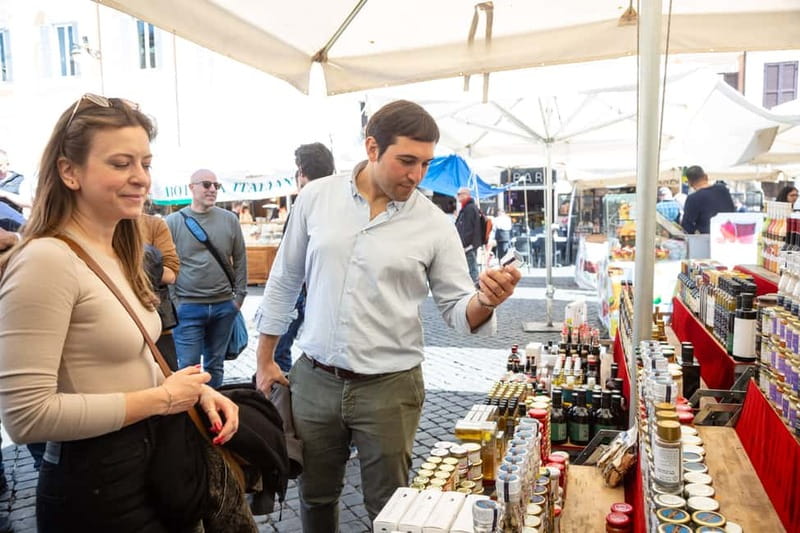
- Morning market bonus: Morning departures include Campo de’ Fiori’s fruit market plus olive oil, truffle, and vinegar samples.
- History along the way: See the Jewish Ghetto, Portico d’Ottavia, Teatro Marcello, Largo di Torre Argentina, and the Pantheon area.
- Good first-day activity: The guides often share practical food addresses, making this useful early in your stay.
- Vegetarian but not vegan: Tell the operator about allergies or dietary restrictions before you go.
- Central walking route: Start at Piazza di San Simeone and finish near Piazza di Sant’Eustachio, with no transport required.
Why Roman food works best on foot
Rome is not a city you understand from a restaurant table alone. Its food is tied to markets, bakeries, old neighborhoods, religious communities, and busy squares. This route gives you a small but well-chosen slice of that connection.
You begin at the fountain in Piazza di San Simeone, a short walk from Piazza Navona. From there, the route moves through narrow streets toward Campo de’ Fiori, then across to the Jewish Ghetto and the ancient ruins around Largo di Torre Argentina. The final stretch leads toward the Pantheon and gelato near Piazza di Sant’Eustachio.
The walking is broken up by tasting stops of about 10 to 20 minutes. That matters. You are not expected to march for two and a half hours while listening to a lecture. You stop, eat, look around, and then move on.
The route is also central enough to fit neatly into a day of sightseeing. You could schedule it early in your visit, use the guide’s food suggestions for later meals, and then return to Campo de’ Fiori or the Jewish Ghetto on your own.
More Jewish Ghetto walks:
- Rome: Trastevere or Jewish Quarter Street Food Tour
★ 4.8 · 3,839 reviews - Jewish Ghetto and Trastevere Tour Rome
★ 4.5 · 1,729 reviews - Jewish Ghetto and Synagogues with Jewish Roman Guide 3 Hours
★ 5.0 · 907 reviews
Starting at Piazza di San Simeone
Meet your English-speaking guide at the fountain in the center of Piazza di San Simeone. This is a simple meeting point, but do not treat the start as a formal tour bus departure. You will be walking through central Rome, and staying alert for the guide at the fountain is part of the plan.
The opening portion passes near the Chiostro del Bramante, a notable Renaissance cloister and exhibition space. You only pass by rather than tour the interior, so this is a quick visual introduction, not a museum visit.
That is typical of the outing. The historic sights provide context, while the food remains the main event. If your priority is entering churches, museums, or archaeological sites, this is not a replacement for those visits. If you want Rome’s streets to make more sense while you snack, the balance works well.
Campo de’ Fiori, market stalls, and Roman staples
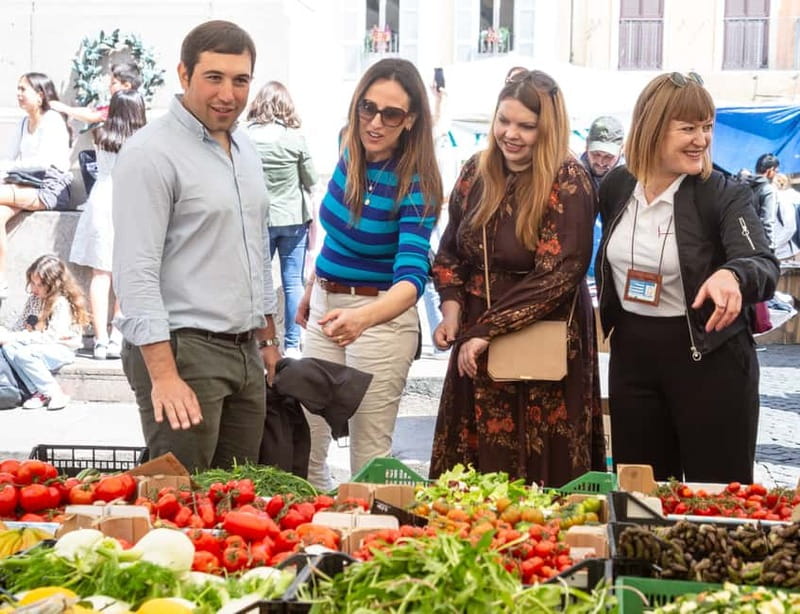
Campo de’ Fiori is one of the most useful stops on the route because it changes with the time of day. Morning tours include the local fruit market, when the square is filled with produce and food stalls. You also get a tasting of olive oil, truffle products, and vinegars.
This market visit gives you a quick lesson in Italian shopping. You can compare the smell and flavor of ingredients before eating prepared Roman food, which makes the later tastings feel less random. It also gives you a chance to ask the guide what is worth buying and what is better left on the shelf.
Afternoon tours still visit Campo de’ Fiori, but the market and specialty-product tasting are not included. I would book a morning departure if you enjoy markets, want the fullest version of the route, or hope to make food shopping part of your Rome stay.
One early food stop is a local restaurant, where the group samples Roman street food and regional specialties. The exact menu can vary, but the advertised tastings include supplì and porchetta. A supplì is a deep-fried rice ball with a crisp outside and a savory center. It is simple, filling, and very Roman.
The porchetta comes in a panino, with tender roast pork as the main attraction. This is hearty food, so keep some room. The tour offers several tastings rather than one large meal, but by the middle of the walk you should expect to feel pleasantly fed.
Pizza, bakeries, and the value of small tastings
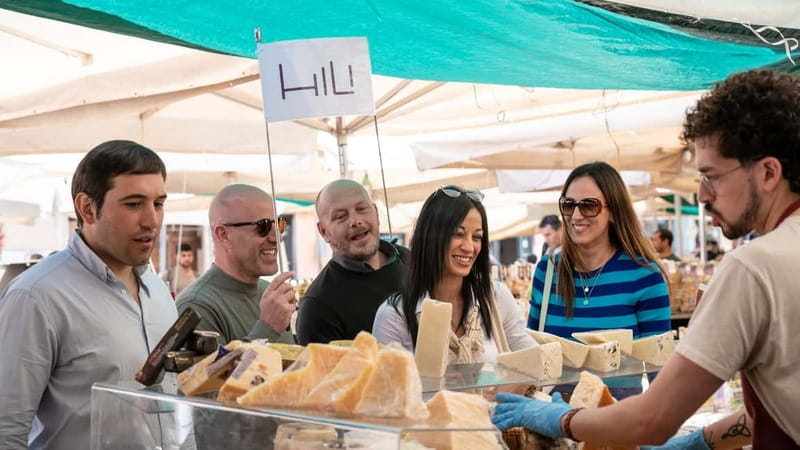
A later stop at a local bakery brings Roman-style pizza into the picture. Roman pizza is often served by the slice, making it ideal for a walking food tour. You get to taste it without committing to a full restaurant meal, and the guide can explain how it fits into everyday Roman eating.
The bakery stop lasts about 15 minutes. That is enough time for a sample and a little conversation, but not enough for a long sit-down break. Wear comfortable shoes and keep your schedule flexible, since the outing is built around moving between small food stops.
The tour also includes another street-food stop, described as a local or lesser-known place. This part of the route adds variety, and the food may include a regional specialty such as arrosticini, which one guide highlighted during a private outing. Since menus can change, consider the broader promise to be a range of Roman and regional bites rather than a fixed restaurant menu.
That flexibility is normal for food tours. It lets the guide respond to opening hours and available products, but it means you should not book solely for one exact dish beyond the listed core tastings.
More food tours in Rome:
- Rome: Tuscany & Montepulciano Day Trip with Lunch & Wine Tasting
★ 4.5 · 5,232 reviews - Winner 2025 Rome Twilight Trastevere Food Tour by Eating Europe
★ 5.0 · 5,157 reviews - Rome Food Tour: Unlimited Tastings with Fine Wine & Barolo
★ 5.0 · 3,365 reviews - Rome: Trastevere Food tour with Free-Flowing Fine Wine
★ 5.0 · 2,853 reviews
The Jewish Ghetto and carciofo alla giudia
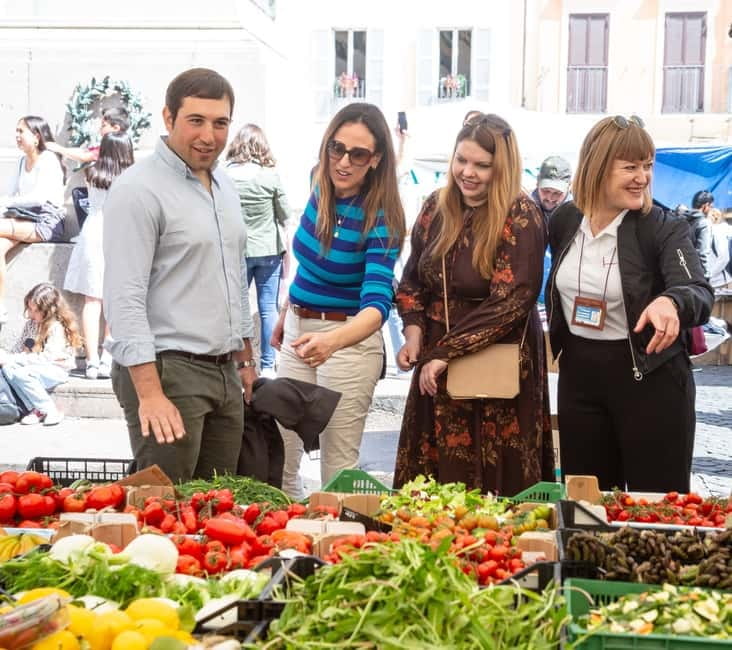
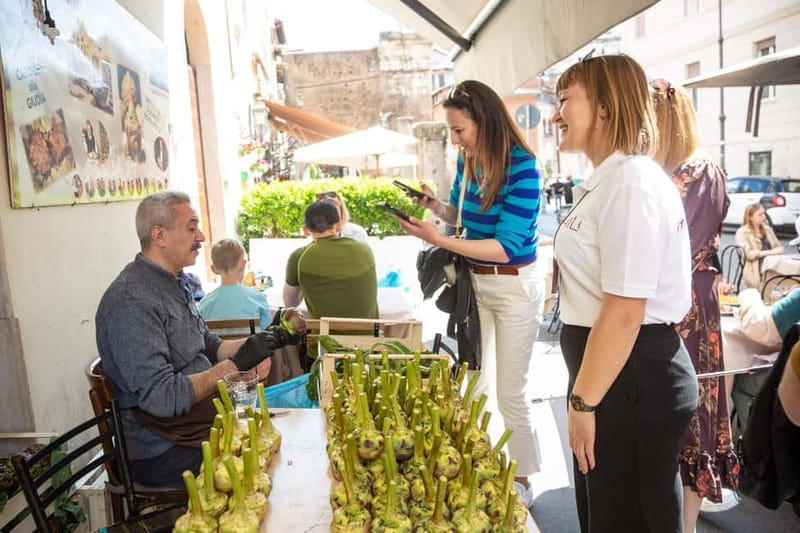
The Jewish Ghetto is the cultural center of the walk. Here, food and history come together most clearly. The guide introduces the neighborhood’s traditions while you sample carciofo alla giudia, the famous Jewish-style fried artichoke.
The dish is visually striking and unlike the usual pasta-and-pizza picture of Rome. The artichoke is prepared and fried so that it becomes crisp, making the entire vegetable part of the experience. It is a useful reminder that Roman cooking is not one single tradition. The city’s food reflects the communities that have shaped it.
The tasting stop in the Jewish Ghetto lasts about 20 minutes, longer than several earlier stops. That gives you more time to eat and hear about the area. You also pass the Portico d’Ottavia, an important ancient structure that helps anchor the neighborhood in Rome’s long past.
You may also see the Turtle Fountain and Teatro Marcello along the route. These are pass-by sights, not scheduled interior visits. I like this approach for a food tour because it keeps the pace moving, though anyone wanting detailed architectural commentary should plan separate visits.
Largo di Torre Argentina and Julius Caesar’s last day
The walk continues to Largo di Torre Argentina, the archaeological area associated with Julius Caesar’s assassination. You pass by for about five minutes, enough to see the ruins and hear the story without turning the tour into an excavation-site visit.
This stop adds drama to the route. One moment you are discussing fried artichokes and street food, and the next you are looking at the place connected with one of ancient Rome’s most famous political killings. The guide uses these short historical stops to keep the city’s story tied to the streets beneath your feet.
The tour does not include an archaeological admission or a long guided visit inside the site. That is worth knowing if Caesar’s assassination is your main reason for booking. You will receive context and a view from the route, not a full ancient-history lesson.
The Pantheon area and the final gelato
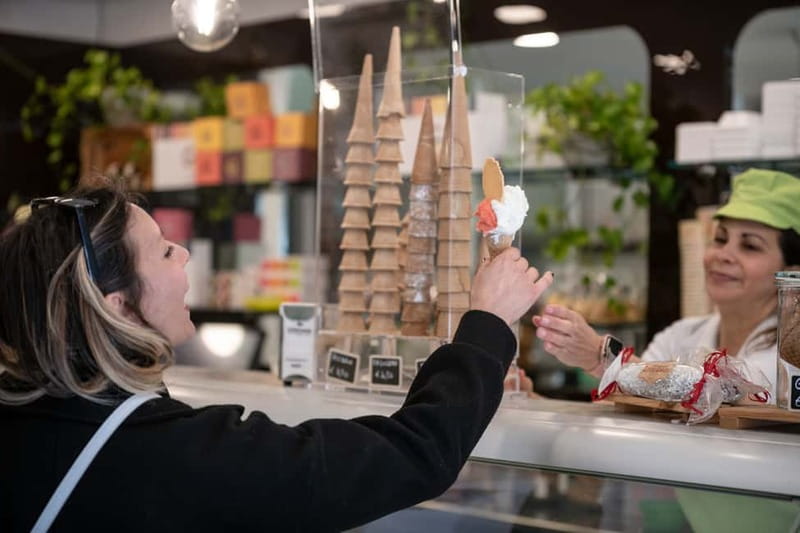
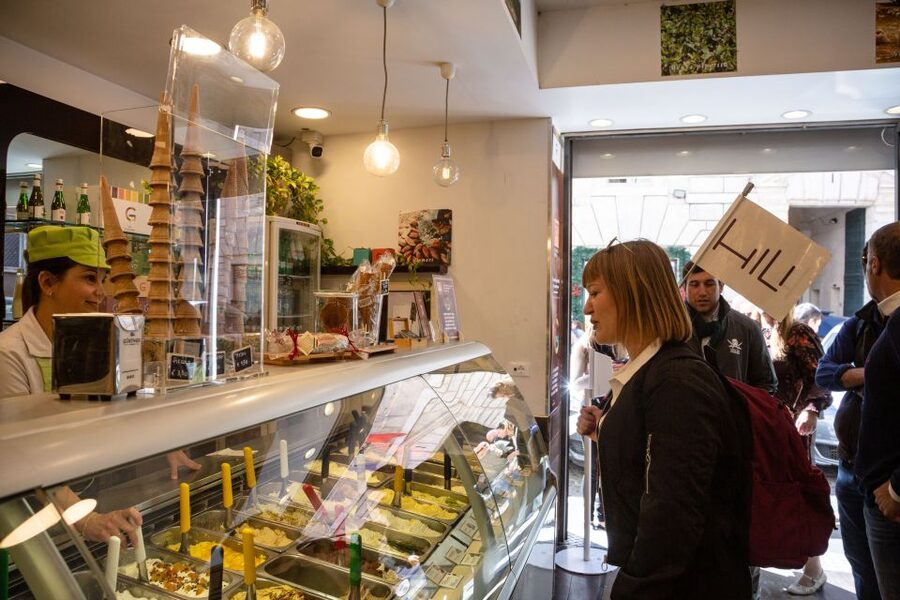
Near the end, the route passes the Pantheon before reaching Gunther Gelateria. The final tasting is artisanal gelato, served as a sweet finish near the Piazza di Sant’Eustachio area.
Ending with gelato is more than a predictable dessert choice. After salty fried food, pizza, and porchetta, something cold and sweet resets your palate. It also leaves you close to major central sights, so you can continue sightseeing rather than finding your way back from a distant suburb.
The published route finishes at Piazza di Sant’Eustachio, while the meeting information describes the activity as ending back at the meeting point. Since those details do not perfectly match, confirm the exact finish location when you book. In either case, the activity remains a central walking tour rather than a transport-based excursion.
What the guides add to the experience
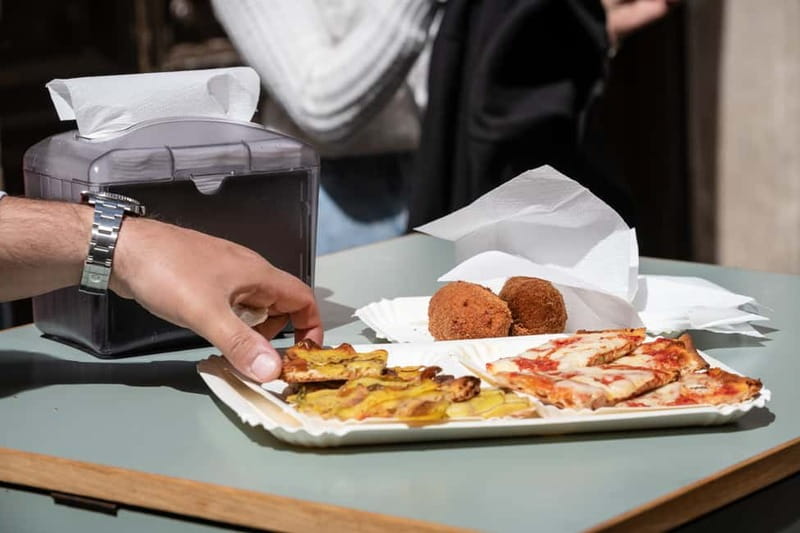
The guide is the difference between a string of snacks and a useful introduction to Rome. Julia is often praised for her warm, clear explanations and for linking food with Roman history. Claudio has been noted for personalizing the walk, answering questions, and suggesting further places to eat.
Fiammetta is associated with lively storytelling and a particularly strong market and Jewish Ghetto visit. Daniele has been praised for combining varied food stops with historical details. Other guides named in the feedback include Angelica, Giulia, Mateo di Marco, Alessandria, Sylvia, and Angie.
You cannot guarantee a particular guide unless the booking page allows you to select one. Still, the repeated pattern is useful: this tour suits you if you want conversation, local recommendations, and stories mixed into the route rather than a memorized speech.
The guides also seem comfortable with different kinds of groups. Families have found the food approachable, teenagers have enjoyed trying items they might not order alone, and solo participants may receive more room for questions if the group is small.
Price, portions, and what the $36 buys
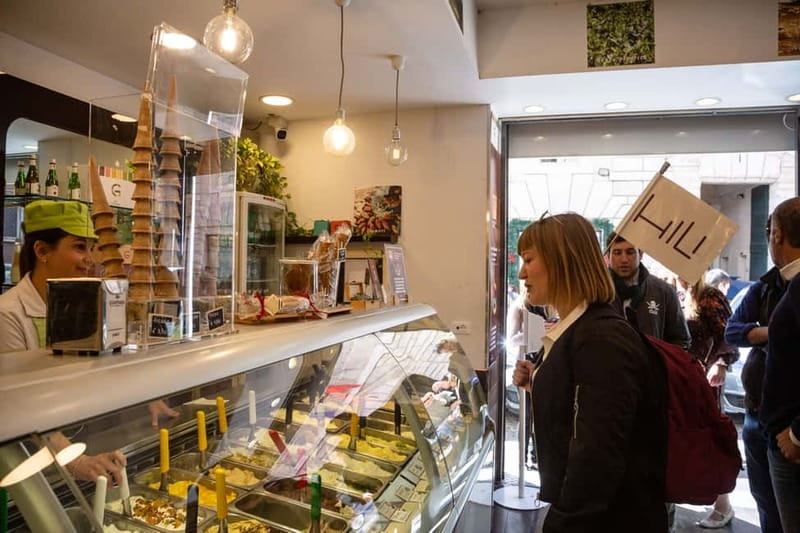
At $36 per person, the tour is priced as a modest food-and-sightseeing activity rather than a full restaurant meal. You receive a guided city-center walk, five food tastings, and explanations of the places along the route.
The value depends on how you use it. If you want five full meals, this will not meet that expectation. If you see it as lunch-sized grazing plus a neighborhood orientation, the price makes more sense. You are also paying for access to selected food stops and for the guide’s help choosing what to try.
Drinks are not included. Budget for water or another beverage, especially in warm weather. The food itself is described as generous enough that many people consider the outing good value, but appetite varies. Avoid eating a large meal just before departure.
I would book this near the beginning of a Rome visit. The route introduces several districts, and guides may recommend additional restaurants and food addresses. You can then use those suggestions for later meals instead of relying only on places near your hotel.
Dietary limits and practical comfort
Vegetarian options are available, but you need to report allergies and dietary restrictions in advance. The activity is specifically not suitable for vegans or people with gluten intolerance, so do not assume that substitutions will solve every problem.
Because this is a walking tour, choose shoes that can handle central Rome’s streets. The advertised duration is two and a half hours, with several walks of three to ten minutes between stops. There is no private transport, and drinks are extra.
The activity is listed as wheelchair accessible. If you use a wheelchair and have particular route or food-stop needs, contact the operator before booking so those details can be confirmed.
English is the stated tour language. Starting times vary, so check the available departures rather than assuming the market option is offered all day. You can cancel up to 24 hours ahead for a full refund, and reserve now while paying later, which helps if your Rome schedule is still taking shape.
Who should book this Rome food walk?
I would recommend it to first-time visitors who want a friendly introduction to Roman food and central neighborhoods. It is also a good match for families, since the tasting format breaks up the history and keeps the walk active.
Food lovers who already know pizza and gelato may still enjoy the less familiar choices, especially supplì and carciofo alla giudia. The tour is less suitable if you want a formal culinary class, a long restaurant lunch, or detailed access to ancient monuments.
Book the morning departure if the Campo de’ Fiori market matters to you. Choose this tour early in your stay if you want restaurant advice and a quick sense of how Roman food fits into the city.
Should you book Eat Like a Roman?
Book it if you want five approachable tastings, central Roman sights, and a guide-led introduction to local food traditions. The combination of Campo de’ Fiori, the Jewish Ghetto, Julius Caesar’s assassination site, and gelato makes good use of two and a half hours.
Skip it if you are vegan, gluten intolerant, or hoping for a seated gourmet meal. For everyone else, $36 is a fair price for a filling walking lunch, neighborhood orientation, and practical food advice, especially when scheduled early and in the morning.
FAQ
How long does the tour last?
The tour lasts 2.5 hours. Starting times vary, so check availability when booking.
Where does the tour start?
Meet the guide at the fountain in the center of Piazza di San Simeone.
Where does the tour finish?
The route lists Piazza di Sant’Eustachio as the finish near Gunther Gelateria. The meeting information also says the activity ends back at the meeting point, so confirm the exact end location when booking.
What food is included?
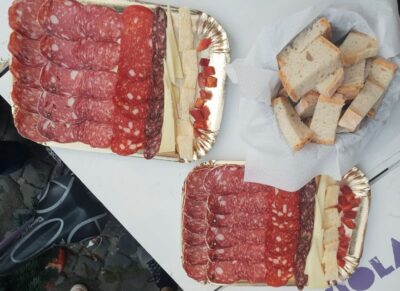
The tastings include a porchetta panino, supplì, Roman-style pizza, fried artichokes known as carciofo alla giudia, and artisanal gelato. Morning tours also include olive oil, truffle, and vinegar tasting.
Are vegetarian options available?
Yes, vegetarian options are available. Tell the operator about allergies or dietary restrictions in advance.
Is the tour suitable for vegans or people with gluten intolerance?
No. The activity is listed as unsuitable for vegans and people with gluten intolerance.
Is the tour wheelchair accessible?
Yes, the activity is listed as wheelchair accessible. You should still share any specific access needs before booking.
Newest reviews from Rome
- Rome: Vatican Museums & Sistine Chapel Skip-the-Line Ticket★ 4.4 · 148 reviews
- Shared Shuttle Transfer from Rome to Civitavecchia Port★ 5.0 · 148 reviews
- Rome: Crypts & Catacombs After Hours Tour with Bone Chapel★ 4.6 · 149 reviews
- Ghosts Legends and Mysteries of Rome Walking Tour★ 5.0 · 149 reviews
- Skip the Line: Vatican and Sistine Chapel with Guided Tour★ 4.0 · 149 reviews
- Tivoli: Villa Gregoriana Entrance Ticket★ 4.7 · 150 reviews
- Pizza and Tiramisu Cooking Class in Rome, Piazza Navona★ 5.0 · 150 reviews
- Rome: Borghese Gallery Skip-the-Line Entry and Guided Tour★ 4.7 · 150 reviews
Jewish Ghetto Tours, compared.
Trastevere or Jewish Quarter Street Food Tour
Read our review →
Jewish Ghetto & Piazza Navona: Food, Wine & Sightseeing Rome Tour
Read our review →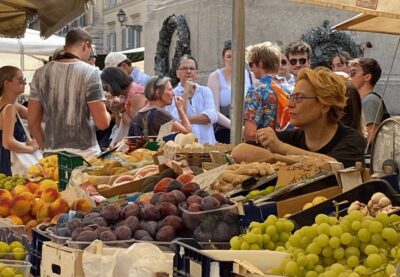
Food & Wine Tour of Campo de Fiori, Ghetto, Trastevere
Read our review →
Jewish Ghetto and Campo Dè Fiori By Night Food, Wine and Sightseeing Tour
Read our review →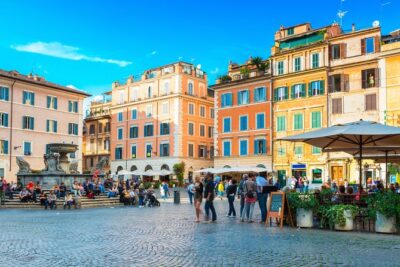
Trastevere and Rome’s Jewish Ghetto Half-Day Walking Tour
Read our review →
Jewish Ghetto & Campo de Fiori by Night Food Wine Tour
Read our review →
Eternal Rome Food Tour: Campo de Fiori, Jewish Ghetto, Trastevere
Read our review →Browse the lists this tour appears in