
Reviewed · EVENING EXPERIENCES
Rome Night Photo Tour
Rome changes after sunset. The crowds thin, floodlights pick out ancient stone, and familiar monuments take on a quieter, more dramatic look. This tour puts you in the hands of Marco, a Rome-based photographer and teacher, who leads you to classic viewpoints and less obvious angles around the city.
I especially like the maximum group of four, which gives you real time with the instructor, and the fact that a non-photographer companion can join free. The included tripod is another practical touch, especially if you use a phone or are still learning how to make sharp night images.
The main consideration is the price: $217.69 per person is a serious spend for an evening activity. You are paying for instruction, transport, equipment help, and access to carefully chosen viewpoints rather than admission tickets. It makes the most sense if you want to improve your photography, not simply tick off Rome’s sights.
In This Review
- Key points to know before booking
- Why Rome at night works so well for photography
- Starting at the Tiber near the Napoleonic Museum
- The Colosseum from two different angles
- St. Peter’s Basilica under a different technique
- Blue Hour at Castel Sant’Angelo
- The Roman Forum and Palatine Hill after dark
- The Altar of the Fatherland from an unexpected angle
- Capitoline Hill and Piazza del Campidoglio
- Trajan’s Market and the Imperial Forums
- Optional additions if you want more famous Rome
- What the instruction is really like
- Price, group size, and what you receive
- Timing, comfort, and cancellation
- Who should book this Rome night tour
- Should you book the Rome Night Photo Tour?
- FAQ
- How long is the Rome Night Photo Tour?
- How much does the tour cost?
- What time does the tour start?
- Where does the tour begin?
- Is hotel pickup included?
- Is hotel drop-off included?
- Can I join without a professional camera?
- Can a non-photographer friend join?
Key points to know before booking
- Small group, big advantage: The tour has a maximum of four participants, so you can ask about your own camera, phone, and settings.
- Rome after dark: You photograph major monuments when they are generally less crowded and more atmospheric.
- You do not need a professional camera: Instruction is available for beginners, amateurs, advanced photographers, and people using an iPhone or Android phone.
- A free companion is allowed: One non-photographer friend or partner may accompany you without paying the photography-tour price.
- Transport helps connect the stops: A private vehicle is used during the evening, and hotel drop-off is included for hotels within Rome.
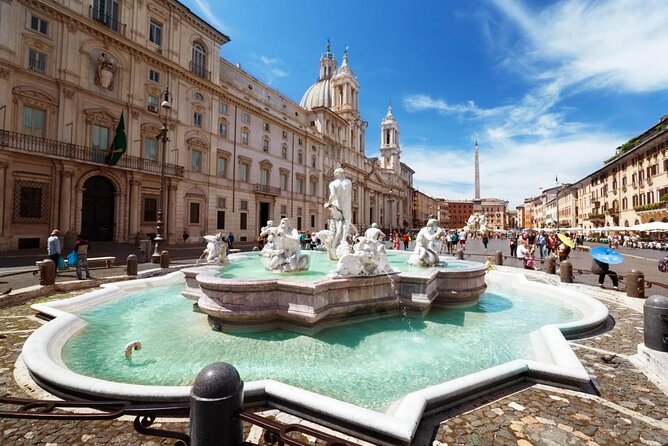
- The route can be adjusted: Trastevere, the Pantheon, Spanish Steps, Trevi Fountain, or Piazza Navona may be included if requested.
Why Rome at night works so well for photography
Rome is a difficult city to photograph in the middle of the day. The light can be harsh, the streets can be packed, and famous monuments often appear in a sea of heads and selfie sticks. At night, the city gives you a different set of tools: artificial light, reflections, shadows, illuminated façades, and calmer streets.
This is not just a ride past the monuments. You spend the evening making roughly 15 to 20 different scenes, with Marco helping you think about framing, perspective, depth of field, composition, and camera settings. He also pushes you beyond the obvious postcard view.
That matters because night photography often exposes weak technique. A crooked horizon, soft focus, or blown-out light can ruin an otherwise fine subject. A teacher who checks your setup and explains why one composition works better than another can make the rest of your Rome photographs better too.
You can bring a DSLR, mirrorless camera, compact camera, iPhone, or Android phone. The instruction is adapted to your equipment. If you arrive without a tripod, one is provided. That is especially useful for long exposures, when even a small movement can soften the image.
More Rome tours worth comparing
- Rome Vespa Scooter Tour with Professional Photographer
★ 5.0 · 857 reviews - Rome Vespa Tour with Professional Photoshoot
★ 5.0 · 576 reviews - Rome: Personalized Photoshoot outside the Colosseum
★ 5.0 · 526 reviews
Starting at the Tiber near the Napoleonic Museum
The listed meeting point is the Napoleonic Museum at Piazza di Ponte Umberto I, near the Tiber. This is a sensible opening location because the river, bridges, domes, and evening light give you an immediate lesson in reflection and framing.
The start time changes with the season. From November through March, it normally begins at 5:00 p.m. From April through October, it normally begins at 7:30 p.m. The exact time can shift with twilight, so check the confirmation rather than relying only on the seasonal guide.
Your first task is not necessarily to get the perfect photograph. It is to learn how the light is changing. The blue-hour period, just after sunset, can give the sky enough color to balance the brighter buildings. That is one reason the timing matters more here than on a standard sightseeing tour.
Wear comfortable shoes. The evening includes walking between viewpoints, even though a private vehicle helps cover longer stretches. Carry a small bottle of water, and remember that the tour lasts about four and a half hours.
The Colosseum from two different angles
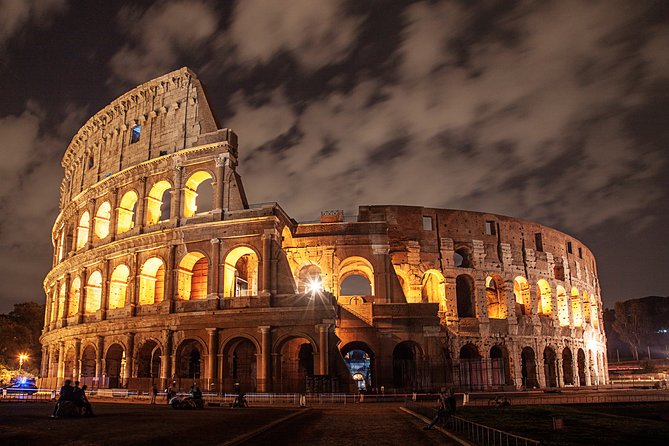
The Colosseum is the first major stop listed, with about 30 minutes devoted to it. You work from two viewpoints: one classic and one unusual.
The classic angle gives you the recognizable outline that belongs in any Rome album. The second approach is the more useful lesson. Instead of taking the same photo found on every souvenir rack, you look for a different relationship between the amphitheater, its surroundings, and the night light.
No admission ticket is required for the photography stops. This is an exterior photo experience, not an evening entry into the Colosseum. If you already have a daytime visit planned, the night session works nicely as a separate photography appointment rather than a replacement.
The short time here also keeps the evening moving. You are not expected to exhaust every possible angle. You are learning how to make a few strong images before moving on.
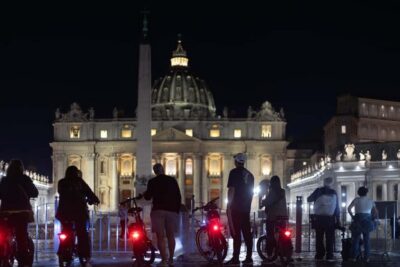
St. Peter’s Basilica under a different technique
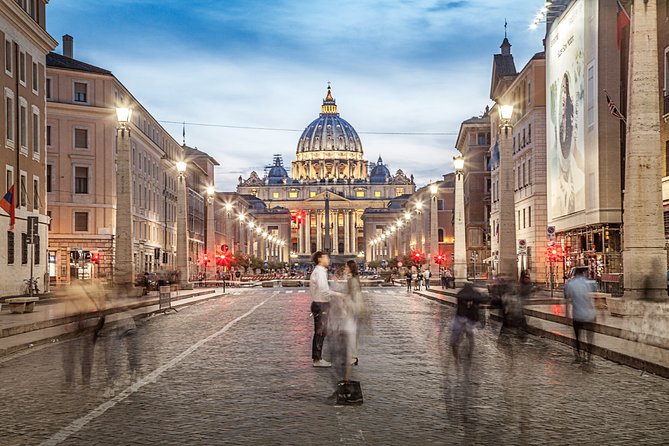
The St. Peter’s stop lasts about 45 minutes, making it one of the longer sessions. The emphasis is on using a different photographic technique, so this is more than another look at a large, famous church.
St. Peter’s is a useful subject because its scale can overwhelm a frame. You need to decide what the picture is about: the dome, the façade, the surrounding space, or the contrast between the lit basilica and the darker city. Marco’s role is to help you make that decision rather than simply point and shoot.
This is also a good place for phone users. Modern phones can produce strong night images, but they still need steady support and careful framing. If you use an iPhone or Android, ask for help with the night mode and tripod setup. The guide has worked with visitors who arrived without dedicated cameras.
A completely different way to spend the day in Rome:
- Vatican: Museums & Sistine Chapel Entrance Ticket
★ 4.5 · 144,003 reviews - Vatican Museums & Sistine Chapel Tour with Optional Basilica
★ 4.3 · 67,413 reviews - Vatican Museums, Sistine Chapel & St Peter’s Basilica Guided Tour
★ 4.5 · 39,149 reviews - Rome: Colosseum, Palatine Hill and Roman Forum Guided Tour
★ 4.8 · 32,814 reviews
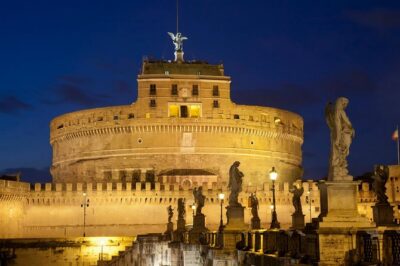
Blue Hour at Castel Sant’Angelo
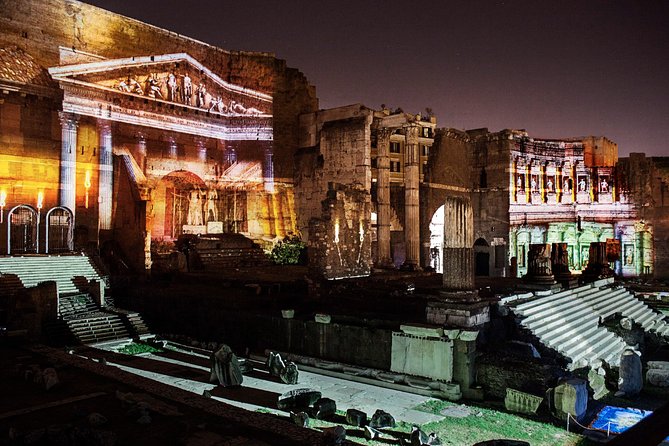
Castel Sant’Angelo receives about 30 minutes, with attention on the castle, its bridge, and the river from selected viewpoints. This is scheduled around blue hour, when the last color in the sky mixes with the first full glow of the city lights.
The castle and bridge offer several layers in one frame. You can work with the river as a foreground, the bridge leading the eye toward the fortress, or the illuminated structure against the fading sky. That gives you a clear lesson in lines and depth without needing a complicated subject.
The stop may involve changing position to find a clean view. A particularly determined instructor might even help clear a temporary obstruction when possible, but you should not count on every construction fence or street condition being movable. Rome is a living city, and the best viewpoint can occasionally be affected by works, traffic, or access limits.
The Roman Forum and Palatine Hill after dark
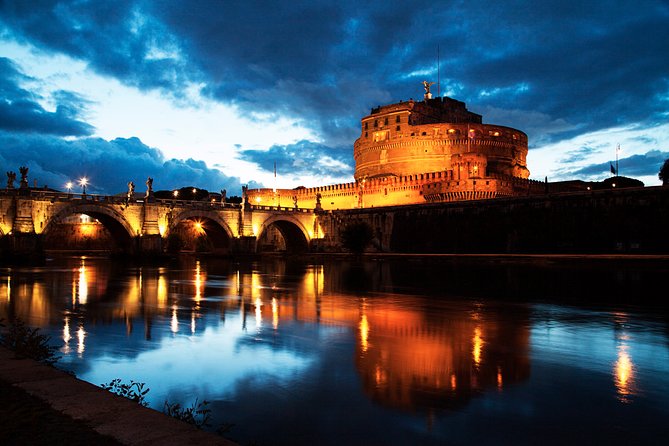
The Roman Forum gets about 30 minutes, followed by roughly 20 minutes at Palatine Hill. These stops focus on alternative approaches and multiple angles rather than a standard guided walk through the ruins.
At night, the Forum becomes a study in fragments, columns, dark gaps, and carefully lit stone. You can work with broad views or isolate smaller details. The Palatine adds height and different sight lines, letting you compare the ruins with the newer buildings of central Rome.
This part of the route is valuable for photographers who already know the usual Rome icons. The challenge is to tell a story with the frame. One striking approach places the ancient Forum in relation to the Monument to Vittorio Emanuele II, creating a visual contrast between old Rome and the more recent monument.
There is a practical limit here: you are photographing from available public viewpoints, not entering every archaeological area at night. The experience is about seeing the ruins from outside and finding strong compositions within those limits.
The Altar of the Fatherland from an unexpected angle
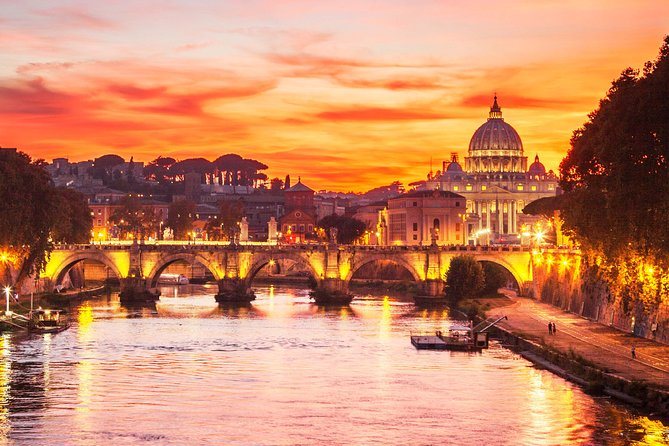
The Monumento a Vittorio Emanuele II receives around 10 minutes. That sounds brief, but this stop is designed for one distinct viewpoint rather than a long exploration.
The monument is often photographed straight on, which can make it look flat and oversized. From a different position, you can use surrounding structures and the Forum to place it in context. That old-and-new comparison gives the image a story instead of leaving you with another isolated monument shot.
Ten minutes is enough for a focused setup, but it will not suit someone who wants to spend half an hour experimenting with multiple lenses. The value comes from having the guide identify a worthwhile angle quickly.
Capitoline Hill and Piazza del Campidoglio
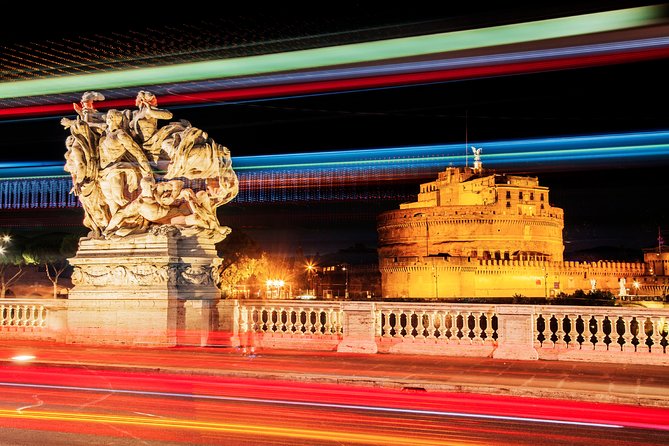
Piazza del Campidoglio receives about 45 minutes, the longest listed stop. That extra time makes sense. Capitoline Hill and its surroundings offer changing views, small glimpses, and architectural details rather than one single subject.
This is where composition advice can become very practical. You may work on symmetry, diagonals, the relationship between open space and buildings, or the way a small detail can anchor a wider scene. The square also gives you a chance to slow down after several landmark stops.
I like this section for beginners because the lesson is not tied to expensive equipment. You can practice with a phone, use the tripod for sharper images, and receive corrections as you go. Advanced photographers can use the same place to refine a visual idea rather than simply learn basic controls.
Trajan’s Market and the Imperial Forums
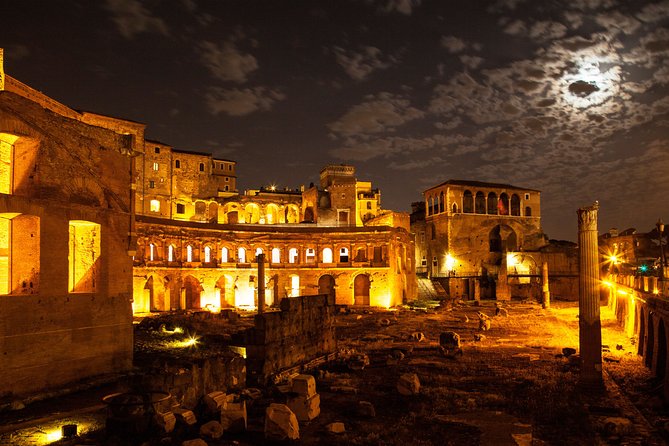
The final listed stop is Mercati di Traiano, or Trajan’s Market, with about 15 minutes for photographs of the market and Imperial Forum from selected spots.
This is another short, targeted session. The curved brickwork, columns, and lighting can produce a more textured photograph than the broad views of St. Peter’s or the Colosseum. It is a useful closing subject because it brings you back to detail, shape, and contrast.
The published end point is the Colosseum, but hotel drop-off by car is included for hotels within Rome. Since the route and end arrangements can depend on the evening’s plan, confirm the practical details when you book.
Optional additions if you want more famous Rome
If requested, the route may include Trastevere, the Pantheon, the Spanish Steps, Trevi Fountain, or Piazza Navona. These are not guaranteed parts of every outing, so ask before you assume a particular landmark will be included.
Trastevere is the most different option. Its narrow streets and less formal scenes can give you a break from monumental Rome. The Pantheon, Trevi Fountain, Spanish Steps, and Piazza Navona are more familiar subjects, but night lighting can still change the way you frame them.
Adding stops may affect the pace. The fixed route already covers many locations in four and a half hours, so you may need to choose between more landmarks and more time at each scene. I would rather photograph fewer places well than rush through a long checklist.
What the instruction is really like
The teaching is built around individual help. You can expect advice on camera setup, composition, lighting, depth of field, perspective, the rule of thirds, and how to make an image tell a story.
Marco is described as a long-time photography teacher, and the strongest part of the experience is the patient correction. You are encouraged to try, look at the result, and adjust. That makes the session useful even if you arrive with very little experience.
The instruction also works for companions who are not the main photographer. A partner can join at no extra charge, and phone users are not treated as second-class participants. One practical benefit is that you can learn techniques to use during the rest of your trip, not only during this evening.
The tour has received a 5.0 rating from 109 reviews, with 98 percent of participants recommending it. Those figures suggest a strong track record, but they should not hide the basic truth: the experience depends on your interest in photography. If you only want a conventional city tour, the teaching pauses may feel slow.
Price, group size, and what you receive
At $217.69 per person, this is expensive compared with a basic Rome walking tour. The price does not cover monument admission because the stops are exterior photo locations. You are paying for the professional photographer-guide, a small group, a tripod, private vehicle transport, and the return ride to your hotel within Rome.
The maximum of four is the key value. In a larger group, a teacher would have less time to check your settings or help you find your own composition. With four or fewer, you can ask for direct advice without losing the entire evening to a lecture.
A non-photographer partner or friend may accompany you free. That changes the calculation for couples and families. The paid participant gets the instruction, while the companion still gets an evening of Rome sightseeing and can receive basic phone tips.
Group discounts are available. A private tour is also possible by contacting the provider, though the private price is not supplied here. For a solo photographer who wants focused help, the small standard group may already be enough.
Timing, comfort, and cancellation
This is a walking-heavy evening supported by private transport, so it is not a sit-down sightseeing ride. Comfortable shoes matter more than dressing up. You can stop for gelato, pizza, or coffee during the outing if needed, which is helpful after a full day in Rome.
The minimum age is 12. Most people can participate, but you should be comfortable walking between photo locations and carrying your own camera or phone. The tour is offered in English.
Rain does not automatically cancel the experience. Wet streets, reflections, and softer light can add mood to the photographs, though you should protect your equipment. The date can be changed without an additional fee, and free cancellation is available up to 24 hours before the start time. Cancellations or changes inside that window are not accepted and are not refunded.
Who should book this Rome night tour
This is best for:
- Beginners who want clear help with night settings
- Amateur photographers hoping to improve composition
- Advanced photographers seeking less obvious viewpoints
- Couples where only one person wants formal instruction
- Phone photographers who want sharper, more deliberate night images
- Visitors who have already seen Rome’s main sights during the day
It is less suitable if you want interior access, a full lecture on Roman history, or a relaxed ride with minimal walking. It also may not be the right choice if your only goal is to see as many landmarks as possible.
Should you book the Rome Night Photo Tour?
Book it if you want more than proof that you visited Rome. The small group, free non-photographer companion, tripod, private transport, and hotel drop-off make the high price easier to justify, especially for a couple or anyone serious about improving their pictures.
I would particularly choose it for a first-time night photographer carrying a phone or basic camera. You get Rome’s biggest sights, but the real payoff is learning how to frame them, steady them, and find an angle that feels personal.
Skip it if you do not enjoy stopping to adjust settings or repeat a shot. A standard evening walk will cost less. But if you want a focused lesson wrapped around the Colosseum, St. Peter’s, Castel Sant’Angelo, and the ancient forums, this is a thoughtful way to spend one Roman night.
FAQ
How long is the Rome Night Photo Tour?
The experience lasts approximately 4 hours and 30 minutes.
How much does the tour cost?
The listed price is $217.69 per person. Group discounts are available.
What time does the tour start?
From November through March, it normally starts at 5:00 p.m. From April through October, it normally starts at 7:30 p.m. The start time may change based on twilight.
Where does the tour begin?
The meeting point is the Napoleonic Museum at Piazza di Ponte Umberto I, 1, in Rome.
Is hotel pickup included?
No. Hotel pickup is not included, so you must reach the meeting point yourself.
Is hotel drop-off included?
Yes. Return transport by car to your hotel is included if the hotel is within Rome.
Can I join without a professional camera?
Yes. The tour is suitable for beginners and for people using an iPhone or Android phone. A tripod is included.
Can a non-photographer friend join?
Yes. One partner or friend who is not taking part as a photographer can accompany you free of charge.
Newest reviews from Rome
- ROME:Colosseum & Ancient Rome – private/small group TOUR★ 5.0 · 24 reviews
- Off the Beaten Track in Rome: Rione VI Parione Private Tour★ 5.0 · 24 reviews
- Cinematic Photoshoot in Rome★ 5.0 · 24 reviews
- Rome: Best of Colosseum and Roman Forum Small Group Guided Tour★ 4.5 · 24 reviews
- The Labyrinth of Rome between catacombs and ancient quarries★ 4.5 · 24 reviews
- Vatican and Trionfale Market Tour with Wine and Food Tasting★ 5.0 · 24 reviews
- private tour: Vatican Museums, Sistine Chapel, St. Peter’s Basilica★ 4.5 · 24 reviews
- Skip the Line: Vatican Wheelchair Accessible Private Tour★ 5.0 · 24 reviews
Evening Experiences, compared.
Paranormal Night Walking Tour & Secret Backstreets
Read our review →
Rome by Night – Ebike Small Group Tour – Food and Wine (Option)
Read our review →
Rome by Night Walking Tour – Legends & Criminal Stories
Read our review →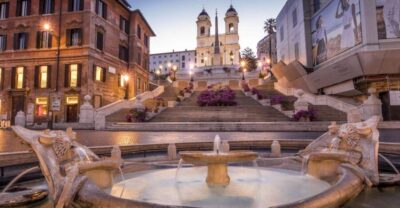
Guided City Center Evening Sightseeing Walking Tour
Read our review →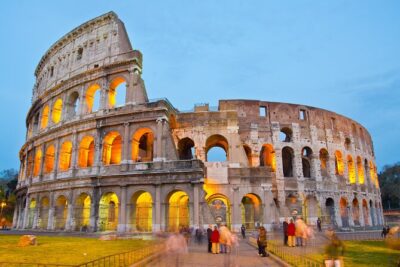
Colosseum by Evening Guided Tour with Optional Arena Floor Access
Read our review →Browse the lists this tour appears in