
Reviewed · UNDERGROUND ROME TOURS
Rome: Piazza Navona and Trevi District Underground Pass
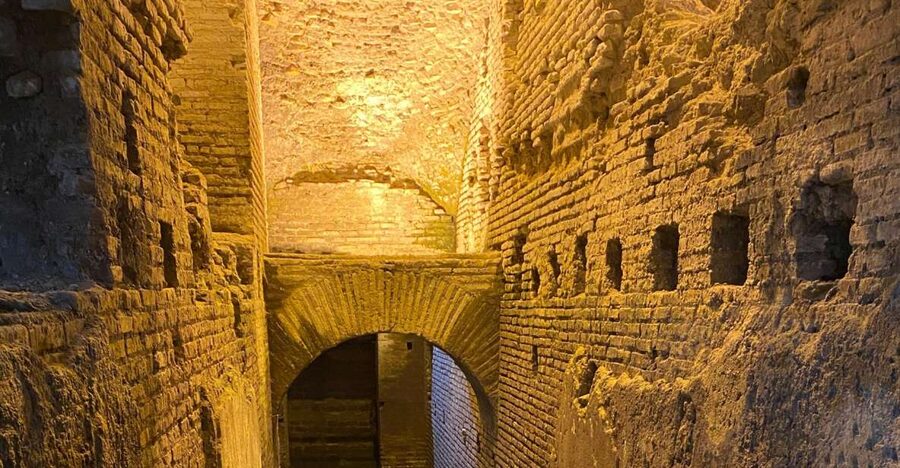
Rome reveals its oldest layers below street level. This combination ticket takes you beneath Piazza Navona to the Stadium of Domitian, then into the excavated remains of Vicus Caprarius near Trevi Fountain. Above ground, an English-speaking guide connects the ruins with Rome’s famous squares, fountains, and imperial past.
I like the pairing of two small archaeological sites, since you get different views of ancient Rome rather than one long museum visit. I also like the audio guides, which let you move at your own pace and are available in eight languages. The main caution is scale: each underground site takes roughly 30 minutes, and some visitors find the Stadium of Domitian less extensive than expected.
In This Review
- Key points to know before booking
- What this Rome underground pass actually includes
- Starting at Piazza Navona, not at the ruins
- Beneath Piazza Navona: the Stadium of Domitian
- Piazza Navona and Bernini’s four rivers
- The Pantheon exterior and Rome’s changing purpose
- Trevi Fountain and the Vicus Caprarius excavation
- How the audio guide changes the pace
- Optional additions: museums and the panoramic elevator
- Is $34 a fair price?
- Who will enjoy this experience most?
- Practical advice for a smoother visit
- Should you book the Piazza Navona and Trevi underground pass?
- FAQ
- Where does the experience begin?
- Is the voucher the entry ticket?
- What archaeological sites does the pass include?
- Is an audio guide included?
- Is the Pantheon included?
- How long does the activity last?
- Can wheelchair users take part?
- Can I cancel the booking?
Key points to know before booking
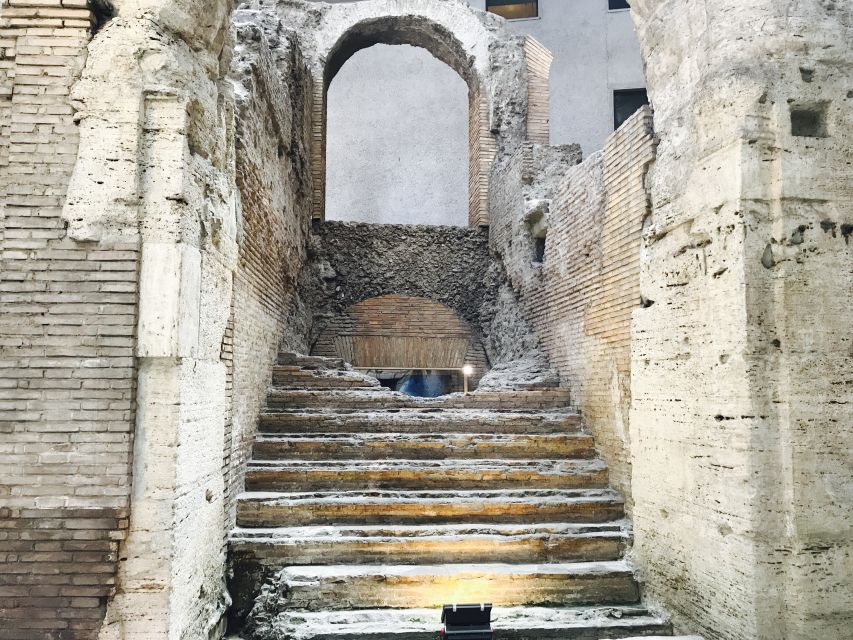
- Two underground sites in central Rome: Visit the Stadium of Domitian beneath Piazza Navona and Vicus Caprarius near Trevi Fountain.
- A short, useful walking route: Piazza Navona and the Trevi site are about 10 minutes apart on foot, according to the supplied visitor information.
- Audio guides included: Commentary is available in English, Italian, French, Spanish, German, Russian, and Portuguese.
- Above-ground Rome included: See Piazza Navona, the Pantheon from outside, and Trevi Fountain with an English-speaking guide.
- Small sites, not vast ruins: Plan for about half an hour at each archaeological stop and adjust your expectations.
- Redeem the voucher first: Your booking voucher is not the entry ticket. Exchange it at the Tourist Office at Piazza Navona 25.
What this Rome underground pass actually includes
At first glance, this looks like a simple entry ticket for two archaeological sites. In practice, it combines reserved admission, audio commentary, and a walk through one of Rome’s most rewarding central districts.
The main draw is the contrast between the two locations. Beneath Piazza Navona, you see remains connected with the Stadium of Domitian, a large Roman sports venue built in the area now occupied by the square. Near Trevi Fountain, Vicus Caprarius gives you a closer look at ancient residential and service spaces below modern Rome.
The above-ground portion adds Piazza Navona, the Pantheon exterior, and Trevi Fountain. These are not minor sights. They are among the busiest stops in central Rome, but a guide can help connect their present appearance with earlier Roman buildings, emperors, fountains, and urban changes.
The advertised duration is two hours, with starting times depending on availability. Since the sites themselves are fairly small, that time likely includes the walk and the above-ground explanation. Do not book this expecting a half-day archaeological tour. Think of it as a compact introduction to the layers beneath central Rome.
More underground Rome tours:
- Colosseum: Underground and Ancient Rome Tour
★ 4.7 · 12,691 reviews - Rome: Crypts and Catacombs Underground Tour with Transfers
★ 4.6 · 5,341 reviews - Expert Guided Tour of Colosseum Arena OR Underground, and Forum
★ 4.5 · 5,041 reviews
Starting at Piazza Navona, not at the ruins
The first practical detail matters: your voucher is not your ticket. Before visiting the attractions, redeem it at the Tourist Office at Piazza Navona 25 in Rome.
Allow enough time to find the office and exchange the voucher. One visitor arrived early for a scheduled visit and received confusing instructions about the timing and location of the next stop. The safest approach is to read the times printed on your confirmation carefully, especially because they may use the 24-hour clock, and ask the staff to confirm the order of visits before setting off.
The activity begins and ends at the meeting point. Piazza Navona is a sensible starting place because it puts you beside one of Rome’s finest urban spaces and close to the Stadium of Domitian entrance.
The ticket includes reserved entry, so you should not need to wait in the regular ticket line at the archaeological sites. That saves useful time in central Rome, especially when the streets around Trevi Fountain and Piazza Navona are crowded.
Beneath Piazza Navona: the Stadium of Domitian
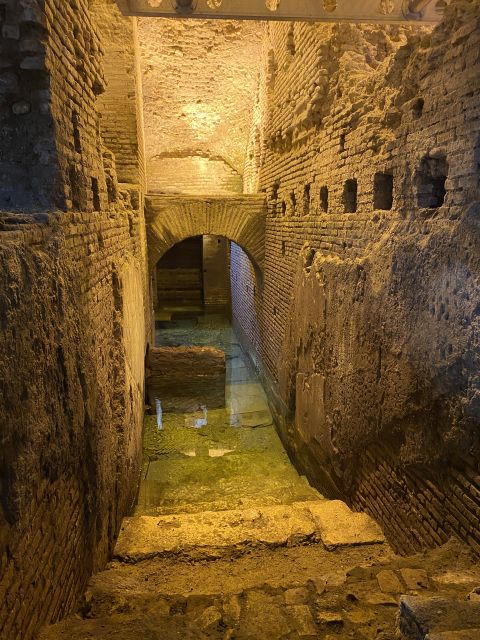
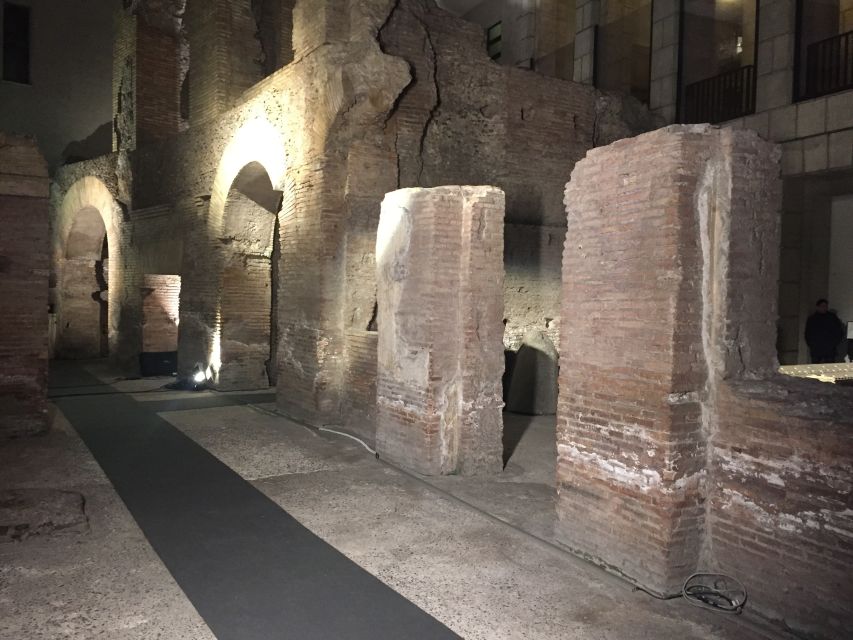
Piazza Navona looks like a grand Baroque square, framed by churches, palaces, cafés, and fountains. Underneath it lies a very different scene: the remains of the Stadium of Domitian.
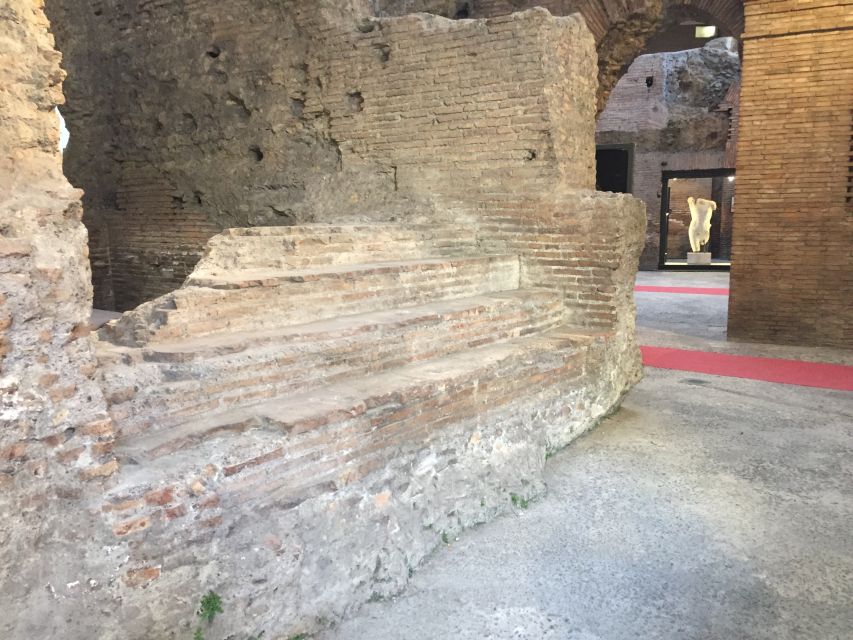
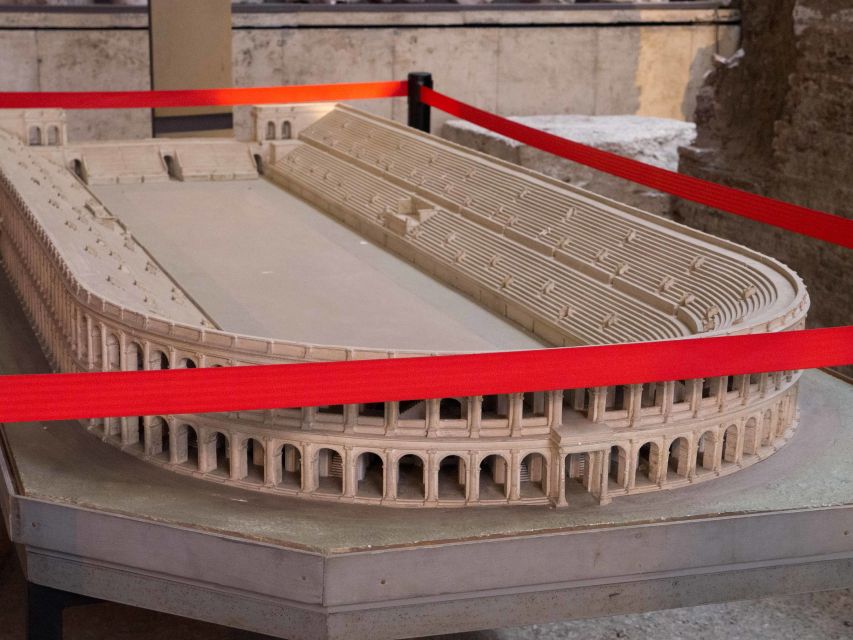
The site helps explain the unusual shape of Piazza Navona. The modern square follows the outline of the ancient stadium, so the long oval form above ground is not accidental. Below, the excavated remains give you a sense of the structure that once occupied this part of Rome.
The audio guide is especially useful here. Without explanation, low walls and partial foundations can be hard to read. Commentary helps you picture the stadium’s purpose and understand how Roman buildings were reused, covered, and absorbed into the city over time.
You should also expect limits. This is not a complete stadium with tall seating tiers and open arena views. The remains are partial, and one visitor felt there was less to see than expected. That is a fair warning. The value comes from understanding the relationship between the ruins below and Piazza Navona above, not from the size of the excavation.
I would give yourself roughly 30 minutes here. That is enough for the main displays and audio commentary without rushing. If you enjoy Roman engineering, urban planning, and archaeology, you may want to listen closely. If you prefer large, dramatic monuments, this stop could feel modest.
Staff experience can vary. One account described the people at the Stadium of Domitian as uninviting, especially when visitors arrived well before the scheduled time. Arrive prepared, follow your assigned time, and do not assume early entry will be welcomed.
Piazza Navona and Bernini’s four rivers
Above the archaeological site, the tour brings you into Piazza Navona itself. This is one of the best places in Rome to pause and look at how ancient and modern city life overlap.
The square’s center is marked by Bernini’s Fountain of the Four Rivers, with its theatrical figures, rocks, and high central obelisk. The fountain represents four major rivers, and the guide points out the details that are easy to miss when you are focused on taking pictures.
Piazza Navona is also a good place for photos. You can frame the fountains, church façades, and long oval space in one view. The square is often crowded, so listen carefully when the guide gathers the group and keep an eye on your belongings.
This part of the experience is not an archaeological visit in the strict sense. It is a short city walk that gives context to the site beneath your feet. I like that arrangement because you do not simply enter a ruin, listen to facts, and leave. You see how Rome’s streets have been built over earlier structures.
More Trevi and Pantheon walks:
- Rome: Pantheon Timeless Marvel Guided Tour with Entry Ticket
★ 4.9 · 4,002 reviews - Rome: Pantheon Priority Entry Ticket & Audio Guide App
★ 4.1 · 3,234 reviews - Enjoy Spritz and Pasta Making in Piazza Navona
★ 5.0 · 1,681 reviews - Rome: Trevi Fountain and Underground Guided Tour
★ 4.3 · 1,664 reviews
The Pantheon exterior and Rome’s changing purpose
The route continues to the Pantheon, where the experience views the building from outside rather than providing interior admission.
Even from the piazza, the Pantheon makes a strong impression. Its massive columns and ancient façade show how Roman design continues to shape the city. The building was dedicated to all divinities, and its survival offers a useful point for discussing Rome from the imperial period to the present.
The guide also brings in Michelangelo’s famous admiration for the Pantheon’s design. He considered its architecture angelic rather than human. You do not need a long lecture to appreciate the building, but a few details can change how you look at its proportions and construction.
Be clear about what is included: the Pantheon is viewed from outside. If entering the interior is important to you, this experience does not replace a separate Pantheon visit.
The stop works well for first-time visitors who want a quick orientation to central Rome. It also suits anyone who has already seen the Pantheon but wants more historical connections between the monument and the surrounding streets.
Trevi Fountain and the Vicus Caprarius excavation
The route then reaches Trevi Fountain, Rome’s best-known fountain and one of its busiest meeting points. You will have time to see the fountain, take pictures, and hear some of the stories attached to it.
The familiar coin toss is part of the Roman ritual here: throw a coin into the fountain to ensure your return to Rome. The guide also points out some of the fountain’s secrets and historical details, giving the stop more substance than a quick photo break.
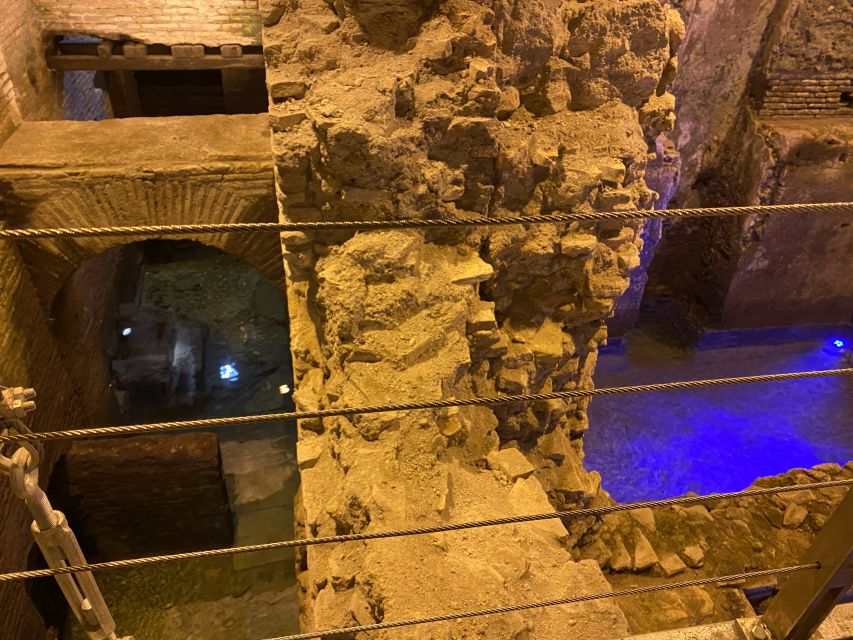
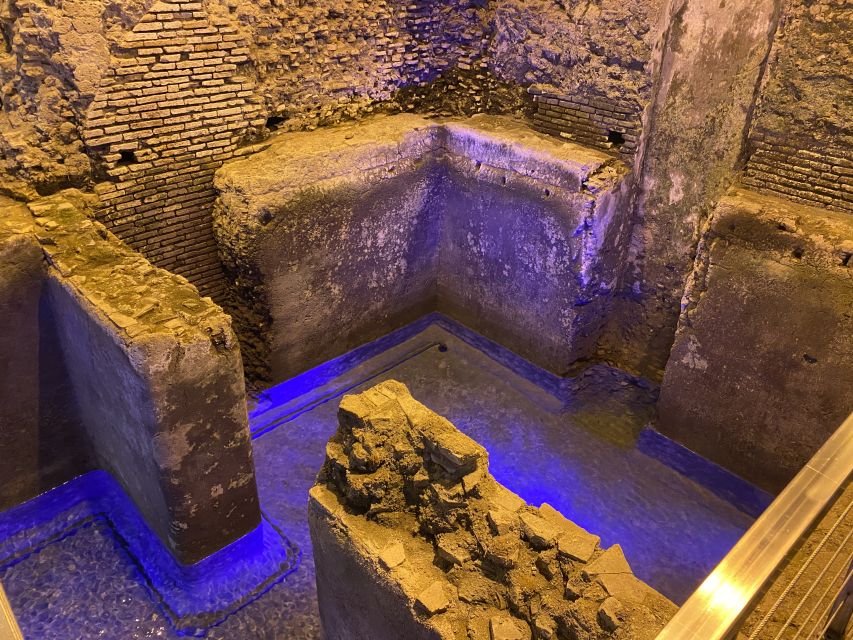
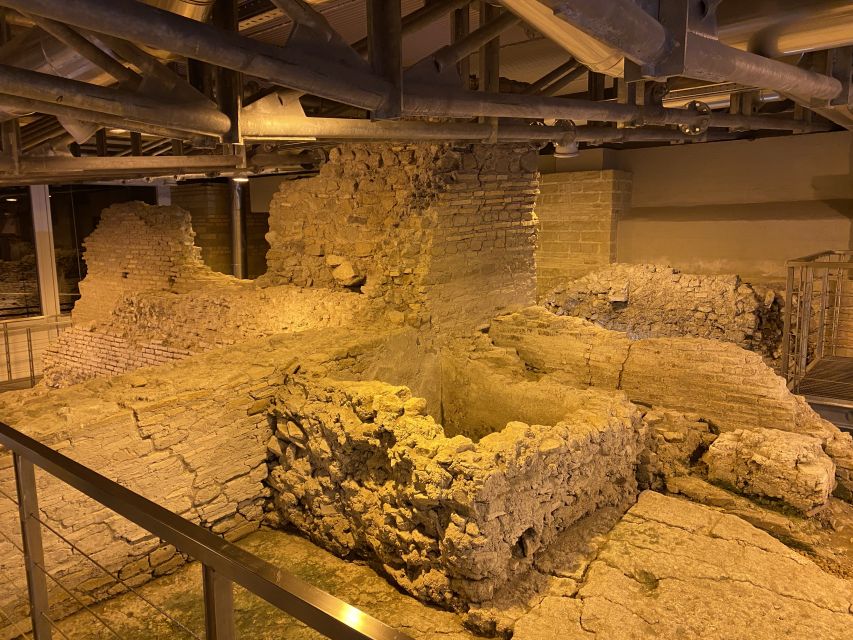
The underground attraction near Trevi is Vicus Caprarius, sometimes described as the City of Water. It is a compact excavation beneath the modern neighborhood. Here you see remains linked with an ancient Roman house and other structures that survived under later buildings.
This stop has a different feel from the Stadium of Domitian. Instead of a large public sports complex, you encounter smaller domestic and urban remains. The scale makes it easier to picture ordinary Roman life, though the spaces are still limited.
Again, plan on about half an hour. One visitor described the excavation as a real Roman house rather than a huge network of tunnels. That is exactly the right expectation. You are not walking through an underground city. You are examining a focused archaeological site with enough material to show how Roman buildings were altered and reused.
The two underground sites are only about 10 minutes apart on foot, which keeps the route manageable. Wear comfortable shoes, since the experience involves walking between attractions and moving through underground areas.
How the audio guide changes the pace
Both archaeological entrances include an audio guide. That is one of the strongest features of this pass.
At a small site, a fixed group lecture can feel rushed. With audio commentary, you can stop at the points that interest you, replay information, and move ahead when you are ready. One couple particularly appreciated being able to explore at their own pace, while still having clear historical explanation.
The audio guide is offered in English, Italian, French, Spanish, German, Russian, and Portuguese. That makes the pass practical for mixed-language groups and for anyone who prefers listening in a language other than English.
The above-ground walk is described as guided in English. The supplied information does not provide the guide’s name or group size, so I would not book this expecting a named historian or a private tour. Think of it as a shared city experience paired with self-paced audio commentary underground.
If you like to linger over displays, the two-hour schedule may feel tight. If you prefer a clear route with a few focused stops, the timing should suit you well.
Optional additions: museums and the panoramic elevator
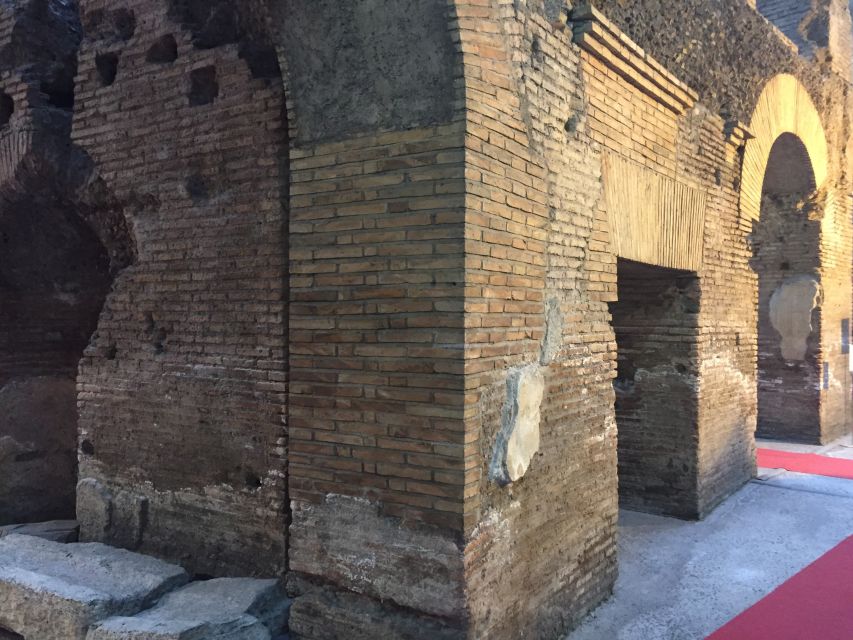
Some booking options add a visit to the Panoramic Glass Elevator, Palazzo Venezia, and the Risorgimento Museum, or to the Capitoline Museums.
These are options rather than part of the basic underground pass, so check the exact package before paying. The Capitoline Museums are especially appealing if you want more ancient Roman sculpture and history after the short excavations. They are also a larger commitment in time and attention.
The Panoramic Glass Elevator and Palazzo Venezia option gives the day a different focus, with city views and the Risorgimento Museum. Choose it if you want a broader sightseeing package rather than two archaeological stops alone.
Do not assume the add-on fits neatly into the stated two-hour duration. Confirm the schedule and included sites on your selected option. The basic experience is best understood as the underground sites plus the central Rome walk.
Is $34 a fair price?
At $34 per person, this pass can offer fair value if you already plan to visit Piazza Navona and Trevi Fountain. Reserved entry to two archaeological sites, two audio guides, and an English-speaking city walk give you more than a basic monument admission.
The value depends on your interest in smaller excavations. You are paying for access and context, not for a grand ruin on the scale of the Colosseum or the Roman Forum. Each underground site takes about 30 minutes, and some people may feel the total is light for the price.
I see it as a good add-on to a day in central Rome. You can combine Piazza Navona, the Pantheon exterior, Trevi Fountain, and the two excavations without crossing the city or losing half a day to transport.
It is less compelling if you want a large archaeological complex, a long guided lecture, or a fully escorted tour from start to finish. In that case, put the money toward a major Roman site instead.
The free cancellation policy allows you to cancel up to 24 hours in advance for a full refund, and the reserve-now, pay-later option gives you some flexibility while planning. The experience is not suitable for wheelchair users, so check this before booking.
Who will enjoy this experience most?
I would recommend the pass to first-time visitors who want to connect Rome’s famous streets with what lies beneath them. It gives you a useful sense of how the city has grown layer by layer.
It also suits history fans who appreciate smaller, focused sites. Vicus Caprarius is a good choice if you want to see the remains of a Roman house, while the Stadium of Domitian helps explain the shape of Piazza Navona.
Families with older children may enjoy the contrast between the fountains above and the ruins below. The short site visits can be easier to manage than a full museum day, although the underground spaces may not hold every child’s attention.
I would be more cautious for visitors with limited time who have not yet seen Rome’s major landmarks. The tour does not include the Pantheon interior, and the archaeological sites are compact. First cover the Colosseum, Roman Forum, or another top priority if those are still missing from your schedule.
Practical advice for a smoother visit
Redeem your voucher at Piazza Navona 25 before going to the attractions. Your voucher alone does not grant entry.
Check the printed times carefully and confirm the order of the two underground visits at the tourist office. The 24-hour clock can cause confusion, and one visitor was sent hurrying to Trevi at the wrong time.
Arrive at the scheduled time rather than very early. Early arrivals may not be admitted or warmly received at the Stadium of Domitian.
Wear comfortable shoes for the walk between sites. Keep your camera ready for Piazza Navona, the Pantheon exterior, and Trevi Fountain, but remember that the archaeological stops are more about close observation than grand photo angles.
Use the audio guide fully. The ruins are easier to understand when you listen to the explanation about their original use and later changes.
Should you book the Piazza Navona and Trevi underground pass?
Book it if you want a short, well-located introduction to Rome below street level, especially if Piazza Navona, the Pantheon, and Trevi Fountain are already on your route. The two sites offer useful contrast, and the audio guides let you explore without being tied to a long spoken presentation.
Skip it if you expect vast tunnels, complete buildings, or a major archaeological spectacle. The sites are small, and the Stadium of Domitian may feel underwhelming if you arrive expecting an intact arena.
For the right visitor, $34 is reasonable: you get two reserved entries, multilingual audio commentary, a central walking route, and a fresh view of places you may otherwise see only from street level. Just confirm your times, redeem the voucher first, and book with realistic expectations.
FAQ
Where does the experience begin?
It begins at the Tourist Office at Piazza Navona 25 in Rome. You must redeem your voucher there before visiting the attractions.
Is the voucher the entry ticket?
No. The voucher must be exchanged at the tourist office before you visit the Stadium of Domitian and Vicus Caprarius.
What archaeological sites does the pass include?
It includes reserved entrance to the Stadium of Domitian beneath Piazza Navona and the Trevi District Underground, also known as Vicus Caprarius.
Is an audio guide included?
Yes. Audio guides are included at both underground sites. Available languages are English, Italian, French, Spanish, German, Russian, and Portuguese.
Is the Pantheon included?
The experience visits the Pantheon from outside. Interior admission is not listed as included.
How long does the activity last?
The stated duration is two hours. Starting times depend on availability, and each underground site takes roughly 30 minutes for many visitors.
Can wheelchair users take part?
No. The activity is listed as unsuitable for wheelchair users.
Can I cancel the booking?
Yes. You can cancel up to 24 hours in advance for a full refund. A reserve-now, pay-later option is also available.
Newest reviews from Rome
- ROME:Colosseum & Ancient Rome – private/small group TOUR★ 5.0 · 24 reviews
- Off the Beaten Track in Rome: Rione VI Parione Private Tour★ 5.0 · 24 reviews
- Cinematic Photoshoot in Rome★ 5.0 · 24 reviews
- Rome: Best of Colosseum and Roman Forum Small Group Guided Tour★ 4.5 · 24 reviews
- The Labyrinth of Rome between catacombs and ancient quarries★ 4.5 · 24 reviews
- Vatican and Trionfale Market Tour with Wine and Food Tasting★ 5.0 · 24 reviews
- private tour: Vatican Museums, Sistine Chapel, St. Peter’s Basilica★ 4.5 · 24 reviews
- Skip the Line: Vatican Wheelchair Accessible Private Tour★ 5.0 · 24 reviews
Underground Rome Tours, compared.
Colosseum: Underground and Ancient Rome Tour
Read our review →
Crypts and Catacombs Underground Tour with Transfers
Read our review →
Expert Guided Tour of Colosseum Arena OR Underground, and Forum
Read our review →
Colosseum Underground Small Group Guided Tour
Read our review →
St. Peter’s Basilica, Dome Climb, and Underground Tour
Read our review →
Colosseum Underground & Ancient Rome Guided Tour
Read our review →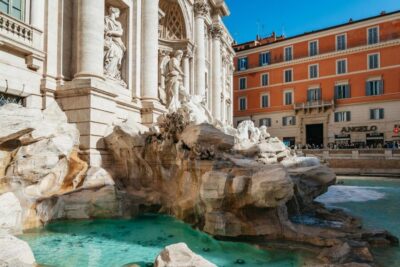
Browse the lists this tour appears in