
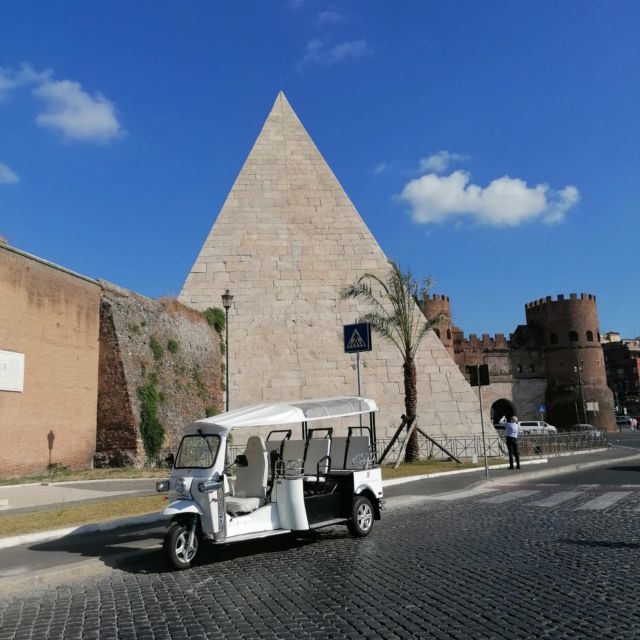
Reviewed · CITY TOURS
Rome: Private City Tour by Electric Tuk Tuk
Rome is a large, tiring city to cross on foot, and this private electric tuk tuk tour gives you a fast first look without turning the day into a forced march. In three hours, you can see the Colosseum, Circus Maximus, Pantheon, Trevi Fountain, major piazzas, and high viewpoints, with short stops for photos and sightseeing.
I like the private format, which lets your guide adjust the route instead of dragging everyone through the same script. I also like the low-emission vehicle, comfortable covered seating, and reported seat belts. The main drawback is Rome’s cobblestones: even a good tuk tuk can give you a bumpy ride, and three hours may feel long if you expect a smooth drive.
In This Review
- Key points at a glance
- Why a tuk tuk makes sense in Rome
- Ancient Rome at the Colosseum and Circus Maximus
- The Pantheon and Rome’s monumental center
- Trevi Fountain, piazzas, and classic Rome
- Rome from above: panoramic terraces
- What the electric vehicle feels like
- The guide matters more than the vehicle
- How much can you really see in three hours?
- Evening tours, food stops, and local touches
- Price, flexibility, and who gets good value
- Who should book this Rome tuk tuk tour?
- Should you book it?
- FAQ
- How long is the Rome electric tuk tuk tour?
- Is the tour private?
- Which languages are available?
- Are attraction tickets included?
- Where does the tour start and finish?
- Can I cancel the tour?
Key points at a glance
- A private three-hour overview: See a wide spread of central Rome in one outing, with your own guide and driver.
- Ancient Rome without the long walks: Reach the Colosseum, Circus Maximus, and other major sights while staying mostly seated.
- Flexible guiding: Guides including Andrea, Fabio, Robin, Luigi, and Pascale have adjusted stops and explanations to suit individual interests.
- Terraces and piazzas: The route includes panoramic viewpoints and Rome’s grand public squares, not only famous monuments.
- No attraction tickets included: This is a sightseeing drive and guided visit from outside, so plan separately for paid entrances.
- Comfort has limits: The vehicle has cover and, according to tour feedback, seat belts, but cobblestones can still be rough.
Why a tuk tuk makes sense in Rome
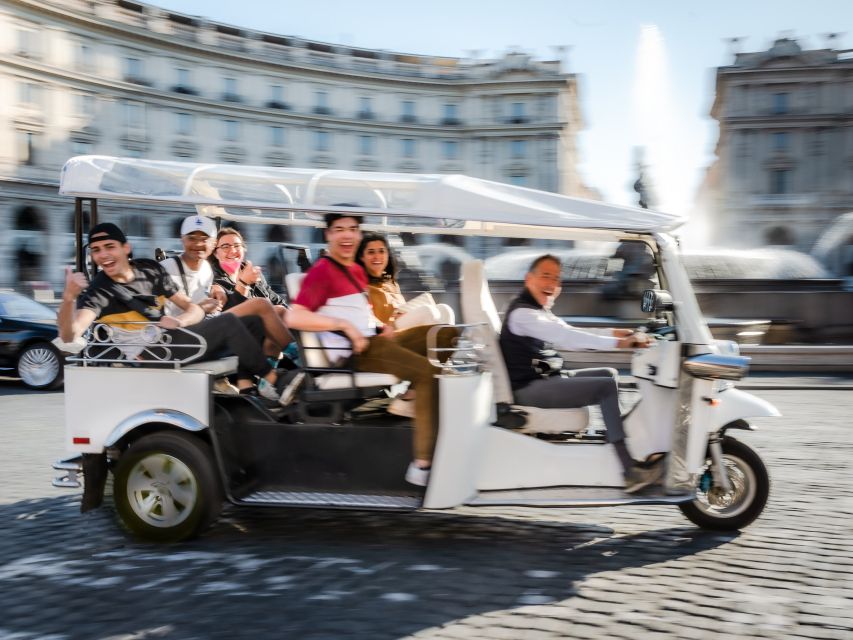
Rome rewards wandering, but it can also wear you out. The main sights are spread across a large central area, and a day that looks manageable on a map can involve hours of pavement, traffic crossings, and uneven stone streets.
This tour solves part of that problem. You sit in a small electric vehicle while your guide handles the route and explains what you are seeing. You still get out for selected stops, but you do not have to walk from the Colosseum to the Pantheon, then across the historic center, then up to a viewpoint under the hot Roman sun.
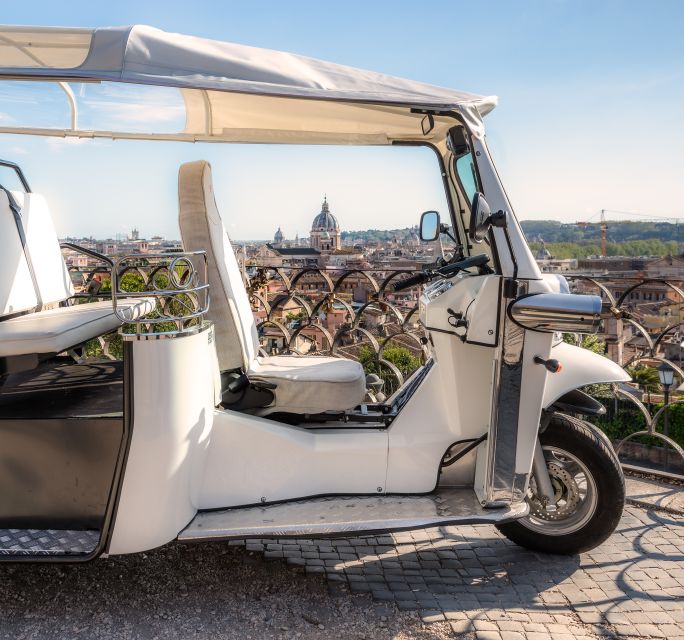
The small vehicle matters. An electric tuk tuk can reach streets and corners that feel awkward for a larger bus, while giving you a close view of the city rather than a distant look through a coach window. It is not silent, and it is not a limousine, but it fits the scale of Rome better than a large sightseeing vehicle.
I would use this as a first-day orientation tour. It helps you learn where the main areas are, decide which monuments deserve a longer visit, and get a feel for Rome before committing to a full day of museums and ruins.
More Rome tours worth comparing
- Private Electric Tuktuk Tour of Rome with Prosecco and Pickup
★ 5.0 · 159 reviews - Rome: 2-Hour Vip Tuk-tuk tour with Hotel Pickup and Prosecco
★ 5.0 · 92 reviews - Rome: Private Tuk Tuk Tour with Hotel Pickup and Prosecco
★ 4.9 · 68 reviews
Ancient Rome at the Colosseum and Circus Maximus

The Colosseum is the natural anchor of the tour. From outside, its great arches and weathered stone make the scale of Roman public entertainment easy to grasp. Your guide can place the building in its wider setting and explain how it fit into Roman political and social life.
Do not confuse this tour with a Colosseum entry tour. Tickets are not included, and the experience description does not promise interior access. You should expect an exterior look, nearby viewpoints, and an explanation from your guide rather than a timed visit inside the arena.
That arrangement has a benefit. You can see the Colosseum without spending a large part of your three-hour tour in an entry line or moving through the interior at a rushed pace. The tradeoff is clear: if walking through the underground levels or arena floor is a priority, you need a separate ticket and more time.
Circus Maximus gives the ancient section a different feel. The huge former chariot-racing ground is less visually intact than the Colosseum, so it benefits from a guide who can help you picture the crowds, racing teams, and thundering chariots that once filled the space. You get the setting and the story, even though there are fewer standing structures to inspect.
This is where a live guide adds real value. A printed description cannot easily show you what is missing or help you connect a broad open space to the events that once took place there. Guides such as Andrea, Fabio, Robin, and Eugenio have been praised for making Roman history clear and engaging, but your exact guide depends on availability.
The Pantheon and Rome’s monumental center
The Pantheon offers a different kind of Roman drama. The building’s powerful facade and famous dome show how Roman engineering could combine practical construction with a strong sense of ceremony.
You may not have time to study every detail during this tour, especially if you are stopping for photographs and moving through several districts. Still, seeing the Pantheon as part of a wider route helps you understand the relationship between ancient buildings, medieval streets, churches, shops, and modern city life.
The tour is built around landmarks rather than long interior visits. That makes it useful for a quick introduction, but less suitable for anyone who wants a slow architectural study. If you care about the Pantheon’s inside, check the separate admission arrangements rather than assuming the tuk tuk price covers entry.
The same principle applies to the city’s piazzas. Rome’s squares are not just empty spaces between attractions. They are places where fountains, churches, palaces, cafes, and everyday city life meet. Your guide can point out why each square matters, while the tuk tuk lets you cover several of them without losing half the afternoon between stops.
Trevi Fountain, piazzas, and classic Rome
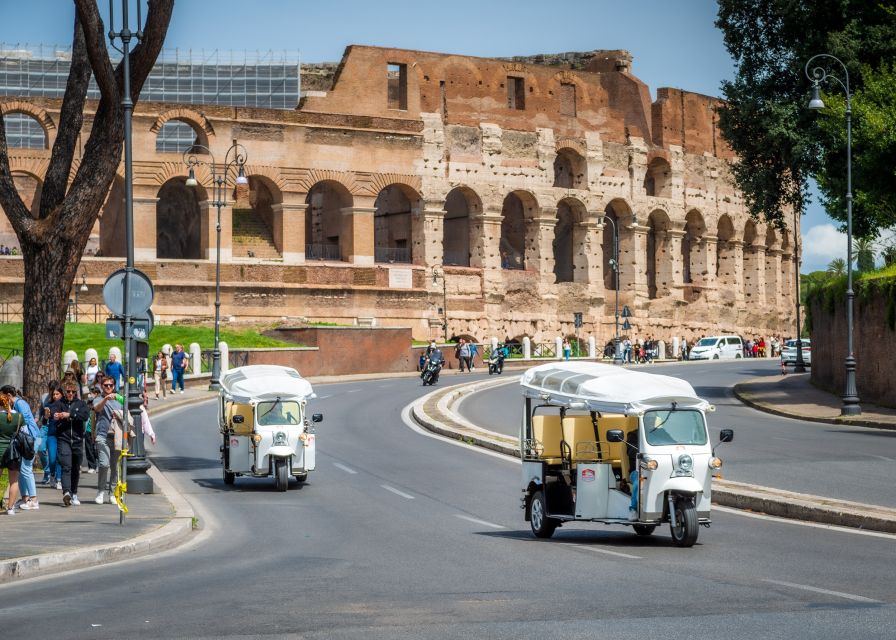
Trevi Fountain is one of the stops most people already know from photographs. In person, the scale, sound, stonework, and crowded setting give it a different character. The fountain is best treated as a quick visual stop unless you want to linger, take photographs, or return later at a quieter time.
Your driver and guide can help you fit Trevi into the larger route instead of treating it as the whole point of the day. That is useful because central Rome has many famous sights close together, but each can consume more time than expected.
The tour also highlights major piazzas and historic monuments. Exact stops can vary by the option booked, traffic, timing, and what you request. Luigi, Andrea, and Fabio have been singled out for adapting routes, changing stops, and making room for places that mattered most to the group.
That flexibility is one of the strongest reasons to choose a private tour. You can say that you want more ancient sites, extra photo stops, or a quicker overview. You should still be realistic: three hours is enough to see many places, not enough to give every monument a full visit.
A completely different way to spend the day in Rome:
- Vatican: Museums & Sistine Chapel Entrance Ticket
★ 4.5 · 144,003 reviews - Vatican Museums & Sistine Chapel Tour with Optional Basilica
★ 4.3 · 67,413 reviews - Vatican Museums, Sistine Chapel & St Peter’s Basilica Guided Tour
★ 4.5 · 39,149 reviews - Rome: Colosseum, Palatine Hill and Roman Forum Guided Tour
★ 4.8 · 32,814 reviews
Rome from above: panoramic terraces
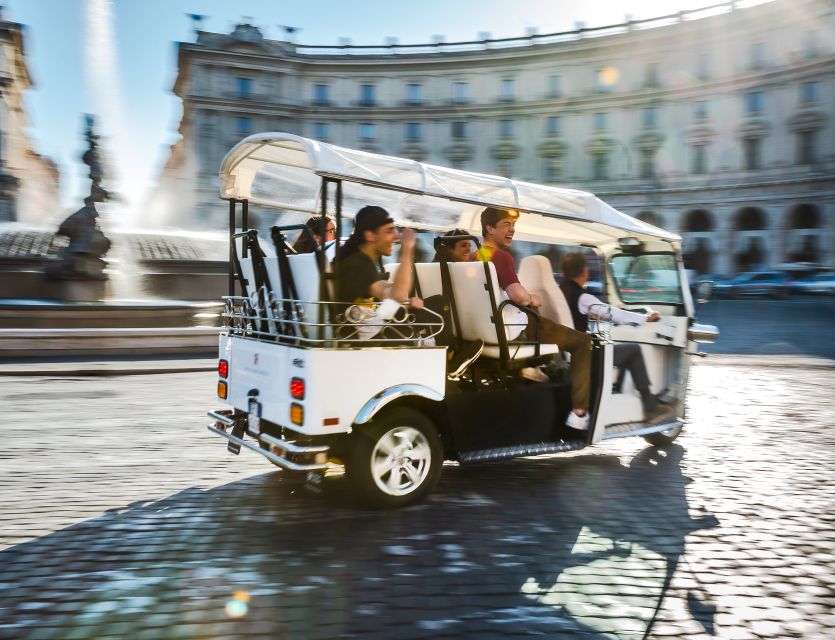
The elevated viewpoints are among the most useful parts of the outing. Rome can feel confusing at street level, with ruins, domes, hills, and winding roads appearing in fragments. From a terrace, you can see how the city fits together across several periods.
The views can also provide a welcome pause from close-up monument viewing. Instead of looking at one facade after another, you get a broader picture of rooftops, church domes, ancient remains, and the city’s historic core.
The information does not name each terrace, so I would not book this expecting one specific famous viewpoint. Think of the terrace stops as part of the route’s panoramic side, with the exact locations shaped by the selected option and the guide’s plan.
Bring clothing suited to the weather. Rome’s sun can be strong, while an evening outing may feel cool in an open-sided vehicle. A light layer is a sensible choice, and comfortable clothing matters more than dressing for a formal tour.
What the electric vehicle feels like
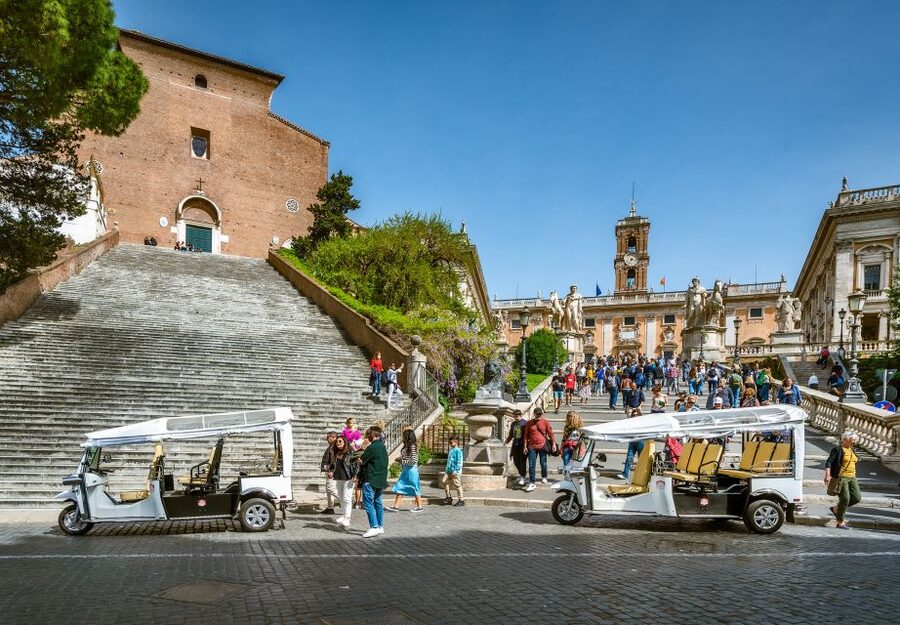
The electric tuk tuk is low-emission, which gives the ride a lighter footprint than a conventional vehicle. It also makes the experience feel more connected to the streets. You are not sealed behind a large window, so you can take in more of the sounds and air of central Rome.
The vehicle has a roof or cover, which helps in hot weather. One guide reportedly kept passengers as dry as possible during thunderstorms, though you should not treat the cover as a guarantee against bad weather. Conditions can change quickly, and weather-appropriate clothing is required advice for a reason.
Seat belts have been noted, an important detail when the vehicle is sharing busy Roman streets. Even so, the ride is not perfectly smooth. Cobblestones can become uncomfortable after a while, and one group found the three-hour journey tiring on rough streets.
I would be especially careful if you have back problems or dislike vibration. The tour involves less walking, but less walking does not mean no physical discomfort. For most people, the vehicle is a practical compromise: easier on the legs, harder on the backside.
The guide matters more than the vehicle
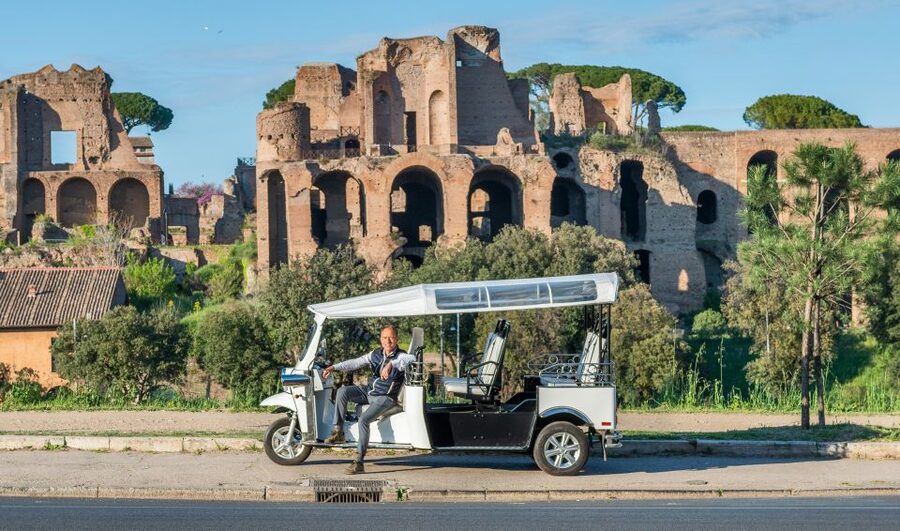
A tuk tuk can show you Rome, but the guide determines how much you understand. This is a private tour, so you are paying for personal attention as well as transport.
The strongest guide feedback centers on enthusiasm, clear explanations, flexibility, and local detail. Eugenio has been praised for making an evening route lively and for using sunset and nighttime stops well. Fabio has been described as passionate about Roman history and willing to personalize the outing.
Robin has been valued for details beyond standard guidebook material. Andrea has been praised for speaking slowly and clearly, which can help older visitors or anyone listening in a second language. Pascale has been appreciated for safe driving, strong English, useful restaurant suggestions, and even taking good photographs with a passenger’s phone.
You cannot guarantee a particular guide unless the operator confirms it. Still, these names give you a useful idea of the sort of service available. If a specific guide is important to you, ask when booking rather than assuming a request will be honored.
The available languages are English, Italian, Japanese, Portuguese, Spanish, and Dutch. A live guide is included, along with a local driver, so you are not relying on an audio recording or a fixed route with no conversation.
How much can you really see in three hours?
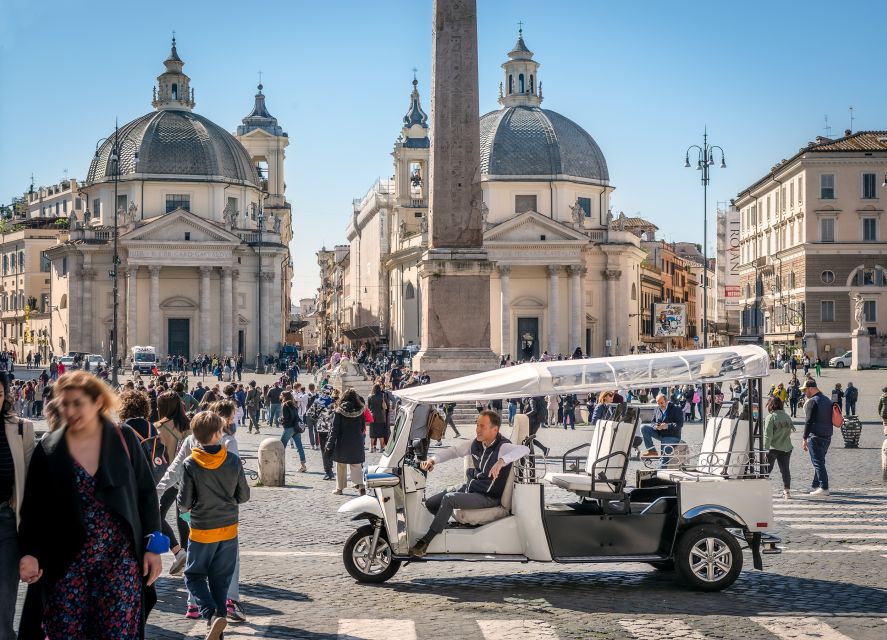
You can cover a surprising amount of Rome in three hours, but you need to define see. In this setting, it means reaching many landmarks, hearing context, taking photographs, and getting out briefly at selected places.
It does not mean entering every monument, reading every inscription, or sitting quietly in each piazza. Paid tickets are not included, and the tour ends back at the meeting point. The start point can vary according to the option you book, so check that detail before making plans around a hotel or train arrival.
The private format helps with time. You are not waiting for a large group to board or trying to keep up with strangers. You can also ask your guide to move on from a place you have already visited and use that time elsewhere.
This is particularly useful if you have only one day in Rome. A quick orientation lets you photograph the major sights first, then return on foot or by public transport to the places that caught your interest. It also suits a return visit, when you may want to see the city again without repeating a full museum schedule.
Evening tours, food stops, and local touches
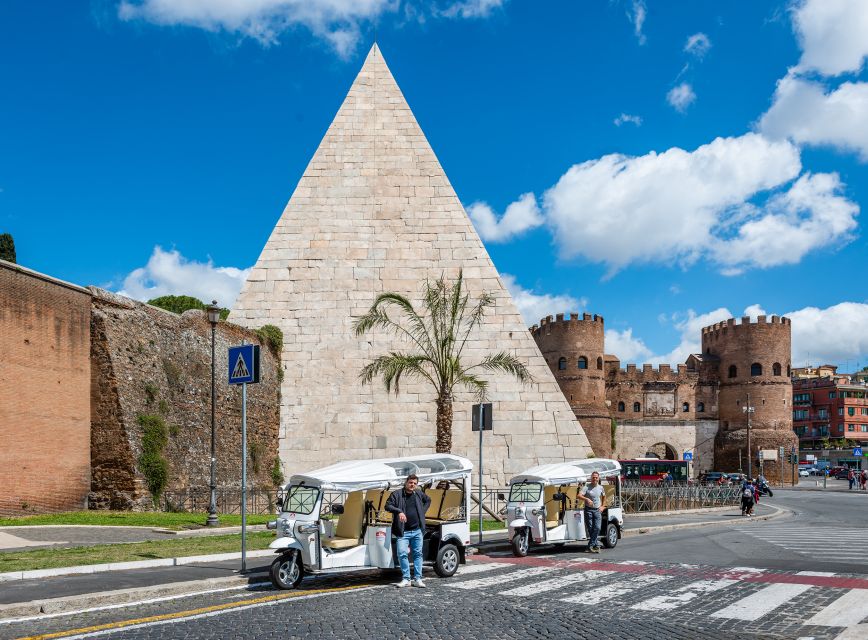
An evening departure can change the mood of the tour. The supplied schedule offers different starting times depending on availability, and one evening group enjoyed sunset viewpoints and monuments after dark.
That makes an evening option worth considering if you want softer light for photographs or prefer to avoid the strongest daytime heat. The tradeoff is that details may be harder to see after dark, especially at less brightly lit sites.
Food and drinks are not included, but gelato and espresso fit naturally into the experience. You can ask whether there is time for a brief stop, though do not assume every snack is part of the price or route.
One guide took a group to a local cookie place, and another helped with a nearby restaurant suggestion. These touches are not guaranteed, but they show how a private tour can feel more personal than a standard sightseeing circuit. If food matters to you, say so early and see what your guide can accommodate.
Price, flexibility, and who gets good value
At $181.26 per person, this is not a bargain transport option. You are paying for a private group, a local driver, a live guide, and a vehicle that covers a lot of ground in a short time.
The value improves when you divide the price across a small private group and consider what you avoid: long walks between distant landmarks, navigation mistakes, and the fatigue of crossing Rome on foot. It is also more useful when your time is limited or when members of your group have different walking abilities.
The price is harder to justify if you are traveling alone, have several days in Rome, and enjoy walking independently. In that case, you may prefer to spend the money on a ticketed monument visit or a longer meal.
Free cancellation up to 24 hours before the tour and reserve-now, pay-later booking add practical flexibility. They do not change the cost, but they can help if your Rome schedule is still shifting.
Who should book this Rome tuk tuk tour?
I would recommend it for a first visit, a short stay, families who want a broad look at the city, and older visitors who would rather limit long walks. It also suits repeat visitors who want a relaxed overview and the freedom to request different stops.
It is a good match for people who like conversation and local suggestions. Ask questions, tell the guide what you have already seen, and request a route that fits your interests. The private setting gives you room to do that.
I would be more cautious if you want deep interior visits, museum time, or a perfectly smooth ride. The tuk tuk covers ground, but Rome’s cobblestones remain Rome’s cobblestones. You should also remember that tickets, food, and drinks cost extra.
Should you book it?
Book this tour if you want to get your bearings fast, see Rome’s biggest sights with minimal walking, and value a guide who can adjust the route. The private vehicle, low-emission design, panoramic stops, and range of guide languages make it a strong introduction to the city.
Skip it if you prefer to explore slowly on foot or need extended time inside the Colosseum, Pantheon, or other paid sites. For most short-stay visitors, though, three hours in an electric tuk tuk is a practical way to meet Rome before choosing where to spend the rest of your time.
FAQ
How long is the Rome electric tuk tuk tour?
The tour lasts three hours. Starting times depend on availability when you book.
Is the tour private?
Yes. The experience is arranged for a private group with a live guide and local driver.
Which languages are available?
Guiding is available in English, Italian, Japanese, Portuguese, Spanish, and Dutch.
Are attraction tickets included?
No. Tickets are not included in the tour price. Food and drinks are also excluded.
Where does the tour start and finish?
The meeting point may vary according to the option booked. The tour ends back at the meeting point.
Can I cancel the tour?
You can cancel up to 24 hours in advance for a full refund. Reserve-now, pay-later booking is also available.
Newest reviews from Rome
- ROME:Colosseum & Ancient Rome – private/small group TOUR★ 5.0 · 24 reviews
- Off the Beaten Track in Rome: Rione VI Parione Private Tour★ 5.0 · 24 reviews
- Cinematic Photoshoot in Rome★ 5.0 · 24 reviews
- Rome: Best of Colosseum and Roman Forum Small Group Guided Tour★ 4.5 · 24 reviews
- The Labyrinth of Rome between catacombs and ancient quarries★ 4.5 · 24 reviews
- Vatican and Trionfale Market Tour with Wine and Food Tasting★ 5.0 · 24 reviews
- private tour: Vatican Museums, Sistine Chapel, St. Peter’s Basilica★ 4.5 · 24 reviews
- Skip the Line: Vatican Wheelchair Accessible Private Tour★ 5.0 · 24 reviews
City Tours, compared.

Fettuccine Pasta Cooking Class in Rome’s City Center
Read our review →
Vatican Museums & Sistine Chapel Entry Ticket
Read our review →
Rome City Small Group Bike Tour with quality Cannondale EBike
Read our review →
Rome Highlights City Tour by Golf Cart with Gelato
Read our review →
Imperial City Tour by Golf Cart with Optional Transfer
Read our review →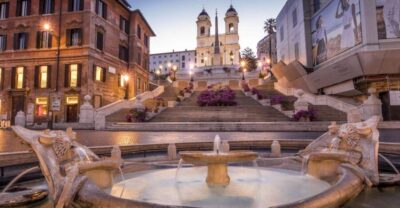
Guided City Center Evening Sightseeing Walking Tour
Read our review →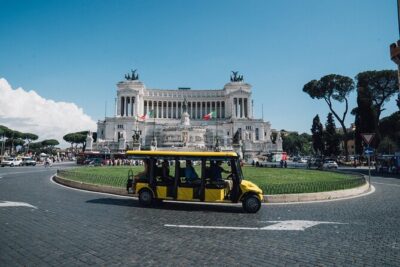
Golf Cart Small-Group Guided Tour: Rome City Highlights
Read our review →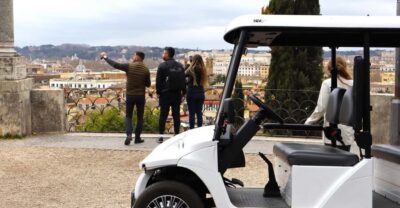
Browse the lists this tour appears in