
Reviewed · WALKING TOURS
Rome Private Family Walking Tour with Games for Kids
Rome can be hard work with children, especially when ancient temples begin to blur into one long line of columns. This private walk solves that problem with treasure hunts and small prizes, giving children something active to do while you hear the stories behind Sant’Ignazio, the Pantheon, Caesar’s murder site, and the old Jewish quarter.
I like the mix of Roman sights and local snacks, from chocolate and pizza to supplì and gelato. I also like the flexible private format: guides such as Elisabetta, Enzo, Julieta, Simone, and Caterina have shown they can adjust the pace for toddlers, older children, grandparents, and tired families.
The main consideration is the scope. Three hours covers a lot of ground, but this is an outdoor walking overview rather than a detailed visit inside major monuments. Food portions may also feel modest if you expect a full meal, particularly since the exact tasting lineup can vary.
In This Review
- Why this family walk works so well
- Starting beneath Sant’Ignazio’s painted ceiling
- Chocolate first, then the Pantheon
- Piazza Navona, fountains, and the first big square
- Campo de’ Fiori and Roman snacks
- Caesar’s murder site at Largo di Torre Argentina
- The Jewish Ghetto and Portico of Octavia
- Crossing to Tiber Island for family photos
- Finishing in Trastevere with supplì and gelato
- How the guides handle different ages
- Pace, walking demands, and timing
- What the private format is worth
- Who should book this Rome family walk?
- FAQ
- Where does the Rome family walking tour start?
- Where does the tour finish?
- How long does the activity last?
- Which languages are available?
- Is this a private tour?
- Is the tour wheelchair accessible?
- What food can you taste during the tour?
- Can I cancel the booking for a refund?
- Should you book it?
Why this family walk works so well

- Children get a real job to do: They search for details, solve clues, and collect prizes instead of simply following an adult lecture.
- The route crosses several Rome neighborhoods: You move from the Pantheon and Piazza Navona through Campo de’ Fiori, the Jewish Ghetto, Tiber Island, and Trastevere.
- Food breaks keep the history moving: Chocolate, pizza, cheese, pesto, coffee cream, supplì, and gelato may appear along the route.
- The guide is the key ingredient: Elisabetta, Enzo, Julieta, and Simone have been especially effective with young children and mixed-age groups.
- It suits a private family group: The pace can respond to a shy child, a two-year-old, jet lag, heat, or the need for a toilet or cool drink.
- You finish in Trastevere: The ending gives you a useful neighborhood for a later meal or evening stroll.
Starting beneath Sant’Ignazio’s painted ceiling
Meet your guide at the entrance to the Church of Sant’Ignazio of Loyola, at 41.89875411987305, 12.47986888885498. This is a smart starting point because the church offers a grand first look at Rome without beginning with the city’s biggest crowds.
The opening guided visit lasts about 10 minutes. Inside, you can admire the Baroque atmosphere and the remarkable frescoed ceiling. The church is also a good choice for children because the ceiling creates an immediate visual surprise. Instead of asking them to absorb dates and names, the guide can point out what looks real, what seems to rise into the sky, and what details they can find.
This stop also sets the tone for the walk. You are not simply ticking off the Pantheon and Piazza Navona. You begin with a less obvious church, then move through Rome’s streets with a guide who uses stories, questions, and small challenges to keep younger minds involved.
More walking tours in Rome:
- Rome: Trastevere & Campo de Fiori Street Food Walking Tour
★ 4.9 · 2,768 reviews - Rome: Paranormal Night Walking Tour & Secret Backstreets
★ 4.9 · 1,921 reviews - Rome by Night Walking Tour – Legends & Criminal Stories
★ 4.5 · 1,003 reviews
Chocolate first, then the Pantheon
A stop at Venchi Cioccolato e Gelato follows the church. The plan includes trying one of the chocolate varieties filled by this well-known Roman chocolate shop. That gives children an early reward and gives adults a pleasant taste of Rome’s sweet side.
Do not think of this as a long food tour. The tasting is one short part of a sightseeing walk, and the amount of food may not replace lunch. Still, these pauses matter. A child who has just had chocolate is often more willing to listen for the next few streets, and the guide has an easy way to connect food with local habits.
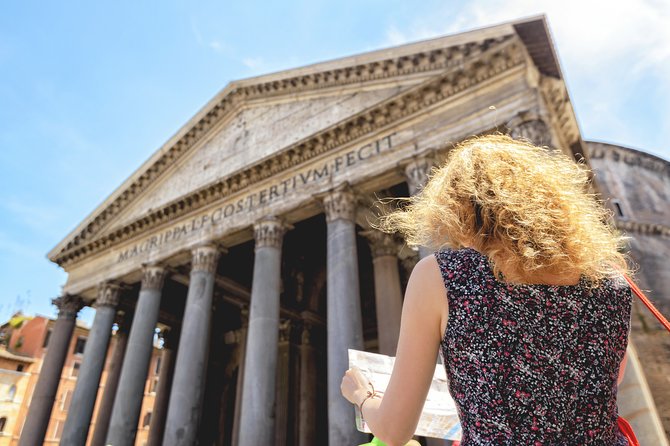
The Pantheon receives about 15 minutes of guided attention. You will contemplate one of Rome’s great ancient buildings, originally dedicated by Roman emperors to their gods. The guide’s stories help turn the structure from a famous photo stop into a place with human drama and political meaning.
The Pantheon is also a useful family stop because its central idea is easy to grasp: ancient builders created a huge, carefully planned space that has endured for centuries. Your children can search the square for details while you take in the columns and the building’s powerful shape.
The tour focuses on the exterior and surrounding square as part of this route. If entering the Pantheon is a must for your family, confirm the current arrangements when booking, since the listed activity does not promise a full interior visit.
Piazza Navona, fountains, and the first big square

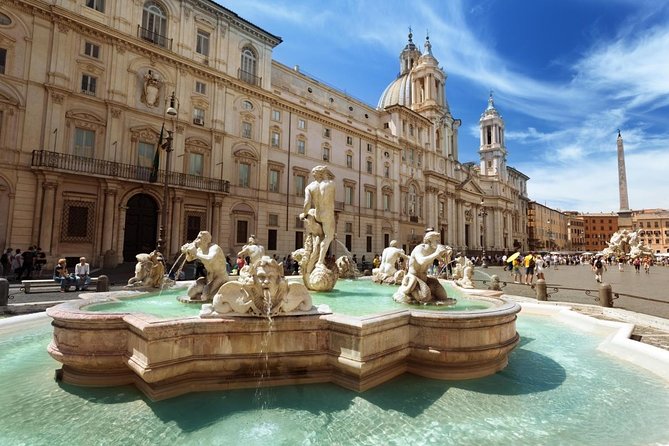
From the Pantheon, you walk to Piazza Navona, with about 15 minutes devoted to the square. This is one of Rome’s best places for a family game because there is so much to look at: fountains, statues, façades, and the long shape of the piazza.
The guide can turn the square into a search rather than a speech. Children may be asked to find certain figures or architectural details, while adults hear why this is one of Rome’s most famous public spaces.
I appreciate this balance. Parents still receive useful context, but the children are not expected to stand still and listen for a quarter hour. The walk also gives you time to take photographs and keep the group together without feeling rushed from one sight to the next.
Campo de’ Fiori and Roman snacks
The route continues to Campo de’ Fiori, a colorful market area with about 10 minutes of guided time. This is a chance to see Rome as a living city, not only as an open-air museum.
The food stops at Forno Campo de’ Fiori and Antico Forno Roscioli add roughly 15 minutes each. You can expect a taste of Italian pizza, with local products and other delicacies available along the way. Some families have also sampled cheese, pesto, and coffee cream during the walk.
The exact food selection is an important point to keep in mind. The advertised highlights include chocolate, pizza, supplì, and gelato, but one family found the amount of pizza and gelato less than expected and had chocolate and supplì as the main tastings. I would treat the snacks as carefully chosen samples rather than a guaranteed progressive lunch.
That said, the food is well placed in the route. Pizza makes sense in this part of Rome, and a quick bite can restore energy before the historic sites that follow. If your children need a full meal, plan one separately before or after the tour.
More Rome tours worth comparing
- Rome by Golf Cart Private Tour: Beyond the Landmarks
★ 5.0 · 4,361 reviews - Early Morning Vatican, Sistine, St. Peter’s Semi or Private Tour
★ 5.0 · 3,779 reviews - Rome on a Golf Cart Semi-Private Tour Max 6 with Private Option
★ 5.0 · 2,502 reviews - Rome Private Arrival Transfer: Fiumicino Airport to Hotel in Rome
★ 4.5 · 2,492 reviews
Caesar’s murder site at Largo di Torre Argentina

At Largo di Torre Argentina, the guide introduces the Sacred Area, the ancient ruins linked to the spot where Julius Caesar was murdered. The stop lasts about 10 minutes.
For children, this is an easy story to remember. They can picture the setting of a famous Roman event while looking at the ruins below street level. For adults, the site adds political drama to a route that has so far focused on churches, monuments, food, and public squares.
The guide’s treasure hunt helps here. Children can search for details in the area while the adults listen, take photographs, and ask questions. The tour does not try to turn this into a full archaeological lecture. Its strength is making the place memorable enough that you may want to return for a closer look.
The Jewish Ghetto and Portico of Octavia
The walk then reaches the Portico of Octavia, in the area of Rome’s historic Jewish Ghetto. The guided visit lasts about 10 minutes.
This section gives the route a different feel. You leave the grand tourist squares and walk through a district where ancient remains, religious history, and everyday streets sit close together. The guide can help your family notice the change in atmosphere and explain why this neighborhood matters.
Because the route is private, you have a better chance to pause when a child spots something interesting or when an adult wants to ask about the area. That flexibility is worth more than it sounds. A fixed group tour often has to keep moving, while a family group can spend a little longer on a question and then make up time later.
Crossing to Tiber Island for family photos

The route crosses the bridge to Tiber Island, with about 10 minutes set aside here. This is one of the simplest but most useful stops: you get a change of view, a break from the denser streets, and a good place for a family photo.
For a three-hour city walk, these visual pauses help. Children can move across the bridge, adults can take pictures, and the guide can connect the river with Rome’s development. The stop does not require a long explanation to be worthwhile.
It also marks the transition into Trastevere. The walk has moved through central Rome’s major sights and now heads toward a neighborhood with a more local, residential feel.
Finishing in Trastevere with supplì and gelato
The final guided section takes about 15 minutes in Trastevere, ending in the neighborhood. Here, you can taste supplì, a traditional Roman fried rice snack, and try gelato.
Supplì is a useful introduction to Roman street food. It is different from pizza and chocolate, so the tasting gives children a chance to try something savory and distinctly local. Gelato provides the obvious grand finale, while a nearby playground gives younger children time to run around before saying goodbye to the guide.
The finish is practical. You are not dropped at an isolated transport stop or sent straight back to the starting point. You end in an area where your family can continue exploring, find a meal, or rest after the walk.
The playground detail matters especially for families with toddlers. A two-year-old will not get much from another fountain explanation, but a chance to play can make the final part of the tour much easier. Guides have also helped families locate a toilet or find a café for cool drinks when heat and fatigue set in.
How the guides handle different ages
The strongest part of this experience is not simply the route. It is the guide’s ability to speak to adults and children at the same time.
Elisabetta has been particularly effective with groups that include children aged 2, 5, and 7, as well as grandparents and other adults. She uses questions, searches, and simple explanations without leaving the grown-ups with nothing to learn.
Enzo has made younger children feel important and included, which can be a big help with shy children. One family found that a normally quiet girl opened up during the walk. Daniele prepared a treasure hunt that children enjoyed, while Simone kept two young children engaged throughout the route.
Julieta has also handled mixed ages well, including an eight-year-old and a two-year-old. Caterina explained the checkpoints clearly and made the game fun for a young girl. These details suggest that the experience depends partly on the guide assigned to your family, but the repeated pattern is encouraging: guides understand that children need direct attention, movement, and a reason to keep looking.
Pace, walking demands, and timing
The activity lasts three hours and covers a long central route, ending in Trastevere rather than returning to Sant’Ignazio. You should expect steady walking through city streets, with stops for explanations, tastings, photographs, and games.
The pace has worked for families with toddlers, older children, and grandparents, but Rome can be hot and tiring. One group joined after a full day in the city and needed a cool drink break. If possible, schedule this walk early in your Rome visit. It gives you a useful map of the center and points out food stops and neighborhoods you may want to revisit.
Starting on your first or second day also lets you return to the Pantheon, Piazza Navona, or Trastevere later. A family who took it on the last day wished they had booked earlier for exactly this reason.
The tour is wheelchair accessible, and it is a private group rather than a shared walk. Starting times depend on availability. English, Spanish, and Italian are offered.
What the private format is worth
No price is provided here, so I cannot judge the exact cost. The right comparison is not simply against a cheaper group walk. Compare it with the cost of keeping children interested, paying for separate snacks, and losing time when a fixed group cannot slow down.
A private tour offers value when your family has mixed ages or a narrow attention span. You can ask questions without worrying about holding up strangers, and the guide can adapt when someone needs a bathroom, a drink, or a slower pace.
It is less compelling if you want a formal, detailed archaeological tour or a full meal. This is a sightseeing walk with food samples and games, not a substitute for a Colosseum tour, Roman Forum visit, or dedicated food tour.
The cancellation terms are family-friendly: you can cancel up to 24 hours ahead for a full refund, and you can reserve now while paying later. Those policies do not change the character of the tour, but they help when family plans are still shifting.
Who should book this Rome family walk?
I would choose this for families with children roughly in the toddler-to-primary-school range, especially if the adults want history but know that a standard lecture will not work. It also suits a group with grandparents because the private pace can respond to different walking speeds.
It is a good first-day activity because it introduces central Rome without requiring a full museum session. You see major sights, lesser-known corners, and several neighborhoods in one outing.
I would look elsewhere if your main goal is entering the Pantheon, exploring the Colosseum, or spending a long time at ancient ruins. The route gives you context and an overview, but its real purpose is to make Rome enjoyable for the whole family.
FAQ
Where does the Rome family walking tour start?
The tour starts at the entrance of the Church of Sant’Ignazio of Loyola in Rome.
Where does the tour finish?
The tour finishes in Trastevere.
How long does the activity last?
The walking tour lasts three hours.
Which languages are available?
The live guide is available in English, Spanish, and Italian.
Is this a private tour?
Yes. The activity is arranged for a private group.
Is the tour wheelchair accessible?
Yes, the activity is wheelchair accessible.
What food can you taste during the tour?
The planned highlights include chocolate, pizza, supplì, and gelato. Additional tastings may include items such as cheese, pesto, or coffee cream, but the exact selection can vary.
Can I cancel the booking for a refund?
You can cancel up to 24 hours in advance for a full refund. You can also reserve now and pay later.
Should you book it?
Book this tour if you want Rome’s big sights presented through games, short explanations, and well-timed snacks. Its best feature is the human one: guides such as Elisabetta, Enzo, Julieta, Simone, and Caterina know how to bring a shy child, a restless toddler, or a tired grandparent into the day.
Go in expecting samples, not lunch, and an overview, not long monument visits. With that expectation, this is a smart and useful way to introduce your family to Rome, especially early in your stay when you still have time to return to the places that catch your eye.
Newest reviews from Rome
- ROME:Colosseum & Ancient Rome – private/small group TOUR★ 5.0 · 24 reviews
- Off the Beaten Track in Rome: Rione VI Parione Private Tour★ 5.0 · 24 reviews
- Cinematic Photoshoot in Rome★ 5.0 · 24 reviews
- Rome: Best of Colosseum and Roman Forum Small Group Guided Tour★ 4.5 · 24 reviews
- The Labyrinth of Rome between catacombs and ancient quarries★ 4.5 · 24 reviews
- Vatican and Trionfale Market Tour with Wine and Food Tasting★ 5.0 · 24 reviews
- private tour: Vatican Museums, Sistine Chapel, St. Peter’s Basilica★ 4.5 · 24 reviews
- Skip the Line: Vatican Wheelchair Accessible Private Tour★ 5.0 · 24 reviews
Walking Tours, compared.
Trastevere & Campo de Fiori Street Food Walking Tour
Read our review →
Paranormal Night Walking Tour & Secret Backstreets
Read our review →
Rome by Night Walking Tour – Legends & Criminal Stories
Read our review →
Guided City Center Evening Sightseeing Walking Tour
Read our review →
Best of Rome Walking Tour including Trevi Fountain
Read our review →

Forbidden History Walking Tour & Pub Crawl with Drinks
Read our review →
Guided Small Group Walking Tour of City Highlights
Read our review →Browse the lists this tour appears in