
Reviewed · ROME STREET FOOD TOURS
Rome Street Food Tour – History, Craft and Authentic Taste
Rome reveals itself especially well at street level, with a crisp supplì in one hand and 2,000 years of history under your feet. This three-hour walk links Largo dei Librari, Campo de’ Fiori, the Jewish Ghetto, the Pantheon, and Piazza Navona with enough food to function as lunch or dinner.
I like the generous tasting lineup, which includes skewers, supplì, pizza, Jewish-style fried artichokes, gelato, and tiramisu. I also like the small groups, capped at 10, and the way guides such as Daniele, Chris, Virginia, and Mattia mix food with the stories of the streets around you.
The main consideration is pace. You cover a lot of ground in three hours, and several stops are brief. The mosaic artisan visit depends on the shop being open, so it may be replaced with another food tasting.
In This Review
- Key things to know before booking
- Why this Rome food walk works so well
- Starting with skewers at Largo dei Librari
- Campo de’ Fiori, supplì, and Giordano Bruno
- A working mosaic shop in Campo de’ Fiori
- The frescoed Passetto del Biscione and pizza by the slice
- Largo Argentina and the story of Julius Caesar
- The Jewish Ghetto and carciofo alla Giudia
- The Pantheon from the outside
- Gelato near Sant’Eustachio
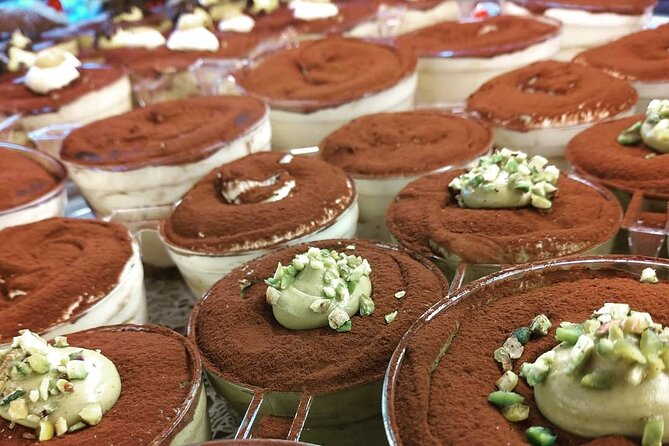
- Piazza Navona and the tiramisu finale
- Food, group size, and guide quality
- Price, timing, and practical limits
- Who should book this Rome street food tour?
- FAQ
- How long does the Rome Street Food Tour last?
- What is the price?
- Where does the tour begin?
- Where does the tour end?
- What food is included?
- Are alcoholic drinks included?
- Is the mosaic artisan visit guaranteed?
- Can vegetarians or people with food intolerances join?
- What is the cancellation policy?
Key things to know before booking
- The meal is bigger than a snack crawl: The tastings add up to a filling meal, not just a few nibbles.
- The route covers classic central Rome: You walk from Largo dei Librari through Campo de’ Fiori, the Jewish Ghetto, the Pantheon area, and Piazza Navona.
- The fried artichoke is a highlight: Carciofo alla Giudia brings a distinctive Roman Jewish specialty to the table.
- Groups stay small: The maximum is 10 people, with some departures reported at only two, four, six, or eight participants.
- The guide makes the difference: Daniele, Chris, Virginia, Mattia, and Serena have each led highly praised departures, though your assigned guide can vary.
- Food restrictions need advance notice: Vegetarians can be accommodated, but vegan diets are not listed as supported, and gluten or lactose restrictions may limit the tastings.
Why this Rome food walk works so well
Many food tours in Rome focus on eating, while many sightseeing walks focus on monuments. This one makes the two subjects support each other. You taste the food in the same central neighborhoods where Rome’s markets, workshops, religious communities, and ancient ruins have shaped daily life.
The route is especially useful during your first days in the city. You get a practical sense of the area between Campo de’ Fiori and Piazza Navona, along with a list of foods worth seeking out later. The tour also helps you notice details you could easily miss while walking alone, such as the shape of buildings influenced by ancient Roman structures or the small passages connecting larger streets.
The experience is offered in English and lasts about three hours. At $83.13 per person, it is not a cheap meal, but the price includes a substantial spread of food, a guide for the entire walk, and historical interpretation at several major sites. If you count the cost of a full lunch or dinner plus a private sightseeing guide, the value becomes easier to see.
This is not a formal restaurant tour. You should expect casual food stops, standing tastings or quick breaks, and a walking route through busy central streets. That informal setup is part of the appeal, but it may not suit you if you want a long, seated meal at every stop.
More Rome street food crawls:
- Rome: Trastevere or Jewish Quarter Street Food Tour
★ 4.8 · 3,839 reviews - Rome: Trastevere & Campo de Fiori Street Food Walking Tour
★ 4.9 · 2,768 reviews - Rome Street Food Tour with Local Guide
★ 5.0 · 2,361 reviews
Starting with skewers at Largo dei Librari
The tour begins at Largo dei Librari on Via dei Giubbonari, near Campo de’ Fiori. The first tasting arrives quickly: meat and cheese skewers with the option to buy a glass of red wine separately.
That early bite sets the tone. You are not waiting until halfway through the route to eat, and the skewer gives you a simple introduction to casual Roman flavors. Alcohol is not included, so you can decide if wine fits your plans and budget.
The meeting point is near public transportation, but the small square can still be easier to find if you arrive a few minutes early. Look for the guide in the open area rather than expecting a large shopfront or restaurant entrance.
Campo de’ Fiori, supplì, and Giordano Bruno
The next stop is Campo de’ Fiori, one of Rome’s best-known public squares. In the morning, the square hosts an old food market, while its center is marked by the statue of Giordano Bruno, the monk executed for heresy.
The sightseeing pause is short, around 15 minutes, so this is an introduction rather than a full lecture. A good guide uses the square as a doorway into Roman politics, religion, markets, and public life without turning the food walk into a classroom.
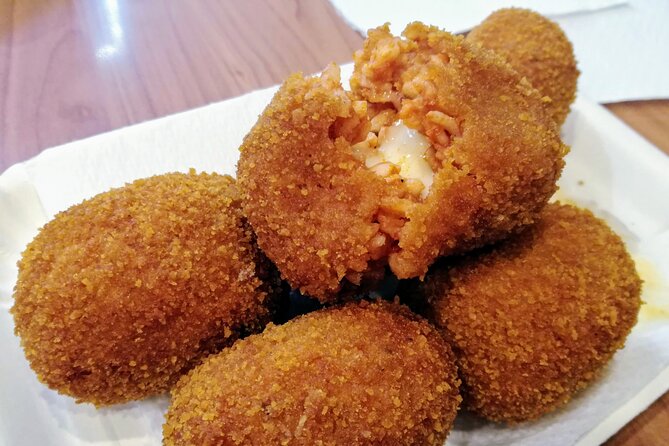
Then comes supplì, a fried rice ball filled with tomato sauce and mozzarella. The name is often associated with the French word surprise, a fitting idea when you reach the melted cheese inside. It is sturdy, hot, filling street food, and one of the most useful things to learn about early in a Rome visit.
The market may not be operating if your tour is later in the day, so do not book this expecting a full market visit at every departure time. The square and statue remain part of the walk, but the food market is specifically a morning feature.
A working mosaic shop in Campo de’ Fiori
The route includes a visit to a mosaic artisan shop, scheduled for about 20 minutes when the workshop is operating on one of its working days. The artisan explains the steps involved in making a mosaic sample, which can include a small frame, and may demonstrate how tiles are cut.
This is a welcome change from eating and walking. Rome is full of famous paintings, churches, and ruins, but craft traditions also tell you how the city’s visual character is made. Seeing the process gives you a better sense of the patience and handwork behind decorative objects.
There is one clear limitation: the shop visit is not guaranteed. If the artisan is unavailable, the tour offers an additional food tasting instead. That replacement may please hungry participants, but it means you should treat the mosaic stop as a bonus rather than a fixed part of the experience.
More food tours in Rome:
- Rome: Tuscany & Montepulciano Day Trip with Lunch & Wine Tasting
★ 4.5 · 5,232 reviews - Winner 2025 Rome Twilight Trastevere Food Tour by Eating Europe
★ 5.0 · 5,157 reviews - Rome Food Tour: Unlimited Tastings with Fine Wine & Barolo
★ 5.0 · 3,365 reviews - Rome: Trastevere Food tour with Free-Flowing Fine Wine
★ 5.0 · 2,853 reviews
The frescoed Passetto del Biscione and pizza by the slice
Passetto del Biscione is a narrow shortcut through Rome’s alleys, decorated with frescoes. You pass through this atmospheric lane on the way to a pizza tasting.
This section shows why the route is more than a checklist of major sights. The famous squares get attention, but Rome’s character often appears in the small connections between them. The passage is brief, yet it gives the walk a sense of discovery without requiring a long detour.
The pizza is served as sliced pizza, a practical Roman format for a walking tour. You get a sample rather than a full individual pie, which matters because several more tastings are still ahead. Pace yourself early. The tour may look like a collection of small bites, but the portions together are described as a generous meal.
Largo Argentina and the story of Julius Caesar
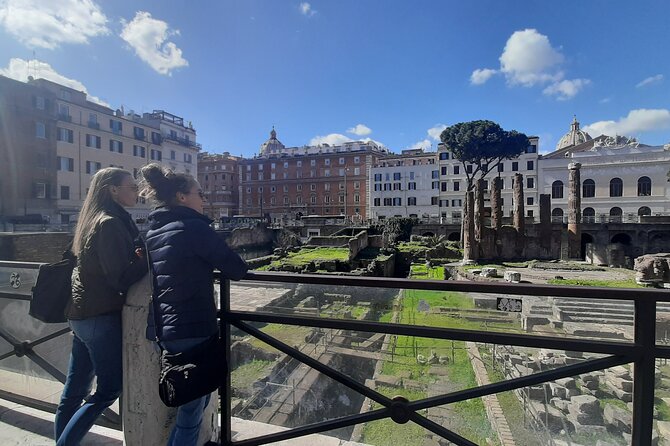
At Area Sacra di Largo Argentina, the guide explains the place associated with Julius Caesar’s murder. The archaeological remains are visible from outside, and admission is not included.
This stop is more about context than entering a monument. You pause, look down into the ancient area, and connect the Roman ruins to one of the most famous political assassinations in history. The guide’s explanation is important here because the site can otherwise look like a collection of weathered stones from the street.
The visit lasts about 15 minutes. If you want to explore the archaeological area in depth, plan a separate visit rather than expecting this food tour to provide museum-style access.
The Jewish Ghetto and carciofo alla Giudia
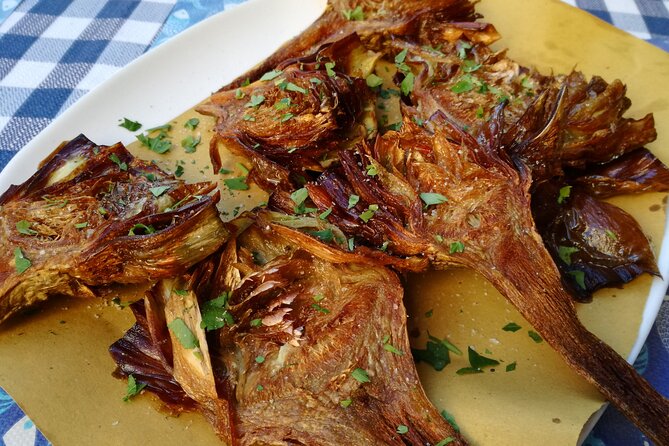
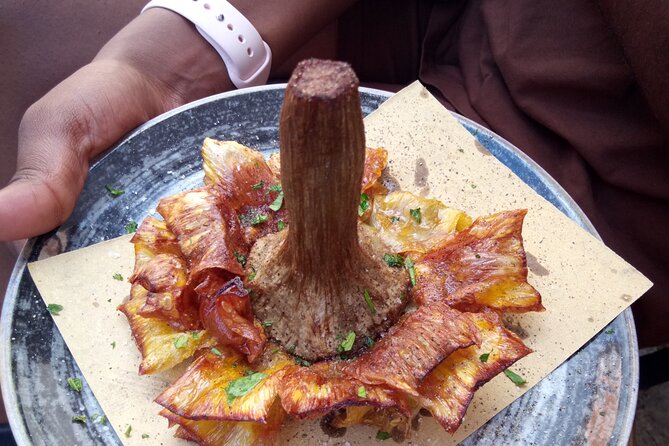
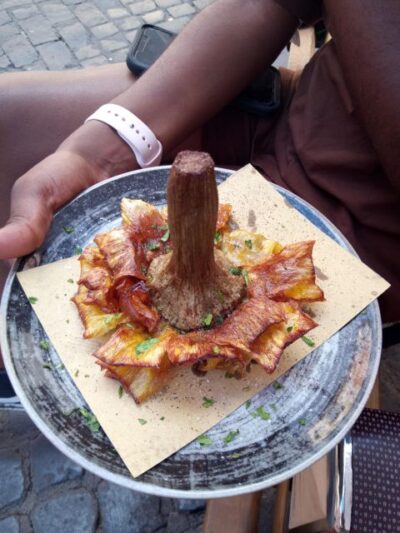
The Jewish Ghetto is the heart of the food story. You see remains of ancient Roman structures and the exterior of Rome’s synagogue before tasting carciofo alla Giudia, the famous deep-fried Jewish-style artichoke.
This is likely the most distinctive dish on the menu. Supplì and pizza are familiar to many people before they arrive in Rome. A whole artichoke fried until crisp offers something more specific to the city’s Jewish Roman cooking tradition.
The stop lasts around 30 minutes, longer than most of the other tastings. That gives the guide more room to explain the neighborhood and lets you enjoy the food without rushing quite as much. Daniele has received particularly strong praise for his talks about the Jewish Ghetto, so this part may be especially rewarding if he leads your group.
The artichoke can be a highlight, but it is also a poor fit for anyone who dislikes fried food or is seeking a light tasting menu. The tour is designed around hearty Roman food, not delicate portions.
The Pantheon from the outside
The walk continues to the Pantheon, where the guide explains the main details of the monument from the piazza. The tour does not include entry.
That distinction is worth noting before you book. The Pantheon is one of Rome’s essential interiors, and you may want to return separately if you have not already visited. On the food walk, you get the setting and an orientation, not a full interior tour.
The short stop works well as part of a larger route. You hear the key points, take in the facade and piazza, then continue toward dessert rather than spending the rest of the afternoon inside one monument.
Gelato near Sant’Eustachio
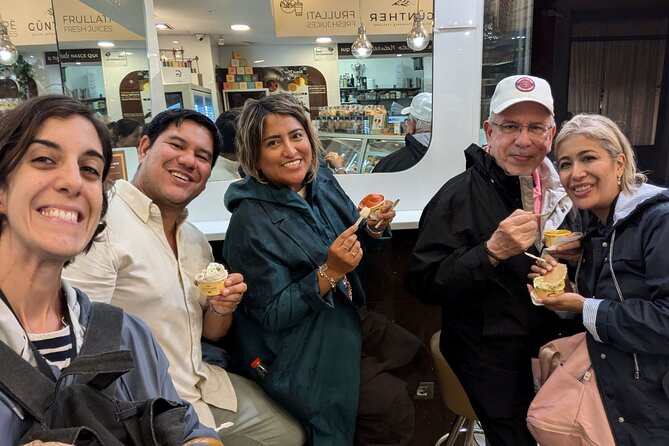
After the savory dishes, the tour turns to gelato near Sant’Eustachio. This is a useful moment to compare Roman gelato with the oversized, brightly colored displays found in tourist areas, though the exact shop and flavor details are not specified.
The guide can help explain what you are tasting and may point out flavors worth trying. One food stop in the route also received praise for pistachio gelato, but no single flavor is guaranteed, so choose according to what is available that day.
Gelato also provides a natural pause. By this point you have walked through several neighborhoods and eaten enough savory food to appreciate a cold dessert. If you are already full, a smaller serving would be sensible, though portion choices depend on the food stop.
Piazza Navona and the tiramisu finale
Piazza Navona brings the route close to its end. The square is famous for Bernini’s Fountain of the Four Rivers, and the final tasting is tiramisu.
This is a satisfying finish because the piazza gives you a grand public space after the narrower lanes of the earlier route. The contrast is part of the experience: small food shops and side streets first, then one of central Rome’s most theatrical squares.
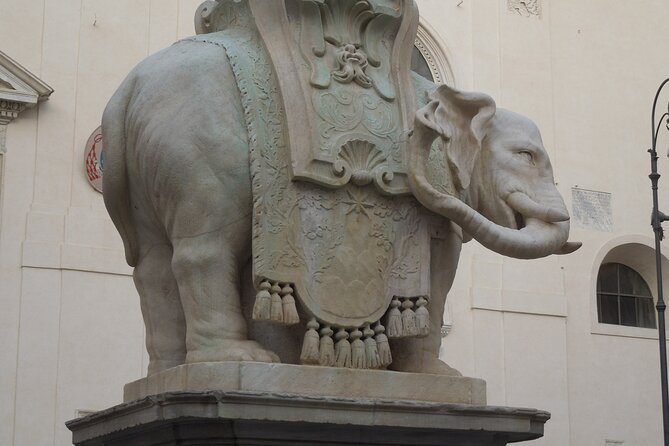
The tour’s stated endpoint is Piazza Navona, making it convenient if you plan to continue sightseeing in the historic center. The itinerary also includes Piazza della Minerva and Bernini’s stone elephant statue, so your guide may include that nearby landmark as part of the final walking section or route variation.
The tour does not promise entry to the Pantheon or any other major monument. Think of the walk as an outside orientation paired with food, not as a substitute for paid sightseeing visits.
Food, group size, and guide quality
The strongest part of the experience is the combination of food and explanation. Guides named in the feedback include Chris, Daniele, Virginia, Mattia, and Serena. Their styles differ, but the repeated strengths are clear: friendly delivery, useful facts, local food background, and a willingness to answer questions.
Chris has been praised for linking Rome’s history with the tastings. Daniele is especially associated with the Jewish Ghetto and with a personable, humorous style. Virginia has been described as flexible and clear, while Mattia has led small groups through local casual food stops with a steady stream of facts.
Your guide is not guaranteed by the tour details, so book for the route and structure rather than for one particular person. Still, the guide matters greatly here. A rushed or quiet host would make the walking sections feel like filler, while a good one turns the spaces between tastings into the best part of the afternoon.
The group maximum is 10. Smaller departures have included groups of two, four, six, and eight, which allows more personal attention and makes it easier to hear explanations in crowded streets. The minimum number of participants must be reached, so an under-booked departure can be moved to another date or replaced with another suitable option.
Price, timing, and practical limits
At $83.13, this tour makes the most sense if you plan to use it as a meal and a first look at central Rome. You get several savory and sweet tastings, a three-hour guide-led walk, and access to neighborhoods that reward explanation.
It is less compelling if you only want a quick snack tour or if you already know these streets well. The price does not include alcoholic drinks, monument admission, or a guaranteed mosaic workshop visit.
The tour runs in sun or rain except during extreme weather. Rain alone does not qualify for a last-minute refund, so bring suitable footwear and a rain layer if the forecast is uncertain. The route involves walking through old central streets, and guests with reduced mobility are advised to choose a private tour so the pace does not affect the rest of the group.
Most people can take part. Vegetarians can be accommodated if you advise the operator at booking. Gluten or lactose intolerances may be accommodated in part, but every tasting cannot be guaranteed, and last-minute requests are not considered. Vegan participation is not listed as available.
Free cancellation is allowed until 24 hours before the start time. Cancellations or changes inside that window are not refunded, and the tour can also be altered if the minimum group size is not reached.
Who should book this Rome street food tour?
I would book this for a first or second day in Rome, especially if you want food recommendations tied to the places where the dishes developed. It is also a strong choice for couples, friends, and families with older children who enjoy walking and can manage several tastings.
You should choose it if you want more than pizza and gelato. The fried artichoke, supplì, mosaic craft, Passetto del Biscione, and Jewish Ghetto give the tour a more local shape than a standard monument circuit.
I would hesitate if you need a fully accessible route, a vegan menu, guaranteed workshop access, or long seated meals. I would also avoid scheduling it immediately before a major dinner reservation. The food is substantial, and you may leave full.
For most people, the best reason to book is the balance: a filling Roman meal, a compact historic-center walk, and a small group that lets you ask questions. Arrive hungry, tell the operator about dietary needs early, and save the Pantheon interior for another visit.
FAQ
How long does the Rome Street Food Tour last?
The tour lasts approximately three hours.
What is the price?
The listed price is $83.13 per person.
Where does the tour begin?
It begins at Largo dei Librari, Via dei Giubbonari 90, 00186 Rome.
Where does the tour end?
The stated endpoint is Piazza Navona.
What food is included?
Included tastings feature skewers, supplì, sliced pizza, fried artichoke, gelato, tiramisu, and a possible surprise tasting.
Are alcoholic drinks included?
No. Alcoholic beverages can be purchased separately according to your preference.
Is the mosaic artisan visit guaranteed?
No. The shop visit operates according to availability during its working days. If it is unavailable, an additional food tasting is offered instead.
Can vegetarians or people with food intolerances join?
Vegetarians can be accommodated if you advise the operator when booking. People with gluten or lactose intolerance can participate, but all tastings may not be available for their restrictions, and advance notice is required.
What is the cancellation policy?
You can cancel for a full refund up to 24 hours before the experience begins. Cancellations or changes made less than 24 hours before the start time are not refunded.
More Historical Tours in Rome
- Rome in a Day Tour with Vatican, Colosseum and Historic Center
★ 4.5 · 1,042 reviews - Rome Food Tour in the Historic Centre with 8+ Food Tastings
★ 5.0 · 1,000 reviews - Rome: Forbidden History Walking Tour & Pub Crawl with Drinks
★ 4.9 · 688 reviews - Twilight Treasures: An Evening Tour Through Rome’s Rich History
★ 4.5 · 263 reviews
Newest reviews from Rome
- ROME:Colosseum & Ancient Rome – private/small group TOUR★ 5.0 · 24 reviews
- Off the Beaten Track in Rome: Rione VI Parione Private Tour★ 5.0 · 24 reviews
- Cinematic Photoshoot in Rome★ 5.0 · 24 reviews
- Rome: Best of Colosseum and Roman Forum Small Group Guided Tour★ 4.5 · 24 reviews
- The Labyrinth of Rome between catacombs and ancient quarries★ 4.5 · 24 reviews
- Vatican and Trionfale Market Tour with Wine and Food Tasting★ 5.0 · 24 reviews
- private tour: Vatican Museums, Sistine Chapel, St. Peter’s Basilica★ 4.5 · 24 reviews
- Colosseum guided tour with Virtual Reality★ 5.0 · 24 reviews
Rome Street Food Tours, compared.
Trastevere or Jewish Quarter Street Food Tour
Read our review →
Trastevere & Campo de Fiori Street Food Walking Tour
Read our review →
Trastevere & Campo de’ Fiori Street Food Tour, Eat Like a Local
Read our review →
Hidden Rome: Small Group E-Bike Tour with Street Food Stops
Read our review →Hidden Rome: Small Group E-Bike Tour with Street Food Stops
Read our review →
Trastevere and Jewish Ghetto Street Food Walking Tour
Read our review →Browse the lists this tour appears in