

Reviewed · WALKING TOURS
Rome: Temples, Squares & Markets Guided Walking Tour
Rome packs centuries into a few city blocks, and this private three-hour walk makes that jumble the main event. You move from a painted Baroque church to the Pantheon, Roman temples, a food market, the Jewish Ghetto, and the ancient stadium of Circus Maximus without treating Rome as one giant museum.
I like the way the tour joins famous sights with less obvious corners, and I like the chance to shape the route with your guide. The street-food stop, especially the Roman supplì tasting, adds a useful bite of local life. The main consideration is pace: with so many stops, most are guided visits or views rather than long, leisurely explorations, and attraction tickets are not included.
In This Review
- Key points to know before booking
- A private Roman walk from Sant’Ignazio to Tiber Island
- Sant’Ignazio and the painted ceiling
- The Pantheon and Rome’s Egyptian obelisks
- Piazza Navona and the city’s talking statues
- Campo de’ Fiori and a taste of supplì
- Largo di Torre Argentina and Rome built in layers
- The Jewish Ghetto and Portico d’Ottavia
- The Temple of Portunus and the Mouth of Truth
- Circus Maximus and Palatine Hill
- Tiber Island and the end of the route
- How much value do you get for $79.30?
- Who should book this walking tour?
- Should you book the Rome Temples, Squares & Markets tour?
- FAQ
- Where does the walking tour begin?
- Where does the tour finish?
- How long does the tour last?
- What languages are available?
- Is food included?
- Are attraction tickets included?
Key points to know before booking

- Sant’Ignazio starts the story with a painted illusion: The church’s ceiling fresco gives you an immediate taste of Rome’s theatrical Baroque style.
- One private guide means a flexible route: You can ask to adjust the walk, as Juan did for one group, or request a practical ending near your hotel when possible.
- Supplì provides a real Roman food pause: You get one included street-food tasting while exploring Campo de’ Fiori and its market.
- The route links several eras: The Pantheon, Largo di Torre Argentina, Portico d’Ottavia, Temple of Portunus, and Imperial Palace ruins show how Rome was built in layers.
- The Jewish Ghetto and Tiber Island slow the mood: These areas offer a quieter look at Rome beyond the major monuments.
- Tickets cost extra: The walk is focused on outdoor views and guided context, so confirm which interiors you want to enter before you go.
A private Roman walk from Sant’Ignazio to Tiber Island
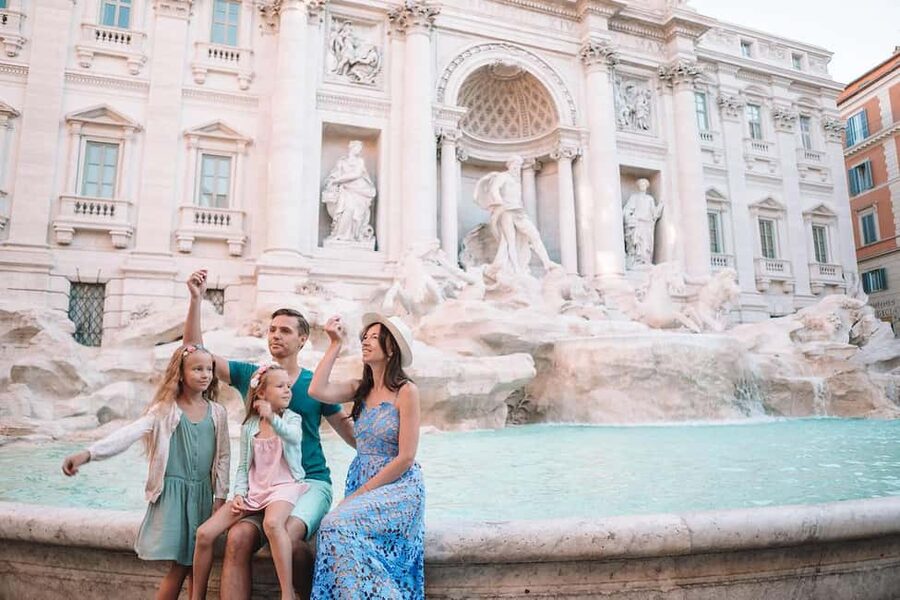
The tour begins at the entrance of the Church of Sant’Ignazio di Loyola. That is a useful starting point because Rome’s center can feel like a pile of unrelated monuments at first. Here, your guide can set up the city’s mix of religion, empire, art, food, and modern daily life before you head into the streets.
The private format matters. You are not trying to hear a guide over a crowd or follow a flag through narrow lanes. You can stop to ask why something was built, request more food history, or shift attention toward ancient Rome, Baroque art, or neighborhood life. The tour is offered in English, Italian, or Spanish.
The experience has a 4.8 rating from 26 reviews, and the strongest praise centers on the guides themselves. Juan is described as warm, well prepared, and willing to add places that were not originally covered. Daniele confirmed the outing the day before, arrived on time, planned for strong views, and tried to finish near the traveler’s hotel. Those details are especially useful in Rome, where a thoughtful route can save you from unnecessary backtracking.
More walking tours in Rome:
- Rome: Trastevere & Campo de Fiori Street Food Walking Tour
★ 4.9 · 2,768 reviews - Rome: Paranormal Night Walking Tour & Secret Backstreets
★ 4.9 · 1,921 reviews - Rome by Night Walking Tour – Legends & Criminal Stories
★ 4.5 · 1,003 reviews
Sant’Ignazio and the painted ceiling
Inside Sant’Ignazio, you get about 15 minutes with the guide. The main draw is the frescoed ceiling and the church’s Baroque atmosphere. Rome has plenty of famous churches, but this one makes a strong opening because it shows how art was used to create drama and movement without requiring a long visit.
Look up before you start thinking about the next stop. The church is a reminder that many of Rome’s best sights are free or inexpensive to enter, yet easy to miss if you only follow the biggest landmarks.
A 15-minute visit will not cover every detail. I would treat it as a visual introduction rather than a full art-history lesson. If ceiling paintings are a priority for you, tell the guide at the start so the stop does not feel rushed.
The Pantheon and Rome’s Egyptian obelisks
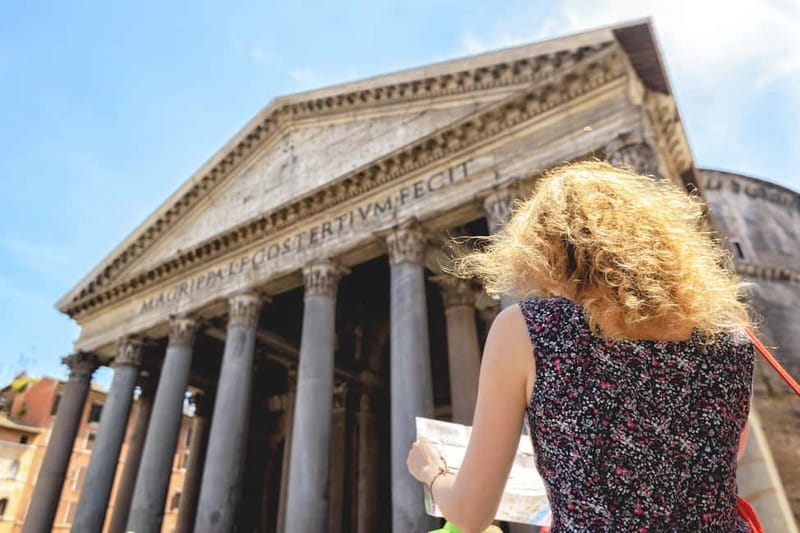
The walk continues to the Pantheon, one of Rome’s essential stops. Your guide explains its ancient purpose, architecture, and place in the modern city. The tour information does not include entrance tickets, so you should not assume admission is part of the $79.30 price. Ask your guide what you will see from outside and decide if you want to add a ticket separately.
The surrounding streets also provide a chance to learn about Rome’s obelisks. Some are thousands of years old and were brought from Egypt, giving you a clear example of Rome’s habit of collecting, reusing, and reinterpreting pieces of other civilizations.
This part of the walk works well for first-time visitors who want context before exploring alone. You can ask questions about what you are seeing instead of trying to absorb the Pantheon from a guidebook paragraph while a crowd presses behind you.
Piazza Navona and the city’s talking statues
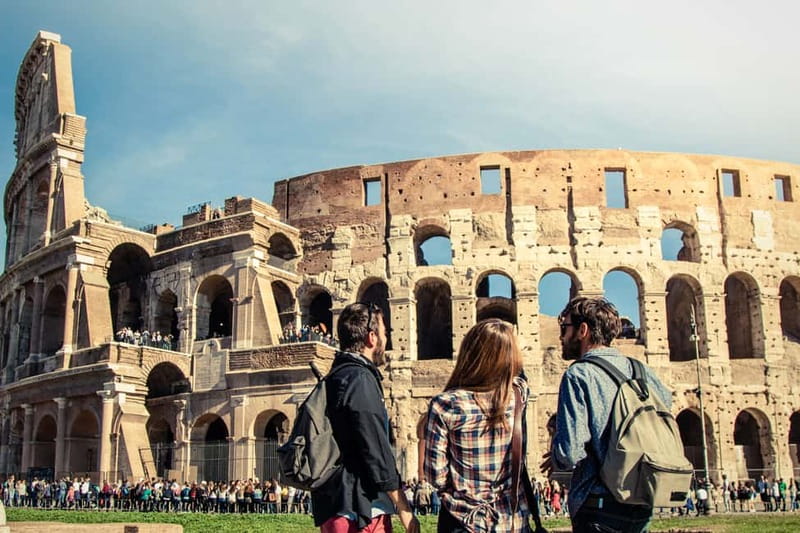
At Piazza Navona, the guide spends about 15 minutes explaining the square and its famous public art. The setting is one of Rome’s great urban stages, and the tour adds the odd local tradition of the talking statues, which were used as places for anonymous public comments and criticism.
That detail gives the square a more human edge. Rome’s monuments were not only built for emperors, popes, or wealthy families. They also became part of street life, gossip, satire, and political expression.
Piazza Navona can be busy, so this is a stop where a private guide helps you focus. Still, 15 minutes is enough for an overview, not a slow survey of every fountain and façade. If you want photographs, take them as the guide talks rather than saving all your camera time for the end.
More Rome tours worth comparing
- Vatican Museums, Sistine Chapel & St Peter’s Basilica Guided Tour
★ 4.5 · 39,149 reviews - Rome: Colosseum, Palatine Hill and Roman Forum Guided Tour
★ 4.8 · 32,814 reviews - Rome: Guided Tour of Colosseum, Roman Forum & Palatine Hill
★ 4.7 · 27,897 reviews - Rome: Colosseum & Forum with Audio Guide App -Optional Arena
★ 4.2 · 24,770 reviews
Campo de’ Fiori and a taste of supplì
Campo de’ Fiori brings the route into the food side of Rome. The market is the setting for your one included street-food tasting, with supplì as the featured Roman bite. Supplì is a fried rice croquette, often associated with mozzarella at its center, though the supplied tour details only confirm the tasting itself, not a specific filling.
This is a small food stop, not a full meal. Plan to eat breakfast or lunch separately, especially if you are booking the tour around midday. The value is in learning how Romans think about everyday food and hearing your guide explain Italian ingredients while you sample something local.
I like this part because it breaks up the monuments. A food market gives you another way to read the city, through smells, produce, snack foods, and the working rhythm of a neighborhood. The market can also be lively, so keep your belongings close and stay aware of where the group is moving.
Largo di Torre Argentina and Rome built in layers
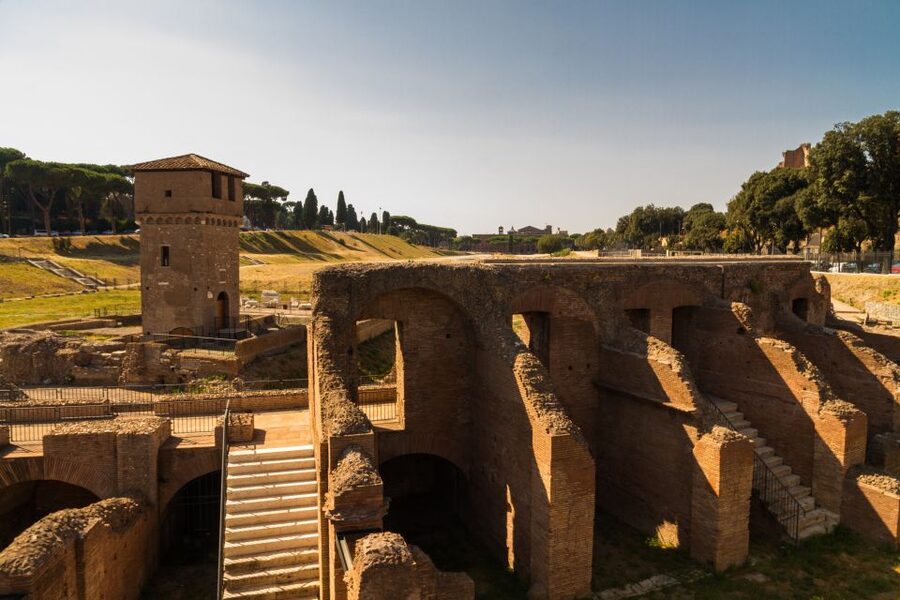
The walk then reaches Largo di Torre Argentina, an archaeological area filled with ancient ruins. Here, the guide explains the place connected with Julius Caesar and the Ides of March, when Caesar met his fate.
The site is a good example of Rome’s layered character. You may be looking at excavated stonework while surrounded by modern traffic and city buildings. That contrast is part of the experience. Rome rarely presents its past in a clean, isolated package.
The planned stop lasts about 15 minutes. You should expect an explanation and a view of the ruins rather than an extended archaeological visit. If the story of Caesar interests you, this is a natural point to ask about the political world behind the assassination.
The Jewish Ghetto and Portico d’Ottavia
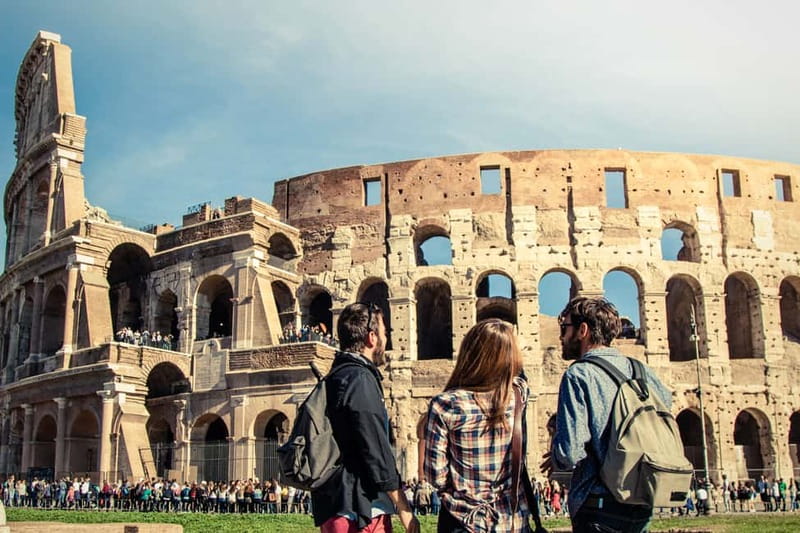
Portico d’Ottavia leads you toward the Jewish Ghetto, one of the more distinctive sections of the route. The neighborhood has retained a strong sense of place, with narrow lanes, old walls, and a mood different from the grand squares nearby.
The guide helps explain why this part of Rome feels separate from the postcard version of the city. You will hear about the area’s history and see how ancient Roman remains sit beside later religious and residential buildings.
The Portico itself is especially valuable because it connects Roman antiquity with the story of the Jewish community in Rome. The stop is scheduled for about 20 minutes, slightly longer than many others, which gives your guide more room to explain the setting.
Food is also part of this district’s identity, but the included tasting is listed at Campo de’ Fiori. Do not book this walk expecting a full Jewish Ghetto food tour. Think of it as a historical neighborhood visit with one Roman snack along the way.
The Temple of Portunus and the Mouth of Truth
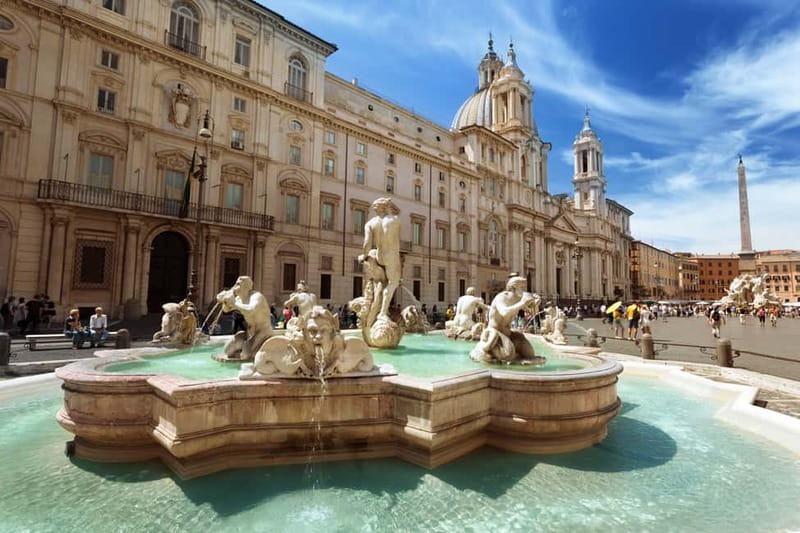
The route continues to the Temple of Portunus, an ancient temple with a more intimate scale than Rome’s giant ruins. This is a useful stop for seeing how Roman religious buildings actually occupied the city. Your guide can help you notice the columns, form, and later changes that are easy to miss when you are simply passing by.
You also see the so-called fake Colosseum, an ancient ruin that resembles the Colosseum. The supplied details do not identify its formal name, so ask your guide to explain exactly what you are looking at. That is part of the fun of a private walk: you can stop the tour from turning an intriguing sight into a quick label.
At the Mouth of Truth, the guide connects the monument with Roman Holiday and Audrey Hepburn. The famous stone face is a quick photo stop, but it has a playful place in modern popular culture. If you want the classic hand-in-the-mouth picture, this is one stop where a private guide can help you make room for it without losing the thread of the route.
Circus Maximus and Palatine Hill
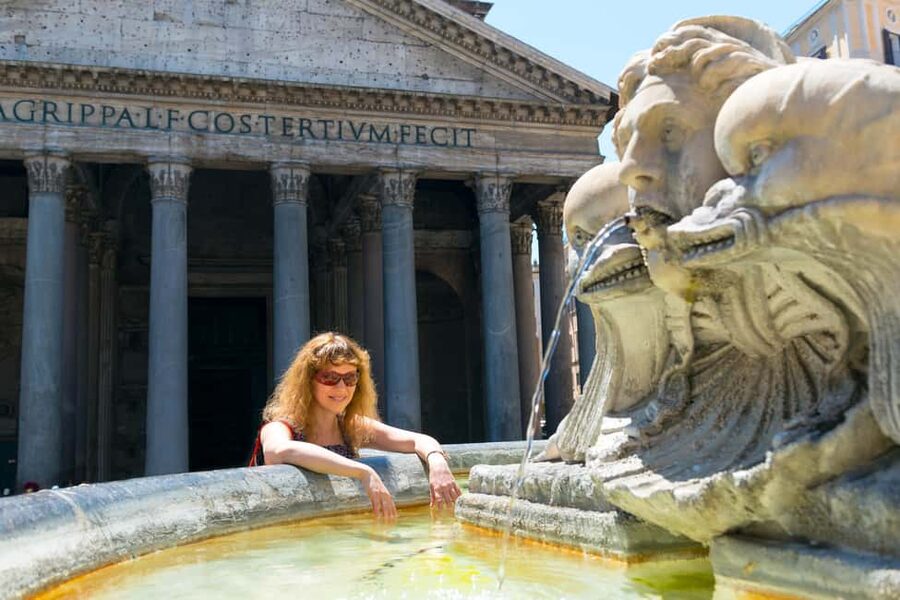
Circus Maximus gives you a broad view of the ancient entertainment district. The guide explains how the stadium was used and how it relates to Palatine Hill, where Rome’s rulers lived and where the remains of the Imperial Palace can be seen.
This section is less about entering a single monument and more about understanding scale. Circus Maximus is large, and it helps you picture the crowds, ceremonies, and public spectacles that once filled the space. Palatine Hill then shifts the focus from mass entertainment to imperial power.
Admission tickets are not included, so clarify whether this portion is a view from outside or whether you want to purchase entry to the archaeological area. The itinerary lists guided time at Palatine Hill but does not provide a separate ticket. That distinction matters if you expect a full interior or excavation visit.
For me, this is one of the strongest parts of the route for anyone who wants ancient Rome explained as a connected city. You are not seeing the Colosseum itself, but you are looking at the political and public spaces that made the Roman Empire function.
Tiber Island and the end of the route
The final stop is Tiber Island, reached by crossing the bridge over the Tiber. The island gives the walk a natural closing point, with water, ancient stone, and views back toward the city.
The stated finish is Tiber Island, while the meeting-point information also says the activity ends back at the meeting point. Because those details do not perfectly match, confirm the exact end location when you book. One guide, Daniele, made a point of planning an ending near a hotel, so it is worth asking if your final location can be adjusted.
Tiber Island is a good place to receive recommendations before saying goodbye. Your guide can point you toward places to eat, shop, or continue sightseeing. Since the walk covers a wide area, these suggestions may be as useful as the formal tour itself, particularly if this is your first day in Rome.
How much value do you get for $79.30?
At $79.30 per person, this is not the cheapest way to stroll through central Rome. The price makes more sense if you are traveling with a partner, family, or small private party and want the full attention of one local guide.
You are paying for three hours of route planning, stories, a food tasting, and the ability to customize the experience. A group tour may cost less, but it will usually offer less control over the pace and questions. For a solo visitor on a tight budget, the price may feel high because only one street-food tasting is included and attraction tickets cost extra.
The tour offers reserve-now, pay-later booking and free cancellation up to 24 hours in advance for a full refund. Those terms are useful when your Rome schedule is still shifting. The walk is wheelchair accessible, though you should still discuss your exact needs with the provider because the route includes historic streets and archaeological areas.
Who should book this walking tour?
I would recommend it most strongly to first-time visitors who want an organized introduction without spending a full day inside museums. It also fits families and private groups who want to ask plenty of questions or change the emphasis during the walk.
Food-focused visitors will enjoy the supplì tasting, but this is not a dedicated culinary tour. Ancient Rome fans will appreciate Largo di Torre Argentina, the Temple of Portunus, Circus Maximus, and Palatine Hill, but anyone seeking extensive archaeological access should budget for extra tickets and additional time.
The tour suits you if you enjoy walking and want to connect famous sights with neighborhoods. It may be less suitable if you prefer to linger at the Pantheon, Campo de’ Fiori, or Palatine Hill for an hour each. The three-hour format gives you range, not a slow, detailed visit to every stop.
Should you book the Rome Temples, Squares & Markets tour?
Book it if you want a private overview with room to personalize, especially early in your stay. Juan and Daniele are specifically praised for warmth, timing, route planning, and practical recommendations, and those are exactly the qualities that can make a Rome walking tour worthwhile.
Before paying, confirm the exact finish point, ask which monuments you will enter, and set aside money for any admission tickets. If you want a broad first look at Rome, a Roman snack, and a guide who can adjust the walk to your interests, $79.30 is a reasonable private-tour price. If your priority is extended time inside one major monument, choose a more focused tour instead.
FAQ
Where does the walking tour begin?
The tour begins at the entrance of the Church of Sant’Ignazio di Loyola in Rome.
Where does the tour finish?
The listed final stop is Tiber Island. The meeting-point information also says the activity ends back at the meeting point, so confirm the precise end location before departure.
How long does the tour last?
The walking tour lasts three hours.
What languages are available?
You can take the tour in English, Italian, or Spanish.
Is food included?
One traditional Roman street-food tasting is included. The featured food is supplì. Additional food and drinks are not listed as included.
Are attraction tickets included?
No. Entrance tickets to attractions are not included in the tour price.
Newest reviews from Rome
- ROME:Colosseum & Ancient Rome – private/small group TOUR★ 5.0 · 24 reviews
- Off the Beaten Track in Rome: Rione VI Parione Private Tour★ 5.0 · 24 reviews
- Cinematic Photoshoot in Rome★ 5.0 · 24 reviews
- Rome: Best of Colosseum and Roman Forum Small Group Guided Tour★ 4.5 · 24 reviews
- The Labyrinth of Rome between catacombs and ancient quarries★ 4.5 · 24 reviews
- Vatican and Trionfale Market Tour with Wine and Food Tasting★ 5.0 · 24 reviews
- private tour: Vatican Museums, Sistine Chapel, St. Peter’s Basilica★ 4.5 · 24 reviews
- Skip the Line: Vatican Wheelchair Accessible Private Tour★ 5.0 · 24 reviews
Walking Tours, compared.
Trastevere & Campo de Fiori Street Food Walking Tour
Read our review →
Paranormal Night Walking Tour & Secret Backstreets
Read our review →
Rome by Night Walking Tour – Legends & Criminal Stories
Read our review →
Guided City Center Evening Sightseeing Walking Tour
Read our review →
Best of Rome Walking Tour including Trevi Fountain
Read our review →

Forbidden History Walking Tour & Pub Crawl with Drinks
Read our review →
Guided Small Group Walking Tour of City Highlights
Read our review →Browse the lists this tour appears in