
Reviewed · TOURS
Rome: The Original Fiat 500 Self-Drive Tour
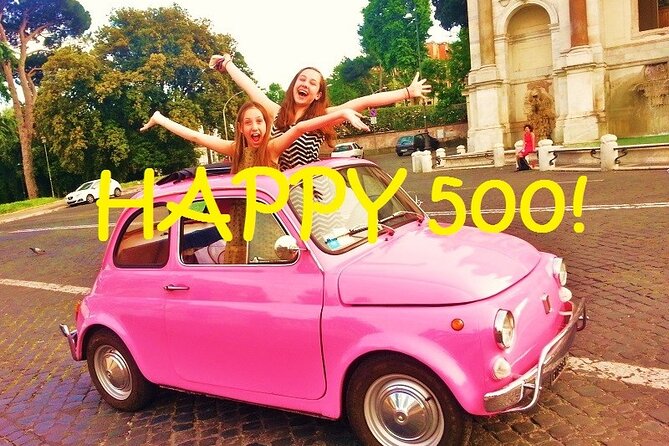
A candy-colored Fiat 500 is a fine way to see Rome. You follow your guide through quieter streets, squeeze into lanes too tight for large vehicles, and attract friendly waves and phone cameras as you go. This is sightseeing with a steering wheel, not sightseeing from behind a bus window.
I like the mix of major sights and out-of-the-way corners, from Circus Maximus to the Aventine Keyhole and Testaccio’s hill of broken pottery. I also like the personal feel: guides such as Alex, Francesco, Mike, and Marco keep the pace manageable, explain what you’re seeing, and stay in touch by walkie-talkie when several Fiats are on the road.
The catch is simple but important: you must be comfortable with a manual clutch and stick shift, and Rome traffic is still Rome traffic. The cars are tiny, the roads can be narrow, and full insurance may cost an additional €25.
In This Review
- Key points to know before you book
- Why the little Fiat changes your view of Rome
- Starting near the Colosseum at Palazzo Manfredi
- Caracalla’s Baths and the scale of ancient Rome
- The Aventine Keyhole and Orange Garden view
- Circus Maximus and Rome’s racing past
- Janiculum Hill for Rome’s wide-angle view
- The Pyramid and Testaccio’s unusual hill
- Trastevere in a car built for tight streets
- Porta San Sebastiano and the final Roman roads
- What the $211.72 price buys you
- Who will enjoy this most
- Practical concerns before you turn the key
- Should you book the Fiat 500 tour?
- FAQ
- How long is the Fiat 500 tour?
- Do I need to know how to drive a manual car?
- What driving license do I need?
- How many people fit in each Fiat 500?
- Is coffee included?
- Can I cancel for a full refund?
Key points to know before you book
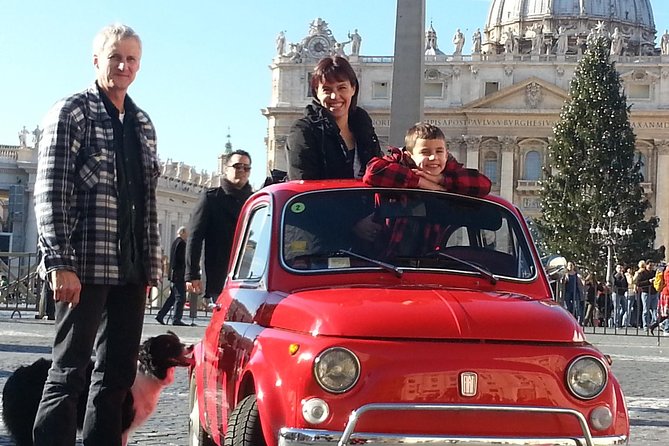
- Drive a genuine vintage Fiat 500: The small manual car is the main event, not just transportation between sights.
- See Rome from several angles: The route combines ancient monuments, hilltop views, neighborhood streets, and unusual city landmarks.
- Expect a guide-led convoy: You drive your own Fiat while following the guide’s car, with communication available by walkie-talkie.
- Plan for photo stops: The Aventine Keyhole, Janiculum terrace, and colorful cars are made for quick pictures.
- Know the car limits: Each Fiat holds up to three adults, or two adults and two children, with restrictions for taller or heavier passengers.
- Bring the right license and shoes: Drivers need a valid EU license or International Driving Permit, plus closed-toe shoes.
Why the little Fiat changes your view of Rome
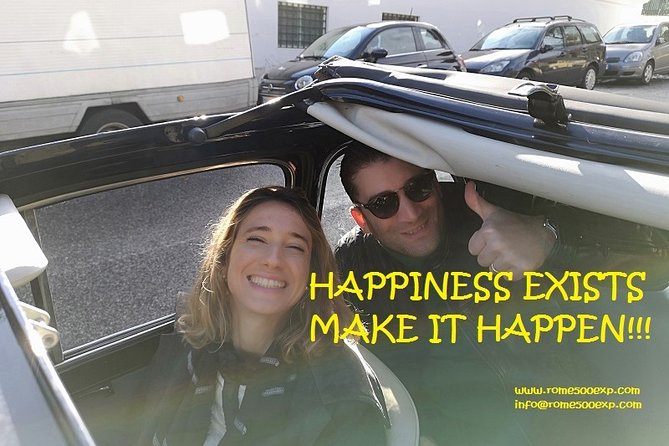
Rome can feel enormous on foot. Its famous sights are spread across hills, ancient roads, busy avenues, and residential districts. In a Fiat 500, you cover more ground without giving up the feel of the city.
The car itself creates much of the fun. The classic Cinquecento was introduced in the 1950s as an affordable, stylish car for everyday Italians. It is small by modern standards, with a manual gearbox and a soft-top roof. Open the roof when the weather allows, and you get sunlight, fresh air, and a much better view of church domes and old facades.
You are not handed the keys and sent into Rome alone. Your guide gives a short briefing on safety and the car’s controls, then leads the convoy. That matters if driving in Rome makes you nervous. Alex has been praised for keeping a steady pace and making first-time visitors feel at ease, while Nando has helped keep groups together when traffic separates the cars.
The guide’s role is part driver, part local host. Alex, Francesco, Mike, and Marco have each been singled out for humor, clear explanations, and an easy manner. The tour can also feel lightly customized when the group is small. If only a couple of people book a departure, the guide may ask what kind of sights or pace you prefer.
Tours travellers often pair with this one in Rome:
- Vatican: Museums & Sistine Chapel Entrance Ticket
★ 4.5 · 144,003 reviews - Vatican Museums & Sistine Chapel Tour with Optional Basilica
★ 4.3 · 67,413 reviews - Vatican Museums, Sistine Chapel & St Peter’s Basilica Guided Tour
★ 4.5 · 39,149 reviews
Starting near the Colosseum at Palazzo Manfredi
The meeting point is at Palazzo Manfredi on Via Labicana, 125, in central Rome. The activity ends back there, so you do not need to arrange a cross-town pickup after the drive.
Before setting off, you are paired with a Fiat and shown how it works. Do not treat this like driving a recent rental car. The clutch and gear changes require real manual-driving skill, and the company can refuse the car if you cannot operate a stick shift safely. In that case, there is no refund.
The tour requires at least two people per booking. A car can carry up to three adults, or two adults and two children, and children must be at least five years old. The driver must be 18 or older.
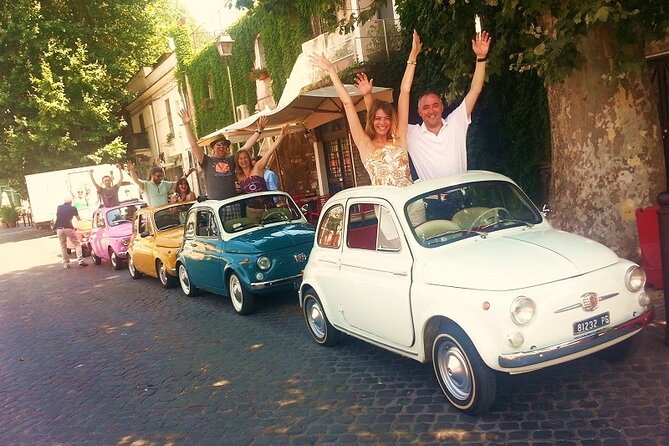
The overall activity may include several cars, with up to 30 people listed as the maximum. Individual bookings can include up to 10 people, split among separate Fiats. That keeps the group more personal than a large coach tour, though the exact number of cars depends on the departure.
Caracalla’s Baths and the scale of ancient Rome
The first scheduled stop is the Terme di Caracalla, the remains of one of ancient Rome’s great bath complexes. The ruins once covered an area about the size of 15 football pitches and included far more than bathing rooms.
You hear about hot and cold baths, libraries, gyms, theaters, gardens, fountains, and rooms for lectures or meetings. The point is not just that Romans went to bathe. These were large public centers where people exercised, read, socialized, and spent much of the day.
You get about 10 minutes here, so this is an exterior stop rather than a full archaeological visit. That is useful for a quick orientation and photos, but it is not enough time to explore the ruins properly. If Caracalla’s Baths are high on your list, plan a separate visit.
The route also passes some of Rome’s most famous ancient sights, including the Colosseum and Arch of Constantine. These pass-by moments help you cover the classic postcard view without using the entire three hours at one monument.
The Aventine Keyhole and Orange Garden view
The Aventine Hill stops are among the most memorable parts of the route. At the Buco della Serratura, or Keyhole of Rome, you look through a small opening in the gate of the Knights of Malta and see a carefully framed view of St. Peter’s Basilica.
The unusual part is the alignment. The keyhole gives you a sightline across three countries: Italy, the Vatican City, and the territory connected with the Order of Malta. It takes only a moment to look, but the view is distinctive and easy to remember.
The nearby Parco Savello, often called the Orange Garden, gives you another reason to pause. The garden offers an attractive city view and a pleasant setting for photographs beside the Fiat. The itinerary lists 20 minutes at both the Keyhole and the park, though the guide may combine the stops in practical fashion.
These stops work especially well for people who have already seen Rome’s main piazzas and want something different. They are not grand museum visits. Their appeal comes from the view, the story, and the small surprise of finding a famous basilica through a gate.
A completely different way to spend the day in Rome:
- Rome: Colosseum, Palatine Hill and Roman Forum Guided Tour
★ 4.8 · 32,814 reviews - Rome: Guided Tour of Colosseum, Roman Forum & Palatine Hill
★ 4.7 · 27,897 reviews - Rome: Colosseum & Forum with Audio Guide App -Optional Arena
★ 4.2 · 24,770 reviews - Rome: Colosseum, Roman Forum and Palatine Hill Guided Tour
★ 4.5 · 23,903 reviews
Circus Maximus and Rome’s racing past
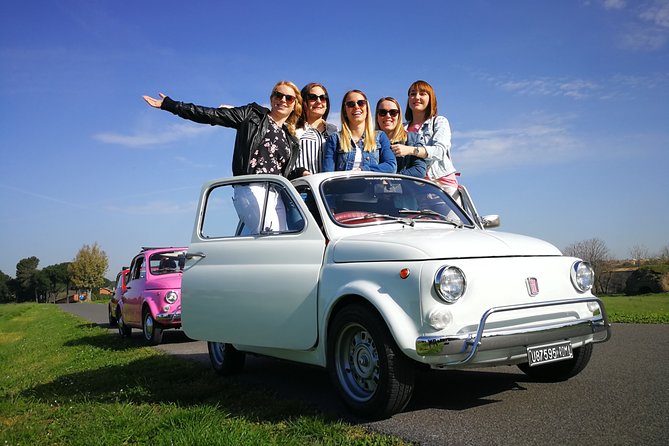
At Circo Massimo, you stop in the broad space that once held ancient Rome’s great chariot-racing arena. The Circus was built centuries before the Colosseum and could hold huge crowds for races and public events.
It is easy to look at the open ground today and miss its former scale. Your guide helps you imagine the noise, speed, and spectacle of chariots racing before a crowd that could number roughly 250,000 people. The setting has changed, but the space still gives you a strong sense of Rome’s appetite for public entertainment.
The Circus has also served modern Rome, with major concerts by performers including the Rolling Stones, Roger Waters, and Bruce Springsteen. The stop is free and lasts about 20 minutes, giving you time to hear the story and take pictures without turning the tour into a long walking visit.
From the Fiat, the Circus also helps you understand how Rome layers old and new. Ancient ruins, modern traffic, and concert venues share the same city block.
Janiculum Hill for Rome’s wide-angle view
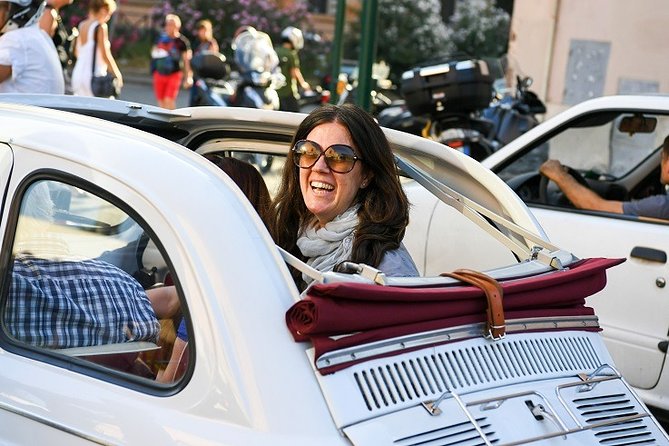
At Piazzale Giuseppe Garibaldi, on the Janiculum terrace, you get one of the tour’s broadest views. From here, you may pick out the Colosseum, Pantheon, Altare della Patria, and a sea of church domes.
This is the place to bring your camera battery back into the conversation. The guide can point out the skyline, while the open terrace gives you a pause from narrow streets and gear changes.
The Janiculum is particularly useful early in a Rome visit because it helps you understand the city’s layout. After seeing the landmarks from above, you may recognize them more easily when walking later. The stop lasts about 20 minutes and does not require an admission ticket.
The drawback is that views depend on weather and visibility. On a hazy day, the panorama may be less sharp. Still, the hilltop break adds variety to a route that otherwise moves between streets and ruins.
The Pyramid and Testaccio’s unusual hill
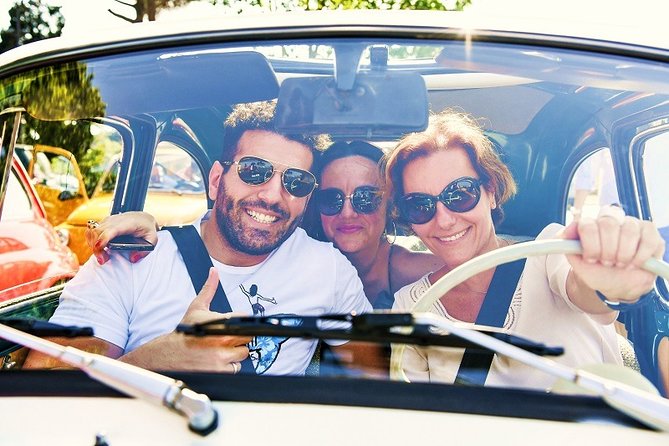
Near Porta San Paolo, the tour pauses by the Pyramid of Cestius. Built in 18 BC as the tomb of Gaius Cestius, this sharp-sided monument is one of Rome’s most unexpected sights.
It is not an Egyptian import from antiquity. It was built by a wealthy Roman who chose an Egyptian-style tomb, reflecting the fascination with Egypt that spread through Roman society. The pyramid sits beside the city’s later walls and roads, which makes the setting feel typically Roman: several eras pressed together in a small space.
The next stop, along Via Galvani, explains an even stranger piece of the city. Monte Testaccio is an artificial hill made from broken transport vessels. These jars carried olive oil, fish sauce, and wine, and discarded fragments accumulated over centuries.
The hill is estimated to contain pieces from around 50 million vessels. At roughly 40 meters high and 700 meters around, it is not a natural hill at all. This is the kind of fact that is easy to miss if you only visit Rome’s headline monuments.
The 20-minute stop is a good example of the tour’s strength. You see a place that is tied to daily Roman commerce rather than imperial ceremony. It helps you picture how goods entered the city and how ordinary waste became part of Rome’s physical shape.
Trastevere in a car built for tight streets

Trastevere is where the Fiat’s size becomes especially useful. The neighborhood is known for narrow, winding streets, and a small vintage car can reach corners that would be awkward for a coach or large van.
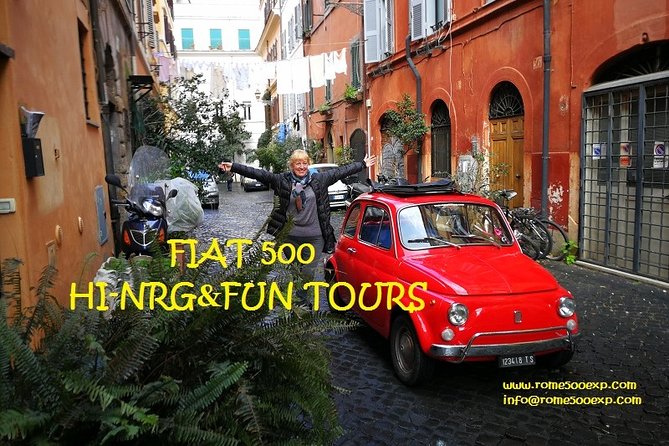
You drive through behind the guide, with time to take in old walls, lanes, and local street life. The cars often attract attention, so expect people to look, smile, and take pictures as the colorful convoy passes. That attention is part of the charm, though anyone hoping to blend into the background should choose a quieter walking tour.
The route through Trastevere is not a replacement for an evening spent on foot. You will not stop at every church, restaurant, or square. Instead, you get a quick moving view of the neighborhood and a chance to return later with a better sense of where you are.
A coffee stop is included during the outing, with one espresso or cappuccino per participant. Additional food and drinks are not included. If you want gelato, you can stop for it at your own expense.
Porta San Sebastiano and the final Roman roads
Porta San Sebastiano is another chance to see Rome’s ancient defensive edges and roads away from the busiest center. The stop is listed for about 20 minutes, and it helps round out the tour with a different kind of Roman landmark.
Unlike the Colosseum or Pantheon, a city gate does not always appear on a first-time visitor’s list. That is exactly why it earns a place here. You get a glimpse of how people entered and left the ancient city, rather than seeing only its grand public monuments.
The precise order of the stops can vary with traffic and local conditions. The listed route includes nine stops or viewing points, plus pass-by sights. In three hours, you should expect short visits rather than long archaeological walks.
That pacing is a feature if you want variety. It is a limitation if you prefer one place explored in detail. Think of this as a moving introduction to Rome, followed by a plan for what deserves a longer visit later.
What the $211.72 price buys you
At $211.72 per person, this is not a budget sightseeing ride. You are paying for the car, guide, route planning, briefing, and the chance to drive a classic Fiat in Rome, not simply for transport.
The value improves if you care about classic cars or want a memorable first look at the city. A normal walking tour can explain the sights in more depth, and public transport costs far less. But neither gives you the experience of piloting a vintage Cinquecento through Rome while a guide leads you between major and lesser-known places.
Coffee or tea, the Fiat, the professional guide, and photo help using your own phone or camera are included. Hotel pickup and drop-off are not. The tour begins and ends at the central meeting point, so allow time to get there independently.
The strongest value comes from the combination. You see the Colosseum area, Circus Maximus, Aventine Hill, Janiculum, the Pyramid, Testaccio, Trastevere, and Porta San Sebastiano in one outing. You also get a practical first look at Rome’s streets and neighborhoods.
Who will enjoy this most
I would choose this for a couple, family, or small group that wants a playful way to cover ground. It suits people who enjoy cars, photography, and short stops more than people seeking long talks inside monuments.
It can be a strong first activity in Rome. The Janiculum view gives you orientation, while the guide’s explanations introduce places you may want to revisit on foot. It also works well for a honeymoon, birthday, or family trip because the car creates a shared story rather than another standard city tour.
Families should check the seating limits carefully. A maximum of three adults per car keeps the Fiat more comfortable, and the minimum child age is five. The car is not suitable for anyone over 220 pounds or taller than 6.2 feet, or 1.9 meters.
You also need closed-toe shoes. Sandals and flip-flops are not allowed. Drivers need a valid European Union license or an International Driving Permit, and you should have solid manual-driving experience, ideally with an older-style car.
Practical concerns before you turn the key
Driving in Rome is manageable here because you follow a guide, but it is not effortless. You still need to watch traffic, shift gears, and keep the car positioned on busy streets. If you have only driven automatic vehicles, do not book this as a lesson.
The Fiat’s size is part of the appeal, yet it can limit comfort. Taller passengers may feel cramped, and anyone close to the weight or height limits should choose another activity. The soft-top roof is a nice touch, but sun, wind, and weather can affect comfort.
Check the insurance terms before departure. One participant was disappointed to learn that the car was not fully insured by default and was asked for an additional €25 for full cover. Ask about this clearly before you start, so the extra cost does not catch you by surprise.
Cancellation is flexible if you act early. You can cancel up to 24 hours before the start time for a full refund. Changes or cancellations made within 24 hours are not accepted for a refund.
Should you book the Fiat 500 tour?
Book it if you want Rome to feel playful, personal, and a little theatrical. The best parts are not only the famous monuments, but also the Aventine Keyhole, Janiculum panorama, Pyramid of Cestius, Testaccio’s pottery hill, and the narrow streets of Trastevere.
Skip it if you dislike manual cars, feel uneasy in city traffic, need lots of legroom, or want detailed time inside each archaeological site. For everyone else, this is a high-energy three-hour introduction with guides such as Alex, Francesco, Mike, and Marco helping you keep pace and make sense of the city.
At $211.72, it is a splurge. But if driving a vintage Italian car is part of your idea of a Rome memory, the price buys something a standard tour cannot. Confirm the insurance cost, bring your International Driving Permit if needed, and book at least a day ahead if you want the cancellation safety net.
FAQ
How long is the Fiat 500 tour?
The tour lasts approximately three hours and ends back at the meeting point at Palazzo Manfredi, Via Labicana 125, Rome.
Do I need to know how to drive a manual car?
Yes. The Fiat 500 has a manual stick and clutch, not an automatic transmission. Drivers must have enough manual-driving experience, and the company can refuse the car if it considers the driver unprepared.
What driving license do I need?
The driver must be at least 18 and have a valid European Union driving license or an International Driving Permit.
How many people fit in each Fiat 500?
For comfort, each car can carry a maximum of three adults, or two adults and two children. Children must be at least five years old.
Is coffee included?
Yes. One espresso or cappuccino per participant is included. Other food and drinks, including any extra gelato or coffee, are at your own expense.
Can I cancel for a full refund?
Yes, if you cancel at least 24 hours before the experience start time. Cancellations or changes made less than 24 hours before the start are not accepted for a refund.
Newest reviews from Rome
- Rome: Vatican Museums & Sistine Chapel Skip-the-Line Ticket★ 4.4 · 148 reviews
- Shared Shuttle Transfer from Rome to Civitavecchia Port★ 5.0 · 148 reviews
- Rome: Crypts & Catacombs After Hours Tour with Bone Chapel★ 4.6 · 149 reviews
- Ghosts Legends and Mysteries of Rome Walking Tour★ 5.0 · 149 reviews
- Skip the Line: Vatican and Sistine Chapel with Guided Tour★ 4.0 · 149 reviews
- Tivoli: Villa Gregoriana Entrance Ticket★ 4.7 · 150 reviews
- Pizza and Tiramisu Cooking Class in Rome, Piazza Navona★ 5.0 · 150 reviews
- Rome: Borghese Gallery Skip-the-Line Entry and Guided Tour★ 4.7 · 150 reviews
Tours, compared.
Vatican Museums & Sistine Chapel Tour with Optional Basilica
Read our review →
Vatican Museums, Sistine Chapel & St Peter’s Basilica Guided Tour
Read our review →
Colosseum, Palatine Hill and Roman Forum Guided Tour
Read our review →
Guided Tour of Colosseum, Roman Forum & Palatine Hill
Read our review →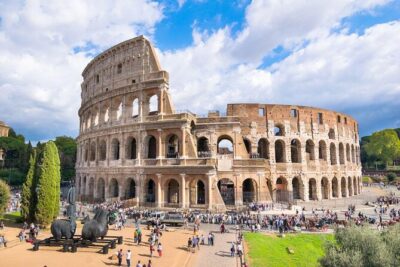
Colosseum, Roman Forum and Palatine Hill Guided Tour
Read our review →
Vatican Museums, Sistine Chapel & Basilica Tour
Read our review →
Colosseum, Forum & Palatine Hill Tour & Optional Arena
Read our review →