

Reviewed · UNDERGROUND ROME TOURS
Rome: Trevi Fountain District Underground Tour and Ice Cream
Beneath Rome’s crowded Trevi District sits a small archaeological site with a big story. At Vicus Caprarius, you see Roman walls, water channels, household remains, coins, and an African oil amphora, all tucked below the modern street.
I like the way this one-hour tour links the Virgo aqueduct to the Trevi Fountain, and I like the cool underground setting on a hot afternoon. Guides such as Carla, Erica, Alessia, and Noemi have earned warm praise for clear explanations, humor, and patience with children.
The main drawback is scale. Vicus Caprarius is compact, and the Trevi Fountain portion is brief, usually viewed from the public side of the plaza rather than as a private close-up visit. The gelato is provided by voucher, not as a guided stop with the group.
In This Review
- Key points to know before booking
- Why this short tour reveals a different Rome
- Starting at Vicolo del Puttarello 25
- Inside Vicus Caprarius, Rome’s City of Water
- Roman objects that make the archaeology feel real
- What the guide adds to the underground visit
- The Trevi Fountain stop is brief but useful
- Gelato near Trevi Fountain
- Is $52 fair for one hour?
- Who should take this tour?
- Practical details that affect your visit
- Should you book the Vicus Caprarius and gelato tour?
- FAQ
- Where does the tour begin?
- How long does the tour last?
- Is the tour offered in English?
- What can I see underground?
- Is gelato included?
- Is the tour suitable for wheelchair users?
- Can I cancel or pay later?
Key points to know before booking
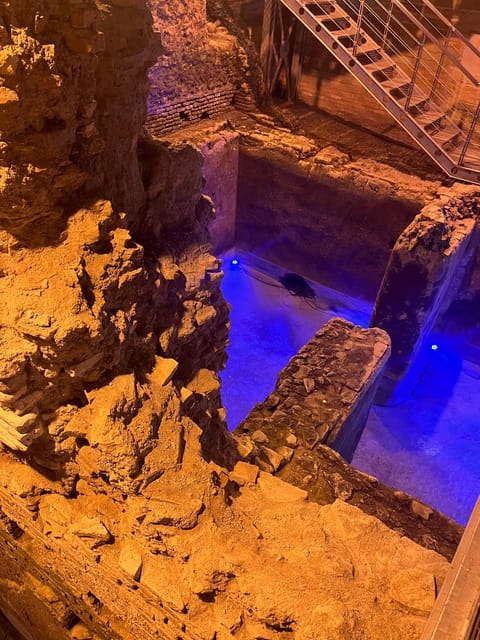
- Roman water still shapes the story: See how water connected to the Virgo aqueduct moves through ancient masonry beneath the Trevi area.
- A small site packed with objects: Look for polychrome marble, the head of Alessandro Helios, about 800 coins, and a Spatheia amphora.
- The guide makes the difference: English-speaking guides including Carla, Erica, Alessia, Noemi, and Naomi have been praised for warmth, humor, and strong storytelling.
- A useful hot-weather break: The underground site is cool, and much of the tour takes place indoors.
- Gelato finishes the visit: You receive an Italian gelato voucher for a historic shop near Trevi Fountain.
- Expect steps and tight spaces: The site is not suitable for wheelchair users or people with mobility impairments.
Why this short tour reveals a different Rome
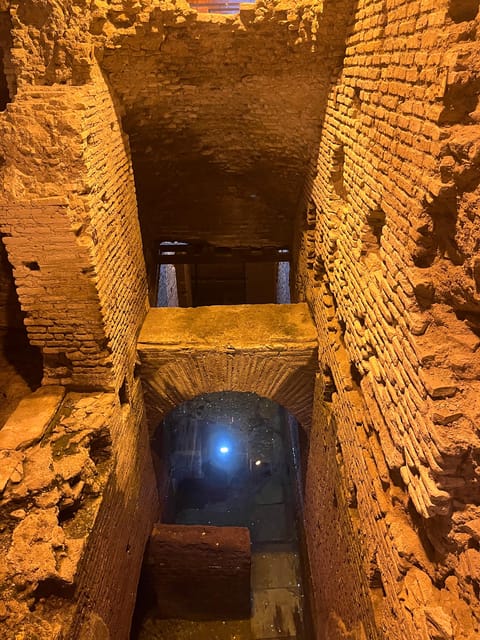
The Trevi Fountain is one of Rome’s great postcard sights. You toss in a coin, take your picture, and move along with the crowd. This tour asks you to look down instead.
The archaeological area known as Vicus Caprarius shows how many layers Rome has stacked on top of itself. The present-day district sits above ancient construction, older streets, water systems, and the remains of a luxurious Domus residence. The site is not huge, but it gives you a close look at the city beneath the city.
I find this useful because Roman history can become a blur of emperors, temples, and dates. Here, the subject is more physical. You see the masonry. You see where water passed. You see objects left behind by people who lived and worked in this part of town.
The tour is led in English and lasts about one hour. That makes it easy to fit between major sights, a meal, or an evening walk. It is also short enough for children who may not manage a long archaeological visit.
More underground Rome tours:
- Colosseum: Underground and Ancient Rome Tour
★ 4.7 · 12,691 reviews - Rome: Crypts and Catacombs Underground Tour with Transfers
★ 4.6 · 5,341 reviews - Expert Guided Tour of Colosseum Arena OR Underground, and Forum
★ 4.5 · 5,041 reviews
Starting at Vicolo del Puttarello 25
Your meeting point is at Vicolo del Puttarello, 25, close to the Trevi Fountain. Arrive at least 15 minutes before your selected time. The Trevi area can become very crowded, and one person reported needing extra time to reach the meeting point because of the number of people around the fountain.
That is practical advice worth taking seriously. Do not plan to arrive at the last second, especially if you are coming from another part of central Rome. Use the full street address and allow time to locate the guide before the group goes underground.
The meeting point puts you right in the middle of the Trevi District, but the tour itself does not begin with a long fountain presentation. The main archaeological visit comes at Vicus Caprarius, where a reserved entry ticket is included.
The information describes the activity as having skip-the-ticket-line access, while also noting that skip-the-line entry is not included. I would read this as reserved admission to the archaeological site, not a promise that every part of the Trevi area will be free of crowds. The public fountain plaza remains a busy Roman street scene.
Inside Vicus Caprarius, Rome’s City of Water
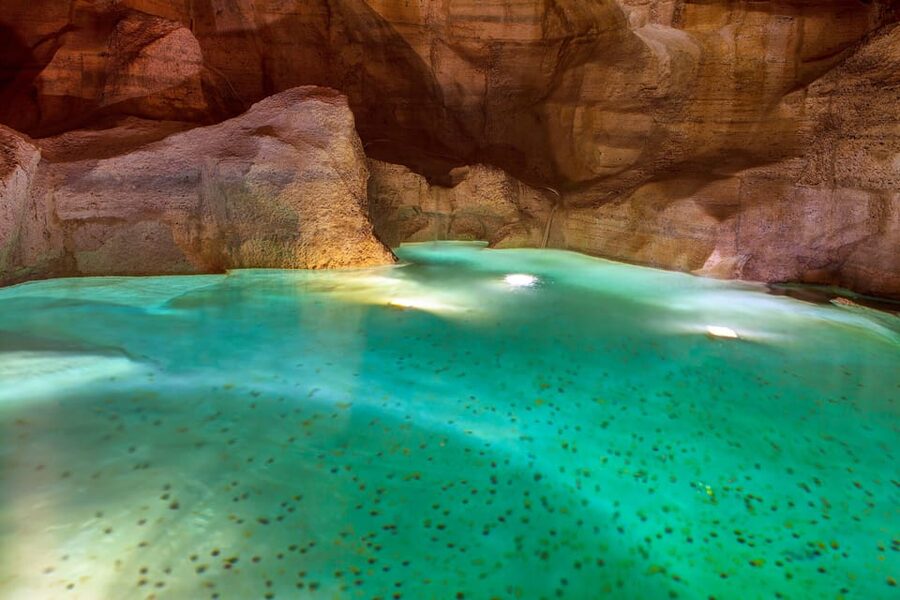
The central visit takes about 40 minutes. Your guide leads you through the three sections of the antiquarian and explains what excavation revealed beneath the modern neighborhood.
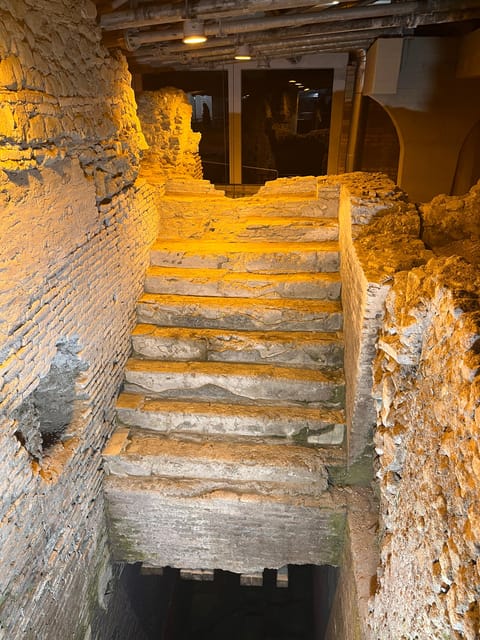
The site is often described as the City of Water. That name is not just a tour slogan. Water is the thread tying the rooms, channels, aqueduct, fountain, and Domus together. You see how water associated with the Trevi supply moves through ancient masonry and continues toward pipes and pools connected with the residence.
This is where an archaeology-focused guide adds real value. A bare ruin can look like a pile of old brick. With explanation, the levels begin to make sense. You learn how later building can sit above earlier Roman remains, creating the stacked arrangement sometimes compared to a Roman archaeological lasagna.
The site is small, so you are not walking through a vast complex for an hour. Instead, you stop close to the walls and objects while the guide explains their use and setting. That close scale works well for questions. Several guides, including Carla, Erica, and Naomi, have been praised for answering questions clearly and making the material easy to follow.
The underground rooms also offer a break from Rome’s summer heat. One visitor specifically appreciated the cool interior during a heat wave, and another noted that the site was a comfortable place to visit on a very hot day. You still need comfortable shoes, but the pace is generally casual rather than strenuous.
Roman objects that make the archaeology feel real
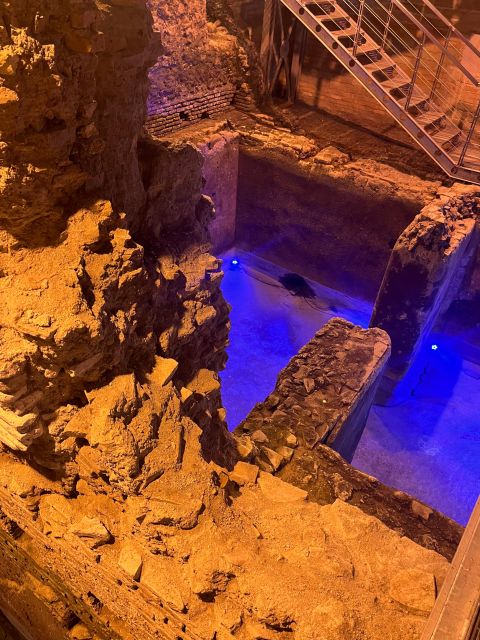
The tour does not rely only on architecture. The finds help turn the visit into a story about daily life, trade, money, and taste.
Among the objects are ancient coins and amphorae dating to the Imperial Age. The most striking find may be the reported treasure of about 800 coins. A collection like that raises simple questions that make the past easier to picture. Who gathered them? Why were they left behind? What did money mean in this part of Rome?
You also see the Spatheia, a special African amphora used to transport oil. Its presence points beyond Rome itself. It shows that goods moved across the Mediterranean and that Roman neighborhoods were connected to wider systems of trade and supply.
The polychrome marble coverings tell a different story. Marble was not simply a structural material. Colored stone helped signal wealth and status, especially in a luxurious residence. The remains associated with the Domus give you a glimpse of a higher-end Roman home, with decorative surfaces and water features that required planning and infrastructure.
The head of Alessandro Helios is another named highlight. Your guide can place this object among the other discoveries and explain why it matters, rather than leaving you with a label and a quick glance.
This is an ideal visit for anyone interested in Roman engineering, aqueducts, architecture, or ordinary material evidence. It is less suited to someone expecting a grand monument on the scale of the Colosseum. The site is modest, but the guide helps you understand why that modest space matters.
More Trevi and Pantheon walks:
- Rome: Pantheon Timeless Marvel Guided Tour with Entry Ticket
★ 4.9 · 4,002 reviews - Rome: Pantheon Priority Entry Ticket & Audio Guide App
★ 4.1 · 3,234 reviews - Enjoy Spritz and Pasta Making in Piazza Navona
★ 5.0 · 1,681 reviews - Rome: Trevi Fountain and Underground Guided Tour
★ 4.3 · 1,664 reviews
What the guide adds to the underground visit
This tour depends heavily on its guide. The archaeology is compact, and the English explanation gives the site its shape.
Carla has been praised for being welcoming and clear. Erica is repeatedly described as friendly, engaging, and strong on Roman culture and daily life. Alessia has been noted for presenting the material in an interesting way, while Noemi has been praised for humor and a wealth of information. Other guides, including Naomi, Viola, Michelle, Jesse, and Alexa, have also been singled out for warmth, patience, and enthusiasm.
Names can vary by departure, so you should not book on the assumption that one particular guide will lead your group. Still, the pattern is clear: the tour works best when the guide turns the water system and building layers into a human story.
Headsets have been used on some departures. That is a small but helpful touch, especially if the group is near other visitors or the guide is speaking in a tight underground room. Instead of shouting, the guide can speak normally while you keep moving through the site.
If you are traveling with children, this may be a good short archaeology stop. One guide was praised for keeping an active child engaged and for showing patience. The 40-minute underground portion also avoids the fatigue that can come with a much longer museum or ruins tour.
The Trevi Fountain stop is brief but useful
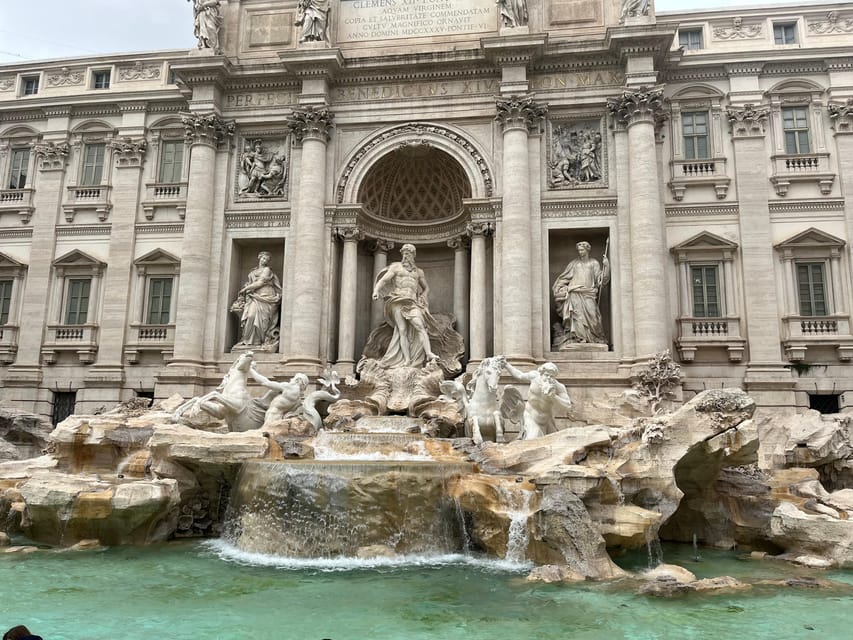
The tour includes about five minutes of guided time at the Trevi Fountain. You begin by making a wish at the city’s largest Baroque fountain, then hear an explanation of the fountain’s exterior and its connection to the water system.
Keep your expectations realistic. This is not a private fountain visit, and it does not appear to include a reserved area in front of the monument. The fountain plaza is open and crowded, and one visitor expected a closer view but instead saw the fountain from the middle of the public crowd.
That does not make the stop pointless. The guide can help you understand what you are looking at and may offer practical advice for taking a good picture. Some guides have also stayed a little longer to help with photos and nearby sightseeing tips, though you should treat that as a kindness rather than a guaranteed part of the one-hour schedule.
The strongest way to think about the fountain stop is as a connection. You have just seen the old water infrastructure below ground. Now you look at the famous Baroque monument above it. The contrast is the point: ancient waterworks support a later work of theater and decoration.
If your main goal is an extended Trevi Fountain explanation, allow extra time before or after the tour. Five minutes will not cover every story, viewing angle, or photo opportunity.
Gelato near Trevi Fountain
The final treat is an Italian gelato from a historic shop near the fountain. The arrangement is simple: you receive a voucher and can use it at the designated gelato shop.
This matters because the group does not necessarily walk into the shop together for a formal tasting. You may be given the voucher and then choose when to collect the gelato. One useful detail from the tour information is that the voucher can be used later, rather than only during the exact moment the guided portion ends.
That gives you flexibility. You can take your gelato right away, or use the voucher later while exploring the Trevi area. The treat is a pleasant close to an archaeology visit, especially for families.
I would not count the gelato as the main reason to pay $52. Its value is as a small extra, not as a full food tour. The real purchase is the reserved archaeological admission and the guide’s explanation. The gelato adds a familiar Roman pleasure at the end.
Is $52 fair for one hour?
At $52 per person, this is not a bargain-priced walk. The tour lasts one hour, and the archaeological area is compact. If you measure value only by time or square footage, the price may feel high.
I think the value depends on your interest. The fee covers assistance, reserved entry to Vicus Caprarius, the guided visit, Trevi Fountain guidance, and Italian gelato. You are paying for access to a site that is easy to miss, plus an English-speaking guide who explains the water system, objects, building levels, and Roman setting.
For a first-time visitor with only a few days in Rome, this works as a compact add-on near one of the city’s most famous sights. You do not need transport between major stops, and the underground rooms offer relief from heat.
For a repeat visitor, the value may be stronger. One person who had visited Rome several times found the underground site a pleasant surprise. That makes sense: the Trevi Fountain is familiar, but the layers below the pavement are easy to overlook.
I would skip it if you want a grand ruin complex, a long fountain lecture, or a full sightseeing tour of the district. I would book it if Roman water systems, archaeology, and the practical workings of ancient cities interest you.
Who should take this tour?
I recommend it most for:
- History and archaeology fans who want more than the standard Roman landmarks.
- Architecture enthusiasts interested in masonry, decorative marble, water channels, and building layers.
- Families who need a short, guided activity with a gelato ending.
- Repeat visitors to Rome looking for a less familiar side of the Trevi area.
- Summer visitors who value a cool indoor stop during the hottest part of the day.
- First-time visitors who want to connect the modern fountain with the ancient water network beneath it.
You should think twice if anyone in your party has a mobility impairment. The site is not suitable for wheelchair users, and comfortable shoes are recommended. The activity is offered in English, so it is best for people who can follow a live English-language explanation.
Practical details that affect your visit
The advertised duration is one hour, with about 40 minutes at Vicus Caprarius, five minutes at the Trevi Fountain, and a short break connected with the gelato stop.
The tour begins at Vicolo del Puttarello, 25. Arrive 15 minutes early, since the streets around Trevi can be difficult to cross quickly. Hotel pickup and drop-off are not included.
Free cancellation is available up to 24 hours before the selected time for a full refund. You can also reserve now and pay later, which is useful if your Rome schedule is still moving around.
The activity has a rating of 4.5 from 356 reviews, with especially strong praise for guide clarity, friendliness, humor, and enthusiasm. The most useful criticism concerns the small archaeological footprint and the limited fountain viewing time. Keep those two facts in mind and you will arrive with the right expectations.
Should you book the Vicus Caprarius and gelato tour?
Book this tour if you want Rome to make more sense below street level. The ancient coins, African oil amphora, marble decoration, Domus remains, and water channels give you specific things to look at, while the guide explains how they fit together.
Do not book it as a replacement for a full Trevi Fountain visit. The fountain stop is short and takes place amid the public crowd. Instead, book it as a focused archaeological lesson with a famous fountain as its above-ground reference point.
At $52, it is best for curious visitors who value interpretation over a long checklist of sights. If Carla, Erica, Alessia, Noemi, Naomi, or another strong guide leads your group, the compact site can become one of the most memorable small stops in central Rome. Add the cool underground rooms and a gelato voucher, and this is a smart one-hour break for the right audience.
FAQ
Where does the tour begin?
The meeting point is Vicolo del Puttarello, 25, near the Trevi Fountain.
How long does the tour last?
The tour lasts one hour. The guided visit to Vicus Caprarius takes about 40 minutes, followed by about five minutes of guided time at the Trevi Fountain and a gelato break.
Is the tour offered in English?
Yes. The activity includes a live English-speaking guide.
What can I see underground?
You can see Roman masonry, water features, ancient coins, amphorae, polychrome marble coverings, the head of Alessandro Helios, the Spatheia African oil amphora, and remains linked to a Domus residence.
Is gelato included?
Yes. Italian gelato is included through a voucher for a historic gelato shop near the Trevi Fountain.
Is the tour suitable for wheelchair users?
No. The tour is not suitable for wheelchair users or people with mobility impairments. Comfortable shoes are recommended.
Can I cancel or pay later?
You can cancel up to 24 hours in advance for a full refund. You can also reserve your place and pay later.
More Dessert Tours in Rome
- Rome: Pasta Making Class with Wine, Limoncello, and Dessert
★ 4.9 · 3,177 reviews - Rome Cooking Class: Make Pizza and Pasta with Wine & Dessert
★ 4.5 · 651 reviews - Rome: City Tour by Vespa with Pictures and Sweets Tastings
★ 5.0 · 180 reviews
Newest reviews from Rome
- Rome: Vatican Museums & Sistine Chapel Skip-the-Line Ticket★ 4.4 · 148 reviews
- Shared Shuttle Transfer from Rome to Civitavecchia Port★ 5.0 · 148 reviews
- Rome: Crypts & Catacombs After Hours Tour with Bone Chapel★ 4.6 · 149 reviews
- Ghosts Legends and Mysteries of Rome Walking Tour★ 5.0 · 149 reviews
- Skip the Line: Vatican and Sistine Chapel with Guided Tour★ 4.0 · 149 reviews
- Tivoli: Villa Gregoriana Entrance Ticket★ 4.7 · 150 reviews
- Pizza and Tiramisu Cooking Class in Rome, Piazza Navona★ 5.0 · 150 reviews
- Rome: Borghese Gallery Skip-the-Line Entry and Guided Tour★ 4.7 · 150 reviews
Underground Rome Tours, compared.
Colosseum: Underground and Ancient Rome Tour
Read our review →
Crypts and Catacombs Underground Tour with Transfers
Read our review →
Expert Guided Tour of Colosseum Arena OR Underground, and Forum
Read our review →
Colosseum Underground Small Group Guided Tour
Read our review →
St. Peter’s Basilica, Dome Climb, and Underground Tour
Read our review →

Colosseum Underground & Ancient Rome Guided Tour
Read our review →
Browse the lists this tour appears in