

Reviewed · UNDERGROUND ROME TOURS
Rome: Trevi Fountain Underground Small Group Tour
Rome’s Trevi Fountain is famous for coins, movie scenes, and grand Baroque sculpture. The better surprise is below street level, where Vicus Caprarius reveals the Roman water system, an Imperial-era home, medieval houses, and the remains of Aqua Virgo, the aqueduct still linked to the fountain’s story. You do not simply look at the fountain. You get a glimpse of the older city buried underneath it.
I like the short, focused format, which fits neatly into a morning or afternoon around central Rome. I also like that entry and headsets are included, so you can hear the English guide in the underground rooms and skip the main entrance queue through a separate entrance. The main caution is that the underground site is not the fountain’s actual basin, so anyone expecting to walk directly beneath the water may find the title a little misleading.
- Aqua Virgo beneath Trevi Fountain: See remains connected to one of Rome’s ancient aqueducts.
- Layers of Roman history: Visit an Imperial domus, medieval homes, and the Hadrian-era castellum aquae.
- A compact 45-minute visit: The archaeological portion is short enough to combine with other sights.
- English guidance with headsets: Audio equipment helps in the enclosed underground rooms.
- A precise meeting point: Find the guide in tiny Piazza dei Crociferi, not at the archaeological entrance.
- Rain or shine access: Bring comfortable shoes and weather-appropriate clothing, since the tour runs in all conditions.
In This Review
- What lies below the Trevi Fountain
- Meeting your guide in Piazza dei Crociferi
- Entering Vicus Caprarius
- The Imperial domus and Rome’s buried homes
- The castellum aquae and Aqua Virgo
- Returning to the Trevi Fountain
- Is $71 a fair price?
- Who will enjoy this underground visit?
- Guide quality and the 4.4 score
- How to get the most from the 45 minutes
- Should you book the Trevi Fountain Underground Tour?
- FAQ
- Where does the Trevi Fountain Underground Tour meet?
- Should I wait at the archaeological site entrance?
- How long does the tour last?
- What language is the tour in?
- Are admission tickets included?
- Are headsets provided?
- Will I go directly underneath the Trevi Fountain?
- Is the tour suitable for wheelchair users?
- What should I bring?
- What happens if it rains?
What lies below the Trevi Fountain

The Trevi Fountain gets most of the attention, but the water beneath it is the real reason to take this tour. The underground site, called Vicus Caprarius, came to light during renovation work at the former Cinema Trevi in 1999. It opened to the public in 2004.
That detail matters because Rome often works like a layer cake. A modern cinema sat above medieval buildings, which sat above Imperial Roman structures, which connected to an ancient water network. In a single short visit, you can see how the city changed without ever erasing everything that came before.
The aqueduct here is Aqua Virgo, one of 11 aqueducts built by the Romans. Its Latin name means pure water, a reference to the clarity of the spring water it carried. A second story says that a young woman led thirsty Roman soldiers to the spring, giving the aqueduct its name through the Latin word for young woman.
You are not visiting a restored fantasy version of ancient Rome. You are seeing archaeological remains below the modern street, with the guide explaining how the pieces fit together. That makes the visit especially useful if you have already seen the fountain above and want to understand why water has mattered so much to this part of the city.
Meeting your guide in Piazza dei Crociferi
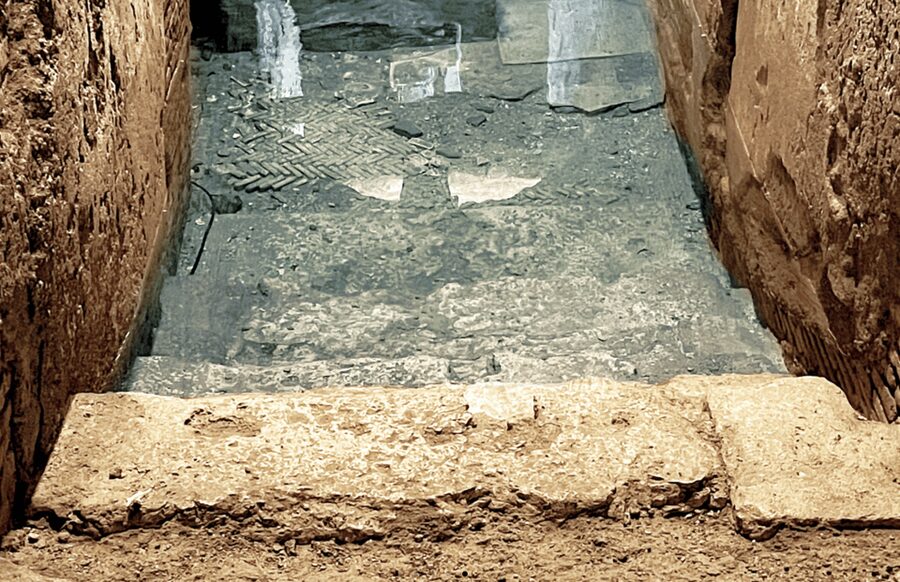
The tour starts in Piazza dei Crociferi, a tiny square near Trevi Fountain. This is the most important practical detail of the whole visit. Do not wait at the entrance to the archaeological site. Look for the guide carrying a sign with the Rome with Silvia logo.
Give yourself time to find the square and arrive before the stated start time. One poor experience reported arriving only three minutes before the scheduled time after receiving calls about being late. The details of that complaint are unusual, but the useful lesson is simple: do not cut this meeting point close. Central Rome can be confusing, and Piazza dei Crociferi is small enough to miss if you are focused only on the fountain.
The provider is Rome with Silvia. The tour is in English, and headsets are supplied so you can follow the guide clearly underground. One highly positive account specifically praised a guide named Virginia, while other feedback praised Silvia or a guide associated with the provider. Since guide assignments can change, book this for the site and format first, not for a guaranteed individual guide unless your confirmation names one.
More underground Rome tours:
- Colosseum: Underground and Ancient Rome Tour
★ 4.7 · 12,691 reviews - Rome: Crypts and Catacombs Underground Tour with Transfers
★ 4.6 · 5,341 reviews - Expert Guided Tour of Colosseum Arena OR Underground, and Forum
★ 4.5 · 5,041 reviews
Entering Vicus Caprarius
After meeting the guide, you enter the archaeological area through its own access point. The separate entrance is useful in a neighborhood where the fountain area is usually crowded, though the site itself is not a grand open monument. You are heading into a compact underground excavation.
The first impression is the contrast between the noisy streets above and the quiet archaeological rooms below. The guide gives the setting a timeline, helping you see that Rome’s story did not stop when the Imperial period ended. Buildings were altered, reused, and buried as the city developed.
This is where the tour earns its place on a Rome schedule. You are not spending hours at another major monument. Instead, you are adding context to a sight most people see for only a few minutes while tossing in a coin and taking photographs.
The underground passages extend beneath the Trevi area, but keep your expectations measured. The supplied timing gives 45 minutes for the guided Vicus Caprarius visit, followed by a 15-minute Trevi Fountain photo stop and guided explanation. The overall activity is presented as 45 minutes, so check the starting details when booking and allow some extra time for the fountain portion.
The Imperial domus and Rome’s buried homes

One of the strongest parts of the visit is the Imperial-era domus. A domus was a Roman house, and seeing its remains gives you a more human view of the ancient city than a monumental arch or column can provide.
The point is not just to identify old walls. It is to understand that the land around Trevi Fountain was once occupied, remodeled, and used for daily life. The guide connects the domestic remains to the water system, which shows how household life and public infrastructure were tied together.
The site also includes medieval houses. These later structures make the archaeology more interesting because you can compare different periods in one place. Rome is often presented as ancient, but the medieval layers remind you that people kept living among, over, and around Roman remains.
You might find this section more rewarding if you enjoy seeing how archaeologists reconstruct a city from fragments. If you want only a dramatic view or a famous statue, the underground rooms may feel modest. Their value comes from the story they tell, not from scale.
The castellum aquae and Aqua Virgo
The water system is the tour’s central subject. You see remains of Aqua Virgo and the castellum aquae, a monumental water tank linked to the aqueduct.
The tank was built under Emperor Hadrian to improve water supplies in Campo Marzio. That gives you a useful piece of Roman engineering in a small space. Aqueducts are often imagined as long rows of arches in the countryside, but this visit shows the less glamorous end of the system: how water was stored and managed once it reached the city.
This is also the best answer to the question of why the fountain is here. Trevi’s beauty is later, but its location is tied to an older water source and distribution network. The modern fountain turns that practical system into theater, while the underground archaeology lets you see the infrastructure behind the spectacle.
The guide’s job is important here. Without explanation, a water tank and broken walls may not mean much. With a clear account of Aqua Virgo, the underground site becomes a lesson in how Roman cities supplied water, reused buildings, and continued to shape later Rome.
One four-star account praised the guide for explaining the Roman aqueduct system, while also noting that the wording of the experience could suggest a route directly beneath the fountain. That is a fair distinction. You see remains beneath the Trevi area and learn their connection to the fountain, but this is not a walk inside the fountain’s plumbing or foundation.
More Trevi and Pantheon walks:
- Rome: Pantheon Timeless Marvel Guided Tour with Entry Ticket
★ 4.9 · 4,002 reviews - Rome: Pantheon Priority Entry Ticket & Audio Guide App
★ 4.1 · 3,234 reviews - Enjoy Spritz and Pasta Making in Piazza Navona
★ 5.0 · 1,681 reviews - Rome: Trevi Fountain and Underground Guided Tour
★ 4.3 · 1,664 reviews
Returning to the Trevi Fountain
The final part brings you back above ground for a guided view and photo stop at Trevi Fountain. This works well because you have just learned why water matters here. The fountain is no longer only a Baroque landmark. It becomes the visible end of a much older story.
The fountain’s film history also adds color. Federico Fellini used it in La Dolce Vita, including the famous scene with Anita Ekberg entering the fountain’s water. Today, you are more likely to see people taking photographs and tossing coins, following the promise that a coin will bring them back to Rome.
The photo stop is brief, listed at 15 minutes. That is enough for orientation and photographs, but it is not a dedicated fountain photography session. If you want quiet pictures, you will need to return at another time, since this tour does not promise a private viewing area or a crowd-free fountain.
I like the order of the experience. Starting underground and ending at the fountain makes the final view more meaningful. You move from the practical Roman water supply to the grand public monument built around it.
Is $71 a fair price?
At $71 per person, this is not the cheapest way to see Trevi Fountain. The fountain itself is free to visit, and you can admire it without a ticket. The price pays for access to the archaeological area, an official English-speaking guide, headsets, and a separate entrance.
The value depends on your interest. If you enjoy Roman archaeology and want a clear explanation of the aqueduct, the price can be reasonable for a short, organized visit. You are paying for access to a site that is easy to miss and for help interpreting remains that would otherwise be little more than old stone walls.
The value is weaker if you are mainly seeking a long tour or a direct visit under the fountain. Forty-five minutes is a compact amount of time, and the underground area is not presented as a large museum. I would compare it with the cost of other Rome archaeological visits before booking several short paid experiences in the same day.
The separate entrance adds practical value in the busy Trevi district. It does not mean you bypass every possible delay, but it avoids treating the main fountain crowd as your entry queue. Admission is included, so you do not need to arrange the archaeological ticket separately.
Who will enjoy this underground visit?
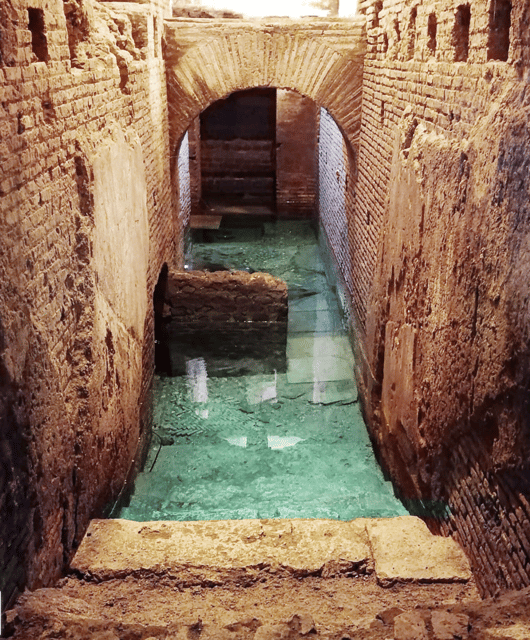
I would choose this tour if you have already planned to see Trevi Fountain and want more than the usual photograph. It suits people who like archaeology, Roman engineering, and the way different periods of a city overlap.
It is also a good fit for a short Rome schedule. The core visit takes 45 minutes, and the fountain stop is nearby. You can place it between other central Rome sights without committing to a half-day excursion.
Families can join, but the quality of the experience will depend on whether children can follow an English explanation in an underground setting. One poor account described children struggling to understand the guide, while other accounts praised the guide’s communication. If your children need a highly visual or very simple presentation, consider that limitation before paying for the whole group.
The tour is not suitable for wheelchair users. Wear comfortable shoes, bring identification, and dress for the weather. The tour operates rain or shine, so a wet day does not cancel the plan automatically.
Guide quality and the 4.4 score
The overall score is 4.4 out of 5 from 47 ratings, which suggests a generally positive experience with some clear variation. Several accounts praise the guide as excellent, very nice, fantastic, and informative. Those comments focus on the human side of the tour, especially the ability to explain the aqueduct and make the visit worthwhile.
There is also one very poor account describing a late-arrival dispute, unclear communication, a guide who seemed impaired, repeated information, and an argument with another guide. I would not ignore that report, even though it is sharply different from the positive feedback. It points to two sensible precautions: arrive early at Piazza dei Crociferi and make sure the guide can communicate clearly with everyone in your group.
Guide assignments may change, so you cannot assume every departure will have the same person. The provider name is Rome with Silvia, and the meeting sign should carry that logo. One positive account identifies Virginia by name, but your booking may have another English-speaking guide.
How to get the most from the 45 minutes
Arrive early enough to locate Piazza dei Crociferi without stress. Keep the confirmation available, but do not stand at the archaeological entrance waiting for the guide. The meeting point and the site entrance are not the same place.
Wear shoes you can walk in comfortably. The tour is short, but the underground setting and archaeological surfaces make practical footwear a better choice than fashion shoes.
Listen for the link between the aqueduct, the castellum aquae, and the fountain above. That connection is the heart of the visit. If you remember only the fountain’s movie history, you have missed the strongest part.
Use the final fountain stop to take your main photographs, but do not expect an extended private session. The time is designed for a brief look and explanation, not a full tour of the surrounding neighborhood.
The activity allows free cancellation up to 24 hours before the start for a full refund, and you can reserve while paying later. Those terms are useful if your Rome schedule is still moving, but they do not remove the need to arrive on time once you keep the booking.
Should you book the Trevi Fountain Underground Tour?
Book it if you want archaeology beneath a famous sight, especially Roman water engineering and the layered history of central Rome. The underground remains, Imperial domus, medieval houses, and castellum aquae give you a view of Trevi that most casual visits miss.
Skip it if you want a long, dramatic monument tour, direct access below the fountain itself, or a guaranteed named guide. At $71, the visit needs to match your interests. For someone curious about how Rome was built and rebuilt, it is a useful short stop. For someone who only wants the fountain, save the money and enjoy the piazza above.
FAQ
Where does the Trevi Fountain Underground Tour meet?
The meeting point is Piazza dei Crociferi, a tiny square near Trevi Fountain. Look for a guide holding a sign with the Rome with Silvia logo.
Should I wait at the archaeological site entrance?
No. The instructions specifically say not to wait at the entrance to the archaeological site. Meet the guide first in Piazza dei Crociferi.
How long does the tour last?
The advertised duration is 45 minutes. The schedule also includes a 15-minute guided photo stop at Trevi Fountain, so check the exact timing when you book.
What language is the tour in?
The live tour is conducted in English by an English-speaking guide.
Are admission tickets included?
Yes. Entry tickets to the archaeological area are included in the price.
Are headsets provided?
Yes. Headsets are included so you can hear the guide clearly during the visit.
Will I go directly underneath the Trevi Fountain?
You will visit Vicus Caprarius, the underground archaeological area beneath the Trevi district, and see remains connected with Aqua Virgo. The experience does not promise a walk inside the fountain itself.
Is the tour suitable for wheelchair users?
No. The activity is not suitable for wheelchair users.
What should I bring?
Bring a passport or identity card, comfortable shoes, and clothing suited to the weather.
What happens if it rains?
The tour operates rain or shine. You should bring weather-appropriate clothing and still go to the stated meeting point unless the provider gives different instructions.
Newest reviews from Rome
- ROME:Colosseum & Ancient Rome – private/small group TOUR★ 5.0 · 24 reviews
- Off the Beaten Track in Rome: Rione VI Parione Private Tour★ 5.0 · 24 reviews
- Cinematic Photoshoot in Rome★ 5.0 · 24 reviews
- Rome: Best of Colosseum and Roman Forum Small Group Guided Tour★ 4.5 · 24 reviews
- The Labyrinth of Rome between catacombs and ancient quarries★ 4.5 · 24 reviews
- Vatican and Trionfale Market Tour with Wine and Food Tasting★ 5.0 · 24 reviews
- private tour: Vatican Museums, Sistine Chapel, St. Peter’s Basilica★ 4.5 · 24 reviews
- Colosseum guided tour with Virtual Reality★ 5.0 · 24 reviews
Underground Rome Tours, compared.
Colosseum: Underground and Ancient Rome Tour
Read our review →
Crypts and Catacombs Underground Tour with Transfers
Read our review →
Expert Guided Tour of Colosseum Arena OR Underground, and Forum
Read our review →
Colosseum Underground Small Group Guided Tour
Read our review →
St. Peter’s Basilica, Dome Climb, and Underground Tour
Read our review →

Colosseum Underground & Ancient Rome Guided Tour
Read our review →
Browse the lists this tour appears in