
Reviewed · UNDERGROUND ROME TOURS
Rome underground: Piazza Navona, the Illusion Church and Pantheon
The surprise here is that Rome’s famous squares are only the surface. In about two and a half hours, you’ll move from the columns of Hadrian’s temple to church optical illusions, Caravaggio paintings, and the ancient stadium buried below Piazza Navona.
I like the small group of up to 12 because it gives guides such as Sabrina and Federica room to answer questions. I also like the easy route through the historic center, with several quiet stops that many people pass without noticing. The main drawback is that the tour covers a lot of ground in a short time, so anyone wanting a slow, detailed visit inside every church may find the pace brisk.
In This Review
- Key points to know
- A compact walk through Rome’s most revealing corners
- Piazza di Pietra and the personal side of Emperor Hadrian
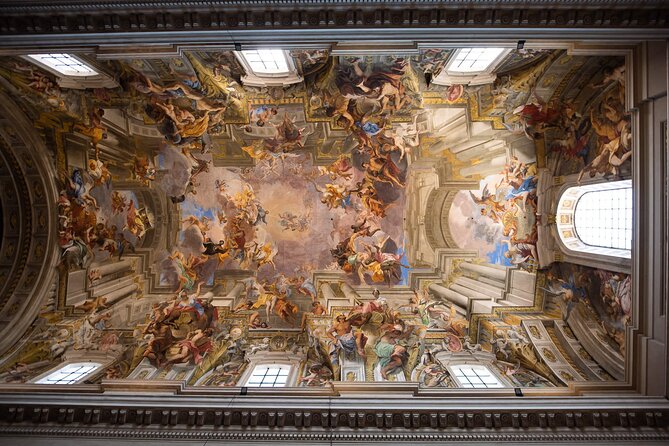
- The optical tricks inside Sant’Ignazio di Loyola
- The Pantheon beyond the usual doorway view
- Piazza della Minerva and an artistic quarrel in stone
- Caravaggio at the Church of St. Louis of the French
- Piazza Navona, then below the modern square
- Is $78.44 a fair price for 2.5 hours?
- Pace, group size, and guide style
- What this tour does best
- What to consider before booking
- Should you book the Rome underground tour?
- FAQ
- How long does the Rome underground tour last?
- What language is the tour offered in?
- Where does the tour begin?
- Where does the tour end?
- What is the maximum group size?
- Is admission to the underground Stadium of Domitian included?
- Can I cancel for a full refund?
Key points to know
- The route links Rome’s surface and underground worlds, ending beneath Piazza Navona at the ancient Stadium of Domitian.
- Church of St. Ignatius hides several optical illusions, not just the famous first one.
- Caravaggio gets a proper introduction at the Church of St. Louis of the French.
- Hadrian’s personal story adds drama to the columns at Piazza di Pietra.
- The group is capped at 12 people, a useful size for questions and close guiding.
- The $78.44 price includes the underground admission, while the other listed stops are free to enter.
A compact walk through Rome’s most revealing corners
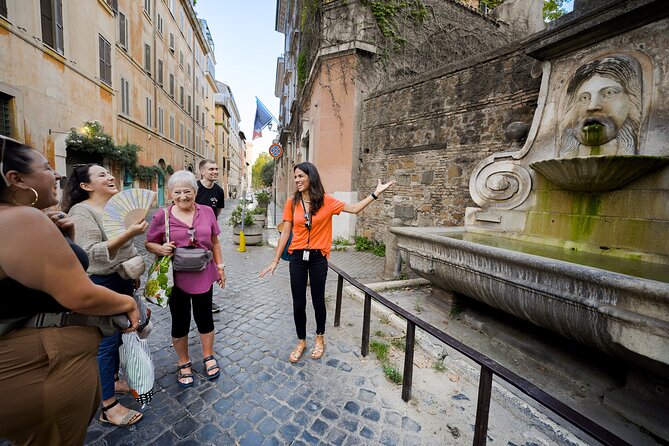
This is a history walk, but it does not feel like a string of dates and names. The guide uses stories, visual tricks, rival artists, and unusual building details to make the center of Rome easier to read.
You begin at Piazza di Pietra and finish at Piazza Navona. The route stays in Rome’s historic center, so you are not spending time on buses or moving between far-flung monuments. That matters in Rome, where a short distance on a map can become a long wait in traffic or a tiring transfer.
The tour lasts about 2 hours and 30 minutes. Each stop has a planned time, from 10 minutes at the Pantheon to 30 minutes at several major sites. You should expect a steady walking experience rather than a full visit to every monument.
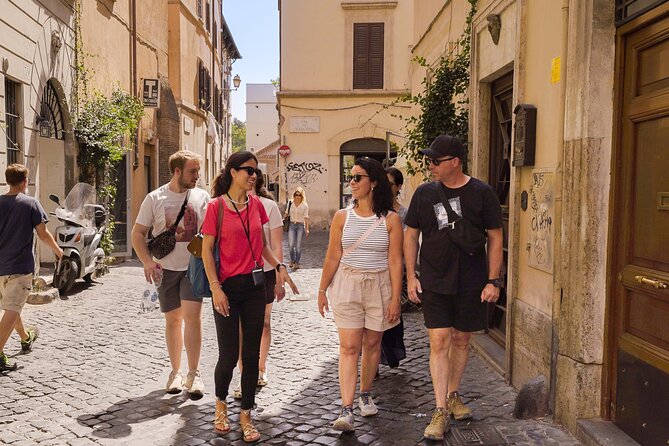
The English-language format and small group make this a good fit if you want more than a quick orientation but less than an all-day history course. The guide’s personality matters here. Sabrina is described as personable and full of information, while Federica is presented as warm, engaging, and able to make the small group feel involved.
More underground Rome tours:
- Colosseum: Underground and Ancient Rome Tour
★ 4.7 · 12,691 reviews - Rome: Crypts and Catacombs Underground Tour with Transfers
★ 4.6 · 5,341 reviews - Expert Guided Tour of Colosseum Arena OR Underground, and Forum
★ 4.5 · 5,041 reviews
Piazza di Pietra and the personal side of Emperor Hadrian
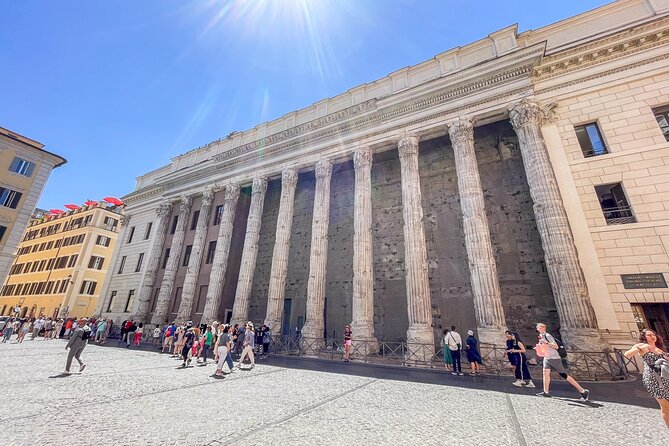
The opening stop is Piazza di Pietra, where the enormous columns of the Temple of Hadrian dominate the square. The setting is a good reminder of how casually Rome places ancient remains into ordinary city life. You can be standing among cafés and daily foot traffic while looking at a monument from the Roman imperial period.
The guide focuses on ancient gossip surrounding Emperor Hadrian, including a love triangle and the tragic end of the person he loved most. This gives the opening a human angle. Instead of treating Hadrian as a distant name carved into a textbook, you get a story about desire, power, and loss.
The scheduled time is about 30 minutes. That is enough for a strong explanation and a careful look at the columns, though not enough for an extended architectural study. I like this as a first stop because it sets the tone: the tour is looking for stories that sit just behind the standard postcard view.
Admission here is free. You only need to arrive at the stated meeting point, P.za di Pietra, 40.
The optical tricks inside Sant’Ignazio di Loyola
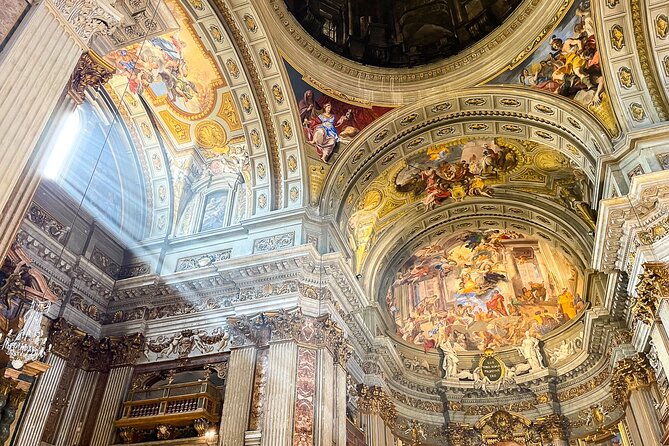
The Church of Sant’Ignazio di Loyola is likely to be one of the tour’s most memorable stops. Its appeal is visual and immediate. The building contains optical illusions, including a first illusion that many people notice before moving on to others that are easier to miss.
That second layer is important. Rome has no shortage of spectacular churches, but plenty of visitors enter, glance upward, and leave. Here, the guide directs your attention to details you might otherwise overlook. The point is not simply that the church looks impressive. It is learning how the illusion works as part of the building’s design.
The visit is allotted about 20 minutes. That makes it a focused stop rather than a long church tour. You will want to listen closely and look where the guide points, since the value comes from seeing the less obvious effects.
No separate admission charge is listed for this church. I would treat this as one of the places where a guide adds real value. You can enter a church by yourself, but you may not know which illusion to seek or how many there are.
The Pantheon beyond the usual doorway view
The Pantheon receives only about 10 minutes, and that tells you what this tour is trying to do. It is not replacing a full Pantheon visit. Instead, the guide explains lesser-known facts from outside and points out an unusual light effect that occurs only a few days each year.
The limited time is both a strength and a limitation. You get a sharp bit of interpretation without spending half an hour repeating the basic facts most people already hear. On the other hand, if the Pantheon is high on your personal list, you should plan a separate visit so you can see the interior at your own pace.
The light effect is especially appealing because it gives you a reason to think about timing. The experience does not promise that your tour will coincide with those rare days, so do not book it expecting to see the phenomenon in action. You will learn about it, along with other details that are easy to miss when you only pause for a photograph.
The Pantheon stop is free and takes place from the outside. That is clear from the schedule, so plan accordingly.
More Trevi and Pantheon walks:
- Rome: Pantheon Timeless Marvel Guided Tour with Entry Ticket
★ 4.9 · 4,002 reviews - Rome: Pantheon Priority Entry Ticket & Audio Guide App
★ 4.1 · 3,234 reviews - Enjoy Spritz and Pasta Making in Piazza Navona
★ 5.0 · 1,681 reviews - Rome: Trevi Fountain and Underground Guided Tour
★ 4.3 · 1,664 reviews
Piazza della Minerva and an artistic quarrel in stone
Piazza della Minerva is a smaller square with a more relaxed feel than Rome’s grand ceremonial spaces. The tour uses it to tell the story of two artists who disliked each other and expressed that rivalry through sculpture.
This is the kind of stop I appreciate on a walking tour. You are not only being taken to the most famous monuments. You are being shown how public art can carry personal conflict, competition, and humor.
The square is described as a place where children play soccer after school. That detail helps you see it as part of living Rome rather than a frozen museum setting. The scheduled visit lasts about 20 minutes, enough for the story and the sculptures without making the stop feel overlong.
The square itself costs nothing to visit. Its value comes from the guide’s explanation, so this is another place where the quality of the storytelling will shape your experience.
Caravaggio at the Church of St. Louis of the French
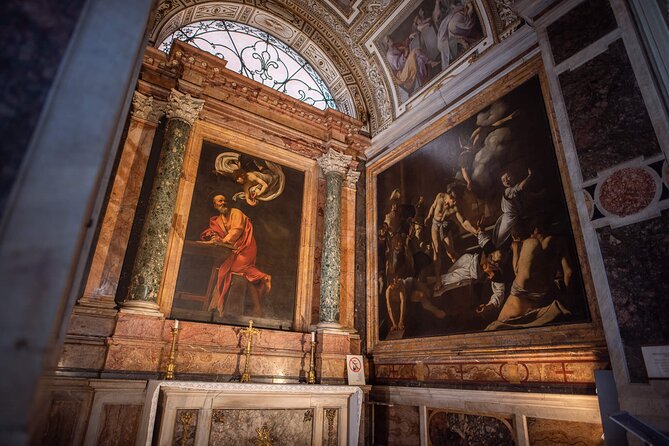
The Church of St. Louis of the French gets about 30 minutes, making it one of the tour’s longer stops. The focus is Caravaggio, one of the most famous painters of the past, known for realistic and dramatic scenes.
If you are unfamiliar with Caravaggio, this is a useful introduction. If you already know his work, the stop still gives you a chance to see how his paintings fit into the church setting. The emphasis is on his strong realism and theatrical sense, qualities that make his paintings feel unusually immediate.
I would pay close attention here rather than treating the church as a quick art stop. The guide is expected to explain what makes the paintings important, not merely point them out. The experience is especially suited to you if you like art presented through stories and visual details instead of a formal lecture.
The church is listed with free admission. Since the visit lasts 30 minutes, you should have time to focus on the Caravaggio material without losing the overall rhythm of the walk.
Piazza Navona, then below the modern square
Piazza Navona is one of Rome’s most famous squares, but the tour spends only about 10 minutes on the surface. That short visit is deliberate. You get the orientation and the visible setting before moving to the part many people never see.
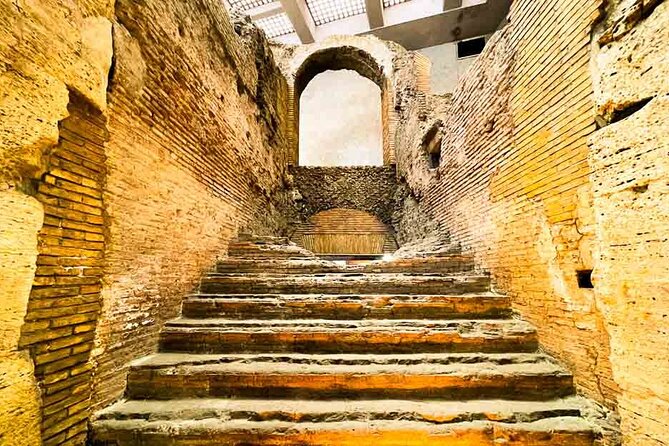
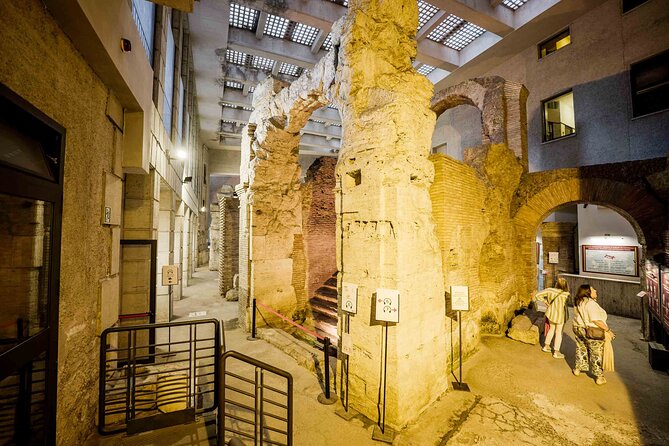
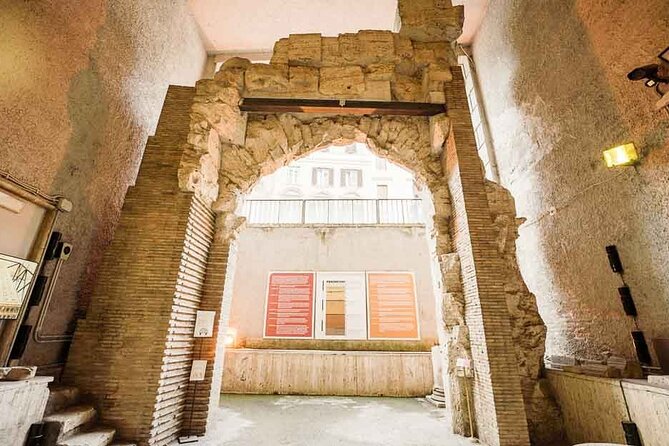
The major payoff comes at the Stadium of Domitian, beneath Piazza Navona. The underground site reveals the ancient Roman stadium that once hosted athletic games around 2,000 years ago. This changes the way you look at the square above. Instead of seeing only a long, elegant piazza, you begin to understand its connection to an earlier Roman structure.
The underground visit lasts about 30 minutes and is the only stop with an admission ticket included in the listed price. That makes it the clearest paid attraction in the package. You are not simply being led around the outside of Piazza Navona. You are getting access to a separate archaeological site below it.
The sequence works well. First, you see the modern square. Then, you go beneath it and learn what occupied the space in ancient Rome. I like that visual contrast, particularly for a first visit to the city.
Is $78.44 a fair price for 2.5 hours?
At $78.44 per person, this is not a cheap orientation walk. The value depends on how much you want interpretation and how much you would otherwise miss on your own.
Most of the stops are free to enter, so the price is not mainly paying for admission. It pays for the guide’s route, explanations, group management, and the included underground access at the Stadium of Domitian. The small group, limited to 12 people, also matters. A guide can respond to questions more easily with 12 people than with a large crowd.
I would see the cost as reasonable if you care about unusual details and prefer a guide who can connect separate parts of Rome. The optical illusions, the Caravaggio focus, Hadrian’s personal story, and the underground stadium are not random stops. They create a clear theme: Rome rewards people who look twice.
The value is weaker if you only want to see the major sights quickly or if you plan to visit the Pantheon, Piazza Navona, and the churches independently anyway. You will still need separate time for a fuller Pantheon visit, since this tour covers it from outside for about 10 minutes.
The tour is often reserved well ahead of time, with an average booking lead time of 81 days. That suggests you should not leave it until the last moment if the date matters to you.
Pace, group size, and guide style
The pace is described as relaxed and easy, but the route contains seven stops in 150 minutes. In practical terms, that means the walk should feel manageable, yet each location receives a carefully limited amount of attention.
The maximum group size of 12 is one of the strongest practical features. You can hear the explanation more clearly than in a large group, and it is easier to ask about a detail that catches your eye. The guide can also keep the group together while moving between the squares and churches.
The experience is offered in English. Guide Sabrina has been praised for being personable and full of information. Federica is noted for being friendly, engaging, and good at drawing a small group into the experience. Those details matter because this tour relies heavily on delivery. A list of places alone would not justify the price, but a lively guide can make familiar streets feel new.
Most people can take part, according to the provided participation information. No special transport is listed, and the route is presented as a walk through the historic center. You should be prepared for ordinary city walking and time spent standing at the stops.
What this tour does best
The strongest feature is its choice of subject. This is not a basic greatest-hits route built around the Colosseum, Trevi Fountain, and Spanish Steps. Instead, it finds surprising material in places you can easily pass.
I especially like the blend of ancient Rome, Baroque art, church design, and underground archaeology. The stories do not all belong to one period, but they fit the city’s layered character.
The underground Stadium of Domitian gives the tour a strong finish. The Church of Sant’Ignazio offers the most immediate visual surprise. The Caravaggio stop gives the route artistic weight, while the Hadrian story makes the first stop personal and dramatic.
The guide is another major strength. The high recommendation rate and perfect five-point rating indicate strong satisfaction, while the individual feedback repeatedly emphasizes warmth, enthusiasm, and strong subject knowledge. I would still remember that a tour is a shared experience. Even in a group of 12, some people may ask more questions or show more interest than others.
What to consider before booking
The tour is best for you if you want a guided look at Rome’s less obvious details and enjoy moving between several short visits. It suits a first trip because it helps you notice parts of the historic center you might otherwise walk past.
It also works well for a return visit. You may have already seen Piazza Navona or the Pantheon, but the underground stadium and the church illusions offer a different angle.
The format may not suit you if you dislike structured walks, need long unhurried time at artworks, or want extensive access inside every monument. The Pantheon is viewed from outside, and the overall route moves on after each scheduled stop.
The cancellation terms are practical: you can receive a full refund if you cancel at least 24 hours before the start time. Changes or cancellations inside that window are not accepted for a refund. The experience also requires a minimum number of people, so if the provider cancels for that reason, you are offered another date or experience, or a full refund.
Should you book the Rome underground tour?
I would book this tour if you want Rome explained through surprises rather than a checklist of famous sights. The best reasons are the second optical illusion at Sant’Ignazio, the Caravaggio paintings, and the chance to go beneath Piazza Navona into the Stadium of Domitian.
At $78.44, it asks you to pay for interpretation more than admissions. That is a fair trade if you value a small group and an engaging guide such as Sabrina or Federica. Skip it if you prefer to wander independently or want long visits inside the Pantheon and churches.
For the right kind of visitor, this is a smart two-and-a-half-hour addition to a Rome itinerary. You leave with a better eye for the city’s surfaces, stories, and layers below them.
FAQ
How long does the Rome underground tour last?
The experience lasts approximately 2 hours and 30 minutes.
What language is the tour offered in?
The tour is offered in English.
Where does the tour begin?
It begins at P.za di Pietra, 40, 00186 Roma RM, Italy.
Where does the tour end?
The tour ends at Piazza Navona, 00186 Roma RM, Italy.
What is the maximum group size?
The group is limited to a maximum of 12 people.
Is admission to the underground Stadium of Domitian included?
Yes. Admission to the Stadium of Domitian beneath Piazza Navona is included. The other listed stops have no admission ticket charge.
Can I cancel for a full refund?
Yes. You can cancel at least 24 hours before the experience start time for a full refund. Cancellations or changes made less than 24 hours before the start time are not refunded or accepted.
Newest reviews from Rome
- ROME:Colosseum & Ancient Rome – private/small group TOUR★ 5.0 · 24 reviews
- Off the Beaten Track in Rome: Rione VI Parione Private Tour★ 5.0 · 24 reviews
- Cinematic Photoshoot in Rome★ 5.0 · 24 reviews
- Rome: Best of Colosseum and Roman Forum Small Group Guided Tour★ 4.5 · 24 reviews
- The Labyrinth of Rome between catacombs and ancient quarries★ 4.5 · 24 reviews
- Vatican and Trionfale Market Tour with Wine and Food Tasting★ 5.0 · 24 reviews
- private tour: Vatican Museums, Sistine Chapel, St. Peter’s Basilica★ 4.5 · 24 reviews
- Colosseum guided tour with Virtual Reality★ 5.0 · 24 reviews
Underground Rome Tours, compared.
Colosseum: Underground and Ancient Rome Tour
Read our review →
Crypts and Catacombs Underground Tour with Transfers
Read our review →
Expert Guided Tour of Colosseum Arena OR Underground, and Forum
Read our review →
Colosseum Underground Small Group Guided Tour
Read our review →
St. Peter’s Basilica, Dome Climb, and Underground Tour
Read our review →
Colosseum Underground & Ancient Rome Guided Tour
Read our review →
Browse the lists this tour appears in