
Reviewed · HISTORICAL TOURS
Secrets of Rome: Historical True Crime Small Group Tour
Rome’s darker past comes alive on this walk through Campo de’ Fiori, Via Giulia, Ponte Sisto, and the streets near Castel Sant’Angelo. You hear about executions, poisonings, power struggles, forbidden romances, and famous Roman families whose names still carry a chill.
I like the small group of no more than 15 people, which makes it easier to hear the guide in narrow streets. I also like the guides’ lively style. Ben, Ivana, Ariel, and Benjamin have all been praised for making serious history funny, clear, and easy to follow.
The main consideration is the theme. This is historical crime, scandal, and political intrigue more than modern police cases or a full ghost walk. If you want recent murders or nonstop horror, the content may feel less creepy than expected.
In This Review
- Key points to know before you book
- Why this Rome tour feels different
- Meeting Giordano Bruno in Campo de’ Fiori
- Piazza Farnese and Rome’s political theater
- Crossing Ponte Sisto and following Via Giulia
- The ten-minute bar stop
- Cagliostro, Giulia Tofana, and the darker characters
- Beatrice Cenci and the human cost of scandal
- Finishing near Castel Sant’Angelo
- How the guides shape the experience
- Is $29 good value for two hours?
- Who should book this walk?
- Should you book Secrets of Rome?
- FAQ
- How long is the Secrets of Rome tour?
- How much does the tour cost?
- What language is the tour conducted in?
- Where does the tour start?
- Where does the tour finish?
- What locations are included on the route?
- Is food or drink included?
- Is the tour wheelchair accessible?
- Can I cancel the booking?
Key points to know before you book
- Campo de’ Fiori sets the tone: Begin beside the statue of Giordano Bruno, whose execution is one of the tour’s opening stories.
- The route uses Rome’s backstreets: Walk through Piazza Farnese, Ponte Sisto, Via Giulia, and streets leading toward Castel Sant’Angelo.
- The stories focus on real figures: Hear about Cagliostro, Donna Olimpia Maidalchini, Giulia Tofana, the Borgias, and Beatrice Cenci.
- The guide makes or breaks the experience: Ben, Ivana, Ariel, and Benjamin are noted for humor, warmth, and strong storytelling.
- A short break is built in: You get about 10 minutes at a local bar for drinks or a restroom stop.
- It is good value at $29: Two hours of guided history in central Rome costs less than many major attraction tours, though food and drinks are extra.
Why this Rome tour feels different
Rome is full of grand monuments, but its most gripping stories often happen around ordinary streets and squares. This tour gives you a different way to read the city. Instead of focusing on emperors, popes, and famous buildings alone, it follows people caught in greed, fear, ambition, betrayal, and revenge.
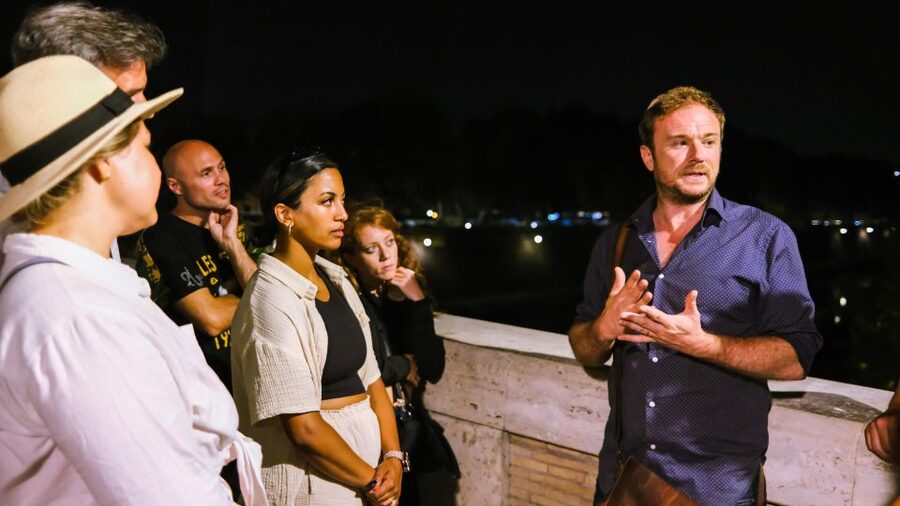
The mood is dark, but the delivery is not relentlessly grim. The guides use humor to keep the stories moving, which matters when the subject turns toward execution, murder, or poison. I like that balance. A guide who treats every grim detail with solemn weight can make a two-hour walk feel heavy. Here, the best guides keep the tone lively without losing the historical setting.
The format suits a first or second evening in Rome. You get your bearings around the historic center while hearing stories that give familiar streets a sharper edge. One guest described it as a good first-evening activity, and that makes sense: the route introduces several central areas without asking you to spend hours inside a museum.
You should also know what this is not. The phrase true crime may suggest recent cases, forensic details, or a dedicated ghost tour. The content here reaches back into Rome’s older history. There are hauntings and frightening themes in the presentation, but the main focus is historical figures and scandals.
More ancient sites near Rome:
- Rome in a Day Tour with Vatican, Colosseum and Historic Center
★ 4.5 · 1,042 reviews - Rome Food Tour in the Historic Centre with 8+ Food Tastings
★ 5.0 · 1,000 reviews - Rome: Forbidden History Walking Tour & Pub Crawl with Drinks
★ 4.9 · 688 reviews
Meeting Giordano Bruno in Campo de’ Fiori
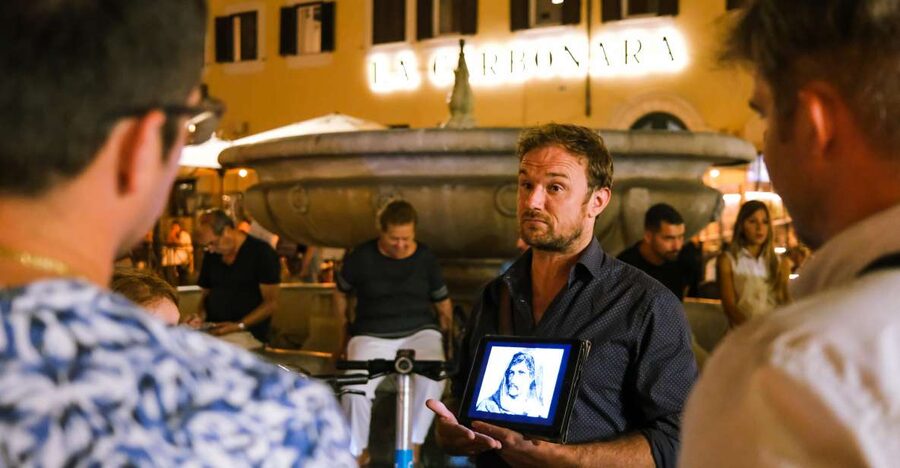
The tour starts at Campo de’ Fiori, in front of the statue in the middle of the square. Look for the guide holding a sign marked Rome’s Dark Side. This clear meeting point helps in a crowded part of the city, though you should allow time to locate the statue rather than simply aiming for the square.
Campo de’ Fiori provides a fitting opening. The tour begins with the fiery death of Giordano Bruno, the heretic philosopher executed here. That story immediately establishes the walk’s central theme: Rome’s famous beauty has always existed alongside punishment, religious conflict, political pressure, and public spectacle.
The square is also a practical place to begin because it connects naturally with the next streets. You are not starting at an isolated attraction and then spending the first part of the tour finding your way. The story begins at a location tied directly to the subject.
Your guide may also add general facts about Rome as the group moves between major stories. This helps the tour work for people who enjoy history beyond crime. Ben, in particular, has been praised for adding useful facts about places along the way, even when they sit outside the main subject.
Piazza Farnese and Rome’s political theater
From Campo de’ Fiori, the route continues to Piazza Farnese for a guided stop. This section brings the tour into the world of powerful families, influence, and Roman politics.
The square is linked on the route with stories about figures such as Donna Olimpia Maidalchini, a forceful 17th-century power player, and the Borgias, whose reputation is tied to treachery, affairs, and political calculation. These stories show that crime in old Rome was not always a simple matter of a victim and a criminal. Power, family connections, religion, and money could shape what happened next.
That is one of the tour’s strengths. It puts notorious acts inside their social setting instead of presenting them as isolated shocks. You hear about people who used influence, deception, or fear to get what they wanted, then connect those stories to the streets and buildings around you.
The drawback is that the exact amount of detail can depend on the guide and group pace. A two-hour tour cannot explain every political connection or provide a full biography of each figure. You get selected stories, told for impact and clarity, rather than an academic survey of Rome’s past.
Crossing Ponte Sisto and following Via Giulia
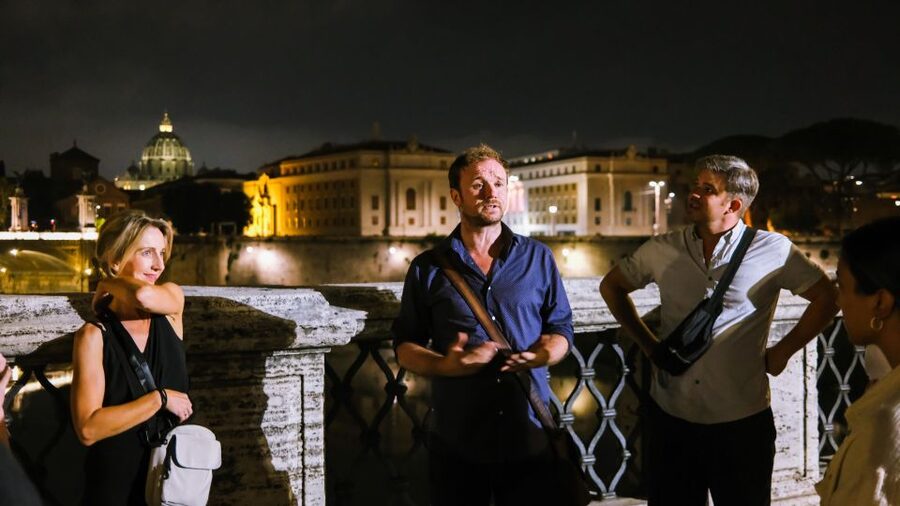
The walk then moves toward Ponte Sisto and Via Giulia. These stretches are important because they shift the experience from set-piece square to a moving story through the city.
Ponte Sisto gives the group a change of scene and a chance to connect different parts of central Rome. Via Giulia adds the feeling of a long, historic passage through the old city. The supplied route describes these locations as guided stops, so expect the guide to pause and explain their connection to the people and events under discussion.
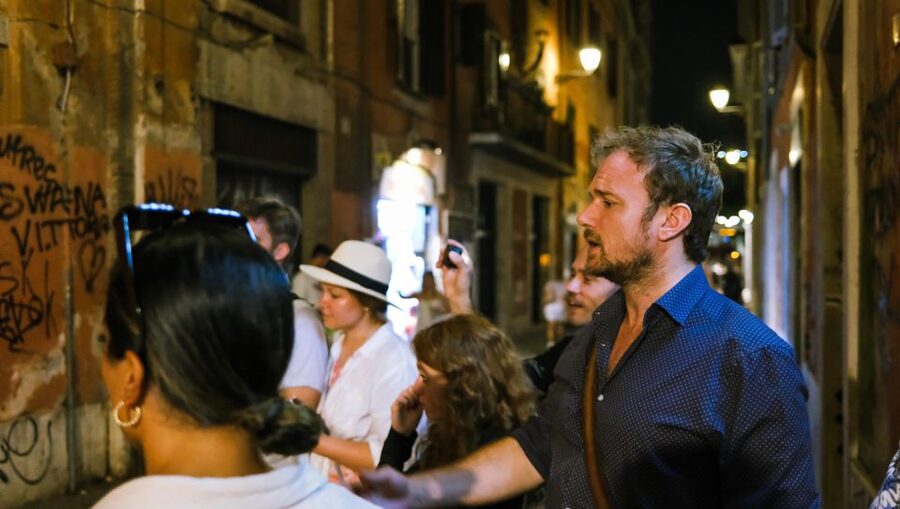
I like this walking format more than a talk in a single room. You are not only hearing about Rome’s forbidden side. You are physically moving through the kind of streets where these events unfolded. The narrow lanes and changing views help the stories feel connected to place, even when the people involved lived centuries ago.
Wear shoes you can walk in for two hours. The route is outdoors from start to finish, apart from the short bar break, and the walk takes place rain or shine. Bring an umbrella or raincoat if the forecast looks uncertain. Bad weather did not prevent one guide from keeping a group engaged, but rain can still make any walking tour less comfortable.
A completely different way to spend the day in Rome:
- Vatican: Museums & Sistine Chapel Entrance Ticket
★ 4.5 · 144,003 reviews - Vatican Museums & Sistine Chapel Tour with Optional Basilica
★ 4.3 · 67,413 reviews - Vatican Museums, Sistine Chapel & St Peter’s Basilica Guided Tour
★ 4.5 · 39,149 reviews - Rome: Colosseum, Palatine Hill and Roman Forum Guided Tour
★ 4.8 · 32,814 reviews
The ten-minute bar stop
A short stop at a local bar is included in the route, with about 10 minutes for drinks or the restroom. Food and drinks are not included, so you should bring money if you want something during the break.
This pause is useful for more than comfort. True crime stories can be dense, especially when several names and time periods come close together. Ten minutes gives you a chance to reset before the final part of the walk.
Do not expect a long sit-down aperitivo or a full meal. The stop is brief, and the experience remains a walking tour. One past participant wished for more time sitting in a bar while hearing additional stories, so keep your expectations modest. Think of this as a practical pause, not a central feature.
Cagliostro, Giulia Tofana, and the darker characters
After the break, the guide continues with stories about Cagliostro and Giulia Tofana. Cagliostro is presented as an enigmatic figure linked to clandestine activity, while Giulia Tofana is remembered as a notorious poisoner whose actions caused alarm in Rome.
These stories add variety to the route. The tour is not built around one type of crime. You move between executions, political maneuvering, poison, scandal, and strange personal histories. That range helps keep the two hours from feeling repetitive.
The guides’ storytelling skill matters most here. Names from past centuries can blur together if they are delivered as a list. Ben has been praised for his charismatic, relaxed delivery, while Ivana and Ariel have been singled out for passion, humor, and an ability to make the material easy to follow.
I would book this tour for the guide-led storytelling rather than for visual sights alone. You will pass through attractive central streets, but this is not a monument-entry tour. The value is in the narrative, the connections between people, and the way the guide frames familiar places.
Beatrice Cenci and the human cost of scandal
The route also follows the story of Beatrice Cenci, a tragic figure whose life was shaped by betrayal and violence. Her story adds a more personal and emotional layer to the tour.
The Cenci material is a good reminder that historical true crime is not only about clever villains. It can also be about abuse, family pressure, public judgment, and the limited choices available to people in another period. The guide’s tone matters here. A thoughtful storyteller can keep the story gripping while allowing its human cost to remain clear.
This is also where the tour may appeal to people who do not usually choose true crime. You do not need a strong interest in gruesome stories to appreciate accounts of social power and personal tragedy. The broader subject is how Rome’s institutions and families affected real lives.
Still, some material may be upsetting. The tour deals with heinous crimes, executions, and scandal, so it is not a light sightseeing walk for young children or anyone hoping to avoid grim subjects. The supplied information does not state an age limit, so use your own judgment based on your group.
Finishing near Castel Sant’Angelo
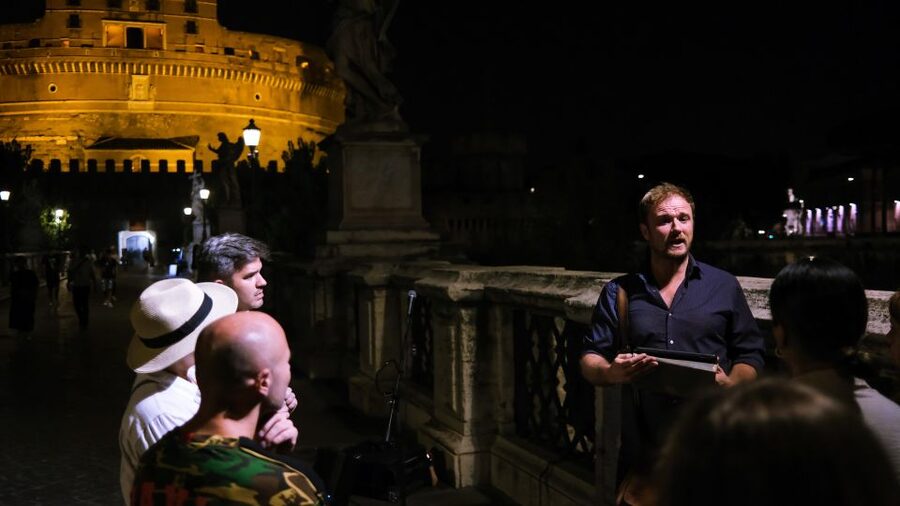
The tour ends at Castel Sant’Angelo, after a guided stop at the fortress. This gives the walk a strong final setting and places you near the Tiber and several central Rome routes.
Castel Sant’Angelo is an effective endpoint for a tour about secrecy and power. You finish beside one of Rome’s most recognizable historic structures, rather than ending in an anonymous street. The tour does not include admission inside, so do not expect an interior visit as part of the $29 price.
The location is useful for continuing your evening. You can treat the tour as a standalone activity, or use the end point as a natural transition to dinner or another Rome walk. Guides have also offered suggestions for restaurants and other things to do, which can be helpful early in a stay when you are still deciding how to use your time.
The route is listed as wheelchair accessible. Since the experience is outdoors and takes place across city streets, you may still want to confirm route details for your specific needs before booking.
How the guides shape the experience
The strongest praise for this tour centers on the guides. Ben is repeatedly described as funny, charismatic, and able to keep a group interested from beginning to end. Ivana is noted for her passion, warmth, humor, and strong command of the subject. Ariel is described as both engaging and clear, while Benjamin is praised for his jokes and useful answers about Rome.
Those names are useful when you compare tour dates, but guide assignments can vary. You should book for the format and subject, not assume a particular person will lead your departure unless the booking information confirms it.
The best quality here is performance. The guide does not simply point to a street and recite dates. The stories are delivered with rhythm, humor, and small details that help you remember them. A guide has even helped visitors with wider questions about Rome and offered suggestions for the rest of a trip.
The small group limit of 15 supports that style. You have a better chance of hearing the guide clearly, asking questions, and staying together in the old city. The group is still large enough to have energy, but it should feel more personal than a big coach-style walk.
Is $29 good value for two hours?
At $29 per person, this is a reasonably priced way to spend two hours in central Rome. You are paying for a live English-speaking guide, a planned route, local context, and a subject that is not covered by standard Colosseum, Forum, or Vatican tours.
The value is especially strong if you have already seen the major monuments or want something different from classic sightseeing. You do not pay for attraction admission, and the tour does not include food or drinks, so the price mainly reflects the guide and storytelling.
I would not compare it directly with a ticketed archaeological visit. A museum or monument tour gives you access to objects and interiors. This experience gives you a moving story through public streets. Choose it for the latter.
The reserve now and pay later option also helps if your Rome plans are still changing. You can cancel up to 24 hours ahead for a full refund. Check the available start times when booking, since the exact departure schedule is not fixed in the basic activity details.
Who should book this walk?
You are a strong match if you like:
- Historical crime and political scandal
- Stories about lesser-known figures
- Evening walks through central Rome
- Guides who use humor and performance
- Small groups rather than large organized tours
- A two-hour activity that fits around major sightseeing
You may want another tour if you mainly want modern true crime, ghost stories, or frightening material. One person specifically expected more recent cases, ghosts, and creepy stories, and found the experience more focused on dark history and general Roman context.
I would also think carefully if you dislike outdoor walking in uncertain weather. The tour runs rain or shine, and there is no indoor alternative described. Bring suitable clothing and plan for a full two hours on your feet, with a brief stop at a bar.
Should you book Secrets of Rome?
Book it if you want Rome told through its scandals, crimes, and troubled characters rather than through its grandest monuments. At $29, the small group and strong guide-led format make it a good-value add-on, especially on your first evening or after you have covered the main sights.
Do not book it expecting a modern crime investigation or a nonstop haunted walk. You will get historical true crime, political intrigue, tragedy, and dark humor, with the quality depending heavily on the storyteller assigned. If that mix sounds right, this is an easy way to see Rome’s backstreets with a sharper sense of what happened there.
FAQ
How long is the Secrets of Rome tour?
The tour lasts two hours.
How much does the tour cost?
The listed price is $29 per person.
What language is the tour conducted in?
The tour is conducted in English with a live guide.
Where does the tour start?
The meeting point is in front of the statue in the middle of Campo de’ Fiori. Look for a guide holding a sign saying Rome’s Dark Side.
Where does the tour finish?
The tour finishes at Castel Sant’Angelo.
What locations are included on the route?
The route includes Campo de’ Fiori, Piazza Farnese, Ponte Sisto, Via Giulia, a local bar stop, another guided location, and Castel Sant’Angelo.
Is food or drink included?
No. Food and drinks are not included, although there is a short stop at a local bar for optional drinks and a restroom break.
Is the tour wheelchair accessible?
Yes, the activity is listed as wheelchair accessible.
Can I cancel the booking?
Yes. You can cancel up to 24 hours in advance for a full refund. A reserve now and pay later option is also available.
Newest reviews from Rome
- ROME:Colosseum & Ancient Rome – private/small group TOUR★ 5.0 · 24 reviews
- Off the Beaten Track in Rome: Rione VI Parione Private Tour★ 5.0 · 24 reviews
- Cinematic Photoshoot in Rome★ 5.0 · 24 reviews
- Rome: Best of Colosseum and Roman Forum Small Group Guided Tour★ 4.5 · 24 reviews
- The Labyrinth of Rome between catacombs and ancient quarries★ 4.5 · 24 reviews
- Vatican and Trionfale Market Tour with Wine and Food Tasting★ 5.0 · 24 reviews
- private tour: Vatican Museums, Sistine Chapel, St. Peter’s Basilica★ 4.5 · 24 reviews
- Colosseum guided tour with Virtual Reality★ 5.0 · 24 reviews
Historical Tours, compared.
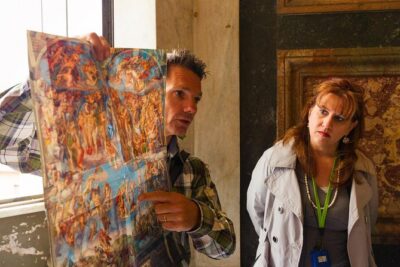
Rome in a Day Tour with Vatican, Colosseum and Historic Center
Read our review →
Rome Food Tour in the Historic Centre with 8+ Food Tastings
Read our review →
Forbidden History Walking Tour & Pub Crawl with Drinks
Read our review →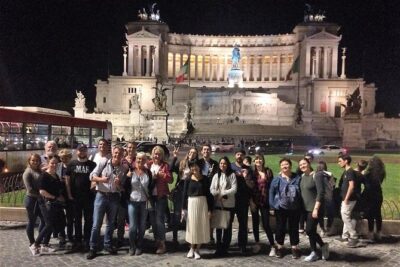
Twilight Treasures: An Evening Tour Through Rome’s Rich History
Read our review →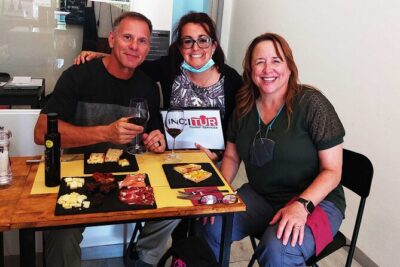
Heritage Site: Villa d’Este and Hadrian’s Villa in Tivoli Tour from Rome
Read our review →
Piazza del Popolo and Historical Sights Walking Tour in Rome
Read our review →Browse the lists this tour appears in