Reviewed · VATICAN TOURS
Tour Squares of Rome and Vatican
Rome’s story unfolds in layers on this walk, from the ancient Pantheon to Bernini’s fountains and the broad sweep of St. Peter’s Square. You’ll see imperial ruins, Renaissance and Baroque monuments, and the Vatican area in one route that begins at the Triton Fountain and ends in Vatican City.
I like the low price and the wide range of sights. I also like the route’s clear sense of progress, moving from central Rome toward the Vatican rather than circling one small district. The main caution is the unclear duration, listed as roughly 2 to 45 minutes, along with a complaint about a paid booking joining a free tour. Confirm exactly what your $17.44 covers before you go.
In This Review
- Key points to know
- From the Triton Fountain into Rome’s historic center
- The Pantheon gives the ancient section real weight
- Trevi Fountain is the big visual reward
- Piazza Navona connects Bernini and public life
- Castel Sant’Angelo adds a fortress to the route
- St. Peter’s Square is the natural finish
- What $17.44 really buys you
- Timing, group size, and practical fit
- Who will get the most from this Rome walk
- Should you book the Squares of Rome and Vatican tour?
- FAQ
- Where does the tour start?
- Where does the tour end?
- How much does the experience cost?
- How long does the tour last?
- Is the Pantheon included?
- Does the tour include the Vatican Museums?
- How many people can join the group?
- Is the tour accessible by public transportation?
- Can I cancel for a refund?
Key points to know
- The route starts at Fontana del Tritone: Meet at Piazza Barberini, a central location near public transportation.
- The Pantheon is listed as an interior visit: This is more useful than simply viewing its outside, though other admission details are not stated.
- The walk covers famous Baroque fountains: Expect Trevi Fountain, the Triton Fountain, the Four Rivers Fountain, Neptune Fountain, and the Moor Fountain.
- The finish is St. Peter’s Square: The activity ends in Vatican City, not back at the starting point.
- Sunday brings a possible papal blessing: The tour says it ends with the Angelus on Sundays.
- The group can reach 30 people: That keeps the price low but may make close listening harder in busy squares.
From the Triton Fountain into Rome’s historic center
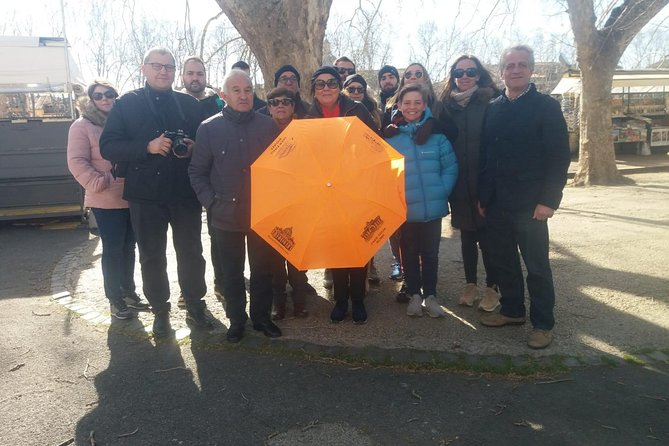
Your meeting point is Fontana del Tritone, or the Triton Fountain, in Piazza Barberini. This is a practical start for a walk through the Centro Storico, and it gives the tour an immediate Bernini connection. The fountain was designed by Gian Lorenzo Bernini, whose work appears again later at Piazza Navona.
The route is designed as a chronological sweep, though Rome rarely behaves like a neat history book. Ancient structures sit beside churches, palaces, cafés, and traffic. I like this format because you keep seeing how one era reused the spaces of another. You are not confined to a single monument or museum room.
The tour description says the guide will explain imperial Rome, Renaissance Rome, and Baroque Rome. That promise matters. A walk past famous sights can become a string of photo stops unless someone explains why each place belongs to a larger story. The supplied details indicate that the guide is meant to connect the monuments rather than simply point them out.
The group size can reach 30 people. That is not a tiny walking tour, so stay close to the guide and arrive at the stated meeting place with your mobile ticket ready. The activity uses mobile admission, which avoids printing one more document, but the information does not name the guide or provide a distinctive sign beyond the meeting point.
More ways to visit the Vatican:
- Vatican: Museums & Sistine Chapel Entrance Ticket
★ 4.5 · 144,003 reviews - Vatican Museums & Sistine Chapel Tour with Optional Basilica
★ 4.3 · 67,413 reviews - Vatican Museums, Sistine Chapel & St Peter’s Basilica Guided Tour
★ 4.5 · 39,149 reviews
The Pantheon gives the ancient section real weight
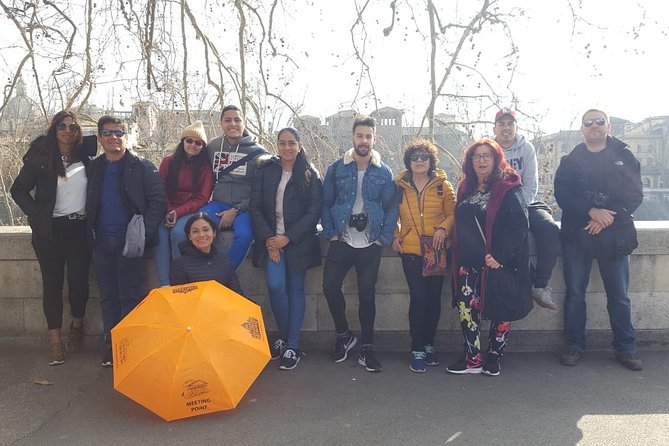
The Pantheon is the strongest ancient stop on the route because you are scheduled to enter it. Its enormous concrete dome and central opening make more sense from inside than from a quick look at the façade. Even without a long visit, stepping into the building gives the imperial section of the walk a physical focus.
The Pantheon has served different purposes across the centuries, and that makes it a useful bridge to the later parts of Rome. You begin with imperial construction, then move into the city shaped by popes, artists, and public ceremonies. The tour’s broad theme depends on these transitions, and the Pantheon helps make them visible.
The details do not state how long you stay inside or list a separate admission fee. Do not assume that every monument on the route includes entry. The Pantheon is specifically described as an interior visit, while the other sights are presented as places you will see along the way.
The phrase describing the duration is also unclear. It says approximately 2 to 45 minutes, which does not fit the number of monuments named. Ask the provider to confirm the expected walking time and schedule before booking if you need to coordinate trains, timed entries, or a Vatican visit afterward.
Trevi Fountain is the big visual reward
Trevi Fountain is the route’s most familiar image, and it earns its place. The fountain is theatrical, crowded, and hard to take in at a glance. A guide can help you notice the arrangement of figures, water, stone, and the surrounding buildings instead of treating it as a quick coin-toss photo stop.
The experience does not promise a private viewing area or a quiet visit. Expect a public square with plenty of activity, especially at popular hours. The value here is not solitude. It is getting the fountain placed within the Baroque chapter of Rome and seeing it as part of the city’s public art system.
After the Triton Fountain and Trevi Fountain, the route includes other major fountains. That gives the walk a useful theme. You are not just collecting landmarks. You are tracing how water, sculpture, and urban design were used to decorate Rome and display papal power.
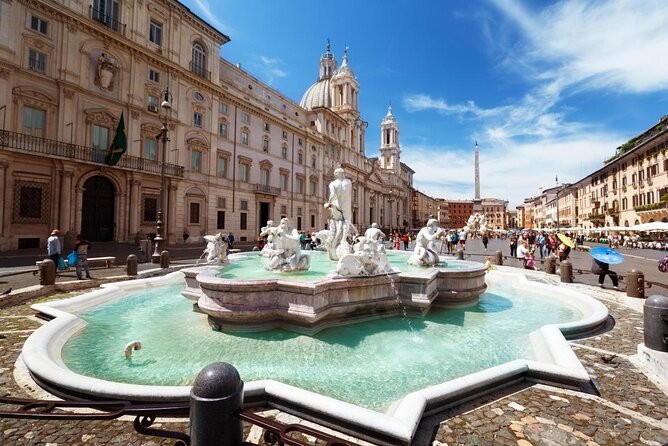
The full list includes the Fountain of the Four Rivers, the Neptune Fountain, and the Moor Fountain at Piazza Navona. The wording also names the Triton Fountain, which serves as the starting point. These locations make the walk attractive to anyone who enjoys sculpture and city squares more than long museum visits.
Piazza Navona connects Bernini and public life
Piazza Navona is one of Rome’s best places for seeing Baroque design in an open setting. The Fountain of the Four Rivers sits at its center, and the Neptune and Moor fountains are also part of the planned route. Here you can compare several works in one large piazza rather than viewing each fountain as an isolated monument.
The Four Rivers Fountain is credited in the tour description to Bernini’s Baroque world, while Michelangelo Buonarroti and Bernini are named as the major artists connected to the Renaissance and Baroque sections. The description does not assign every named fountain to a specific artist, so your guide’s explanation will matter if you want precise art history.
I like this part of the walk because it gives you room to understand Rome as a city built for public display. Fountains were useful, but they were also statements. Grand squares offered space for ceremonies, movement, and spectacle. That is a more rewarding idea to carry with you than a list of fountain names.
The drawback is that the route may move quickly. With many monuments packed into one experience, you should not expect a long art lecture at every fountain. If you want detailed treatment of each sculpture, a specialist art tour would likely suit you better.
A completely different way to spend the day in Rome:
- Rome: Colosseum, Palatine Hill and Roman Forum Guided Tour
★ 4.8 · 32,814 reviews - Rome: Guided Tour of Colosseum, Roman Forum & Palatine Hill
★ 4.7 · 27,897 reviews - Rome: Colosseum & Forum with Audio Guide App -Optional Arena
★ 4.2 · 24,770 reviews - Rome: Colosseum, Roman Forum and Palatine Hill Guided Tour
★ 4.5 · 23,903 reviews
Castel Sant’Angelo adds a fortress to the route
Castel Sant’Angelo is included as a major sight between central Rome and the Vatican area. Its round bulk and fortified appearance make it different from the fountains and open piazzas earlier in the walk. It also helps show how Rome’s older structures were adapted for later needs.
The tour description calls attention to the ruins of the Domitian Flavian Stadium and Castel Sant’Angelo. The wording is not fully clear about the exact viewing point or whether any interior access is included. Treat Castel Sant’Angelo as an exterior sight unless the provider confirms an entrance.
This is one of the places where the tour’s broad historical approach can work well. Rome’s monuments are rarely one-period objects. A building or ruin may have an ancient origin, a medieval use, and a later role tied to the papacy. Castel Sant’Angelo gives the route a strong visual marker as it approaches the Vatican.
You should also remember that the finish is not near the start. This is a one-way experience, beginning at Piazza Barberini and ending at St. Peter’s Square. That is convenient if you plan to spend time around the Vatican afterward, but less useful if you need to return to your hotel in the Barberini area.
St. Peter’s Square is the natural finish
The tour ends at St. Peter’s Square in Vatican City. This is a satisfying endpoint because the route moves from the civic and artistic center of Rome toward the heart of the Catholic world. The square is large enough to make the final arrival feel different from the tighter streets and piazzas earlier in the walk.
The description refers to leaving the Vatican Museums, but it does not clearly promise entrance to the museums or include museum admission. Do not book this activity expecting a Vatican Museums tour, Sistine Chapel entry, or a guided visit inside St. Peter’s Basilica unless those details are confirmed separately.
That distinction matters for planning. You may finish near major Vatican sights, but being near them is not the same as having an entry reservation. If you want to visit the museums, arrange that as a separate part of your Rome schedule and allow time beyond this activity.
On Sundays, the tour says it will end with the papal blessing at the Angelus. This is the most date-specific feature of the experience. The information does not state the exact Sunday schedule or guarantee access to a particular viewing position, so confirm the timing before relying on it as the centerpiece of your day.
What $17.44 really buys you
At $17.44 per person, this is priced like an introductory city walk rather than a private sightseeing experience. The value is strongest if you want orientation, a broad historical story, and an efficient path through several famous places.
You are paying for the route and guiding service, not a long list of confirmed monument entries. The Pantheon is named as an interior stop. The other sights are described as places you will visit or see, but separate admissions are not listed. That makes the low price easier to understand.
There is one important pricing warning. A complaint describes someone paying through Viator and then discovering that the rest of the group had joined what was presented as a free tour. The guide reportedly could not explain the difference. This does not erase the overall 4.6 rating from 133 ratings, but it is a real reason to check the booking terms, meeting instructions, and provider identity.
The operator is RomaTourGratis, a name that itself suggests a free-walking-tour model. If you book through a paid platform, make sure you know what the charge provides. You may be paying for a reserved place, platform handling, or a specific version of the walk, but the supplied information does not explain the distinction.
Timing, group size, and practical fit
The maximum group size is 30 people. For $17.44, that is understandable, but it affects the feel of the walk. You may need to stand close to hear commentary, and the guide may have limited time for individual questions.
The duration information needs clarification. The stated estimate of 2 to 45 minutes is unusually short for the number of places named, which include the Pantheon, multiple fountains, Castel Sant’Angelo, and St. Peter’s Square. It may be a data error, a shortened estimate, or a reference to one portion of the activity. Do not build a full day around the published timing without asking RomaTourGratis for a clearer answer.
The meeting point is Fontana del Tritone, Piazza Barberini, 00187 Rome. The end point is St. Peter’s Square, Piazza San Pietro, 00120, Vatican City. Since the route is one way, plan your next step from the Vatican side of town.
Most people can participate, and service animals are allowed. The activity is near public transportation, which helps at both ends. The mobile ticket is useful for a last-minute phone-based check-in, though confirmation is supposed to arrive at booking.
Free cancellation is available up to 24 hours before the start time for a full refund. Changes made within 24 hours are not accepted, and the amount paid is not refunded for a late cancellation. The activity also requires a minimum number of participants, so a cancellation by the operator may lead to another date, another experience, or a full refund.
Who will get the most from this Rome walk
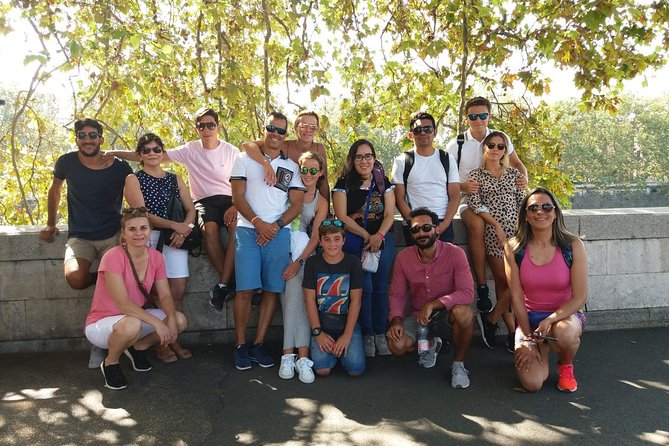
I would choose this tour if you have limited time and want a first look at Rome’s central sights without paying for a costly private guide. The sequence gives you ancient architecture, famous fountains, a fortress, and the Vatican area in one outing.
It also suits you if you enjoy outdoor art and city scenes. The fountains at Piazza Navona and Trevi Fountain are more rewarding when grouped with the Triton Fountain and the Roman setting around them. You get a clear theme, even if the commentary may not be highly specialized.
This is less suitable if you need exact timing, small-group attention, or guaranteed Vatican Museums access. It is also not the best choice if you want to linger inside every monument. The group size and unclear duration point to a brisk orientation rather than a slow study tour.
Sunday may be the best day for you if the Angelus matters. Still, confirm the schedule. The tour says it ends with the papal blessing, but it does not provide enough detail to promise exactly how the Sunday portion will work.
Should you book the Squares of Rome and Vatican tour?
Book it if you want a very inexpensive introduction to Rome that links the Pantheon, Baroque fountains, Castel Sant’Angelo, and St. Peter’s Square. The one-way route and broad historical scope are its strongest features, and the 4.6 rating from 133 ratings suggests that the format has worked well for many people.
Before paying, ask RomaTourGratis to clarify three points: the actual duration, which admissions are included, and why a paid booking might join a free tour. If those answers are clear and you value a wide survey over detailed monument visits, $17.44 can be a sensible use of your first hours in Rome.
FAQ
Where does the tour start?
It starts at Fontana del Tritone in Piazza Barberini, Rome, postal code 00187.
Where does the tour end?
It ends at St. Peter’s Square in Vatican City, at Piazza San Pietro, postal code 00120.
How much does the experience cost?
The listed price is $17.44 per person.
How long does the tour last?
The listed approximate duration is 2 to 45 minutes. Because that estimate is unclear for the number of sights included, confirm the expected duration with the provider before booking.
Is the Pantheon included?
The experience description says you will enter the Roman Pantheon. It does not provide separate details about the length of the visit or any additional admission charge.
Does the tour include the Vatican Museums?
The information mentions leaving the Vatican Museums, but it does not clearly state that museum entry or a museum tour is included. Confirm this directly before booking.
How many people can join the group?
The maximum group size is 30 participants.
Is the tour accessible by public transportation?
The activity is near public transportation, according to the supplied information.
Can I cancel for a refund?
Yes. You can cancel at least 24 hours before the start time for a full refund. Cancellations or changes made less than 24 hours before the start time are not refunded.
Newest reviews from Rome
- Fiumicino Airport Arrivals Private Transfer Free with private half day tour of Rome★ 5.0 · 23 reviews
- Full Day Tour of Rome★ 5.0 · 23 reviews
- Private Tour – Palazzo Barberini★ 5.0 · 23 reviews
- From Rome: Private Day-Tour of Tuscany★ 4.3 · 23 reviews
- Rome at the Sunset; Navona, Trevi Fountain, Pantheon and more★ 5.0 · 23 reviews
- Rome: Wonders of Ancient Rome at Dusk★ 4.8 · 23 reviews
- Private Golf Cart Twilight Tour Rome★ 4.5 · 23 reviews
- Rome Key Sights Golf Cart Tour | Private & Groups★ 5.0 · 23 reviews
Vatican Tours, compared.
Vatican Museums & Sistine Chapel Tour with Optional Basilica
Read our review →
Vatican Museums, Sistine Chapel & St Peter’s Basilica Guided Tour
Read our review →
Vatican Museums, Sistine Chapel & Basilica Tour
Read our review →
Vatican Museums & Sistine Chapel Skip-the-Line Entry Ticket
Read our review →Vatican Museums, Sistine Chapel & Basilica Tour
Read our review →
Skip-the-Line Group Tour of the Vatican, Sistine Chapel & St. Peter’s Basilica
Read our review →