
Reviewed · UNDERGROUND ROME TOURS
Trevi Fountain Underground Aqueduct and Spanish Steps Tour
The most surprising part of this Rome tour is not the Trevi Fountain itself. It is what lies below the modern city: an ancient water tank built in 19 BC, still connected to the aqueduct that feeds the fountain today. I like the way this tour links famous sights with the less obvious story of Roman water. I also like its small-group size, capped at 12 people, which suits a relaxed walk and makes it easier to hear guides such as Sabrina, Federica, and Riccardo.
The two-hour route is an efficient way to connect the Spanish Steps and Trevi Fountain while adding history most visitors miss. The main drawback is the pace. The guide spends time explaining each stop, and one review found the tour slow because of the standing and listening. You should choose it for stories and context, not for a fast sightseeing sprint.
In This Review
- Key points to know before booking
- Why Rome’s water story makes this tour different
- Starting at the Spanish Steps, where the name misleads you
- The Column of the Immaculate Conception and local tradition
- Seeing the Acquedotto Vergine above ground
- Ancient Rome beneath Rinascente Roma Tritone
- Trevi Fountain with more than a coin toss
- Going underground at Vicus Caprarius
- How the two-hour pace feels
- The guides and the importance of clear English
- Who will get the most from this Rome walk
- Is $62.75 a fair price?
- Should you book the Trevi Fountain Underground Aqueduct and Spanish Steps Tour?
- FAQ
- How long does the tour last?
- Where does the tour begin?
- Where does the tour finish?
- Is admission to Vicus Caprarius included?
- How large is the tour group?
- Is free cancellation available?
Key points to know before booking
- The underground finale is the main event: Vicus Caprarius reveals a Roman water tank from 19 BC beneath the city.
- The route connects two famous landmarks: Begin at the Spanish Steps and finish at the Trevi Fountain.
- A modern department store hides ancient remains: Rinascente Roma Tritone provides one of the tour’s most unexpected stops.
- The group is limited to 12 people: That helps keep the walk informal and easier to follow.
- The tour lasts about two hours: It fits neatly between larger Rome attractions.
- Expect easy walking and a few steps: The experience suits most people who can manage that level of movement.
Why Rome’s water story makes this tour different
Many first visits to Rome focus on statues, churches, and grand ruins. This route takes a more practical path. It asks how the city worked, especially how water reached Roman homes, fountains, and public spaces.
That question gives the walk a clear thread. You begin at the Spanish Steps, see the aqueduct above ground, pass through a modern building that covers ancient remains, and end below street level at Vicus Caprarius. The city’s past does not sit in one isolated archaeological park. It runs beneath shops, streets, and famous squares.
I find that idea especially useful if you have already seen the major monuments. The tour gives familiar places more meaning without requiring a full day or a long transfer across Rome.
At $62.75 per person, this is not the cheapest way to see the Spanish Steps and Trevi Fountain. You can visit both public landmarks without paying an admission fee. The price makes more sense if you want an English-speaking guide, a small group, and access to the underground archaeological site at Vicus Caprarius, where admission is included.
The tour is recommended by 99 percent of participants and carries a 4.9 rating from 91 reviews. Those figures point to a strong experience overall, though the comments also make one point clear: the quality of the visit depends partly on how easily you follow the guide’s English. One person found a heavy accent difficult to understand, while several others praised the guides for being clear, lively, and engaging.
More underground Rome tours:
- Colosseum: Underground and Ancient Rome Tour
★ 4.7 · 12,691 reviews - Rome: Crypts and Catacombs Underground Tour with Transfers
★ 4.6 · 5,341 reviews - Expert Guided Tour of Colosseum Arena OR Underground, and Forum
★ 4.5 · 5,041 reviews
Starting at the Spanish Steps, where the name misleads you
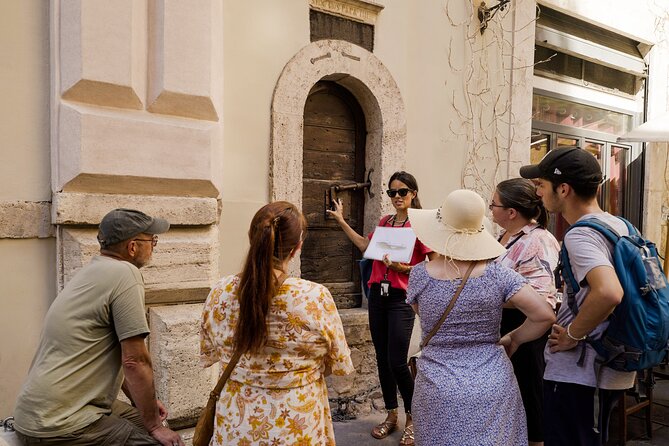
The meeting point is Piazza di Spagna, the broad square at the foot of the Spanish Steps. This is a useful starting place because the guide begins with the square itself, not just the staircase.
You learn how Romans use the area today and how it changed over time. The setting has long carried a glamorous reputation, and the tour places that modern image beside its older Roman connections. It also explains the name: the Spanish Steps are not Spanish. That small correction is a good reminder that Rome’s labels often hide complicated political and cultural stories.
The steps lead your attention upward, but the tour soon turns toward water. At their base, the Barcaccia Fountain is still fed by an ancient Roman aqueduct more than 2,000 years old. This is where the route’s main subject becomes visible in an everyday city setting.
The stop lasts about 30 minutes. That is enough time for explanation and orientation, but it also means you will spend a portion of the opening section standing in a public square. If you prefer constant movement, this may feel slow. If you like understanding what you are looking at, the pause gives the rest of the route a useful foundation.
The Column of the Immaculate Conception and local tradition
The next stop is the Colonna dell’Immacolata, located in Piazza di Spagna. The column is tied to local Christmas traditions, adding a seasonal and religious layer to the walk.
This is a short stop of about 15 minutes. It is not the tour’s central attraction, but it helps show how Roman places gather new meanings over time. Ancient engineering, later religious customs, and modern city life all occupy the same few streets.
You will not need a separate admission ticket for this stop. The value comes from the guide’s explanation and the way it fits into the wider route.
Seeing the Acquedotto Vergine above ground
At the Acquedotto Vergine, the aqueduct becomes more than a story about something hidden below. You see portions of it above ground, along with a mysterious door beside the remains.
The stop lasts about 15 minutes. It is brief, but it changes the way you read central Rome. Ancient infrastructure is not always marked by a giant monument. Sometimes it appears as a wall, a passage, or an odd feature beside a modern street.
This is also where the walking route begins to feel more connected. The Barcaccia Fountain introduced the aqueduct’s living role. Here, the structure itself becomes easier to picture. The route then carries that idea into a modern building.
More Trevi and Pantheon walks:
- Rome: Pantheon Timeless Marvel Guided Tour with Entry Ticket
★ 4.9 · 4,002 reviews - Rome: Pantheon Priority Entry Ticket & Audio Guide App
★ 4.1 · 3,234 reviews - Enjoy Spritz and Pasta Making in Piazza Navona
★ 5.0 · 1,681 reviews - Rome: Trevi Fountain and Underground Guided Tour
★ 4.3 · 1,664 reviews
Ancient Rome beneath Rinascente Roma Tritone
One of the tour’s best surprises comes at Rinascente Roma Tritone. This is a department store, but shopping is not the reason you stop there.
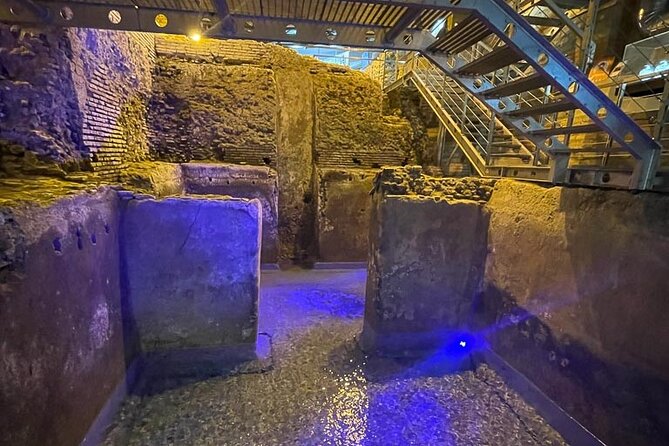
Below the store are ruins of the only ancient Roman aqueduct still functioning today. That detail gives the tour its strongest lesson about Rome: the modern city was built around and above older layers rather than replacing them completely.
I like this stop because it breaks the usual museum pattern. You do not walk through a clearly separated ancient site. You enter a modern commercial building and find Roman infrastructure beneath it. The contrast makes the age of the aqueduct easier to grasp.
The visit here takes about 15 minutes. Again, the stop depends on the guide’s explanation, so expect a short talk rather than a long archaeological visit. The attraction is the unexpected setting and the connection between present-day Rome and the ancient water system.
Trevi Fountain with more than a coin toss
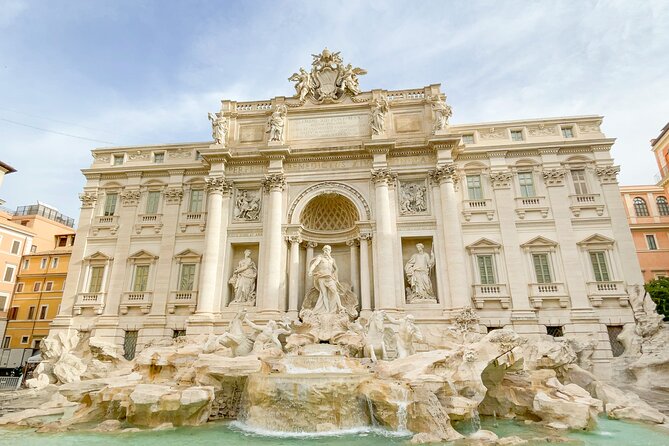
The Trevi Fountain is the route’s most famous sight and its endpoint before the underground visit. It is one of Rome’s most photographed places, but the tour asks you to look beyond its familiar image.
The guide explains legends and stories connected with the fountain from ancient times to the present. You also learn why the water matters, since the aqueduct system is not just a backdrop to the fountain’s design. It is part of the fountain’s identity.
This stop lasts about 15 minutes. That is enough for context, though not a long period for independent sightseeing. If you want unhurried time at the fountain, plan to return on your own after the tour or visit before the scheduled start.
The route ends at Trevi Fountain above ground, then continues below the city at Vicus Caprarius. That arrangement gives the famous landmark a useful payoff. You first see the fountain, then trace its water source into the archaeological layers beneath Rome.
Going underground at Vicus Caprarius
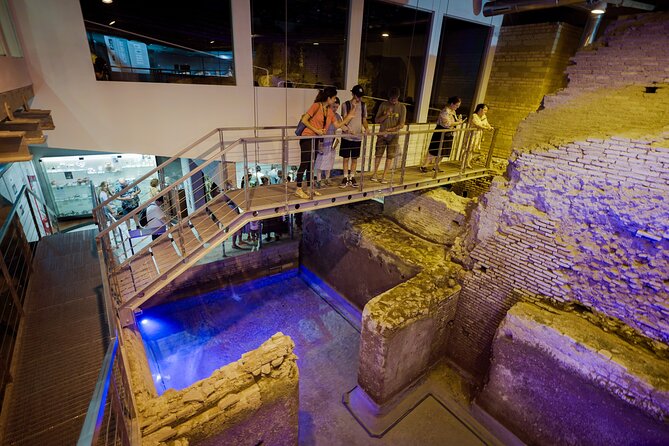
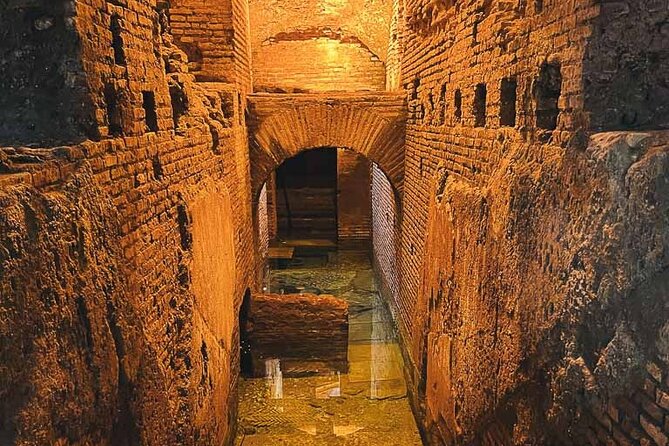
Vicus Caprarius, also called the City of Water, is the tour’s main reason to book. Here you walk underground to see the ancient water tank connected with the aqueduct, built in 19 BC.
The site shows more than one Roman structure. It reveals layers of buildings and homes occupied through different centuries. The experience is often described as a kind of historical lasagna, with one period placed over another. That comparison works because you can see how Rome grew upward while leaving parts of older life below.
The water tank provides a direct link to Trevi Fountain. Instead of treating the fountain as a single work of art, you see the long-running system that helps explain its water supply. It is a practical story, and for me, practical stories often make ancient Rome easier to understand than a list of emperors and dates.
This section lasts about 30 minutes and is the only stop with included admission. One person wished there had been more time or more areas to see underground, so you should set your expectations correctly. Vicus Caprarius is a focused archaeological visit, not an extensive subterranean tour of Rome.
Still, it is a strong finish. The underground site gives physical form to the idea that the city has many levels. You are not simply told that ancient Rome lies beneath the present city. You see the remains under a department store, streets, and the area around Trevi.
How the two-hour pace feels
The advertised duration is about two hours, with roughly 30 minutes at the Spanish Steps, 15 minutes at the column, 15 minutes at the visible aqueduct, 15 minutes at the department store, 15 minutes at Trevi Fountain, and 30 minutes underground.
That schedule is compact but not rushed. The route covers more than eight points of interest within the main stops, so the guide has to pause often. You should expect short walks followed by explanations at each location.
This works well in a packed Rome itinerary. You can fit it between larger visits, and the route does not require a full day. It also offers some shelter from the weather because the experience moves between outdoor locations and underground spaces.
The tradeoff is that the tour is not designed for people who want to keep moving. If you prefer a guide who talks briefly and lets you explore alone, the standing portions may test your patience. If you enjoy asking questions and hearing the background behind ordinary-looking places, the rhythm should suit you.
The guides and the importance of clear English
The experience is offered in English, and the guide makes a major difference. Sabrina is repeatedly praised for making the history light, engaging, and easy to follow. Federica is described as energetic and able to bring Rome’s sites to life, while Riccardo is noted for clear explanations and humor.
Those individual names matter because this is a talk-centered tour. You are not simply being led from one address to another. The guide supplies the connections between the Spanish Steps, the aqueduct, the fountain, and the underground site.
One concern raised was a heavy accent that made some explanations difficult to understand. That appears to be an individual issue rather than a feature of every departure, but it is worth keeping in mind if clear spoken English is especially important to you.
The maximum group size is 12. That is small enough for a more casual atmosphere than a large city walk, and it should make it easier to stay with the guide through streets and indoor spaces. Confirmation arrives when you book, and the tour uses a mobile ticket.
Who will get the most from this Rome walk
I would choose this tour if you want a short introduction to Roman engineering and the layered structure of the city. It suits first-time visitors who want the famous landmarks explained, as well as repeat visitors who have already seen the major outdoor sights.
It is a good match for families and mixed-age groups who can manage easy walking and a few steps. One family described the length as comfortable and appreciated the mix of indoor and outdoor locations. Most people can participate, according to the practical details provided.
History fans will get the most from the route, especially if aqueducts, urban archaeology, and ancient water systems interest you. The tour is less suitable if your only goal is to take photographs at the Spanish Steps and Trevi Fountain.
You should also leave room in your schedule. The tour runs for approximately two hours, but the value comes from listening, not racing between stops. Arrive ready to stand, walk, and pay attention to details that may look ordinary at first.
Is $62.75 a fair price?
The price is reasonable only if you want the underground access and interpretation. The Spanish Steps, Piazza di Spagna, the column, the visible aqueduct, and Trevi Fountain are public locations, so the paid portion is primarily the guide’s time, the small group, and entry to Vicus Caprarius.
At 30 minutes, the underground visit takes up a quarter of the tour. That is important when comparing this experience with a general Rome sightseeing walk. You are paying for a focused theme rather than a broad survey of the city.
I would consider it good value for a visitor who might otherwise pass the aqueduct and underground ruins without understanding them. I would skip it if you have limited money and are happy to see Trevi Fountain and the Spanish Steps on your own.
Free cancellation is available until 24 hours before the start time. Changes made less than 24 hours before departure are not accepted, and a full refund is offered if the minimum group size is not reached and the experience is canceled.
Should you book the Trevi Fountain Underground Aqueduct and Spanish Steps Tour?
Book this tour if you want Rome to make more sense, not simply look beautiful. The route shows how an ancient aqueduct still shapes a famous fountain, how ruins can survive beneath a department store, and how homes and streets accumulated in layers over centuries.
The strongest reason to go is Vicus Caprarius, paired with the guide’s explanation of Roman water. Sabrina and Federica have received especially strong praise for making the subject lively, and Riccardo is noted for humor and clear explanations.
Skip it if you dislike standing while a guide talks or want a fast, photo-focused walk. For everyone else, the two-hour length, 12-person limit, and unusual underground finish make this a useful addition to a Rome schedule.
FAQ
How long does the tour last?
The tour lasts approximately two hours.
Where does the tour begin?
The tour begins at the Spanish Steps in Piazza di Spagna.
Where does the tour finish?
The route finishes with the underground visit at Vicus Caprarius, near the Trevi Fountain area.
Is admission to Vicus Caprarius included?
Yes. Admission to Vicus Caprarius, the underground archaeological site, is included.
How large is the tour group?
The tour has a maximum of 12 participants.
Is free cancellation available?
Yes. You can cancel up to 24 hours before the experience starts for a full refund. Cancellations or changes made less than 24 hours before the start time are not accepted.
Newest reviews from Rome
- ROME:Colosseum & Ancient Rome – private/small group TOUR★ 5.0 · 24 reviews
- Off the Beaten Track in Rome: Rione VI Parione Private Tour★ 5.0 · 24 reviews
- Cinematic Photoshoot in Rome★ 5.0 · 24 reviews
- Rome: Best of Colosseum and Roman Forum Small Group Guided Tour★ 4.5 · 24 reviews
- The Labyrinth of Rome between catacombs and ancient quarries★ 4.5 · 24 reviews
- Vatican and Trionfale Market Tour with Wine and Food Tasting★ 5.0 · 24 reviews
- private tour: Vatican Museums, Sistine Chapel, St. Peter’s Basilica★ 4.5 · 24 reviews
- Colosseum guided tour with Virtual Reality★ 5.0 · 24 reviews
Underground Rome Tours, compared.
Colosseum: Underground and Ancient Rome Tour
Read our review →
Crypts and Catacombs Underground Tour with Transfers
Read our review →
Expert Guided Tour of Colosseum Arena OR Underground, and Forum
Read our review →
Colosseum Underground Small Group Guided Tour
Read our review →
St. Peter’s Basilica, Dome Climb, and Underground Tour
Read our review →

Colosseum Underground & Ancient Rome Guided Tour
Read our review →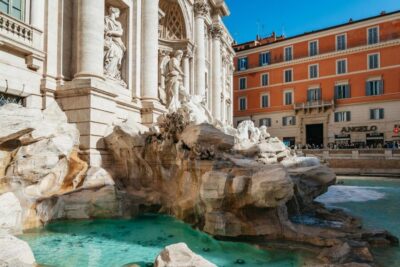
Browse the lists this tour appears in