
Reviewed · WALKING TOURS
Via Crucis Catholic Pilgrim Walking Tour in Rome
Rome’s Via Crucis route links some of the city’s most important Catholic churches, ending with relics associated with the Passion of Christ. The small group, capped at five people, gives guides such as Tom and Wen room to explain theology, Scripture, art, and Church history rather than simply point at buildings.
I like the quiet pause at Santa Prassede, where early Christian mosaics and the traditional scourging pillar make a sharp contrast with Rome’s busy streets. I also like the final stop at Santa Croce in Gerusalemme, where relics connected with the True Cross and Christ’s Passion give the walk a clear purpose. The main drawback is physical: this is a demanding route in summer, and you need to walk more than 2 kilometres.
In This Review
- Key points to know before booking
- What this Catholic walking tour is really about
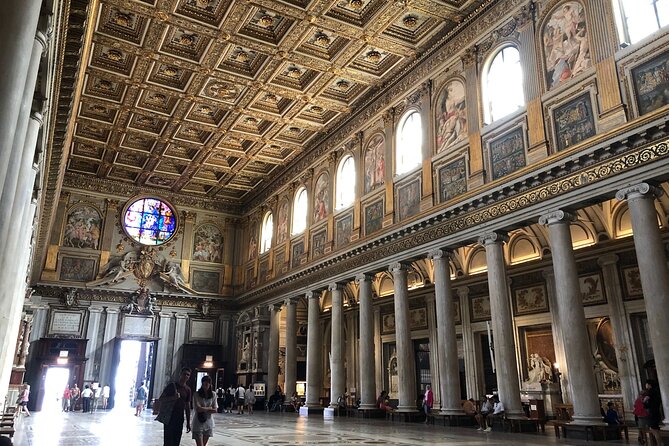
- Santa Maria Maggiore begins the morning with scale
- Santa Prassede offers quiet art and a powerful relic
- Santa Alphonsus reveals a treasured icon
- The Scala Sancta is meaningful, but plan a return visit
- St John Lateran brings papal Rome into focus
- Santa Croce in Gerusalemme gives the walk its purpose
- Why the small group changes the experience
- Price, pace, and practical value
- Who should book this route
- Cancellation and changing church access
- Should you book the Via Crucis?
- FAQ
- How much does the Via Crucis Catholic Pilgrim Walking Tour cost?
- How long does the tour last?
- What time does the tour start?
- Where does the tour begin?
- Where does the tour end?
- How many people can join the tour?
- Is the Holy Stairs kneeling ritual included?
- What should I wear?
- Is the walk physically demanding?
- Is the tour offered in English?
- Can I cancel for a full refund?
Key points to know before booking
- A Catholic pilgrimage, not a standard sightseeing walk: Expect prayerful context, Scripture, theology, saints, relics, and Church history throughout.
- Six major stops in 3 to 4 hours: The route moves from Santa Maria Maggiore through Santa Prassede, Santa Alphonsus, the Scala Sancta, St John Lateran, and Santa Croce.
- No more than five people: A very small group allows direct questions and a more personal pace of discussion.
- The Holy Stairs are viewed, not climbed: You will see the Scala Sancta, but the tour does not allow time to climb on your knees.
- The final basilica contains Passion relics: Santa Croce in Gerusalemme includes traditional relics tied to the True Cross, Holy Nails, the Crown of Thorns, and the Crucifixion.
- Dress and stamina matter: Cover your shoulders and knees, wear sensible shoes, and prepare for a serious walking morning.
What this Catholic walking tour is really about
This is best understood as a pilgrimage with expert interpretation, not a church-hopping tour. You begin at 8:45 a.m. in front of Santa Maria Maggiore and walk between six religious sites in central Rome, finishing at Basilica di Santa Croce in Gerusalemme.
The route is designed for people who want to understand why these churches matter to Catholics. Your guide may connect a mosaic to early Christian worship, a relic to a Gospel passage, or a basilica to the development of the Church in Rome. Tom and Wen are among the guides praised for bringing art, architecture, theology, and Roman history together in a way that works for both adults and children.
I would not choose this experience if you want a quick look at pretty interiors. Several stops are short, and the guide’s religious approach shapes the whole morning. If you are Catholic, the route can feel like a proper devotional journey. If you are not, you can still learn a great deal about Rome’s churches, art, relic traditions, and Christian past, but you should be comfortable with faith being part of the discussion.
More walking tours in Rome:
- Rome: Trastevere & Campo de Fiori Street Food Walking Tour
★ 4.9 · 2,768 reviews - Rome: Paranormal Night Walking Tour & Secret Backstreets
★ 4.9 · 1,921 reviews - Rome by Night Walking Tour – Legends & Criminal Stories
★ 4.5 · 1,003 reviews
Santa Maria Maggiore begins the morning with scale
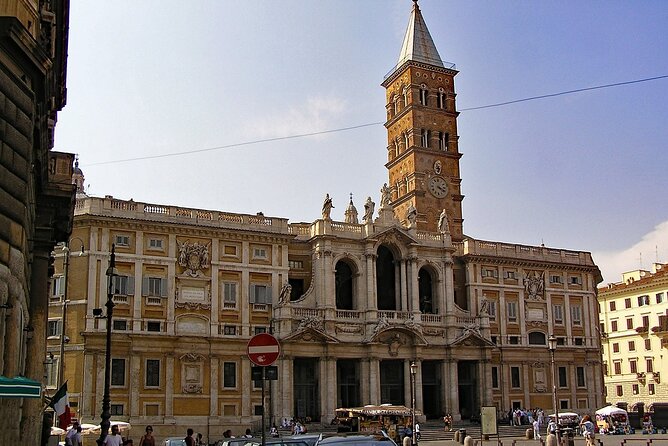
Santa Maria Maggiore is the opening point at Piazza di Santa Maria Maggiore, 33. It is one of Rome’s four Major Basilicas and one of the city’s most significant Marian churches.
The supplied route description also includes material about St John Lateran at this point, but the actual opening location is Santa Maria Maggiore. St John Lateran comes later as Stop 5, so you should expect the morning to begin at Santa Maria Maggiore before continuing toward the Holy Stairs.
Allow about an hour here. That is a substantial share of the tour, and it gives your guide time to set up the religious and historical themes that appear again at later stops. The basilica’s interior and exterior are both major sights, and the church is tied to Rome’s pilgrimage tradition.
You will hear about papal tombs and important relics. The precise focus can shift with liturgical events or church access, but this first stop provides the broad setting: Rome as the center of Catholic memory, ritual, and pilgrimage.
Santa Prassede offers quiet art and a powerful relic
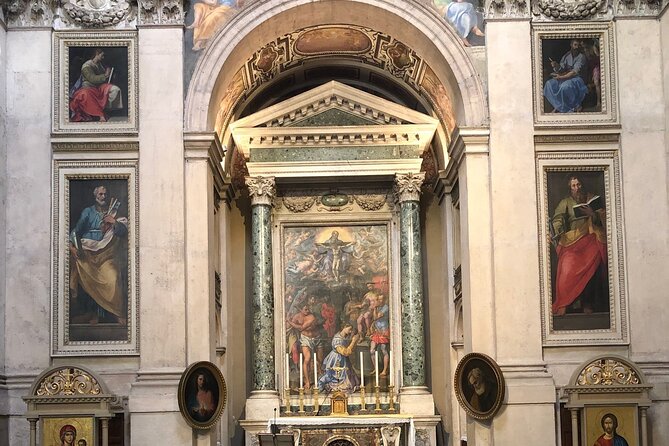
Just across the street, Santa Prassede feels far more intimate. The visit lasts about 15 minutes, but I would pay close attention here because the church combines a calm atmosphere with some of the route’s strongest visual details.
The basilica is associated with St Praxedes, a first-century martyr who, according to tradition, helped persecuted Christians along with her sister Pudentiana. The site also carries a tradition of relics belonging to many martyrs, said to have been hidden in a well.
The most striking object is the pillar traditionally identified as the column used to scourge Christ before the Crucifixion. It was brought to Rome from Jerusalem in the 13th century. You do not need to accept every relic tradition in the same way to appreciate what this object reveals about medieval pilgrimage, devotion, and the way Rome gathered sacred objects from across the Christian world.
Santa Prassede is also known for early Christian mosaics. The short stop means you will not have unlimited time to study every image, so listen closely when the guide directs your attention. This is one reason the small group helps. You can ask about a particular mosaic or relic without trying to catch a guide’s words from across a large crowd.
Santa Alphonsus reveals a treasured icon
The Church of Saint Alphonsus Maria de Liguori is easy to underestimate from the street. Its neo-Gothic exterior is comparatively plain by Rome’s grand standards, but the interior holds an important devotional image.
The church is connected with St Alphonsus of Liguori, an 18th-century bishop and theologian. Its main draw on this route is the original icon of Our Lady of Perpetual Help, also called Our Lady of Perpetual Succour. In Eastern Christian tradition, the image is also known as Our Lady of the Passion.
The stop lasts about 15 minutes. That is enough for a focused explanation, but not enough for a long period of private prayer. I would treat it as a compact lesson in how a single icon can carry centuries of devotion across different Catholic traditions.
This visit also breaks up the larger basilicas. You move from major papal churches to a less imposing building with a very specific spiritual importance. That change is part of the appeal: Rome’s Catholic story is not confined to its most famous monuments.
A completely different way to spend the day in Rome:
- Vatican: Museums & Sistine Chapel Entrance Ticket
★ 4.5 · 144,003 reviews - Vatican Museums & Sistine Chapel Tour with Optional Basilica
★ 4.3 · 67,413 reviews - Vatican Museums, Sistine Chapel & St Peter’s Basilica Guided Tour
★ 4.5 · 39,149 reviews - Rome: Colosseum, Palatine Hill and Roman Forum Guided Tour
★ 4.8 · 32,814 reviews
The Scala Sancta is meaningful, but plan a return visit
At the Pontificio Santuario della Scala Santa, you see the Holy Stairs, traditionally identified as the steps Jesus climbed at Pontius Pilate’s headquarters in Jerusalem before his condemnation.
According to tradition, St Helena, the mother of Emperor Constantine, brought the stairs to Rome in the fourth century. Pilgrims often climb them on their knees while praying. That practice is not included in this tour because the schedule does not allow enough time.
This point needs careful planning. You will visit the Holy Stairs and the Holy of Holies, but you will not take part in the full kneeling devotion during the group walk. The Holy of Holies was historically reserved for the Pope, and the chapel contains an image of Christ traditionally said to have been begun by St Luke and completed by angels.
The visit lasts about 30 minutes and admission is included. If climbing the stairs on your knees is central to your pilgrimage, arrange a separate visit. No booking is necessary and entrance is free, according to the tour information.
St John Lateran brings papal Rome into focus
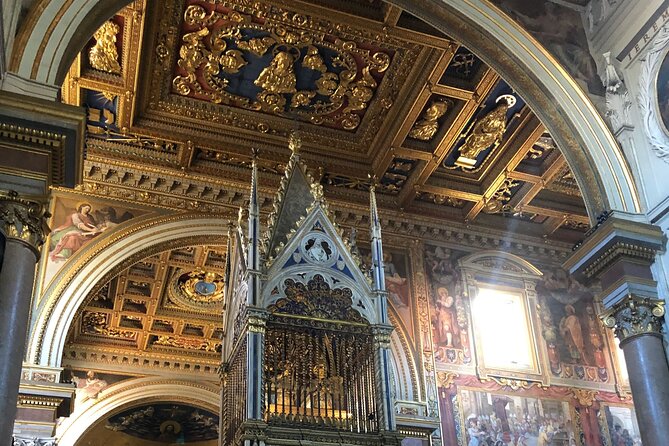
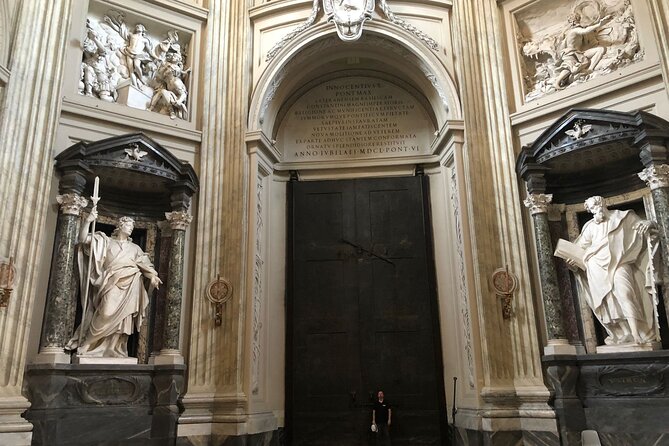
Basilica of San Giovanni in Laterano, or St John Lateran, is the cathedral of Rome and the seat of the Bishop of Rome, the Pope. It is also the oldest and highest-ranking of Rome’s four Major Basilicas.
This is a major stop, even for visitors who have already seen St Peter’s Basilica. St John Lateran has its own role in the Catholic structure of Rome, and your guide can explain why the cathedral of the Pope is here rather than at the Vatican.
The church is associated with a Holy Door used by pilgrims during Jubilee years. It also contains monumental apostle statues, papal tombs, and relic traditions connected with Saints Peter and Paul. The route description refers to the skulls of these two apostles, so listen for the guide’s explanation of the basilica’s relic claims and Catholic meaning.
You have about 30 minutes here. That is enough to see the principal spaces and receive a strong introduction, but not enough to explore every chapel or artwork at length. The guide’s storytelling matters. Tom is repeatedly praised for making Church history clear and for keeping children engaged, while Wen is noted for explaining art, architecture, and spiritual meaning with care.
Santa Croce in Gerusalemme gives the walk its purpose
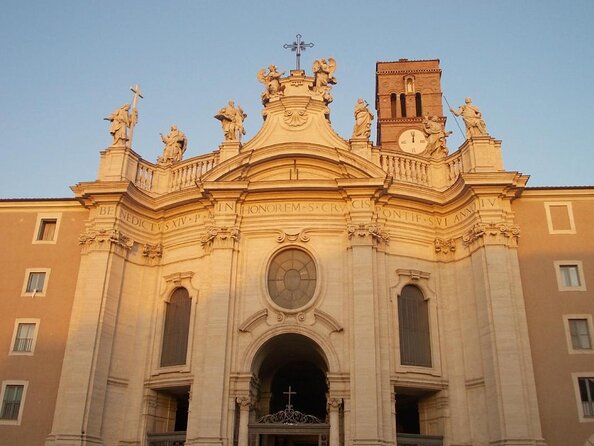
The final stop is Basilica di Santa Croce in Gerusalemme, at Piazza di Santa Croce in Gerusalemme, 10. The tour ends here rather than returning to its starting point, so plan your day around a one-way walking route.
This basilica is presented as the climax because it holds the main collection of Passion relics on the itinerary. Tradition connects them with St Helena, who traveled to Jerusalem after Christianity became legal and brought sacred objects back to Rome.
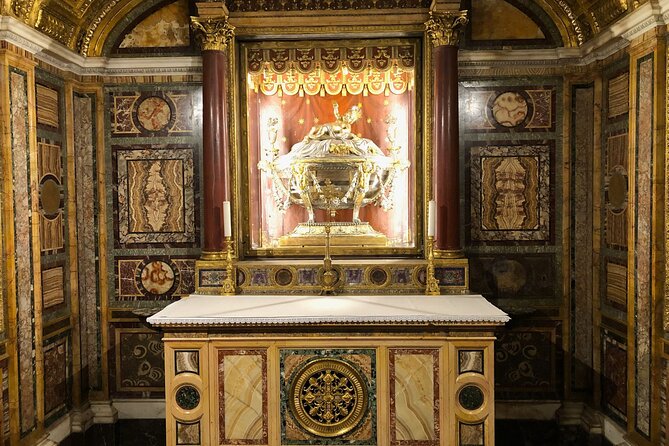
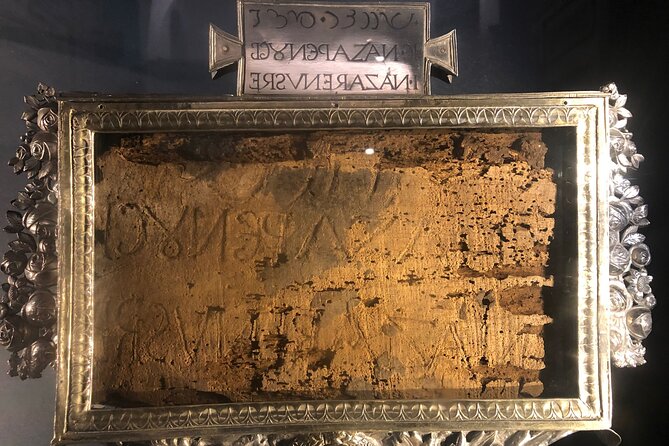
The relics associated with the basilica include a piece of the True Cross, Holy Nails, thorns from the Crown of Thorns, and the board said to have hung above Christ on the cross. That board bears the inscription Jesus the Nazarene, King of the Jews. Other objects traditionally kept here include the finger of St Thomas and fragments connected with the Nativity cave and the Holy Sepulchre.
You have about 30 minutes inside. The church is described as a place where crowds are often limited despite the city activity outside, which can make the final visit feel especially focused. This is not a theatrical presentation. You are looking at objects held sacred by Christian tradition, and the guide’s role is to explain their place in Scripture, devotion, and Church history.
Why the small group changes the experience
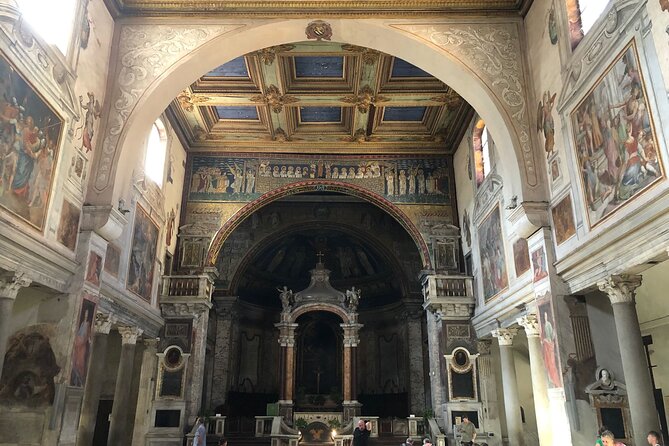
The maximum group size is five. That is unusually small for a Rome walking tour and makes a real difference at churches where the guide may need to point out a small mosaic, icon, inscription, or relic.
You can ask why one object matters, request clarification about a saint, or discuss the difference between historical evidence and devotional tradition. The tour’s most praised guides, Tom and Wen, are described as patient, attentive, and able to adapt their explanations to the curiosity of the group.
The tone is also personal. Tom’s approach is strongly rooted in Catholic faith, and the route can become spiritually moving for participants who treat it as a pilgrimage. At the same time, the tour is not presented as useful only to practicing Catholics. The art, architecture, Roman setting, and development of early Christianity provide plenty to consider if your interest is cultural or historical.
Price, pace, and practical value
At $114.45 per person, this is not the cheapest way to enter Rome’s churches. The value rests in the guide rather than in admission fees, since most stops are free and all fees and taxes are included.
For me, the price makes sense if you want interpretation that connects six sites into one religious story. Visiting these churches alone would cost little, but you would need to research their traditions, identify the key artworks and relics, and work out the walking route yourself. The small group is another part of the value.
The route lasts about 3 to 4 hours. Most of the individual visits are short, but the walking between them adds up. The tour information says it is particularly difficult in summer and is not recommended for anyone unable to walk more than 2 kilometres.
Wear shoes suited to city walking. Cover your shoulders and knees, since these are active Catholic churches and respectful dress is required. Bring water in hot weather, though the tour data does not specify refreshment stops. Service animals are allowed, and the meeting area is near public transportation.
Because the tour ends at Santa Croce rather than the starting point, you avoid retracing your steps. That is efficient, but it also means you should know where you want to go next. The tour is offered in English and uses a mobile ticket.
Who should book this route
I would recommend it first to practicing Catholics, Catholic families, and anyone making a pilgrimage to Rome who wants more than a list of dates and architectural labels. The route gives you sacred sites, relic traditions, saints’ stories, and a chance to reflect on the meaning of the churches.
It also suits history and art enthusiasts who are comfortable with a faith-centered presentation. Several parts of the tour can be appreciated through architecture and visual art alone, especially Santa Prassede and St John Lateran.
Families may find the small group helpful. Tom is specifically described as patient with children and able to keep them involved. Still, the walking and the serious subject matter may be tiring for very young children.
I would skip it if you want the Vatican, the Colosseum, or a broad survey of ancient Rome. This route is concentrated on Catholic sites and Christian history. I would also avoid booking it during the hottest part of summer unless your group is ready for a demanding walk.
Cancellation and changing church access
You can cancel free of charge up to 24 hours before the 8:45 a.m. start time for a full refund. Changes made less than 24 hours before departure are not accepted, and cancellations inside that period are not refunded.
Rome’s church schedules can change because of feast days, liturgical events, and other city occasions. The itinerary may occasionally be adjusted, with notice sent by email. Keep an eye on your messages before the tour, especially if a particular basilica is the main reason you booked.
Should you book the Via Crucis?
Book this tour if you want Rome’s Catholic churches explained through faith, Scripture, relics, and history, and if you are ready for a serious walk. The combination of a five-person maximum, guides such as Tom and Wen, and a final visit to Santa Croce gives the route a clear identity.
Think twice if you need a gentle pace, want extended time inside each church, or hope to climb the Holy Stairs on your knees during the tour. For the right audience, though, this is one of the strongest ways to connect Rome’s churches into a single pilgrimage story, with enough art and history to reward non-Catholic visitors too.
FAQ
How much does the Via Crucis Catholic Pilgrim Walking Tour cost?
The listed price is $114.45 per person. All fees and taxes are included, but guide tips are not.
How long does the tour last?
The experience lasts approximately 3 to 4 hours.
What time does the tour start?
The tour starts at 8:45 a.m.
Where does the tour begin?
The meeting point is Piazza di Santa Maria Maggiore, 33, 00185 Rome.
Where does the tour end?
The tour ends at Basilica di Santa Croce in Gerusalemme, Piazza di Santa Croce in Gerusalemme, 10, 00185 Rome.
How many people can join the tour?
The maximum group size is five travelers.
Is the Holy Stairs kneeling ritual included?
No. The tour visits the Holy Stairs but does not allow enough time to climb them on your knees. You can arrange a separate visit, with no booking required and free entrance.
What should I wear?
Your shoulders and knees must be covered, and you should dress respectfully for the churches.
Is the walk physically demanding?
Yes. The tour is particularly difficult in summer and is not recommended for people unable to walk more than 2 kilometres.
Is the tour offered in English?
Yes. English is the listed language, and a mobile ticket is provided.
Can I cancel for a full refund?
Yes. You can cancel at least 24 hours before the experience starts for a full refund. Cancellations or changes made less than 24 hours before the start time are not accepted for a refund.
Newest reviews from Rome
- ROME:Colosseum & Ancient Rome – private/small group TOUR★ 5.0 · 24 reviews
- Off the Beaten Track in Rome: Rione VI Parione Private Tour★ 5.0 · 24 reviews
- Cinematic Photoshoot in Rome★ 5.0 · 24 reviews
- Rome: Best of Colosseum and Roman Forum Small Group Guided Tour★ 4.5 · 24 reviews
- The Labyrinth of Rome between catacombs and ancient quarries★ 4.5 · 24 reviews
- Vatican and Trionfale Market Tour with Wine and Food Tasting★ 5.0 · 24 reviews
- private tour: Vatican Museums, Sistine Chapel, St. Peter’s Basilica★ 4.5 · 24 reviews
- 3 Hours Mosaic Workshop in Trastevere★ 5.0 · 24 reviews
Walking Tours, compared.
Trastevere & Campo de Fiori Street Food Walking Tour
Read our review →
Paranormal Night Walking Tour & Secret Backstreets
Read our review →
Rome by Night Walking Tour – Legends & Criminal Stories
Read our review →
Guided City Center Evening Sightseeing Walking Tour
Read our review →
Best of Rome Walking Tour including Trevi Fountain
Read our review →

Forbidden History Walking Tour & Pub Crawl with Drinks
Read our review →
Guided Small Group Walking Tour of City Highlights
Read our review →Browse the lists this tour appears in