
Reviewed · ROME
Via Roma: A Journey Through Time
Rome changes character after sunset. This two-hour walking tour links Rome’s best-known sights with lesser-seen corners, from the glowing fountains of Piazza Navona to the moonlit ruins along Via dei Fori Imperiali. It is a good way to pack a lot of Rome into one evening without arranging the route yourself.
I like the mix of famous stops and surprises, especially the trompe-l’œil ceiling at St. Ignazio di Loyola and the underground ruins of Vicus Caprarius. I also like the timing: summer evenings are cooler, and the illuminated Pantheon, Trevi Fountain, and Colosseum make powerful first or last impressions of Rome.
The main catch is the pace. You cover a long stretch of central Rome on foot, and the tour is not suitable for wheelchair users or people with mobility impairments. The meeting point can also vary by booking option, so check your confirmation carefully.
In This Review
- Key points to know before you book
- Rome at night gives the monuments room to breathe
- Piazza Navona brings Baroque Rome to life
- The Pantheon is at its best in a soft evening glow
- St. Ignazio offers Rome’s best optical trick
- Galleria Sciarra rewards a short detour
- Vicus Caprarius reveals the City of Water
- Trevi Fountain supplies the classic Rome moment
- Piazza Venezia gathers Rome’s grand political symbols
- Palazzo Bonaparte and the Imperial Forums lead toward the Colosseum
- What the $32 price really covers
- Who should take this evening walk
- Should you book Via Roma: A Journey Through Time?
- FAQ
- How long does Via Roma: A Journey Through Time last?
- What language is the tour offered in?
- Where does the tour start?
- Where does the tour end?
- Is hotel pickup included?
- Are entrance fees included?
- Is food or drink included?
- What should I wear or bring?
- Is the tour suitable for wheelchair users?
Key points to know before you book
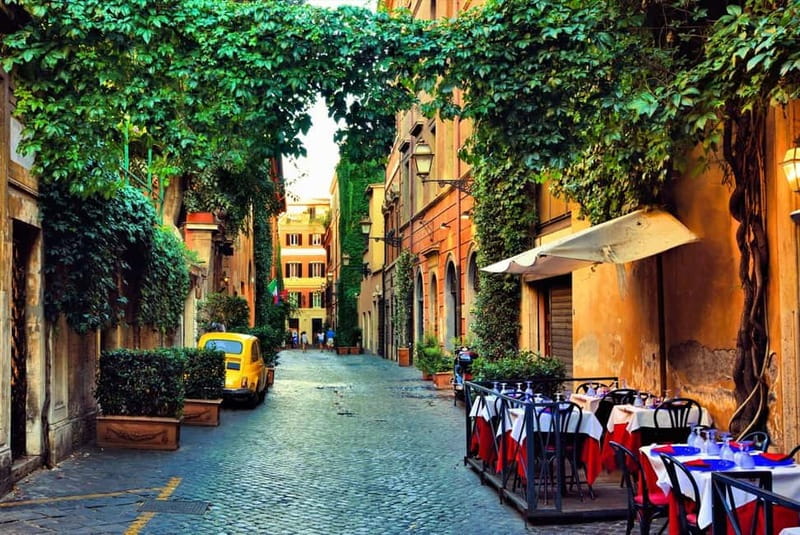
- Rome’s major sights after dark: See Piazza Navona, the Pantheon, Trevi Fountain, Piazza Venezia, and the Colosseum under evening light.
- A few unusual stops: St. Ignazio’s painted ceiling, Galleria Sciarra, and Vicus Caprarius add more than the standard postcard route.
- A long central-Rome walk: Comfortable shoes and water matter more than fancy evening clothes.
- A guide-led history lesson: English and Spanish tours are available, with Sara receiving especially warm praise for her clear and friendly style.
- Good value at $32: The guide and walking route are included, but food, drinks, and attraction entry fees are not.
- Check the ending details: The route description finishes at the Colosseum, while the activity information says the tour ends back at the meeting point.
Rome at night gives the monuments room to breathe
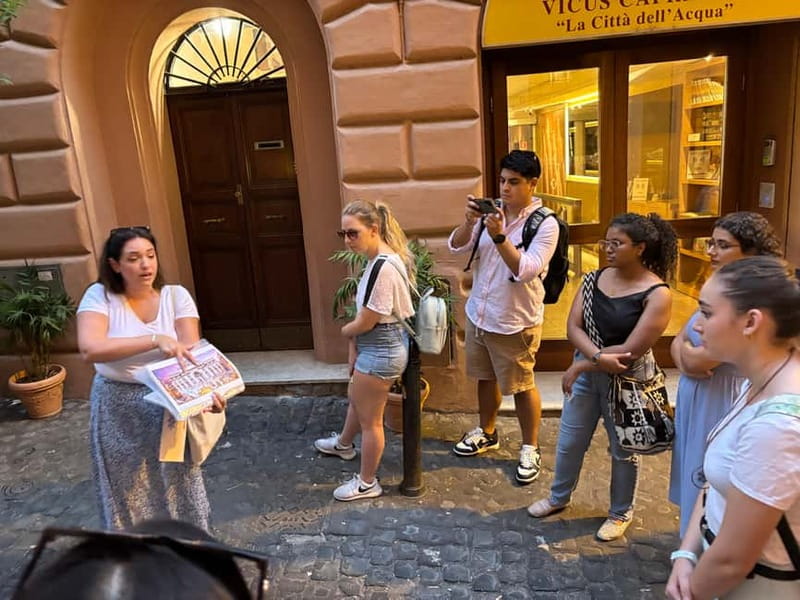
The tour begins at Piazza di S. Agostino, a calm starting point surrounded by Renaissance buildings. That quieter opening is useful. Instead of being dropped straight into the noise around the Trevi Fountain, you get a gentler introduction to central Rome before the evening crowds gather around the main sights.
From here, the route moves through the historic heart of the city. Your guide leads on foot, explaining the buildings and monuments as you go. The exact meeting point may change according to the option you book, so this is one activity where you should not rely on a general map pin alone.
The timing is one of the tour’s strongest features. Rome’s stone buildings take on a softer look after sunset, while fountains and monuments are lit for viewing. In summer, an evening walk can also be more comfortable than crossing the same streets in the afternoon heat.
You should still expect a steady pace. The route connects many locations over roughly two hours, and one account put the actual outing at about two and a half hours. Leave room in your plans rather than scheduling dinner or a train immediately afterward.
Tours travellers often pair with this one in Rome:
- Vatican: Museums & Sistine Chapel Entrance Ticket
★ 4.5 · 144,003 reviews - Vatican Museums & Sistine Chapel Tour with Optional Basilica
★ 4.3 · 67,413 reviews - Vatican Museums, Sistine Chapel & St Peter’s Basilica Guided Tour
★ 4.5 · 39,149 reviews
Piazza Navona brings Baroque Rome to life
Piazza Navona is one of the tour’s essential stops. The long, open square follows the shape of an ancient stadium, though the evening view is dominated by its Baroque fountains and grand façades.
The fountains are especially effective at night. Water catches the light, and the square feels more theatrical than it does in full daylight. Your guide can help you read the details instead of treating the piazza as a quick photo stop.
This is also a good place to notice how Rome layers different periods in a small area. Ancient foundations, papal-era design, churches, cafés, and modern foot traffic all occupy the same space. You do not need a long lecture to appreciate the setting, but a guide helps connect what you are seeing.
Piazza Navona can be crowded, especially around the most photographed fountain. Keep your group in sight and expect some noise. The evening atmosphere is part of the appeal, but this is not a quiet, private stroll.
The Pantheon is at its best in a soft evening glow
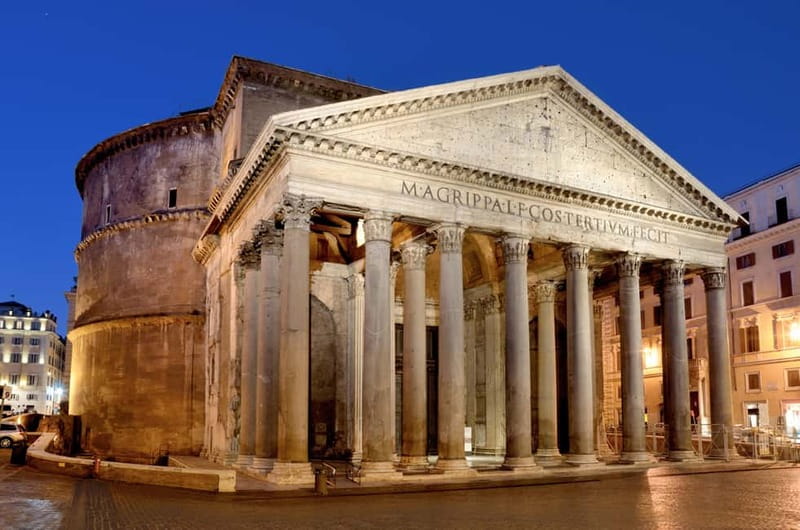
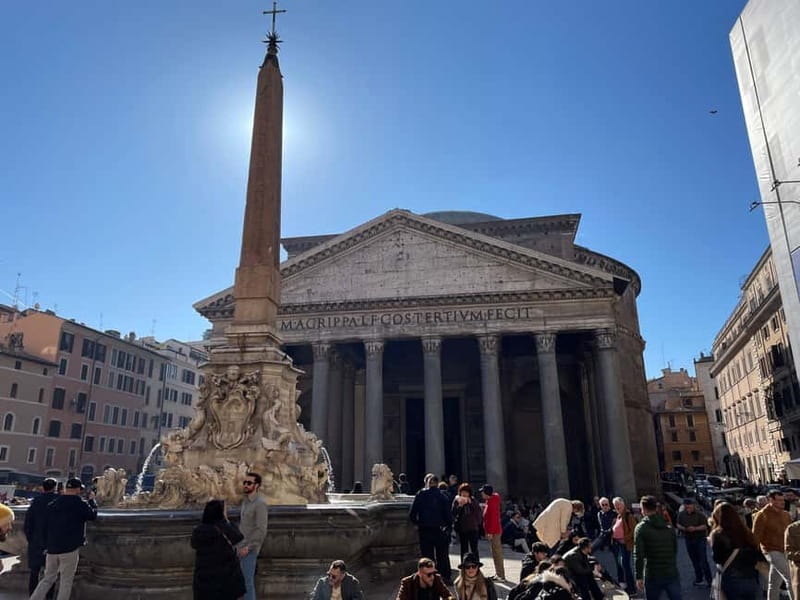
The Pantheon follows, bringing the tour to one of Rome’s most remarkable ancient buildings. Its massive dome and central oculus are the focus. That opening at the top lets in natural light during the day, but even from the outside at night, the building’s proportions are striking.
The experience here is mainly an exterior visit within a walking tour. Entrance fees are not included, and the tour information does not promise an interior admission. If seeing the inside matters to you, ask before booking or plan a separate visit.
The Pantheon is valuable even as a short stop because it gives you a clear sense of Roman engineering and later reuse. The building has survived because it was maintained and used across many centuries, rather than left entirely as a ruin.
Your guide can provide the context that a quick photograph cannot. Still, do not expect an extended indoor visit as part of the $32 price. This is a sightseeing walk, not a ticketed monument tour.
St. Ignazio offers Rome’s best optical trick
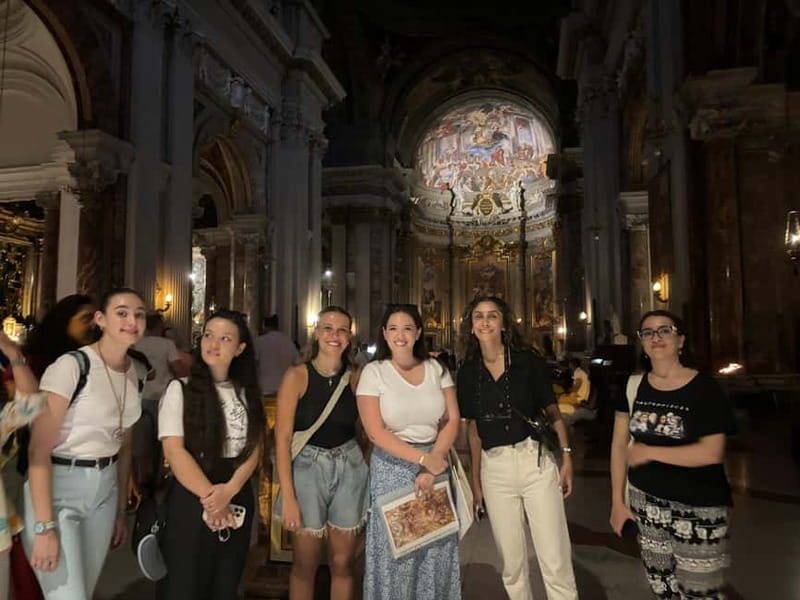
St. Ignazio di Loyola Church is one of the most memorable stops because of its painted ceiling. The church is often nicknamed the Instagram Roman Church, but the optical illusion is more impressive than the nickname suggests.
The ceiling uses trompe-l’œil painting to create the appearance of architectural depth. Painted columns, figures, and open space seem to rise above you, even though much of the effect is flat artwork. Soft evening light makes the illusion easier to appreciate.
I like this stop because it changes the rhythm of the tour. After piazzas, fountains, and imposing stone buildings, you step indoors and look upward at something built to fool the eye. It is a reminder that Rome’s art is not limited to the most famous museums.
Flash photography is not allowed in certain areas, so follow the guide’s instructions. You can bring a camera, but this is a place where taking a moment to look matters more than firing off a burst of pictures.
A completely different way to spend the day in Rome:
- Rome: Colosseum, Palatine Hill and Roman Forum Guided Tour
★ 4.8 · 32,814 reviews - Rome: Guided Tour of Colosseum, Roman Forum & Palatine Hill
★ 4.7 · 27,897 reviews - Rome: Colosseum & Forum with Audio Guide App -Optional Arena
★ 4.2 · 24,770 reviews - Rome: Colosseum, Roman Forum and Palatine Hill Guided Tour
★ 4.5 · 23,903 reviews
Galleria Sciarra rewards a short detour
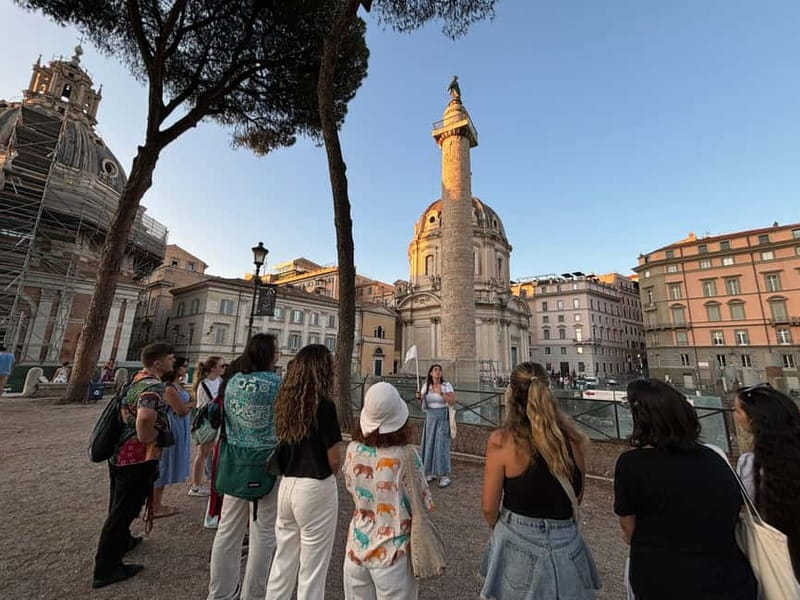
Galleria Sciarra adds another change of mood. This covered passage is known for its Art Nouveau decoration and detailed frescoes, which look particularly appealing when illuminated in the evening.
It is not one of Rome’s headline monuments, and that is precisely why it earns a place on the route. You get a glimpse of the city’s decorative side without entering a large museum or paying another admission fee.
The passage is a useful reminder to look above street level. Rome often hides its best details in courtyards, arcades, church ceilings, and building entrances. A guide can point out what you might otherwise walk past.
Because the tour includes many major landmarks, this stop may be brief. Think of it as a well-chosen pause rather than a long gallery visit.
Vicus Caprarius reveals the City of Water
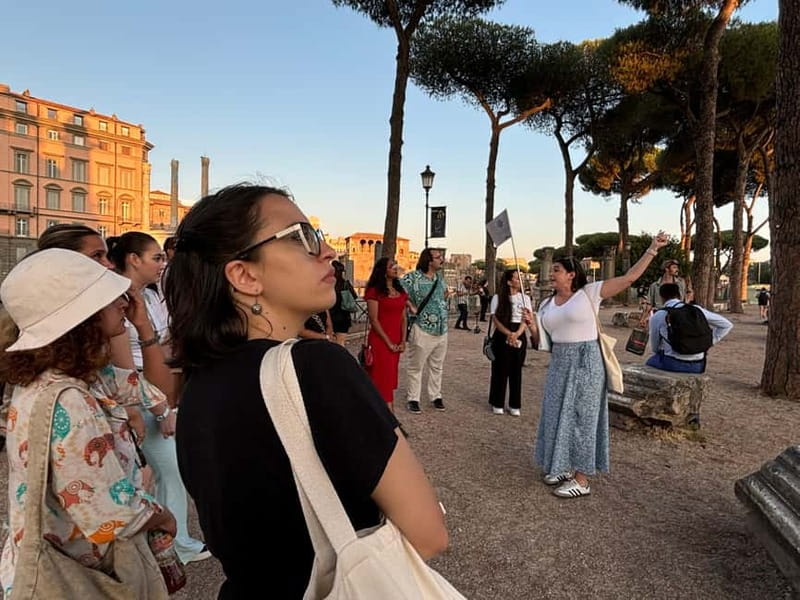
The route then reaches Vicus Caprarius, also called the City of Water. These ancient ruins offer a different view of Rome from the grand monuments above ground.
The site is associated with underground remains and old water systems. It helps explain why Rome is often described as a city built in layers. Streets and buildings from later eras sit above older structures, and the water network remains part of that story.
Entry fees are not included in the tour price, and the activity information does not clearly promise entry into the archaeological site. Treat this as a stop on the route rather than assuming a full underground visit. If the ruins are a priority, confirm what your selected option covers.
Even a short explanation here adds value. You begin to see that Rome’s past is not confined to the Colosseum or the Forum. It can appear below a modern street, behind a church, or inside a residential block.
Trevi Fountain supplies the classic Rome moment
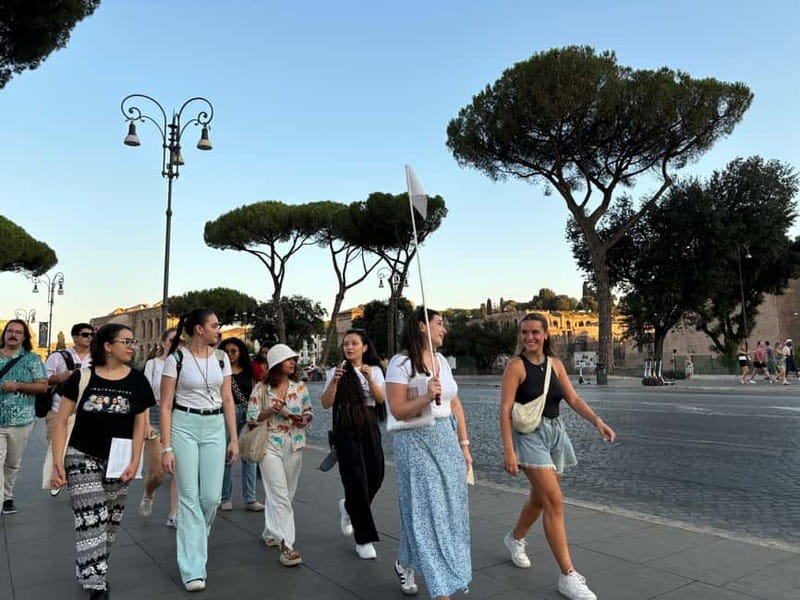
Trevi Fountain is the most familiar stop on the walk, and the evening setting suits it. The water sparkles under the lights, the Baroque design fills the space, and the tradition of tossing in a coin gives you a simple ritual to join.
Bring a small coin if you want to follow the custom of ensuring your return to Rome. The activity does not include food, drinks, or any special purchase, so this is an easy personal touch rather than an added tour expense.
Trevi is also the point where expectations need managing. It is one of Rome’s busiest sights, and the fountain can feel crowded even late in the day. Your guide can help you find the right viewing position, but you should not expect an empty square or a long, peaceful pause.
The benefit of seeing it on a guided route is that you do not have to work out how it fits with the Pantheon, Piazza Navona, and the ancient center. You can enjoy the sight without spending your evening navigating between disconnected landmarks.
Piazza Venezia gathers Rome’s grand political symbols
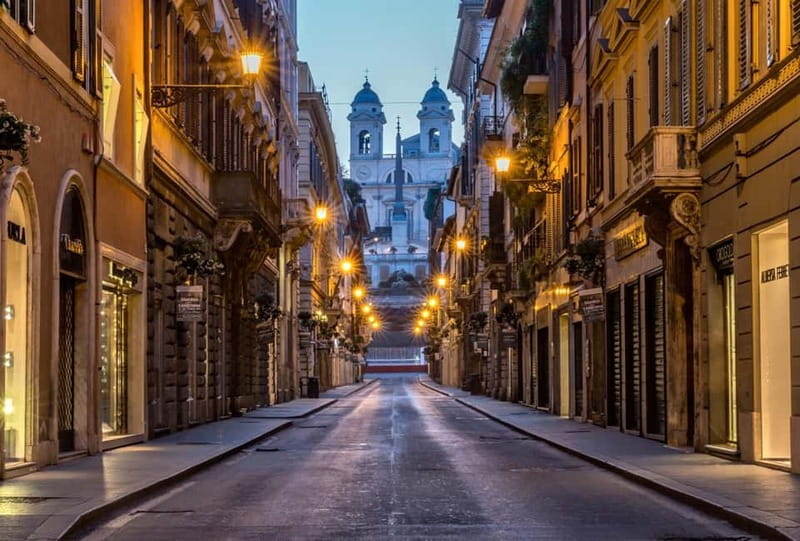
The walk continues past the Pontifical Gregorian University toward Piazza Venezia. This is a major traffic hub, but it also brings together several important buildings and viewpoints.
You will see Palazzo Venezia and Palazzo delle Assicurazioni Generali, both tied to Rome’s civic and political story. The Piazza Venezia area is not as relaxed as Piazza Navona, yet it gives you a strong sense of the city’s formal center.
The Vittoriano Monument is the dominant landmark here. Its bright stone and large stairways can look almost theatrical when lit at night. From the area, you get broad views across Rome’s illuminated skyline, though the exact viewpoint and length of the stop depend on the group’s pace.
You will also see Trajan’s Column and Trajan’s Market. The column’s carved spiral tells a military story in stone, while the market complex shows the scale of ancient Roman public construction. These are important stops for anyone who wants more than fountains and photo locations.
Palazzo Bonaparte and the Imperial Forums lead toward the Colosseum
Before the final stretch, the route passes Palazzo Bonaparte, a Baroque residence with its own place in Rome’s political and architectural story. It is another exterior sight, not a promised interior visit, but it helps fill in the city’s later chapters.
Then the walk follows Via dei Fori Imperiali. This broad avenue gives you long views across the remains of ancient Rome. At night, the ruins take on a solemn quality, with columns, foundations, and fragments picked out against the dark.
This is one of the best parts of the route for understanding scale. The ancient center was not a single building. It was a network of public spaces, temples, markets, columns, and government structures. Seeing several sites in sequence helps you picture that larger Roman world.
The walk ends with the Colosseum, the most dramatic possible closing sight. Its curved outer walls and arches are powerful under artificial light, and the absence of daytime glare can make the structure feel even more imposing.
The published information says the activity ends back at the meeting point, while the route description presents the Colosseum as the final stop. Since those details do not fully match, confirm the end location before you book. That matters if you have dinner reservations, a taxi pickup, or a late event planned.
What the $32 price really covers
At $32 per person, this tour offers fair value if you want a guide and a carefully connected route through central Rome. You are paying for a live English- or Spanish-speaking guide, historical explanation, and the convenience of moving between many major sights without planning the sequence yourself.
The price does not cover entry fees, food, drinks, hotel pickup, or hotel drop-off. That keeps the cost down, but it also means you should not assume you are receiving an all-access monument package.
For a first evening in Rome, the value is strongest. You can get your bearings, see the city’s headline sights, and mark places you may want to revisit in daylight. For a repeat visit, the unusual stops, especially St. Ignazio and Vicus Caprarius, give the walk more appeal than a basic fountain circuit.
The guide makes a real difference. Sara is singled out for being friendly, engaging, and clear, and several accounts praise the guiding as both fun and informative. The available score is 4.1 from 30 ratings, which suggests a generally positive experience while leaving room for normal variation in guide style and group conditions.
Who should take this evening walk
I would recommend it to a first-time Rome visitor who wants a broad introduction without spending the evening on public transport. It also suits solo visitors who enjoy walking and want a simple way to see the center with company.
It works well for summer sightseeing because the evening can take the edge off the heat. You still need comfortable walking shoes, a water bottle, and a camera. The route is not suitable for wheelchair users or people with mobility impairments, so accessibility should be a firm consideration rather than an afterthought.
You may want something else if you prefer a slow tour focused on one monument. The number of stops means some visits will be short, and the tour does not include interior admission to the attractions listed. It is also a poor fit if you dislike crowds around famous landmarks or have difficulty walking for two hours or more.
The tour is offered in English and Spanish. Free cancellation is available up to 24 hours before the activity, and you can reserve now and pay later, which helps if your Rome schedule is still changing.
Should you book Via Roma: A Journey Through Time?
Book this tour if you want to see Rome’s major evening sights in one organized walk, with enough smaller stops to keep the route from feeling predictable. The strongest moments are St. Ignazio’s painted ceiling, the illuminated fountains of Piazza Navona, the Trevi Fountain ritual, and the final approach to the Colosseum.
Skip it if you need a wheelchair-accessible route, guaranteed indoor entry, or a slow pace with long stops. Before confirming, check the exact meeting and ending points, then reserve a night when you can walk without rushing to another appointment.
For $32, this is a practical introduction to Rome after dark. Bring good shoes, water, and realistic expectations about crowds. If Sara is leading your departure, you can also expect the warm, engaging style that has made her a particularly popular guide on this route.
FAQ
How long does Via Roma: A Journey Through Time last?
The stated duration is two hours. One account describes the outing as lasting approximately two and a half hours, so allow some flexibility.
What language is the tour offered in?
The tour is available with a live guide in English or Spanish.
Where does the tour start?
The starting point is Piazza di S. Agostino in the general tour description, but the meeting point may vary by booking option. Check your confirmation for the exact location.
Where does the tour end?
The activity information says it ends back at the meeting point. The route description presents the Colosseum as the final stop, so confirm the exact ending location for your selected option.
Is hotel pickup included?
No. Hotel pickup and drop-off are not included.
Are entrance fees included?
No. Entrance fees to attractions are not included in the $32 price.
Is food or drink included?
No. Food and drinks are not included. You should bring your own water bottle.
What should I wear or bring?
Wear comfortable walking shoes and bring water and a camera. Flash photography is not allowed in certain areas.
Is the tour suitable for wheelchair users?
No. The activity is not suitable for wheelchair users or people with mobility impairments.
Newest reviews from Rome
- Fiumicino Airport Arrivals Private Transfer Free with private half day tour of Rome★ 5.0 · 23 reviews
- Full Day Tour of Rome★ 5.0 · 23 reviews
- Private Tour – Palazzo Barberini★ 5.0 · 23 reviews
- From Rome: Private Day-Tour of Tuscany★ 4.3 · 23 reviews
- Rome at the Sunset; Navona, Trevi Fountain, Pantheon and more★ 5.0 · 23 reviews
- Rome: Wonders of Ancient Rome at Dusk★ 4.8 · 23 reviews
- Private Golf Cart Twilight Tour Rome★ 4.5 · 23 reviews
- Rome Key Sights Golf Cart Tour | Private & Groups★ 5.0 · 23 reviews