
Reviewed · EVENING EXPERIENCES
Walk the magic of Rome at night
Rome is at its most theatrical after sunset. This walk links the Colosseum, Pantheon, Trevi Fountain, and Spanish Steps in one evening, when the stone is lit, the air is cooler, and the streets feel less demanding than under the midday sun. Guides such as Isuf, also called Joseph, and Drita are known for turning dates and legends into an entertaining running conversation.
I especially like the small maximum of 12 people and the guide’s habit of stopping for photos, including clever positioning at the crowded Trevi Fountain. I also like that the walk ends in a useful place, Piazza di Spagna, where you can continue your evening or find a taxi. The tradeoff is simple: this is a long city walk with some fast stretches, and you only see the monuments from outside.
In This Review
- Key points to know before booking
- Why Rome works so well after dark
- Starting near the Colosseum
- Via dei Fori Imperiali and Piazza Venezia
- The Pantheon and the central streets
- Trevi Fountain after sunset
- Piazza Navona and the evening route
- Finishing at the Spanish Steps
- What you get for $42.34
- Who should book this walk
- Practical advice for a better evening
- Should you book it?
- FAQ
- Where does the Rome night walk begin?
- Where does the tour end?
- How long does the tour last?
- Is the tour offered in English?
- What sights are included?
- Do I enter the Colosseum or other monuments?
- How large is the group?
- What level of fitness is needed?
- Can children join?
- What happens if the tour is canceled because too few people book?
Key points to know before booking
- Rome’s headline sights in one evening: The route connects the Colosseum, Vittoriano, Pantheon, Trevi Fountain, Piazza Navona, and Spanish Steps.
- Small group size: A maximum of 12 people makes it easier to hear the guide and get help with photos.
- Strong guide presence: Isuf, Joseph, Drita, and Rita are named by past participants as engaging, funny, and generous with local suggestions.
- Exterior sightseeing only: You will not enter the Colosseum, Pantheon, or other monuments.
- Expect serious walking: The tour lasts about 2 hours 30 minutes to 3 hours, and some groups have taken closer to four hours.
- Best used early in your stay: It gives you a useful map of central Rome and ideas for places to revisit during daylight.
Why Rome works so well after dark
Rome can be tiring in daylight. The heat gathers around the paving stones, major squares fill quickly, and the city’s traffic adds noise to every stop. At night, the illuminated monuments gain a sharper outline, and a guided walk lets you see a broad slice of central Rome without spending the evening planning every turn.
I like this format because it is not built around one single monument. You move from ancient ruins to Baroque fountains, grand modern-era memorials, churches, university buildings, and elegant public squares. That variety helps you understand Rome as a living city rather than a collection of isolated photo stops.
The guide is a big part of the experience. Isuf, also referred to as Joseph, has led many of these walks, while Drita and Rita have also been praised for their warm, playful way of explaining the city. Expect stories, trivia, jokes, and questions that test your memory as you walk. The best guides keep the pace moving without turning the tour into a lecture.
You should also set your expectations correctly. This is an orientation walk, not an archaeological visit. You will discuss the Colosseum from outside, admire the Pantheon without going in, and see the fountains and squares at street level. If you want interior access, you will need separate daytime tickets.
More walking tours in Rome:
- Rome: Trastevere & Campo de Fiori Street Food Walking Tour
★ 4.9 · 2,768 reviews - Rome: Paranormal Night Walking Tour & Secret Backstreets
★ 4.9 · 1,921 reviews - Rome by Night Walking Tour – Legends & Criminal Stories
★ 4.5 · 1,003 reviews
Starting near the Colosseum
The meeting point is Via del Monte Oppio, 3, near the Colosseum. Allow time to find it, since one person specifically advised arriving with plenty of time to locate the starting point. The area is near public transportation, which helps if you are coming from another part of Rome.
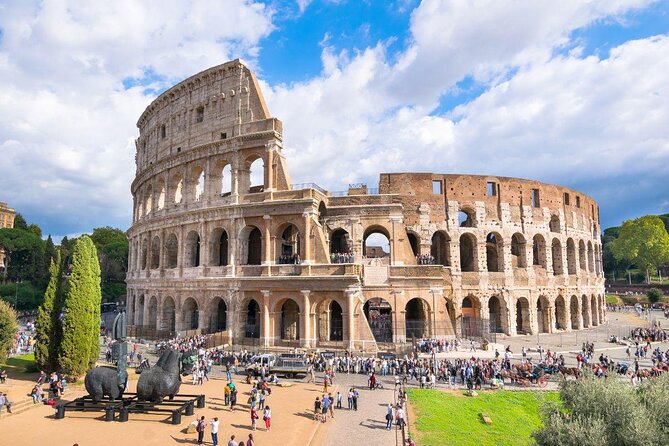
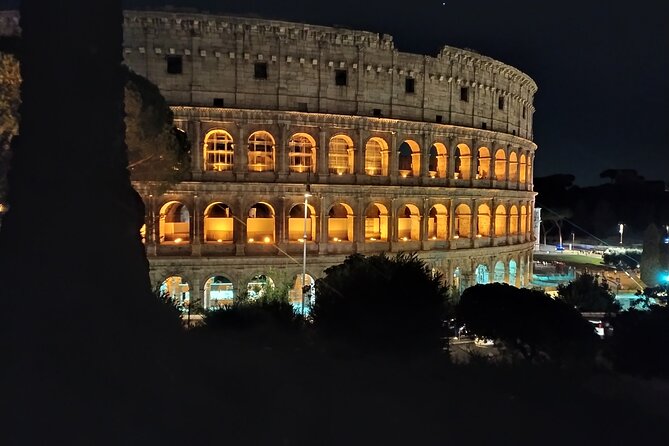
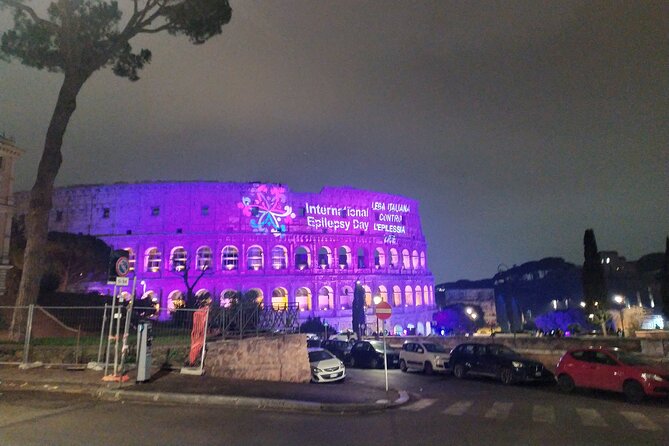
Beginning near the Colosseum gives the walk an immediate sense of scale. The guide discusses the amphitheater from outside, including its details and place in Roman history. You will not enter, but the exterior is still an excellent first stop at night, especially when you can step back and take in the full shape of the building.
The Colosseum stop is scheduled for about 15 minutes. That is enough for an introduction and photos, not enough for a full examination of its construction or long history. I would treat this as a first look, then return in daylight if the monument is a priority for you.
Wear proper walking shoes. The route covers a lot of ground, and some people describe parts of it as power walking. The pace is generally manageable, but this is not a slow stroll with long periods of sitting.
Via dei Fori Imperiali and Piazza Venezia
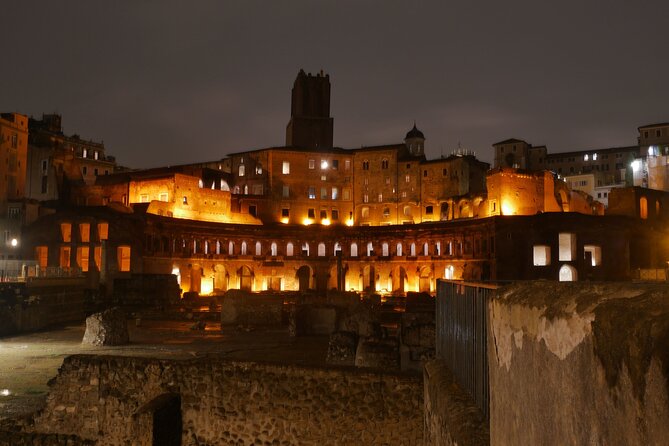
From the Colosseum, the group walks along Via dei Fori Imperiali, the grand avenue associated with Mussolini’s reshaping of central Rome. This section brings together imperial ruins, broad city planning, and the political history of modern Italy.
The route then reaches Piazza Venezia, where the guide explains why it is called Venice Square. This is a short stop, listed at about two minutes, so expect a quick piece of context rather than a long talk.
Nearby, you pause at the Monumento a Vittorio Emanuele II, better known as the Altar of the Fatherland or the Vittoriano. The guide explains why this monument carries strong symbolic value, and you have time for photographs. The stop is about 10 minutes, though admission is not included and the walk does not take you inside.
This is one of the useful contrasts of the evening. The Colosseum represents ancient Rome, while the Vittoriano belongs to a much later national story. Seeing both close together helps you notice how different eras compete for attention in the same city center.
The Pantheon and the central streets
The walk passes the Pontifical Gregorian University, described as the first university founded by Jesuits. The stop lasts around nine minutes, giving the guide time to explain its role and point out details you could easily miss while walking past on your own.
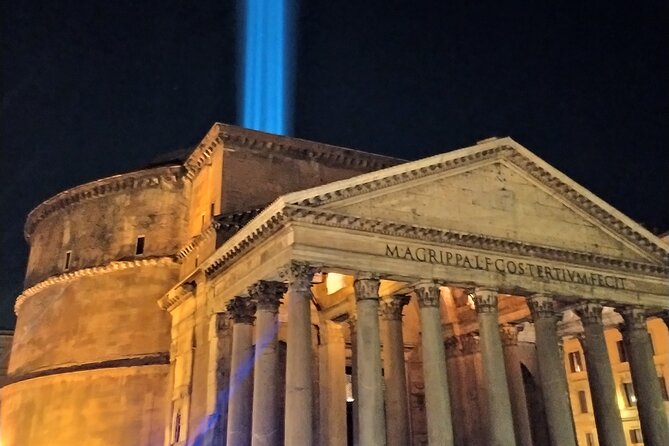
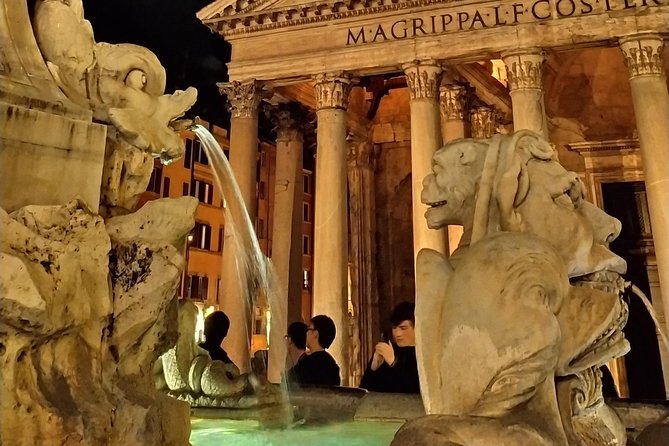
The Pantheon follows, with roughly 10 minutes at the monument. It is described as the best-preserved monument from the Roman period, and its exterior remains one of the most impressive sights in the center. Since there is no interior visit, the guide’s explanation matters here. You can look at the building’s entrance and exterior while learning why this particular Roman structure has survived so well.
This part of the route also shows the value of having a guide who can connect landmarks. Without help, you might simply walk from one famous building to the next. With context, the university, Pantheon, nearby streets, and public squares become parts of a larger story about Rome’s religious, political, and civic life.
The walk includes a bathroom break, and some groups have also paused for coffee. Those breaks matter because the route is long enough for comfort to become a real concern. They are not guaranteed as formal sightseeing stops, but the guide may build them into the evening.
More Rome tours worth comparing
- Rome: City Highlights Open-Top Bus Night Tour
★ 4.1 · 2,038 reviews - Vespa Sidecar Tour By Night with Pickup
★ 5.0 · 1,803 reviews - Rome by Night – Ebike Small Group Tour – Food and Wine (Option)
★ 5.0 · 1,275 reviews - Colosseum Sunset Tour with Entry
★ 4.5 · 1,230 reviews
Trevi Fountain after sunset
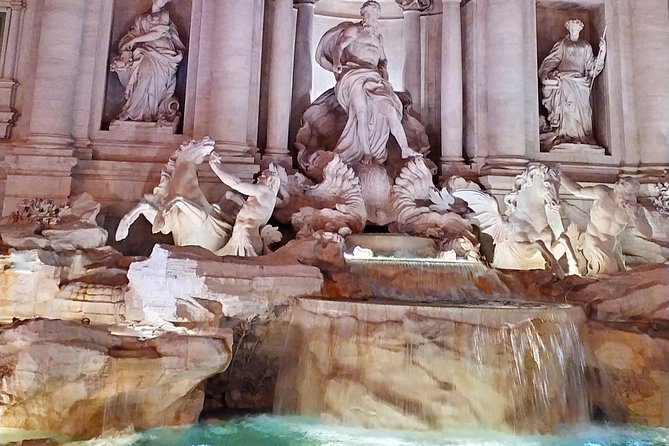
The Trevi Fountain receives about 15 minutes. This is one of the most anticipated stops, and night is a good time to see it. The water and stone are illuminated, giving the fountain a more dramatic feel than a quick daytime glance between crowds.
Do not expect solitude. Trevi is busy at most hours, and the group may need to move carefully through the crowd. One of the most useful details about this tour is the guide’s skill with photographs. Isuf, in particular, has been praised for finding a position and creating a small opening so photos look less crowded than the actual square.
That practical help can be worth more than it sounds. At a famous fountain, you often get a few seconds to take a picture before another group moves in front of you. A guide who knows where to stand can save time and frustration, especially if you are traveling with family or want a proper group photograph.
The guide also uses this stop for stories and trivia rather than simply pointing and saying, There it is. You get time to see the details, hear the explanation, and take pictures before moving on.
Piazza Navona and the evening route
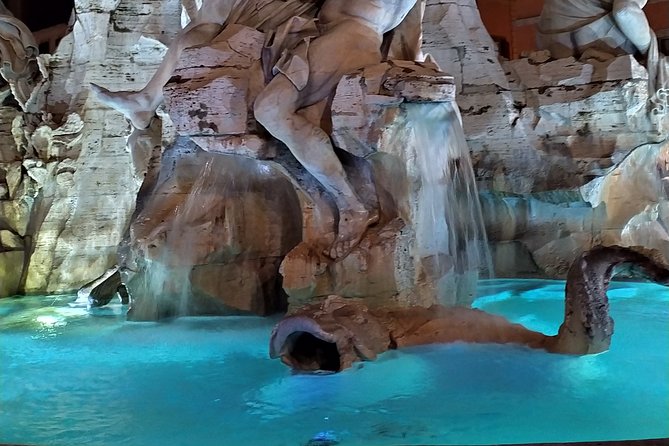
Piazza Navona is listed among the highlights, and it adds a welcome change of mood to the route. The square is known for its lively evening atmosphere, open shape, fountains, and cafés. The supplied stop details do not specify a separate duration here, so the amount of time can vary with the group and the guide.
For me, this is the kind of place where a walking tour earns its price. You can visit a fountain alone, but it is harder to understand the shape and purpose of a historic square without someone explaining what you are seeing. The guide can also help you decide if the square deserves a return visit during the day.
Because the tour covers many major sights, you should not expect extended free time at every stop. The point is breadth, movement, and orientation. If you like to linger over every fountain or read every plaque, you may find the pace brisk.
Finishing at the Spanish Steps
The route ends at the French and Spanish Steps, officially the Spanish Steps, in Piazza di Spagna. The stop is about 10 minutes and focuses on the staircase’s unusual design, elegance, and romantic setting.
This is a smart finish. After several hours on foot, you are in a central part of Rome with plenty of options for the rest of the night. The end point is Piazza di Spagna, 77, and there are taxis in the area, according to the practical information shared about the experience.
I also like the way the ending encourages you to keep exploring. You can use the guide’s suggestions for restaurants, coffee shops, bars, and other sights, then decide what deserves a second visit. Several guides have provided extra recommendations after the walk, which is especially useful if this is your first evening in Rome.
What you get for $42.34
At $42.34 per person, the value depends on what you want from a city tour. You are paying for an official English-speaking guide, a small group capped at 12 people, and a route that would take effort to plan on your own. The tour also saves you from navigating Rome’s confusing sequence of streets after dark.
You are not paying for entry tickets. No monument interiors are included, so the price is not comparable to a guided Colosseum or Pantheon admission. If your priority is going inside famous sites, spend your money on a dedicated interior tour instead.
If your priority is seeing Rome’s major outdoor sights in one evening, the price is reasonable. The guide adds value through timing, stories, photos, and restaurant advice. The photography help at Trevi Fountain is a small but useful extra, and the small group makes personal questions easier.
The tour is often booked about 26 days ahead, so you may want to reserve before your trip if your dates are fixed. The cancellation terms are strict: the experience is non-refundable and cannot be changed for any reason. If the operator cancels because too few people have booked, you will be offered another option or a full refund.
Who should book this walk
I would choose this tour early in a Rome visit. It gives you a clear sense of where the main sights sit in relation to one another, and the guide’s food and coffee suggestions can shape the rest of your stay.
It suits adults, older children, and teenagers aged 11 and up who can manage several hours on foot. Babies under two are free, but the route still requires an adult to handle the practical demands of an evening city walk.
You will likely enjoy it most if you want:
- A broad first look at Rome’s famous outdoor monuments
- A guide who mixes history with jokes, questions, and local advice
- Night photography at the Colosseum, Trevi Fountain, and Spanish Steps
- A small group rather than a large crowd
- A useful introduction before returning to selected sights on your own
You may want something else if you need wheelchair-free planning, a slow pace, or interior access. The information provided only says that participants need moderate physical fitness, so anyone with mobility concerns should confirm the route before booking.
Practical advice for a better evening
Meet at Via del Monte Oppio, 3, and give yourself extra time to arrive. Bring comfortable shoes, since the walk is long and the pace can increase through crowded streets.
A light rain jacket or umbrella is sensible. One group completed the route in rainy conditions with umbrellas and rain jackets, but weather can change the comfort of any outdoor walk.
Keep your phone ready for photos, but do not let photography replace the explanations. The guide may know the best positions, especially at Trevi Fountain, and can help you get a better group picture.
If this is your first night in Rome, take notes when the guide suggests restaurants, coffee shops, or bars. The walk ends in a useful central location, and those suggestions can save you from making a tired, random choice after three hours on foot.
Should you book it?
Book this tour if you want Rome’s greatest outdoor sights in one well-organized night, with a personable guide, photo help, and plenty of historical context. The small group and consistently warm guide feedback are strong points, especially with Isuf or Joseph, Drita, or Rita leading the evening.
Skip it if entering the Colosseum or Pantheon is essential, or if you dislike brisk walking. For most first-time visitors who want to get their bearings fast, see Rome lit up, and collect ideas for the rest of the trip, this is a solid use of an evening.
FAQ
Where does the Rome night walk begin?
The tour begins at Via del Monte Oppio, 3, 00184 Roma RM, Italy.
Where does the tour end?
The walk ends at Piazza di Spagna, 77, 00187 Roma RM, Italy, in the Spanish Square area.
How long does the tour last?
The stated duration is approximately 2 hours 30 minutes to 3 hours. Some groups have spent closer to four hours on the route.
Is the tour offered in English?
Yes. English is the offered language.
What sights are included?
The route includes the Colosseum, Via dei Fori Imperiali, Piazza Venezia, the Vittoriano, the Pontifical Gregorian University, the Pantheon, Trevi Fountain, Piazza Navona, and the Spanish Steps.
Do I enter the Colosseum or other monuments?
No. The tour discusses the monuments and views them from outside. Admission tickets are not included.
How large is the group?
The maximum group size is 12 people.
What level of fitness is needed?
Participants should have a moderate level of physical fitness because the experience involves substantial walking.
Can children join?
Participants aged 11 and older can join. Babies under two are free.
What happens if the tour is canceled because too few people book?
You will be offered a different date or experience, or you will receive a full refund. The experience is otherwise non-refundable and cannot be changed for any reason.
Newest reviews from Rome
- Rome: Vatican Museums & Sistine Chapel Skip-the-Line Ticket★ 4.4 · 148 reviews
- Shared Shuttle Transfer from Rome to Civitavecchia Port★ 5.0 · 148 reviews
- Rome: Crypts & Catacombs After Hours Tour with Bone Chapel★ 4.6 · 149 reviews
- Ghosts Legends and Mysteries of Rome Walking Tour★ 5.0 · 149 reviews
- Skip the Line: Vatican and Sistine Chapel with Guided Tour★ 4.0 · 149 reviews
- Pizza and Tiramisu Cooking Class in Rome, Piazza Navona★ 5.0 · 150 reviews
- Tivoli: Villa Gregoriana Entrance Ticket★ 4.7 · 150 reviews
- Rome: Borghese Gallery Skip-the-Line Entry and Guided Tour★ 4.7 · 150 reviews
Evening Experiences, compared.
Paranormal Night Walking Tour & Secret Backstreets
Read our review →
Rome by Night – Ebike Small Group Tour – Food and Wine (Option)
Read our review →
Rome by Night Walking Tour – Legends & Criminal Stories
Read our review →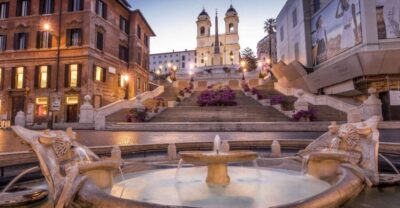
Guided City Center Evening Sightseeing Walking Tour
Read our review →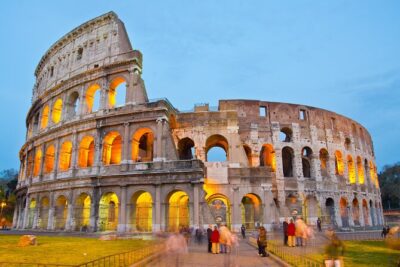
Colosseum by Evening Guided Tour with Optional Arena Floor Access
Read our review →Browse the lists this tour appears in