
Reviewed · COLOSSEUM TOURS
Colosseum and Roman Forum Sightseeing Area Night Walking Tour
Rome’s ancient center takes on a different mood after dark. On this two-hour night walk, you move from the ruins at Largo Argentina through Capitoline Hill and the Forum area, finishing beneath the Colosseum. You are not entering the monuments, but you get strong viewpoints, cooler air, and a clearer sense of how the pieces of ancient Rome fit together.
I like two things right away: the route begins with the assassination site of Julius Caesar, not just the usual Colosseum introduction, and the guides make a real effort to explain history through stories, politics, art, and everyday life. Simone, Simon, Jacob, Max, and Ivana receive repeated praise for humor, clear explanations, and patient answers.
The main consideration is simple: this is an outside-only sightseeing walk. The Roman Forum, Forum of Augustus, and Colosseum admission fees are not included, and you spend much of the tour standing. The low advertised price is appealing, but this is a tip-based tour, so you should plan to tip the guide.
In This Review
- Key points to know before booking
- Why Rome at night changes the experience
- Largo Argentina begins with Caesar and ancient temples
- Insula dell’Ara Coeli shows ordinary Roman life
- Michelangelo’s Capitoline Hill adds a Renaissance layer
- Marcus Aurelius brings philosophy into the route
- The Roman Forum is seen from the outside
- Forum of Augustus explains the birth of empire
- Trajan’s Market reveals Rome’s commercial side
- Constantine’s Arch links empire and Christianity
- The Colosseum is the dramatic finish
- The guides make or break this low-cost walk
- Price, pace, and who will enjoy it most
- Should you book the Colosseum night walk?
- FAQ
- Does the tour enter the Colosseum or Roman Forum?
- How long does the walking tour last?
- Where does the tour start and finish?
- Is the tour offered in English?
- Is the tour tip-based?
- Can I cancel for a refund?
Key points to know before booking
- The walk begins at Largo Argentina, where ancient temples meet the story of Julius Caesar’s murder.
- Capitoline Hill provides some of the route’s best viewpoints, especially around Michelangelo’s Piazza del Campidoglio.
- You see the Colosseum and Forum from outside, with no interior entry or included admission ticket.
- The guides are the heart of the experience, with Simone, Simon, Jacob, Max, and Ivana praised for humor and strong storytelling.
- The tour suits budget-minded visitors, but the guide works for tips alone, so the final cost should include a generous tip.
- You need moderate fitness, since the walk lasts about two hours and includes periods of standing.
Why Rome at night changes the experience
Ancient Rome can feel scattered in daylight. You see a temple here, a column there, and a wall disappearing behind a modern street. A good guide gives those fragments a timeline and a purpose. At night, the softer light and quieter streets can also make the ruins easier to look at without the full daytime rush.
This route is less about entering one major monument and more about building a picture of Rome across several centuries. You begin with the late Republic, move through imperial Rome, pass Renaissance design on Capitoline Hill, and finish with Constantine and the Colosseum.
I like that progression. It gives you more than a single photo stop, yet it does not demand a full evening of walking. The pace is described as manageable, and one guide received particular praise for keeping everyone together while making the two hours pass quickly.
The group can include up to 25 people. That is not a private walk, but it is still small enough for a guide to answer questions if the group stays attentive. The experience is offered in English, and a licensed guide is included.
More ways to see the Colosseum:
- Rome: Colosseum, Palatine Hill and Roman Forum Guided Tour
★ 4.8 · 32,814 reviews - Rome: Guided Tour of Colosseum, Roman Forum & Palatine Hill
★ 4.7 · 27,897 reviews - Rome: Colosseum & Forum with Audio Guide App -Optional Arena
★ 4.2 · 24,770 reviews
Largo Argentina begins with Caesar and ancient temples
The first stop is Area Sacra di Largo Argentina, a sunken archaeological area containing the remains of four ancient Roman temples. It is also linked to Pompey’s court, where Julius Caesar was assassinated in 44 BC.
This is a smart place to begin because the site connects famous Roman politics with physical ruins. You are not simply hearing that Caesar was killed in Rome. You are standing beside a real archaeological setting tied to the final crisis of the Roman Republic.
The stop lasts about 15 minutes. That is enough time for the guide to explain the site and orient you to the route, though not enough for an extended archaeological study. If you already know Caesar’s story, listen for the broader point: the murder did not restore the Republic. It helped open the way for Augustus and the Roman Empire.
At night, you should expect the site to be viewed from outside. This is a sightseeing stop, not a museum visit or a chance to walk through the ruins.
Insula dell’Ara Coeli shows ordinary Roman life
Next comes the Insula dell’Ara Coeli, beside Capitoline Hill. This ancient apartment block offers a rare look at the way ordinary Romans lived in multi-story housing nearly 2,000 years ago.
The Colosseum tends to dominate people’s image of Rome. The insula corrects that picture. Ancient Rome was not only emperors, temples, and arena spectacles. It was also a dense city where people lived in stacked apartments, worked, shopped, and dealt with the practical limits of urban life.
The stop is brief, about 10 minutes, so the guide’s explanation matters. You will get the most from it if you pay attention to the contrast between monumental Rome and everyday Rome. This is one of the route’s more unusual stops, since many first-time visitors pass through the city without noticing how much ancient housing survives.
Michelangelo’s Capitoline Hill adds a Renaissance layer
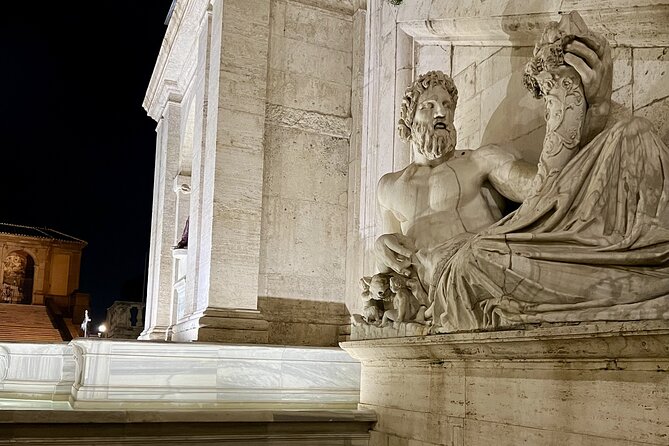
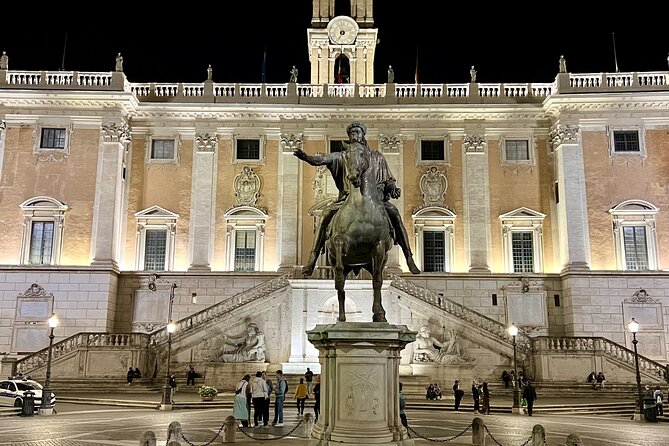
Piazza del Campidoglio takes you from imperial ruins to Renaissance Rome. Michelangelo designed this elegant square on Capitoline Hill, using a distinctive oval pattern that draws your eye toward the center and the surrounding buildings.
The stop itself is listed at five minutes, but the setting carries more weight than the time suggests. Here, Rome’s past was not simply preserved. It was reshaped by later generations. That is an important lesson in this city: ancient stones often sit inside Renaissance, Baroque, and modern layers.
A replica of the equestrian statue of Marcus Aurelius occupies the center of the square. The original is protected indoors, while the copy lets you appreciate the statue in its intended public setting.
The short stop may feel rushed if you want to study the architecture or take many photographs. Still, the guide can use the square to explain how Michelangelo framed the Capitoline and why Marcus Aurelius remains such a fitting figure for the site.
More Roman Forum and Palatine Hill visits:
- Rome: Colosseum, Roman Forum and Palatine Hill Guided Tour
★ 4.5 · 23,903 reviews - Rome: Colosseum, Forum & Palatine Hill Tour & Optional Arena
★ 4.4 · 13,839 reviews - Rome: Colosseum, Palatine Hill & Roman Forum Guided Tour
★ 4.6 · 12,703 reviews - Rome: Colosseum Arena, Palatine Hill & Forum Guided Tour
★ 4.6 · 10,584 reviews
Marcus Aurelius brings philosophy into the route
The statue of Marcus Aurelius offers a pause from battles and emperors as political figures. He ruled from AD 161 to 180, a period remembered for stability and intellectual life, and he wrote Meditations, a major work of Stoic thought.
This is a useful stop because it gives the tour a human voice. Ancient Roman leaders were not all presented as conquerors or tyrants. Marcus Aurelius is remembered for discipline, reflection, and the ideal of a thoughtful ruler.
Again, the scheduled stop is only about five minutes. You should not expect a full lecture on Stoicism, but a skilled guide can turn the statue into a short lesson about Roman power, duty, and personal conduct.
The Roman Forum is seen from the outside
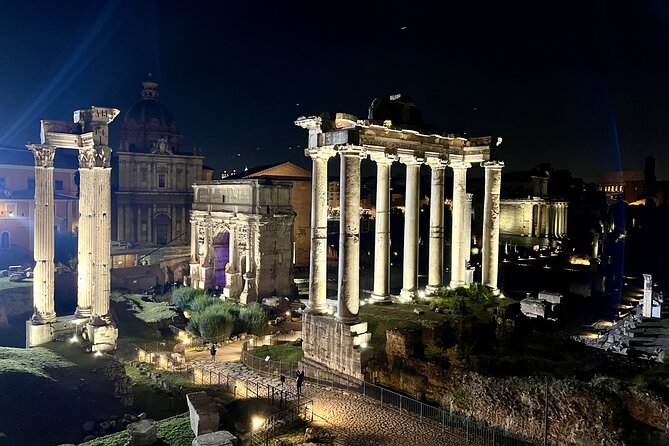
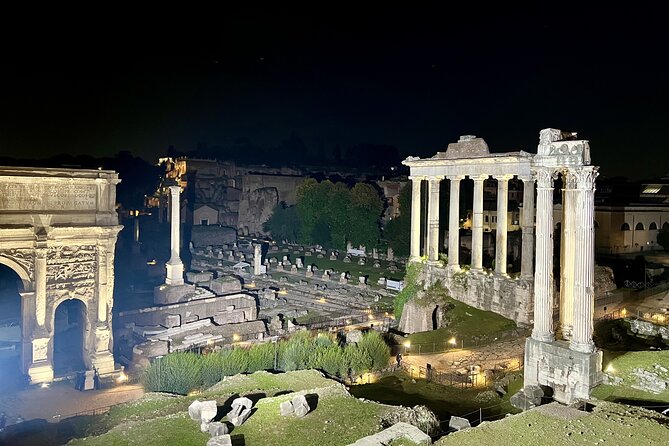
The Roman Forum is the central payoff for many people on this walk. It was the political, religious, and commercial heart of ancient Rome, filled with temples, arches, gathering places, and marketplaces.
You do not enter the Forum on this experience. That limitation is important. The listed admission is not included, and the internal visit is specifically excluded. Instead, the guide takes you to panoramic viewpoints around the area, where you can look across the ruins and understand their scale.
I like this approach for a first evening in Rome. From above or from the surrounding streets, the Forum can read as a whole rather than as a maze of individual stones. You can take photographs of the ruins at night and hear how public life, religion, and politics once worked together.
The tradeoff is detail. An inside visit gives you closer access to individual monuments and more time among the remains. This walk gives you orientation and atmosphere. If you plan to visit the Forum during the day, the night tour works well as a preview. If this is your only Forum experience, know that you are seeing it from outside.
Forum of Augustus explains the birth of empire
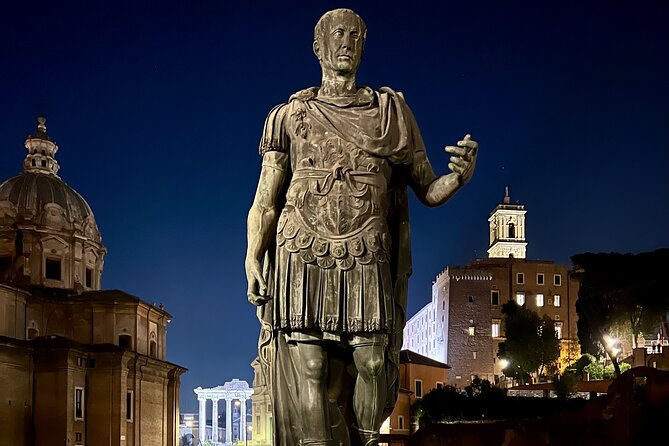
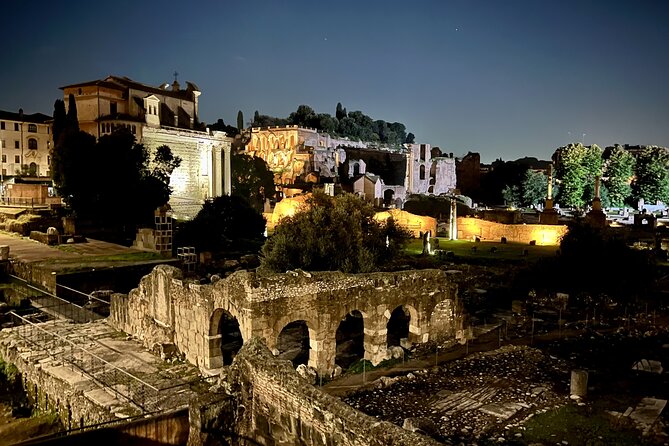
The walk continues toward the Forum of Augustus. Augustus was Rome’s first emperor, and his rise marked the shift from Republic to Empire. His rule also began the Pax Romana, a long period associated with peace and stability across much of the Roman world.
The stop lasts about five minutes, so the value is not in examining every stone. It is in understanding how Augustus used architecture and public space to shape his image. A forum was not only a place for business or government. It could also tell a political story about power, ancestry, order, and Rome’s destiny.
This is another outside viewing point, with admission not included. The guide’s explanation helps you connect the site to the earlier discussion of Caesar and the collapse of the Republic.
Trajan’s Market reveals Rome’s commercial side
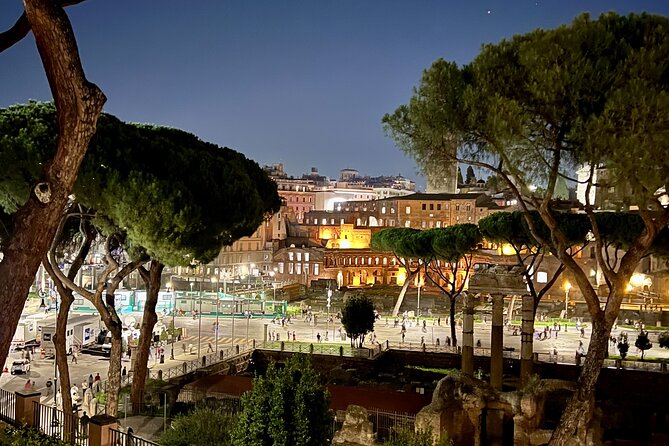
The route also passes Trajan’s Market, an impressive multi-level complex built around AD 110. It is often described as the world’s first shopping mall, with more than 150 shops and offices arranged through arches and corridors.
That comparison is useful, as long as you remember that this was an ancient administrative and commercial complex, not a modern retail center. Its multiple levels show how Roman builders adapted architecture to a crowded urban setting.
Trajan’s Market broadens the evening beyond emperors and arena games. Rome depended on trade, paperwork, retail, and public administration. When you look at its corridors and arches, you can picture an empire functioning through ordinary transactions as well as grand military victories.
The route information gives no separate duration for this stop, so treat it as part of the walk rather than a long visit. The tour does not include interior admission to the archaeological sites.
Constantine’s Arch links empire and Christianity
Near the Colosseum, you reach the Arch of Constantine. Constantine the Great was the first Christian emperor of Rome. He also established Constantinople as a new imperial capital and supported Christianity, changes that reshaped the Roman world.
The arch is a fitting stop before the Colosseum because it represents Rome in transition. The earlier sites point to republican government, imperial ambition, civic religion, and traditional Roman power. Constantine’s story adds a new religious and political direction.
The stop lasts about five minutes and is viewed from outside. The guide can point out how the arch belongs not only to the story of one emperor but also to the changing identity of the empire.
The Colosseum is the dramatic finish
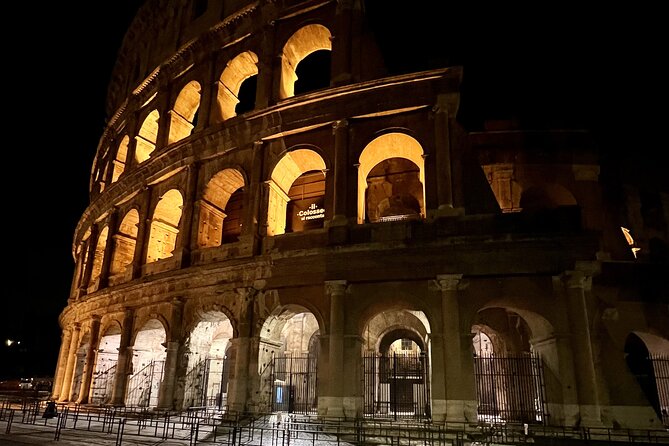
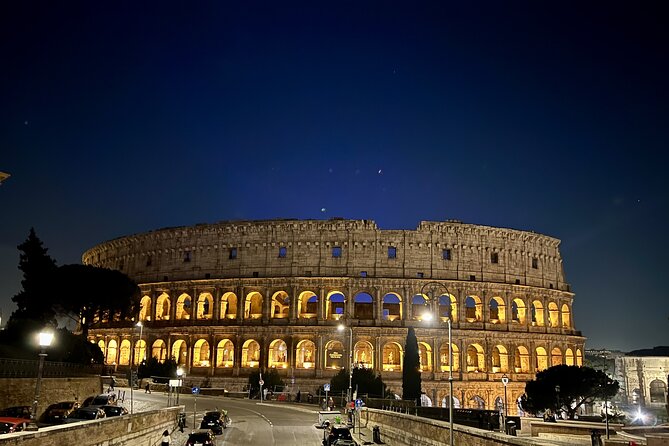
The tour ends in front of the Colosseum, a convenient location beside buses and the metro. From the outside, the amphitheater is still powerful, especially when lit at night.
The Colosseum once held up to 80,000 spectators for gladiatorial contests and other spectacles. That fact gives the final stop its weight, but the guide’s job is to place the arena in a larger setting. The building was part of an imperial program, designed to entertain the public and display the emperor’s power.
You have about 10 minutes here. That is enough for photographs and a final explanation, but not for a detailed architectural inspection. There is no entry ticket, underground visit, or internal tour. If you want the arena floor, upper levels, exhibitions, or underground areas, you will need a separate booking.
The benefit of ending here is practical as well as visual. You finish at one of Rome’s best-connected landmarks, with easy onward transport. The route also ends on a strong note, leaving you close to the monument most people picture when they think of ancient Rome.
The guides make or break this low-cost walk
The strongest part of the experience is the guide. Simone and Simon are repeatedly praised for combining humor with clear explanations. Jacob is described as approachable and able to handle many questions, while Max is praised for making Roman history feel alive. Ivana receives credit for keeping the walk fun and pointing out good photo locations.
That pattern tells you what to expect: this is not meant to be a silent march from one ruin to another. The guide narrates the route, explains the political background, and adds stories and practical suggestions. One guide even offered recommendations for restaurants, bars, and museums.
The tip-only model makes the guide’s role even more important. The advertised price is remarkably low at $3.87 per person, but the guide works for tips alone. You should not treat the booking price as the full value of the service. Bring enough money to reward a guide who gives you a good evening, since the tip is part of the business model.
There are also two practical warnings. One person had trouble reaching a meeting point during road closures, while the operator stated that the guide was at the correct location. Rome’s street works can change quickly, so allow extra time for Piazza dei Calcarari and confirm the meeting details before setting out.
The other issue is weather. The walk operates outdoors, and one guide continued through cold rain. That shows commitment, but it also tells you to check the forecast and bring suitable clothing. There is no indoor substitute built into the route.
Price, pace, and who will enjoy it most
At $3.87, this is one of the cheapest ways to get a guided introduction to ancient Rome. You receive a licensed guide, an English-language walk, archaeological viewpoints, and a route that covers far more than the Colosseum alone.
The price is best understood as an entry point, not the final cost. Since the tour is tip-based, budget for a tip. You also receive no admission to the Colosseum or Forum, so you may want to pay for a separate daytime visit if entering the monuments matters to you.
I would choose this walk if I wanted a low-cost orientation on my first evening in Rome. It is also a good fit if you prefer stories and city views to a long indoor lecture. The two-hour length leaves room for dinner or another evening plan, and the end point makes it easy to continue elsewhere.
I would not choose it as my only Colosseum experience if I cared most about the interior. The Roman Forum is much easier to study from inside, and the Colosseum’s galleries and underground areas require a separate ticket. The tour is also less suitable for anyone who cannot comfortably walk and stand for about two hours.
The maximum group size is 25, and the required fitness level is moderate. Service animals are allowed, and the meeting and ending points are near public transport. Free cancellation is available up to 24 hours before the start time. Within 24 hours, the payment is not refunded, and the experience requires a minimum number of participants.
Should you book the Colosseum night walk?
Book it if you want an affordable, story-led introduction to ancient Rome, strong night photographs, and a route that connects Caesar, Augustus, Marcus Aurelius, Constantine, and the Colosseum. The guides are the main reason to book, particularly if you enjoy asking questions and learning through humor.
Skip it if you expect entry to the monuments, a deep archaeological inspection, or a private experience. In that case, spend your money on a timed Colosseum and Forum admission instead.
For most first-time visitors with a free evening, I think this is a smart value. Just arrive early, wear comfortable shoes, check the weather, and remember that the guide’s tip is part of the price.
FAQ
Does the tour enter the Colosseum or Roman Forum?
No. The Colosseum and Roman Forum are seen from outside, and entrance tickets are not included.
How long does the walking tour last?
The tour lasts approximately two hours.
Where does the tour start and finish?
It starts at Piazza dei Calcarari in Rome and ends in front of the Colosseum at Piazza del Colosseo.
Is the tour offered in English?
Yes. The experience is offered in English and includes a licensed guide.
Is the tour tip-based?
Yes. The guides work for tips alone, so you should plan to tip in addition to the advertised booking price.
Can I cancel for a refund?
You can cancel at least 24 hours before the start time for a full refund. Cancellations or changes made within 24 hours are not refunded or accepted.
More Evening Experiences in Rome
- Rome: City Highlights Open-Top Bus Night Tour
★ 4.1 · 2,038 reviews - Vespa Sidecar Tour By Night with Pickup
★ 5.0 · 1,803 reviews - Rome by Night – Ebike Small Group Tour – Food and Wine (Option)
★ 5.0 · 1,275 reviews - Colosseum Sunset Tour with Entry
★ 4.5 · 1,230 reviews
More Walking Tours in Rome
- Rome: Trastevere & Campo de Fiori Street Food Walking Tour
★ 4.9 · 2,768 reviews - Rome: Paranormal Night Walking Tour & Secret Backstreets
★ 4.9 · 1,921 reviews - Rome by Night Walking Tour – Legends & Criminal Stories
★ 4.5 · 1,003 reviews - Rome: Guided City Center Evening Sightseeing Walking Tour
★ 4.4 · 953 reviews
Newest reviews from Rome
- ROME:Colosseum & Ancient Rome – private/small group TOUR★ 5.0 · 24 reviews
- Off the Beaten Track in Rome: Rione VI Parione Private Tour★ 5.0 · 24 reviews
- Cinematic Photoshoot in Rome★ 5.0 · 24 reviews
- Rome: Best of Colosseum and Roman Forum Small Group Guided Tour★ 4.5 · 24 reviews
- The Labyrinth of Rome between catacombs and ancient quarries★ 4.5 · 24 reviews
- Vatican and Trionfale Market Tour with Wine and Food Tasting★ 5.0 · 24 reviews
- private tour: Vatican Museums, Sistine Chapel, St. Peter’s Basilica★ 4.5 · 24 reviews
- Colosseum guided tour with Virtual Reality★ 5.0 · 24 reviews
Colosseum Tours, compared.
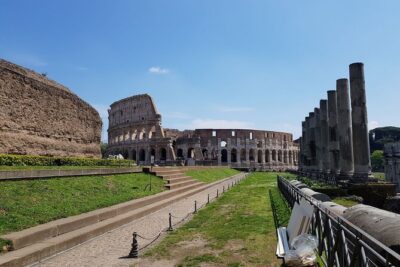
Colosseum, Palatine Hill and Roman Forum Guided Tour
Read our review →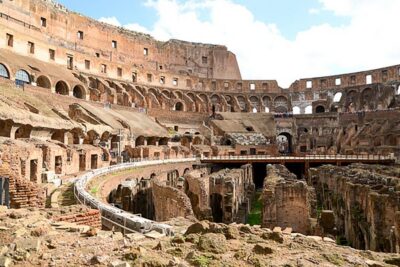
Guided Tour of Colosseum, Roman Forum & Palatine Hill
Read our review →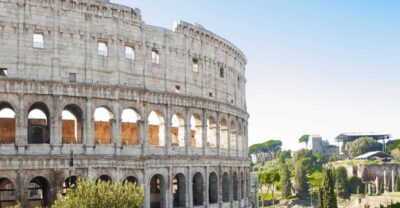
Colosseum & Forum with Audio Guide App -Optional Arena
Read our review →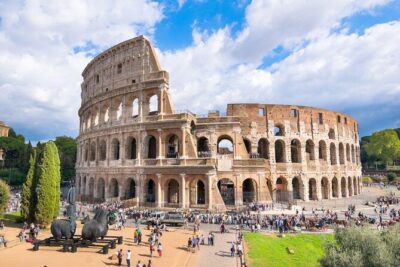
Colosseum, Roman Forum and Palatine Hill Guided Tour
Read our review →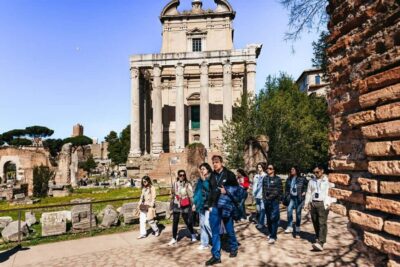
Colosseum, Forum & Palatine Hill Tour & Optional Arena
Read our review →
Colosseum, Palatine Hill & Roman Forum Guided Tour
Read our review →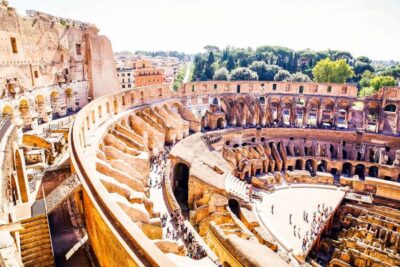
Colosseum: Underground and Ancient Rome Tour
Read our review →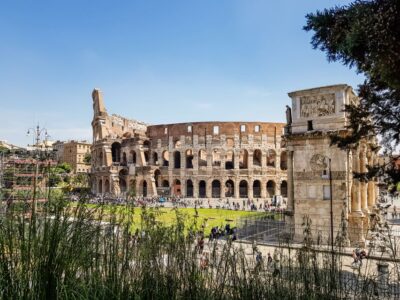
Colosseum Arena, Palatine Hill & Forum Guided Tour
Read our review →Browse the lists this tour appears in