
Reviewed · WALKING TOURS
Fountains and Squares of Rome 2-Hour Walking Tour
Rome’s great fountains are more than pretty photo stops. They are the city’s outdoor art gallery, built into busy squares where daily life still carries on around them. This two-hour walk links the most famous examples, from Bernini’s half-sunken boat to the immense Trevi Fountain and the river gods of Piazza Navona.
I like two things right away: the route gives you a quick, useful introduction to central Rome, and the guides can adjust their pace and explanations. Felice has helped families and answered plenty of questions, while Federica was especially patient with an older group. The main drawback is value: at $74 per person, the tour costs more than some walks that also include an admission ticket.
In This Review
- Key Points
- Why This Two-Hour Walk Works Well in Rome
- Piazza Barberini and the Start at the Fountain
- Piazza di Spagna and the Half-Sunken Barcaccia
- Trevi Fountain and Rome’s Return Ritual
- The Pantheon and Its Extraordinary Dome
- Piazza Navona on the Site of a Roman Stadium
- Campo de’ Fiori and a More Serious Ending
- What the Guides Add to the Walk
- Is $74 a Fair Price?
- Who Should Book This Rome Walk?
- Practical Tips for a Better Two Hours
- Should You Book It?
- FAQ
- How long does the Fountains and Squares of Rome tour last?
- Where does the tour begin?
- Where does the tour end?
- Which languages are available?
- Is hotel pickup and drop-off included?
- What should I bring?
Key Points
- A classic central Rome route: Begin at Piazza Barberini and finish at Campo de’ Fiori, passing several major sights without needing a taxi between them.
- The Barcaccia Fountain: See the unusual half-sunken ship at the foot of the Spanish Steps and learn how the square connects to Rome’s Spanish heritage.
- A coin at Trevi Fountain: Take part in Rome’s familiar return-to-the-city ritual, though the area can be crowded.
- The Pantheon’s giant dome: Look up at the world’s largest non-reinforced concrete dome, with time to see one of Ancient Rome’s best-preserved monuments.
- Bernini in Piazza Navona: Visit the former Stadium of Domitian and its famous Fountain of the Four Rivers.
- A thoughtful finish: End at Campo de’ Fiori, where a market square and a grim execution site share space with the statue of Giordano Bruno.
Why This Two-Hour Walk Works Well in Rome
Rome can feel like a pile of separate sights until someone explains how the streets and squares fit together. This route gives you a simple thread to follow: Renaissance and Baroque art, public fountains, papal ambition, ancient Roman engineering, and a few legends along the way.
You meet the guide in front of the fountain at Piazza Barberini. The precise meeting-point information is sent 24 hours before the tour, so check your messages rather than relying only on a map pin. From there, the route heads through the historic center on foot.
Two hours is enough to cover a lot, but it is not enough for long museum visits or a slow examination of every monument. Think of this as a lively orientation walk, not a full art-history course. You get the big ideas, the memorable details, and a useful sense of direction for later exploring.
The tour is offered in English or Italian, with a live guide and a small group format. The small-group setup matters here. Fountains and piazzas are open public spaces, and a guide who can pause for questions or adapt the pace makes the walk easier to follow than a large procession.
More walking tours in Rome:
- Rome: Trastevere & Campo de Fiori Street Food Walking Tour
★ 4.9 · 2,768 reviews - Rome: Paranormal Night Walking Tour & Secret Backstreets
★ 4.9 · 1,921 reviews - Rome by Night Walking Tour – Legends & Criminal Stories
★ 4.5 · 1,003 reviews
Piazza Barberini and the Start at the Fountain
Piazza Barberini is a practical place to begin because it puts you near several important streets in central Rome. The meeting point is specifically in front of the fountain, not at a hotel or a transport stop, so arrive ready to identify the monument and watch for the guide.
This opening stop helps set the tone. Rome’s fountains were not merely decorative plumbing. They brought water into public spaces, marked important urban centers, and gave artists a chance to work on a grand scale.
From Piazza Barberini, the group continues toward Piazza di Spagna. The route is central, but you should still wear comfortable shoes. Rome’s historic center is best handled at walking speed, and two hours on stone streets can feel longer in thin sandals or stiff footwear.
There is no hotel pickup or drop-off. That keeps the tour focused and avoids spending part of the two hours collecting people, but you need to arrange your own way to the starting point and your onward transport from Campo de’ Fiori.
Piazza di Spagna and the Half-Sunken Barcaccia
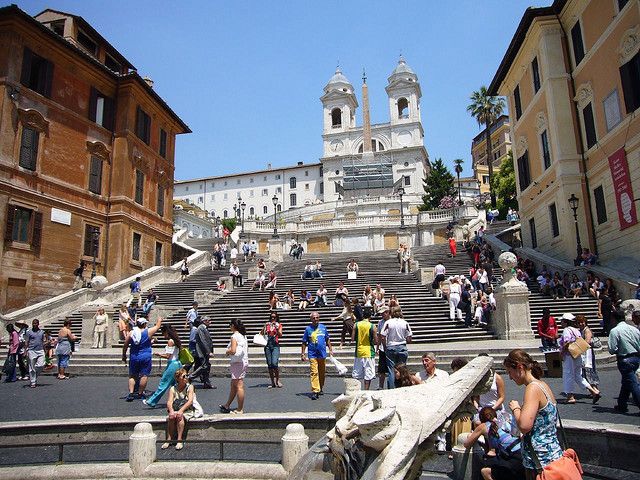
Piazza di Spagna is one of Rome’s most recognizable urban scenes. The Spanish Steps rise from the square toward the Trinità dei Monti church, linking the former Bourbon Spanish Embassy area with the church at the top.
The steps number 135, and they create a dramatic staircase rather than a quiet viewing platform. Your main fountain stop is at the base: the Fontana della Barcaccia, or Fountain of the Boat.
The Barcaccia is shaped like a half-sunken ship. It is a playful design that looks almost too low to the ground, especially when compared with the towering stairway behind it. The unusual form gives the square its character and makes this a better stop than a quick photograph might suggest.
Your guide can connect the fountain to the broader Baroque habit of turning useful city structures into theatrical public art. That is one of the benefits of taking this route with a guide. You are not just collecting famous names. You are learning why Rome’s squares feel like outdoor rooms.
The Spanish Steps area is also one of the places where crowds can affect the pace. The tour description does not promise a private viewing area or a quiet visit. You should expect to share the square with other people and keep close enough to hear the guide.
Trevi Fountain and Rome’s Return Ritual
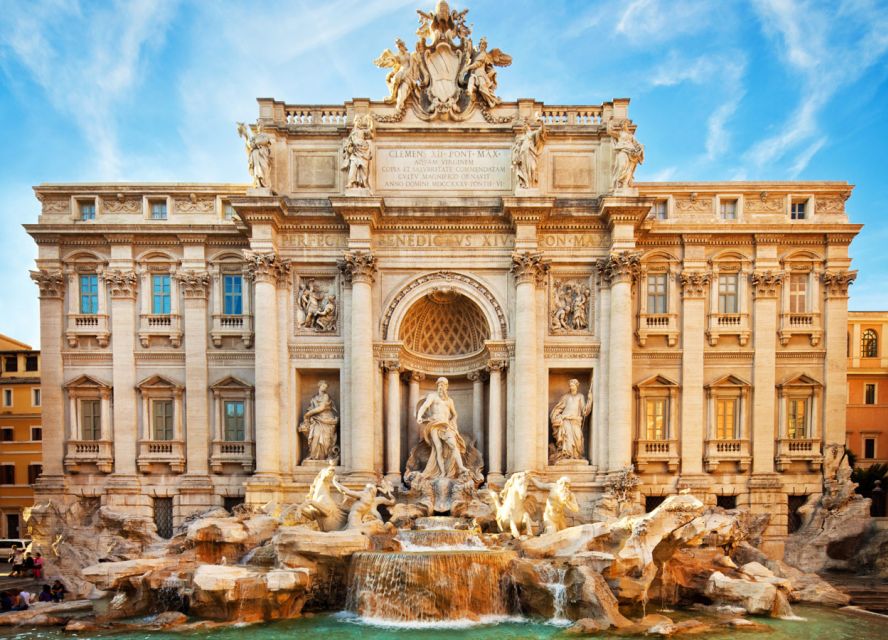
The route then enters the Trevi district for Rome’s most famous fountain. The Trevi Fountain is set against the Palazzo Poli, using the building as a theatrical backdrop for its large sculptural scene.
This is the stop where the tour shifts from elegant urban design to full spectacle. Water, stone, figures, and architecture all work together, and the fountain is much larger than many first-time visitors expect.
You can throw a coin into the water as part of the familiar Roman custom. The tradition says that a coin ensures you will return to Rome. It is a small ritual, but it gives you a personal moment in an otherwise crowded public space.
I would treat Trevi as a place to look carefully, not only a place to take a quick selfie. Notice how the fountain is framed by the palace and how the water makes the sculpture seem to move. Your guide can also help you separate the city’s old legends from its documented history.
Crowds are the main issue here. The fountain is one of Rome’s most popular sights, and the tour does not include a reserved viewing area. A guide is useful because you can learn the key points without spending a long time trying to find the perfect spot.
More Rome tours worth comparing
- Vatican Museums & Sistine Chapel Express 2-Hour Guided Tour
★ 4.5 · 1,037 reviews - Rome: 2-Hour Gladiator School
★ 4.7 · 630 reviews - Cooking Class 2 Hour Spanish Steps – Fettucine and Tiramisù
★ 5.0 · 298 reviews - Rome 2 hour Golf Cart night tour with Hotel Pickup
★ 5.0 · 215 reviews
The Pantheon and Its Extraordinary Dome
From Trevi, the walk continues to the Pantheon. This is one of the strongest stops on the route because it shifts the focus from Baroque Rome to Ancient Rome while keeping the same theme of ambitious architecture.
The Pantheon was dedicated to the Olympian gods and remains one of the best-preserved monuments from Ancient Rome. Its preservation helps you understand the building as a real structure rather than a set of scattered ruins.
Inside, look up. The dome is described as the world’s largest non-reinforced concrete dome, an engineering feat that still commands attention. The central opening brings in daylight and gives the interior a changing quality as the sun moves.
The Pantheon is also a good place to slow the tour for a few minutes. Fountains reward close attention to sculpture and water. The Pantheon rewards you by making you look upward and think about weight, balance, and construction.
One point deserves careful checking before you book: the information says the route goes inside the Pantheon, but the listed inclusions mention only the guide and small-group tour. A previous booking note also raises the issue of tours that include an admission ticket. Ask whether entry is covered in your scheduled departure and budget for the possibility of a separate ticket if needed.
That admission question affects the $74 price. If the fee is included, the guided access may feel more reasonable. If you must pay separately, you are paying mainly for the walking route and live interpretation.
Piazza Navona on the Site of a Roman Stadium
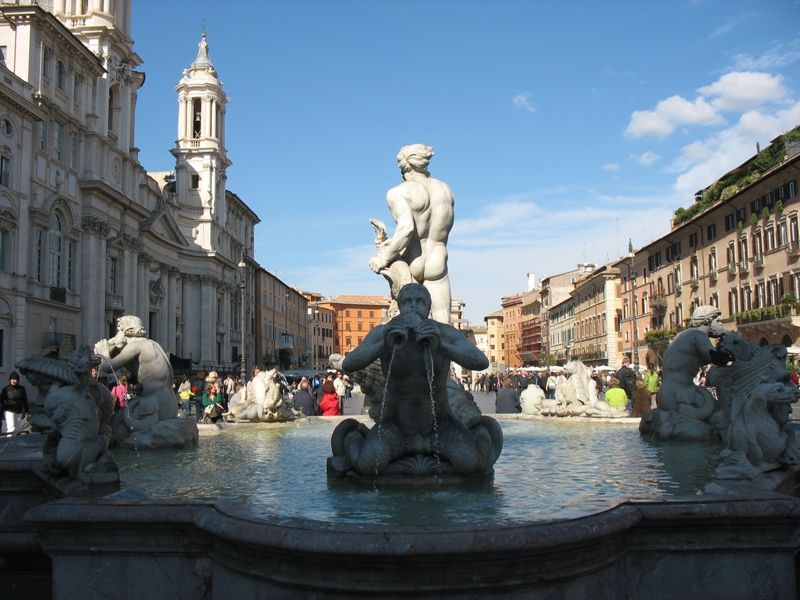
Piazza Navona is the grandest square on the route. It was built on the site of the Stadium of Domitian, so the broad, elongated shape is not accidental. The modern piazza still reflects the footprint of the ancient sporting venue beneath it.
This is where the tour’s art and urban history come together most clearly. The square is filled with Baroque design, and its fountains give the space a strong visual center.
The key work is Bernini’s Fontana dei Quattro Fiumi, the Fountain of the Four Rivers. Its figures represent four major rivers, and the sculptural group turns a functional water source into a monument of movement and drama.
Your guide can help you read the fountain instead of seeing only a mass of stone. Look for the relationship between the river figures, the central structure, and the open space around them. In a square this large, scale is part of the experience.
Piazza Navona is also a good reminder that Rome often places different centuries in the same view. The ancient stadium survives in the shape of the piazza, while Baroque artists supplied the decoration, and modern Rome uses the space for everyday movement and public life.
Campo de’ Fiori and a More Serious Ending
The walk ends at Campo de’ Fiori, whose name means Field of Flowers. The square was once the site of a medieval market, but it also carries a darker past as a place of public executions.
In the center is the bronze statue of Giordano Bruno, a Dominican friar and philosopher who was burned at the stake for heresy in 1600. His statue gives the final stop a more serious tone than the fountains at the start.
This ending is useful because it keeps the tour from becoming a parade of pretty monuments. Rome’s squares were places for trade, ceremony, punishment, debate, and public display. Campo de’ Fiori shows how a space can change purpose while still holding on to its past.
The tour ends here rather than returning to Piazza Barberini. That is convenient if you plan to continue exploring central Rome, but it means you need to know where you are going next. If rain arrives, you may want a transport plan ready. One guide, according to the experience details, even helped arrange a cab when rain began at the end of a tour.
What the Guides Add to the Walk
The guide is the main reason to book this instead of following the same route with a map. The listed languages are English and Italian, and the experience uses a live guide rather than an audio recording.
Several guide names appear in the tour’s booking history. Felice has been praised for adjusting explanations to a family with children and for handling questions and requests. Federica was noted for walking at a steady pace and showing patience with an older group that could not walk much.
Luisa received especially strong praise for combining historical detail with lighter stories and useful small facts. That balance matters in Rome, where a guide can easily overload you with dates, names, and papal rivalries.
You should still remember that guide quality can vary by departure. These names give you an idea of the kind of guiding style available, not a guarantee that one specific person will lead your tour. The strongest pattern is clear: friendly explanations, flexible pacing, and a willingness to respond to the group.
Is $74 a Fair Price?
At $74 per person, this is not a bargain-priced orientation walk. The route covers famous sights that you can technically reach on your own, and most of the fountains and piazzas are public spaces.
The value comes from the guide’s interpretation and the efficient sequence. In two hours, you connect Piazza Barberini, the Spanish Steps, the Barcaccia, Trevi Fountain, the Pantheon, Piazza Navona, and Campo de’ Fiori. For a first day in Rome, that can save you time and help you understand what deserves a longer return visit.
The price looks better if you want a small group, a live English or Italian guide, and a flexible pace. It looks weaker if you are comfortable reading about the monuments yourself or if Pantheon admission is extra.
I would compare the total cost with other guided walks before booking. Pay attention to whether they include an entry ticket, not just the headline price. A cheaper tour with no guide interaction may not give you the same experience, while a slightly higher-priced tour with admissions included could be the better deal.
Who Should Book This Rome Walk?
I would recommend it to first-time visitors who want a clear introduction to central Rome without spending half a day on a single museum. It also suits families if the guide assigned to your group can adapt the stories and pace, as Felice did for one family.
Older visitors or anyone concerned about walking speed should mention that before the tour begins. Federica’s patient pacing shows that the format can work for a group with limited walking ability, but the tour remains a two-hour walk through central streets.
It is also a good choice if you enjoy architecture more than formal museum displays. The route puts you in front of fountains, domes, steps, and public squares, with the city itself as the setting.
You may want another type of tour if your priority is extensive interior access, long historical lectures, or included admissions. This walk gives you a broad selection of Rome rather than a detailed study of one building.
Practical Tips for a Better Two Hours
Wear comfortable shoes. That is the one item specifically advised for the tour, and it is sound advice for any walk linking this many central sights.
Check the meeting-point message 24 hours before departure. The start is at the fountain in Piazza Barberini, but the final instructions are sent shortly before the tour.
Keep your expectations realistic at Trevi Fountain and Piazza di Spagna. These are major public sights, not controlled museum rooms. Stay close to the guide, especially when the square is crowded, and allow time for your own photographs after the explanation.
If you want to throw a coin at Trevi, carry a small coin with you. The tour includes the chance to take part in the custom, but it does not say that coins are supplied.
The tour offers free cancellation up to 24 hours before the start, and you can reserve now and pay later. Those terms are useful if your Rome schedule is still shifting, but they do not change the need to confirm the start time and meeting instructions.
Should You Book It?
Book this tour if you want a well-paced introduction to Rome’s fountains and squares, especially on your first visit. The route is smart, the guide can add human detail to familiar monuments, and the Pantheon and Piazza Navona give the walk real architectural weight.
At $74, I would book only after checking the admission arrangement for the Pantheon and comparing the price with similar small-group walks. If you value a friendly live guide, flexible explanations, and a compact route through central Rome, the cost can be reasonable. If you mainly want to see the fountains and take photographs, you can follow the same public route on your own for much less.
FAQ
How long does the Fountains and Squares of Rome tour last?
The walking tour lasts two hours.
Where does the tour begin?
The guide waits in front of the fountain in Piazza Barberini. The detailed meeting-point information is sent 24 hours before the tour.
Where does the tour end?
The tour ends at Campo de’ Fiori.
Which languages are available?
The live tour guide speaks English or Italian.
Is hotel pickup and drop-off included?
No. Hotel pickup and drop-off are not included, so you must make your own way to Piazza Barberini and arrange transport after the tour.
What should I bring?
Bring comfortable shoes. If you plan to follow the coin tradition at Trevi Fountain, you may also want to carry a coin.
Newest reviews from Rome
- Off the Beaten Track in Rome: Rione VI Parione Private Tour★ 5.0 · 24 reviews
- ROME:Colosseum & Ancient Rome – private/small group TOUR★ 5.0 · 24 reviews
- Cinematic Photoshoot in Rome★ 5.0 · 24 reviews
- Rome: Best of Colosseum and Roman Forum Small Group Guided Tour★ 4.5 · 24 reviews
- The Labyrinth of Rome between catacombs and ancient quarries★ 4.5 · 24 reviews
- Vatican and Trionfale Market Tour with Wine and Food Tasting★ 5.0 · 24 reviews
- private tour: Vatican Museums, Sistine Chapel, St. Peter’s Basilica★ 4.5 · 24 reviews
- Colosseum guided tour with Virtual Reality★ 5.0 · 24 reviews
Walking Tours, compared.
Trastevere & Campo de Fiori Street Food Walking Tour
Read our review →
Paranormal Night Walking Tour & Secret Backstreets
Read our review →
Rome by Night Walking Tour – Legends & Criminal Stories
Read our review →
Guided City Center Evening Sightseeing Walking Tour
Read our review →
Best of Rome Walking Tour including Trevi Fountain
Read our review →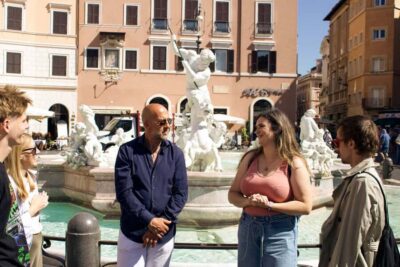

Forbidden History Walking Tour & Pub Crawl with Drinks
Read our review →
Guided Small Group Walking Tour of City Highlights
Read our review →Browse the lists this tour appears in