
Reviewed · GLADIATOR EXPERIENCES
Rome: 2-Hour Gladiator School
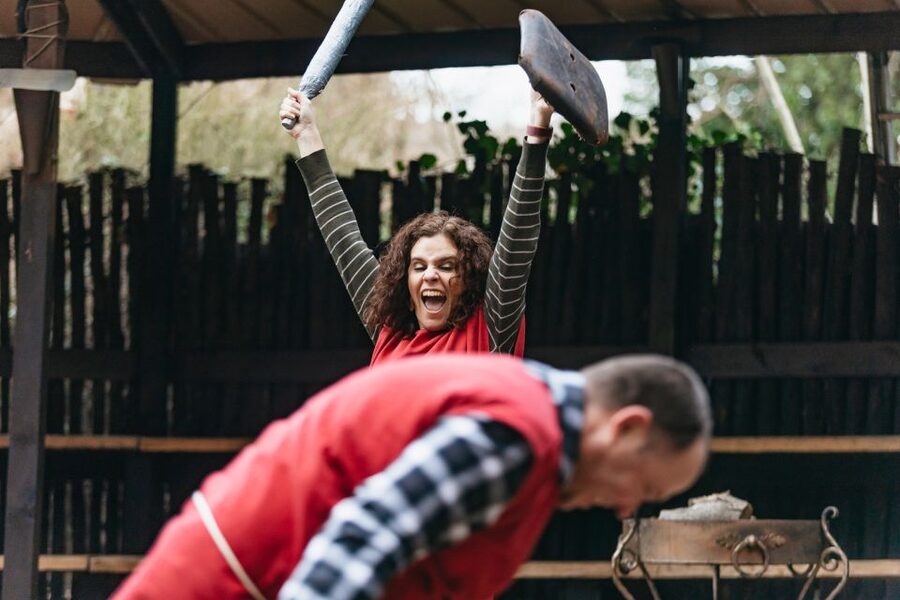
The best part of this Rome experience is that you do not just look at Roman history, you put on a gladiator tunic and practice the moves. I like the balance of short history lessons and constant activity, and I like that adults can join their children rather than stand on the sidelines. The final battle with foam swords gives the whole session a clear, funny payoff.
The main caution is the price: $135.94 per person is a serious family expense for two hours. The site is also outdoors on the Appian Way, where summer heat and mosquitoes can be a nuisance. Bring water, use insect repellent, and decide in advance who really wants to take part, since parents who only watch do not need a ticket.
In This Review
- Key points to know before booking
- Why this gladiator class works so well for families
- Starting at the small museum on the Appian Way
- What you learn about real Roman gladiators
- Putting on the tunic and learning swordplay
- The final battle in the arena
- Weather, comfort, and the practical side
- Is $135.94 per person good value?
- Who should book this experience
- Booking, cancellation, and timing tips
- Should you book the Rome Gladiator School?
- FAQ
- Where does the gladiator school activity take place?
- How long does the activity last?
- What languages are available?
- How do I reach the meeting point?
- Are children allowed to participate?
- Do parents have to buy a ticket if they only watch?
- What is included in the price?
- Can I cancel the booking?
Key points to know before booking

- A hands-on Appian Way lesson: You train at a gladiator school beside one of Rome’s oldest roads, not in the city center.
- History with a sword in hand: The session covers gladiator life, Roman soldiers, weapons, armor, and basic fighting technique.
- Children and adults take part: Ages in the groups can range from young children to adults, making this a good shared family activity.
- A final arena battle: After practice, participants use foam swords in supervised mock combat.
- A certificate and drinks included: The experience ends with a souvenir certificate, and water or other drinks are provided.
- English and Italian instruction: Guides have included Mirko, Cena, Patriccio, Olympus, Marko, and Sina, though your instructor depends on the date.
Why this gladiator class works so well for families
Rome has no shortage of ancient sites, but many of them ask children to look, listen, and avoid touching anything. This activity flips that pattern. You hear about Roman life, handle replicas, learn simple movements, and then use those skills in a mock fight.
I especially like the way the lesson gives children a reason to pay attention. When the instructor explains how a Roman weapon worked, the information has an immediate use. A child who might drift off during a standard museum talk suddenly wants to know how a gladiator trained.
Adults are not treated as spare camera operators. Parents, grandparents, and older children can join the drills, and mixed groups have included people from about ages three to 76. You can also watch without paying if you are accompanying someone but do not want to take the course.
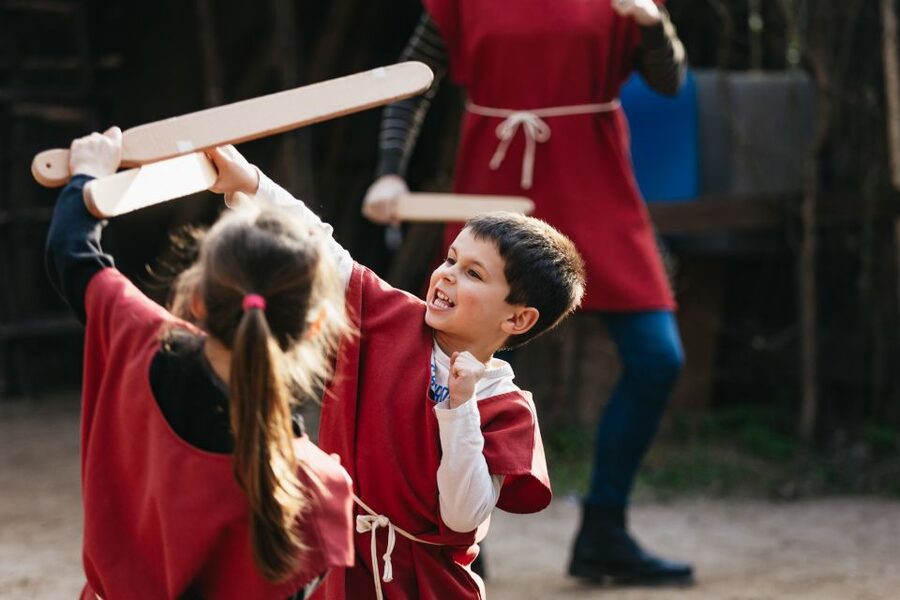
The tone is playful, not grim. The fighting uses foam swords, and the lesson is presented as safe training rather than a serious martial-arts class. That makes it suitable for families, though you should expect movement, noise, and excited children rather than a quiet cultural tour.
More gladiator experiences in Rome:
- Rome: Colosseum Tour with Access to the Gladiator Arena
★ 4.3 · 6,690 reviews - Gladiator’s Gate: Special Access Colosseum Tour with Arena Floor
★ 4.5 · 4,037 reviews - Roman Gladiator School: Learn How to Become a Gladiator
★ 4.5 · 1,477 reviews
Starting at the small museum on the Appian Way
The meeting point is the Gladiator School of Rome on the Via Appia Antica, also called the Appian Way. The nearest bus stop is Appia Antica-Travicella, served by routes 118 and 218. You meet your instructor there, and the activity returns to the same place at the end.
The location matters. The Appian Way is one of Rome’s great ancient routes, and the setting gives the activity more sense of place than a themed attraction in a modern shopping district. Still, plan the journey carefully. This is not a Colosseum-side meeting point, so allow time to reach the school by bus.
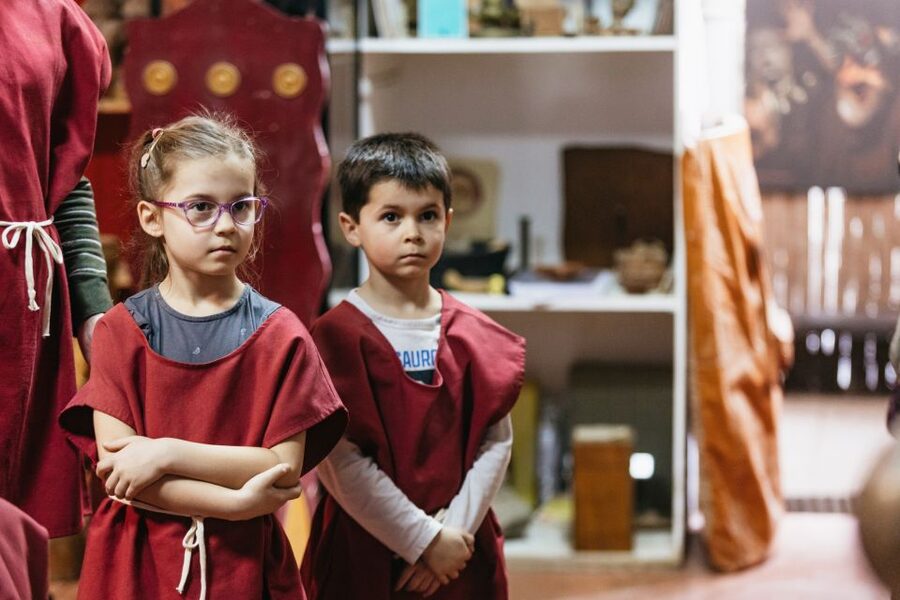
The first part includes a museum visit. It is small, but it gives the instructor a chance to show weapons, armor, and objects connected with Roman soldiers and gladiators. Do not expect the scale of the Colosseum or the Capitoline Museums. The value is in the close, direct explanation and in being able to connect what you see with the practical lesson that follows.
That compact setting also suits children. A large museum can become tiring before the fun begins. Here, the introduction is short enough to keep the group moving, then the objects become part of a broader story about who gladiators were and how their lives differed from the Hollywood version.
What you learn about real Roman gladiators
The history lesson covers life for gladiators in imperial Rome and includes information about Roman soldiers and weapons. The instructor explains that gladiators were not simply interchangeable men with swords. Their training, equipment, and fighting styles varied, and the session introduces some of those differences in an accessible way.
The exact depth depends on the instructor and the group. Guides such as Cena, Mirko, Olympus, Marko, Patriccio, and Sina have been praised for keeping explanations lively and adjusting their approach to children. Olympus, in particular, has presented the difference between real gladiator practice and the Hollywood image, along with points about the Roman military.
This is not a substitute for a serious archaeology tour. You will not receive a long academic lecture or a full survey of Roman social history. Instead, you get useful context in small portions, with the instructor showing you how an object or technique connects to gladiatorial life.
That approach is a strong choice after the Colosseum. The amphitheater shows you where public combat took place. The school helps you picture the training, discipline, equipment, and physical work behind the spectacle. If your family is also visiting the Colosseum’s underground areas, the two activities can complement each other nicely, though you should not assume they are part of one ticket or one package.
Putting on the tunic and learning swordplay
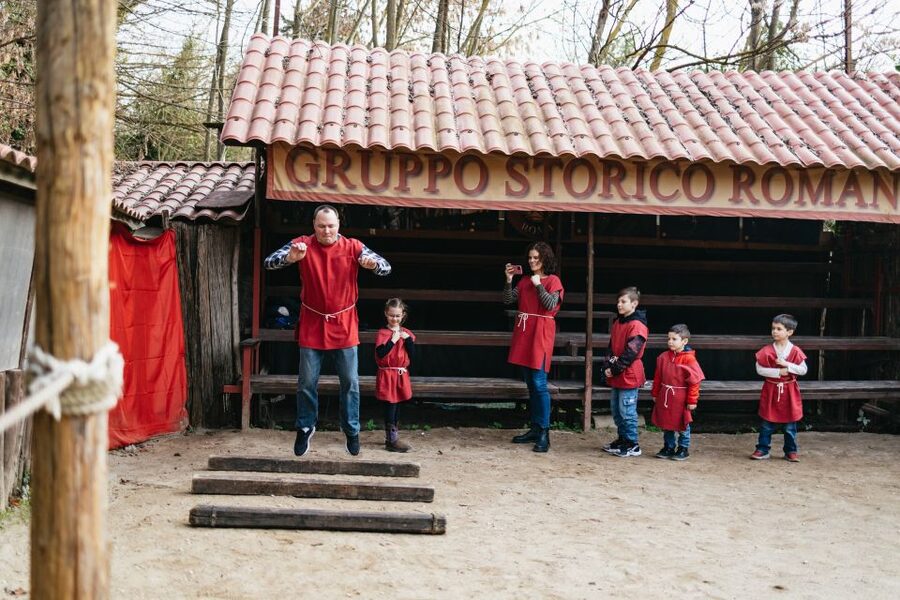
After the introduction, participants wear gladiator tunics and begin basic sword-fighting instruction. The goal is not to turn you into a trained fighter in two hours. You learn simple positions, movements, and techniques that are easy to remember and fun to use later in the mock battle.
The instructor keeps the class active. Parents have described the lesson as far more than a long safety briefing, with the group moving through drills and practice rather than sitting through a lecture. That matters for younger children, who usually need a change of pace every few minutes.
You can expect the instructor to demonstrate a move, have the group try it, and then correct or encourage participants. A lively guide can make a big difference here. The strongest sessions seem to rely on humor, patience, and direct attention, especially when small children become overexcited.
The equipment is used for controlled play. The final battle involves foam swords, not sharp Roman weapons. Even so, you should remind children to listen closely and follow the instructor’s rules. This is an active experience, and younger participants may need help staying focused.
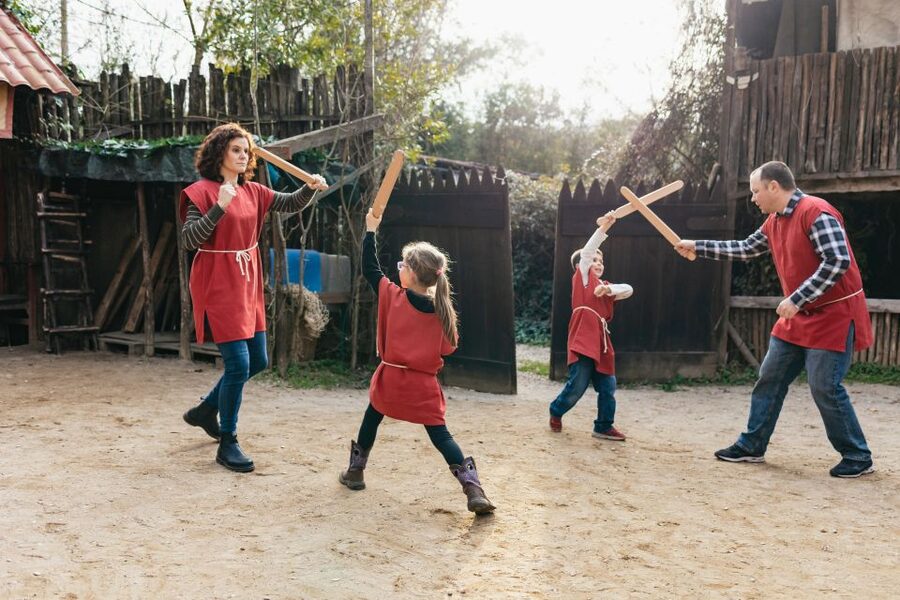
Adults can join the practice without feeling out of place. One of the pleasures is that a parent can train alongside a child, then face that child in the final contest. If you would rather preserve your energy for the rest of your Rome day, watching is allowed, and nonparticipating parents or companions do not pay for a course ticket.
More Rome tours worth comparing
- Vatican Museums & Sistine Chapel Express 2-Hour Guided Tour
★ 4.5 · 1,037 reviews - Cooking Class 2 Hour Spanish Steps – Fettucine and Tiramisù
★ 5.0 · 298 reviews - Rome 2 hour Golf Cart night tour with Hotel Pickup
★ 5.0 · 215 reviews
The final battle in the arena
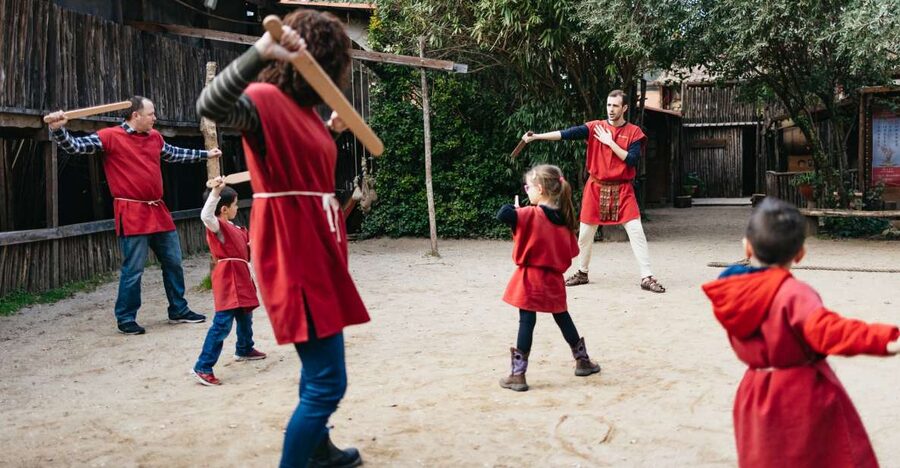
The class builds toward a supervised final battle in an arena. Participants use the moves they have practiced, often fighting other children and adults from the group. This is the moment many families remember because the history lesson suddenly becomes personal and theatrical.
The battle is designed for fun, not for deciding who is genuinely skilled. The instructor guides the action and keeps it safe, while the arena setting gives children a strong sense of occasion. You might find yourself taking the contest more seriously than expected when your child raises a foam sword and charges.
This final activity also helps explain why the course is longer than a quick photo opportunity. You are not simply dressing up and posing. There is a progression: introduction, museum, history, equipment, training, and battle. That structure gives the two hours a satisfying shape.
Photographs should be easy to take during the activity, though the supplied details do not promise a professional photographer or a specific photo service. If you are watching, stay ready for the best moments during the mock battles and certificate presentation.
Weather, comfort, and the practical side
Rome can be very hot, and the gladiator school is not a fully indoor attraction. Families have taken part in temperatures above 95 degrees Fahrenheit, with shady spots and cold water available at the training site. Drinks are included, but I would still dress for heat and sun.
Mosquitoes can be a problem, especially around outdoor areas. Pack insect repellent. Comfortable clothing and shoes will make the training easier, and children will be happier if they are not wearing stiff sightseeing clothes.
The activity lasts two hours, but you should allow extra time for the bus ride to and from the Appian Way. Starting times vary, so check availability before planning the rest of your day. Since the session ends at the meeting point, you can continue exploring the Appian Way afterward, but the activity itself does not provide a wider tour of the road.
The school is wheelchair accessible. The information provided does not explain which parts of the sword training can be adapted for every mobility level, so contact the provider if you need a precise arrangement. The activity is taught in English or Italian.
Is $135.94 per person good value?

At $135.94 each, this is not a budget attraction. A family of four could spend more than $540 before transport and other Rome admission fees. The cost looks especially high if you compare it with a simple museum ticket or a short walking tour.
The value improves if you see it as a full family event rather than a lesson alone. You receive the museum visit, two hours of guided instruction, costume use, weapons practice, drinks, the arena battle, and a certificate. More important, you get an activity that can hold the attention of children who may already be tired of ruins and church interiors.
The price also works better when adults take part. If only one child joins and the rest of the family watches, the experience becomes expensive quickly. The good news is that parents or companions who do not attend do not need to buy a ticket.
I would book it for a special family day, a birthday, or a child who is genuinely excited by Roman history. I would think twice if your group wants a quiet, low-cost cultural visit, or if several family members have no interest in physical play.
Who should book this experience

This is best for families with children who enjoy costumes, movement, pretend battles, and clear goals. It has worked well for children around five to 14, but adults and older family members can enjoy it too.
It is also a good choice after the Colosseum. Seeing the amphitheater first can give children a place and purpose for the skills they learn later. The order can work in reverse as well, since the class may make the Colosseum feel less abstract afterward.
The activity suits a multigenerational group because participation is flexible. Younger children can try the drills, adults can fight alongside them, and grandparents can watch or join as they prefer. Guides have been praised for patience with small children and for keeping older adults interested in the history.
This is not the right pick for someone seeking an exact reconstruction of ancient combat. The lesson is educational entertainment, with safe equipment and a playful battle. Its success depends partly on your instructor, and guides such as Mirko, Cena, Patriccio, Olympus, Marko, and Sina have each been singled out for energy, humor, patience, or strong explanations.
Booking, cancellation, and timing tips

You can reserve now and pay later, which helps if your Rome schedule is still changing. Free cancellation is available up to 24 hours before the activity for a full refund.
Check the available start times before booking, then compare them with your Colosseum visit and transport plans. The school is reached by bus lines 118 or 218 to Appia Antica-Travicella, and the activity begins and ends at the school.
If you are traveling with a family group, decide who will participate before paying. A nonparticipating parent or companion can watch without a ticket, while anyone who wants to wear the tunic, train, and join the battle needs a place.
Should you book the Rome Gladiator School?
Book it if you want your Rome trip to include active learning instead of another sit-and-listen tour. The combination of a small museum, Roman weapons, safe sword drills, and a final arena battle gives children a memorable way to connect with the ancient city.
The high price and outdoor setting deserve serious thought. Still, for a family that will use the places and the certificate, take part in the battle, and treat the session as one of the day’s main activities, the experience can justify its cost. Bring repellent, plan the bus ride, and join in if you can. The parent who agrees to be defeated by a child in the arena may get the best story of the day.
FAQ
Where does the gladiator school activity take place?
It takes place at the Gladiator School of Rome on the ancient Via Appia Antica, or Appian Way, in Rome.
How long does the activity last?
The gladiator school experience lasts two hours. Starting times vary, so check availability when selecting a date.
What languages are available?
The instructor can teach in English or Italian.
How do I reach the meeting point?
The nearest bus station is Appia Antica-Travicella, served by bus lines 118 and 218. You meet the instructor at the school, and the activity ends at the same location.
Are children allowed to participate?
Yes. The activity is suitable for both children and adults, and families with young children can take part.
Do parents have to buy a ticket if they only watch?
No. Parents or companions who do not attend the course do not have to pay for a ticket.
What is included in the price?
The price includes the museum visit, gladiator training, a certificate, and drinks.
Can I cancel the booking?
Yes. You can cancel up to 24 hours in advance for a full refund. You can also reserve now and pay later.
Newest reviews from Rome
- Rome: Vatican Museums & Sistine Chapel Skip-the-Line Ticket★ 4.4 · 148 reviews
- Shared Shuttle Transfer from Rome to Civitavecchia Port★ 5.0 · 148 reviews
- Rome: Crypts & Catacombs After Hours Tour with Bone Chapel★ 4.6 · 149 reviews
- Ghosts Legends and Mysteries of Rome Walking Tour★ 5.0 · 149 reviews
- Skip the Line: Vatican and Sistine Chapel with Guided Tour★ 4.0 · 149 reviews
- Tivoli: Villa Gregoriana Entrance Ticket★ 4.7 · 150 reviews
- Pizza and Tiramisu Cooking Class in Rome, Piazza Navona★ 5.0 · 150 reviews
- Rome: Borghese Gallery Skip-the-Line Entry and Guided Tour★ 4.7 · 150 reviews
Gladiator Experiences, compared.
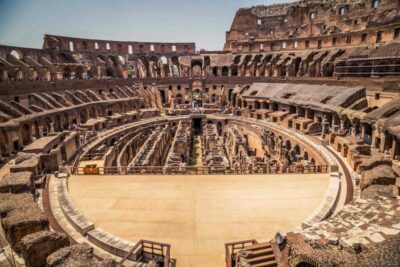
Colosseum Tour with Access to the Gladiator Arena
Read our review →
Gladiator’s Gate: Special Access Colosseum Tour with Arena Floor
Read our review →
Gladiator’s Gate and Arena Special Colosseum Access
Read our review →Colosseum Gladiator’s Arena and Roman Forum Group Tour
Read our review →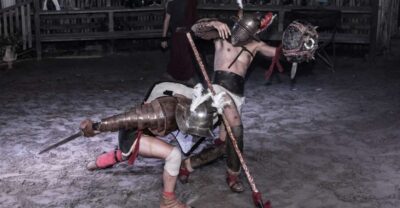
Colosseum Gladiator’s Arena and Ancient Rome VIP Guided Tour
Read our review →
Colosseum Gladiator’s Arena and Roman Forum Tour
Read our review →Browse the lists this tour appears in