
Reviewed · COOKING CLASSES
Home Cooking in Testaccio: Cacio e Pepe, Amatriciana, Carbonara
Roman pasta is built on simple ingredients, careful timing, and a few techniques that are easy to get wrong. In Testaccio, Andrea and Milvia welcome you into their home to make fresh dough, roll and cut pasta, and prepare cacio e pepe, amatriciana, and carbonara from scratch. You finish by eating all three dishes at the same table.
I like the small maximum of six people, which gives you real time at the work surface instead of a quick turn at a crowded station. I also like the practical detail: you get to practice hand-cut fettuccine and use a traditional machine to make tonnarelli, then take home the recipes as a PDF.
The main consideration is the setting. This is a home visit, not a polished cooking school, and the class is not recommended if you have serious allergies to dogs or cats. At about $95.54 per person, it is also a full meal and social afternoon, not simply a short pasta demonstration.
In This Review
- Key points to know before booking
- Why Testaccio makes a fitting home base
- Andrea and Milvia set the tone
- From flour and eggs to fettuccine
- Three sauces, three lessons in Roman cooking
- The meal is part of the lesson
- A small group changes the whole class
- Who will enjoy this most
- Timing, transport, and practical details
- Is $95.54 a fair price?
- Should you book it?
- FAQ
- Where does the pasta class meet?
- How long does the experience last?
- Which pasta dishes will I learn to make?
- Is food and drink included?
- How many people can join the class?
- Is hotel transportation included?
Key points to know before booking
- Three Roman classics in one sitting: Learn cacio e pepe, amatriciana, and carbonara rather than a single general pasta recipe.
- A real home kitchen: Andrea and Milvia teach in their Testaccio apartment, creating a personal setting with conversation and a shared meal.
- Hands-on pasta work: Mix dough, learn about flour, eggs, gluten, and protein, then roll, cut, shape, and machine-make tonnarelli.
- Small group format: The class accepts no more than six people, with a minimum of two required per booking.
- A generous finish: Eat three fresh pasta courses with unlimited local wine, followed by homemade dessert and coffee.
- Useful for home cooks: The hosts share techniques and send a PDF of the recipes after the class.
Why Testaccio makes a fitting home base
Testaccio is one of Rome’s best neighborhoods for a food-focused afternoon. It has a strong connection to traditional Roman cooking, and the class keeps you in that local setting rather than moving you into a large central venue built for groups.
You meet at Via Galvani 4, in the Testaccio area. The activity lasts about three hours and ends back at the meeting point. Hotel pickup and drop-off are not included, so you will need to make your own way there and back. The meeting point is near public transportation, which helps if you are staying outside the neighborhood.
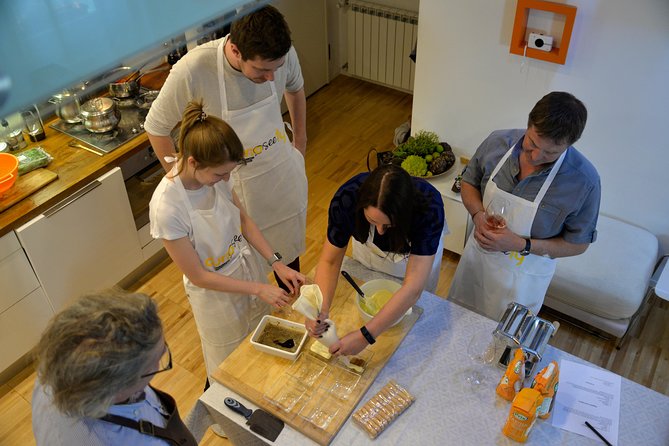
The location matters because this is meant to feel like a visit to a Roman household. You are not just watching someone prepare pasta behind a counter. You enter a private home, work alongside the hosts, and later sit at their dining table. Several details from the class give it a distinctly personal feel, including family conversation, stories, and even the chance to see an antique piano.
More cooking classes in Rome:
- 3 in 1 Cooking Class near Navona: Fettuccine, Ravioli & Tiramisu
★ 5.0 · 7,376 reviews - Rome: Pasta Making Class with Wine, Limoncello, and Dessert
★ 4.9 · 3,177 reviews - Rome: 3-in-1 Fettuccine, Ravioli, and Tiramisu Cooking Class
★ 4.9 · 2,704 reviews
Andrea and Milvia set the tone
The hosts, Andrea and Milvia, are central to the appeal. Their role is not limited to showing you a recipe and sending you away. They explain why the dough behaves as it does, how the sauces come together, and how small changes affect the final dish.
I especially like that the instruction begins with the flour-to-egg ratio. That may sound basic, but it is the part many casual pasta classes skip. You learn how gluten and protein affect the dough, which helps explain why pasta can turn out too soft, too tough, or difficult to roll.
The teaching style appears suited to a mixed group. If you have never made pasta, the process is broken into manageable steps. If you already cook, you may still pick up new tips. One Italian home cook found the techniques useful despite having made homemade pasta before, while another participant appreciated learning different ways to cut the dough.
The hosts also make room for conversation. This is a social class, not a silent lesson. You may spend as much time hearing about Roman food and family life as you do measuring ingredients. That is a strength if you want personal contact with local people, but it may not suit you if you want a fast, tightly timed professional workshop.
From flour and eggs to fettuccine
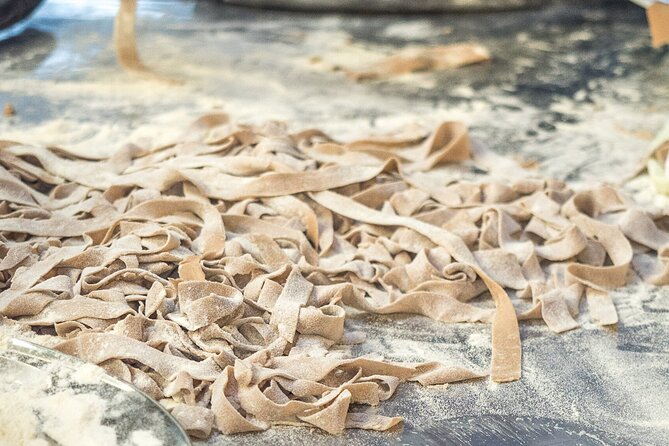
The class starts with dough made from scratch. You learn the hosts’ preferred formula for flour and eggs, then work through the mixing and kneading process. The lesson includes the role of gluten and protein, giving you a clearer idea of why the dough needs time and pressure before it becomes smooth and workable.
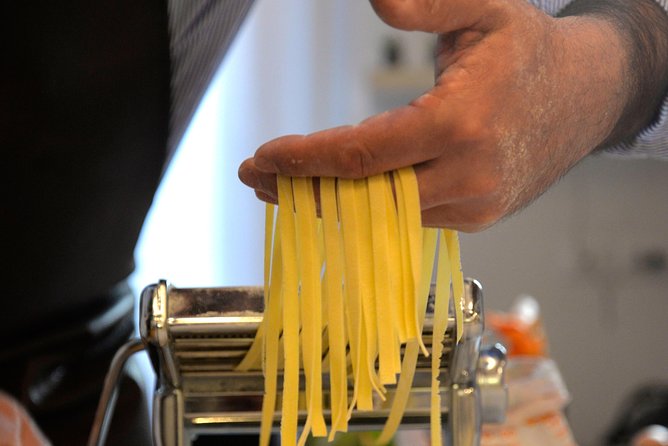
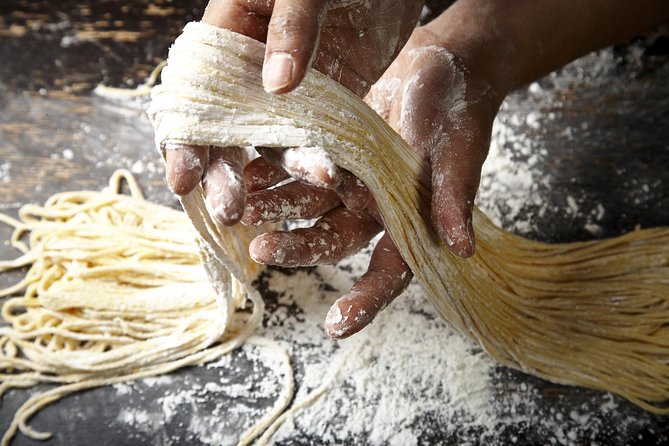
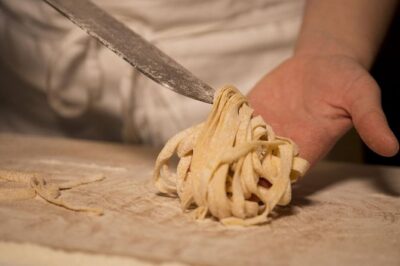
Next comes the satisfying hands-on part: rolling, cutting, and shaping. You make fettuccine by hand, which gives you a feel for thickness and width that you cannot get from simply buying fresh pasta. You also use a traditional pasta machine to produce tonnarelli.
The difference between the two shapes is useful in this particular class. Fettuccine gives you a broad, ribbon-like pasta to work with, while tonnarelli is well suited to Roman sauces. You are not only making one type of noodle and putting one sauce on top. You work with shapes that help show how pasta and sauce are meant to function together.
Expect flour on your hands and a little mess around the work surface. That is part of the fun, but it is worth remembering that you may want to keep your phone out of the way. Andrea has taken photos during the class and sent pictures and recipes afterward, a thoughtful touch for anyone who wants a record of the afternoon without handling a phone with sticky fingers.
Three sauces, three lessons in Roman cooking
The meal centers on three Roman sauces. Each one teaches a different kind of control.
Cacio e pepe looks simple because it uses few ingredients, but the cheese and pepper need to form a smooth sauce rather than a clump. You learn how heat, pasta water, and stirring work together. This is the dish where technique matters most, since there is nowhere for poor timing to hide.
Amatriciana brings a different balance, with a sauce built around tomato and the savory character of cured pork. The preparation gives you a useful lesson in how a Roman sauce gets its depth without a long ingredient list.
Carbonara is often the dish people most want to learn, and it is frequently mishandled outside Rome. The class shows how to create a creamy texture without turning the eggs into scrambled pieces. One participant singled out the carbonara as especially delicious, but the larger value is learning the method so you can repeat it at home.
You prepare the sauces as part of the group work, then eat the finished pasta in three separate courses. That format lets you taste the effect of the different sauces and pasta shapes instead of trying to compare everything on one overloaded plate.
Vegetarian requests can be accommodated if you provide the details when booking. You should still state all dietary needs in advance rather than waiting until you arrive. The class is not recommended for people with serious allergies to dogs and cats, so this is important to consider before paying.
A completely different way to spend the day in Rome:
- Vatican: Museums & Sistine Chapel Entrance Ticket
★ 4.5 · 144,003 reviews - Vatican Museums & Sistine Chapel Tour with Optional Basilica
★ 4.3 · 67,413 reviews - Vatican Museums, Sistine Chapel & St Peter’s Basilica Guided Tour
★ 4.5 · 39,149 reviews - Rome: Colosseum, Palatine Hill and Roman Forum Guided Tour
★ 4.8 · 32,814 reviews
The meal is part of the lesson
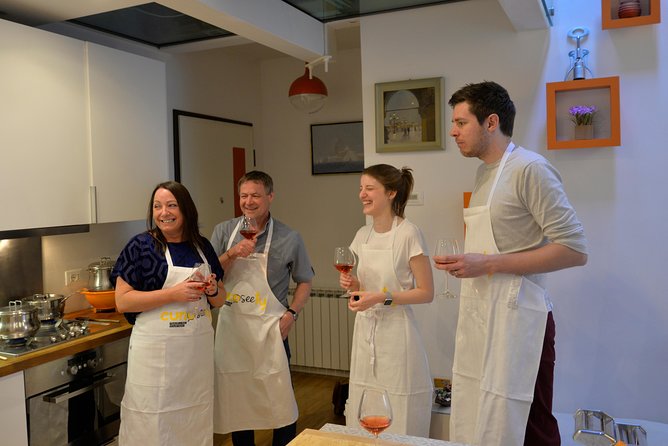
After the cooking, you sit down for a three-course pasta meal. The main food is the three fresh pasta preparations: cacio e pepe, amatriciana, and carbonara. Dessert and coffee follow, and wine is included without a stated limit.
That makes the price easier to assess. At $95.54 per person, you are paying for more than instruction. The fee covers about three hours of teaching, the ingredients, three pasta courses, wine, dessert, coffee, and a recipe PDF. You also get the setting of a private Roman home and time for conversation with the hosts.
I would not book this simply as a cheap lunch. Rome has many inexpensive places to eat pasta. I would book it if you want to understand how the dishes are made, enjoy a long meal, and spend time with a local couple. The value rises for people who will actually use the recipes later.
The meal can be substantial. One participant specifically suggested choosing a midday session so there is time to walk afterward. That is practical advice. Three pasta courses, wine, dessert, and coffee make this a serious meal, so leave some room in your schedule and appetite.
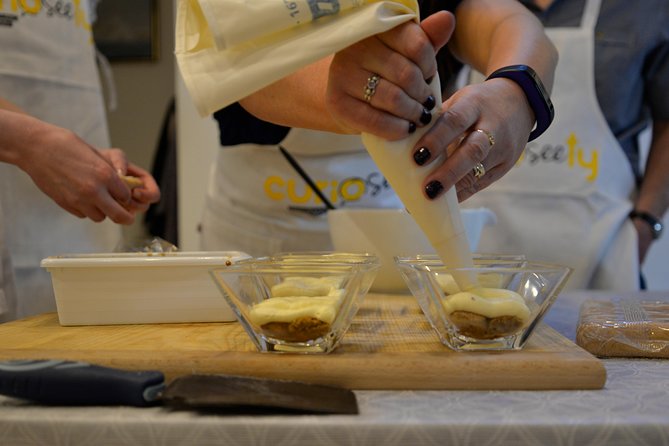
Some occasions may include small extras beyond the listed menu. Past participants have described additions such as fried zucchini, fried sardines, and a homemade tiramisu-style dessert, but these should not be treated as guaranteed parts of the booking. The confirmed core is the three pasta courses, dessert, wine, and coffee.
A small group changes the whole class
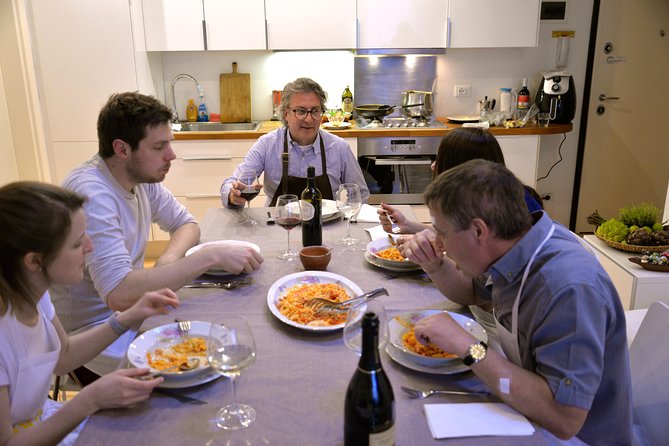
The maximum group size is six people, with at least two required per booking. That is one of the strongest features here.
In a large cooking class, you may spend much of the time watching someone else knead or waiting for a turn with the machine. With six or fewer people, Andrea and Milvia can correct your technique, answer questions, and give you more attention as you shape the pasta.
The group size also affects the meal. Sitting around a home dining table with a handful of people feels more like a shared Roman lunch than a standard activity with a quick tasting at the end. Solo visitors should note the minimum booking rule, though a person booking alone may need to check how the reservation system handles that requirement.
The class is offered in English, so you can follow the explanations without relying only on demonstration. Confirmation is provided at booking, and the ticket is mobile, which keeps the practical side simple.
Who will enjoy this most
This class is a strong fit for couples, families with adult children, and friends who like food but do not want a formal restaurant meal every night. It also works well for anyone who wants a slower break from Rome’s crowded sights.
You do not need to be an experienced cook. The process starts with basic dough and moves through each stage in order. At the same time, experienced pasta makers can still find value in the discussion of flour, eggs, gluten, cutting, shaping, and sauce technique.
I would particularly recommend it to you if:
- You want to make Roman pasta at home after the trip.
- You prefer small groups to large commercial classes.
- You enjoy meeting local people in a private home.
- You want a full meal, not just a tasting.
- You are interested in carbonara, cacio e pepe, and amatriciana specifically.
- You have enough time for a relaxed three-hour activity.
I would think twice if you want a quick demonstration, dislike social conversation, need a highly formal teaching kitchen, or have a serious dog or cat allergy. The home setting is the point, but it also means the experience is less standardized than a purpose-built school.
Timing, transport, and practical details
The class lasts approximately three hours. You should plan extra time around it for getting to Testaccio, sitting down to eat, and walking afterward. Since hotel transfers are not included, check your route to Via Galvani 4 before the start time.
The booking is available in English and uses a mobile ticket. You should provide dietary requirements at the time of booking. Service animals are allowed, but the separate warning about serious dog and cat allergies remains relevant because the activity takes place in a home.
Free cancellation is available up to 24 hours before the start time for a full refund. Changes or cancellations made within 24 hours are not accepted for a refund, and the cut-off follows Rome’s local time.
The class is often reserved well ahead, with an average booking lead time of about 39 days. That is worth noting if your Rome dates are fixed, especially since the group is capped at six people. I would reserve early rather than expect a last-minute place.
Is $95.54 a fair price?
For Rome, the price is not low, but the package is broad. You receive hands-on teaching, three separate pasta dishes, unlimited wine, dessert, coffee, and recipes to take home. The small group and private-home setting also account for part of the cost.
The best comparison is not a bowl of pasta in a trattoria. Compare it with a cooking lesson plus lunch. If you would otherwise pay for a class and then eat separately, the price becomes easier to justify. You are also getting a skill you can use again, particularly if you pay attention to the dough and carbonara lessons.
The value is weaker if you mainly want to eat. In that case, a restaurant will be cheaper and faster. This class earns its price through participation, personal instruction, and time with Andrea and Milvia.
Should you book it?
Book this if you want Roman food explained at the kitchen table, not just served on a plate. The strongest reasons are the small group, the chance to practice several pasta shapes, the focused lesson on three classic sauces, and the generous meal that follows.
I would choose it for a midday slot if possible, then plan a walk through Testaccio afterward. I would also reserve ahead, list dietary needs clearly, and check the allergy warning before booking.
Skip it if you want a short, highly polished cooking show or if you are uncomfortable in a private home. For everyone else, this offers a warm, practical way to learn the pasta dishes Rome is famous for, with recipes and techniques you can carry into your own kitchen.
FAQ
Where does the pasta class meet?
The class meets at Via Galvani 4, 00153 Rome, Italy, in the Testaccio neighborhood. The activity ends back at the meeting point.
How long does the experience last?
The cooking and meal take approximately three hours.
Which pasta dishes will I learn to make?
You will learn to make cacio e pepe, amatriciana, and carbonara. The class also covers fresh pasta dough, hand-cut fettuccine, and tonnarelli made with a traditional pasta machine.
Is food and drink included?
Yes. The experience includes a three-course meal of fresh pasta, dessert, unlimited wine, coffee, and a PDF containing the recipes.
How many people can join the class?
The maximum group size is six people. A minimum of two people is required per booking.
Is hotel transportation included?
No. Hotel pickup and drop-off are not included. The meeting point is near public transportation, and the experience is offered in English.
Newest reviews from Rome
- ROME:Colosseum & Ancient Rome – private/small group TOUR★ 5.0 · 24 reviews
- Off the Beaten Track in Rome: Rione VI Parione Private Tour★ 5.0 · 24 reviews
- Cinematic Photoshoot in Rome★ 5.0 · 24 reviews
- Rome: Best of Colosseum and Roman Forum Small Group Guided Tour★ 4.5 · 24 reviews
- The Labyrinth of Rome between catacombs and ancient quarries★ 4.5 · 24 reviews
- Vatican and Trionfale Market Tour with Wine and Food Tasting★ 5.0 · 24 reviews
- private tour: Vatican Museums, Sistine Chapel, St. Peter’s Basilica★ 4.5 · 24 reviews
- Colosseum guided tour with Virtual Reality★ 5.0 · 24 reviews
Cooking Classes, compared.
3 in 1 Cooking Class near Navona: Fettuccine, Ravioli & Tiramisu
Read our review →
Pasta Making Class with Wine, Limoncello, and Dessert
Read our review →
3-in-1 Fettuccine, Ravioli, and Tiramisu Cooking Class
Read our review →
Fettuccine Pasta Cooking Class in Rome’s City Center
Read our review →
Traditional Pasta with Cocktails Cooking Class
Read our review →
Fettuccine and Tiramisu Cooking Class with Wine
Read our review →
Pasta Cooking Class Near the Colosseum with 3 Spritz Cocktails
Read our review →
Enjoy Spritz and Pasta Making in Piazza Navona
Read our review →Browse the lists this tour appears in