
Reviewed · COOKING CLASSES
Rome: Fettuccine and Tiramisu Cooking Class with Wine
Rome knows how to feed you, but this class lets you make the meal yourself. At Restaurant Gusto, an English-speaking chef guides you through tiramisu and fresh fettuccine, then serves your work with wine in the same restaurant. The recipes use simple ingredients, which makes the lesson approachable even if your kitchen skills stop at boiling water.
I like the hands-on format and the chance to choose your pasta sauce, including tomato and basil, Amatriciana, or cacio e pepe. I also like the social side: classes can be intimate, and instructors such as Mimi, Maria, Kiki, Carlotta, and Tommy are praised for clear teaching and lively personalities. The possible drawback is pace. One class felt rushed, and a group activity can be noisier or less orderly when several people want to take the lead.
In This Review
- At a glance
- Starting at Restaurant Gusto in central Rome
- Tiramisu comes first for a practical reason
- Making fettuccine from scratch
- Choosing between three sauces
- Sitting down to eat your own cooking
- The chefs make the difference
- Small groups, shared tables, and class manners
- Is $67.40 a fair price?
- Who will enjoy this class most?
- What to know before you book
- Should you book the Rome fettuccine and tiramisu class?
- FAQ
- How long does the cooking class last?
- Where does the activity begin?
- What language is the class taught in?
- What dishes will I make?
- Which pasta sauces can I choose?
- What drinks are included?
- Is the class suitable for young children?
- Can I cancel my booking?
At a glance
- Two Roman staples in three hours: Make tiramisu first, then prepare fresh fettuccine from dough to plate.
- Your pasta, your sauce: Choose tomato and basil, Amatriciana, or cacio e pepe for the finished dish.
- English-speaking instruction: The chef explains each step and helps you throughout the class.
- Dinner is part of the lesson: Eat your own pasta and tiramisu with wine, water, and limoncello or coffee.
- A social restaurant setting: You cook beside people from around the world and share a meal at the end.
- Strong overall record: The activity carries a 4.8 rating from 2,013 reviews, with repeated praise for the chefs and food.
Starting at Restaurant Gusto in central Rome
The class begins inside Restaurant Gusto, a picturesque restaurant in the heart of Rome. You meet your chef there, and the activity finishes at the same place, so there is no need to follow a guide through the city or arrange transport between cooking stations.
That simple setup matters. You can arrive ready to cook, rather than spending part of the three hours finding a separate kitchen. The restaurant also gives the meal a proper setting at the end. You are not just preparing food at a temporary table and heading off with a paper plate. You sit down in a restaurant atmosphere and eat what you made.
The exact starting time depends on the date you select, so check availability before building the rest of your day around it. The class lasts three hours. I would avoid scheduling a major museum reservation immediately afterward, since kneading, shaping, cooking, and eating can take the full allotted time.
The instruction is in English. That makes this a practical choice if you want more than a demonstration and need clear explanations while working with dough, cream, and sauce. The chef names vary by session. Past classes have included Mimi, Maria, Kiki, Carlotta, Tommy, Matt, Laura, Tomas, Matty, and others, so you should not book this expecting one particular instructor unless the provider confirms it.
More gelato and tiramisu classes:
- 3 in 1 Cooking Class near Navona: Fettuccine, Ravioli & Tiramisu
★ 5.0 · 7,376 reviews - Rome: Pasta & Tiramisu Class with Fine Wine by the Vatican
★ 4.9 · 4,852 reviews - Rome: 3-in-1 Fettuccine, Ravioli, and Tiramisu Cooking Class
★ 4.9 · 2,704 reviews
Tiramisu comes first for a practical reason
The class begins with tiramisu. This is not just a random choice in the order of events. The dessert needs time to rest in the refrigerator, so preparing it first allows it to chill while you work on the pasta.
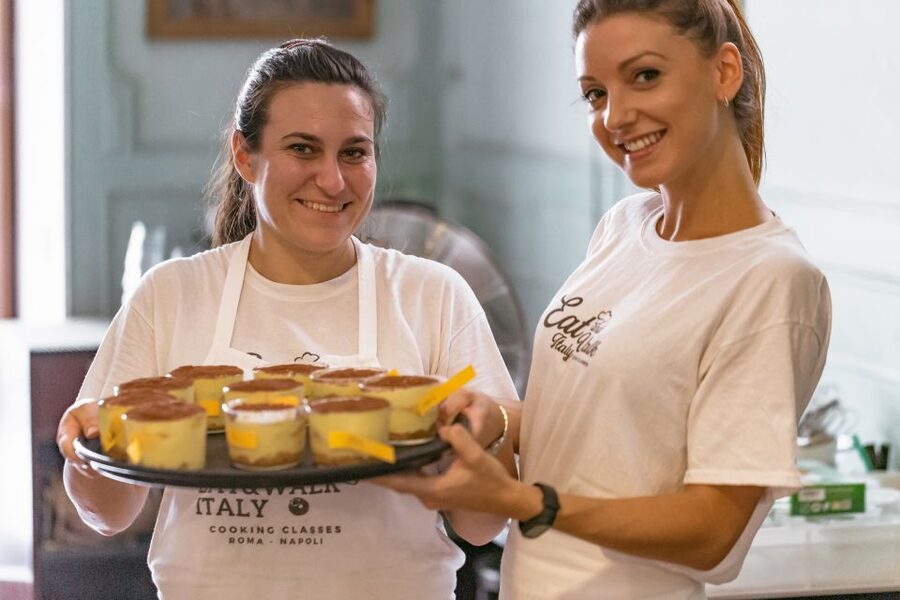
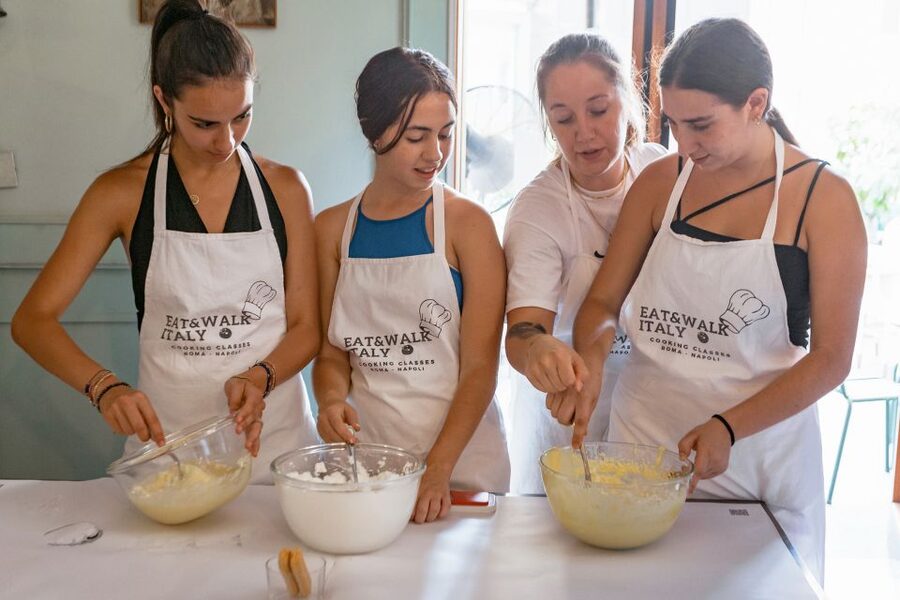
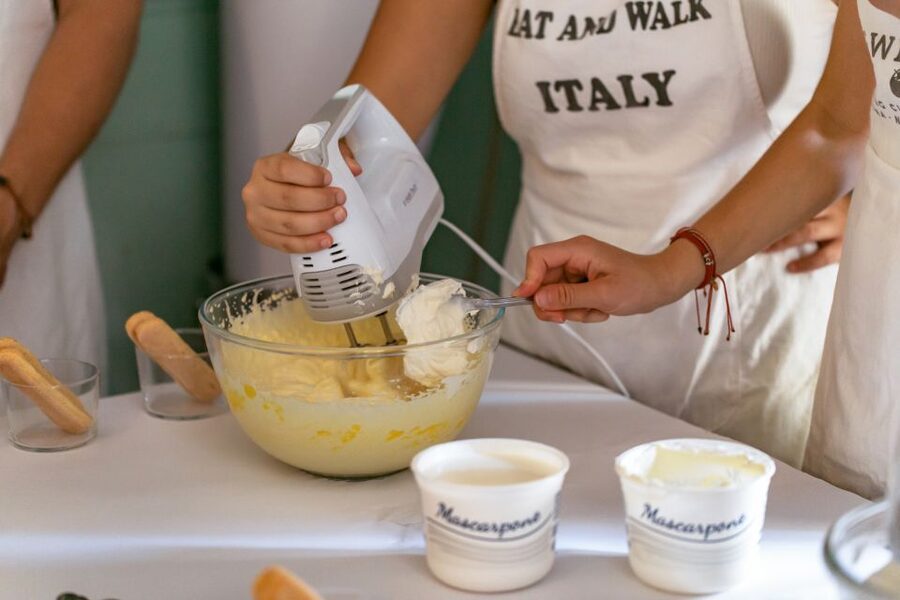
You make the tiramisu yourself with guidance from the chef. The appeal here is the short ingredient list and the direct result. You see how a few fresh ingredients become one of Italy’s best-known desserts, rather than watching someone else assemble it behind a counter.
The chef provides step-by-step support, and the class is designed for different cooking levels. You do not need to arrive as an experienced pasta maker or pastry cook. Several instructors are praised for patience, encouragement, and clear explanations, which is useful when you are handling the mixture for the first time.
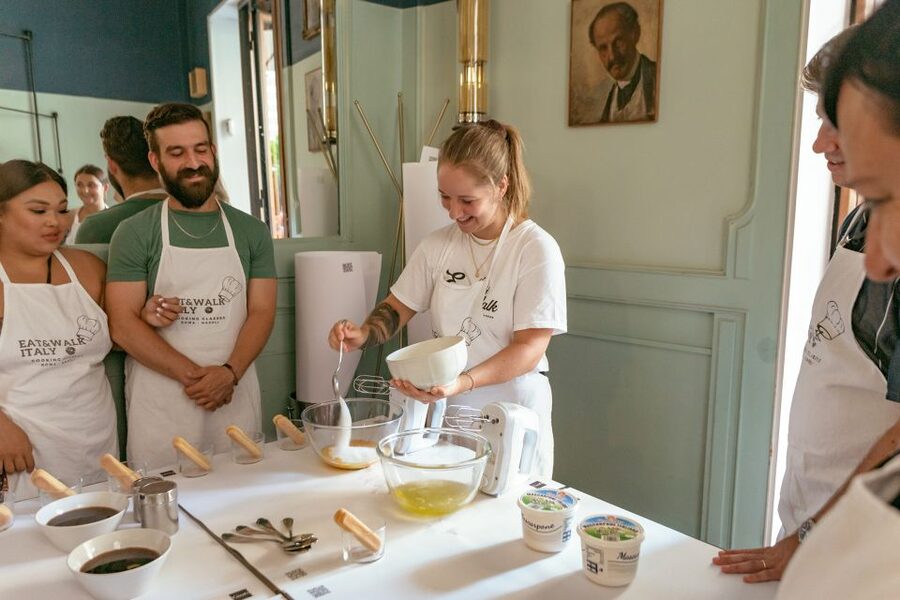
The tiramisu portion is also a good early test of the group dynamic. You may be working with several people at shared tables, trading tips and comparing techniques. That social element can make the class more fun, but it also means you may need to listen carefully when the chef gives instructions.
Once your dessert is ready, it goes into the fridge to rest. Then the class turns to pasta.
Making fettuccine from scratch
The pasta portion is the main event for many people. You begin with the dough, then learn how to shape the famous fettuccine. The chef demonstrates the process and stays available to help as you work.
Fresh pasta is a good teaching subject because you can feel what is happening. Dough that is too dry, too sticky, or uneven will show you the problem quickly. The chef’s role is not only to tell you what to do, but to help you correct those small mistakes before the pasta reaches the pot.
You also learn how to create different pasta shapes with a special recipe, while focusing on fettuccine for the meal. That gives the class a little more range than simply rolling one kind of noodle and stopping there.
The hands-on work is a major strength. You are not merely watching a chef toss flour around while you sip wine. You take part in the preparation, and the final dish has a clear connection to the work you did at the table.
Still, keep your expectations sensible. This is a group class, not a private lesson with unlimited time for every person. One participant found the pace quick and felt some steps were partly prepared in advance. That can be useful for keeping the class moving, but it may disappoint you if you want a slow, highly technical lesson on every stage of pasta making.
Choosing between three sauces
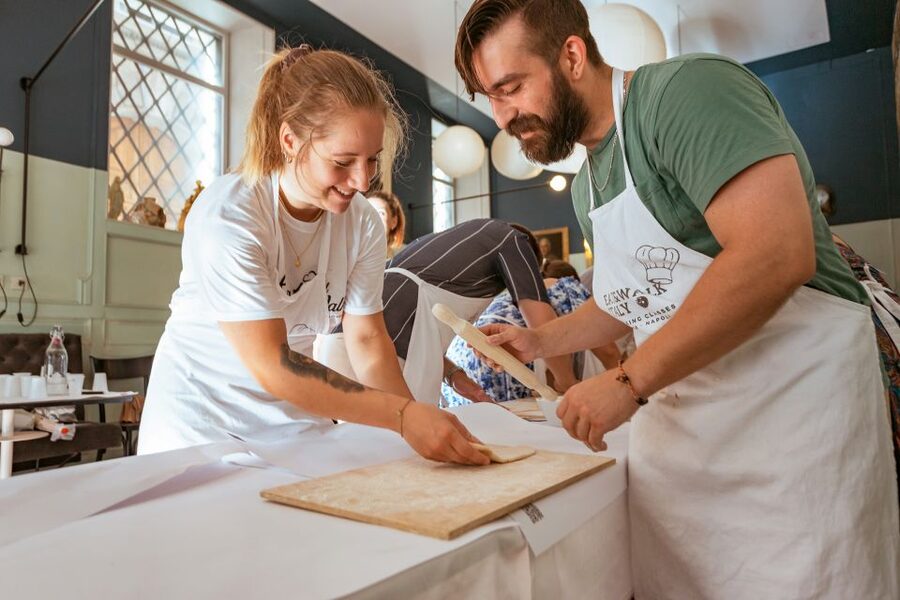
After shaping the fettuccine, you choose the sauce for your meal. The options are tomato and basil, Amatriciana, or cacio e pepe.
Tomato and basil is the straightforward choice, with a clean, familiar flavor that lets you focus on the fresh pasta. Amatriciana brings a stronger Roman identity to the plate. Cacio e pepe is the minimalist option, built around cheese and pepper, and a useful reminder that Italian cooking often depends on handling a few ingredients well.
The choice gives the meal a personal touch without making the class complicated. You can pick the sauce that suits your taste, and you do not have to prepare several full dishes in the time available.
The menu is also helpful for mixed groups. If one person wants a classic tomato sauce and another wants something more Roman, there is room for both preferences. The class provides fettuccine with the sauce you choose, rather than leaving you with plain pasta after all that work.
More Rome wine tastings worth an afternoon:
- Rome: Tuscany & Montepulciano Day Trip with Lunch & Wine Tasting
★ 4.5 · 5,232 reviews - Rome Food Tour: Unlimited Tastings with Fine Wine & Barolo
★ 5.0 · 3,365 reviews - Rome: Pasta Making Class with Wine, Limoncello, and Dessert
★ 4.9 · 3,177 reviews - Rome: Trastevere Food tour with Free-Flowing Fine Wine
★ 5.0 · 2,853 reviews
Sitting down to eat your own cooking
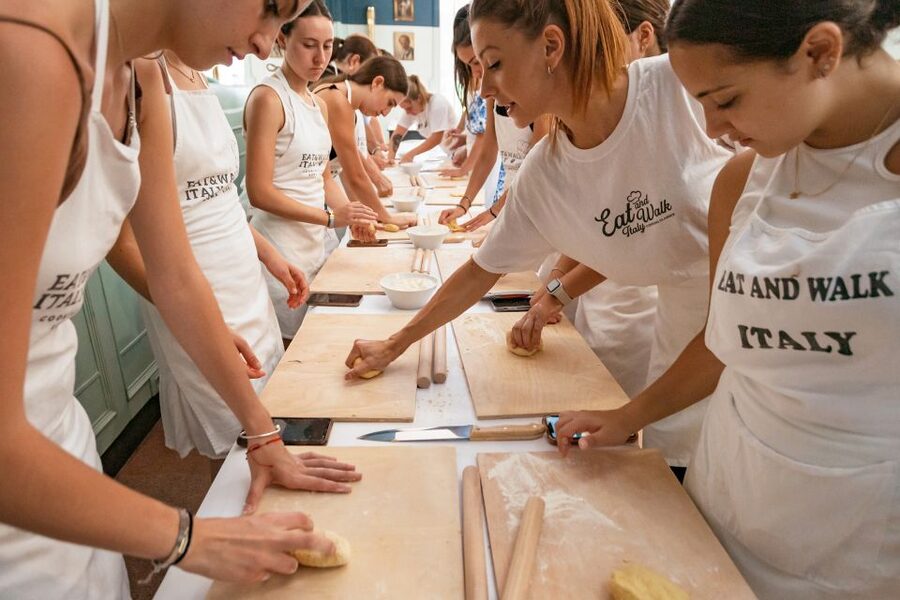
At the end, you eat the fettuccine and tiramisu you prepared. The meal includes a glass of Italian wine or a non-alcoholic drink, water, and either a glass of limoncello or coffee.
This finish gives the class good value. You are paying for instruction, ingredients, a meal, and drinks in one three-hour activity. A standard restaurant dinner in Rome might cost less or more depending on the menu, but it would not include the cooking lesson or the chance to make the dishes yourself.
The wine and limoncello also help shift the mood from work to dinner. You can trade stories with classmates and enjoy the restaurant setting instead of rushing out as soon as the food is plated.
The food itself receives repeated praise, especially the fettuccine and tiramisu. That does not mean every plate will look like a chef’s. The point is that the process is simple enough to follow and the finished dishes should give you a satisfying reward for your effort.
If you do not drink alcohol, the included glass of wine can be replaced with a non-alcoholic drink, and limoncello can be replaced with coffee. The class includes both options, which makes it easier for mixed groups.
The chefs make the difference
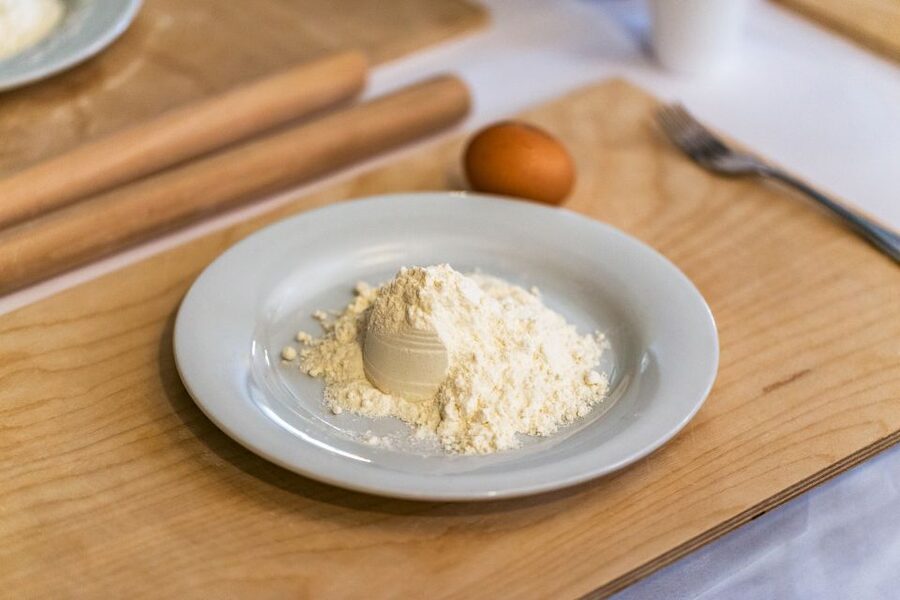
The strongest part of this class is the chef leading it. Good instruction matters more here than fancy equipment or a long list of dishes.
Mimi is praised for energy, humor, and clear explanations. Maria is described as encouraging and skilled at helping people feel confident. Kiki receives praise for creating a friendly atmosphere, especially for people who feel shy at first. Carlotta is noted for her engaging style and detailed guidance, while Tommy is remembered as both entertaining and a good teacher.
Those details point to the kind of class you can expect at its best. You get practical instruction, but you also get a host who keeps the room moving and makes it easier to speak with the other people at your table.
The chefs do not all teach in exactly the same way. Some may move quickly, while others may give more personal help. That variation is normal in an activity with several instructors, but it is worth knowing if you want a highly uniform class.
I would pay close attention during demonstrations, then ask for help as soon as something feels wrong. Waiting until the pasta is already shaped or the mixture is already folded can make a small problem harder to fix.
Small groups, shared tables, and class manners
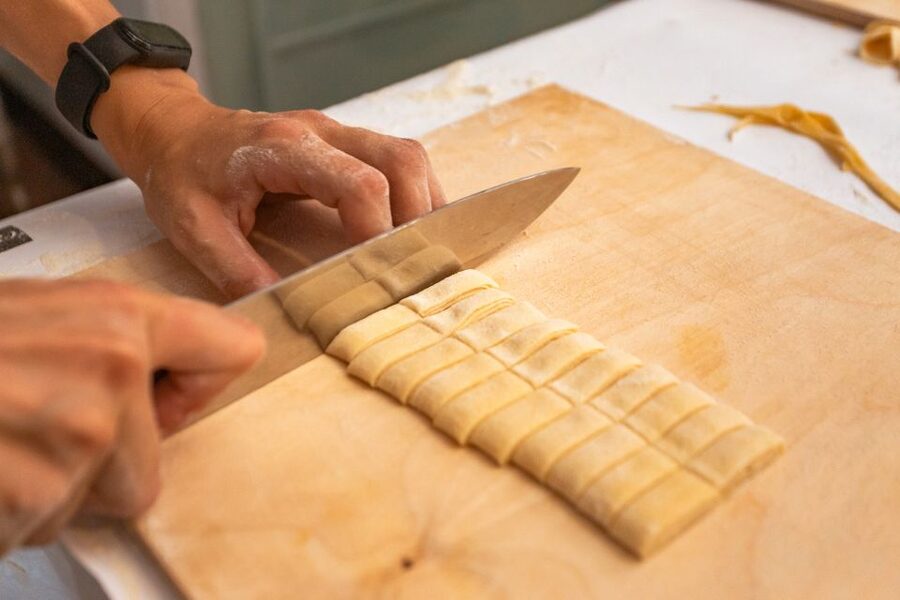
The class can be intimate. One group had only five people, which made it easier to connect and ask questions. A smaller class also gives the chef more chances to check your dough and technique.
The exact group size is not specified for every session, so do not assume every booking will be limited to five. It is still a shared activity, and the experience depends partly on the people at your table.
That social side is part of the appeal. You meet people from different countries, compare cooking habits, and share the final meal. If you are traveling alone, this can be an easy way to spend an evening with others without arranging a separate dinner.
The tradeoff is familiar: a group class can include someone who talks over the chef or wants to be in front for every demonstration. One family found other participants loud and pushy, though they still enjoyed the food and instruction. You cannot control the group, but you can choose a seat where you can see the chef and hear clearly.
This activity suits people who enjoy participation more than silence. If you want a calm private lesson, ask whether a private option exists before booking. That is not included in the information provided here, so do not assume it is available.
Is $67.40 a fair price?
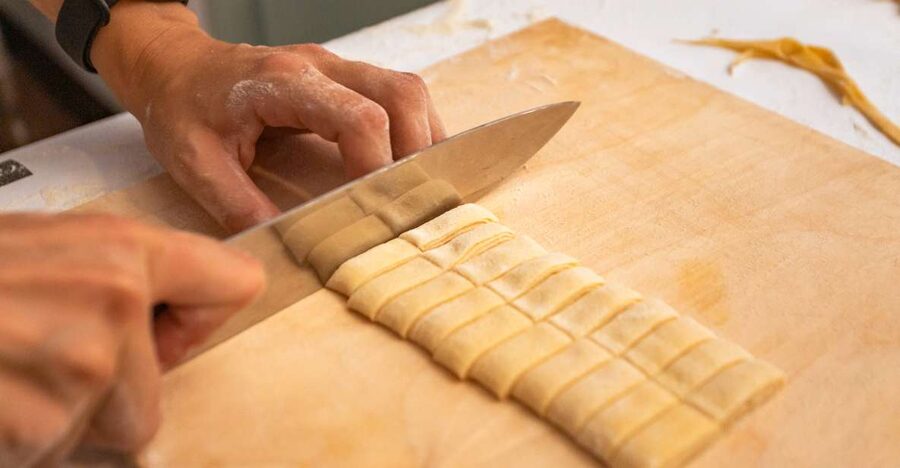
At $67.40 per person, this is not the cheapest way to eat pasta in Rome. It is also not simply a restaurant meal. The price includes three hours of instruction, ingredients for two dishes, your chosen pasta sauce, the finished meal, wine or a non-alcoholic drink, water, and limoncello or coffee.
I see the value in the combination. You get an activity for part of the day, a substantial meal, and recipes you can use at home. The shared format keeps the cost below what a private chef-led lesson would usually command, while still giving you direct contact with the instructor.
The value is strongest if you enjoy cooking or want a memorable food activity. If you only want to eat, a regular trattoria may be a better use of your money and time. If you want to return home able to make fresh fettuccine and tiramisu, the class offers more than dinner.
Reserve now and pay later is available, and you can cancel up to 24 hours before the activity for a full refund. Those terms are useful when your Rome schedule is still changing, though you should check the final booking conditions when selecting your time.
Who will enjoy this class most?
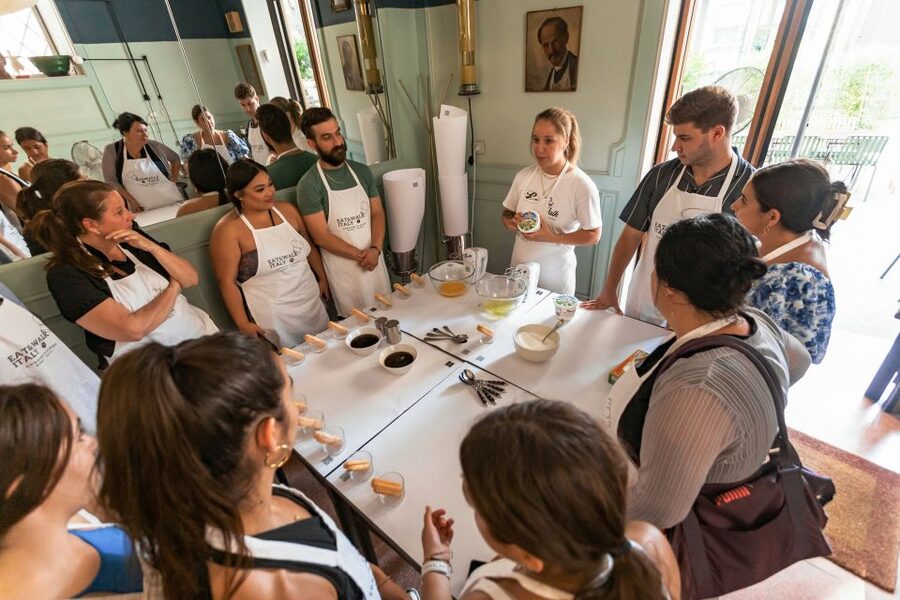
I would recommend this for first-time pasta makers, couples, families with older children, solo visitors who like meeting people, and anyone looking for a break from museums and monuments.
It is suitable for a range of cooking ability. You can arrive with little experience because the chef provides guidance throughout. Teens have also enjoyed the activity, and the format can work well for families, although children under four are not suitable for the class.
The class is a particularly good choice for someone who wants a tangible souvenir from Rome. You do not take home a trinket, but you do leave with recipes, a new skill, and the memory of eating food you prepared in a Roman restaurant.
It may be less suitable if you have a very restricted diet, though no dietary accommodation details are provided. Ask before booking rather than assuming the sauces or dessert can be changed.
Pets are not allowed. That is a small point, but it matters if you are traveling with an animal.
What to know before you book
Arrive at Restaurant Gusto knowing the class is built around participation. Wear something you can cook in comfortably, and be ready to work at the pace of the chef and the group.
Keep the full three hours free. The schedule includes tiramisu preparation, chilling time, pasta dough, shaping, sauce, cooking, and the sit-down meal. The class is not a quick demonstration that ends after an hour.
If you want the best view of the chef, position yourself where you can follow the demonstrations clearly. In a group setting, listening closely is as important as getting your hands into the dough.
You may also want to save room for the meal. You will be eating pasta and tiramisu, not simply sampling a bite, and the included drink and limoncello or coffee complete the sitting-down portion.
Should you book the Rome fettuccine and tiramisu class?
Book it if you want an active food experience with a clear payoff. The strongest reasons are the hands-on pasta work, the simple tiramisu lesson, the choice of three sauces, and the chance to eat your own cooking with wine in central Rome.
The 4.8 rating from 2,013 reviews reflects a very strong overall experience, especially when the chef is patient, lively, and attentive. Instructors such as Mimi, Maria, Kiki, Carlotta, and Tommy are repeatedly praised for making beginners feel comfortable.
Skip it if you want a quiet private meal, dislike group activities, or need a slow technical course. The pace may feel brisk, and other participants can affect the atmosphere.
For most visitors, though, $67.40 is a reasonable price for three hours of cooking, dinner, drinks, and recipes you can use after Italy. I would place this on your Rome schedule when you want to put down the guidebook, roll up your sleeves, and eat something you helped make.
FAQ
How long does the cooking class last?
The class lasts three hours. Check availability for the available starting times.
Where does the activity begin?
Meet your chef inside Restaurant Gusto in the heart of Rome. The activity ends back at the same meeting point.
What language is the class taught in?
The instructor teaches in English.
What dishes will I make?
You will make fettuccine pasta and tiramisu with guidance from the chef.
Which pasta sauces can I choose?
You can choose tomato and basil, Amatriciana, or cacio e pepe for your fettuccine.
What drinks are included?
The class includes wine or a non-alcoholic drink, water, and either limoncello or coffee.
Is the class suitable for young children?
Children under four are not suitable for this activity.
Can I cancel my booking?
You can cancel up to 24 hours in advance for a full refund. Reserve now and pay later is also available.
More Workshops in Rome
- Become a Masterchef in Rome: Pasta, Ravioli and Tiramisù Class
★ 5.0 · 2,156 reviews - Rome: Pasta & Tiramisu Cooking Class near the Spanish Steps
★ 4.8 · 1,395 reviews - Rome Tipsy Cooking Class: Make Pasta and Mix 3 Spritz Cocktails
★ 5.0 · 1,357 reviews - Cooking Class in the Heart of Rome: Pizza and Tiramisu Making
★ 5.0 · 1,330 reviews
More Cooking Classes in Rome
- Rome: Fettuccine Pasta Cooking Class in Rome’s City Center
★ 4.8 · 2,414 reviews - Rome: Traditional Pasta with Cocktails Cooking Class
★ 5.0 · 2,374 reviews - Pasta Cooking Class Near the Colosseum with 3 Spritz Cocktails
★ 5.0 · 1,686 reviews - Enjoy Spritz and Pasta Making in Piazza Navona
★ 5.0 · 1,681 reviews
Newest reviews from Rome
- Rome: Vatican Museums & Sistine Chapel Skip-the-Line Ticket★ 4.4 · 148 reviews
- Shared Shuttle Transfer from Rome to Civitavecchia Port★ 5.0 · 148 reviews
- Rome: Crypts & Catacombs After Hours Tour with Bone Chapel★ 4.6 · 149 reviews
- Ghosts Legends and Mysteries of Rome Walking Tour★ 5.0 · 149 reviews
- Skip the Line: Vatican and Sistine Chapel with Guided Tour★ 4.0 · 149 reviews
- Pizza and Tiramisu Cooking Class in Rome, Piazza Navona★ 5.0 · 150 reviews
- Tivoli: Villa Gregoriana Entrance Ticket★ 4.7 · 150 reviews
- Rome: Borghese Gallery Skip-the-Line Entry and Guided Tour★ 4.7 · 150 reviews
Cooking Classes, compared.
3 in 1 Cooking Class near Navona: Fettuccine, Ravioli & Tiramisu
Read our review →
Pasta Making Class with Wine, Limoncello, and Dessert
Read our review →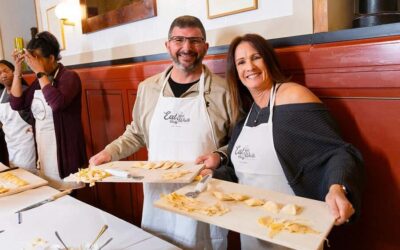
3-in-1 Fettuccine, Ravioli, and Tiramisu Cooking Class
Read our review →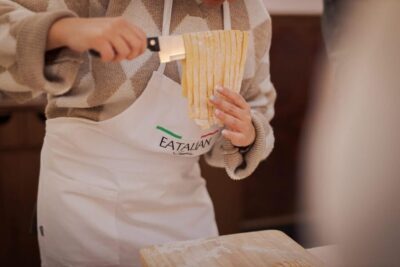
Fettuccine Pasta Cooking Class in Rome’s City Center
Read our review →
Traditional Pasta with Cocktails Cooking Class
Read our review →
Pasta Cooking Class Near the Colosseum with 3 Spritz Cocktails
Read our review →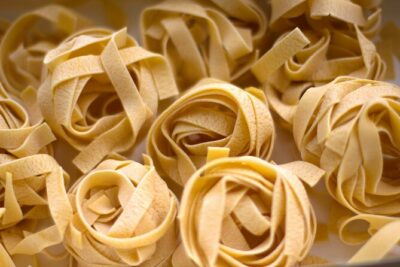
Enjoy Spritz and Pasta Making in Piazza Navona
Read our review →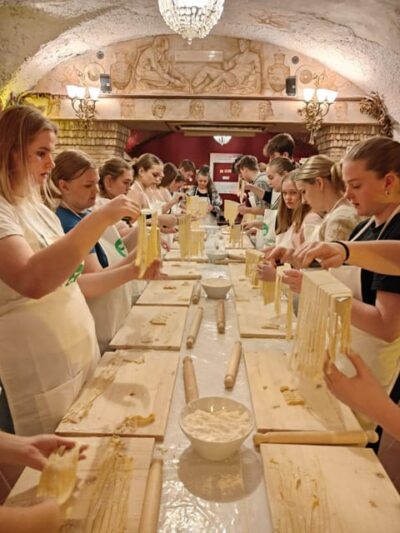
Pasta & Tiramisu Cooking Class near the Spanish Steps
Read our review →Browse the lists this tour appears in