
Reviewed · MUSEUMS
Private Tour – Capitoline Museums
The Capitoline Museums give you a rare chance to see Rome’s ancient art in a calm, organized setting, then step outside into Michelangelo’s carefully designed Piazza del Campidoglio. The original statue of Marcus Aurelius is inside, while its copy presides over the square.
I like the private format, since your guide can adjust the pace and spend more time on subjects that interest you, from Roman emperors to mythology and the Vestal Virgins. I also like the guides’ lively teaching style, especially Vincenzo, Martina, Max, Victoria, and Massimo, who are praised for making difficult material clear and memorable.
The main consideration is the price: at $157.22 per person, this is not a casual museum add-on for most budgets. You also need to leave bags and backpacks in the checkroom, and the tour does not include hotel pickup, drop-off, or private transport.
In This Review
- Key points to know before booking
- Why the Capitoline Museums deserve your time
- Inside the museum: ancient Rome in rooms you can follow
- The artworks become easier to understand with a guide
- The original Marcus Aurelius and the museum’s bronze sculpture
- Piazza del Campidoglio and Michelangelo’s Renaissance plan
- What the private format changes
- Price, timing, and practical details
- Who will get the most from this museum visit?
- Should you book the Private Capitoline Museums Tour?
- FAQ
- How long does the Private Capitoline Museums Tour last?
- Is museum admission included?
- Is the tour private?
- What language is the tour offered in?
- Where does the tour start and finish?
- Do I need to leave my bag somewhere?
Key points to know before booking
- The original Marcus Aurelius statue is indoors: The familiar equestrian monument in the square is a copy. The ancient original is displayed inside the museum.
- You get a private English-speaking guide: Only your group takes part, so you can ask questions and request extra attention for favorite works.
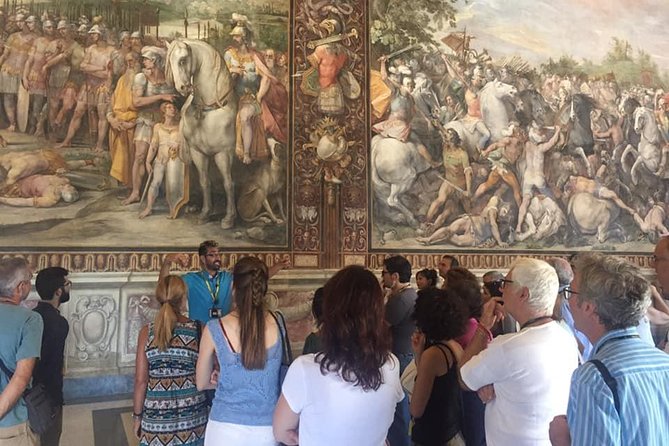
- The museum combines art with Roman history: Expect ancient sculpture, bronze works, frescoed rooms, courtyards, and objects tied to Roman public life.
- Michelangelo designed the setting: The 20-minute visit to Piazza del Campidoglio explains the Renaissance plan and its relationship to the museum buildings.
- Guides make the biggest difference: Vincenzo is often singled out for energy and storytelling, while Martina is praised for archaeology, languages, and answering detailed questions.
- Plan for roughly two and a half hours: About two hours are spent in the museum, followed by 20 minutes in the square, with a little time for transitions.
Why the Capitoline Museums deserve your time
Rome can make ancient history feel scattered. You see a ruin here, a column there, and perhaps a statue in a church, but the larger picture can be hard to grasp. The Capitoline Museums help gather that story in one place.
The collection was created at the end of the 15th century by Pope Sixtus IV, the pope associated with the Sistine Chapel. It is described as the oldest public museum in Europe, and its setting matters as much as its age. You are not walking through a plain modern gallery. The art is displayed in historic palaces with courtyards, frescoes, and carefully planned rooms.
That arrangement gives the tour a useful rhythm. You move from Roman antiquities to Renaissance architecture, from public monuments to intimate portraits, and from objects found in ancient ruins to the political ideas behind them. I find this more satisfying than seeing isolated masterpieces without knowing why they mattered.
The museum also offers a helpful counterpoint to Rome’s better-known attractions. The Vatican Museums can be enormous and crowded. The Capitoline collection is more focused, and the museum experience can feel easier to follow. One particularly useful point from the tour is the view toward the Roman Forum, which helps you connect the objects inside with the physical city outside.
More Capitoline Museums visits:
- Rome: Capitoline Museums Experience with Multimedia Video
★ 4.3 · 1,093 reviews - Capitoline Museum Experience with Multimedia Video
★ 4.0 · 98 reviews - Rome: Percy Jackson-Themed Tour of the Capitoline Museums
★ 4.5 · 36 reviews
Inside the museum: ancient Rome in rooms you can follow
The main portion lasts about two hours. That is enough time for a guided route through important parts of the collection without trying to inspect every single object.
Your guide’s job is not simply to name statues. The strongest guides connect an object to Roman government, religion, family life, military power, or ideas about death. That context changes the way you look at a marble portrait or bronze figure. You begin to notice what the Romans wanted an image to communicate.
The collection includes Roman antiquities, with a few later works such as Bernini’s Baroque sculptures. That mixture is useful because it shows how later artists and museum makers continued to interpret classical Rome. It also prevents the visit from becoming a single-period survey.
Ancient sculpture is the main attraction. You might spend time with portraits of emperors, mythological figures, or works removed from ruins around the city. The museum’s collection helps put flesh on the bare stone of the Forum and other archaeological sites. A ruin tells you where something stood. A sculpture can suggest who commissioned it, how it was seen, and what message it carried.
The guides praised most highly are strong storytellers. Vincenzo is described as energetic, interactive, and particularly good at helping people retain facts. His style seems suited to visitors who enjoy questions, conversation, and a little theatrical energy rather than a quiet lecture.
Martina offers a somewhat different appeal. She is described as an archaeologist and language expert, with a clear way of explaining subjects such as Roman beliefs about the afterlife, the role of the Vestal Virgins, and the story behind a bust of Emperor Commodus. If you like detail and want to ask follow-up questions, a private format is especially useful.
You should not assume a particular guide will be assigned unless you can confirm that before booking. Vincenzo, Martina, Max, Victoria, and Massimo are among the guides praised for this experience, but availability can vary.
The artworks become easier to understand with a guide
I would not call the Capitoline Museums difficult, but some of their best objects can be easy to pass without help. A bust may look like another stern Roman face. A damaged statue may seem less important than a complete one. A guide gives you the visual clues and historical framework to see why an object deserves attention.
The tour can also help correct oversimplified versions of Roman history. One guide is praised for separating popular stories from events supported by historical evidence. That is valuable in Rome, where legends, political propaganda, later Christian interpretation, and modern film versions often blend together.
The discussion of the Vestal Virgins is a good example of how a seemingly narrow topic can open a larger window on Roman society. Their religious duties connect to ideas about purity, public responsibility, status, and the role of women in Rome. A short explanation can turn a name from a textbook into a real social institution.
The same is true of Roman views of the afterlife. Rather than treating mythology as a list of gods and stories, the guide can show how beliefs shaped funerary art and attitudes toward death. A private tour gives you room to pause and ask the questions that a fixed group lecture might not accommodate.
Families and mixed-age groups should pay attention to this point. One guide’s enthusiasm made the collection appealing to a teenage visitor, and another adapted explanations so a 13-year-old could follow them. The museum has plenty for adults who already love ancient Rome, but the right guide can also keep younger visitors involved.
The original Marcus Aurelius and the museum’s bronze sculpture
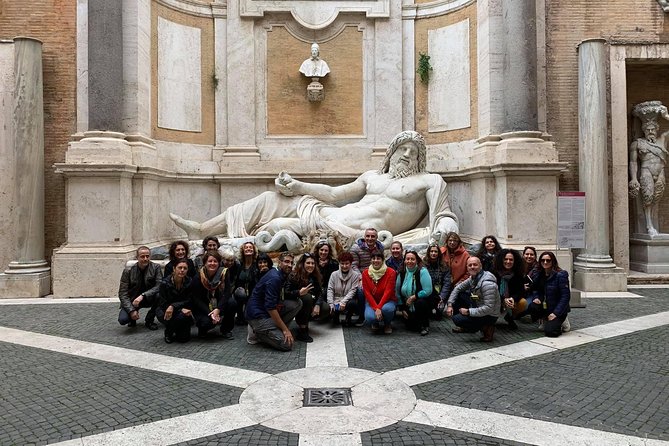
The equestrian statue of Marcus Aurelius is one of the museum’s signature works. In the center of Piazza del Campidoglio, you see a copy. The original is protected inside the museum, which gives you the chance to examine the ancient sculpture more closely.
That inside-outside pairing is one of the most effective parts of the experience. In the square, the statue functions as a centerpiece in a grand Renaissance composition. Indoors, the original becomes an artwork to study. You can compare the two settings and think about how the same object carries different meaning as a public monument and as a preserved museum piece.
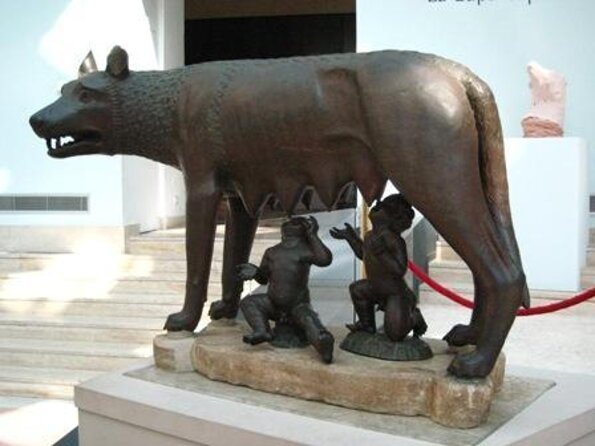
Bronze sculpture adds another layer to the visit. Visitors often expect Roman art to mean marble, but bronze works bring a different surface and sense of movement. Your guide can point out details that are easy to miss when you are moving through the rooms alone.
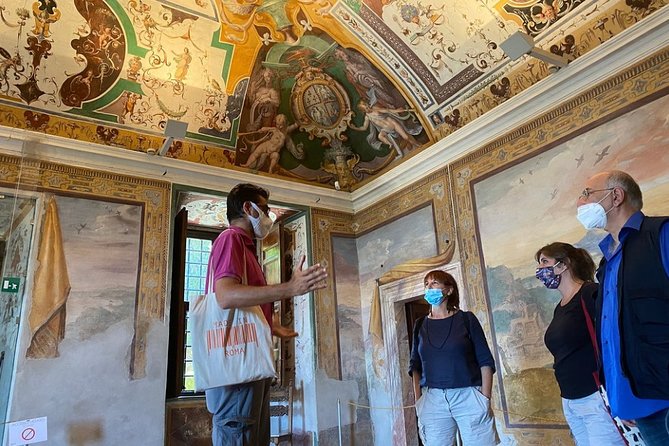
The museum’s courtyards and frescoed interiors also deserve attention. They remind you that the collection is housed in historic palaces, not simply in display halls. I like this because the architecture creates a conversation between ancient Rome and the Renaissance Rome that rediscovered, collected, and presented it.
More museums and galleries in Rome:
- Vatican: Museums & Sistine Chapel Entrance Ticket
★ 4.5 · 144,003 reviews - Vatican Museums & Sistine Chapel Tour with Optional Basilica
★ 4.3 · 67,413 reviews - Vatican Museums, Sistine Chapel & St Peter’s Basilica Guided Tour
★ 4.5 · 39,149 reviews - Rome: Vatican Museums, Sistine Chapel & Basilica Tour
★ 4.3 · 13,872 reviews
Piazza del Campidoglio and Michelangelo’s Renaissance plan
After the museum, the tour spends about 20 minutes in Piazza del Campidoglio. This is a short stop, but it is not filler.
Michelangelo designed the square as an urban reorganization project. The result is a carefully controlled Renaissance space, shaped to guide your eye and give the Capitoline Hill a more formal civic setting. Your guide explains the architecture and points out how the buildings and central statue work together.
The square is worth seeing before or after the museum even if you have visited it independently. Without explanation, you may notice the impressive pattern and symmetry but miss the planning behind it. With a guide, you can read the square as a designed space rather than just a convenient viewpoint.
The copy of Marcus Aurelius is the visual focus. From here, you may also get a useful view toward ancient Rome and the Forum. Several people consider that closing view one of the memorable parts of the visit, so keep your camera ready, but do not let photography replace the explanation.
The stop lasts only 20 minutes, so do not expect a long architectural walk through the Capitoline Hill. Its purpose is to explain the square, connect the exterior to the museum, and finish the tour with a wider view of Rome.
What the private format changes
A private tour is most valuable when you use it actively. Tell your guide if you care most about emperors, mythology, architecture, archaeology, or sculpture. One couple requested specific works and received a route shaped around those interests.
That flexibility is harder to get on a standard group visit. You can ask why a statue matters, request a simpler explanation, or spend a little longer with an object that catches your eye. If one member of your group needs to sit or stretch, the guide may also be better able to adjust the pace than a large fixed group.
The absence of headphones can be a benefit in a very small group. You can speak directly with the guide, and conversation feels more natural. The experience is still described as private for your group only, but the exact number of people depends on your booking.
This format also suits people who have already visited the museum. Returning on your own may show you more objects, but a guide can reveal connections you missed earlier. The museum’s collection is large enough to reward a second look, particularly if your first visit felt like a procession of unfamiliar names and faces.
Price, timing, and practical details
The listed cost is $157.22 per person. That is a substantial price for around two and a half hours, especially for a solo visitor or couple. The value improves for a larger group because the private guide cost is shared, and group discounts may be available.
You are paying for more than admission. The price includes museum tickets, a professional local guide, and a private tour. You are also buying a planned route through material that can be hard to interpret alone. If you already have a strong background in Roman archaeology and prefer to read labels at your own pace, you may find the premium less convincing.
For most visitors, the value comes from time saved and understanding gained. You do not need to research every emperor before arriving, and you can ask about the works that actually interest you. I would especially consider the fee reasonable for a family, a small group of friends, or anyone visiting Rome for a short stay.
The meeting point is Piazza del Campidoglio, 00186 Rome. The activity finishes back at the same meeting point. Hotel pickup, drop-off, and private transportation are not included, so you need to make your own way there. The site is near public transportation.
Allow time to find the square and locate the guide. Confirmation arrives when you book, and the tour is offered in English. Most people can participate, but the mandatory checkroom rule matters: bags and backpacks must be left there. Pack lightly and avoid arriving with luggage.
The tour is often reserved well ahead, with an average booking time of about 81 days. That suggests you should arrange it early if your Rome dates are fixed, particularly if you hope to request a specific guide. Free cancellation is available up to 24 hours before the start time. Changes or cancellations inside that window are not accepted for a refund.
Who will get the most from this museum visit?
I would choose this tour for anyone who wants Roman art to make sense rather than simply wants to tick off another museum. It is a strong match for first-time visitors who feel overwhelmed by Rome’s long story, and for returning visitors who want a more focused look at the Capitoline collection.
It is also a good choice for families. A lively guide can turn portraits, statues, and religious customs into stories that younger visitors remember. The private setting helps if your group has different levels of interest or needs a gentler pace.
Art lovers and ancient-history fans should benefit most, especially if they come with questions. Ask about the original Marcus Aurelius, Roman portraits, Bernini, the Vestal Virgins, or the Forum view. The more specific your interests, the more useful the private format becomes.
You may want to skip it if your budget is tight, you prefer to explore alone, or you have only a few minutes for the Capitoline Hill. The museum can be visited without a guide, and the square itself is free. But if you want clear explanations, personal attention, and a structured look at one of Rome’s most important collections, the extra cost has a solid case.
Should you book the Private Capitoline Museums Tour?
I would book it if you want an engaging explanation of Roman sculpture and public life, rather than a quick walk through display rooms. The strongest part is the human guide: Vincenzo’s energy, Martina’s archaeological background, and the clear, friendly style associated with guides such as Max, Victoria, and Massimo can make the museum far easier to remember.
Book early, pack light, and arrive ready to ask questions. If possible, request a guide whose style suits your group, though assignments are subject to availability. For a small group splitting the cost, this is one of the more useful private museum visits in Rome. For a solo visitor on a strict budget, the admission and self-guided option may be the better bargain.
FAQ
How long does the Private Capitoline Museums Tour last?
The experience lasts approximately two hours and 30 minutes. About two hours are spent inside the Musei Capitolini, followed by roughly 20 minutes in Piazza del Campidoglio.
Is museum admission included?
Yes. Tickets to the Capitoline Museums are included, along with a professional local guide and the private tour.
Is the tour private?
Yes. Only your group participates in the activity. Group discounts may be available.
What language is the tour offered in?
The tour is offered in English.
Where does the tour start and finish?
It starts at Piazza del Campidoglio, 00186 Rome, Italy, and ends back at the meeting point.
Do I need to leave my bag somewhere?
Yes. It is mandatory to leave bags and backpacks in the museum checkroom. Hotel pickup, drop-off, and private transportation are not included.
Newest reviews from Rome
- Rome: Vatican Museums & Sistine Chapel Skip-the-Line Ticket★ 4.4 · 148 reviews
- Shared Shuttle Transfer from Rome to Civitavecchia Port★ 5.0 · 148 reviews
- Rome: Crypts & Catacombs After Hours Tour with Bone Chapel★ 4.6 · 149 reviews
- Ghosts Legends and Mysteries of Rome Walking Tour★ 5.0 · 149 reviews
- Skip the Line: Vatican and Sistine Chapel with Guided Tour★ 4.0 · 149 reviews
- Pizza and Tiramisu Cooking Class in Rome, Piazza Navona★ 5.0 · 150 reviews
- Tivoli: Villa Gregoriana Entrance Ticket★ 4.7 · 150 reviews
- Rome: Borghese Gallery Skip-the-Line Entry and Guided Tour★ 4.7 · 150 reviews
Museums, compared.
Vatican Museums & Sistine Chapel Tour with Optional Basilica
Read our review →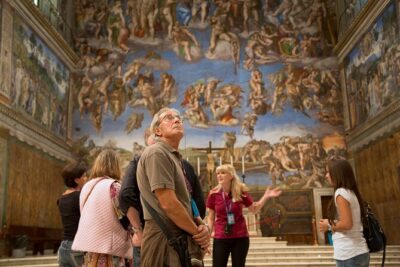
Vatican Museums, Sistine Chapel & St Peter’s Basilica Guided Tour
Read our review →
Vatican Museums, Sistine Chapel & Basilica Tour
Read our review →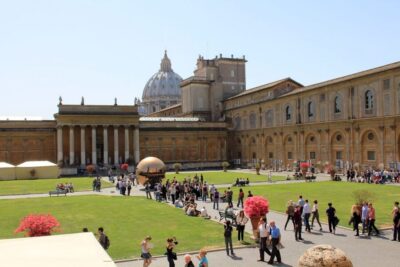
Vatican Museums & Sistine Chapel Skip-the-Line Entry Ticket
Read our review →Vatican Museums, Sistine Chapel & Basilica Tour
Read our review →
Vatican Museums & Sistine Chapel Guided Tour
Read our review →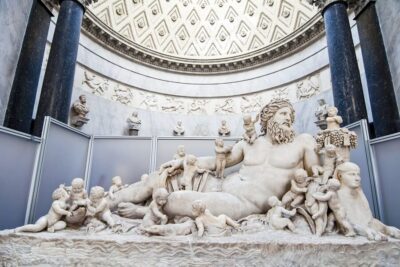
Vatican Museums & Sistine Chapel Skip-The-Line Ticket
Read our review →Browse the lists this tour appears in