
Reviewed · GLADIATOR EXPERIENCES
Rome: Gladiator Show and Museum Tickets
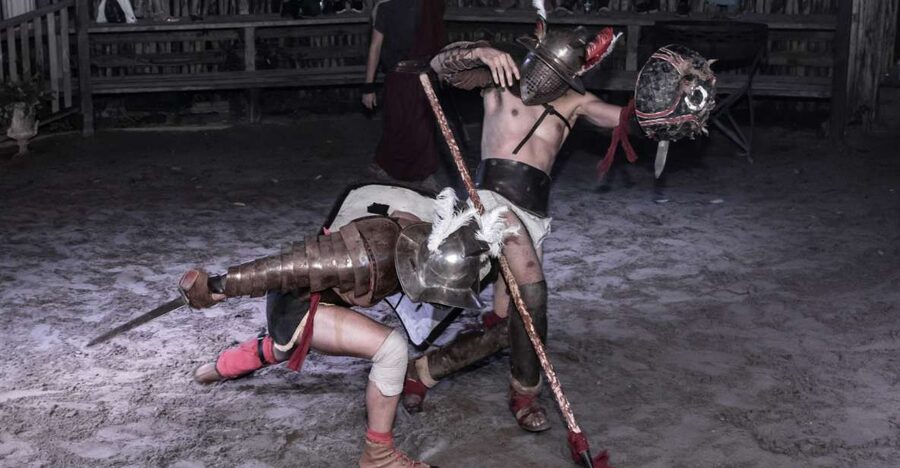
The most unusual part of this Rome evening is the setting: you watch a gladiator fight in the headquarters of a Roman reenactment group, not in a modern theater. Music, lights, incense, costumes, real weapons, and audience participation turn the visit into a lively history lesson with plenty of theatrical flair.
I like the variety, which includes a museum visit, Roman dances, Vestal rites, pantomime, comedy, and fighting. I also like the warm personal touch: guides and performers help with photos, answer questions, and have even helped arrange taxis after the late finish. The main drawback is the location. It is only about 3.5 kilometers from the Colosseum, but public transport can be awkward after 10 p.m., and there are few nearby places for dinner.
In This Review
- Key points to know before booking
- What the Roman gladiator evening is really like
- Arriving at the Gruppo Storico Romano arena
- The museum visit before the performance
- Roman refreshments in the armory
- Music, lights, dances, and Roman rites
- How intense are the gladiator fights?
- Audience participation makes the difference
- Is $29 a fair price?
- Who will enjoy this most?
- Practical planning for your evening
- Should you book the gladiator show?
- FAQ
- How much does the Rome Gladiator Show and Museum experience cost?
- How long does the experience last?
- Where does the show take place?
- What is included in the activity?
- What months do the shows take place?
- Can I cancel or book without paying immediately?
Key points to know before booking
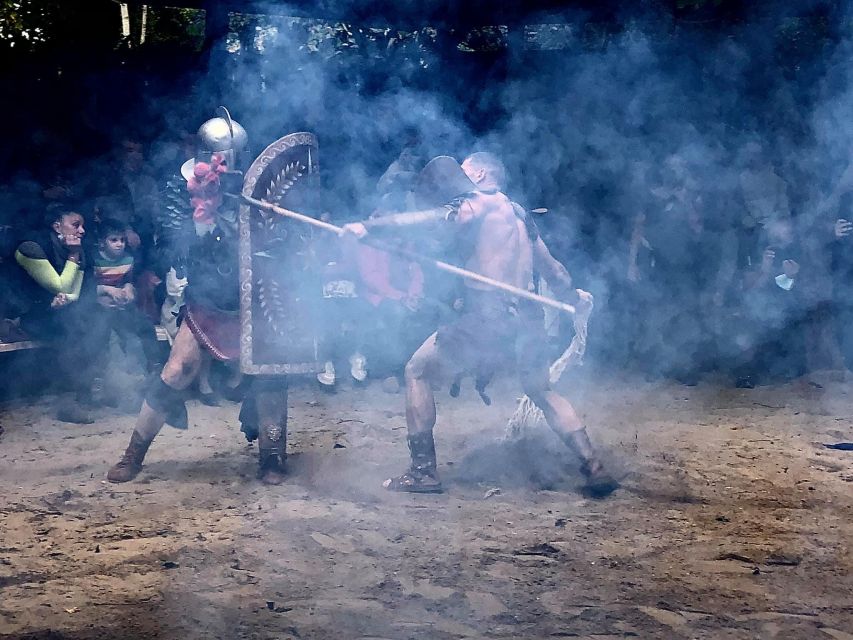
- Real weapons and armor: Historical reenactors use authentic-looking equipment, and the fighting can feel surprisingly intense.
- More than a sword fight: The evening includes ancient dances, rituals, pantomime, comedy, audience participation, and a museum visit.
- A compact Roman setting: The arena is at the Gruppo Storico Romano headquarters, about 3.5 kilometers from the Colosseum.
- Late summer timing: Shows take place from May through September, with entry at 8:45 p.m. and the event ending around 10 p.m.
- Good family entertainment: Children and adults can take part in selected activities, try on armor, and watch a playful but sometimes violent performance.
- Plan your ride home: Buses may get you there, but a taxi is often the simplest choice after the show.
What the Roman gladiator evening is really like
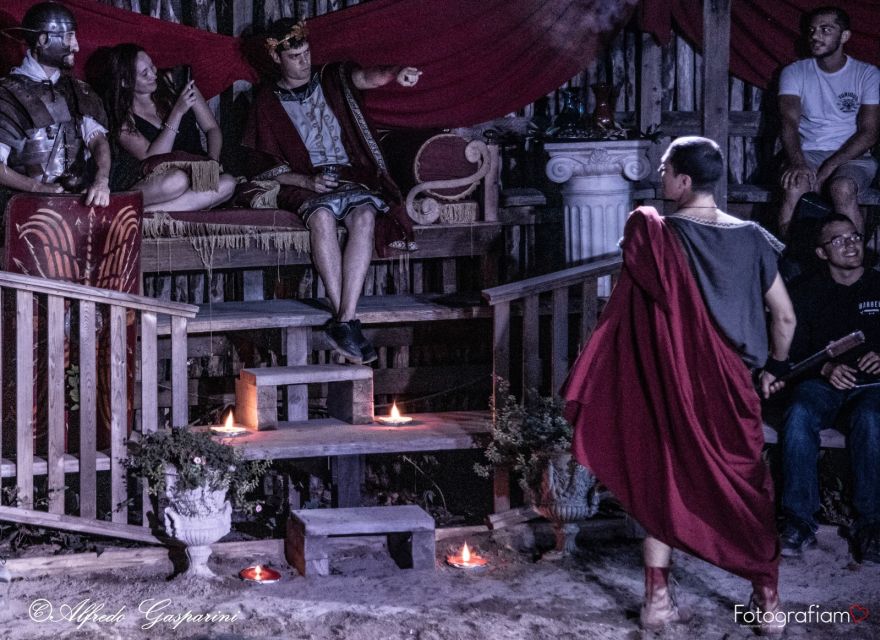
This is not a solemn archaeological presentation. It is a staged historical show designed to make ancient Rome feel immediate, noisy, and fun. The performers use theatrical timing and crowd interaction, but they also bring period costumes, armor, weapons, music, and Roman customs into the evening.
That mix explains the strong appeal. You are not simply sitting through a lecture about gladiators. You are watching a performance unfold around you, with the presenter drawing the audience into the action. At moments, the swordplay looks convincing enough to make you wonder how carefully the performers have choreographed each blow.
The tone shifts often. One segment may focus on combat, followed by a dance, a comic interlude, or a ritual scene. This keeps the 90-minute program moving and makes it easier for children to follow than a talk devoted only to military history.
You should know what kind of authenticity to expect. The people onstage are historical reenactors, not ancient Romans and not competitors in an actual fight to the death. The weapons and armor are real, but the event is still a theatrical production. Some scenes are deliberately dramatic, and parts of the show can feel cheesy in the best family-entertainment sense.
More gladiator experiences in Rome:
- Rome: Colosseum Tour with Access to the Gladiator Arena
★ 4.3 · 6,690 reviews - Gladiator’s Gate: Special Access Colosseum Tour with Arena Floor
★ 4.5 · 4,037 reviews - Roman Gladiator School: Learn How to Become a Gladiator
★ 4.5 · 1,477 reviews
Arriving at the Gruppo Storico Romano arena
The meeting point is the Rome Gladiator School, operated by Gruppo Storico Romano. The venue is roughly 3.5 kilometers from the Colosseum, so it is not a walk-next-door attraction despite its central Roman theme.
Entry is scheduled for 8:45 p.m. The evening normally finishes at about 10 p.m., which gives you a clear slot to fit around an earlier dinner or a day of sightseeing. Since the event runs from May through September, the late start also suits Rome’s warm summer evenings.
Getting there deserves more thought than the short distance suggests. Buses 118 and 218 have been used by visitors, with a walk of about five minutes from the stop. A taxi is more direct, especially for families, anyone with limited mobility, or anyone who does not want to work out a bus route after dark.
The return journey is the bigger issue. Public transport may no longer be running when the show ends, and the venue is not surrounded by restaurants or late-night services. Staff have helped arrange taxis for people leaving the performance, which is useful, but I would still plan your ride before the show begins.
The museum visit before the performance
The first part of the evening takes place in the Museo storico-didattico del legionario romano, a compact teaching museum devoted to the Roman legionary world. Do not expect a large national museum on the scale of the Colosseum’s archaeological collections. This is a small, hands-on introduction that prepares you for the performance.
The displays include gladiator weapons and armor. You may have the chance to look closely at the equipment and, depending on the evening’s arrangements, try some pieces on yourself. That practical element helps explain how much protection the armor offered, and how heavy and restrictive a fighter’s equipment could be.
The museum also gives the guide a chance to explain gladiator life, training, and the roles of people connected with the arena. This is where the activity has its clearest educational value. The stories help turn the later fights into more than costume drama.
Large groups can make this first section feel crowded. If the museum is busy, you may not have much time with every display. I would arrive on time and stay close to the guide during the introduction so you do not miss the short explanations before the crowd moves toward the arena.
Roman refreshments in the armory
Before the fighting begins, you can enjoy a small tasting in the Armory of the Legion. The refreshments are described as Roman-style snacks, with wine and, on some accounts, wine served with honey in an ancient Roman fashion.
This is a tasting, not dinner. One useful piece of advice is to eat beforehand or plan a meal afterward. The supplied food can be a pleasant extra, but it is not intended to replace a full restaurant meal.
The setting adds more value than the quantity of food. Having a drink among armor and weapons, while Roman music plays and incense fills the air, gives the opening of the evening a ceremonial feel. It also provides time to take photographs and speak with the cast.
The cast is notably open to photographs and conversation. That makes the event feel personal rather than tightly controlled. If you enjoy meeting performers, this is a good time to ask about the costumes, weapons, or characters before the formal show begins.
More museums and galleries in Rome:
- Vatican: Museums & Sistine Chapel Entrance Ticket
★ 4.5 · 144,003 reviews - Vatican Museums & Sistine Chapel Tour with Optional Basilica
★ 4.3 · 67,413 reviews - Vatican Museums, Sistine Chapel & St Peter’s Basilica Guided Tour
★ 4.5 · 39,149 reviews - Rome: Vatican Museums, Sistine Chapel & Basilica Tour
★ 4.3 · 13,872 reviews
Music, lights, dances, and Roman rites
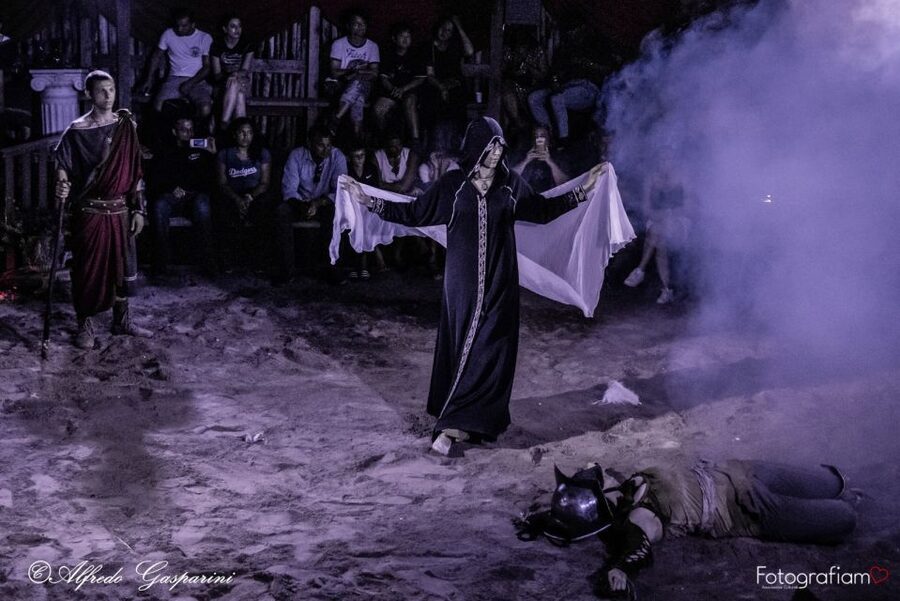
Once the show starts, the arena uses music, lighting, and visual effects to create its ancient-Rome mood. The production is not trying to reproduce a silent archaeological scene. It uses modern stage tools to help you understand the crowd energy and spectacle associated with Roman entertainment.
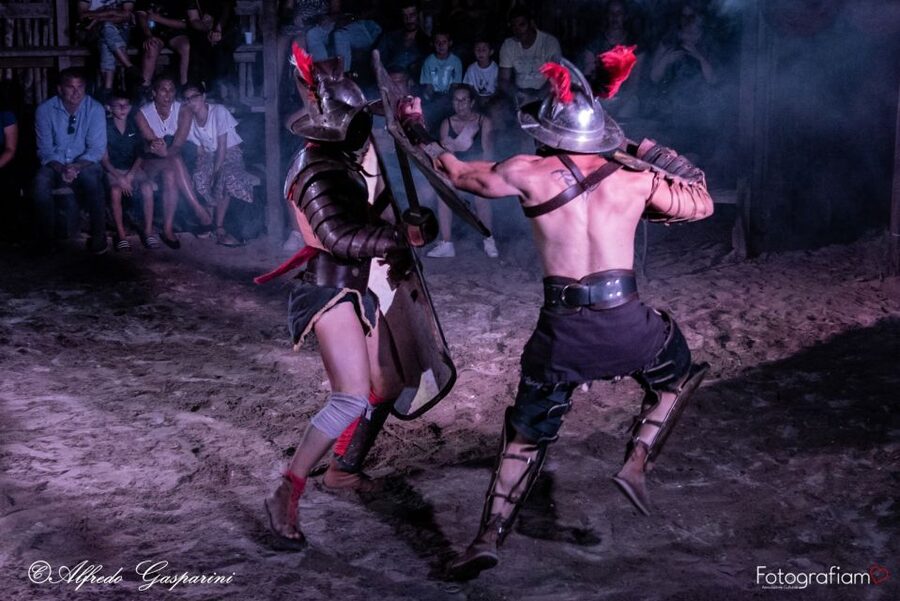
Ancient dances and Vestal rites add welcome variety to the combat scenes. Younger Roman women appear in dance sections, and ritual scenes help show that public entertainment in Rome involved ceremony and performance as well as violence.
Pantomime and comedy also have a role. A comic warm-up act has been part of the program, and it gives the audience a lighter entry into the evening. This is especially helpful for families, since the show does not remain grim or aggressive for the full hour.
The presenter is central to the mood. One particularly praised guide, Dafydd, has been singled out for making the evening special, while other descriptions point to a strong, sonorous host who explains what is about to happen and keeps the audience involved. You are likely to get more from the show if you respond to the invitations to clap, answer, or join in.
How intense are the gladiator fights?
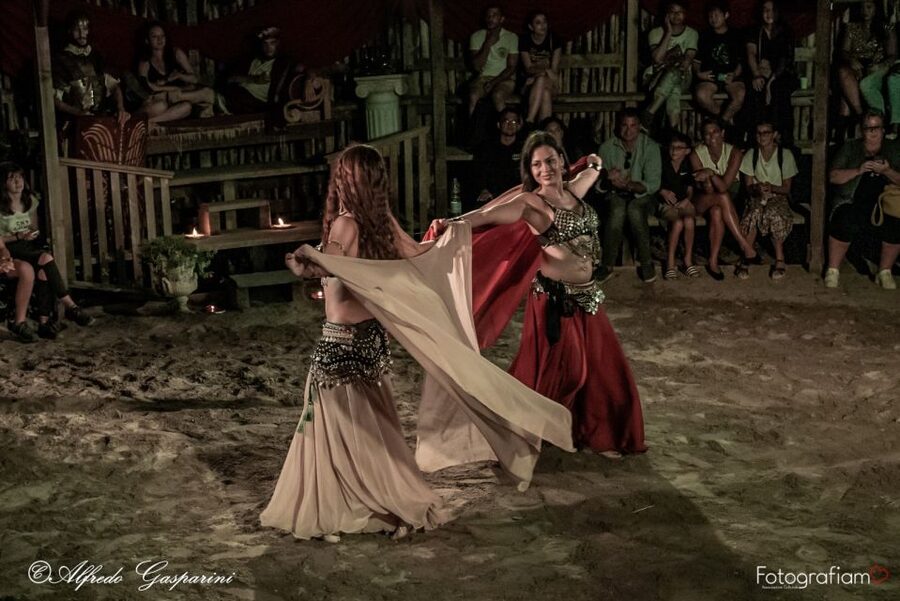
The fights are the headline act, and the use of real weapons and armor gives them weight. The performers are trained reenactors presenting choreographed combat, but fast sword movements and falls in the dirt can look startlingly genuine.
You may see fighters collapse, recover, and return to the action as the story develops. The show uses drama rather than a strict academic reconstruction, so the emotional effect matters as much as the technical detail.
This is a good choice if you want a lively connection to Roman military culture. It is less suitable if you want a quiet, museum-style explanation or a carefully restrained historical lecture. The violence is part of the entertainment, and the tone can be playful one moment and forceful the next.
Parents should use their own judgment. The event has been enjoyed by children, including a 10-year-old, and audience participation keeps younger viewers interested. Still, the sight of armed fighters striking and falling may be too strong for some children. The family-friendly atmosphere does not mean the combat is entirely gentle.
Audience participation makes the difference
The performers do not simply act at you from a distance. Selected audience members can take part in different ways, and the presenter works to include the crowd during the show. Armor demonstrations and opportunities to pose for pictures add to the sense that you are inside a working gladiator school rather than watching a detached stage production.
That involvement is one of the strongest reasons to choose this activity over a standard evening performance. If you are shy, you can watch without volunteering. If you enjoy being part of the action, the format gives you chances to respond and join the fun.
The audience mix can affect the feel of the evening. A full group creates more noise and energy, while a smaller group may allow more direct contact with the cast. A large crowd can make the museum section harder to explore, but it can also make the arena feel more like a public Roman spectacle.
The show is presented in a way that works across language barriers. Gestures, facial expressions, costumes, and physical comedy carry much of the action, so you do not need perfect English to follow the basic story and enjoy the performance.
Is $29 a fair price?
At $29 per person, the value is strong if you want a complete evening activity rather than a single short performance. The price covers the museum visit and show, and the experience can also include Roman-style snacks and drinks.
You are paying for about 90 minutes at the venue. That is not a long museum tour, and the museum itself is modest. The value comes from combining several elements: historical displays, a live performance, music and effects, audience participation, photography, and the unusual venue.
Compared with a major Rome attraction, this is a relatively low-cost way to add something different to your schedule. It does not replace seeing the Colosseum, Roman Forum, or Palatine Hill. Those sites provide the physical remains and archaeology. This activity provides a playful reconstruction of people, customs, costumes, and arena drama.
I would consider it especially good value for families and first-time visitors who want one evening with several kinds of entertainment. Solo visitors can enjoy it too, particularly if they like meeting performers and joining group activities. If your main goal is serious historical accuracy, the price may feel less compelling because the show uses broad theatrical effects and comic scenes.
Who will enjoy this most?
I would recommend the show to you if you want:
- A family activity that is more active than another indoor museum
- A Roman-themed evening with dancing, rituals, food, music, and combat
- A chance to see and handle period-style armor and weapons
- A performance where the audience is encouraged to take part
- A lower-cost alternative to a formal theater production
- A memorable addition to a history-focused Rome holiday
You may want to skip it if you dislike staged violence, audience participation, or deliberately theatrical presentations. It is also not ideal if you need a convenient late-night location with restaurants and frequent buses right outside.
Wheelchair access is available, which makes the activity more practical for many visitors. Transport still deserves attention, since accessibility at the venue does not solve the late return journey.
Practical planning for your evening
Keep your afternoon schedule flexible enough to arrive at the 8:45 p.m. entrance without rushing. The museum, photographs, and refreshments come before the main performance, so arriving late could mean missing some of the explanations that give the show context.
Eat a proper meal before arriving unless you have confirmed a fuller food arrangement. The Roman snacks and tasting are best treated as part of the atmosphere, not as dinner.
Wear something comfortable for an evening at an arena and bring a light layer if needed. The supplied information does not specify seating conditions in detail, so avoid planning the night around formal theater comfort.
Take photos during the museum visit and before or after the show when the performers are available. The reenactors welcome pictures, and the costumes and armor make this one of the easier Rome activities for memorable family photographs.
For the journey home, arrange a taxi in advance or ask the staff for help before the finale. Some visitors have caught a bus shortly after the end, but service is not guaranteed, and others have needed taxis because buses had stopped. A few minutes of planning can prevent a long, inconvenient walk on roads with limited sidewalks.
Should you book the gladiator show?
Book it if you want fun history with real theatrical energy, especially if you are visiting Rome with children or need an evening break from churches, ruins, and formal museums. The combination of a compact museum, Roman refreshments, dances, rituals, comedy, and combat gives you plenty for the $29 price.
Go in expecting a reenactment, not a literal recreation of the Colosseum. Some moments are knowingly cheesy, the museum can feel crowded, and the out-of-the-way setting requires a transport plan. Those limits are easy to accept if you want a lively, interactive night and understand that entertainment is part of the package.
For many visitors, this works best as a complement to the Colosseum rather than a substitute for it. See the ancient structure by day, then use this evening to picture the people, costumes, rituals, and spectacle that once filled Roman arenas.
FAQ
How much does the Rome Gladiator Show and Museum experience cost?
The listed price is $29 per person.
How long does the experience last?
The full event lasts about 1.5 hours. Entry is scheduled for 8:45 p.m., and the evening ends around 10 p.m.
Where does the show take place?
It takes place at the Rome Gladiator School, the headquarters of Gruppo Storico Romano, about 3.5 kilometers from the Colosseum. Look for the Rome Gladiator School and Gruppo Storico Romano meeting point.
What is included in the activity?
The booking includes the Museo storico-didattico del legionario romano visit and the gladiator show. Roman-style snacks and drinks have also been part of the evening experience.
What months do the shows take place?
Shows take place from May through September. The supplied dates refer to the 2026 season.
Can I cancel or book without paying immediately?
You can cancel up to 24 hours in advance for a full refund. Reserve now and pay later is available, allowing you to hold a place without paying at the time of booking. The activity is also listed as wheelchair accessible.
Newest reviews from Rome
- Rome: Vatican Museums & Sistine Chapel Skip-the-Line Ticket★ 4.4 · 148 reviews
- Shared Shuttle Transfer from Rome to Civitavecchia Port★ 5.0 · 148 reviews
- Rome: Crypts & Catacombs After Hours Tour with Bone Chapel★ 4.6 · 149 reviews
- Ghosts Legends and Mysteries of Rome Walking Tour★ 5.0 · 149 reviews
- Skip the Line: Vatican and Sistine Chapel with Guided Tour★ 4.0 · 149 reviews
- Tivoli: Villa Gregoriana Entrance Ticket★ 4.7 · 150 reviews
- Pizza and Tiramisu Cooking Class in Rome, Piazza Navona★ 5.0 · 150 reviews
- Private Cooking Class in Rome with Chef Andrea Consoli★ 5.0 · 150 reviews
Gladiator Experiences, compared.
Colosseum Tour with Access to the Gladiator Arena
Read our review →
Gladiator’s Gate: Special Access Colosseum Tour with Arena Floor
Read our review →
Gladiator’s Gate and Arena Special Colosseum Access
Read our review →Colosseum Gladiator’s Arena and Roman Forum Group Tour
Read our review →
Colosseum Gladiator’s Arena and Ancient Rome VIP Guided Tour
Read our review →
Colosseum Gladiator’s Arena and Roman Forum Tour
Read our review →Browse the lists this tour appears in