
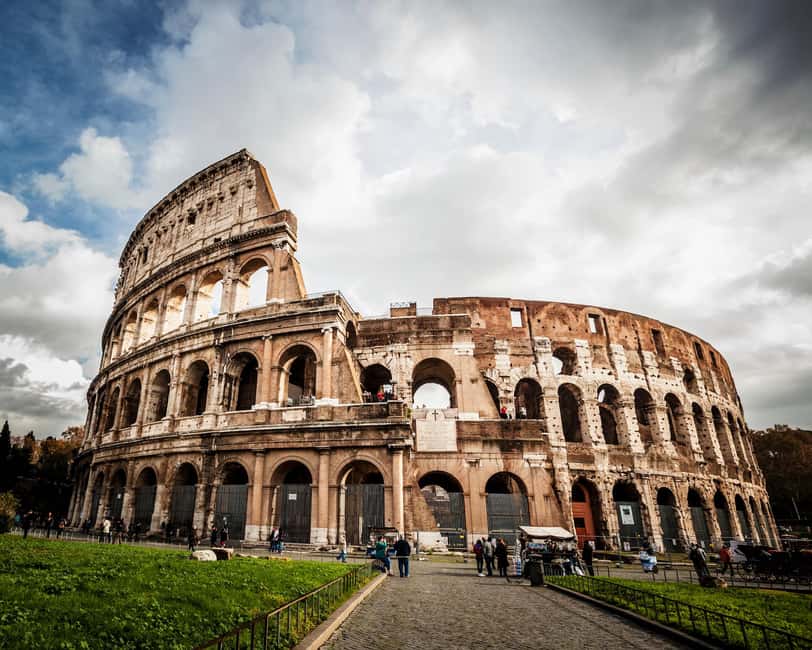
Reviewed · COLOSSEUM TOURS
Rome: Colosseum Arena Floor, Roman Forum & Palatine Tour
The best part of this Rome tour is the 20 minutes on the Colosseum’s arena floor, where gladiators once fought before packed Roman crowds. You also visit the first and second tiers, then walk through the Forum and Palatine area with an English-speaking art historian who can turn scattered ruins into a readable story.
I like the small group size, capped at 12 people, and the way the guide stays close in a huge, confusing archaeological zone. I also like the practical combination of skip-the-ticket-line entry, the restricted arena access, and the Arch of Constantine and Arch of Titus along the route.
The main thing to consider is time. The tour is advertised as 2.5 hours, but the detailed schedule lists about 1.5 hours at each major site, and several past groups spent closer to three hours overall. The Forum and Palatine may take much of the visit, so this is not simply a Colosseum-only tour.
In This Review
- Key points at a glance
- Why the arena floor is worth the extra cost
- Meeting at the Arch of Constantine
- Inside the Colosseum: tiers, crowds, and the arena
- The Arch of Constantine and Arch of Titus
- The Roman Forum: politics, religion, and daily life
- Palatine Hill and the wider Ancient Rome story
- Group size, guide quality, and pace
- Is $93 a fair price?
- Who should book this Ancient Rome tour?
- Should you book it?
- FAQ
- How long is the tour?
- Where does the tour meet?
- Is the Colosseum arena floor included?
- Is the Roman Forum included?
- What language is the tour in?
- What identification do I need?
- Is the tour suitable for wheelchair users?
Key points at a glance
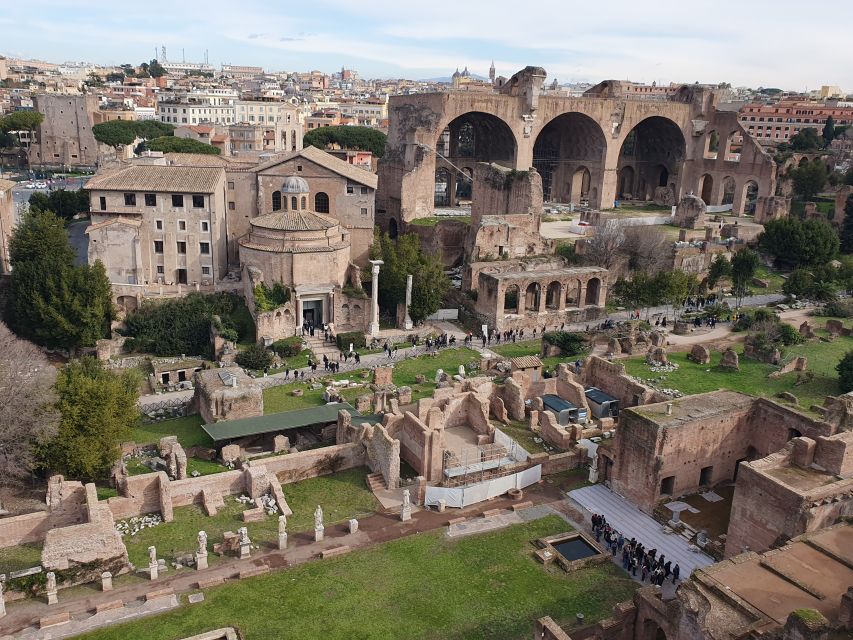
- Walk on the Colosseum arena floor: You get 20 minutes on the sand-covered central stage, a restricted area many standard tickets do not include.
- See three major ancient sites: The route covers the Colosseum, Roman Forum, and Palatine area in one guided visit.
- Keep the group personal: The maximum group size is 12, making it easier to hear the guide and ask questions.
- Expect strong guides: Alessio, Vera, Sandra, Nick, Helena, Andrea, and Niccolo are among the guides praised for clear explanations, humor, and patience.
- Plan for outdoor walking: Much of the Forum and Palatine is open to the sun, with steps, slopes, and uneven ancient ground.
- Bring official identification: Your passport or ID card is mandatory, though a copy is accepted.
Why the arena floor is worth the extra cost
At $93 per person, this is not a bargain-basement Rome ticket. I think the price makes sense if walking onto the arena floor matters to you and you want a guide for the Forum and Palatine. A basic Colosseum visit can show you the structure, but the arena access gives the experience a physical center.
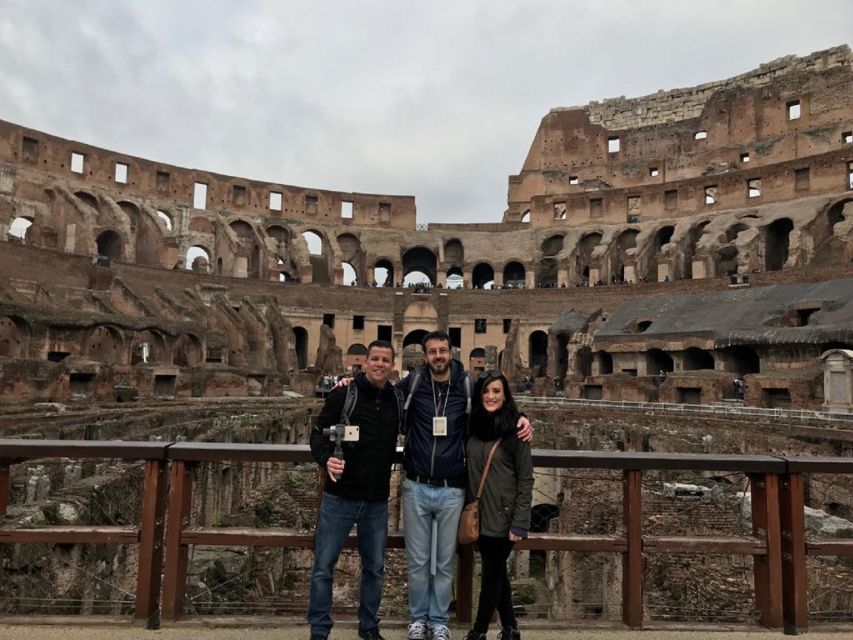
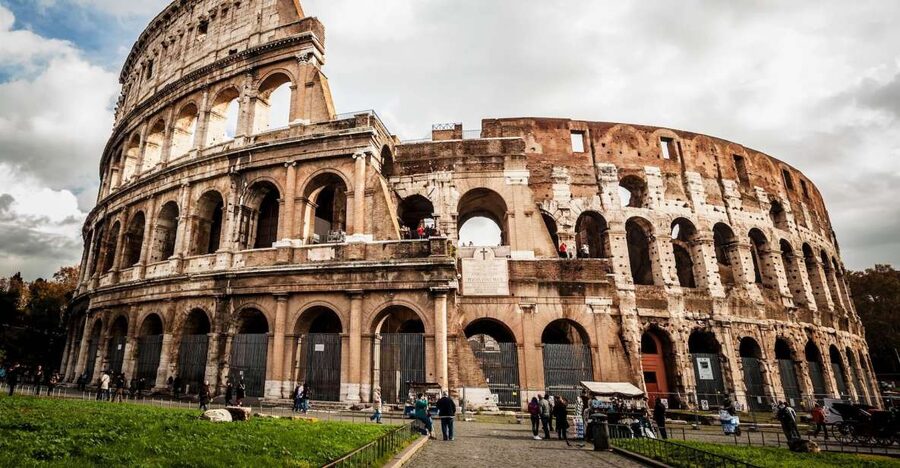
The arena floor is the sand-covered stage where gladiatorial contests and public spectacles took place. You are not just looking down from the seats. You are looking back toward the tiers from the same central space where performers and combatants once faced the crowd.
Your time on the sand floor is limited to 20 minutes. That is enough to take in the setting, listen to the explanation, and get photographs, but it is not a long independent wander. The restriction is part of what makes this section special, so you should expect a controlled visit rather than free exploration.
The tour also includes the first and second tiers. From these levels, you can understand the amphitheatre as a place built for mass entertainment, not just as a photogenic ruin. The Colosseum could hold up to 75,000 people, and the guide explains how shows were prepared, why emperors funded them, and how the crowd shaped Roman public life.
Several guides have received especially warm praise. Alessio is described as friendly and helpful, while Vera is known for clear explanations and patience. Sandra has been singled out for enthusiasm and her ability to encourage questions. Nick, Helena, Andrea, and Niccolo have also been praised for bringing archaeology and Roman politics to life.
The exact guide depends on your departure, so do not book on the assumption that you will receive one particular person. What you can count on is an English-speaking professional art historian guide, with the experience built around spoken explanation rather than an audio guide.
More ways to see the Colosseum:
- Rome: Colosseum, Palatine Hill and Roman Forum Guided Tour
★ 4.8 · 32,814 reviews - Rome: Guided Tour of Colosseum, Roman Forum & Palatine Hill
★ 4.7 · 27,897 reviews - Rome: Colosseum & Forum with Audio Guide App -Optional Arena
★ 4.2 · 24,770 reviews
Meeting at the Arch of Constantine
The meeting point is the Arch of Constantine, at Piazza dell’Arco di Costantino. Your guide waits beside a small column near the arch, holding a sign with the tour name and the Wander in Italy logo.
This sounds simple, but the area is crowded with tour groups. The guide may not be directly in front of the arch, which has caused some confusion. I would look carefully beside the arch, near the small column, rather than joining the largest group gathered in front.
Arrive with time to spare, but do not feel you need to wait there very early. One past group found the area crowded with people selling tours and had trouble identifying the right meeting point. If you cannot locate the guide, the activity provider’s office can help by phone.
You need a passport or ID card to enter. A copy is accepted, but identification is mandatory. Pay attention when booking tickets for children: anyone under 18 needs the correct reduced-rate ticket, and a minor arriving with an adult ticket may be refused entry.
Inside the Colosseum: tiers, crowds, and the arena
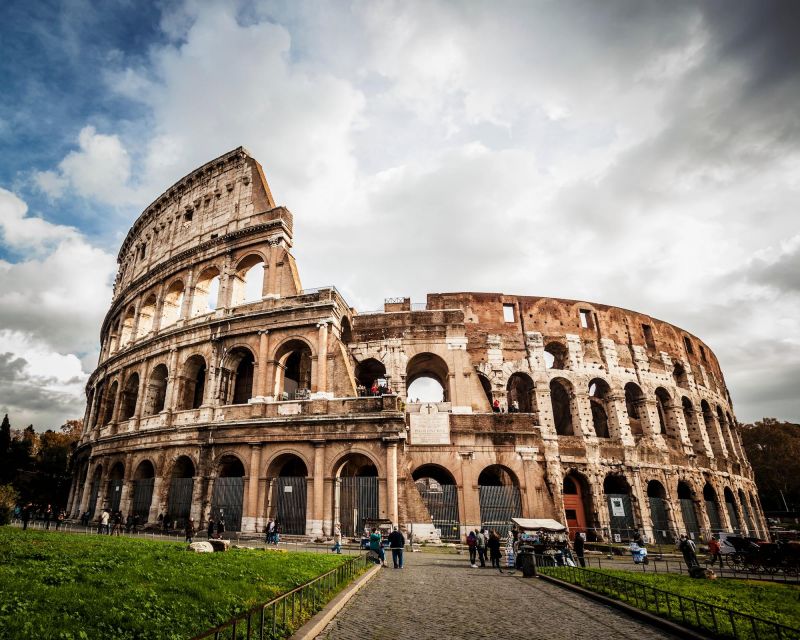
The tour enters the Flavian Amphitheatre, the formal name for the Colosseum. It is recognized as part of Rome’s UNESCO World Heritage listing and is also included among the New Seven Wonders of the World.
Your guide takes you through the first and second tiers before or around the arena-floor visit, depending on the day’s operating arrangements. From these upper sections, you gain the visual scale that is hard to grasp from street level. The curved rows, open central space, and surviving stonework show how carefully the building directed thousands of people toward one shared spectacle.
The guide focuses on the Roman appetite for public shows. You learn how the contests were arranged and why emperors presented them to the people. This is useful context because the Colosseum was not only a sports venue. It was also a political stage where power, generosity, social rank, and violence met in public.
Headsets are included, and you will want them. The Colosseum is a noisy place, with many groups moving through the same spaces. Past groups have praised guides who kept everyone together and spoke clearly through the radios, though one older review advised bringing personal earbuds because the supplied set was poor quality. If you are particular about earphones, carrying your own compatible pair may be sensible.
The route involves standing and walking. One past participant described steps, steep slopes, and hills, while also noting that there were places to pause. Take water, sunscreen, and comfortable walking shoes. Shade is limited around the Forum and Palatine, and the heat can make this feel more demanding than the 2.5-hour duration suggests.
The Arch of Constantine and Arch of Titus
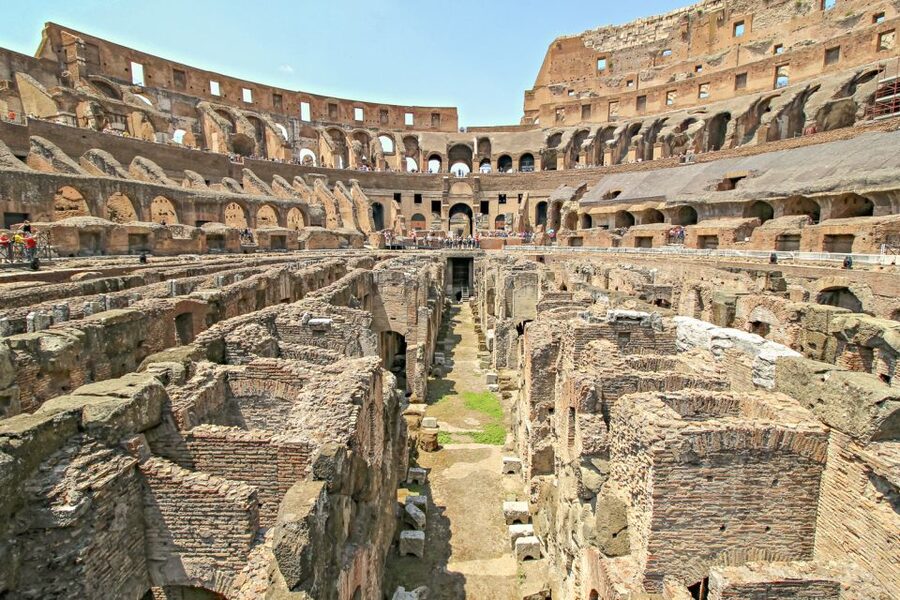
After leaving the Colosseum, you get a look at the Arch of Constantine, directly beside the amphitheatre. Built in the fourth century, it marks the emperor’s victory and is associated with the point at which Christianity became the religion of the Roman Empire.
The arch is easy to overlook when your attention is fixed on the Colosseum. I like that the tour gives it a place in the story, since it helps explain how Rome changed from a pagan imperial power into the center of a Christian empire.
The Arch of Titus is another important landmark along the ancient route. Its reliefs and survival help connect the monuments to Rome’s military victories and imperial ceremony. Your guide can make these arches more than quick photo stops by explaining how triumphs were staged and how monuments carried political messages.
The arches also help you understand the area as a ceremonial entrance to the ancient center of Rome. The Colosseum was not an isolated building. It was part of a larger urban zone filled with temples, roads, government buildings, and monuments.
More Roman Forum and Palatine Hill visits:
- Rome: Colosseum, Roman Forum and Palatine Hill Guided Tour
★ 4.5 · 23,903 reviews - Rome: Colosseum, Forum & Palatine Hill Tour & Optional Arena
★ 4.4 · 13,839 reviews - Rome: Colosseum, Palatine Hill & Roman Forum Guided Tour
★ 4.6 · 12,703 reviews - Rome: Colosseum Arena, Palatine Hill & Forum Guided Tour
★ 4.6 · 10,584 reviews
The Roman Forum: politics, religion, and daily life
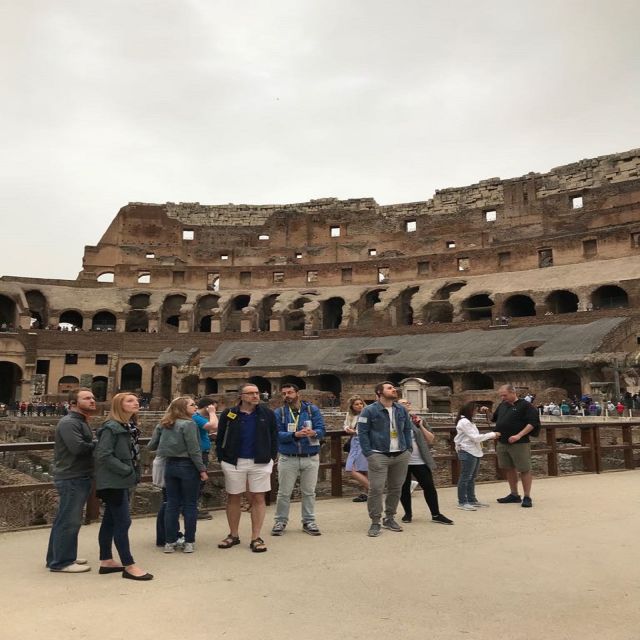
The second major part of the tour takes you into the Roman Forum, the old center of public life. This is where the visit shifts from a single monument to an entire city.
The Forum can be hard to read without help. You see columns, foundations, broken walls, and partial arches, but the original functions are not always obvious. A good guide gives each section a purpose: political meetings, religious ceremonies, legal business, public speeches, and ordinary errands.
You hear about the life of a Roman citizen as well as the major events of the empire. The point is not simply to memorize names. It is to picture how people moved through the Forum, where they worshipped, how leaders displayed authority, and how religion and politics overlapped.
The story of the she-wolf and the twins Romulus and Remus is part of the visit. According to Rome’s founding legend, the she-wolf nursed the brothers, who later became associated with the city’s origins. The tale is useful not because it can be treated as a plain historical record, but because it shows how Rome explained and celebrated its own beginnings.
Guides such as Helena, an archaeologist, and Andrea, who specializes in the imperial Roman period, have been praised for adding depth to these ruins. Niccolo has also been noted for using logic and vivid descriptions to help people imagine how different groups experienced the city.
The Forum is also where the tour may feel longest. Some departures begin here rather than at the Colosseum, and the balance between the sites can change. One group expected more time inside the Colosseum but spent roughly two-thirds of the visit around the Palatine and Forum. That is not necessarily a flaw, but you should know what you are buying: this is an Ancient Rome tour, not a restricted-Colosseum-only experience.
Palatine Hill and the wider Ancient Rome story
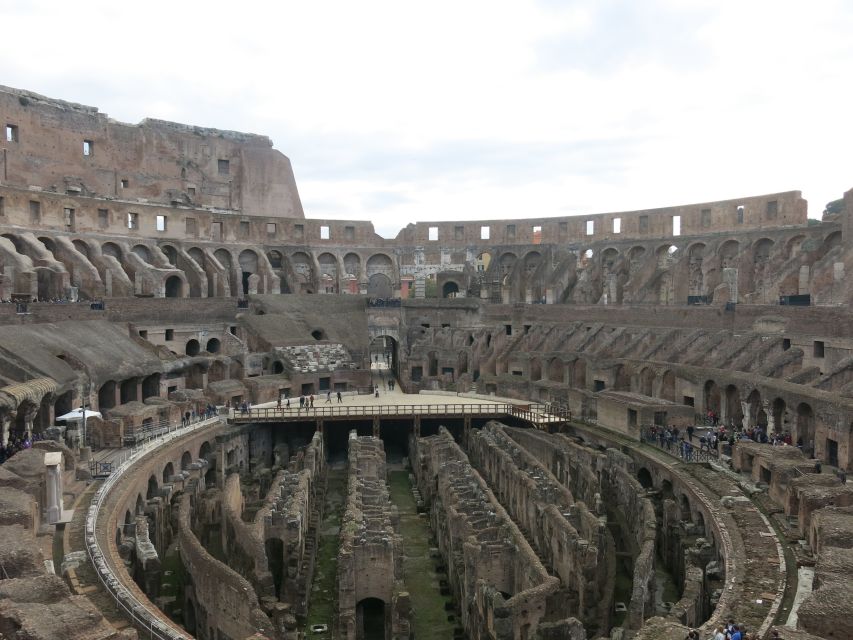
The Palatine area adds another layer to the visit. It is tied to Rome’s foundation stories and to the residences and power of emperors. From the higher ground, you can look across the Forum and understand the relationship between the public center below and the elite world above.
The views are a strong reason to keep the Palatine portion in the plan. You get a broader sense of the ancient city instead of seeing each ruin as a separate stop. The open setting also helps you picture Rome as a working capital, with public buildings, temples, streets, and grand residences spread across the hills.
The downside is exposure. The Palatine and Forum have little shade in many areas, and the walk includes inclines. Past participants have found the combination of heat and open ground tiring, especially in summer. I would schedule this tour early in the day if that option is available, both for comfort and for lighter crowds.
One useful detail is that toilets are available at the top of Palatine Hill. Water can also be refilled at a fountain there, although you should still arrive with a bottle. Food and drinks are not included, so plan to eat before or after the tour rather than expecting a refreshment stop during it.
Group size, guide quality, and pace
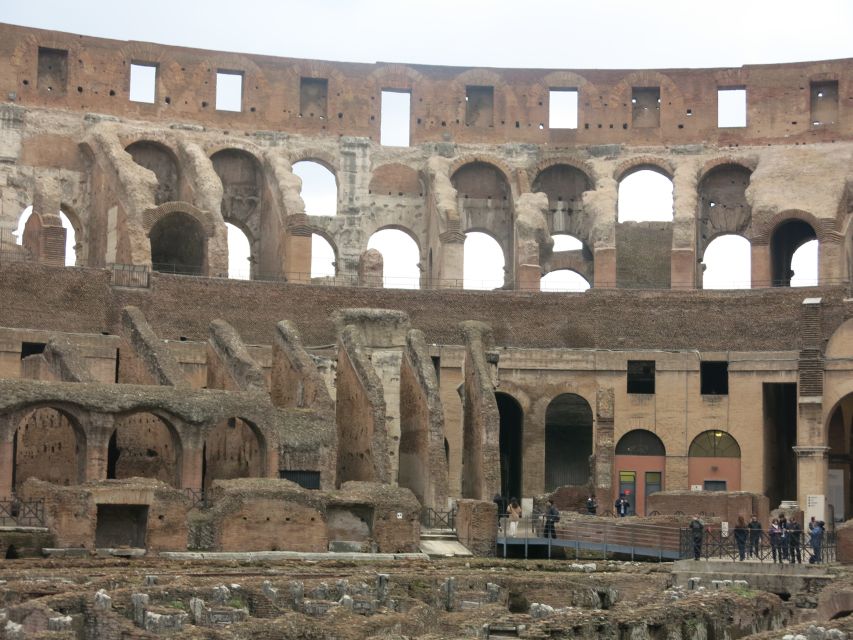
The group is limited to 12 people. That is a meaningful advantage here. The Colosseum and Forum are large, crowded sites, and a small group makes it easier for the guide to check that nobody has been left behind.
Small groups also give you a better chance to ask questions. Past guides have been praised for waiting when needed, answering questions, and making room for different walking speeds. That personal attention is especially useful if you are visiting with children or with someone who needs occasional rests.
The pace is generally described as steady and manageable, but it can vary by guide and group. One past participant felt that a guide moved a little fast at times, though the headset made it possible to keep listening. Another group experienced a delayed start while waiting for late arrivals.
I would not choose this tour if you want to roam alone or spend long periods taking photographs at each stop. The guide controls the route and timing. I would choose it if you want the complicated parts explained and prefer not to lose time figuring out the archaeological area by yourself.
Is $93 a fair price?
At $93, the tour costs more than simple entry, but it includes entrance fees, headsets, a professional art historian guide, skip-the-ticket-line access, and the arena floor. You are paying for access and interpretation, not just transportation or a ticket bundle.
The strongest value comes from combining all three sites in one visit. Booking separate entry and finding a good explanation for the Forum can take more planning. Here, the guide links the Colosseum’s spectacles with the Forum’s politics and the Palatine’s imperial setting.
The value is weaker if your main goal is to spend a long time inside the Colosseum. Only 20 minutes are assigned to the sand floor, and the Forum and Palatine may take a large share of the tour. In that case, compare this with a Colosseum option that includes underground areas or longer interior access.
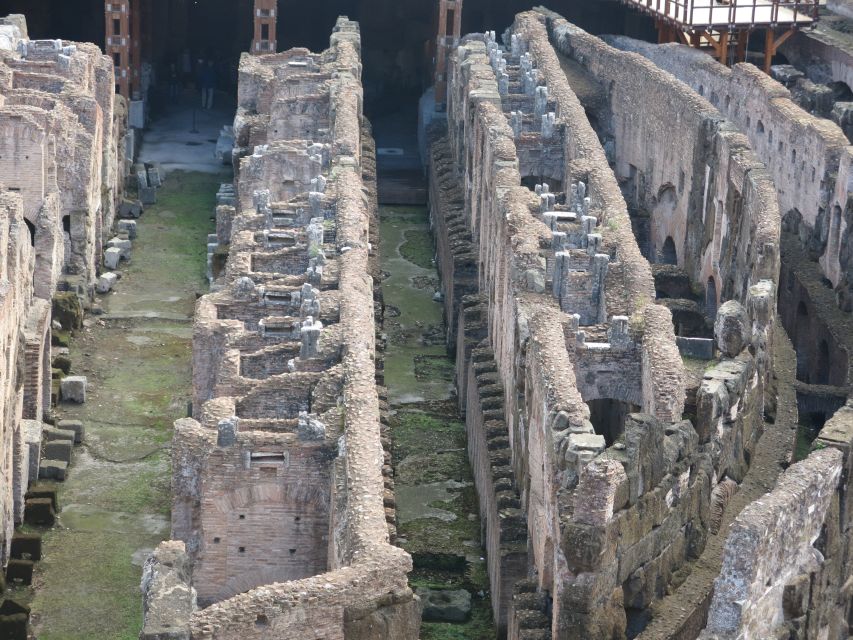
The underground section is not included in the details for this experience. Some older departures with a different restricted-area arrangement included underground access, while another had underground access canceled for security reasons and substituted a different area. Do not assume that this booking includes the underground. If that section is essential, confirm the exact access offered for your date before paying.
Free cancellation is available up to three days in advance for a full refund. That gives you some useful flexibility while arranging a Rome schedule, but the age and ID rules still need careful attention.
Who should book this Ancient Rome tour?
I would recommend it to first-time visitors who want the major Ancient Rome sights explained in one compact visit. It also suits families, provided everyone can manage the walking, standing, heat, and open archaeological ground.
History fans will appreciate the art historian guide and the chance to ask questions. The tour is also a good fit if the arena floor is high on your Rome wish list and you do not want to gamble on finding restricted access independently.
I would hesitate if you dislike guided groups, need a slow and highly flexible pace, or want underground access specifically. I would also avoid booking it back-to-back with another demanding walking tour. The advertised 2.5 hours can stretch toward three, and the Forum and Palatine require energy.
Should you book it?
Book this tour if you want to stand on the Colosseum arena floor and understand how the amphitheatre fits into the political and religious center of Ancient Rome. The small group, included headsets, and consistently strong guide feedback make the $93 price defensible.
Choose a different option if you want underground access, a longer self-guided Colosseum visit, or complete control over your time. For most first visits, though, this is a focused way to connect the Colosseum, Forum, Palatine, and Rome’s founding stories without wandering through the ruins on your own.
FAQ
How long is the tour?
The advertised duration is 2.5 hours. The detailed itinerary allows about 1.5 hours for the Colosseum and 1.5 hours for the Roman Forum, so the actual visit may take closer to three hours.
Where does the tour meet?
Meet at the Arch of Constantine in Piazza dell’Arco di Costantino. The guide waits beside a small column near the arch with a tour sign and the Wander in Italy logo.
Is the Colosseum arena floor included?
Yes. The tour includes 20 minutes on the Colosseum’s sand-covered arena floor, along with access to the first and second tiers.
Is the Roman Forum included?
Yes. The tour includes a guided visit to the Roman Forum and the Palatine area.
What language is the tour in?
The live tour is conducted in English by an English-speaking guide.
What identification do I need?
You must bring a passport or ID card. A copy is accepted, but identification is mandatory.
Is the tour suitable for wheelchair users?
The activity is listed as wheelchair accessible. You should still consider the walking and outdoor archaeological areas when deciding if it suits your needs.
Newest reviews from Rome
- Rome: Vatican Museums & Sistine Chapel Skip-the-Line Ticket★ 4.4 · 148 reviews
- Shared Shuttle Transfer from Rome to Civitavecchia Port★ 5.0 · 148 reviews
- Rome: Crypts & Catacombs After Hours Tour with Bone Chapel★ 4.6 · 149 reviews
- Ghosts Legends and Mysteries of Rome Walking Tour★ 5.0 · 149 reviews
- Skip the Line: Vatican and Sistine Chapel with Guided Tour★ 4.0 · 149 reviews
- Tivoli: Villa Gregoriana Entrance Ticket★ 4.7 · 150 reviews
- Pizza and Tiramisu Cooking Class in Rome, Piazza Navona★ 5.0 · 150 reviews
- Rome: Borghese Gallery Skip-the-Line Entry and Guided Tour★ 4.7 · 150 reviews
Colosseum Tours, compared.
Colosseum, Palatine Hill and Roman Forum Guided Tour
Read our review →
Guided Tour of Colosseum, Roman Forum & Palatine Hill
Read our review →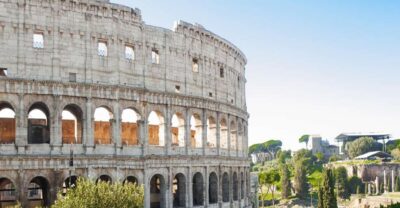
Colosseum & Forum with Audio Guide App -Optional Arena
Read our review →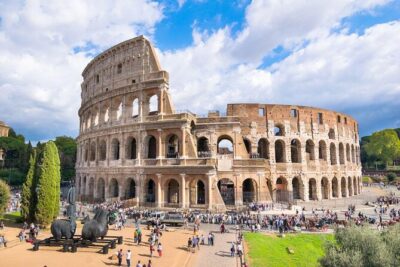
Colosseum, Roman Forum and Palatine Hill Guided Tour
Read our review →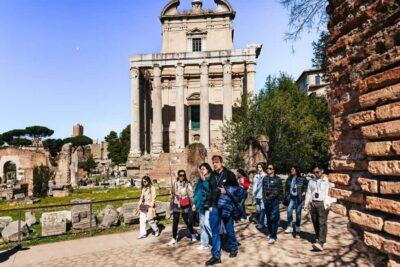
Colosseum, Forum & Palatine Hill Tour & Optional Arena
Read our review →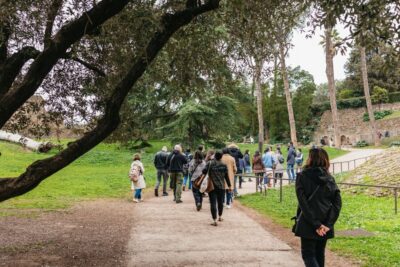
Colosseum, Palatine Hill & Roman Forum Guided Tour
Read our review →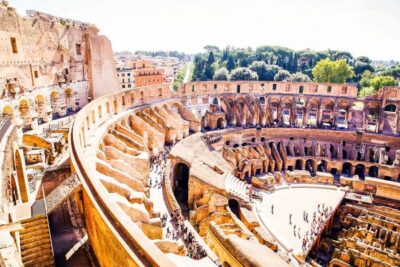
Colosseum: Underground and Ancient Rome Tour
Read our review →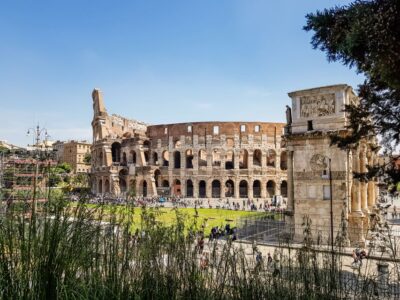
Colosseum Arena, Palatine Hill & Forum Guided Tour
Read our review →Browse the lists this tour appears in