
Reviewed · ROME OPERA & CONCERTS
Rome: Giuseppe Verdi’s “La Traviata” Live Performance
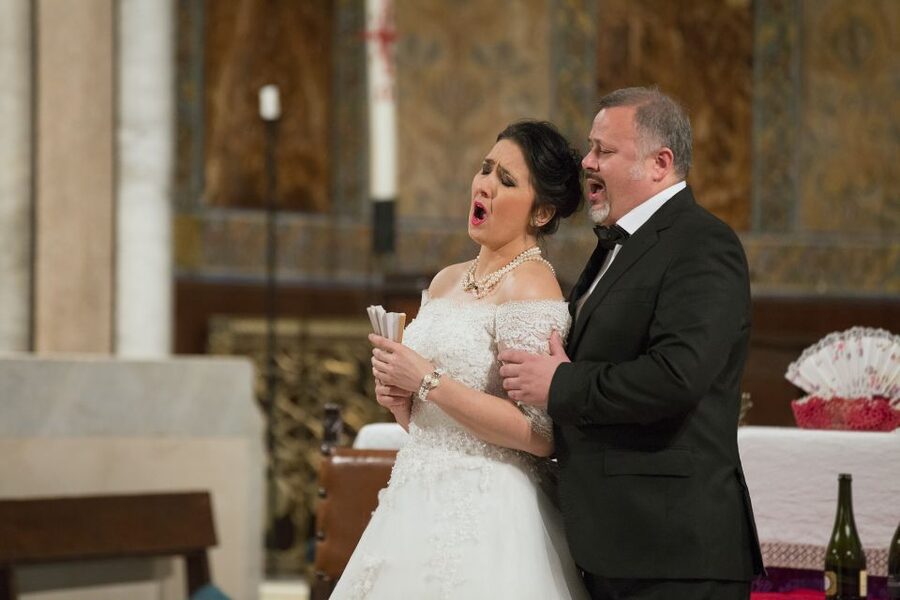
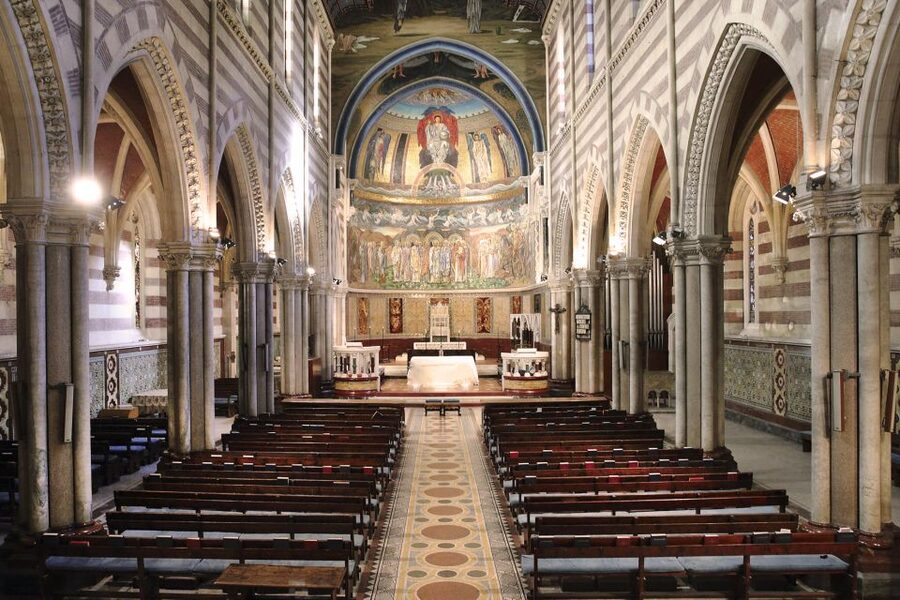
Rome puts a memorable twist on opera by presenting Verdi’s La Traviata inside St. Paul’s Within the Walls Church on Via Nazionale. Instead of a grand opera house, you sit in an old church with the singers and orchestra close by, surrounded by soaring walls and strong natural acoustics.
I like two things right away: the $41 price makes a live opera a realistic choice for many visitors, and the two-hour format fits neatly into an evening in Rome. The singing, orchestra, and setting are the main attractions, with soprano Aleksandra Buczek taking the role of Violetta and Elvin Dhimitri conducting.
The main caution is seating. The stage is at floor level, and church pews do not give everyone a clear view. Arrive early if possible, and remember that La Traviata is performed in Italian, not English. The church can also feel quite warm in summer.
In This Review
- Key points to know before you book
- Why La Traviata works so well in Rome
- Entering St. Paul’s Within the Walls Church
- What happens during the two-hour performance
- The singing and orchestra are the main reward
- Seating: the biggest practical issue
- Heat and comfort during the evening
- Is $41 good value for Rome?
- How to plan the evening
- Who will enjoy this experience most?
- Cancellation and booking flexibility
- Should you book La Traviata at St. Paul’s?
- FAQ
- Where is the performance held?
- What time does La Traviata begin and end?
- How long is the performance?
- Is the opera performed in English?
- Who performs in the production?
- Is food or drink included?
- Is the venue wheelchair accessible?
- Can I cancel the booking?
Key points to know before you book
- Verdi’s famous tragedy in two hours: You follow Violetta Valéry’s doomed love story in a shortened performance of the three-act opera.
- A church replaces the opera house: St. Paul’s Within the Walls gives the evening an intimate, unusual setting, but its pews and floor-level stage can limit sight lines.
- Live voices, orchestra, and choir: Opera e Lirica presents a full musical performance led by conductor Elvin Dhimitri.
- A strong first-opera choice: At $41, this is a sensible way to try opera without committing to a much more expensive theater production.
- Read the story first: There are no English lyrics or spoken explanations listed, so knowing the plot will help you follow the action.
- Arrive early for the best view: Seats closer to the front generally offer a clearer look at the singers and any ballet interludes.
Why La Traviata works so well in Rome
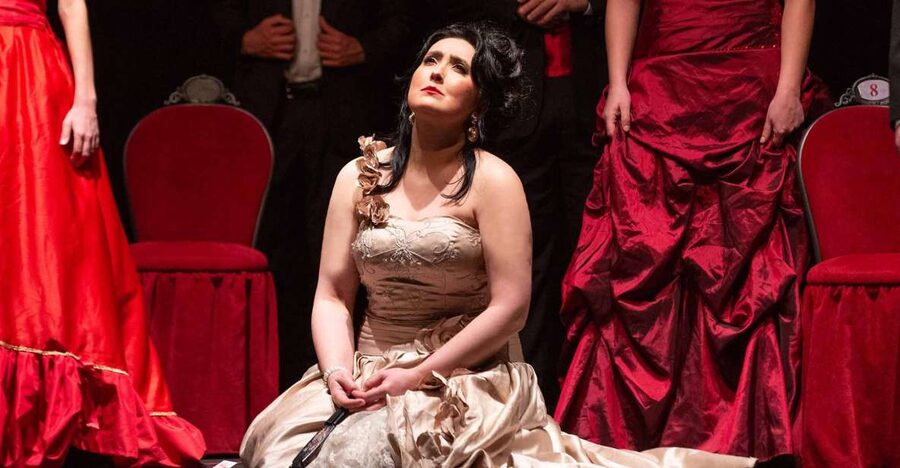
La Traviata is one of Verdi’s most performed operas, and its story is easy to grasp once you know the basic outline. Violetta Valéry, a celebrated Parisian courtesan, falls in love with Alfredo Germont. Their relationship is threatened by social pressure, family expectations, and Violetta’s failing health.
The opera was first performed in Venice in 1853. Verdi based it on Alexandre Dumas fils’s novel La Dame aux Camélias, which had also been adapted for the stage. The work was originally called Violetta, a title that puts the central character even more clearly at the heart of the story.
You do not need to be an opera expert to appreciate it. The themes are direct: love, sacrifice, reputation, illness, and regret. The music moves from lively social scenes to intimate duets and powerful final moments. If this is your first opera, the emotional shape is easier to follow than a complicated mythological plot.
Still, the performance is in Italian. You may understand the mood from the music and acting, but you will miss much of the detail if you arrive without knowing the story. One useful preparation is to read a short plot summary before dinner. That small effort can make the difference between following the drama and simply hearing beautiful singing.
More opera and concerts in Rome:
- Rome: “The Most Beautiful Opera Arias” Concert
★ 4.3 · 2,495 reviews - Rome: Opera Concert at Palazzo Poli – Fontana di Trevi
★ 4.7 · 1,026 reviews - Rome: La Traviata at St. Paul’s Within the Walls
★ 4.4 · 683 reviews
Entering St. Paul’s Within the Walls Church
The address is Via Nazionale 16/A, a central Rome location that makes this easy to add to an evening of sightseeing. You make your own way to the church, and the performance runs from 8:30 pm to about 10:30 pm.
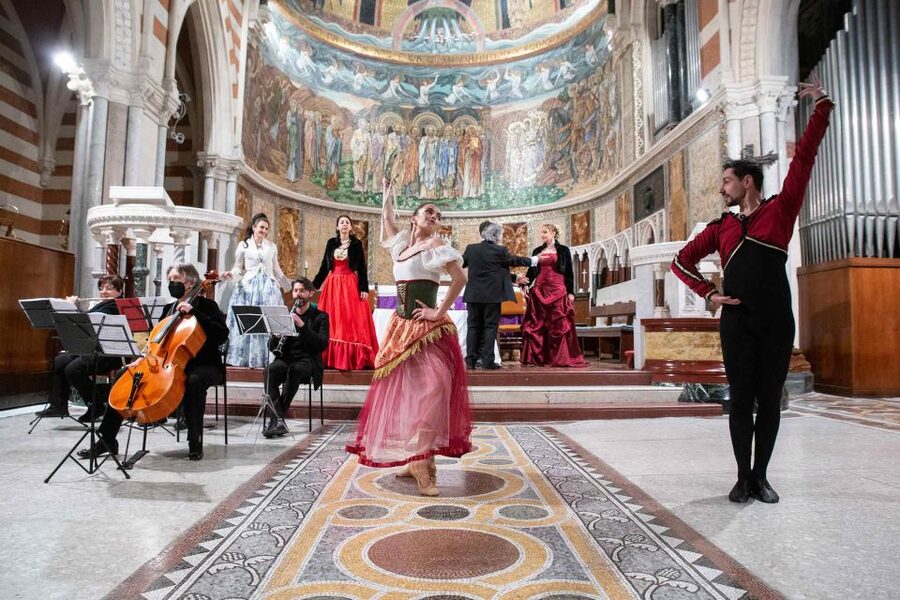
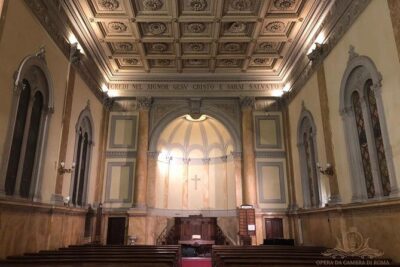
The venue is the heart of the experience. St. Paul’s Within the Walls is a historic church with a striking interior, and its religious setting gives the performance a different character from an opera house. You are not looking at painted scenery and a formal theater balcony. You are sitting in a church, close to the performers, with the architecture forming the backdrop.
I like this arrangement because it feels personal. With only about 20 rows in the church, the orchestra and singers can seem remarkably near. That closeness helps you notice vocal power, facial expression, and the physical effort behind the music.
The setting has practical limits. The church was not designed as a modern performance hall, and the sound can vary from one part of the room to another. Some positions may give you very good acoustics, while others can make the voices or orchestra sound less balanced. Several performances also include ballet interludes, but these may be difficult to see from the side or rear.
What happens during the two-hour performance
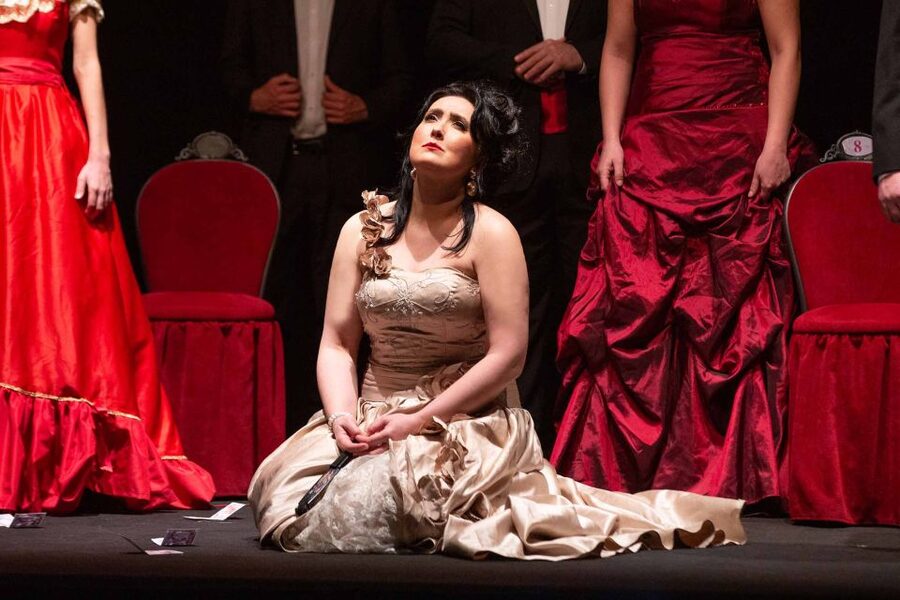
The production follows La Traviata through its three acts, though it is presented in a shortened version. The evening begins with the social world around Violetta and Alfredo, then moves toward their attempt at a quieter life together. Giorgio Germont, Alfredo’s father, brings the outside world crashing into their relationship.
The second act carries much of the opera’s emotional weight. Violetta is asked to give up Alfredo for the sake of his family, and the decision brings pain to everyone involved. The third act brings the story to its tragic close.
You can expect the main musical work to come from the soloists, supported by choir and orchestra. The listed cast includes Aleksandra Buczek as Violetta, Emil Alekperov as Alfredo, and Cristian Alderete as Giorgio Germont. Other roles include Flora and Annina, Gastone, Baron Douphol, the Marquis d’Obigny, and a commissioner.
The choir represents the wider world around the main characters: servants, noblemen, friends, gypsies, picadores, matadores, and masked figures. That variety helps the production shift between private scenes and larger gatherings.
The orchestra is led by Elvin Dhimitri, with the Opera e Lirica Orchestra. The conductor, singers, and musicians are important here because there is no large-scale theatrical machinery to carry the evening. The music has to create the drama.
Some performances also feature ballet. This is not the central promise of La Traviata, so you should think of it as an extra rather than the main reason to book. If you sit where the stage is partly blocked, the dancers may be harder to follow than the singers.
The singing and orchestra are the main reward
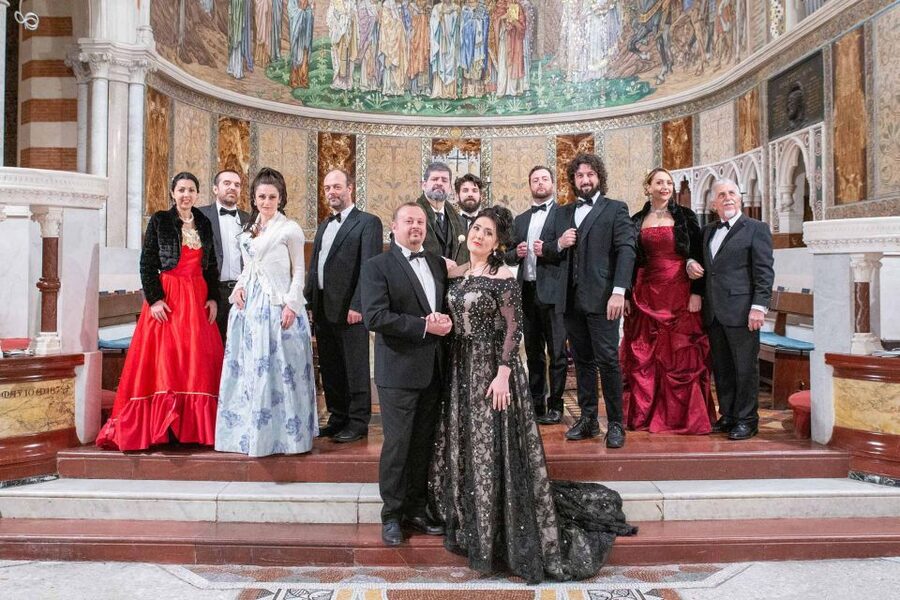
The strongest part of this experience is the music. The soprano role of Violetta demands both dramatic feeling and vocal control, and the lead singer carries much of the opera’s emotional force. Alfredo brings the romantic side of the story, while Giorgio Germont introduces the stern moral pressure that drives the plot forward.
The orchestra gives the evening its shape and pace. In a small church setting, you are close enough to feel the relationship between conductor, musicians, and singers. Several performances have been praised for strong voices, clear vocal range, lively dynamics, and a particularly impressive soprano.
The church acoustics can work beautifully. Some seating positions produce a powerful sound, and the height of the interior helps the music carry. At the same time, the acoustics are not as controlled as those in a purpose-built opera theater. Sound may seem slightly distorted farther back or beneath the tall ceiling.
That trade-off is worth understanding. If you want the polished sound balance of a major opera house, this is not the same product. If you want a close, atmospheric evening with live Italian opera in an unusual setting, the church adds something a formal theater cannot.
A completely different way to spend the day in Rome:
- Vatican: Museums & Sistine Chapel Entrance Ticket
★ 4.5 · 144,003 reviews - Vatican Museums & Sistine Chapel Tour with Optional Basilica
★ 4.3 · 67,413 reviews - Vatican Museums, Sistine Chapel & St Peter’s Basilica Guided Tour
★ 4.5 · 39,149 reviews - Rome: Colosseum, Palatine Hill and Roman Forum Guided Tour
★ 4.8 · 32,814 reviews
Seating: the biggest practical issue
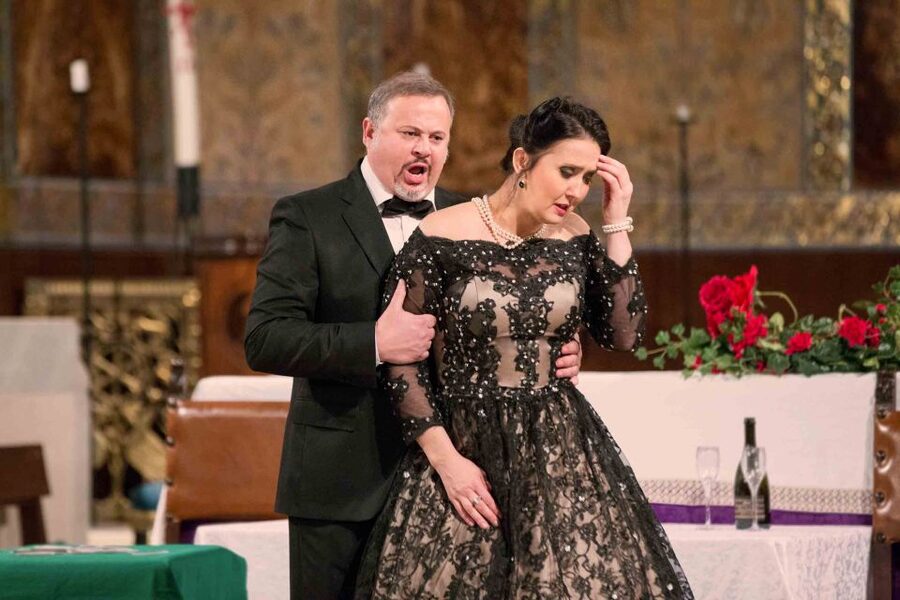
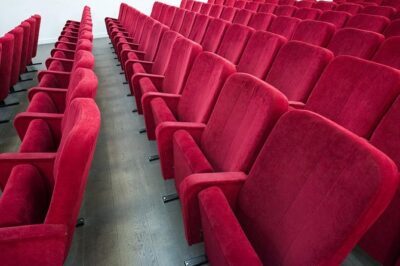
The performance space does not appear to use a raised stage. The singers and musicians perform at floor level, with the audience seated in church pews and some chairs. That arrangement creates closeness in the front rows, but it can make visibility difficult farther back.
If you are shorter, a tall person in front can block much of the action. From a side seat, you may have trouble seeing the full stage area, particularly during ballet sections. The rear of the church may also offer a weaker view even when the sound remains enjoyable.
This is the most important reason to arrive early. A prompt arrival gives you a better chance of choosing a useful position, depending on how seating is organized for your performance. Front rows generally provide the clearest view, and paying more for a forward seat may be worthwhile if seeing the performers matters as much as hearing them.
Comfort is another concern. Church pews are hard, and you will be seated for roughly two hours. Some seats may be plastic chairs, which can be less comfortable than the pews. A small cushion could make the evening easier, especially if you are sensitive to firm seating.
The audience is asked to avoid bringing pets. The venue is wheelchair accessible, which makes this a practical option for visitors who need an accessible location, though the supplied information does not give further details about specific seating arrangements.
Heat and comfort during the evening
Rome can be hot, and the church may feel warm, especially in summer. There is no air conditioning mentioned, and fans may not fully solve the problem. Heat can affect your comfort and, at times, your ability to concentrate on the performance.
This matters more during a two-hour opera than during a quick church visit. If you are attending in July or August, plan your day so you are not arriving already overheated from several hours of sightseeing. Light clothing may help, within the respectful standards expected in a church.
The warmth is not a problem every visitor will experience in the same way. For some, the atmosphere of the old church is worth the lack of modern climate control. For others, particularly anyone sensitive to heat or poor ventilation, it may be the deciding drawback.
Is $41 good value for Rome?
At $41 per person, this is a fairly accessible introduction to live opera. You receive a ticket for a two-hour performance with soloists, choir, orchestra, and a conductor. Food and drinks are not included, but that is easy to manage because the event occupies only the evening performance period.
The price is especially reasonable if your goal is to try opera rather than attend a major full-length production in a famous theater. You get the essential parts of the art form: Verdi’s music, trained singers, live instrumental support, and a dramatic story.
There are limits behind the lower price. This is a shortened version, the seating is less comfortable than a traditional opera house, and the floor-level stage can make the view uneven. You are paying for atmosphere and access, not for the full theater treatment.
I would consider it good value for a first opera, a music-focused evening, or a visitor who wants something different from Rome’s museums and monuments. If you already attend opera regularly and expect elaborate scenery, subtitles, a full production, and theater-style seating, you may find the format modest.
How to plan the evening
The performance begins at 8:30 pm and ends around 10:30 pm. You should make your way directly to St. Paul’s Within the Walls Church on Via Nazionale, rather than expecting transportation or a guided escort to be part of the activity.
Because the story is performed in Italian, read a plot outline before you go. You can also learn the basic characters:
- Violetta Valéry: A soprano and the central character.
- Alfredo Germont: A tenor who falls in love with Violetta.
- Giorgio Germont: Alfredo’s baritone father.
- Flora and Annina: Mezzo-soprano roles connected to Violetta’s social circle and household.
- Gastone, Baron Douphol, and other figures: Members of the society surrounding the central couple.
A little advance reading also helps you recognize the changes between the three acts. Without that preparation, the movement between parties, private scenes, and social gatherings can feel abrupt.
You might plan dinner before the performance, but do not cut it too close. Arriving ten minutes before the start may leave you with a poor view, particularly if the church is filling quickly. Since the stage is low, your seat matters more than it would in a theater with steeply rising rows.
Who will enjoy this experience most?
I would recommend this evening to first-time opera audiences, couples looking for a calm cultural activity, and visitors who want live music in an unusual Roman setting. The familiar story and two-hour running time keep the commitment manageable.
It also works well for families with older children and teenagers. One teenage audience member particularly enjoyed the experience as a first opera, which makes sense: La Traviata has romance, conflict, and a clear emotional story rather than a remote or abstract plot.
Classical music fans will appreciate the orchestra and the close setting. The performance can feel intimate, and the singers are near enough for you to focus on their voices rather than on a large stage production.
I would be more cautious if you need very comfortable seating, a fully visible stage from every position, or a cool interior in summer. Shorter visitors should try especially hard to sit near the front. Anyone who wants English translations should also know that no English-language performance or explanation is specified.
Cancellation and booking flexibility
You can cancel up to 24 hours in advance for a full refund. The reserve-now-and-pay-later option lets you hold a place without paying immediately, which is useful when you are still adjusting a Rome itinerary.
The ticket is the included item. Food and drinks are separate, and you should make your own way to the church. Check the available start time when booking, although the stated performance schedule is 8:30 to 10:30 pm.
Should you book La Traviata at St. Paul’s?
Book it if you want accessible live opera, a beautiful church setting, and a relaxed two-hour evening at a moderate price. The voices, orchestra, and intimate atmosphere are the strongest reasons to go, and the experience can be a fine highlight for a first visit to Rome.
Before booking, accept the trade-offs. It is performed in Italian, the version is shortened, the pews can be hard, and the floor-level stage makes front seating valuable. Arrive early, read the plot, and consider a forward seat if your budget allows.
I would choose this over skipping opera entirely. It gives you the core of Verdi’s work without demanding a full night or a large theater budget. Just think of it as opera in a historic church, not as a substitute for a fully staged production at one of Europe’s major opera houses.
FAQ
Where is the performance held?
The performance takes place at St. Paul’s Within the Walls Church at Via Nazionale 16/A in Rome.
What time does La Traviata begin and end?
The stated start time is 8:30 pm, and the performance ends at approximately 10:30 pm.
How long is the performance?
The experience lasts about two hours.
Is the opera performed in English?
No. The performance is in Italian. Reading the plot of La Traviata before attending can help you follow the story.
Who performs in the production?
Opera e Lirica soloists perform with choir and orchestra. The listed cast includes soprano Aleksandra Buczek as Violetta, tenor Emil Alekperov as Alfredo, and baritone Cristian Alderete as Giorgio Germont. Elvin Dhimitri is the conductor.
Is food or drink included?
No. The ticket is included, but food and drinks are not.
Is the venue wheelchair accessible?
Yes. The activity is listed as wheelchair accessible.
Can I cancel the booking?
Yes. You can cancel up to 24 hours in advance for a full refund. A reserve-now-and-pay-later option is also available.
Newest reviews from Rome
- Rome: Vatican Museums & Sistine Chapel Skip-the-Line Ticket★ 4.4 · 148 reviews
- Shared Shuttle Transfer from Rome to Civitavecchia Port★ 5.0 · 148 reviews
- Skip the Line: Vatican and Sistine Chapel with Guided Tour★ 4.0 · 149 reviews
- Rome: Crypts & Catacombs After Hours Tour with Bone Chapel★ 4.6 · 149 reviews
- Ghosts Legends and Mysteries of Rome Walking Tour★ 5.0 · 149 reviews
- Tivoli: Villa Gregoriana Entrance Ticket★ 4.7 · 150 reviews
- Pizza and Tiramisu Cooking Class in Rome, Piazza Navona★ 5.0 · 150 reviews
- Rome: Borghese Gallery Skip-the-Line Entry and Guided Tour★ 4.7 · 150 reviews
Rome Opera & Concerts, compared.
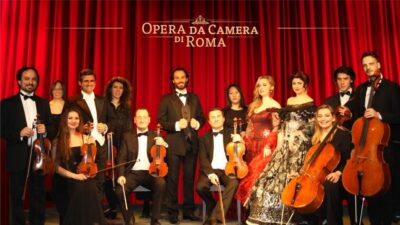
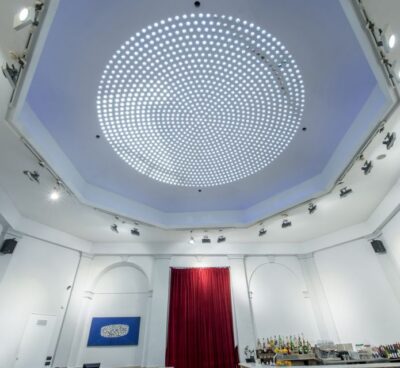
Opera Concert at Palazzo Poli – Fontana di Trevi
Read our review →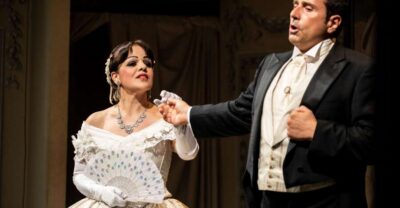
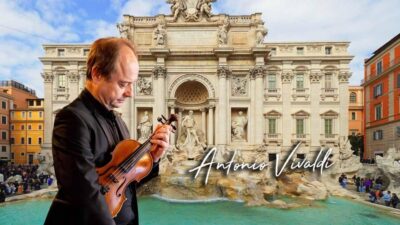
The Great Opera Arias Concert at Palazzo Poli – Trevi Fountain
Read our review →
Concert Ticket – The Most Beautiful Opera Arias by Opera da Camera di Roma
Read our review →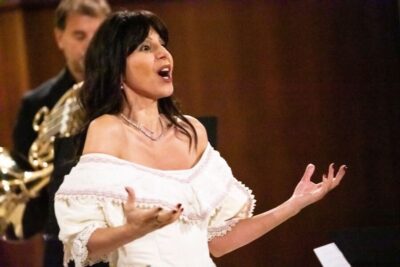
St. Paul’s Within the Walls Church Opera Arias Ticket
Read our review →Browse the lists this tour appears in