
Reviewed · ROME OPERA & CONCERTS
Rome: The Four Seasons by Vivaldi
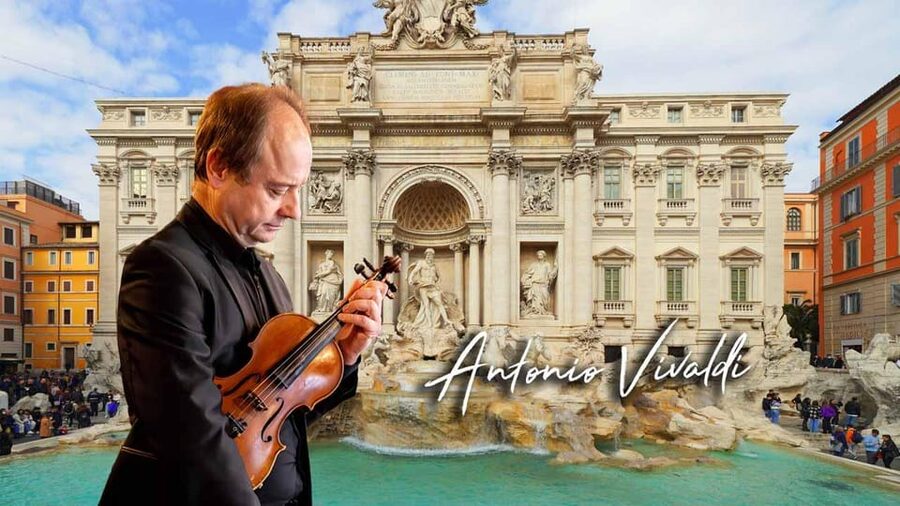
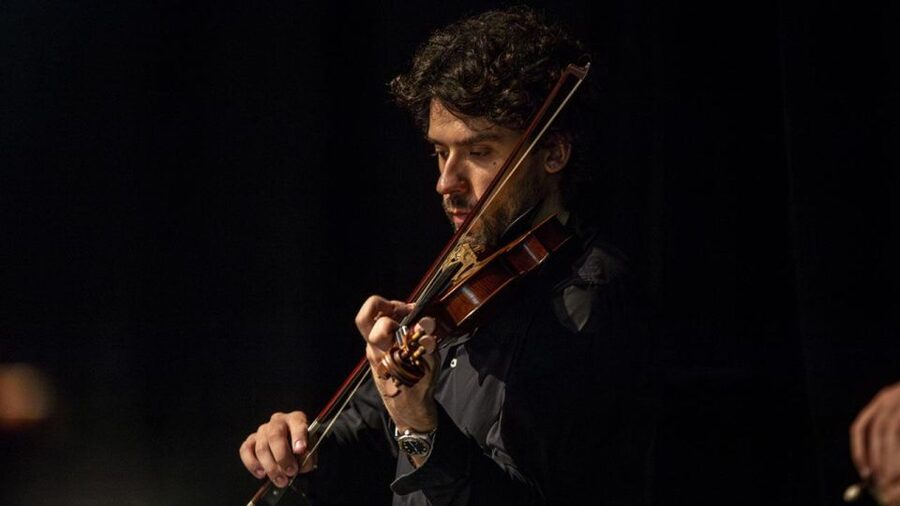
Rome has a fine answer to the question of what to do after dinner: sit in a historic setting and hear Vivaldi’s Four Seasons played live. Elvin Dhimitri leads the Opera e Lirica musicians as first violin and conductor, with strings and harpsichord bringing out the birds, storms, dances, and winter chill in the score.
I like the small-scale setting, where the violin remains close and expressive rather than lost in a huge concert hall. I also like the chance to hear the music in central Rome, including Sala Dante at Palazzo Poli, where windows may look toward Trevi Fountain. The main thing to watch is the venue: locations can change, seating is unnumbered, and some settings have been hot, chilly, or less comfortable than expected.
In This Review
- Key points to know before booking
- Why Vivaldi works so well in Rome
- The program: from Baroque warm-up to four concertos
- Elvin Dhimitri and the sound of a small ensemble
- Choosing among Rome’s three possible venues
- Chiesa Evangelica Metodista
- Sala Dante at Palazzo Poli
- Horti Sallustiani
- How the 80-minute evening fits your itinerary
- Seating, sound, and comfort
- Is $35 a fair price?
- Who should book this concert?
- My practical booking advice
- Should you book Rome’s Four Seasons concert?
- FAQ
- How long does the concert last?
- Where does the concert take place?
- Can I see Trevi Fountain during the concert?
- Are the seats numbered?
- Who performs the Four Seasons?
- Is the concert wheelchair accessible?
- Can I cancel my booking?
Key points to know before booking
- Elvin Dhimitri leads from the first violin: His role gives the performance a clear musical focus and plenty of visual energy.
- The full Four Seasons is the main event: Spring, Summer, Autumn, and Winter are performed in sequence, with other Baroque works included.
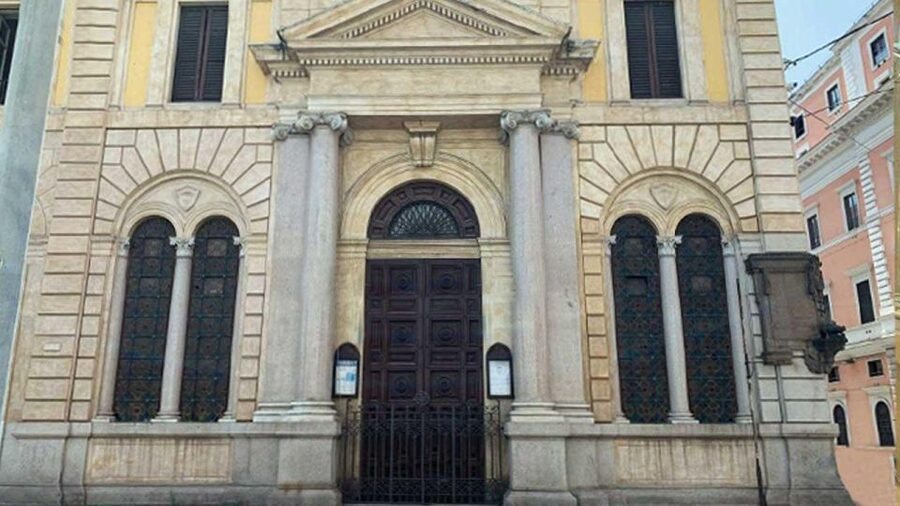
- The venue may vary: Listed locations include a Methodist church, Sala Dante of Palazzo Poli, and Horti Sallustiani.
- Trevi Fountain may be part of the setting: At Palazzo Poli, you may look out toward the fountain during your evening.
- Seats are first come, first served: Arrive with enough time if sitting near the musicians matters to you.
- The concert is short enough for most evenings: The advertised duration is 80 minutes, though some performances have run closer to one hour.
Why Vivaldi works so well in Rome
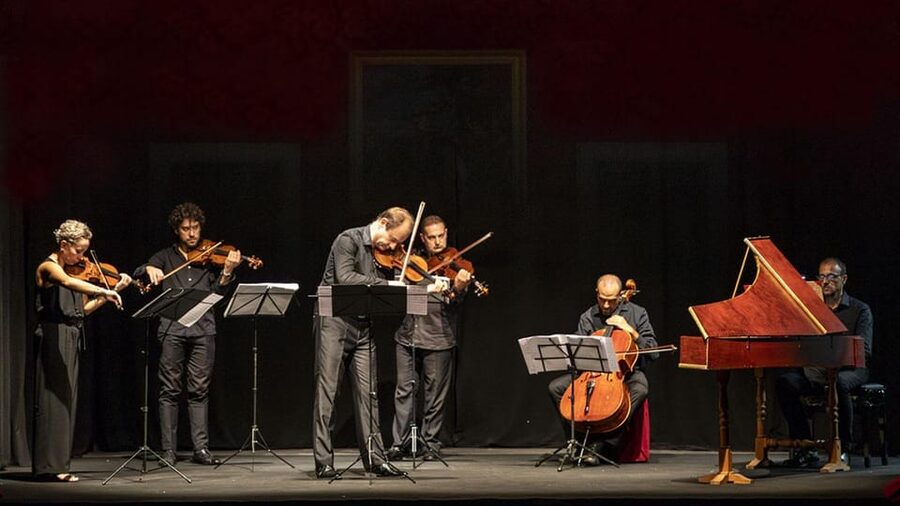
Vivaldi’s Four Seasons is familiar music, but hearing it live changes the experience. A recording gives you polished sound. In a concert setting, you see the bow speed up, the players lean into a phrase, and the harpsichord add its crisp Baroque pulse.
The four violin concertos are built around scenes from nature and daily life. Spring brings birdsong and a country dance. Summer moves from heat and stillness to a sudden storm. Autumn includes a peasant dance, sleepy drinkers, and a hunt. Winter gives you chattering teeth, falling rain, and the famous Largo, calm and spare after the violence of the opening movement.
This music came from a period fascinated by nature, science, and the power of observation. Baroque artists such as Gian Lorenzo Bernini pictured the changing seasons in sculpture, while Galileo’s discoveries challenged the old idea that people occupied the center of the cosmos. Vivaldi’s score reflects that new sense of wonder. Nature is not just a pretty backdrop. It can be noisy, threatening, playful, and overwhelming.
You do not need to know any of that to enjoy the concert. Still, the context helps explain why the music feels so visual. Vivaldi was not simply writing pleasant tunes. He was trying to make an orchestra imitate the world outside.
More opera and concerts in Rome:
- Rome: “The Most Beautiful Opera Arias” Concert
★ 4.3 · 2,495 reviews - Rome: Opera Concert at Palazzo Poli – Fontana di Trevi
★ 4.7 · 1,026 reviews - Rome: La Traviata at St. Paul’s Within the Walls
★ 4.4 · 683 reviews
The program: from Baroque warm-up to four concertos
The evening begins with additional instrumental works, including Concerto per archi RV 127 and RV 151, followed by Concerto XI No. 4 in A Major. These pieces establish the sound of the ensemble before the best-known part of the program begins.
The featured work is arranged as four separate concertos:
- Spring, RV 269, in E Major
- Summer, RV 315, in G Minor
- Autumn, RV 293, in F Major
- Winter, RV 297, in F Minor
Each concerto follows the usual fast, slow, fast pattern. The quick movements carry the action, while the middle movement offers a pause. That contrast matters in a live setting. The quiet passages let you hear the solo violin’s tone and the supporting strings, while the fast sections show how tightly the group works together.
The program also includes the familiar scenes that make the Four Seasons so easy to follow. You might hear birds calling in Spring, a shepherd sleeping in Summer, a hunting party in Autumn, or rain falling in Winter. The descriptions are not announced as a guided lecture, so a little advance reading can help you catch the musical pictures as they pass.
Elvin Dhimitri and the sound of a small ensemble
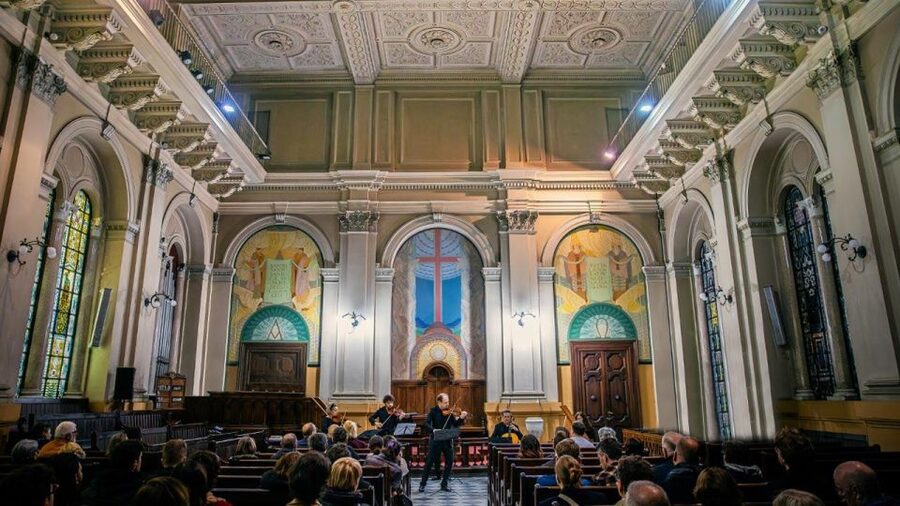
Elvin Dhimitri serves as first violin and conductor. He has performed with orchestras including the Luglio Musicale Symphony Orchestra of Trapani, La Nuova Scarlatti Symphony Orchestra of Naples, and the Toscanini Symphony Orchestra of Parma. He was also appointed first violin in the Rome Philharmonic Orchestra and has been a member of the Rome and Lazio Symphony Orchestra since 1997.
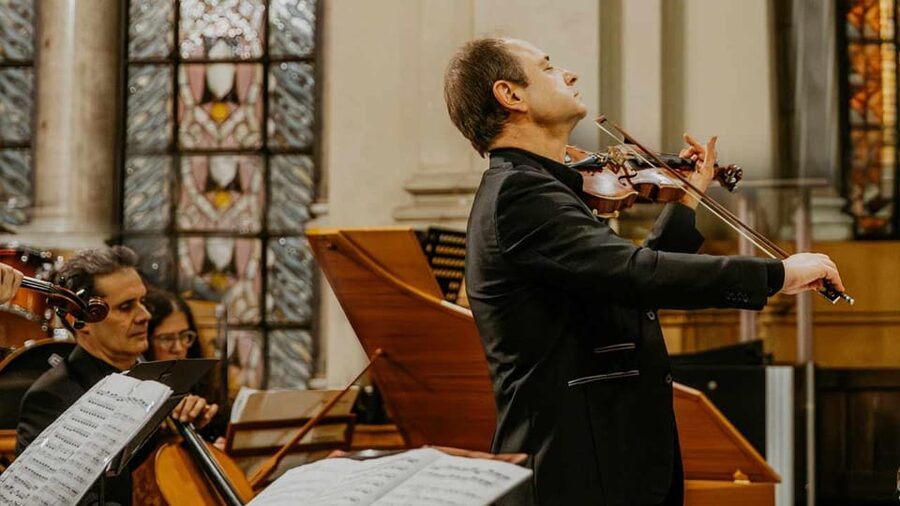
That background matters because the solo violin carries the Four Seasons. Dhimitri must handle the bright, athletic passages while also shaping the quieter, more delicate sections. In a small ensemble, the first violin is not hidden in a large orchestral mass. You can follow the instrument’s role from phrase to phrase.
The group is described as a strings quintet with harpsichord. This is a more intimate sound than a full symphony orchestra, with less weight behind the loud passages but often more clarity in the individual instruments. I think that format suits Vivaldi well, especially in a modest church or hall where the sound reaches you directly.
Several concerts have been praised for passionate playing and strong acoustics. Dhimitri has also been noted for appearing to perform the demanding violin part from memory. That can add a sense of concentration and movement to the evening, though the exact feel will depend on the venue and the musicians scheduled for your date.
Choosing among Rome’s three possible venues
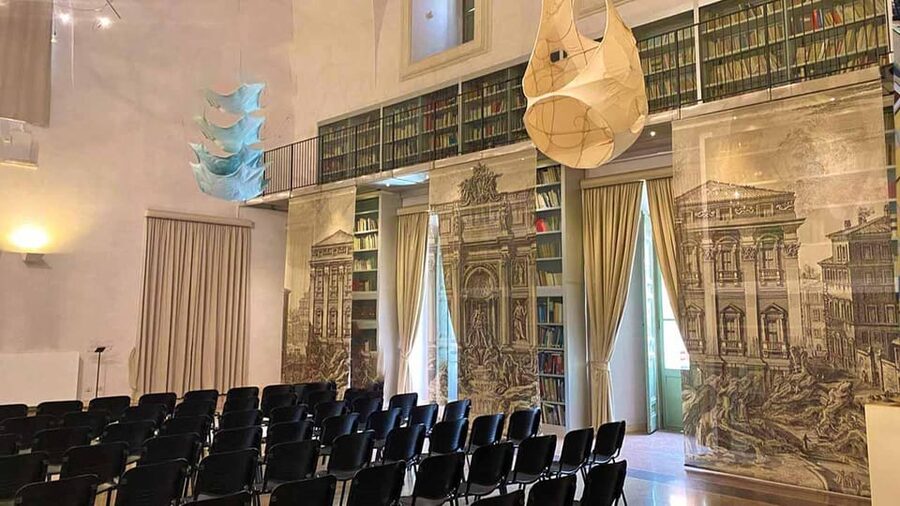
The most important practical detail is that the concert can be held in different locations. The stated meeting point is Chiesa Evangelica Metodista at Via XX Settembre 122 c, but the available venues also include Sala Dante of Palazzo Poli at Via Poli 54 and Horti Sallustiani at Piazza Sallustio 21.
Check the address for your selected date rather than assuming it will be at the church. Some performances have been moved from an advertised church to another venue, and that change has disappointed people who chose the event mainly for the religious building. A venue change can affect the atmosphere, the acoustics, the temperature, and how easily you reach the concert.
A completely different way to spend the day in Rome:
- Vatican: Museums & Sistine Chapel Entrance Ticket
★ 4.5 · 144,003 reviews - Vatican Museums & Sistine Chapel Tour with Optional Basilica
★ 4.3 · 67,413 reviews - Vatican Museums, Sistine Chapel & St Peter’s Basilica Guided Tour
★ 4.5 · 39,149 reviews - Rome: Colosseum, Palatine Hill and Roman Forum Guided Tour
★ 4.8 · 32,814 reviews
Chiesa Evangelica Metodista
The Methodist church offers the traditional concert setting. Its interior has been described as beautiful, and several performances benefited from strong acoustics. A church also gives the music a sense of occasion without requiring the formality of a major opera house.
The trade-off is comfort. Summer performances have been reported as very hot, while another concertgoer found the interior chilly. Bring a light layer, and in warm weather, a small fan may be useful. Lighting has also drawn mixed comments. The music remains the focus, but the room may not have the soft, atmospheric lighting you expect from a candlelit Baroque concert.
Church seating can create another issue. Rows may not be staggered, so the person in front could affect your view. Since seats are not numbered, arriving early is the best way to improve your position.
Sala Dante at Palazzo Poli
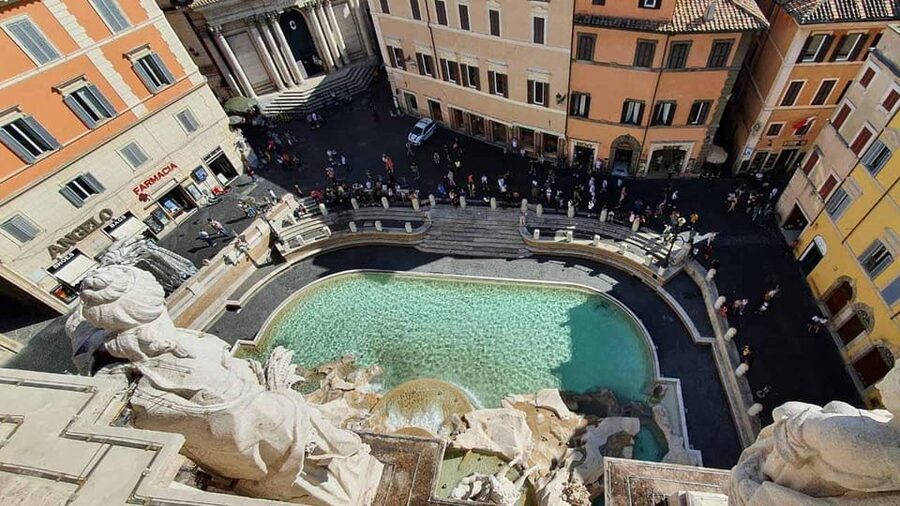
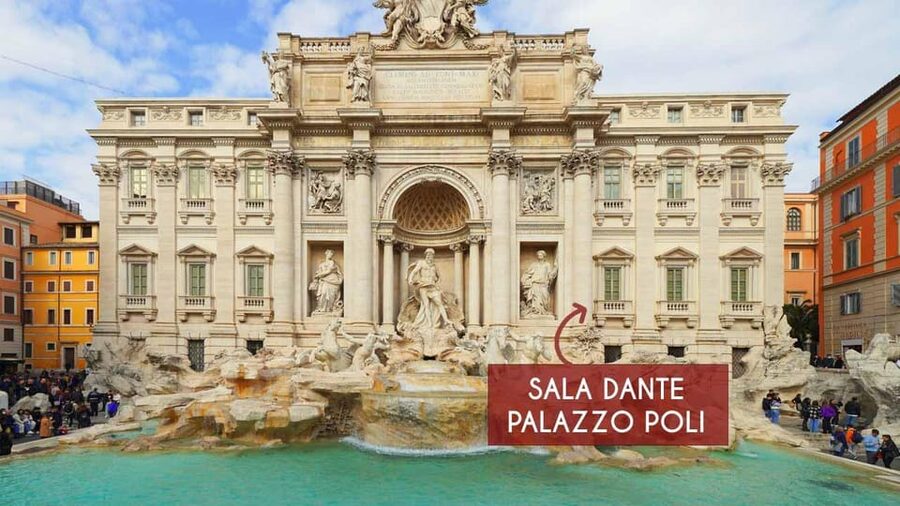
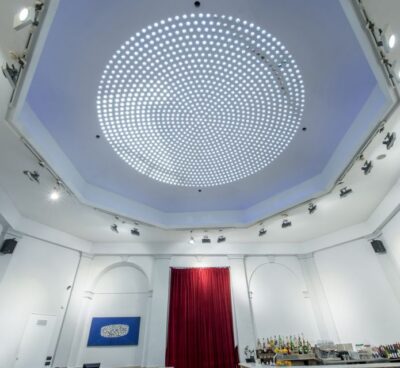
Palazzo Poli is the most distinctive option because it sits beside Trevi Fountain. The hall is part of the building overlooking the fountain, giving you a memorable Rome setting before or after the performance. A view toward Trevi can add a special touch to the evening, particularly if you are planning a short walk afterward through central Rome.
The setting may be better for anyone who wants to combine music with a major Rome sight. It is not simply a concert followed by a separate sightseeing stop. Depending on the room and your seat, the fountain may be visible from the windows.
You should still confirm the venue before setting your expectations. The Trevi view applies to Sala Dante, not automatically to every performance. If your booking shows the church or Horti Sallustiani, plan around that address instead.
Horti Sallustiani
Horti Sallustiani, at Piazza Sallustio 21, is listed as a venue with two possible concert times, 7:00 pm and 9:00 pm. That second option can help you fit the performance around dinner or a full day of sightseeing.
Because the concert location and atmosphere vary, I would treat the venue as part of the booking detail, not a minor footnote. The music is the core experience, but the room changes how close, dramatic, or comfortable the evening feels.
How the 80-minute evening fits your itinerary
The stated duration is 80 minutes. One past audience member found the performance closer to an hour, so you should allow extra time for arrival and departure rather than building a tight dinner reservation around the advertised finish.
This is a manageable length for families. Children aged four and eight have attended successfully, and the concert was considered sustainable for young attention spans. The music is serious, but the Four Seasons has enough contrast and recognizable sound effects to hold interest better than a long, single-mood recital.
For adults, the timing works well after a museum visit or before a late meal. If you choose the 7:00 pm performance at Horti Sallustiani, dinner afterward is easy to plan in principle. If you choose 9:00 pm, you get a later cultural stop, but you will want to confirm your own evening plans around the finish.
Seating, sound, and comfort
There are no numbered seats. You sit on a first come, first served basis, so I would arrive early if you want a central view of Dhimitri and the strings. This is especially useful in a church, where chair placement may not give every seat a clear line toward the players.
The best seat is not always the closest one. A position with a direct view of the first violin and the full group can be more rewarding than sitting at the extreme front or side. Since the ensemble is relatively small, seeing the musicians helps you follow the musical conversation.
Acoustics have generally been a strength, particularly in the church. The sound can carry beautifully in a compact space, giving the strings a warm, ringing quality. Still, acoustics depend on the exact room. One performance received criticism for sound clarity, and another hall eventually felt short on fresh air.
Temperature is worth taking seriously. The church has been described as too warm in summer and too cold at another time of year. Dress in layers, and do not assume an evening concert room will feel like the Roman street outside.
Wheelchair access is available. For exact seating arrangements and the most suitable entrance, confirm details when booking, since the venues differ.
Is $35 a fair price?
At $35 per person, this is a reasonable Rome evening activity if you value live music and a central location. You are paying for an 80-minute performance by professional musicians, not for a full opera production with scenery, costumes, or a large orchestra.
The value improves if you would otherwise pay for a separate evening attraction. At Palazzo Poli, the setting near Trevi Fountain gives the concert an extra sightseeing connection. At the church, the intimate room and acoustics provide a different kind of value. You are close to the musicians, and the performance does not require a long trip outside central Rome.
The price is less appealing if you expect a grand basilica, guaranteed fountain views, or assigned premium seating. Those features are not assured. I would book it for the music first, then treat the building and location as added benefits.
The flexible booking terms help with planning. You can cancel up to 24 hours before the activity for a full refund, and reserve now while paying later. That is useful when your Rome schedule is still shifting.
Who should book this concert?
I would recommend it to anyone who already enjoys Vivaldi, wants a polished cultural evening without a long formal production, or needs a family-friendly concert length. It is also a good choice for a first classical concert because the Four Seasons is easy to recognize and follows a clear set of musical scenes.
It suits couples looking for an atmospheric evening, solo visitors who want a focused cultural activity, and families with older children who can sit quietly for about an hour. The central Rome settings make it easy to pair with dinner, sightseeing, or a walk near Trevi Fountain.
I would hesitate if you need guaranteed seating, dislike variable venues, or are sensitive to heat, cold, poor airflow, or blocked views. The music can be excellent, but the room is part of the experience and is not identical at every performance.
My practical booking advice
First, check the exact venue and address for your date. Do not rely only on the general meeting point, especially if you are booking because of the Trevi Fountain view.
Second, arrive early. Unnumbered seating means your arrival time can affect both your view and your sense of space. This matters most if you are attending with children or want to see the first violin clearly.
Third, dress for the room rather than the season. A light layer is sensible, and summer church performances may feel warm enough that a small fan helps.
Finally, allow a little breathing room after the listed 80 minutes. Some performances have lasted closer to one hour, but the actual finish can vary with the program and venue arrangements.
Should you book Rome’s Four Seasons concert?
Book it if you want live Vivaldi in an intimate Rome setting and can accept that the venue, temperature, and seating position may vary. The strongest reasons to go are the expressive first violin, the clear musical storytelling, the harpsichord, and the chance to hear all four concertos in one compact evening.
I would not book it solely for a promised church interior or Trevi Fountain view. Choose it for the performance, then let the setting supply the bonus. At $35, it offers a good cultural evening for most visitors, especially those who want something more personal than another crowded sightseeing stop.
FAQ
How long does the concert last?
The advertised duration is 80 minutes. Some performances have been experienced as closer to one hour, so allow extra time around the scheduled start and finish.
Where does the concert take place?
Possible venues include Chiesa Evangelica Metodista at Via XX Settembre 122 c, Sala Dante of Palazzo Poli at Via Poli 54, and Horti Sallustiani at Piazza Sallustio 21. Check the address for your date.
Can I see Trevi Fountain during the concert?
Sala Dante of Palazzo Poli offers the possibility of looking toward Trevi Fountain. This view is connected to that venue and is not guaranteed at the church or Horti Sallustiani.
Are the seats numbered?
No. Seating is first come, first served, so arrive early if you want a preferred position.
Who performs the Four Seasons?
Elvin Dhimitri is the first violin and conductor. The performance also includes the Opera e Lirica strings quintet and harpsichord.
Is the concert wheelchair accessible?
Yes, the activity is listed as wheelchair accessible. Since venues differ, confirm any specific access needs when booking.
Can I cancel my booking?
You can cancel up to 24 hours in advance for a full refund. The reserve now and pay later option is also available.
Newest reviews from Rome
- Rome: Vatican Museums & Sistine Chapel Skip-the-Line Ticket★ 4.4 · 148 reviews
- Shared Shuttle Transfer from Rome to Civitavecchia Port★ 5.0 · 148 reviews
- Rome: Crypts & Catacombs After Hours Tour with Bone Chapel★ 4.6 · 149 reviews
- Ghosts Legends and Mysteries of Rome Walking Tour★ 5.0 · 149 reviews
- Skip the Line: Vatican and Sistine Chapel with Guided Tour★ 4.0 · 149 reviews
- Tivoli: Villa Gregoriana Entrance Ticket★ 4.7 · 150 reviews
- Pizza and Tiramisu Cooking Class in Rome, Piazza Navona★ 5.0 · 150 reviews
- Rome: Borghese Gallery Skip-the-Line Entry and Guided Tour★ 4.7 · 150 reviews
Rome Opera & Concerts, compared.
Opera Concert at Palazzo Poli – Fontana di Trevi
Read our review →
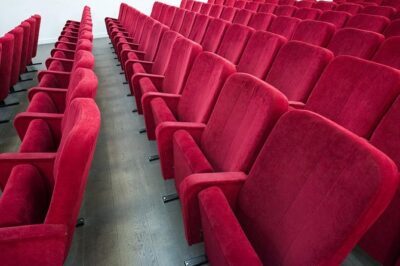
The Great Opera Arias Concert at Palazzo Poli – Trevi Fountain
Read our review →
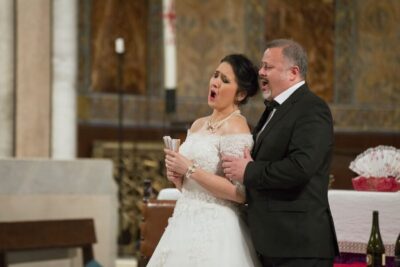
Giuseppe Verdi’s “La Traviata” Live Performance
Read our review →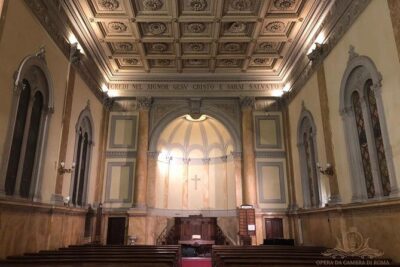
Concert Ticket – The Most Beautiful Opera Arias by Opera da Camera di Roma
Read our review →
St. Paul’s Within the Walls Church Opera Arias Ticket
Read our review →Browse the lists this tour appears in