
Reviewed · GLADIATOR EXPERIENCES
Rome Gladiator Show at Gruppo Storico Romano
The most interesting part of this evening is the setting: you move from a compact museum of Roman arms and armor into a real arena-style performance space, where actors in costume stage gladiator fights, dances, and pantomime. The program gives you a taste of Roman spectacle without pretending to be a serious historical drama.
I like the hands-on museum visit, where you can try helmets, shields, and weapons for photos. I also like the warm, playful hosting, especially when guides such as Giacomo, who presents himself as Titus, bring children and selected adults into the action. The main drawback is that the combat portion may feel short, and the venue is awkward to reach and leave at night.
In This Review
- Key points to know before booking
- A Roman evening that is more theater than battle
- Starting at the Gladiator School of Rome
- Wine, Roman snacks, and a welcome before the arena
- Entering the miniature amphitheater
- What makes the performance work
- Getting there and arranging the return
- Who will enjoy this most
- Price, timing, and cancellation
- Small details that can make the night better
- Should you book the Rome Gladiator Show?
- FAQ
- Where does the Rome Gladiator Show take place?
- What time does the show start?
- How long does the experience last?
- Is transportation included?
- What is included with the ticket?
- Is the activity offered in English?
- Can children attend the show?
Key points to know before booking
- The evening begins in a small Roman Legionary Museum, with explanations of weapons, armor, and gladiator life.
- The show includes more than swordplay, with a procession, ancient-style dancing, pantomime, and audience involvement.
- Wine and Roman-style snacks are included, but do not expect a full meal.
- The venue sits outside central Rome, so plan your return before the show ends.
- The tone is theatrical and family-friendly, best suited to children, first-time Rome visitors, and anyone seeking a light evening activity.
- Seats are not assigned in advance, and the group can reach up to 200 people.
A Roman evening that is more theater than battle
Rome offers no shortage of ancient monuments, but most of them are quiet after dark. This event gives you something different: costumed performers, staged combat, music, movement, and a chance to handle replicas of the gear associated with Roman soldiers and gladiators.
The experience takes place at Scuola Gladiatori Roma, operated by Gruppo Storico Romano. The program lasts about an hour and a half to two hours from arrival through the museum, refreshments, and arena performance. The listed price is $29.96 per person, which is reasonable if you want an organized evening activity with entertainment and a drink included.
You should set your expectations correctly. This is not a major theatrical production with elaborate scenery or a long story. It is a live historical re-enactment built around atmosphere and participation. Some people will find that charming. If you are hoping for continuous, hard-hitting combat, the actual fight scenes may seem too brief.
The strongest feature is the enthusiasm of the performers. The hosts explain what you are seeing, bring humor into the presentation, and make the event feel personal rather than formal. Several guides have been warmly received, including Ivan, remembered for involving children, and Giacomo, who appears as Titus and explains Roman weapons and armor with confidence.
More gladiator experiences in Rome:
- Rome: Colosseum Tour with Access to the Gladiator Arena
★ 4.3 · 6,690 reviews - Gladiator’s Gate: Special Access Colosseum Tour with Arena Floor
★ 4.5 · 4,037 reviews - Roman Gladiator School: Learn How to Become a Gladiator
★ 4.5 · 1,477 reviews
Starting at the Gladiator School of Rome
Your visit begins at the Gladiator School of Rome, where you make a short stop at the Roman Legionary Museum. The museum is small, so think of it as an introduction rather than a full archaeological collection.
Its value comes from the objects and the way they are presented. You can see helmets, shields, weapons, and armor linked to Roman military life and gladiatorial combat. The guide uses these items to explain how gladiators entered Roman history and how their equipment shaped the way they fought.
This first section helps put the show into context. After a day spent looking at the Colosseum, Forum, and other ruins, it can be useful to see the tools of combat up close, even as replicas or re-enactment pieces. You begin to connect the famous arena with the physical equipment used inside it.
The museum also offers one of the best photo opportunities of the night. You may be invited to try on a helmet or hold a shield or weapon. Children are often included, but adults can have fun with this part too. It is a small touch, yet it gives the evening more energy than simply sitting in an audience.
Do not expect a quiet, academic museum tour. The guide’s presentation is informal, humorous, and designed for a mixed-age crowd. The main language is English, so you will need enough English to follow the explanations and the spoken parts of the show.
Wine, Roman snacks, and a welcome before the arena
After the museum visit, you receive a welcome drink and light food. The included refreshments consist of a wine tasting and snacks described as typical of ancient Roman times. Water is also available.
This is a pleasant pause between the museum and the performance. The actors and hosts remain nearby, so you have a chance to see the costumes and speak with them before the show begins. The relaxed welcome is especially helpful if you are attending alone, since the setting encourages easy conversation.
Keep the food description in perspective. This is not dinner. One account describes the Roman snack as a small biscuit or piece of Roman-style pastry, along with a small serving of white wine. If you arrive hungry, eat beforehand or plan a meal after the event.
The price makes more sense when you view the snack and wine as part of the welcome rather than as the main value. You are paying for an evening program that includes a museum introduction, live entertainment, a drink, and photo opportunities. The refreshments are a nice extra, but they should not determine your booking decision.
If you do not drink wine, the experience still works. Water is offered, and the museum and arena program remain the main attractions.
Entering the miniature amphitheater
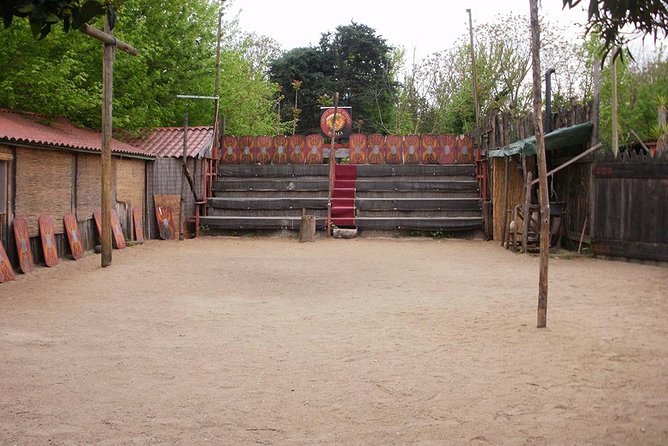
The arena is a compact performance space designed to suggest a Roman amphitheater. Once you enter, the lights, sounds, costumes, and circular setting do much of the work.
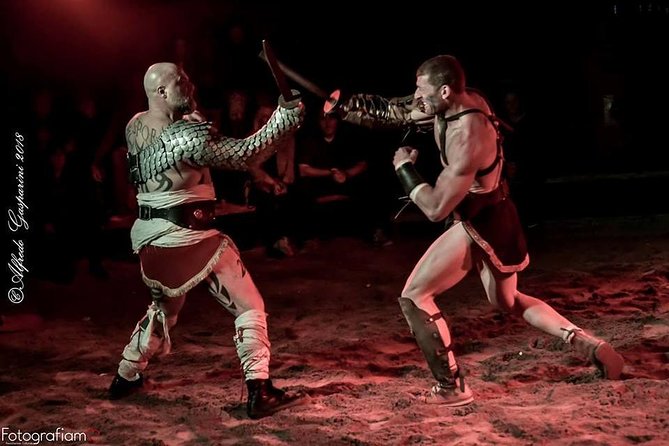
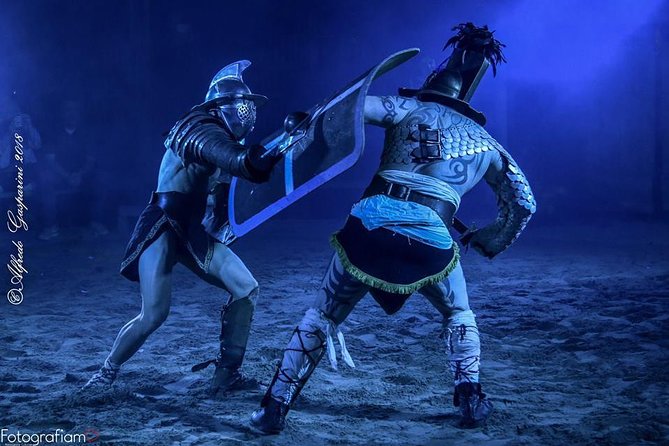
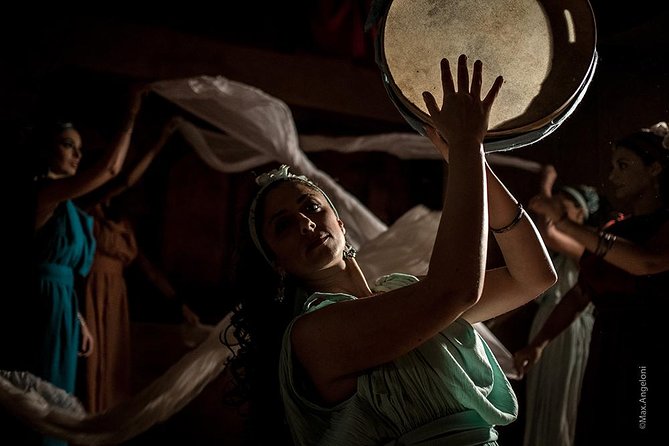
The show begins with a procession and moves through several forms of entertainment. You may see dancers performing ancient-style rituals, actors presenting pantomime, and gladiators facing one another in staged combat. The program is not limited to sword fighting, which helps keep the event suitable for children and mixed groups.
The combat is performed with blunt stage weapons, naturally. The actors make the clashes look forceful and energetic, but the action is controlled. Their work depends on timing, gestures, and sound as much as on the weapons themselves.
Audience participation is part of the format. A child or adult may be selected for a small role, and one person can even be invited to sit as the emperor on the raised dais. You do not need to volunteer, but if you enjoy being part of a performance, this adds a memorable surprise.
The overall show lasts roughly an hour, though the balance between combat, dancing, pantomime, and audience interaction can vary. This point matters. Some performances may give you several energetic fight sequences, while others may devote more time to family-friendly entertainment. The combat segment itself may feel as short as five to ten minutes to some visitors, so do not book this expecting an uninterrupted gladiator tournament.
That shorter fight time is the central criticism to consider. The atmosphere can be effective, and the performers clearly put effort into their roles, but the show does not recreate the scale or danger of an ancient Roman arena. It is closer to a lively historical stage program.
More Rome tours worth comparing
- Rome: Gladiator Show and Museum Tickets
★ 4.5 · 237 reviews - Rome: Cabaret and Burlesque Show Entry Ticket
★ 4.6 · 103 reviews - Rome: Rooftop Bar Opera Show
★ 4.6 · 94 reviews - Rooftop Bar Opera Show: The Great Beauty of Rome
★ 5.0 · 92 reviews
What makes the performance work
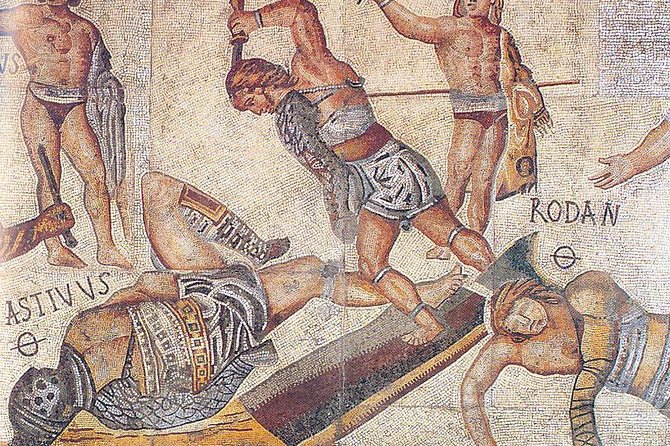
The event succeeds best when you treat it as a playful introduction to Roman customs. The performers are friendly, and the host keeps the pace moving with explanations and jokes. Giacomo, who uses the name Titus during the presentation, has been singled out for his ability to explain the weapons, armor, and Roman setting while keeping children engaged.
The museum and show also work well after a visit to the Colosseum. You have already seen the famous monument, but here you watch people act out the public entertainment that once took place in arenas. The combination makes Roman life feel less abstract.
The dancing and pantomime may appeal more to some people than the fighting. Those sections give the show variety, although visitors who want a clear storyline may find the performance loosely connected. One criticism is that there is little plot, with the program functioning more as a sequence of demonstrations and scenes.
I would describe the tone as educational, theatrical, and cheerful. It is not grim, realistic historical drama. Even the gruesome displays in the museum are presented in a way that remains suitable for families.
Getting there and arranging the return
Transportation requires planning. The venue is outside the city center, and the walk from the nearest practical drop-off point can be dark or poorly lit. A bus stop is reported to be about two minutes away, and Bus 118 has been used to reach the site.
Taxis are another option, but some drivers may not immediately recognize the location. The site can feel isolated, particularly after the performance ends around 10:15 p.m. For that reason, I would arrange your return before you arrive.
The activity does not include hotel pickup or drop-off. That lowers the price, but it also means you are responsible for reaching the arena and getting back to your accommodation. Some people have waited for a taxi after the show, and one account describes a long delay. You should not assume that a taxi will be waiting outside.
If you are traveling alone, the bus may be the more economical choice, but check your route and evening service in advance. If you are with family or a small group, sharing a taxi can make the return simpler. The dark, unpaved approach is not the place to improvise late at night.
This is the most important practical weakness of the experience. The show itself may be enjoyable, but poor transport planning can sour the whole evening.
Who will enjoy this most
Families with children are the clearest match. The armor photos, selected audience members, jokes, and safe stage fighting give children several ways to stay involved. The program is also appropriate for adults who enjoy costume history and informal re-enactment.
It works well for solo visitors too. The welcome is social rather than stiff, and you are not left sitting in a formal lecture. If you enjoy unusual evening activities, it is a good alternative to another restaurant, bar, or night walk.
History specialists may want more detail. The museum is small, and the explanations are aimed at a general audience. You will receive useful background on Roman soldiers and gladiators, but not a scholarly examination of sources, class, politics, or the daily life of enslaved people.
The show is also a fair choice for first-time visitors who have already spent the day at ancient sites. It changes the rhythm of a Rome itinerary. After stone ruins and museum displays, live performers can help you picture movement, noise, costumes, and public spectacle.
It may not suit you if you want a polished theatrical production, a large arena, or a long series of fights. The group may include as many as 200 people, seats are not assigned ahead of time, and the performance style is informal.
Price, timing, and cancellation
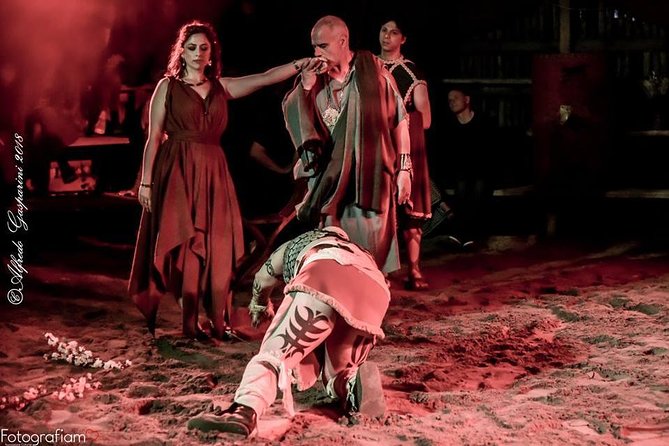
At $29.96 per person, the event offers decent value for a short evening program, especially if you value the museum visit and audience participation. The price includes a wine tasting and snacks, but not transportation or a meal.
The start time is 8:30 p.m., with the full visit lasting approximately 90 minutes to two hours. That timing leaves room for dinner beforehand, which I recommend because the included food is light.
The activity is often booked well ahead, with an average booking point around 47 days in advance. If this is important to your itinerary, reserve early rather than assuming you can decide at the last moment.
You receive confirmation at booking, and free cancellation is available up to 24 hours before the start time. Changes or cancellations inside that 24-hour window are not accepted for a refund. The experience also requires a minimum number of participants, so if the operator cancels for that reason, you are offered another date or activity, or a full refund.
Small details that can make the night better
Wear shoes you are comfortable walking in. The approach to the site may be sandy or uneven, and lighting can be limited on the way out.
Bring insect repellent or cover exposed skin. Mosquitoes have been a problem at the outdoor venue, and spray may be available if you ask, but it is wiser to arrive prepared.
Keep your phone ready for photos during the museum portion and after the show. The chance to try on a helmet or handle a shield is one of the most distinctive parts of the evening.
If English is not comfortable for you, consider how much spoken explanation you want. The presentation is offered in English, and the host’s commentary is an important part of understanding the museum and performance.
Do not count on a particular seat. Seating is not known in advance, so arrive ready for an informal arrangement rather than a reserved theater place.
Should you book the Rome Gladiator Show?
Book it if you want a friendly, low-cost evening with Roman costumes, simple historical explanations, light refreshments, and audience participation. It is especially suitable for families, solo visitors, and anyone who wants a break from formal sightseeing.
Skip it if your main goal is a long, realistic combat show. The fight scenes can be energetic, but they may occupy only a small part of the evening. Also skip it, or arrange transport very carefully, if a late return from an out-of-the-way venue will cause stress.
For most people, the decision comes down to expectations. Think of this as a compact historical theater experience with a small museum attached, not a modern blockbuster. Plan dinner beforehand, bring mosquito spray, and secure your return ride. With those details handled, the show offers an entertaining way to see Roman spectacle brought to life.
FAQ
Where does the Rome Gladiator Show take place?
The experience takes place at the Gladiator School of Rome, operated by Scuola Gladiatori Roma and Gruppo Storico Romano.
What time does the show start?
The listed start time is 8:30 p.m.
How long does the experience last?
The complete activity lasts approximately one hour and 30 minutes to two hours.
Is transportation included?
No. Hotel pickup and drop-off are not included, so you must arrange your own transportation to and from the venue.
What is included with the ticket?
The ticket includes admission to the Roman Legionary Museum, the arena performance, a wine tasting, and snacks.
Is the activity offered in English?
Yes. The activity is offered in English.
Can children attend the show?
Yes. Children can participate, but they must be accompanied by an adult. The activity is designed to be suitable for families, and some children may be invited to take part in the performance.
Newest reviews from Rome
- ROME:Colosseum & Ancient Rome – private/small group TOUR★ 5.0 · 24 reviews
- Off the Beaten Track in Rome: Rione VI Parione Private Tour★ 5.0 · 24 reviews
- Cinematic Photoshoot in Rome★ 5.0 · 24 reviews
- Rome: Best of Colosseum and Roman Forum Small Group Guided Tour★ 4.5 · 24 reviews
- The Labyrinth of Rome between catacombs and ancient quarries★ 4.5 · 24 reviews
- Vatican and Trionfale Market Tour with Wine and Food Tasting★ 5.0 · 24 reviews
- private tour: Vatican Museums, Sistine Chapel, St. Peter’s Basilica★ 4.5 · 24 reviews
- Colosseum guided tour with Virtual Reality★ 5.0 · 24 reviews
Gladiator Experiences, compared.
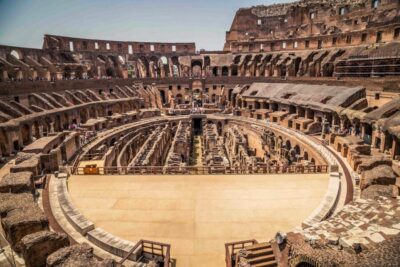
Colosseum Tour with Access to the Gladiator Arena
Read our review →
Gladiator’s Gate: Special Access Colosseum Tour with Arena Floor
Read our review →
Gladiator’s Gate and Arena Special Colosseum Access
Read our review →Colosseum Gladiator’s Arena and Roman Forum Group Tour
Read our review →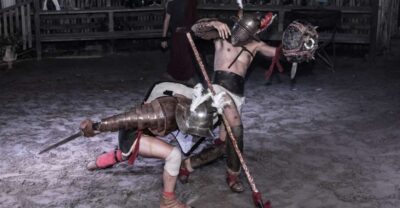
Colosseum Gladiator’s Arena and Ancient Rome VIP Guided Tour
Read our review →
Colosseum Gladiator’s Arena and Roman Forum Tour
Read our review →Browse the lists this tour appears in