
Reviewed · ROME GHOST & LEGEND TOURS
Rome: Guided Haunted Rome Ghost Tour with Dowsing Rods
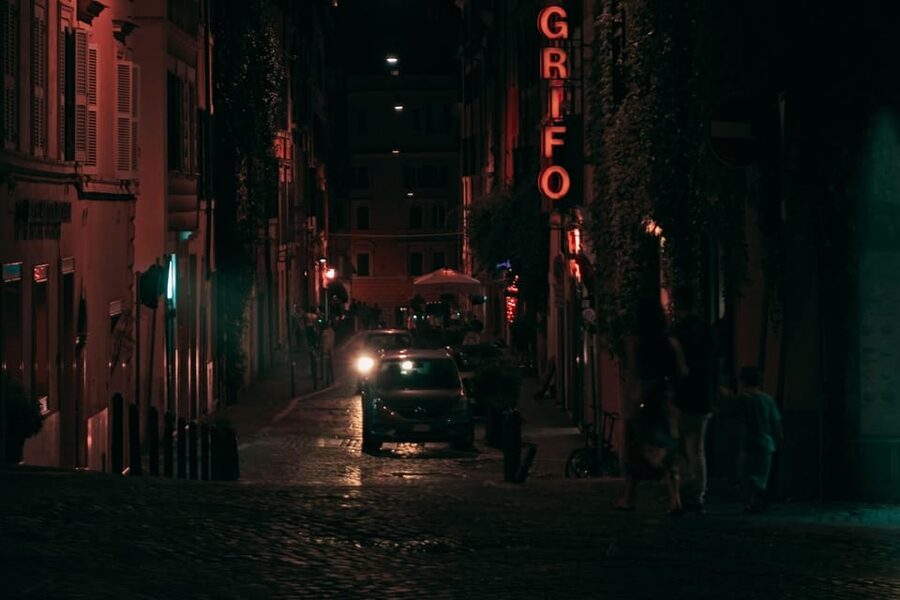
Rome’s darker side begins at Castel Sant’Angelo, an ancient tomb turned papal fortress, and ends at Campo de’ Fiori, where public executions once drew huge crowds. Along the way, you’ll use dowsing rods to search for ghosts while your guide connects narrow streets and grand squares to Rome’s grim past.
I like the mix of hands-on ghost hunting and real historical places. I also like the guides’ storytelling. Ali, Clara, Elvie, Sonja, Bryan, and Brian have all earned praise for being engaging, funny, and passionate about the tales. The main drawback is that the paranormal element is playful rather than scientific, so you should book this for atmosphere and stories, not proof of the afterlife.
In This Review
- Key points to know before you book
- Why this ghost tour feels different from a standard Rome walk
- Starting at Castel Sant’Angelo and Ponte Sant’Angelo
- Via dei Banchi Vecchi and Rome’s old criminal center
- Via di Monserrato, the women’s prison, and a poisoner’s home
- Via Giulia and the Brotherhood of Mercy
- Santa Maria dell’Orazione e Morte, the most atmospheric stop
- The Fountain of the Mask and Piazza Farnese
- Campo de’ Fiori and Rome’s harshest public spectacles
- What $29 buys you
- Who should book this Rome ghost walk
- Booking tips for a smoother evening
- Final verdict: book it for stories, mood, and participation
- FAQ
- Where does the Rome ghost tour start?
- Where does the tour finish?
- How long does the tour last?
- What language is the tour conducted in?
- Are dowsing rods included?
- Is the tour wheelchair accessible?
- Can I cancel for a full refund?
Key points to know before you book
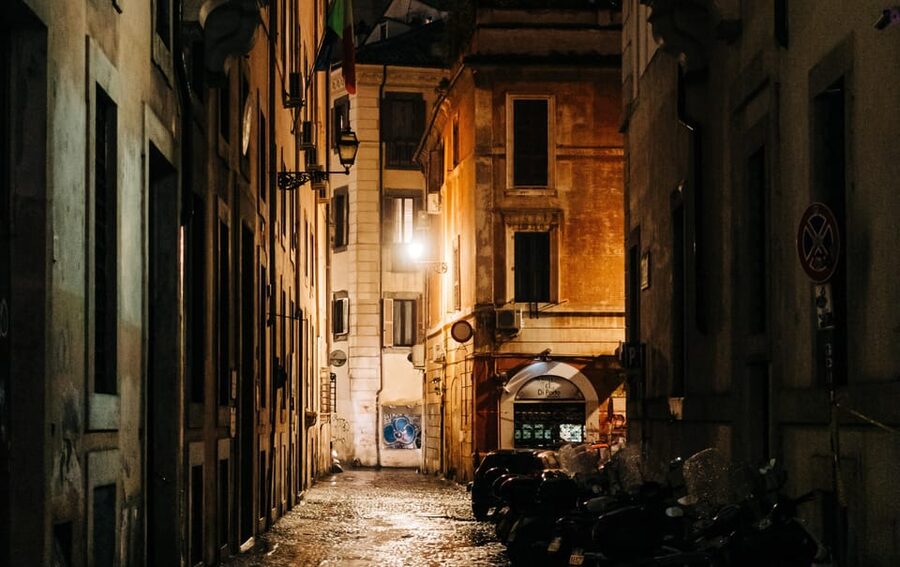
- Dowsing rods make this an interactive walk: You do more than listen, since the guide invites you to test reported paranormal spots.
- The route covers Rome’s darker center: Stops include Castel Sant’Angelo, old execution sites, a former women’s prison, and Campo de’ Fiori.
- The storytelling is the main event: Guides such as Ali and Clara bring murder tales, local legends, and grim characters to life.
- The walk lasts 1.5 hours: It is long enough to create a mood without taking up an entire evening.
- The ending is practical: You finish at Campo de’ Fiori, a useful spot for food and drinks afterward.
- The price is modest: At $29 per person, the tour offers a low-cost change of pace from Rome’s major ticketed sights.
Why this ghost tour feels different from a standard Rome walk
Rome has no shortage of guided walks, but most focus on emperors, churches, fountains, and famous artists. This tour points your attention toward the places where fear, punishment, crime, and superstition shaped daily life.
The route is also interactive. Your guide supplies the dowsing rods and shows you how to use them while the group investigates selected paranormal hot spots. You can take the activity seriously, treat it as a bit of theater, or simply enjoy the way it makes you look at an ordinary street corner with fresh suspicion.
That balance matters. The tour is not presented as a museum lecture, and it is not a haunted-house attraction with actors jumping from behind walls. The appeal comes from walking through central Rome while hearing stories about heretics, witches, executioners, poisoners, and the souls said to remain behind.
The guides are central to the experience. Ali receives repeated praise for his storytelling, while Clara is described as charismatic, funny, and able to keep the group involved. Elvie, Sonja, Bryan, and Brian also receive strong praise for their energy and command of the stories. Since the experience depends heavily on the person leading it, a good guide makes a real difference here.
More Rome legends after dark:
- Rome by Night Walking Tour – Legends & Criminal Stories
★ 4.5 · 1,003 reviews - Haunted Rome Ghost Tour – The Original
★ 4.5 · 668 reviews - Rome: Angels and Demons Guided Tour
★ 4.7 · 610 reviews
Starting at Castel Sant’Angelo and Ponte Sant’Angelo
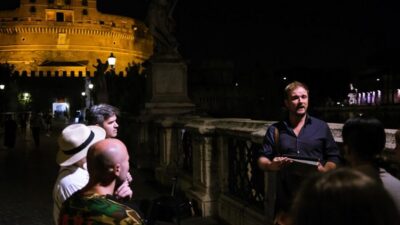
Meet at Lungotevere Castello, 50, in front of Castel Sant’Angelo, near the end of Ponte Sant’Angelo. Look for the guide holding a More of Rome sign. This is a clear meeting point, but give yourself enough time to reach it because the tour does not include pickup.
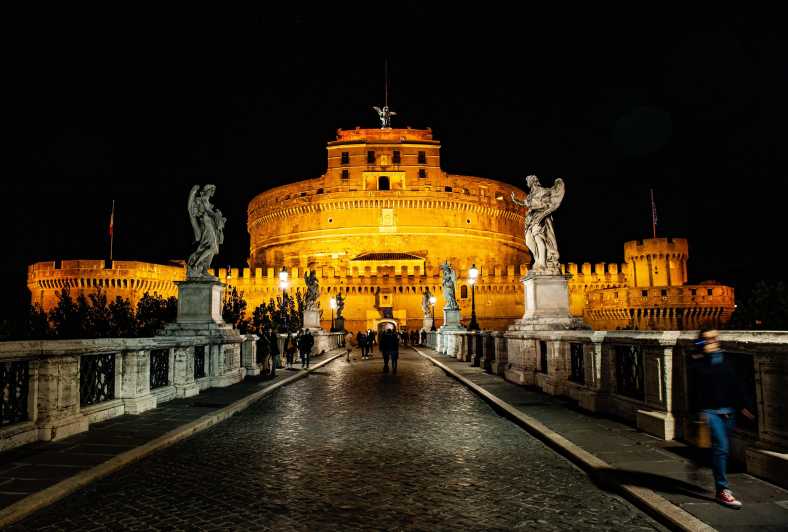
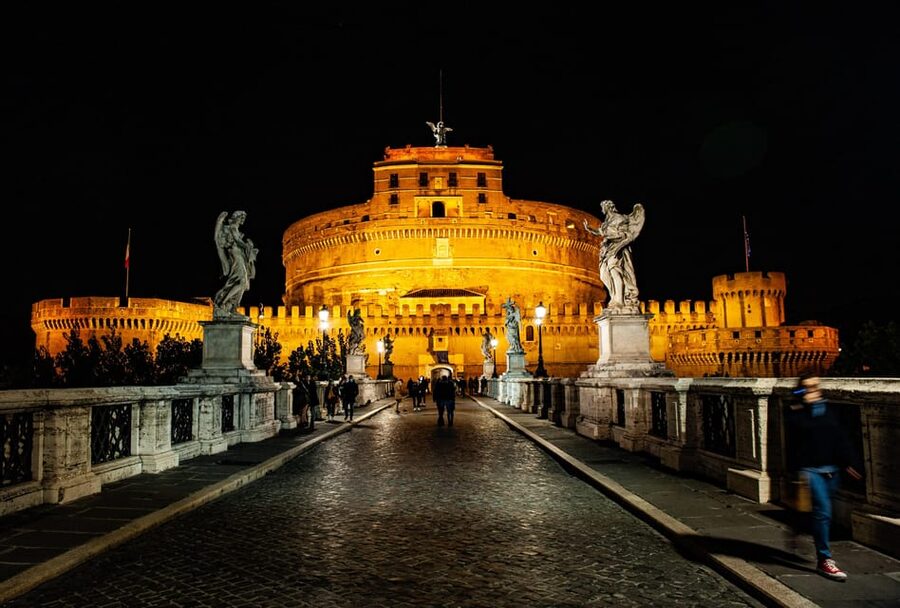
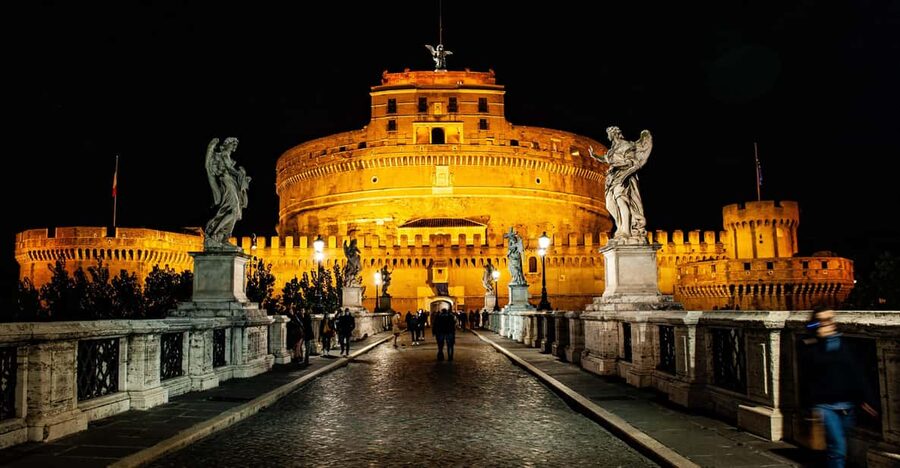
Castel Sant’Angelo gives the walk a suitably grim opening. The building began as an ancient tomb before becoming a fortress and papal stronghold. Its changing role helps explain why it carries such a dark reputation. A tomb is already a place tied to death, and a fortress suggests confinement, power, and danger.
The first part of the tour takes place around Ponte Sant’Angelo, with about 20 minutes of guided discussion. The bridge links the castle with the center of Rome and provides a strong visual start, especially as the guide sets up the stories connected with the fortress.
This is one of the best stops for atmosphere. You are not being asked to imagine a distant ruin. The castle, bridge, and river are right in front of you, and the guide uses that setting to introduce the darker Rome that the rest of the walk explores.
Via dei Banchi Vecchi and Rome’s old criminal center
After crossing toward mainland Rome, the group reaches Via dei Banchi Vecchi for about five minutes of guided discussion. The stop is short, but it helps shift the mood from grand fortress to the smaller streets where grim public life unfolded.
Here, the focus turns to Rome’s most notorious executioner. The wording of the route makes clear that you are visiting the area where this figure worked, not entering a preserved execution chamber. That distinction is useful because the experience relies on storytelling and place, rather than a large collection of physical displays.
You may find this part of the walk especially effective if you like the contrast between present-day Rome and its former uses. Streets that now serve as passageways through the historic center once carried very different associations. The guide’s job is to make those lost connections visible without slowing the group with a long lecture.
Via di Monserrato, the women’s prison, and a poisoner’s home
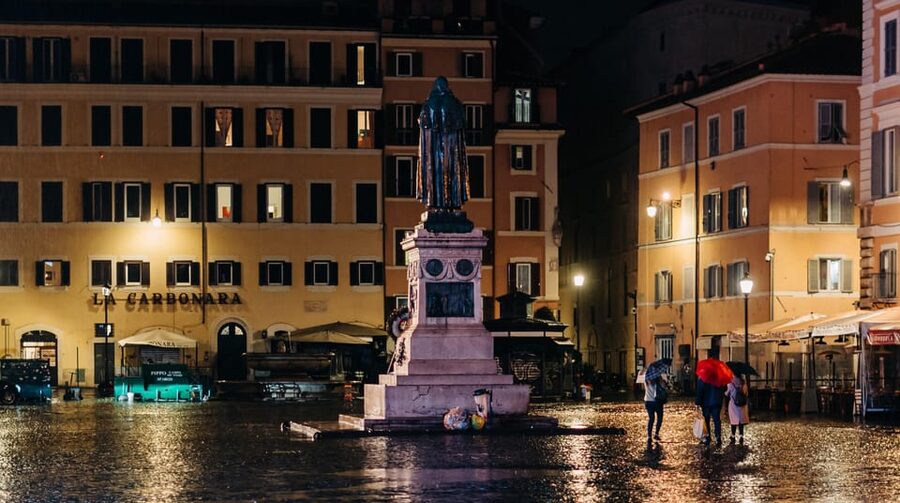
The next stop is Via di Monserrato, with roughly 10 minutes of stories. The route brings you to an ancient prison for women and then to the former home of an infamous poisoner.
These stops add variety to the tour. The story is no longer focused only on public punishment. You also hear about crime carried out in private spaces, along with the people who were imprisoned or accused. That change gives the walk more range than a simple collection of execution tales.
The prison stop also shows why the route works best as a walk through the city rather than as a collection of isolated ghost stories. The buildings and streets provide a setting, even when the original structure or use is no longer obvious. Pay close attention to the guide’s location cues, since the most interesting detail may be what once happened in a place that looks ordinary today.
At $29, this kind of connection adds value. You are not paying only for a spooky story. You are also getting a guided look at corners of Rome that you could easily pass without knowing their past.
More Rome tours worth comparing
- Vatican Museums, Sistine Chapel & St Peter’s Basilica Guided Tour
★ 4.5 · 39,149 reviews - Rome: Colosseum, Palatine Hill and Roman Forum Guided Tour
★ 4.8 · 32,814 reviews - Rome: Guided Tour of Colosseum, Roman Forum & Palatine Hill
★ 4.7 · 27,897 reviews - Rome: Colosseum & Forum with Audio Guide App -Optional Arena
★ 4.2 · 24,770 reviews
Via Giulia and the Brotherhood of Mercy
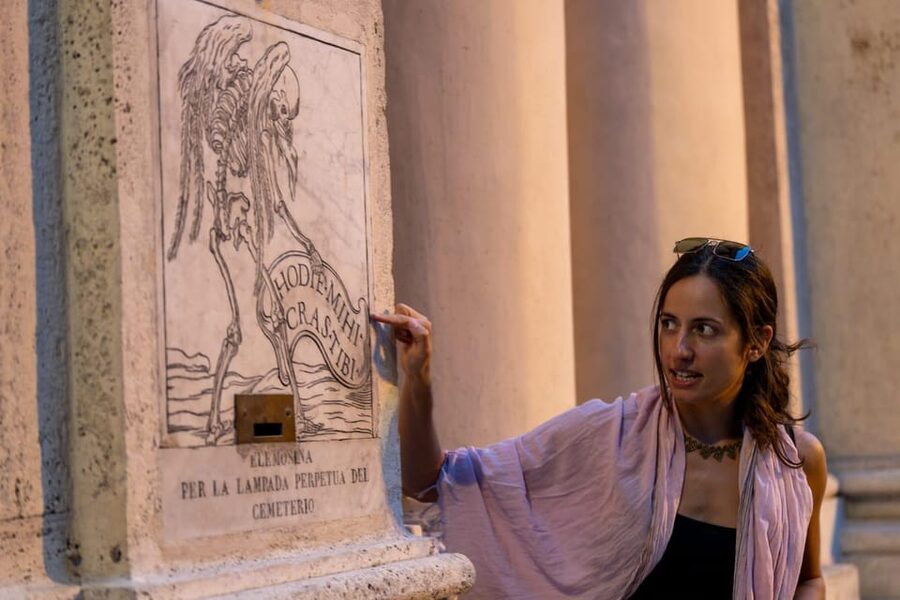
Via Giulia receives about 10 minutes on the route. This attractive street leads the group toward the church of Santa Maria dell’Orazione e Morte, connected with the Brotherhood of Mercy.
The brotherhood is described as a group of friars who carried out public executions. That detail gives the church a striking role in the tour. Religious institutions in Rome often bring to mind art, worship, and architecture. Here, the story turns toward death, punishment, and the people involved in carrying out final rites or public justice.
This is also where the tour’s title and content work together particularly well. The walk uses real locations and documented dark subjects, then adds the question of lingering spirits and paranormal activity. You get a historical frame before the guide asks you to consider the supernatural side.
Via Giulia is a good section for the walking pace. The tour moves through the streets rather than keeping you in one place, and the shorter stops help keep the stories moving. Wear comfortable shoes, as requested, and expect to stand while listening.
Santa Maria dell’Orazione e Morte, the most atmospheric stop
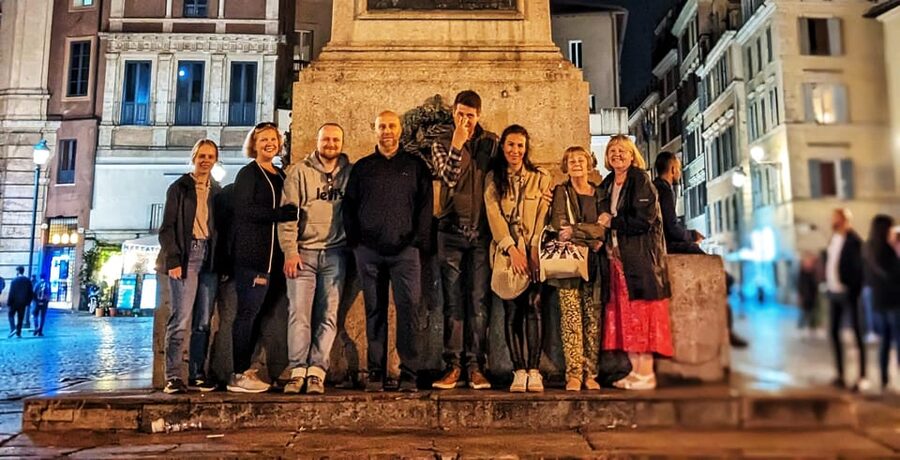
The Church of Santa Maria dell’Orazione e Morte receives about 15 minutes, making it one of the longer stops. Its name alone sets the tone, and its connection with the Brotherhood of Mercy gives the guide plenty to explain.
This is likely to be one of the tour’s strongest locations for people who enjoy macabre history. The story of a religious brotherhood linked to public executions has a clear connection to the walk’s larger themes: death in public, remembrance of the dead, and the belief that some souls may not have moved on.
The dowsing rods are a natural fit here. You can participate in the search for unusual activity instead of simply hearing about it. Still, keep your expectations sensible. The rods are part of the tour’s interactive fun, not a scientific measuring device. If you enjoy folklore, suspense, and a shared group activity, you will probably get more from this stop than someone looking for strict historical analysis.
The guide’s delivery matters most at places like this. A flat reading of facts would weaken the mood, but the strongest guides on this experience are praised for being passionate, funny, and attentive to the group. Clara, in particular, is noted for keeping people engaged, while other guides are praised for answering questions and making the walk inclusive.
The Fountain of the Mask and Piazza Farnese
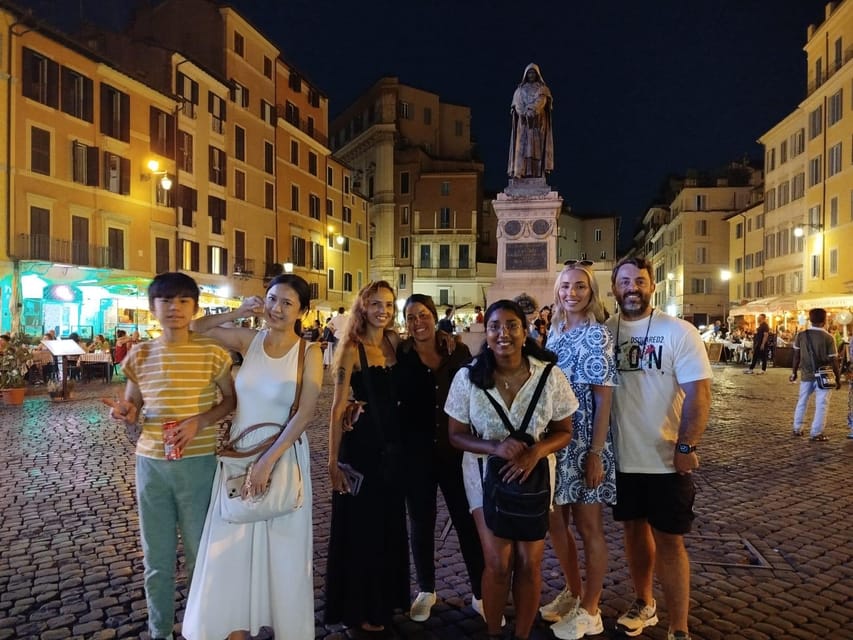
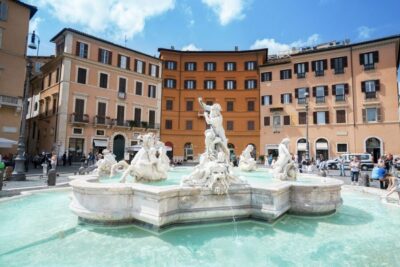
The Fountain of the Mask receives about 10 minutes, followed by about five minutes at Piazza Farnese. These shorter stops break up the heavier stories and keep the group moving through central Rome.
The Fountain of the Mask is a useful example of how the tour turns small urban details into story locations. You may have walked past a fountain without giving it much thought. With the guide’s explanation, it becomes part of a chain of places linked to Rome’s darker characters and events.
Piazza Farnese provides a brief pause before the final section. The square is one of the route’s more open settings, which can help you reset before the closing stories at Campo de’ Fiori. Do not expect a long sightseeing stop here. The tour is designed around tales and atmosphere, so the guide keeps the pace brisk.
The route includes no food or drinks, and there is no hotel pickup or drop-off. That is not a serious problem for a 90-minute walk, but you should plan your own route to the meeting point and decide in advance where you want to eat afterward.
Campo de’ Fiori and Rome’s harshest public spectacles
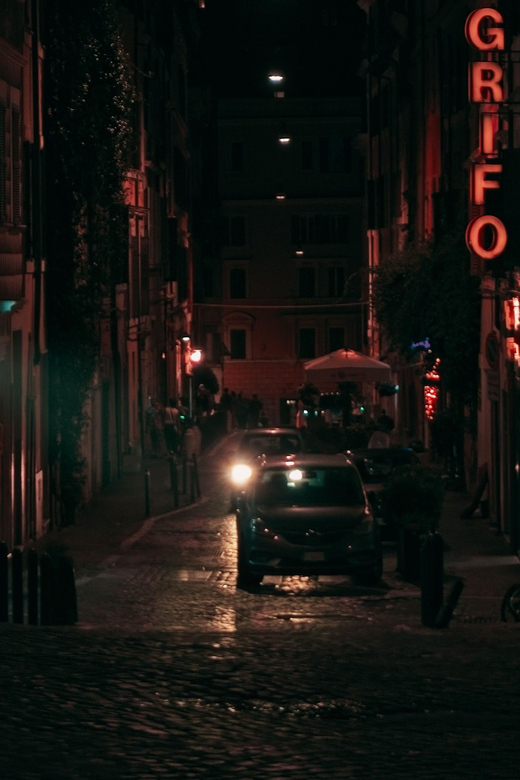
The tour ends at Campo de’ Fiori after about 15 minutes of guided storytelling. This is a lively square today, but the walk presents its earlier role as a place where thousands of people were executed in brutal ways.
That contrast gives the tour a strong finish. You end among restaurants, bars, and evening activity while thinking about a square with a far darker past. Several guides have also finished the walk in a way that leaves the group well placed for dinner or a drink. One guide even recommended a beer afterward, which is practical advice after a ghost walk.
Campo de’ Fiori is more than a convenient endpoint. It sums up the tour’s main idea: Rome’s past is not locked away in ruins. It sits beneath the daily life of streets and squares that continue to serve modern residents and visitors.
If you want to extend the mood, stay in the area for food or drinks. If you prefer a quiet end to the evening, arrange your onward route before the tour begins. The experience finishes in the square, and you will need to make your own way home.
What $29 buys you
At $29 per person, this is a reasonably priced way to spend 90 minutes in central Rome. You receive an English-speaking guide and the dowsing rods, with no added charge listed for the interactive activity.
The value depends on what you want from a tour. If you are seeking entry to a historic site, detailed architectural commentary, or access to rooms inside Castel Sant’Angelo, this is not the right purchase. The walk does not include admissions, food, drinks, transportation, or hotel service.
If you want a compact evening activity that shows you a less familiar side of Rome, the price makes sense. You see several historic areas, hear stories about real places and people, and take part in an activity that sets this apart from an ordinary walking tour.
The 1.5-hour length is another plus. You get a clear theme without giving up half a day. It also fits well into a Rome schedule that already includes major sights. Check the available start times when booking, since the tour’s mood will naturally work best when the city begins to quiet down.
Who should book this Rome ghost walk
I would recommend this experience to you if you enjoy:
- Dark local history and stories about crime, punishment, and executions
- Guided walks that include audience participation
- A different view of famous central Rome
- Folklore and ghost stories without needing a formal haunted attraction
- Short evening activities that finish near places to eat and drink
- Family groups with older children or teenagers who enjoy spooky themes
The tour can also work well for a Halloween visit. One booking made on Halloween night found the timing and theme especially suitable. A separate booking specifically praised the guide for being considerate and inclusive with a teenage daughter.
I would think twice if you dislike stories about executions, imprisonment, murder, or poisoning. The subject matter is not mild. The tour also may not satisfy you if you want evidence-based paranormal research. The dowsing rods are there to make the walk interactive and entertaining.
The experience is listed as wheelchair accessible, but the provided details do not explain the exact street conditions or whether every section of the route has a fully step-free path. If that matters for your booking, confirm the route details in advance.
Booking tips for a smoother evening
Meet at the end of Ponte Sant’Angelo in front of Castel Sant’Angelo, and look for the More of Rome sign. Since pickup is not included, plan enough time to reach the castle before the start.
Wear comfortable shoes. The route covers Ponte Sant’Angelo, Via dei Banchi Vecchi, Via di Monserrato, Via Giulia, Piazza Farnese, and Campo de’ Fiori, with several standing stops along the way.
The tour is conducted in English. You can cancel up to 24 hours before the activity for a full refund, and the reserve now, pay later option lets you keep your plans flexible. Those terms are useful in Rome, where weather, museum bookings, and dinner plans can shift quickly.
Final verdict: book it for stories, mood, and participation
Book this tour if you want Rome to feel a little stranger for an evening. Its best features are the route through real historic streets, the dowsing rod activity, and guides who know how to tell a grim story without losing the group.
I especially like the way the walk moves from Castel Sant’Angelo to Campo de’ Fiori. You get a clear beginning, a series of varied stops, and a practical finish near food and drinks. At $29, it is a fair buy for a short, unusual experience.
Skip it if you want a conventional history tour or serious paranormal testing. But if Ali, Clara, Elvie, Sonja, Bryan, or Brian bring the same energy described by past participants, you can expect a memorable look at Rome’s darker side.
FAQ
Where does the Rome ghost tour start?
The tour starts at the end of Ponte Sant’Angelo, in front of Castel Sant’Angelo Castle. The guide will be holding a More of Rome sign.
Where does the tour finish?
The walk finishes at Campo de’ Fiori.
How long does the tour last?
The experience lasts 1.5 hours.
What language is the tour conducted in?
The live guided tour is conducted in English.
Are dowsing rods included?
Yes. Dowsing rods are provided for the interactive search for ghosts.
Is the tour wheelchair accessible?
The activity is listed as wheelchair accessible. The supplied details do not specify the exact street conditions along every part of the route.
Can I cancel for a full refund?
Yes. You can cancel up to 24 hours in advance for a full refund. A reserve now, pay later option is also available.
Newest reviews from Rome
- ROME:Colosseum & Ancient Rome – private/small group TOUR★ 5.0 · 24 reviews
- Off the Beaten Track in Rome: Rione VI Parione Private Tour★ 5.0 · 24 reviews
- Cinematic Photoshoot in Rome★ 5.0 · 24 reviews
- Rome: Best of Colosseum and Roman Forum Small Group Guided Tour★ 4.5 · 24 reviews
- Vatican and Trionfale Market Tour with Wine and Food Tasting★ 5.0 · 24 reviews
- private tour: Vatican Museums, Sistine Chapel, St. Peter’s Basilica★ 4.5 · 24 reviews
- The Labyrinth of Rome between catacombs and ancient quarries★ 4.5 · 24 reviews
- Colosseum guided tour with Virtual Reality★ 5.0 · 24 reviews
Rome Ghost & Legend Tours, compared.
Rome by Night Walking Tour – Legends & Criminal Stories
Read our review →


Small Group Rome’s Dark Side – Ghosts & Legends Tour
Read our review →
Dark Heart of Rome – Facts, Legend & Mystery Walking Tour
Read our review →
Ghosts, Legends & Mysteries of Rome Tip-Based Walking Tour
Read our review →Browse the lists this tour appears in