
Reviewed · TRASTEVERE TOURS
Rome Private Wine & Food Tour Trastevere, Ghetto, Campo de Fiori
Rome’s best food lessons often come between the famous sights. This private walk links Campo de’ Fiori, the Jewish Ghetto, and Trastevere, with stops for pizza, cheese, cured meat, fried specialties, pasta, wine, and gelato. You get a meal-sized introduction to Roman cooking while learning how each neighborhood shaped the city’s table.
I like the private format, which lets your guide slow down for questions and adjust some tastings to your tastes or allergies. I also like the mix of eating and place: you are not simply moving from one restaurant to the next, but crossing old streets, the Tiber Island, market stalls, and neighborhood squares. The main consideration is the price, $217.69 per person, which makes the tour best suited to people who value personal guiding and a generous tasting menu.
In This Review
- Key points to know before booking
- Starting at Piazza Farnese
- Campo de’ Fiori and the rhythm of Roman shopping
- Roman bread, pizza, and a family food shop
- The Jewish Ghetto, where food carries memory
- Crossing Isola Tiberina
- Cacio e pepe and amatriciana in Trastevere
- Ending with gelato near Santa Maria in Trastevere
- What the menu really includes
- How good is the private format?
- Morning or afternoon, weekday or Sunday?
- Who will enjoy this tour most?
- Should you book the Rome private food walk?
- FAQ
- How long does the Rome private wine and food tour last?
- Where does the tour begin?
- Where does the tour end?
- Is this a private tour?
- Is the tour offered in English?
- What food is included?
- Is wine included?
- Are vegetarian, gluten-free, or dairy-free options available?
- Does the tour operate on Sundays?
Key points to know before booking
- Roman food in many forms: Expect pizza bianca with mortadella, pizza al taglio, mozzarella, pecorino, salami, supplì, seasonal fried foods, two pasta tastings, three wines, and gelato.
- Three distinct neighborhoods: The route connects Campo de’ Fiori, the Jewish Ghetto, and Trastevere, so food comes with plenty of local context.
- Private attention: Only your group takes part, making it easier to ask questions or request slower pacing.
- Morning and afternoon choices: Morning tours make the most of the Campo de’ Fiori market, while afternoon tours offer a more relaxed square and an evening-style finish in Trastevere.
- Sunday is different: The route uses an organic farmers market and open venues because many small food shops close that day.
- A walking meal: You need comfortable shoes and enough appetite for several substantial tastings over roughly three and a half hours.
Starting at Piazza Farnese
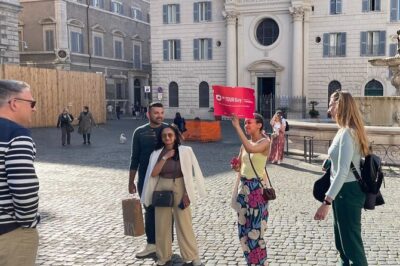
The meeting point is Piazza Farnese, a graceful square near the center of Rome. Your guide meets you at 106 Piazza Farnese, usually holding a sign for Gourmetaly Food Tours.
The square gives the walk a polished start. The Farnese building, now home to the French Embassy, dominates the space, while two fountains add a calm backdrop before the food begins. This is a short introduction, not a long sightseeing stop, so you will move on quickly.
That is useful if you have limited time in Rome. The tour does not spend half an hour explaining a single monument. Instead, the opening square becomes a doorway into the city’s streets, shops, and eating habits.
More Trastevere tours and tastings:
- Winner 2025 Rome Twilight Trastevere Food Tour by Eating Europe
★ 5.0 · 5,157 reviews - Rome: Trastevere or Jewish Quarter Street Food Tour
★ 4.8 · 3,839 reviews - Rome: Trastevere Food tour with Free-Flowing Fine Wine
★ 5.0 · 2,853 reviews
Campo de’ Fiori and the rhythm of Roman shopping
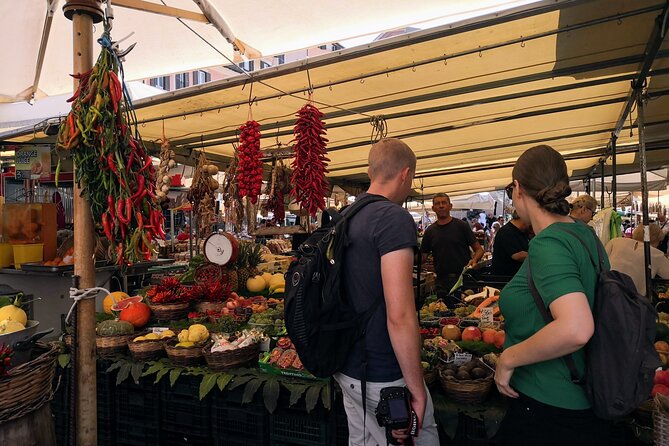
On a morning tour, Campo de’ Fiori is one of the first major stops. The market is known for seasonal produce and local food products, and your guide helps you look beyond the souvenir stalls to the way ingredients connect with Roman cooking.
You can expect to see produce, speak with vendors, and sample items such as fresh mozzarella, cured meats, cheese, and bread. The market portion itself is fairly brief, listed at about ten minutes, but the food stops around it add much more time.
The statue of Giordano Bruno occupies the center of the square. Bruno was burned by the Inquisition in 1600, and the statue gives the market a serious historical note. It is a useful reminder that Campo de’ Fiori has not always been just a place for lunch supplies and photographs.
Afternoon travelers get a different version of the square. The market is not in full swing, so you will see Campo de’ Fiori in its more relaxed daily setting. If fresh produce and vendor interaction are your main reasons for booking, choose the morning. If you prefer a later start, the afternoon still includes the square and the food tastings.
Roman bread, pizza, and a family food shop
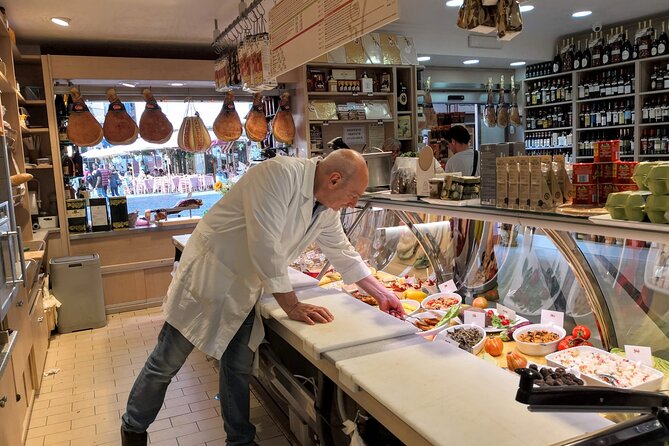
The food stops begin to show why Roman eating is not limited to pasta. At Ancient Pizzicheria Ruggeri, a family food business operating since 1919, you taste traditional products while hearing about local habits, recipes, and food customs.
The planned tastings include pecorino romano, spianata romana, buffalo mozzarella, and pizza bianca with mortadella. Pecorino is especially important because it gives Roman pasta dishes their sharp, salty character. Pizza bianca, split and filled with mortadella, is a classic Roman snack that feels simple but depends on good bread and good ingredients.
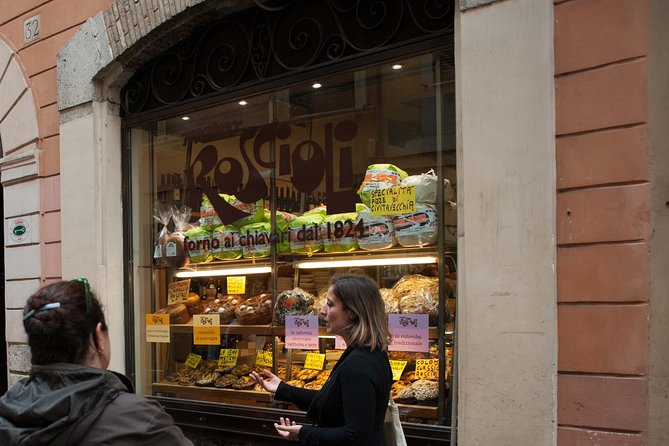
You also visit Antico Forno Roscioli, known here for pizza al taglio and bread. The tasting may include pizza rossa, with tomato and extra-virgin olive oil, and pizza con le patate, a Roman specialty topped with sliced potatoes, black pepper, and rosemary.
This is one of the tour’s practical strengths. You learn that pizza in Rome is not one thing. There is the airy white bread used for sandwiches, the crisp rectangular slices sold by weight, and the potato-topped version that many people would miss if they only ordered a round restaurant pizza.
The exact selection can change with the season and what is available. That is normal for a food walk, and it is better than pretending every ingredient is fixed year-round.
The Jewish Ghetto, where food carries memory
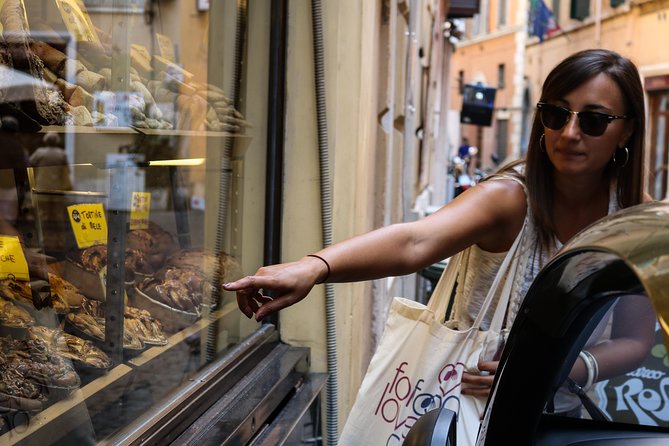
From Campo de’ Fiori, the route continues to Rome’s historic Jewish Ghetto. You walk through the old quarter, passing Piazza delle Cinque Scole, the Jewish school, ancient Roman remains, and the Synagogue area.
The food here is tied closely to the neighborhood’s culture. A traditional stop includes fried artichokes, known as carciofi alla giudia, when artichokes are in season. The artichoke is prepared with a double-frying method that makes the outer leaves crisp while keeping the inside tender.
In summer, the seasonal tasting can switch to fried zucchini flowers filled with mozzarella and anchovy. You may also taste fried codfish and supplì, rice balls with tomato and mozzarella that are fried until crisp.
The Ghetto stop is more than a sequence of fried snacks. Your guide explains how Jewish Roman cooking developed and why ingredients and preparation methods matter. This gives the meal a stronger sense of place than a standard food crawl through generic restaurants.
One small drawback is that seasonal foods are not guaranteed. If you are visiting in winter, you may get fried artichoke rather than zucchini flowers. That is a fair trade for eating food in its proper season, but keep it in mind if one particular dish is the reason you booked.
More Jewish Ghetto walks:
- Jewish Ghetto and Trastevere Tour Rome
★ 4.5 · 1,729 reviews - Jewish Ghetto and Synagogues with Jewish Roman Guide 3 Hours
★ 5.0 · 907 reviews - Rome: Eat Like a Roman Ghetto & Campo de’ Fiori Food Tour
★ 5.0 · 743 reviews - Jewish Ghetto & Piazza Navona: Food, Wine & Sightseeing Rome Tour
★ 5.0 · 460 reviews
Crossing Isola Tiberina
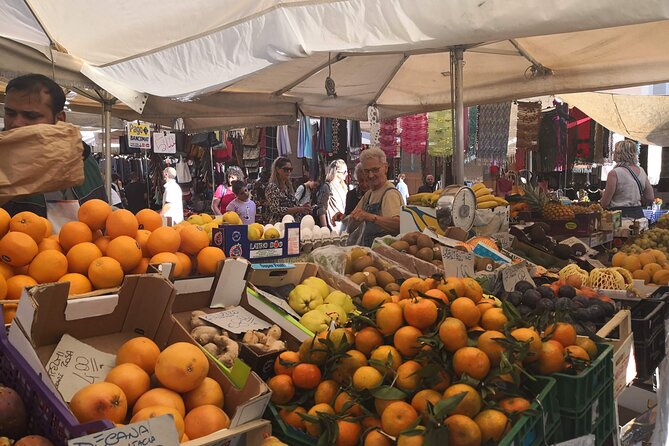
The walk continues toward the Tiber and crosses the city’s oldest bridge to Isola Tiberina, the island in the river. The island includes a church, convent, and two hospitals, and it can also have music in the evening, especially in summer.
This part provides a welcome pause between tastings. After cheese, bread, pizza, and fried food, a short walk helps you reset before the pasta course.
The route is still a walking tour, not a series of quick vehicle transfers. You should be comfortable on your feet for most of the three and a half hours. One guide took extra time for a participant with mobility issues, so the private setup can help if someone in your group walks slowly. Still, you should mention mobility needs when booking rather than assume the route will be effortless.
Cacio e pepe and amatriciana in Trastevere
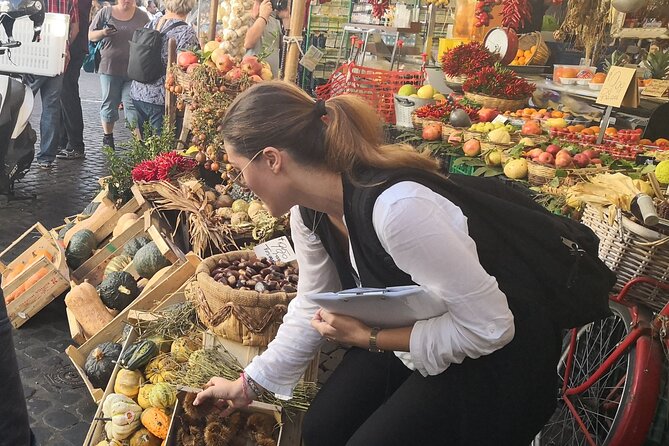
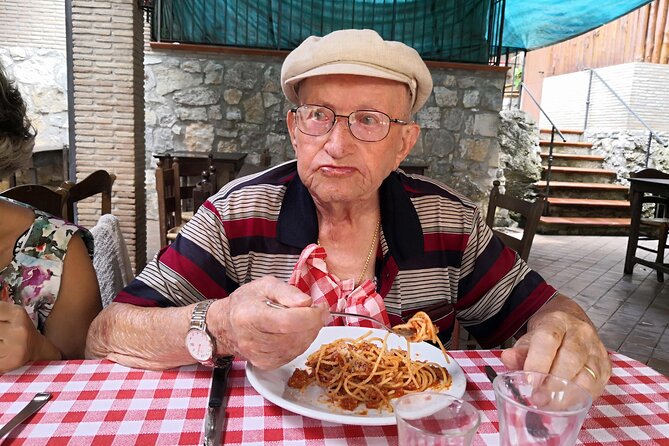
Trastevere is the final neighborhood and the place where the tour moves into its main pasta tastings. At Ristorante Sette Oche in Altalena, you taste cacio e pepe and amatriciana.
Cacio e pepe is built from pecorino romano, black pepper, and pasta water. It is a good test of technique because there is nowhere for a poor sauce to hide. Amatriciana brings tomato and cured pork into the mix, creating a fuller, more savory plate.
The portions are described as tastings, not full restaurant entrees, but the overall meal is substantial. You have already eaten several starters before reaching this stop, so do not arrive after a large lunch.
The three seated stops with wine are an important part of the value. You are not always eating while standing beside a counter. At selected stops, you can sit, taste three wines, and ask your guide how the dishes fit into Roman food traditions.
The tour includes three fine wine tastings, but it does not function as a formal wine seminar. If your main interest is Roman wine production, this may feel light. If you want wine to accompany a food-focused walk, the arrangement makes sense.
Ending with gelato near Santa Maria in Trastevere
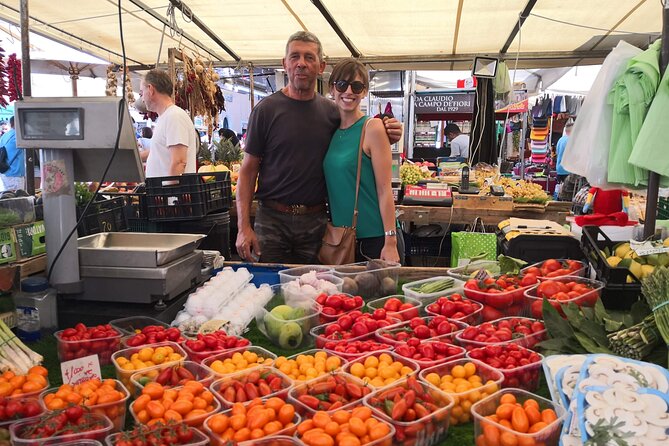
The final edible stop is Fiordiluna, a gelato shop associated with Eugenio Morrone, named as the 2020 gelato world champion. You receive a two-flavor cup with additional extras.
Calling gelato ice cream misses some of the point, and your guide uses the stop to explain the difference in style and texture. After the salty foods and pasta, gelato is a natural finish.
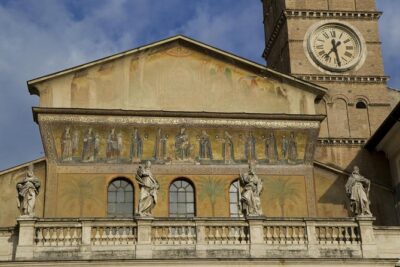
The walk ends in Piazza Santa Maria in Trastevere, beside the Basilica of Santa Maria in Trastevere. This is a handsome, lively square and a useful place to continue your evening. The official endpoint is Piazza Giuseppe Gioachino Belli, a short distance within the neighborhood.
Trastevere is one of Rome’s most popular areas for dining, but the tour helps you see more than its restaurant-lined reputation. Narrow lanes, artisan shops, cafes, small squares, and fountains give the final section a pleasant sense of neighborhood life.
What the menu really includes
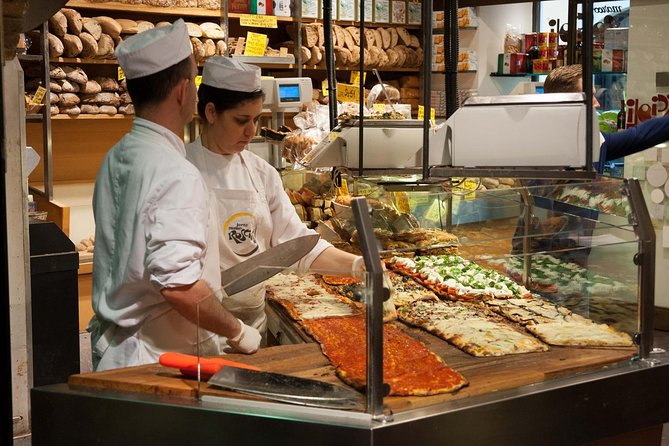
The advertised food selection is broad. It may include:
- Pecorino romano and spianata romana
- Buffalo mozzarella
- Pizza bianca with mortadella
- Pizza rossa and pizza con le patate
- Fried artichoke in winter
- Fried zucchini flowers in summer
- Supplì
- Fried codfish
- Cacio e pepe and amatriciana
- Gelato
- Three wine tastings
The tour description also specifies meals at a historic grocery, two or three pizza tastings, seasonal fried foods in the Jewish Ghetto, two pasta tastings in Trastevere, and gelato.
Because some dishes depend on the season and opening hours, you should treat the menu as a well-defined range rather than a rigid restaurant order. This is especially important on Sunday, when many independent vendors close. Sunday tours use a farmer-managed organic market and open venues, so the food remains central but the market and shop experience changes.
Vegetarian, gluten-free, and dairy-free options are available if you request them in advance. You should still take the allergen warning seriously. Milk, eggs, soy, mustard, nuts, and gluten may be present in the tastings, and cross-contact cannot be ruled out from the supplied information.
How good is the private format?
Private guiding changes the pace and tone of a food walk. You can ask why Roman cooks use pecorino instead of another cheese, how a supplì differs from other fried rice dishes, or what makes a local pizza style different from the pizza you know at home.
The guides associated with this experience include Clelia, Marielle, Natasha, Aurelio, Gloria, Livia, and Claudio. Guide assignments vary, but the strongest pattern is a personal, friendly approach with plenty of food and neighborhood explanation. Claudio has been especially noted for adapting tastings to personal preferences, while Livia was praised for clear English and an easygoing way of encouraging some Italian conversation.
A private group can also help if you have questions, food restrictions, or a slower pace. It is a good fit for families, couples, and small groups who want to talk rather than listen to a scripted speech.
The tradeoff is cost. At $217.69 per person, this is far more expensive than simply eating your way through Rome on your own. You are paying for a guide, multiple tastings, seated wine stops, planning, and access to a sequence of food businesses without having to choose them yourself.
For a group of several people, group discounts may improve the calculation. For a solo diner or a couple on a tight budget, the price deserves more thought. I would book it early if this is a priority, since the experience is booked an average of 74 days ahead.
Morning or afternoon, weekday or Sunday?
Choose a morning departure if Campo de’ Fiori market life matters to you. You will see more vendor activity and get a clearer sense of how fresh ingredients enter Roman kitchens.
The afternoon option works better if you want a later start and a lively Trastevere finish. Campo de’ Fiori will be quieter, but the route still includes the main food sequence and the neighborhood walk.
Monday through Saturday offers the fullest access to independent shops and vendors. Sunday is still possible, but the route shifts to an organic farmers market and venues that are open that day. I would choose Sunday only if your schedule requires it or if a direct-from-producer market sounds especially appealing.
The tour operates in all weather. Rome’s streets can be awkward in rain, and you will be carrying a full meal in your stomach while walking, so wear practical shoes and clothing suited to the forecast.
Who will enjoy this tour most?
I would recommend it to you if you want Roman food explained as part of Roman life. It works particularly well as an early trip activity, since it introduces dishes you can recognize and neighborhoods you may return to later.
It also suits families and friend groups. The private format gives everyone room to ask questions, and the food selection offers enough variety to keep a mixed group interested.
You may want to skip it if you dislike eating several small portions in a row, avoid walking, or prefer a formal wine class. It may also feel expensive if you are comfortable researching bakeries, markets, and restaurants yourself.
The tour is offered in English, includes a mobile ticket, and is near public transportation. Most people can take part, and service animals are allowed. Transportation to or from the meeting and ending points is not included, so plan your own way to Piazza Farnese and from Trastevere afterward.
Should you book the Rome private food walk?
Book it if you want a high-touch introduction to Roman cooking rather than a basic restaurant meal. The combination of the market, Jewish Ghetto specialties, pizza, pasta, wine, and gelato gives you a wide taste of the city in one sitting.
I especially like it for first-time visitors who want neighborhood context and for families or groups that benefit from a flexible guide. The price is substantial, but the private attention and amount of food make it easier to justify when shared by a group and used as both a meal and a guided city walk.
Choose a morning weekday tour for the fullest market experience. Choose afternoon for a more relaxed start and a Trastevere finish. If you need Sunday, book knowing that the market and open shops will shape the route differently.
FAQ
How long does the Rome private wine and food tour last?
The tour lasts approximately three hours and 30 minutes.
Where does the tour begin?
The meeting point is Piazza Farnese, 106, 00186 Rome. Look for the host holding a sign for Gourmetaly Food Tours.
Where does the tour end?
The tour ends in Trastevere, at Piazza Giuseppe Gioachino Belli. The final sightseeing stop is near the Basilica of Santa Maria in Trastevere.
Is this a private tour?
Yes. Only your group participates in the activity.
Is the tour offered in English?
Yes. The tour is offered in English.
What food is included?
Included tastings can include cheeses, cured meats, mozzarella, several types of Roman pizza, seasonal fried foods, supplì, two pasta tastings, and gelato.
Is wine included?
Yes. The experience includes three wine tastings at seated stops.
Are vegetarian, gluten-free, or dairy-free options available?
Vegetarian, gluten-free, and dairy-free options are available if you advise the provider when booking. Possible allergens include milk, eggs, soy, mustard, nuts, and gluten.
Does the tour operate on Sundays?
Yes, but the Sunday route is adapted. It begins at an organic farmers market and uses open venues because many independent food shops and vendors close on Sundays.
More Food Tours in Rome
- Rome: Trastevere & Campo de Fiori Street Food Walking Tour
★ 4.9 · 2,768 reviews - Rome Street Food Tour with Local Guide
★ 5.0 · 2,361 reviews - Rome: Award Winning Trastevere Group Food Tour with Wine
★ 5.0 · 2,273 reviews - Rome: Guided Food Tour in Trastevere
★ 4.8 · 2,266 reviews
More Wine Tours in Rome
- Rome: Tuscany & Montepulciano Day Trip with Lunch & Wine Tasting
★ 4.5 · 5,232 reviews - Rome: Pasta & Tiramisu Class with Fine Wine by the Vatican
★ 4.9 · 4,852 reviews - Rome Food Tour: Unlimited Tastings with Fine Wine & Barolo
★ 5.0 · 3,365 reviews - Rome: Pasta Making Class with Wine, Limoncello, and Dessert
★ 4.9 · 3,177 reviews
Newest reviews from Rome
- ROME:Colosseum & Ancient Rome – private/small group TOUR★ 5.0 · 24 reviews
- Off the Beaten Track in Rome: Rione VI Parione Private Tour★ 5.0 · 24 reviews
- Cinematic Photoshoot in Rome★ 5.0 · 24 reviews
- Rome: Best of Colosseum and Roman Forum Small Group Guided Tour★ 4.5 · 24 reviews
- The Labyrinth of Rome between catacombs and ancient quarries★ 4.5 · 24 reviews
- Vatican and Trionfale Market Tour with Wine and Food Tasting★ 5.0 · 24 reviews
- private tour: Vatican Museums, Sistine Chapel, St. Peter’s Basilica★ 4.5 · 24 reviews
- Colosseum guided tour with Virtual Reality★ 5.0 · 24 reviews
Trastevere Tours, compared.
Winner 2025 Rome Twilight Trastevere Food Tour by Eating Europe
Read our review →
Trastevere or Jewish Quarter Street Food Tour
Read our review →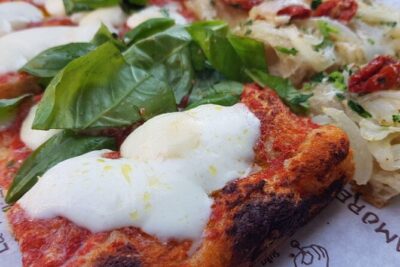
Trastevere Food tour with Free-Flowing Fine Wine
Read our review →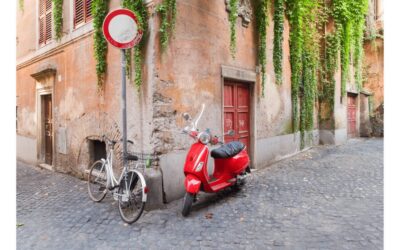
Trastevere & Campo de Fiori Street Food Walking Tour
Read our review →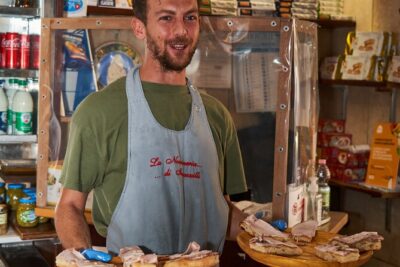
Award Winning Trastevere Group Food Tour with Wine
Read our review →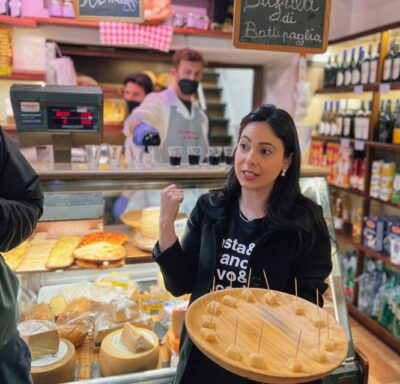
Rome Food Tour: Hidden Gems of Trastevere with Dinner & Wine
Read our review →
Trastevere Guided Food and Wine Tour with 20+ Tastings
Read our review →Browse the lists this tour appears in