
Reviewed · UNDERGROUND ROME TOURS
Rome: Underground Temples and Crucifixion Relics Walking Tour
Rome keeps some of its best stories below street level. At the Basilica of San Clemente, you descend through three eras of Roman life, from the medieval church to an early Christian basilica and a pagan Temple of Mithras, with an ancient stream still running below. Then the route shifts from archaeology to pilgrimage, ending among relics linked to the Crucifixion.
I like the small group of up to 10 people, which makes it easier to hear the guide and ask questions. I also like the range of places packed into one morning or afternoon: underground Roman ruins, the cathedral of Rome, the Holy Stairs, and Santa Croce in Gerusalemme. Guides including Francesca, Mario, Daniel, Paul, and Chiara have earned especially warm praise for clear explanations and thoughtful handling of sacred sites.
The main drawback is simple: this is more walking than the word moderate suggests. You may cover roughly 3 to 4 kilometers, with plenty of standing, stairs, and little built-in rest time. In hot weather, the route can feel demanding, and the final stop may be a stretch if your legs are already tired.
In This Review
- Key points to know before booking
- Why San Clemente makes such a strong beginning
- San Giovanni in Laterano, Rome’s cathedral
- The Holy Stairs and a living place of devotion
- Santa Croce in Gerusalemme and the Crucifixion relics
- The optional extension to Santa Maria Maggiore
- What the guides add to the experience
- Walking, heat, and the real time commitment
- Is the $90.51 price fair?
- Who should book this Roman church tour?
- Should you book it?
- FAQ
- How long does the Rome Underground Temples and Crucifixion Relics tour last?
- Where does the tour begin and end?
- Is the tour offered in English?
- How many people can join the group?
- What should I wear?
- Is admission included?
Key points to know before booking
- San Clemente is the star of the tour: Three layers of buildings lead down to a well-preserved Mithraic temple, ancient mosaics, and an underground waterway.
- The tour connects archaeology with Christian pilgrimage: You move from pagan cults and early Christianity to Constantine, St. Helena, the Holy Stairs, and Crucifixion relics.
- Expect a serious walk between churches: The route links sites that are a few blocks apart, and the full experience can last up to three and a half hours.
- The guide matters here: Francesca, Mario, Daniel, Paul, Tom, and Chiara are among the guides praised for strong explanations and respectful presentation.
- Dress for church visits: Cover your shoulders and knees, and wear walking shoes suited to stairs and hard pavement.
- The relics are presented as sacred objects: The tour includes items traditionally identified with the Crucifixion, but the experience is best approached with respect for both faith and historical uncertainty.
Why San Clemente makes such a strong beginning
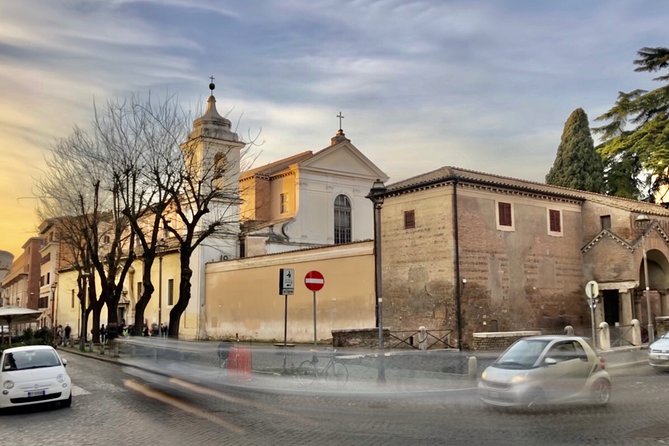
The tour starts at Piazza di San Clemente, close to the Colosseum. That location is convenient, but the real value is what waits below the modest church entrance. San Clemente is one of Rome’s clearest examples of how the city was built layer upon layer, with later structures taking shape above older ones.
You begin in the twelfth-century basilica, then go lower to a fourth-century church, and finally reach first-century Roman buildings. The change is not just a matter of age. Each level gives you a different look at how Rome shifted from pagan worship to Christianity and then to a public Christian society.
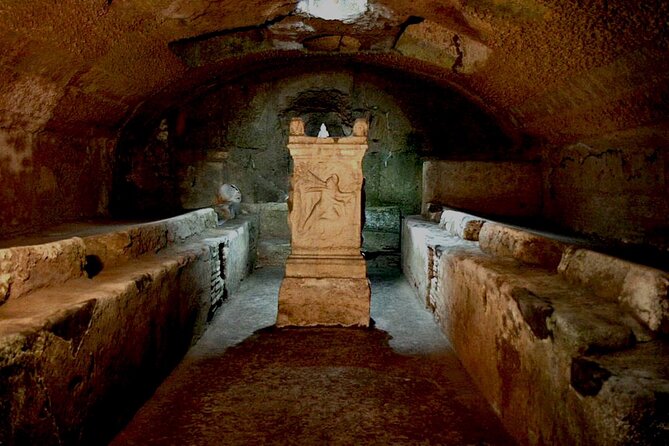
At the lowest level, you see the Temple of Mithras, linked to a mystery religion that spread through the Roman world. The preserved room is intimate rather than grand. That is part of its appeal. You can study the stone benches and central altar area while your guide explains how the cult’s rituals and symbols differed from the Christian faith developing nearby.
The underground water is another memorable feature. An ancient stream flows beneath the streets and below the Colosseum area, giving the lowest level a damp, enclosed feel. You can hear and see the water as you move through the archaeological remains. It is a useful reminder that Rome was not simply built on dry, empty ground. Its engineers, builders, and worshippers had to work around the city’s natural waterways.
Allow about 1 hour and 15 minutes here. That is a good amount of time for the site because there is much to explain in a compact area. Your guide may point out mosaics, carved stone, wall construction, and scenes that carry layers of religious meaning. The strongest guides, such as Francesca and Paul, have been praised for making those details understandable without turning the visit into a lecture.
San Clemente also requires the most care if you dislike enclosed spaces. The lower levels are underground, and the tour specifically is not recommended for people with claustrophobia. If you are comfortable in narrow historic rooms but dislike long periods underground, ask yourself how you normally respond to catacombs or crypts before booking.
More underground Rome tours:
- Colosseum: Underground and Ancient Rome Tour
★ 4.7 · 12,691 reviews - Rome: Crypts and Catacombs Underground Tour with Transfers
★ 4.6 · 5,341 reviews - Expert Guided Tour of Colosseum Arena OR Underground, and Forum
★ 4.5 · 5,041 reviews
San Giovanni in Laterano, Rome’s cathedral
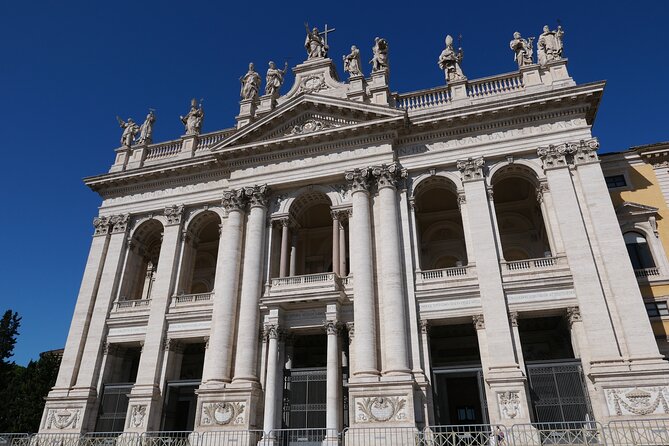
After San Clemente, you walk to the Basilica of St. John Lateran, formally the Archbasilica of Saint John Lateran. It is Rome’s cathedral and is known as the mother and head of all churches on Earth.
This stop changes the mood. San Clemente is about excavation, fragments, and shadowy underground rooms. San Giovanni presents a grand public church with a golden interior, large frescoes, and a scale designed to impress. Your guide connects the building to Emperor Constantine and the year 313, when Christianity was legalized in the Roman Empire.
That historical link is important. The tour does not treat Christianity as a story that began with monumental basilicas. Instead, you see the transition from persecution and small underground communities to a faith that could build major public churches. The contrast between the first stop and San Giovanni gives the whole route a clear arc.
The visit here lasts about 30 minutes and has no separate admission charge. You will likely spend much of that time looking upward and listening, so comfortable shoes still matter even when you are inside. Guides have also pointed out changes in artistic style across the churches, helping you see how frescoes and paintings reflect different periods rather than blending into one general idea of old Rome.
The Holy Stairs and a living place of devotion
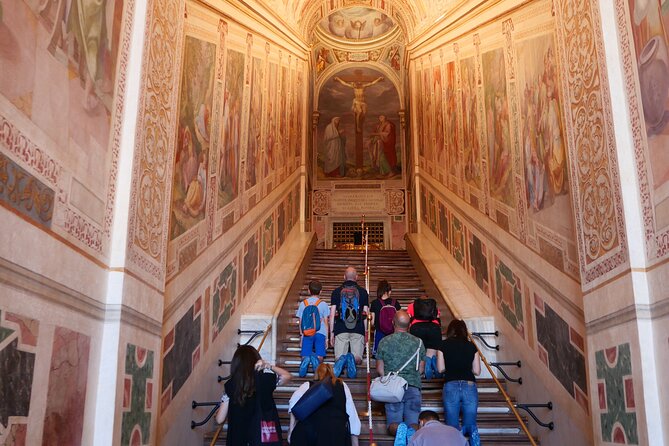
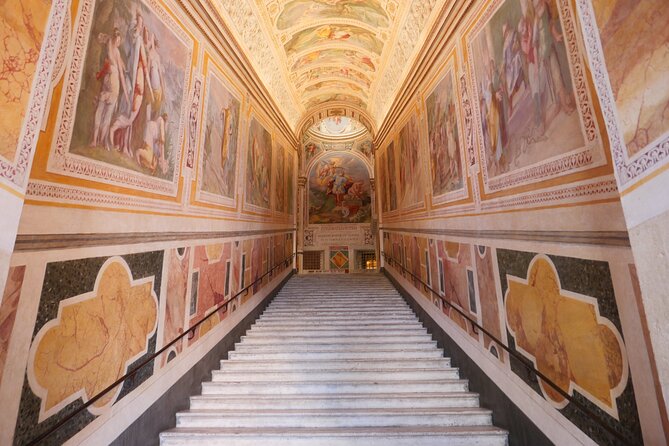
The nearby Pontifical Sanctuary of the Holy Stairs is a short stop, listed at about 15 minutes. Tradition identifies these as the stairs Jesus climbed to reach the praetorium during his judgment. The story is tied to St. Helena, the mother of Constantine, who is said to have traveled to Jerusalem and brought important objects back to Rome.
The experience here is not only about looking at an old staircase. The Holy Stairs remain a place of active devotion. You may see people climbing on their knees, as one tour participant did, rather than treating the site as an ordinary museum display. That detail can change how you enter the room. Keep voices low, follow the site’s rules, and remember that this is a working religious sanctuary.
A short stop is both a strength and a weakness. It keeps the route moving, but you may want more time to take in the stairs and the devotional setting. One visitor specifically wished for extra time here. If the Holy Stairs are a major reason you booked, tell your guide early and pay attention to the timing.
The dress code applies here and at every church on the route. Cover your shoulders and knees. Do not count on being able to enter in a bare-shouldered top or very short shorts, even during hot Roman weather.
Santa Croce in Gerusalemme and the Crucifixion relics
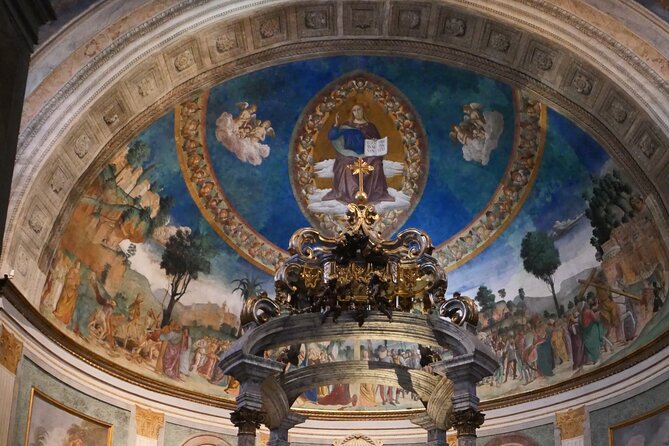
The final required stop is the Basilica di Santa Croce in Gerusalemme. The church was built with earth brought from the Holy Land, and its chapel holds relics traditionally associated with the life and death of Jesus.
The objects described on the tour include a nail from the Crucifixion, a wooden piece identified as part of the Cross, the walnut board said to have carried Pontius Pilate’s inscription, two thorns associated with the Crown of Thorns, and fragments connected with the cave of the Nativity in Bethlehem. You may also see a copy of the Shroud of Turin.
These objects carry enormous meaning for Christian visitors. The guide’s role is especially important here, since the material combines devotion, tradition, archaeology, and questions of authenticity. A good presentation should explain what the Church preserves and how the objects are traditionally identified without pretending that every claim can be proven to modern scientific standards.
This is one reason the best guides receive such strong praise. Daniel, for example, has been singled out for explaining complex subjects in plain language while treating the churches with respect. Paul was also praised for giving the sites context rather than rushing from object to object. You get more from the relic chapel when you understand both its religious importance and the long story of how relics were collected and displayed.
The church is about a 30-minute stop in the listed plan. That is enough to see the main relics with a guide, but it may feel short if you want quiet prayer or extended personal reflection. This is a guided sightseeing visit, not a private pilgrimage service, so the group must keep moving.
More walking tours in Rome:
- Rome: Trastevere & Campo de Fiori Street Food Walking Tour
★ 4.9 · 2,768 reviews - Rome: Paranormal Night Walking Tour & Secret Backstreets
★ 4.9 · 1,921 reviews - Rome by Night Walking Tour – Legends & Criminal Stories
★ 4.5 · 1,003 reviews - Rome: Guided City Center Evening Sightseeing Walking Tour
★ 4.4 · 953 reviews
The optional extension to Santa Maria Maggiore
The route may be extended to the Papal Basilica of Saint Mary Major, listed at about one additional hour with admission included. This adds another major church and gives you more time with Christian art and sacred relics.
The extension is worth considering if you have the energy and want a fuller church circuit. It also makes the day longer, and the walking can become tiring after San Clemente, San Giovanni, the Holy Stairs, and Santa Croce. One person chose to skip the final church because the extra walk felt too much after the earlier stops.
Clarify the planned route at the start. The description presents Santa Maria Maggiore as an extension, while the main route ends at Santa Croce in Gerusalemme. A change in order can happen if a church is closed for Mass, a liturgical event, or another religious use. The guide will adapt the visit, but you should not assume every group will follow precisely the same sequence.
What the guides add to the experience
This tour depends heavily on the guide. The churches are open to independent visitors, but their stories are not always easy to connect on your own. The guide explains why a pagan temple sits beneath a Christian basilica, how Constantine changed the public life of Christianity, and why St. Helena is central to the relic tradition.
The strongest names associated with this experience include Francesca, Mario, Daniel, Paul, Tom, Chiara, and Kiera. Francesca has been praised for careful explanations of the mosaics, statues, stonework, frescoes, and different artistic periods. Mario is noted for managing time well while still covering the relics. Daniel has been praised for his depth, clear communication, and respectful manner.
Paul received especially high marks for subject knowledge and presentation across all the churches. That matters because the subject can become dense. You are dealing with Roman architecture, pagan religion, theology, imperial politics, pilgrimage, and relic traditions in a short period. A guide who can explain those links simply will make the route far more useful.
You also receive headsets, which are valuable inside large basilicas and in areas where the group must spread out. The maximum of 10 people is another practical advantage. It does not turn the experience into a private tour, but it should make it easier to stay connected to the guide.
Walking, heat, and the real time commitment
The advertised duration is about 2 hours and 30 minutes to 3 hours and 30 minutes. Plan around the longer figure if you want the full route and optional extension. The distance between churches is manageable for an active walker, but the route includes standing, stairs, outdoor pavement, and repeated transitions between sites.
Several people found the walking worthwhile, including on hot days, but the heat clearly changes the experience. Bring water, use sun protection, and avoid booking this immediately after another demanding walking tour. The route has no built-in breaks in the way some sightseeing programs do.
Public transportation is nearby, but hotel pickup and drop-off are not included. The tour begins at Piazza di San Clemente and ends at Santa Croce in Gerusalemme unless you add or follow a different final arrangement. Check your return route before setting off, especially if you need to reach a hotel on foot.
The pace can also vary. Most guides keep the group moving so all major sites fit into the schedule. If you need extra time at the Holy Stairs or relic chapel, say so. If a church is closed for a liturgical event, an alternative site or adjusted order may be used, while the overall tour duration is intended to remain similar.
Is the $90.51 price fair?
At $90.51 per person, this is not a cheap church walk. The cost includes a live English-speaking guide, headsets, entrance fees, and taxes. It does not include gratuities or transportation to and from your hotel.
The value comes from the explanation and the underground admission at San Clemente. You could enter several churches on your own, but you would need to organize the route, research the layers at San Clemente, understand the connection between Constantine and the Lateran Basilica, and interpret the relic displays without a guide. The small group also gives the price more weight than a large coach tour.
I would call it good value for someone who is genuinely interested in early Christianity, Roman archaeology, or pilgrimage traditions. It is less compelling if you only want to look quickly inside a few churches. The route asks for time, attention, and physical effort, so your interest should match the subject.
The 95 percent recommendation rate and 4.8 rating from 76 ratings suggest a consistently strong experience, though one poor experience points to a real risk: route changes, a shorter-than-expected finish, or missed highlights can affect the value. That is not a reason to avoid the tour, but it is a reason to confirm the order and tell the guide which stops matter most to you.
Who should book this Roman church tour?
I would recommend it to you if you have a strong interest in Christian history, sacred art, Roman archaeology, or relic traditions. It is also a smart choice after visiting the Colosseum and Forum, since San Clemente adds a less familiar side of Rome close to those major sights.
The tour suits adults and older children who can walk several kilometers and remain attentive through detailed explanations. It is especially fitting for a faith-based visit, but you do not need to be Catholic to appreciate the architecture, archaeology, and development of Rome’s religious institutions.
I would think twice if you have limited mobility, dislike underground spaces, struggle with heat, or want lots of free time at each church. The tour requires moderate fitness, and the wording understates the amount of walking for some people. Claustrophobia is a specific concern at San Clemente.
Book at least a few days ahead if your schedule is fixed. The experience is booked an average of 49 days in advance, which signals that popular dates may fill early. Free cancellation is available up to 24 hours before the start time. If bad weather causes a cancellation, you can choose another date or receive a full refund.
Should you book it?
Book this tour if you want Rome’s Christian story explained through real places rather than presented as a list of famous churches. The underground levels at San Clemente are the strongest reason to go, while the Holy Stairs and Santa Croce offer a more personal pilgrimage experience.
Skip it if your priority is a relaxed pace, minimal walking, or long independent visits. For everyone else, the combination is unusually focused: pagan worship below the city, the rise of public Christianity, St. Helena’s relic tradition, and sacred objects connected with Jerusalem. Just bring water, cover your knees and shoulders, and arrive ready to walk.
FAQ
How long does the Rome Underground Temples and Crucifixion Relics tour last?
The tour lasts approximately 2 hours and 30 minutes to 3 hours and 30 minutes. The optional visit to Saint Mary Major can add about one hour.
Where does the tour begin and end?
It begins at Piazza di San Clemente beside the Basilica of San Clemente. The listed endpoint is Basilica di Santa Croce in Gerusalemme at Piazza di Santa Croce in Gerusalemme, 10.
Is the tour offered in English?
Yes. The tour is offered in English with a live professional guide.
How many people can join the group?
The group is limited to a maximum of 10 people.
What should I wear?
You must cover your shoulders and knees to enter the churches. Comfortable walking shoes are recommended because the route involves a moderate amount of walking, stairs, and standing.
Is admission included?
Yes. Entrance fees, headsets, and all taxes and fees are included. Optional gratuities and hotel pickup and drop-off are not included.
Newest reviews from Rome
- ROME:Colosseum & Ancient Rome – private/small group TOUR★ 5.0 · 24 reviews
- Off the Beaten Track in Rome: Rione VI Parione Private Tour★ 5.0 · 24 reviews
- Cinematic Photoshoot in Rome★ 5.0 · 24 reviews
- Rome: Best of Colosseum and Roman Forum Small Group Guided Tour★ 4.5 · 24 reviews
- The Labyrinth of Rome between catacombs and ancient quarries★ 4.5 · 24 reviews
- Vatican and Trionfale Market Tour with Wine and Food Tasting★ 5.0 · 24 reviews
- private tour: Vatican Museums, Sistine Chapel, St. Peter’s Basilica★ 4.5 · 24 reviews
- Colosseum guided tour with Virtual Reality★ 5.0 · 24 reviews
Underground Rome Tours, compared.
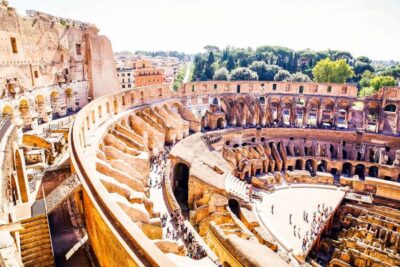
Colosseum: Underground and Ancient Rome Tour
Read our review →
Crypts and Catacombs Underground Tour with Transfers
Read our review →
Expert Guided Tour of Colosseum Arena OR Underground, and Forum
Read our review →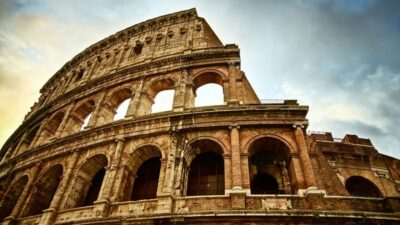
Colosseum Underground Small Group Guided Tour
Read our review →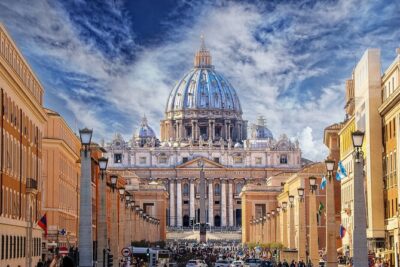
St. Peter’s Basilica, Dome Climb, and Underground Tour
Read our review →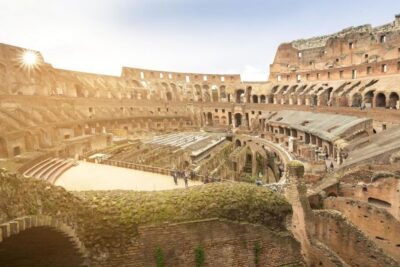
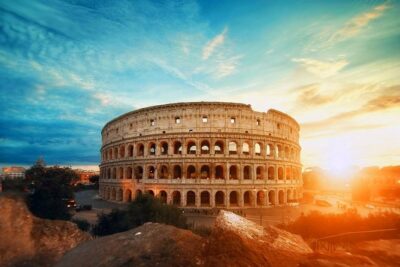
Colosseum Underground & Ancient Rome Guided Tour
Read our review →
Browse the lists this tour appears in